
Reviewed · PRIVATE
8-Hour Barcelona Private Tour
A single day can feel like a week. This private Barcelona tour strings together Gaudí’s landmarks, Modernisme architecture, and Montjuïc viewpoints with door-to-door pickup for up to six. You also get an English-speaking guide and a route that can bend to your starting point and interests, which helps when you only have one shot at the city.
What I like most is the way you move through Barcelona with less friction. You get private transportation plus bottled water, so you spend more time looking up at buildings and less time figuring out transit. The tradeoff is that it’s a highlight sprint: several famous places are best experienced by buying tickets separately, so expect lots of great exterior views and short photo stops, not hours inside every site.
In This Review
- Key things that make this tour work (and why you’ll enjoy them)
- Price and Logistics: What you’re really paying for
- How the day is paced: a highlight tour, not a museum marathon
- Plaça de Catalunya: the nerve center you need first
- Paseig de Gràcia Modernisme circuit: Casa Lleó i Morera to La Pedrera
- La Sagrada Família: Gaudí’s ongoing masterpiece
- Recinte Modernista de Sant Pau: a different kind of Gaudí-world
- Park Güell: the gardens that show Gaudí’s structural imagination
- Gràcia and Pedralbes: quieter Barcelona between the icons
- Camp Nou area and the football-shaped side of Barcelona
- Montjuïc: the viewpoint payoff and the Olympic memory lane
- World Trade Center and the port-to-city transitions
- Barceloneta, Port Olímpic, Ciutadella, and Arc de Triomf: the easy-walk Barcelona loop
- Gothic Quarter and El Born: medieval streets with modern life
- Las Ramblas and the final energy shift
- Timing and ticket strategy: how to make the paid stops worth it
- Who should book this (and who might regret it)
- Should you book this 8-hour Barcelona private tour?
- FAQ
- How many people are in the private group?
- Where does the tour start?
- What’s included in the price?
- Are entrance tickets included for the major sights?
- What costs are listed as not included for tickets?
- How long is the tour?
- Is the guide language English?
- Is free cancellation available?
Key things that make this tour work (and why you’ll enjoy them)
- Small group, private van energy: up to 6 people means less waiting, more flexibility, and easier pacing.
- Door-to-door pickup options: hotel, port, and even the airport as a starting point, which is a big deal on cruise days.
- Modernisme in concentrated form: Paseig de Gràcia and the surrounding buildings get your attention fast.
- Two of Gaudí’s heavy hitters together: Sagrada Família plus Park Güell in one day planning block.
- Montjuïc by design: you hit the big sights around Placa d’Espanya, the Magic Fountain area, and the Olympic ring.
- Old Port to beach-town mood: Columbus Monument, Port Vell, Maremagnum, and Barceloneta show Barcelona’s waterfront sides.
Price and Logistics: What you’re really paying for
At $1,804.40 per group (up to 6) for about 8 hours, this isn’t a budget tour. But it can still feel like value if you’re traveling as a family or a small group and you want the day to run smoothly.
Here’s the math that makes sense: with a private van, the cost spreads across people. Add the fact that several of the most popular sites in Barcelona require timed planning (and can sell out), and you can see why operators sell a packed, guided flow. You’re paying for time saved, stress reduced, and smart routing—especially helpful if you’re doing Barcelona as a pre-cruise day, have a tight schedule, or simply don’t want to hop buses all day.
You’ll also notice the tour includes practical stuff that matters mid-day: private transportation and bottled water. And if you’re traveling with kids, baby chairs and boosters are available on request. That’s the kind of detail that quietly changes the whole experience.
More private days built around you


How the day is paced: a highlight tour, not a museum marathon
Barcelona can swallow an entire day if you do it by public transit and on foot. This tour is built to prevent that. The plan mixes:
- quick introductions (good for orientation),
- exterior-focused architecture stops (fast but meaningful),
- and longer ticket-based stops where the big monuments live.
You should expect that time at each place varies depending on where you start and end, plus your preferences. In other words, this works best when you’re open to seeing highlights in motion. If you want long guided time inside every major site, you’d likely need either a longer tour or a tour focused on fewer stops.
Plaça de Catalunya: the nerve center you need first
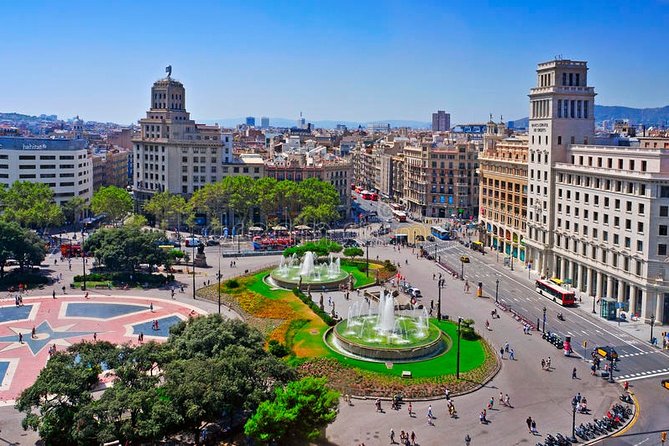
The day typically begins with pickup from your hotel, the port, or the airport. Then you roll to Plaza de Catalunya, a central square that acts like a crossroads between Barcelona’s older core and the Ensanche district.
Even if you’re not stopping long, this is a useful anchor point. It helps you understand how the city lays out: streets radiate from here, and you get that quick sense of direction that makes later neighborhoods easier to navigate.
Paseig de Gràcia Modernisme circuit: Casa Lleó i Morera to La Pedrera
The heart of Barcelona’s Modernisme story is the Passeig de Gracia area, and this tour treats it like a concentrated exhibit you can experience in one sweep.
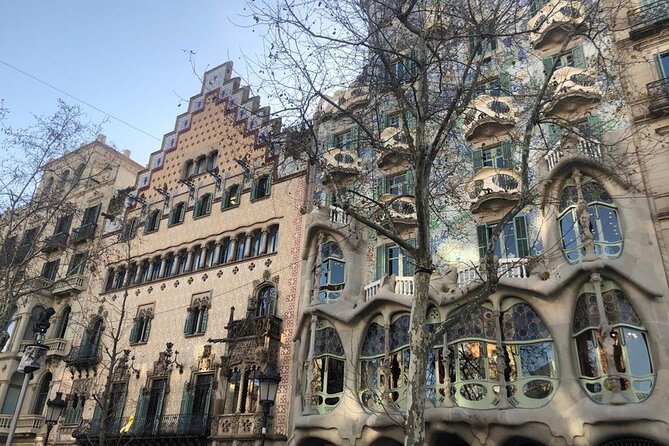
You’ll spend time along this famous avenue, where major architects built eye-catching homes. The street is known for UNESCO-recognized Modernist landmarks, and in this day-plan you get to see the cluster called La Mansana de la Discordia (the Apple of Discord). The name comes from how many architectural styles from top Catalan architects sit so close together.
You’ll hit:
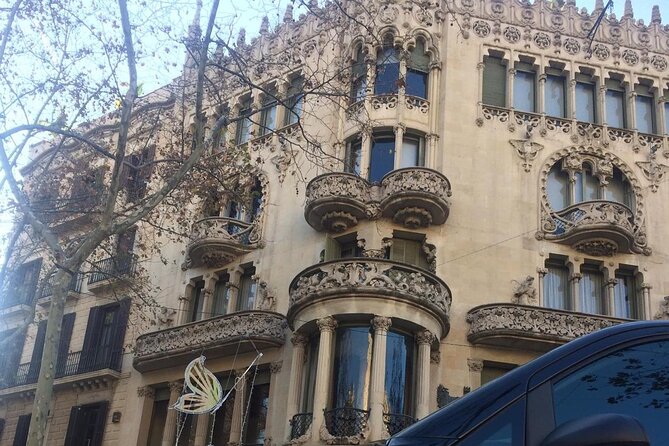
- Casa Lleó i Morera (by Lluís Domènech i Montaner)
This stop can be quick, but it’s worth it for the contrast between ornate Modernisme and the sleek way this avenue is set up for pedestrians and traffic.
- Casa Amatller (Josep Puig i Cadafalch, near the main cluster)
Another exterior-heavy moment, but a good one for spotting details that people miss when they only do one building.
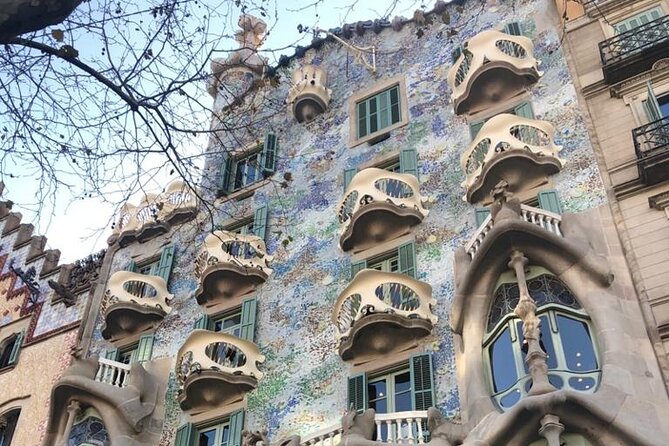
- Casa Batlló (Antoni Gaudí)
This is one of Gaudí’s signature looks—an exterior stop here works like a teaser for what you’ll see later with his bigger projects.
- La Pedrera / Casa Milà (Gaudí)
This is one of the city’s most visited buildings, with around 20 million visitors since it opened to the public in 1987. Even from the outside, it gives you that sense that Barcelona’s architecture isn’t decoration—it’s structure turned into drama.
Notably, some of these major Modernist building interiors aren’t included, so you’ll likely do photos and exterior viewing at most of them. If you want inside time, plan on buying those separately and keep expectations realistic for an 8-hour day.
La Sagrada Família: Gaudí’s ongoing masterpiece
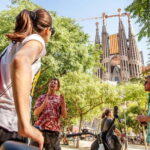
Next up is Basilica de la Sagrada Familia. This is the big one, and you should treat it as a must.
Construction began in 1882 and is still ongoing, which is part of its power. When it finishes, it’s expected to become the tallest Christian church in the world. That future goal turns your visit into something more than a finished attraction—you’re seeing a living project shaped over generations.
The entrance fee isn’t included. The tour lists €18.00 per person for entry. If you care about going inside, this is where you’ll want your timing and ticket plan to be solid in advance.
- Barcelona: Hola Barcelona Public Transport Travel Card★ 4.5 · 20,985 reviews
- Barcelona: 24 or 48-Hour Hop-On Hop-Off Bus Tour★ 4.4 · 20,872 reviews
- Barcelona: Park Guell Guided Tour with Skip The Line Entry★ 4.7 · 17,563 reviews
Recinte Modernista de Sant Pau: a different kind of Gaudí-world
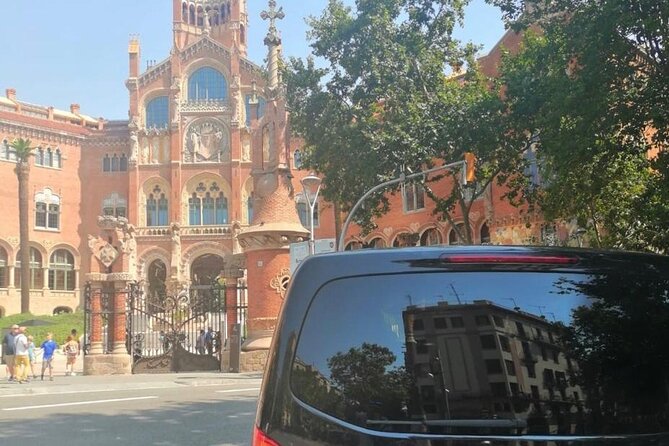
Right after Sagrada Família, you get Recinte Modernista de Sant Pau, the modernist hospital complex designed by Lluís Domènech i Montaner.
This is a change of pace from Gaudí. Instead of one iconic building, you’re looking at a complex built between 1902 and 1930, developed in two phases. UNESCO recognized it as a World Heritage site in 1997, which tells you this isn’t just pretty architecture—it’s important design and planning.
The stop here is shorter in the plan, and admission is not included, so you may be doing exterior viewing and a quick orientation rather than a full deep visit. Still, it’s one of those places that makes Barcelona feel like a city where design mattered deeply before today’s tech age.
Park Güell: the gardens that show Gaudí’s structural imagination
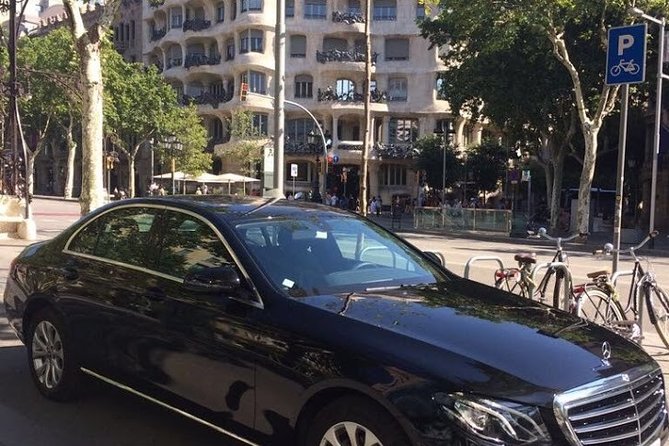
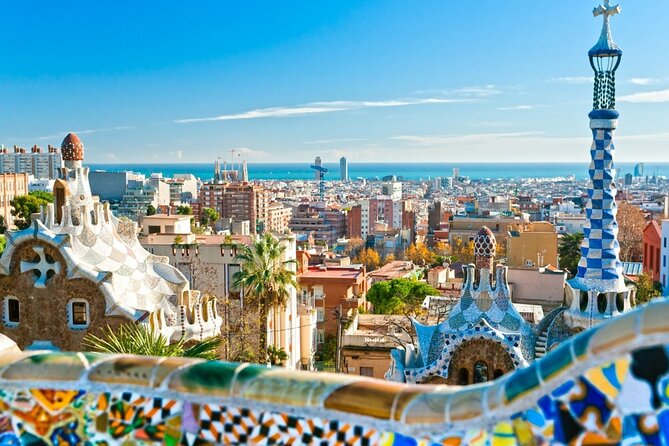
Then comes Parque Güell. This park is more than a stroll—it’s Gaudí’s natural forms translated into architecture.
The park was built as a residential project between 1900 and 1914, then it opened to the public in 1926. In the tour context, you’re usually going for the signature elements: the sweeping views and the organic, nature-inspired forms.
Admission isn’t included, and the tour lists Park Güell from €10. If you do only one paid ticket on a tight day, many people prioritize this or Sagrada Família. The advantage of doing both on the same route is that you can compare how Gaudí’s thinking shows up in different settings.
Gràcia and Pedralbes: quieter Barcelona between the icons
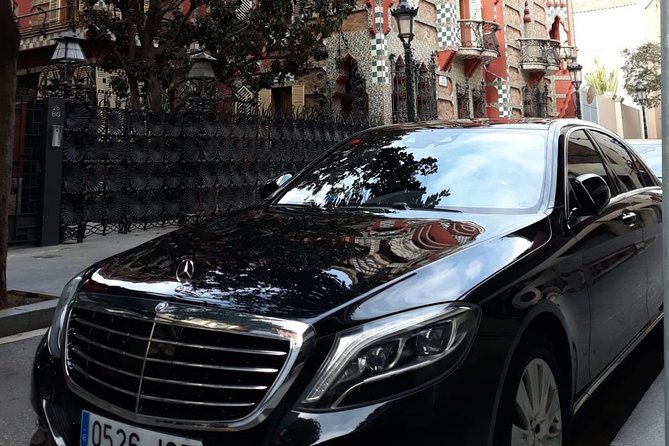
After the big names, the itinerary often swings through areas that feel more local:
- Casa Vicens (Gràcia): Gaudí’s first relevant project after earning his degree in 1878. It was built between 1883 and 1888 and belongs to his orientalist era, inspired by Middle Eastern and Far Eastern tastes plus Islamic Hispanic influences. Admission isn’t included here, so think exterior look + context.
- Monastery of Pedralbes (Santa María de Pedralbes): Gothic in style, originally walled, with watchtowers and gates still visible. A quick stop can be enough to feel the stone-and-silence shift from the busy center.
- Jardins Palau Reial Pedralbes: a garden stop. The palace itself is noted as closed to the public, but the gardens give you that palace-adjacent feel without the ticket cost.
This portion works well because it breaks up the day before Montjuïc and the water again.
Camp Nou area and the football-shaped side of Barcelona
The route includes FC Barcelona Official Store – Camp Nou, with admission not included and prices listed:
- Camp Nou official store: from €29.50 per person
If you love football, this can be a fun add-on. If you don’t, you’ll probably treat this as a photo or quick stop while the van keeps moving. The practical point: because ticket costs exist here, it’s easier to decide ahead of time whether you want to spend on this or put that money toward Sagrada Família or Park Güell.
Montjuïc: the viewpoint payoff and the Olympic memory lane
Montjuïc is where the tour’s pacing often changes from “architecture stops” to “views and big-city landmarks.” This is the area that gives you the payoff shots you remember.
You may pass through:
- Placa d’Espanya and the Torres Venecianas area
Placa d’Espanya connects you to Montjuïc and the expo-era buildings from 1929. The Torres Venecianas are twin ornamental towers built as part of the 1929 exposition, named for their resemblance to Venice’s St. Mark bell tower.
- Magic Fountain of Montjuïc
Built for the 1929 exposition site, later upgraded with music in the 1980s, fully restored before the 1992 Olympics, and used for big events. It’s also where Barcelona Campanadas are celebrated since 2013.
- Poble Espanyol
An outdoor architectural village museum in Montjuïc. The complex has 117 life-sized buildings, representing a typical Spanish village with streets, squares, workshops, and more. It was planned for the exhibition but stayed because it became popular. Admission isn’t included, so consider whether you want the extra time inside.
- Museu Nacional d’Art de Catalunya (MNAC)
Not included, but this museum is known for its Romanesque art collection, described as one of the most complete in the world. The viewpoint area around MNAC is often where you get those postcard panoramas.
The tour also touches the Olympic Ring:
- Palau Sant Jordi
- Estadi Olímpic
- and more around the Olympic facilities
It’s a great contrast: Barcelona isn’t only an old-city story. It also writes modern chapters through sports, events, and massive public projects.
There are also stops that keep the day from feeling only like walk-bys—like Montjuïc Castle (a historic fortress) and Jardins del Mirador del Alcalde, plus a cableway stop nearby. Even if your time is short, viewpoints are what make Montjuïc worth the climb.
World Trade Center and the port-to-city transitions
The route can include World Trade Center Barcelona, an iconic business park by Henry N. Cobb. It’s described as having an original structure inspired by the shape of a ship, surrounded by the Mediterranean Sea. That ship-shape feel is one of those Barcelona details you notice more when you’re coming in from Montjuïc.
Then you’re back toward the sea with:
- Monument a Colom at Portal de la Paz
Built for the 1888 Universal Exposition, it has an elevator inside the column that can take you up to a viewing half-sphere.
- Port Vell (Old Port)
The old port area has 2000+ years of tradition, with the artificial port separated from the sea by a breakwater. You also have cruise activity nearby and the Maremagnum commercial zone.
- Maremagnum
A shopping and restaurant center focused on fashion and accessories, and it’s allowed to open year-round due to its tourist location.
All of these are exterior-friendly stops. They work in the flow because you don’t need tickets to enjoy the mood switch—from monuments and stone to sea air, promenades, and people-watching.
Barceloneta, Port Olímpic, Ciutadella, and Arc de Triomf: the easy-walk Barcelona loop
Near the water, you may also get:
- Barceloneta: a coastal neighborhood known for beach time at Playa de Sant Sebastià and outdoor seafood/tapas culture.
- Port Olímpic: a leisure port area between Barceloneta and Nova Icària.
- Parc de la Ciutadella: a public park over the old citadel area. It draws references to Luxembourg Gardens and hosted the 1888 Universal Exposition. The park also has an Arsenal building that now serves the Parliament of Catalonia and includes Barcelona’s zoo.
- Arc de Triomf: a civil, expo-era triumphal arch, designed for the 1888 Universal Exposition. Restored in 1989.
This part of the day gives you breathing room. You’re not rushing into ticket lines; you’re walking and absorbing neighborhoods.
Gothic Quarter and El Born: medieval streets with modern life
As the itinerary moves back toward the city’s older core, you get a classic Barcelona combo:
- Palau de la Música Catalana (Domènech i Montaner)
This UNESCO-listed music auditorium is admired for its crystal walls and integration of sculpture, mosaics, and stained glass. Admission isn’t included, so this may be a quick viewing stop.
- Catedral de Barcelona (Santa Creu i Santa Eulàlia)
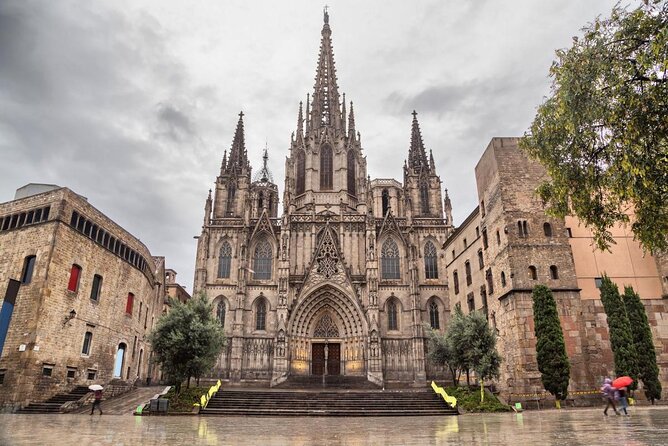
Built over older structures from Romanesque layers, with a facade from the 19th century. Admission isn’t included.
- Barri Gòtic (Gothic Quarter)
Medieval alleys with trendy bars and Catalan restaurants, plus an art market around Plaza del Pi on weekends.
- El Born
Medieval streets by day, lively nightlife by evening.
- Basilica de Santa Maria del Mar
A major basilica built between 1329 and 1383.
Even if you don’t go inside, this area is where Barcelona feels most cinematic. The trick is to keep moving, because the streets are compact and easy to get turned around—exactly why a guide’s pacing helps.
Las Ramblas and the final energy shift
You’ll likely end near Las Ramblas, the iconic promenade between Plaza Cataluña and Port Vell. It’s full of kiosks, flower shops, street performers, coffee stops, and the constant flow that makes the street feel like a living set.
This tour context often treats Ramblas as a finish-line atmosphere: you get the sense of the crowd and the street texture, and you’re not expected to spend hours wandering every side street.
Timing and ticket strategy: how to make the paid stops worth it
A tour like this works best when your tickets match the schedule. The tour’s structure assumes you’ll handle admissions for major sites that aren’t included—especially Park Güell and Sagrada Família.
Two practical tips that will save you time in real life:
- Book early. The tour is often reserved about 41 days in advance on average, which is a clue that popular entry times can disappear.
- Use official sources for your paid tickets. One reason small-group private tours feel smoother is the guidance around ticket timing and avoiding sketchy listings.
And a small mindset shift: in an 8-hour day, you’re choosing where you want the most minutes. The rest becomes great photo stops and orientation.
Who should book this (and who might regret it)
This tour is a strong fit if:
- you’re traveling with kids (booster seats can be arranged),
- you’re on a cruise day or you only have one full day,
- you want a private, air-conditioned way to cover major Barcelona highlights,
- you love Gaudí plus Modernisme and you want them grouped efficiently,
- you prefer a guided route over spending the day figuring out transit.
You might not love it if:
- you want long interior time at every major site (this plan is built for highlights),
- you’re trying to keep every entrance free (several are ticket-based),
- your idea of fun is slow, deep neighborhood exploring with long café sits at each stop.
Should you book this 8-hour Barcelona private tour?
If your goal is to see a lot of Barcelona without turning your day into logistics math, I think it’s a smart booking. The best value comes when you’re up to 6 people, want door-to-door pickup, and you’re willing to treat the day as a guided highlight sprint—with paid entries reserved for the big ticket monuments like Sagrada Família and Park Güell.
If you only have one day and you care about Gaudí, Modernisme, and the Montjuïc-to-port arc, this tour gives you structure and momentum. You’ll come away with clear impressions and enough variety to feel like you saw the city, not just a checklist of buildings.
FAQ
How many people are in the private group?
The tour is private and is designed for up to 6 people per group.
Where does the tour start?
Pickup is offered, and the tour can start from your hotel, the port, or the Barcelona airport. The itinerary can change depending on your starting/ending place and preferences.
What’s included in the price?
The tour includes pickup service at your Hotel, bottled water, private transportation, and baby chairs and boosters for children (on request), plus a mobile ticket. It is offered in English.
Are entrance tickets included for the major sights?
Not all entrances are included. Some stops are free to view, while others have admission fees not included, such as Sagrada Família (€18 per person) and Park Güell (from €10).
What costs are listed as not included for tickets?
The listed not-included items are Park Güell, Sagrada Família entrance (€18 per person), and Camp Nou official store (from €29.50 per person).
How long is the tour?
It runs for about 8 hours.
Is the guide language English?
Yes, the tour is offered in English.
Is free cancellation available?
Yes. You can cancel for a full refund up to 24 hours in advance of the experience start time.
Private Days Built Around You
- Montserrat Monastery Small Group or Private Tour Hotel pick-up
★ 5.0 · 5,144 reviews - Tour Welcome Barcelona with Local Guide in Eco Tuk Tuk Private
★ 5.0 · 1,882 reviews - Barcelona Private Tour by Sidecar Motorcycle
★ 5.0 · 1,750 reviews - Barcelona: Private Group Bike Tour
★ 4.8 · 1,420 reviews - Barcelona Helicopter, Sailboat & Old Town Private Walking Tour
★ 5.0 · 1,395 reviews
More Ways to Tour Barcelona
- Barcelona: Casa Batlló Entry with Self-Audioguide Tour
★ 4.7 · 25,359 reviews - Barcelona: 24 or 48-Hour Hop-On Hop-Off Bus Tour
★ 4.4 · 20,872 reviews - Barcelona: Park Guell Guided Tour with Skip The Line Entry
★ 4.7 · 17,563 reviews - Barcelona: Sagrada Familia Skip-the-Line Entry Ticket & Tour
★ 4.8 · 12,789 reviews - Barcelona: FC Barcelona Museum “Barça Immersive Tour” Ticket
★ 4.4 · 10,944 reviews
More Barcelona Tours on Our Radar
- Barcelona: Sagrada Familia Entry Ticket with Audio Guide
★ 4.6 · 105,312 reviews - Barcelona: Park Güell Admission Ticket
★ 4.4 · 76,534 reviews - Barcelona: Casa Batlló Entry with Self-Audioguide Tour
★ 4.7 · 25,359 reviews - Barcelona: Montjuïc Cable Car Roundtrip Ticket
★ 4.5 · 22,368 reviews - Barcelona: Hola Barcelona Public Transport Travel Card
★ 4.5 · 20,985 reviews
Just Rated Around Barcelona




Private, compared.
 ★ 5.0Montserrat Monastery Small Group or Private Tour Hotel pick-upFrom $1145,144 reviews
 ★ 5.0Tour Welcome Barcelona with Local Guide in Eco Tuk Tuk PrivateFrom $281,882 reviews
 ★ 5.0Barcelona Private Tour by Sidecar MotorcycleFrom $1991,750 reviews
 ★ 4.8Private Group Bike TourFrom $411,420 reviews
 ★ 5.0Barcelona Helicopter, Sailboat & Old Town Private Walking TourFrom $5131,395 reviews
 ★ 4.7Helicopter, Boat Ride & Old Town Private TourFrom $5001,357 reviews
 ★ 4.9Private City Tour by Eco Tuk TukFrom $331,339 reviews
 ★ 4.5Sagrada Familia & Gaudi Tour Private or Small Group with TicketsFrom $901,188 reviews