Reviewed · BARCELONA
A Day in Sants Feasting Off the Grid
Forget Gaudi. Try Sants.
This 5-hour, small-group Barcelona walk is built for photo-worthy streets and real neighborhood eating, with a guide who ties each bite to what made Sants tick. I especially love the chance to eat like a local—pastry shops, down-home restaurants, and vermut culture instead of the usual tourist circuits—and I like that the pace gives you room to ask questions as you go.
One thing to consider: this is a neighborhood day, not a big-sight, top-10-tapas parade, so if you want only Barcelona’s most famous landmarks, you’ll probably feel underfed on that front. The upside is you’ll get the other Barcelona you came for.
In This Review
- Key things I’d pencil in before you book
- Why Sants Feels Like Real Barcelona (Not a Postcard Day)
- Price and What You Actually Get for $160
- Meeting at Carrer de Sants and How the 5-Hour Rhythm Works
- Stop 1 in Sants: Markets, Old Vermuterías, Pastry Shops, and Neighborhood History
- Stop 2 in La Bordeta: Breakfast at Mercat de Sants (Since 1913)
- Stop 3 by the Mercat de Sant Antoni Area: A Former Textile Factory Becomes a Community Hub
- Alcohol, Lunch, and the Taste Strategy That Makes This Work
- Shopping for Local Boutiques and Souvenirs You’ll Actually Want
- Who This Sants Food Tour Is Best For
- A Practical Word on Weather and Comfort
- FAQ
- FAQ
- How long is the Sants food tour?
- What time does the tour start?
- Where do we meet?
- What language is the tour offered in?
- Is there a mobile ticket?
- What’s the maximum group size?
- What’s included in the price?
- Should You Book This Off-the-Grid Sants Food Tour?
Key things I’d pencil in before you book
- A 7-person max group means you’re not just herded; you can actually talk with your guide.
- Vermut + tapas stops in real bodegas and wine-cask bars, not staged tastings.
- Market time includes restored Mercat de Sants (in business since 1913) for breakfast and vendor samples.
- A community-centered cultural stop inside a former 19th-century textile factory with its own bar and microbrewery.
- Admission-free visits at stops so you can focus on eating and learning, not surprise ticket lines.
Why Sants Feels Like Real Barcelona (Not a Postcard Day)
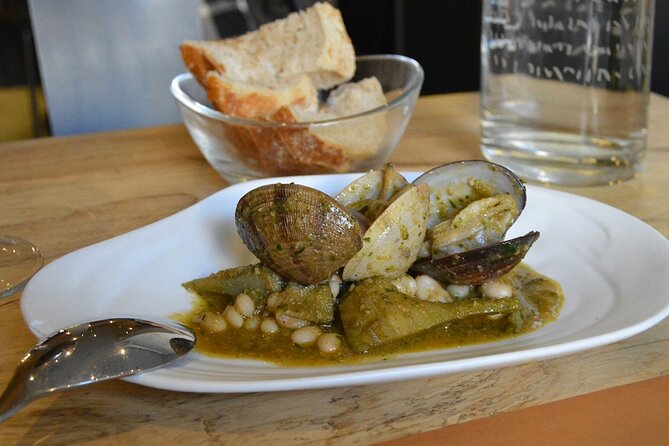
Sants is one of those parts of Barcelona that rewards curiosity. You don’t get the instantly recognizable Gaudi look. You get everyday streets, busy local rhythms, and food places that feel like they’ve always been here. That’s exactly why I like this kind of tour: it helps you see a neighborhood the way locals actually experience it.
This walk is built around the idea that Barcelona isn’t only built of monuments. It’s built of markets, old vermuterías, family pastry shops, and seasonal menus that change as the year changes. And the timing works in your favor. Starting at 9:00 am means you catch places at a good moment—breakfast energy first, then the slower, more conversational pace of lunch-time food.
Torn between options? Line this one up against other Barcelona picks.

Price and What You Actually Get for $160
At $160 per person for about 5 hours, this isn’t a throwaway budget activity. But it’s also not overpriced for what’s included. You’re getting snacks, alcoholic beverages, and lunch, plus a guide-led route through multiple food stops.
Here’s the practical way to think about value: if you tried to recreate this on your own, you’d still pay for food, and you’d likely miss the context—why a neighborhood has certain institutions, why vermut culture shows up in specific places, and how community projects shape what people eat and where they gather. You’re paying partly for the food and partly for the translation of local culture into something you can understand fast.
Also, the tour highlights that admission tickets at the stops are free, which matters in Barcelona. Extra tickets can add up quickly, and this keeps the focus where you want it.
Meeting at Carrer de Sants and How the 5-Hour Rhythm Works
The meeting point is Carrer de Sants, 109 (Sants-Montjuïc). The tour starts at 9:00 am and ends back at the same meeting spot. So you don’t need to do any complicated logistics at the finish—good news if you’re planning the rest of your day in Barcelona.
Group size is small, max 7 travelers, and the tour is offered in English with a mobile ticket. That combination usually makes the experience feel less like a scripted walk and more like a guided conversation that happens to pass through food stops.
The pacing is split into three blocks: about 2 hours in Sants, about 2 hours in La Bordeta, and about 1 hour at the Mercat de Sant Antoni area cultural project. That structure helps you avoid the common problem of food tours that rush. You get enough time to actually taste, not just sample.
Stop 1 in Sants: Markets, Old Vermuterías, Pastry Shops, and Neighborhood History
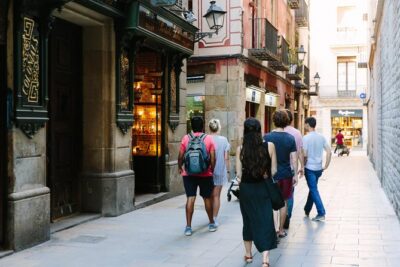
This is where the tour earns its off-the-grid label. In Sants, you’ll walk through a lesser-explored district with a real local food scene, and the guide connects that scene to the area’s history. You’re not chasing Gaudi-style scenery. You’re chasing clues: which types of shops survive, what kinds of food show up where, and how the neighborhood eats across decades.
Expect a mix of classic institutions and modern food projects in the neighborhood. That balance matters. It’s one thing to show you old-school food places. It’s another to show how Sants food culture adapts over time without losing its identity.
For photos, this part of the route is practical. Sants offers streets where daily life plays in the background—shop doors, market details, and small storefront character. If you like taking pictures that look like they belong to the place, this stop gives you material.
Potential drawback here: if your idea of a food tour is only famous dishes and the biggest names, you’ll have to be open-minded. The point is local tradition and neighborhood character, not a greatest-hits list.
Stop 2 in La Bordeta: Breakfast at Mercat de Sants (Since 1913)
After settling into the Sants atmosphere, the tour shifts into La Bordeta, staying close to the same general area so the day flows without transit headaches. This section leans into how life in Barcelona used to look before it became the global hotspot it is today.
You start with breakfast in Mercat de Sants, a restored market that’s been in business since 1913. That detail matters because it frames the market not as a modern attraction but as an institution. Food tours that focus on markets can sometimes feel like a quick photo stop. Here, the emphasis is on what vendors offer and how the market functions as a local meeting place.
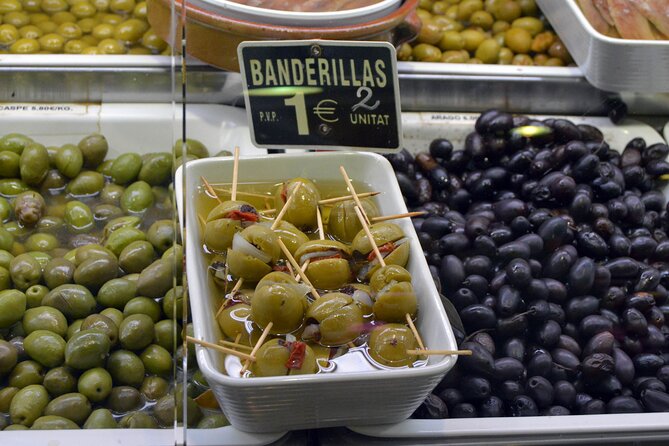
From there, the route moves through neighborhood food shops and restaurants—old and new—with seasonal menus. You’ll also stop at old-school bodegas and bars where you can enjoy vermut with tapas. The wine-cask setting is part of the atmosphere, and it helps you understand why vermut is more than a drink here—it’s a ritual built around social time.
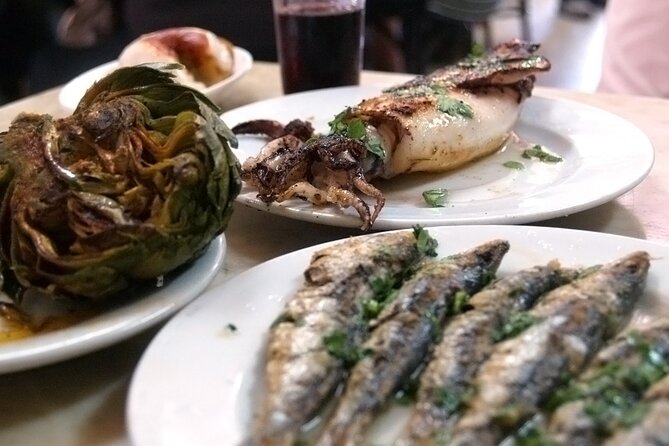
Sweet lovers get some attention too. Along the way you’ll find stops at small bakeries and chocolate shops for handmade sweets. The best part of that kind of mix is balance: savory first, then the kind of dessert tasting that feels like you’re sampling what locals actually buy, not what a menu tourist checklist expects.
- Barcelona: Hola Barcelona Public Transport Travel Card★ 4.5 · 20,985 reviews
- Barcelona: 24 or 48-Hour Hop-On Hop-Off Bus Tour★ 4.4 · 20,872 reviews
- Barcelona: Park Guell Guided Tour with Skip The Line Entry★ 4.7 · 17,563 reviews
Stop 3 by the Mercat de Sant Antoni Area: A Former Textile Factory Becomes a Community Hub
This final segment is the “how people shape a neighborhood” part of the day. Even though it’s connected to the Mercat de Sant Antoni area by name, the real story is the 19th-century textile factory that locals transformed after decades of disuse.
The tour describes it as a massive cultural center now, with its own bar and microbrewery. That’s a big deal because it turns the neighborhood story into something you can feel immediately: community organization made a place useful again, and food and drink fit naturally into the way the site works today.
Over a drink and more bites, the guide explains the history of community organizing in Sants and what makes the neighborhood special. I like these moments because they change what you think you’re doing. You’re not only eating. You’re learning the social context behind why certain local institutions exist in the first place.
Also, it ties back to the tour’s promise of going off the grid while staying in the heart of the city. You’re still in Barcelona, but you’re leaving the most predictable tourist loops behind.
Alcohol, Lunch, and the Taste Strategy That Makes This Work
This tour includes snacks, alcoholic beverages, and lunch, so it’s not just a walk-and-look experience. The tastings are distributed across stops so you get variety without feeling like you’re stuffed at the start. You’re also tasting in situ—at markets, bars, bakeries, and restaurants—so you’re seeing how each type of food place operates.
The vermut component is worth highlighting. In Sants, vermut isn’t treated like a novelty. It’s woven into the bar-and-tapas rhythm, and you’ll be served in settings that look and feel built for that tradition. If you drink, great. If you don’t, you can still approach the day as a food tour first; the cultural context around the drink is what makes it interesting.
The guide also actively invites questions, and with a max group size of 7, it’s easy to ask what you’re wondering in real time. I find that’s one of the biggest quality signals of a well-run neighborhood tour: it doesn’t treat people like passengers. It treats you like you’re participating.
Shopping for Local Boutiques and Souvenirs You’ll Actually Want
One of the tour’s subtle wins is that it doesn’t just talk about food. It gives you time to explore local boutiques and buy souvenirs you won’t find everywhere. That matters because most food tours in big cities stop at the same kinds of souvenir shops or just skip shopping entirely.
Here, the neighborhood vibe continues. You’re walking streets where shops feel like they serve residents first. That increases your odds of finding something personal—maybe a small food item, a practical local craft, or just something that feels tied to the day instead of to a generic tourist market.
This is also where your guide’s local perspective can help. If you ask what’s worth buying or what a shop is known for, you’ll likely get clearer answers than you’d get wandering on your own.
Who This Sants Food Tour Is Best For
This tour fits you best if you want Barcelona that feels like it has daily life, not only photo backdrops. I’d recommend it for:
- Food people who like understanding where flavors and traditions come from
- Photographers who want streets and markets that don’t scream tourist district
- Travelers who enjoy small groups and Q-and-A moments
- Anyone who wants a different side of Barcelona beyond famous architecture
“Most travelers can participate” is also a good sign if you’re traveling solo or as a couple and want a lower-key day with a clear structure.
A Practical Word on Weather and Comfort
The experience requires good weather, and that’s not random. Parts of the tour are walking-focused, so if the day turns gray and rainy, the plan may change. The tour is set up to handle that by offering a different date or a full refund, so you won’t be stuck if the skies don’t cooperate.
For comfort, I’d dress like you’re going to spend hours moving between local spots. Layers help in Barcelona because mornings can feel cooler than afternoons.
FAQ
FAQ
How long is the Sants food tour?
It’s about 5 hours.
What time does the tour start?
It starts at 9:00 am.
Where do we meet?
You meet at Carrer de Sants, 109, Sants-Montjuïc, 08028 Barcelona, Spain.
What language is the tour offered in?
It’s offered in English.
Is there a mobile ticket?
Yes, it’s a mobile ticket.
What’s the maximum group size?
The tour has a maximum of 7 travelers.
What’s included in the price?
Snacks, alcoholic beverages, and lunch are included. Private transportation is not included.
Should You Book This Off-the-Grid Sants Food Tour?
Yes—if you want Barcelona that feels local and you’re excited by markets, vermut culture, and neighborhood institutions instead of the usual landmark sprint. The small group size, inclusion of lunch plus drinks, and the fact that the day stays focused on Sants and nearby areas make it a strong value for a first-timer who’s ready to see the city differently.
If you’re chasing only the most famous sights or top-10 tapas plates, you may find this too neighborhood-specific. But if you like authentic texture, real places, and a guide who explains the why behind the food, this is the kind of day that stays with you.
More Barcelona Tours on Our Radar
- Barcelona: Sagrada Familia Entry Ticket with Audio Guide
★ 4.6 · 105,312 reviews - Barcelona: Park Güell Admission Ticket
★ 4.4 · 76,534 reviews - Barcelona: Casa Batlló Entry with Self-Audioguide Tour
★ 4.7 · 25,359 reviews - Barcelona: Montjuïc Cable Car Roundtrip Ticket
★ 4.5 · 22,368 reviews - Barcelona: Hola Barcelona Public Transport Travel Card
★ 4.5 · 20,985 reviews