
Reviewed · AUDIO TOURS
Barcelona: Mies van der Rohe Pavilion Ticket and Audio Guide
Modern architecture gets personal here. I love how the Mies van der Rohe Pavilion strips design down to essentials, and I love that the audio guide helps you read the building in five languages. You’ll get a calm visit to one of the most influential modernist spaces in the city.
One catch: the pavilion is minimal on purpose, so if you’re hunting for big-ticket sights and constant movement, this can feel short and quiet. Also, the pavilion sometimes hosts artistic interventions, which may alter the look you expect.
In This Review
- Key things to know before you go
- A 1929 Landmark Rebuilt in 1986: What You’re Stepping Into
- Ticket and Audio Guide: How to Get the Most in One Visit
- Entering the Pavilion: Calm Space, Big Architectural Ideas
- Inside the Pavilion: Where Minimal Design Holds Your Attention
- Materials and the Palette Story: Alps, Tivoli, Atlas, Tinos
- Reconstruction in 1986: Why This Visit Feels Like History with a Future
- Practical Tips: Rules, Timing, and Artistic Interventions
- A Short Walk Nearby: Don’t Miss the Little Extra Time
- Value Check: Is a $10 Ticket Worth It?
- Who Should Book This Audio-Guided Pavilion Visit
- Should You Book the Mies van der Rohe Pavilion Ticket and Audio Guide?
- FAQ
- Do I need to buy an entrance ticket in advance?
- Is the audio guide included, and what languages are available?
- How long is the visit?
- Can I skip the ticket line?
- Are there restrictions on what I can bring or do inside?
- Is the pavilion accessible for wheelchair users?
Key things to know before you go
- A guided reading of a simple building: the audio helps you notice what your eyes might skip.
- Five-language audio guide: Spanish, Catalan, English, French, and German.
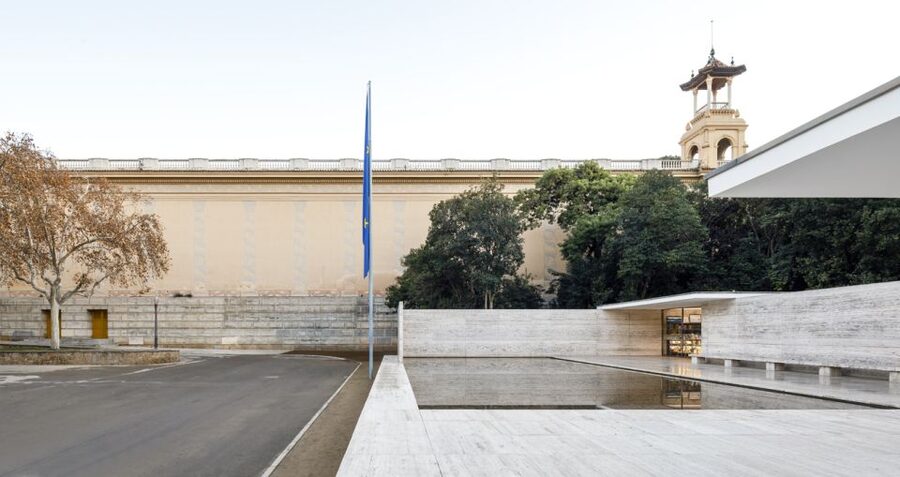
- A 1929 pavilion rebuilt for 1986: you’re seeing an important restoration story, not just a pretty structure.
- Material origins matter: the palette uses stone and details associated with places like the Alps, Tivoli, Atlas, and Tinos.
- A calm setting that still attracts pros: you may see photographers and models working in the space.
- Timing helps: arriving on schedule makes the visit smoother, especially when the site changes day to day.
A 1929 Landmark Rebuilt in 1986: What You’re Stepping Into
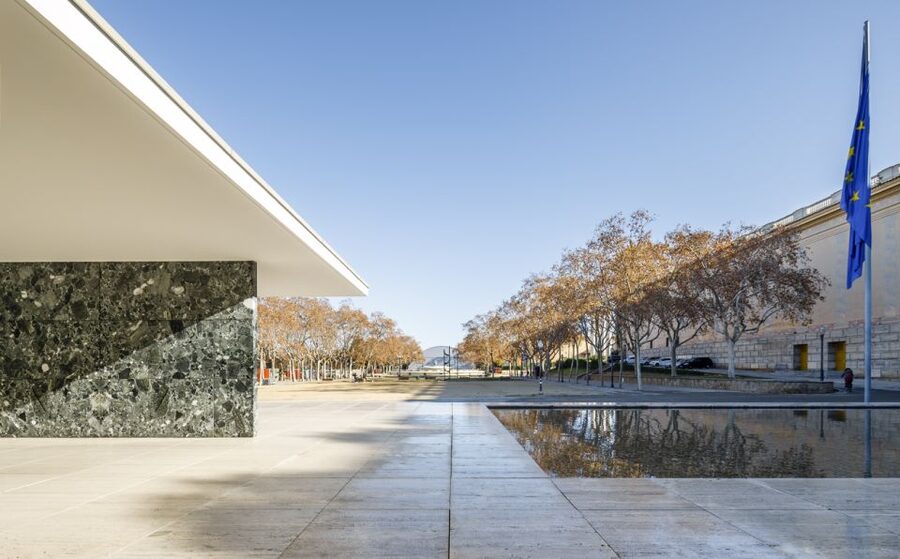
The Mies van der Rohe Pavilion isn’t a museum full of clutter. It’s a single, focused experience: architecture pared down until it has to do real work. The effect is a bit like walking into an idea—clean lines, careful proportions, and a strong sense of balance.
This structure was originally the German national pavilion for the 1929 Barcelona International Exhibition. After the event ended, the pavilion was dismantled, which makes today’s visit more interesting than you might expect: you’re not just looking at a historic building, you’re standing in a later reconstruction.
The pavilion was reconstructed and reopened on its original site in 1986. That timeline matters. It turns the visit into a lesson about preservation, influence, and why architects still study this place as a benchmark for the Modern Movement.
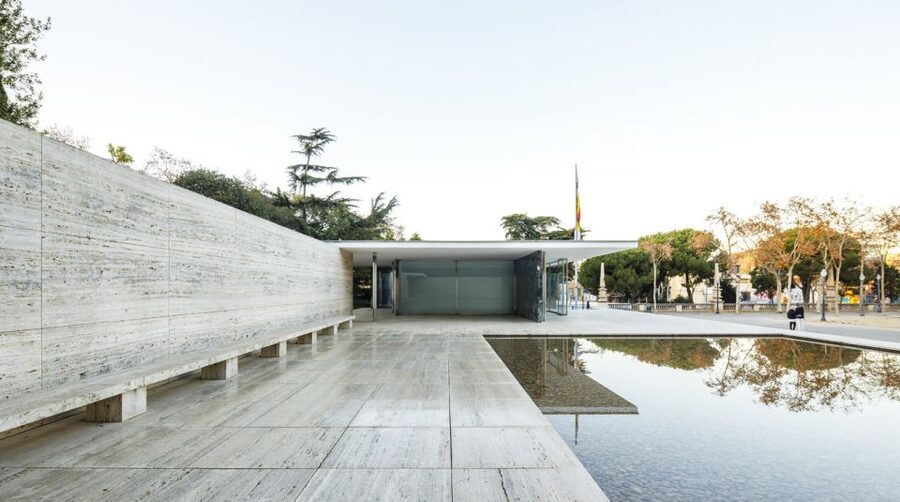
And it’s not only about the look. The pavilion is famous for the purity of its forms, the sobriety of its design, and the linear interplay between interior and exterior spaces. The structure’s design choices are deliberate enough that you’ll feel them even if you’re not an architecture nerd.
More Barcelona tickets worth grabbing



Ticket and Audio Guide: How to Get the Most in One Visit
Your entry ticket includes an audio guide, available in Spanish, Catalan, English, French, and German. That’s a big deal here because the pavilion rewards attention. If you just walk through it quickly, you’ll still enjoy the calm—but you’ll miss the “why.”
This is a one-day visit with starting times to check based on availability. Because it’s not an all-day roaming kind of site, I suggest you treat it like a scheduled stop, not a flexible wander. Arriving close to your time slot makes the experience smoother, especially if the pavilion is being used for an artistic intervention.
Also, the ticket is set up to skip the ticket line, which helps you spend your limited time inside the pavilion rather than waiting outside. For a simple site like this, those minutes count.
One practical move: before you move deep into the pavilion space, confirm your audio guide is ready and in the language you want. A smooth start keeps the rest of the visit from feeling like you’re chasing the story.
Entering the Pavilion: Calm Space, Big Architectural Ideas
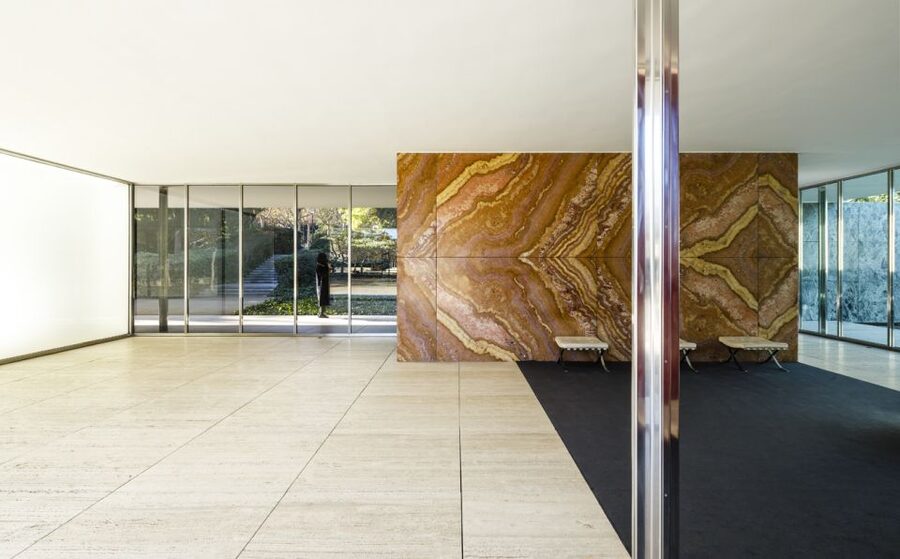
When you step in, the vibe is controlled. The pavilion doesn’t try to overwhelm you with scale. It asks for stillness. That’s why it can feel like a pause in Barcelona rather than another “must-see” sprint.
I like that the visit doesn’t demand marathon stamina. You can enjoy the place even if you only have a short window between other sights. One review noted the site can be relatively light on crowds, and that fits the overall mood: it’s designed for quiet observation.
Here’s what to pay attention to right away:
- How the layout guides your line of sight.
- How the inside and outside feel related rather than separated.
- How the materials create contrast without loud color.
This is also a place where you might see professional photography or modeling happening. That doesn’t ruin the experience. Instead, it reinforces the pavilion’s role as a working stage for modern visual culture. Just treat those moments as part of the atmosphere, and focus on your own walk through the space.
Inside the Pavilion: Where Minimal Design Holds Your Attention
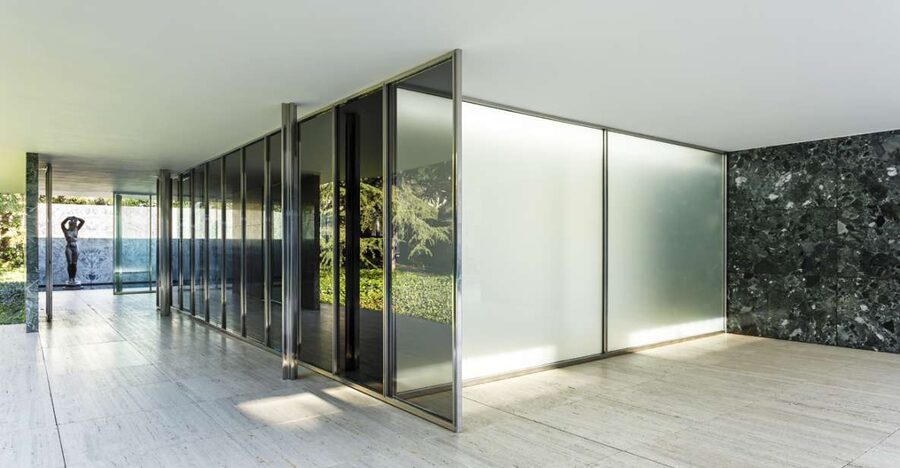
Inside, the genius is restraint. The pavilion uses a limited palette and clean geometry, so each element becomes more noticeable. Even if you don’t know the technical terms, you can feel the careful structure: sharp edges, calm surfaces, and a layout that keeps pulling your gaze back to key lines.
The pavilion’s fame comes from its precision. The design is built around contrasts—especially in materials—and the way interior and exterior form a continuous experience. You’re not dealing with random decoration. Everything feels like it has a job.
The audio guide is where a lot of the payoff lives. It helps you “read” the space, not just look at it. You’ll get the history of the pavilion, the context of its original role in 1929, and why its modernist design still influences architects and artists today.
If you’re sensitive to crowds, this place can be a relief. Several people point out the pavilion’s beauty and calm feel, and that’s exactly the kind of experience you should expect: quiet observation, not tourist chaos.
Materials and the Palette Story: Alps, Tivoli, Atlas, Tinos
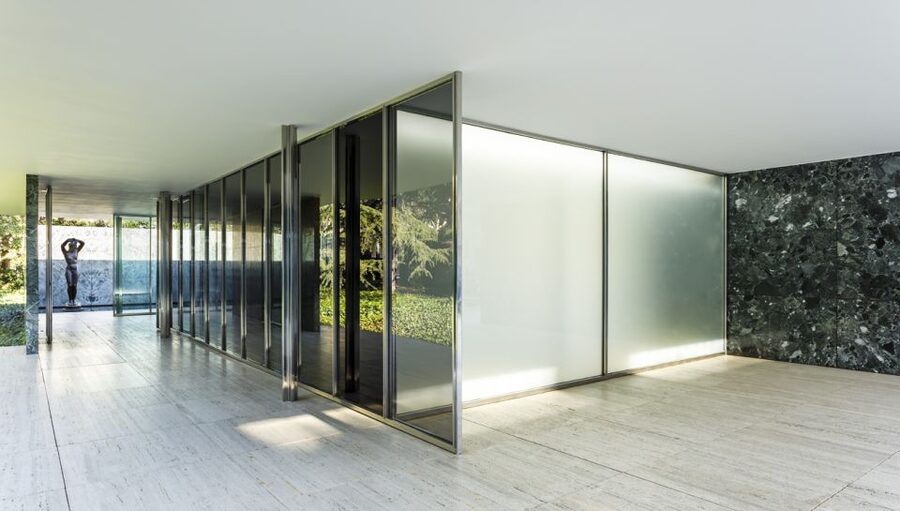
Architecture fans know this, but it’s worth saying plainly for everyone else: material choice can make or break a minimal building. In this pavilion, the palette is part of the message.
The pavilion uses materials sourced and associated with regions such as the Alps, Tivoli, Atlas, and Tinos. That’s not trivia—it explains why the colors and textures feel restrained and coherent. You’re seeing the designers’ intent to create a specific mood through stone and surface, not through visual noise.
When you listen to the audio, try to match what you hear to what you’re seeing. For example, notice where the light hits surfaces and how the materials look different in the same space depending on where you stand. Minimal design hides meaning in small shifts—this is the kind of site where your feet and your angle matter.
Also watch for the way materials create contrast. The pavilion doesn’t throw bold gestures at you. It builds an ordered world, with balance between interior and exterior that feels intentional from every direction.
More days walked with a local guide
- Barcelona: Sagrada Familia Entry Ticket with Audio Guide★ 4.6 · 105,312 reviews
- Barcelona: Park Guell Guided Tour with Skip The Line Entry★ 4.7 · 17,563 reviews
- Fast Track Sagrada Familia Guided Tour★ 4.5 · 8,795 reviews
Reconstruction in 1986: Why This Visit Feels Like History with a Future
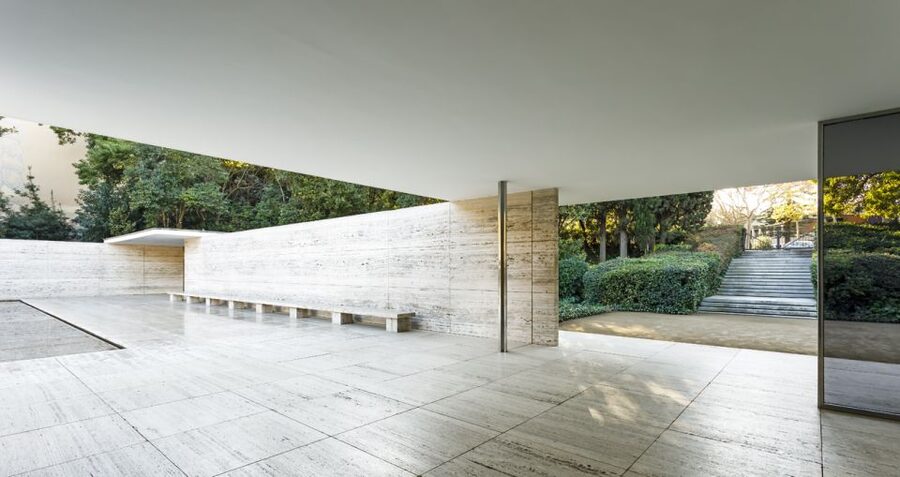
One reason the pavilion hits harder than a “pretty modern building” is the story of what happened after 1929. The pavilion was dismantled after the exhibition, then reconstructed and reopened in 1986 because of its significance.
That reconstruction isn’t just a detail for the audio guide. It changes what you’re experiencing. You’re standing in a decision: to bring back an influential design rather than let it vanish. It’s also why the pavilion matters to architects and artists—its ideas endured long enough to earn a second life.
You can think of it like this: the pavilion is both design and proof. Proof that form can influence generations, and proof that preserving an architectural concept sometimes requires careful rebuilding—not simple preservation like you’d do with older stone monuments.
Practical Tips: Rules, Timing, and Artistic Interventions
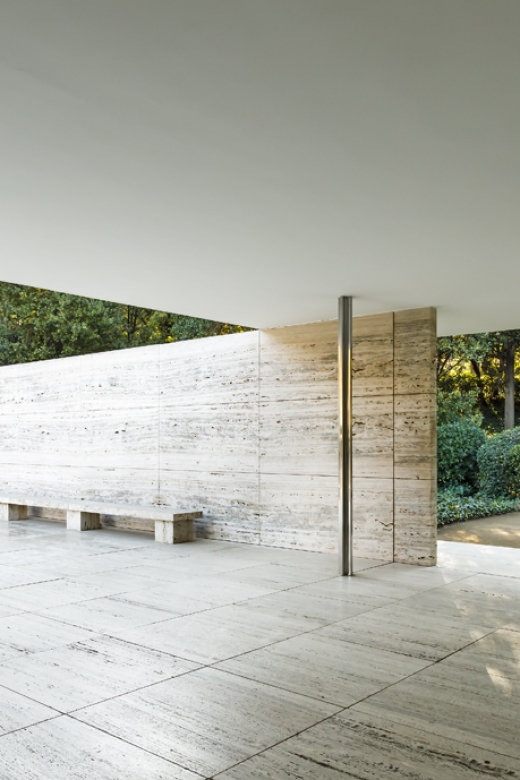
This is a controlled site, and the rules reflect that. You should plan on:
- No smoking
- No food or drinks
- No pets (assistance dogs are allowed)
- No tripods
Those restrictions may sound strict, but they help keep the pavilion calm and focused. If you’re a photographer, you may need to work around the tripod rule. If you’re visiting with a child who’s hungry, make sure you handle snacks before you arrive, because food and drink aren’t allowed inside.
Wheelchair accessibility is supported, so the pavilion is designed to be approachable for mobility needs.
One more thing: opening hours can change, and the pavilion occasionally hosts artistic interventions that may alter its appearance. That’s not a bad thing. It’s a reality of a living cultural site. Just be flexible and go with the flow if something looks different than you expect.
If you want the cleanest experience, aim to arrive close to your scheduled time. Even for a short visit, timing helps you avoid the feeling of rushing through details.
A Short Walk Nearby: Don’t Miss the Little Extra Time
One review mentioned a short nature trail near the site. That’s the kind of bonus you can enjoy if your day has breathing room. If you have a few extra minutes after the pavilion, consider adding a gentle walk to shift your pace.
The key is not to overplan. The pavilion is the main event, and the surrounding area can be a calm way to reset after you’ve been staring at precise lines and textures.
Value Check: Is a $10 Ticket Worth It?
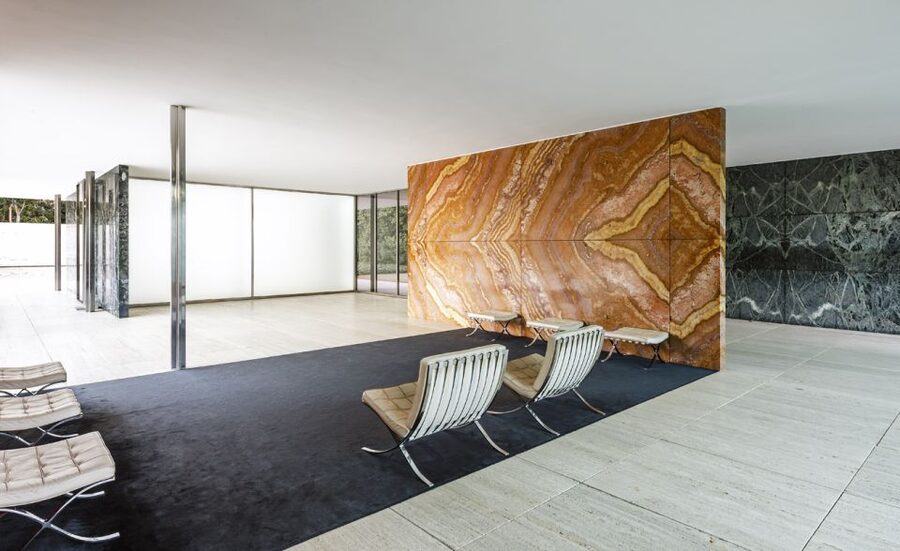
At $10 per person, this ticket can feel like an easy decision if you care about architecture—or even if you just want a high-quality, low-stress cultural stop. The value comes from two places.
First, you’re getting an audio guide included in the price. For a minimal, idea-driven building, that’s the difference between passively viewing and actively understanding. Second, the pavilion’s influence is real. This isn’t a random modern structure. It’s a benchmark for the Modern Movement, and the history and reconstruction story give the visit weight.
Where the value might not land is if you’re the type who expects a large collection or lots of activities. This is one building and a focused walk. You can absolutely enjoy it, but it won’t behave like a “theme park of landmarks.”
So here’s the practical math: if you can spend your time paying attention, the ticket feels like a bargain. If you want constant motion and variety, you might prefer a larger museum day.
Who Should Book This Audio-Guided Pavilion Visit
This experience suits you best if:
- You like calm, high-design spaces where attention matters.
- You want a short stop that still teaches you something.
- You enjoy architecture, design, or photography-friendly environments.
- You prefer learning at your own pace with a guide in your language.
It may be less ideal if you’re chasing big crowds, long timelines, or lots of separate rooms. The pavilion is minimal by design, and that’s exactly why it’s memorable.
Should You Book the Mies van der Rohe Pavilion Ticket and Audio Guide?
If you’re choosing between this and another major sight, I’d book it when you want a quieter, smarter cultural break. The audio guide gives you the context behind the lines and materials, and the pavilion’s reconstructed story makes it feel meaningful rather than merely scenic.
My rule: if you can slow down for 45–90 minutes and let the space speak, this is a strong use of your time. If you’re only interested in spectacle and motion, you might leave wanting more. But for most people who enjoy design, this is one of those rare stops where the simplicity is the point—and the payback arrives fast.
FAQ
Do I need to buy an entrance ticket in advance?
Yes. This experience requires an entrance ticket to the Mies van der Rohe Pavilion.
Is the audio guide included, and what languages are available?
Yes, the audio guide is included. It’s available in Spanish, Catalan, English, French, and German.
How long is the visit?
The experience is listed as valid for one day, with starting times based on availability.
Can I skip the ticket line?
Yes. The ticket is described as a skip-the-ticket-line entry.
Are there restrictions on what I can bring or do inside?
Yes. Smoking, food and drinks, pets (assistance dogs allowed), and tripods are not allowed.
Is the pavilion accessible for wheelchair users?
Yes. The experience is described as wheelchair accessible.
With a Local Guide in Barcelona
- Barcelona: Sagrada Familia Entry Ticket with Audio Guide
★ 4.6 · 105,312 reviews - Barcelona: Park Guell Guided Tour with Skip The Line Entry
★ 4.7 · 17,563 reviews - Fast Track Sagrada Familia Guided Tour
★ 4.5 · 8,795 reviews - Park Guell Guided Tour with Skip the Line Ticket
★ 4.5 · 6,996 reviews - Barcelona: Sagrada Familia Skip-the-Line Guided Tour
★ 4.3 · 5,365 reviews
More Barcelona Tickets Worth Buying
- Barcelona: Sagrada Familia Entry Ticket with Audio Guide
★ 4.6 · 105,312 reviews - Barcelona: Park Güell Admission Ticket
★ 4.4 · 76,534 reviews - Barcelona: Montjuïc Cable Car Roundtrip Ticket
★ 4.5 · 22,368 reviews - Barcelona Aquarium: Entry Ticket
★ 4.4 · 16,717 reviews - Barcelona: Sagrada Familia Skip-the-Line Entry Ticket & Tour
★ 4.8 · 12,789 reviews
More Barcelona Tours on Our Radar
- Barcelona: Sagrada Familia Entry Ticket with Audio Guide
★ 4.6 · 105,312 reviews - Barcelona: Park Güell Admission Ticket
★ 4.4 · 76,534 reviews - Barcelona: Casa Batlló Entry with Self-Audioguide Tour
★ 4.7 · 25,359 reviews - Barcelona: Montjuïc Cable Car Roundtrip Ticket
★ 4.5 · 22,368 reviews - Barcelona: Hola Barcelona Public Transport Travel Card
★ 4.5 · 20,985 reviews
Just Rated Around Barcelona






Audio Tours, compared.
 ★ 4.6Sagrada Familia Entry Ticket with Audio GuideFrom $39105,312 reviews
 ★ 4.5Casa Batllo Admission Ticket with Intelligent Audio GuideFrom $543,168 reviews
 ★ 3.9Montjuïc Cable Car Ticket with Audio GuideFrom $32270 reviews
 ★ 3.5Montjuïc Cable Car Entry Voucher with Audio Tour on Your PhoneFrom $3337 reviews
 ★ 3.5Gaudi and La Sagrada Familia Exterior Self-Guided Audio TourFrom $525 reviews
 ★ 4.5Sagrada Familia Skip The Queue With Audio Guide TourFrom $14320 reviews
 ★ 4.0Reserved Entrance to Casa Mila (La Pedrera) with AudioFrom $4613 reviews
 ★ 3.5Reserved Entrance to Casa Batlló with Audio Guide in BarcelonaFrom $5613 reviews
Browse the lists this tour appears in