
Reviewed · PALAU DE LA MÚSICA TOURS
Barcelona: Palau de la Música Guided Tour in Japanese
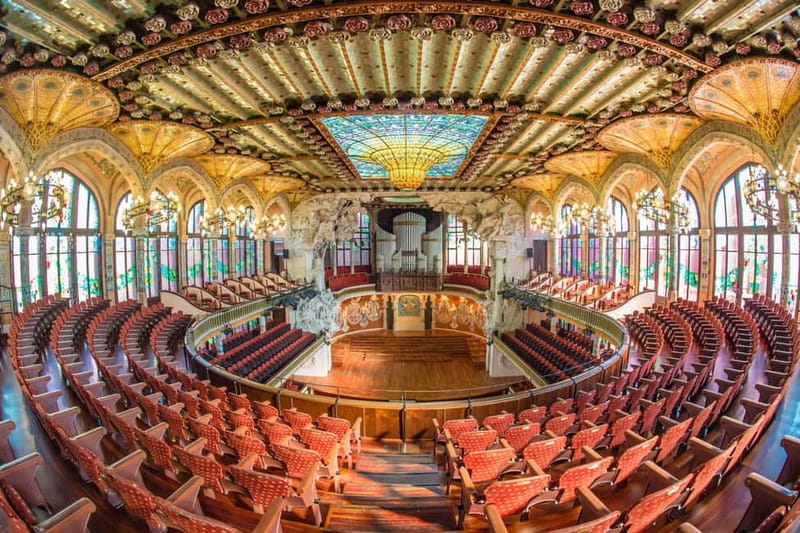
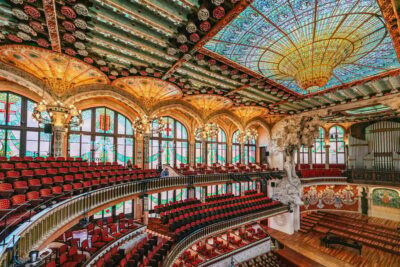
Barcelona’s Palau de la Música is basically architecture that talks. I love two things most: the central skylight pouring daylight into the auditorium, and the modernist decoration made of sculpture, mosaics, stained glass, and ironwork that you can actually study up close. With a Japanese-speaking guide, the symbolism and “who built what and why” lands in a way that feels easier than trying to read everything yourself.
One thing to plan around: you need to be on time. You’ll meet at a specific spot by the main entrance, and the tour requires you to arrive about 10 minutes early. If your schedule shifts or you miss the start, you may lose your spot, so keep an eye on any timing messages you get before you go.
In This Review
- Key Things to Know Before You Go
- Getting There: Carmela, the Main Entrance, and a 10-Minute Rule
- What This Tour Really Is: A Guided Look Inside Barcelona’s UNESCO Masterpiece
- The Main Event: Skylight Light and a Concert Hall Built to Be Seen
- Modernist Decoration: Mosaics, Stained Glass, Ironwork, and Sculpture
- Domènech i Montaner and the Artisans: Why the Building Feels So Precise
- Listening for Meaning: The Stories Behind the Decoration
- How the Japanese Guide Affects Your Visit (and Why That’s a Plus)
- Photos, Shoes, and Other Small Rules That Save You Time
- Price and Value: Is $34 Worth It for a 1-Hour Guided UNESCO Tour?
- Who This Tour Fits Best (and Who Might Want Another Option)
- Should You Book the Palau de la Música Japanese Tour?
Key Things to Know Before You Go
- Japanese live guide for a full hour with headsets so you can follow comfortably.
- Guaranteed admission and skip-the-ticket-line entry, which saves stress in a busy site.
- Central skylight: expect to spend real time looking up and around the main hall.
- Modernisme details: mosaics, stained glass, ironwork, and sculpture are the stars.
- The story behind the craft: you’ll hear about the artisans and the building’s short build timeline.
- No flash photography, so plan on taking normal photos if you’re allowed to.
Getting There: Carmela, the Main Entrance, and a 10-Minute Rule
Meet next to the sculpture named Carmela (it looks like a giant head) right in front of the Palau de la Música main entrance. Your guide will be holding a sign with the The Touring Pandas logo.
Why this matters: this tour is only 1 hour. If you’re late, you can burn your whole window just figuring out where to gather. I’d treat the “arrive 10 minutes early” note like the real rule, not a suggestion.
Also note the practical stuff. Wear comfortable shoes. You’re walking and standing while you look up at decorative elements. If you hate standing still for photos and close inspection, plan for that now.
Other visits to the modernist concert hall
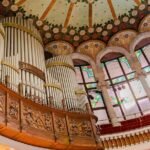


What This Tour Really Is: A Guided Look Inside Barcelona’s UNESCO Masterpiece
This isn’t a long, slow “general sightseeing” stop. It’s a focused visit to the Palau de la Música Catalana, a UNESCO World Heritage site designed by Lluís Domènech i Montaner. The payoff is learning how the building works as a piece of art, not just seeing pretty interiors.
Your guide leads you through the hall while explaining:
- the architecture tied to Catalan Art Nouveau
- the history of the concert hall
- how the artisans created the intricate decoration
- the meaning behind what you’re seeing
And because the tour is in Japanese with headsets, you’re not stuck translating as you go.
The Main Event: Skylight Light and a Concert Hall Built to Be Seen
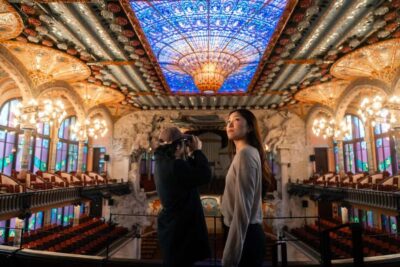
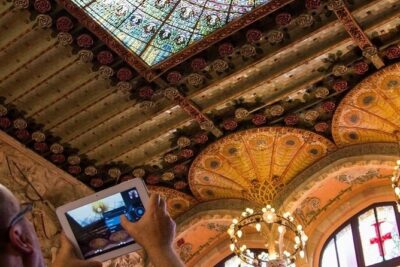
If you only remember one visual, make it the central skylight. It’s the element that bathes the auditorium with natural light, and it’s exactly what turns the building into a place you can feel.
Here’s what I find helpful for your viewing:
- Look up first, even if you feel like you should start with the floor. The skylight is the “center of the story.”
- Then look outward—mosaics, stained glass, and ironwork start to connect into one design language.
- Finally, read the details like a map. Once you notice the materials and patterns, the decoration stops feeling random.
A guided hour is perfect for this. The guide can point out what to look for before you get overwhelmed by beauty.
Modernist Decoration: Mosaics, Stained Glass, Ironwork, and Sculpture
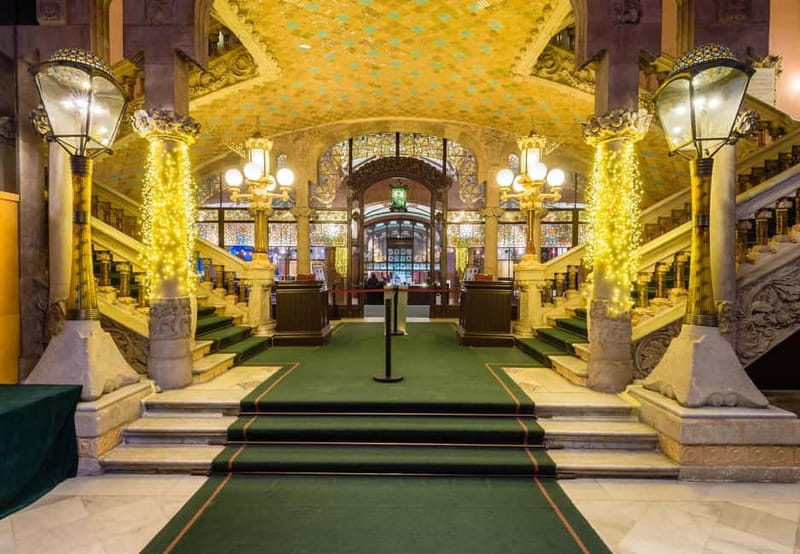
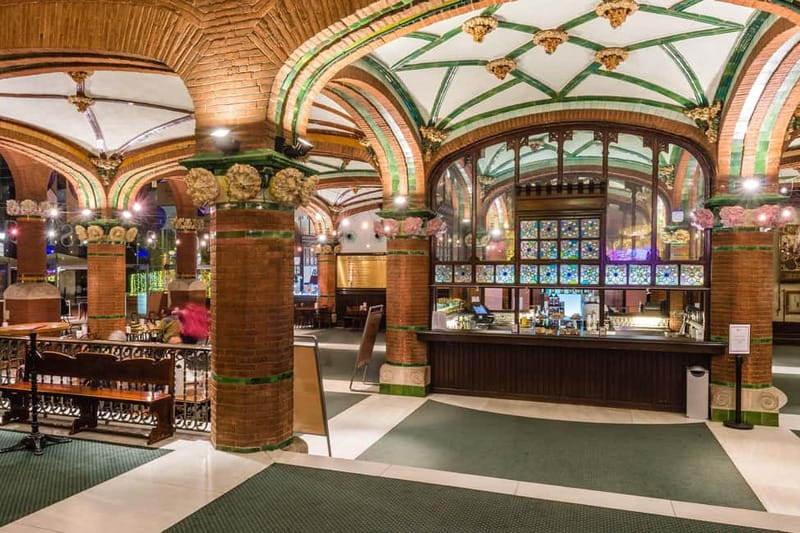
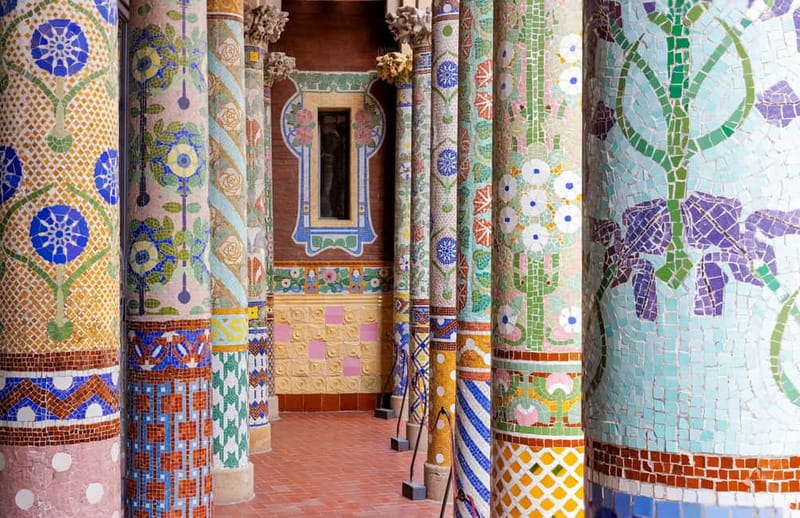
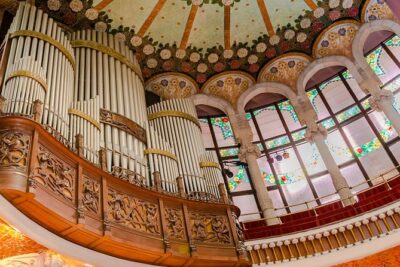
Palau de la Música feels like a workshop of art forms. During the tour, you’ll admire the concert hall’s intricate decoration made from sculpture, mosaic work, stained glass, and ironwork.
What you’re really learning is that modernisme isn’t just a style you “admire.” It’s a collaboration between structure and craft. That matters because if you show up without context, you might treat everything as decoration. With a guide, it becomes a set of intentional choices.
Expect the guide to highlight small design features and explain how they fit together. Headsets help a lot here—standing near details means your voice distance varies, and you don’t want to constantly strain to hear.
Domènech i Montaner and the Artisans: Why the Building Feels So Precise
This concert hall is tied to Lluís Domènech i Montaner, and you’ll hear the history of the building and the artisans who built it.
One detail worth knowing ahead of time: the structure is described as having been built in just three years. That short timeline helps explain the intense feeling of unity in the work. It wasn’t a “slow and scattered” project. It was a concentrated push to create something detailed and coherent.
How to use that on the visit: as you move through the hall, try to connect the “why” to what you see. When the guide talks about craftsmanship, don’t just picture hands at work. Picture the planning that must have happened to make so many materials and patterns fit together in one place.
More days walked with a local guide
- Barcelona: Sagrada Familia Entry Ticket with Audio Guide★ 4.6 · 105,312 reviews
- Barcelona: Park Guell Guided Tour with Skip The Line Entry★ 4.7 · 17,563 reviews
- Fast Track Sagrada Familia Guided Tour★ 4.5 · 8,795 reviews
Listening for Meaning: The Stories Behind the Decoration
One of the best parts of this kind of guided tour is that you’re not only looking at art—you’re learning the stories attached to it. The guide will share tales behind the mesmerizing decoration, including themes tied to muses that inspire performers and audiences.
This is where a language-matched guide changes the experience. When you understand the explanation in Japanese, the symbolism lands as a story, not a fact you can only half-grasp.
A simple strategy for you: when the guide mentions a motif or symbol, pause and look back at the exact element they reference. Don’t let your attention wander. Palau de la Música rewards “look-then-listen,” not “listen-while-moving.”
How the Japanese Guide Affects Your Visit (and Why That’s a Plus)
A Japanese live guide with headsets is a strong choice if you want deeper context without battling translations on your phone.
From what you can expect on the ground:
- the guide’s explanations are delivered clearly enough to be comfortable
- headsets help you stay oriented as the group shifts slightly
- you’ll get a guided story arc instead of scattered observations
The one caution I’d give: because it’s a live schedule, timing changes matter. There’s at least one real case where someone missed the tour after noticing schedule updates too late. So treat the start time as fixed, double-check before you leave, and aim to arrive early even if you’re familiar with the area.
Photos, Shoes, and Other Small Rules That Save You Time
A few practical details are worth noting:
- No flash photography. If you like taking pictures, plan for natural-light photos without flash.
- Wear comfortable shoes. You’ll be standing and moving inside while looking at details.
- Expect to arrive ~10 minutes early. This tour is only 1 hour, so you don’t have much buffer.
- Wheelchair users: not suitable. The tour is described as not suitable for wheelchair users, so plan an alternative if mobility is an issue.
One more tip: since the meeting point is very specific (next to Carmela), I recommend using the building entrance itself as your landmark, then matching the sculpture location. It’s easy to get turned around in a historic area with multiple entrances.
Price and Value: Is $34 Worth It for a 1-Hour Guided UNESCO Tour?
At $34 per person for a 1-hour visit, the value comes from three places:
- Guaranteed admission means you’re not stuck at ticket counters or waiting for capacity.
- Skip the ticket line reduces friction—especially important at a famous site where delays can happen.
- A Japanese live guide with headsets gives you context, not just access.
If you’re the kind of visitor who loves architecture but doesn’t want to spend the hour reading your way through it, this price makes sense. You’re paying for interpretation—someone else doing the “what am I looking at and why does it matter” work.
If you prefer self-guided time and you speak enough Spanish/Catalan (or you’re comfortable reading signage and plaques), you might feel less value in the guide cost. But if you want a clean, structured visit with language support, this is a straightforward way to do it.
Also remember what’s not included: transportation and food/drinks. That’s normal for a museum-style tour, but it means you’ll want to plan your Barcelona logistics separately.
Who This Tour Fits Best (and Who Might Want Another Option)
This experience is ideal if you:
- want a guided explanation of modernist architecture in a language you understand
- enjoy looking for specific details (skylight, stained glass, mosaic work, ironwork)
- want to get value from a tight time window—just 1 hour
- like UNESCO sites but prefer context over wandering
You might choose something else if you:
- need wheelchair-friendly access (this tour is listed as not suitable)
- strongly dislike guided groups or headsets
- want a super flexible pace to linger for photos for a long time without stopping points
Should You Book the Palau de la Música Japanese Tour?
I’d book it if your priority is understanding what you’re seeing. Palau de la Música can look like “beautiful chaos” at first glance. With a Japanese guide, the central skylight, the ornate materials, and the stories behind the decoration snap into focus.
My main booking advice is simple: plan to arrive at the meeting point by Carmela early, and treat timing updates seriously. If you do that, this is one of those short tours that leaves you with more than photos—you’ll leave with a mental map of the building and a sense of how the craft connects to meaning.
More Ways to Tour Barcelona
- Barcelona: Casa Batlló Entry with Self-Audioguide Tour
★ 4.7 · 25,359 reviews - Barcelona: 24 or 48-Hour Hop-On Hop-Off Bus Tour
★ 4.4 · 20,872 reviews - Barcelona: Park Guell Guided Tour with Skip The Line Entry
★ 4.7 · 17,563 reviews - Barcelona: Sagrada Familia Skip-the-Line Entry Ticket & Tour
★ 4.8 · 12,789 reviews - Barcelona: FC Barcelona Museum “Barça Immersive Tour” Ticket
★ 4.4 · 10,944 reviews
More Barcelona Tours on Our Radar
- Barcelona: Sagrada Familia Entry Ticket with Audio Guide
★ 4.6 · 105,312 reviews - Barcelona: Park Güell Admission Ticket
★ 4.4 · 76,534 reviews - Barcelona: Casa Batlló Entry with Self-Audioguide Tour
★ 4.7 · 25,359 reviews - Barcelona: Montjuïc Cable Car Roundtrip Ticket
★ 4.5 · 22,368 reviews - Barcelona: Hola Barcelona Public Transport Travel Card
★ 4.5 · 20,985 reviews
Encore at the Palau de la Música
- Barcelona: Palau de la Música Entry Ticket
★ 4.6 · 4,907 reviews - Barcelona: Palau de la Música Guided Tour
★ 4.7 · 3,273 reviews - Palau de la Musica Catalana Guided Tour
★ 4.5 · 632 reviews - Barcelona: Guitar Trio & Dance @ Palau de la Música
★ 4.8 · 449 reviews - Barcelona Guitar Trio & Dance at the Palau de la Musica
★ 5.0 · 269 reviews
Just Rated Around Barcelona





Palau de la Música Tours, compared.
 ★ 4.6Palau de la Música Entry TicketFrom $214,907 reviews
 ★ 4.7Palau de la Música Guided TourFrom $283,273 reviews
 ★ 4.5Palau de la Musica Catalana Guided TourFrom $26632 reviews
 ★ 4.8Guitar Trio & Dance @ Palau de la MúsicaFrom $65449 reviews
 ★ 5.0Barcelona Guitar Trio & Dance at the Palau de la MusicaFrom $66269 reviews
 ★ 4.5Palau de la Musica Catalana Admission Ticket with AudioguideFrom $28246 reviews
 ★ 4.6Palau de la Música & Sant Pau Modernist SiteFrom $3847 reviews
Browse the lists this tour appears in