
Reviewed · PRIVATE
Explore hidden streets of Barcelona with a local – Private Tour
Barcelona makes more sense on foot.
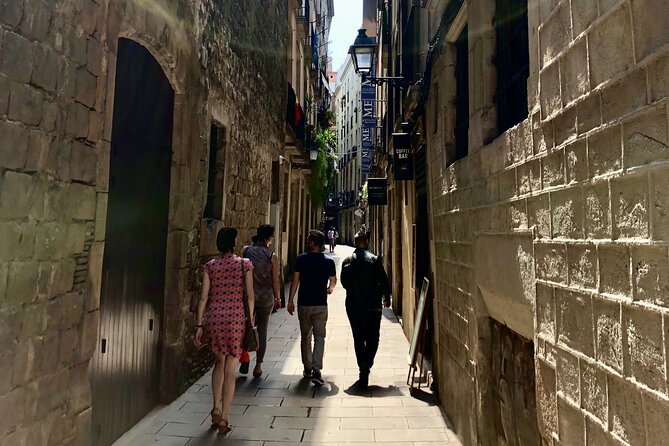
This private, small-group walk helps you decode the medieval streets around El Born and the Gothic Quarter, with Michael ready to answer questions as you go. I like that it feels like a conversation, not a lecture, and you get a route that focuses on how neighborhoods connect instead of dropping you at random photo spots.
I also love how the itinerary keeps moving through real landmarks and squares, so you start seeing Barcelona as one long story—from Roman foundations to later architectural styles. One thing to consider: it is mostly time outdoors and you’ll cover a lot of ground in about 2.5 hours, so it may not satisfy if you’re hoping for lots of museum or long inside visits.
In This Review
- Key highlights worth planning for
- A 2.5-hour private walk with Michael at your side
- El Born: medieval streets, markets, and what the name means
- Modernism in the middle of the old city
- Mercat del Born to Picasso-area streets: the maze effect
- Correus: a big, functional landmark with stories
- Barri Gòtic: the 2000-year-old heart of Barcelona
- Roman squares and the finish at Plaça Sant Felip Neri
- Price, walking time, and value that makes sense
- Should you book this private Barcelona Feeling tour?
- FAQ
- How long is the private tour?
- Where does the tour start and end?
- Is this tour private?
- Are entrance tickets included for the sights?
- What language is the tour offered in, and can I participate if I walk slowly?
- What if I need to cancel?
Key highlights worth planning for
- Nearly two hours in El Born to get the vibe of a medieval neighborhood, not just a quick pass
- Modernism cameo at the Palace of Catalan Music with a short, sight-focused stop (tickets not included)
- Arco di Trionfo stop with legends and context for history you can actually picture
- Mercat del Born and Passeig del Born tied to meanings and everyday Barcelona rhythm
- Correus post office building treated as a landmark with stories, not just a backdrop
- Barri Gòtic walk lasting about 1 hour 20 minutes where you learn why Barcelona began here
A 2.5-hour private walk with Michael at your side
This is a private tour format, limited to your group, which changes the whole feel. In a city like Barcelona, the fastest way to understand what you’re seeing is to ask questions as you encounter the clues. With this tour, you’re not waiting your turn or competing for attention.
I like that you meet near Placa de Catalunya, so you don’t have to solve a complicated puzzle just to start. The tour then carries you through the older center, with an ending in the Gothic Quarter at Plaça de Sant Felip Neri—a nice way to finish without feeling rushed back to your hotel.
You should expect steady walking. The route is designed for about 2.5 hours on foot, and the stops are relatively short except for El Born and the Gothic Quarter stretch. If your pace is slower or you want frequent long breaks, plan to take your time—this is the kind of tour where even a brief pause helps you read the street signs and building details.
More private days built around you


El Born: medieval streets, markets, and what the name means
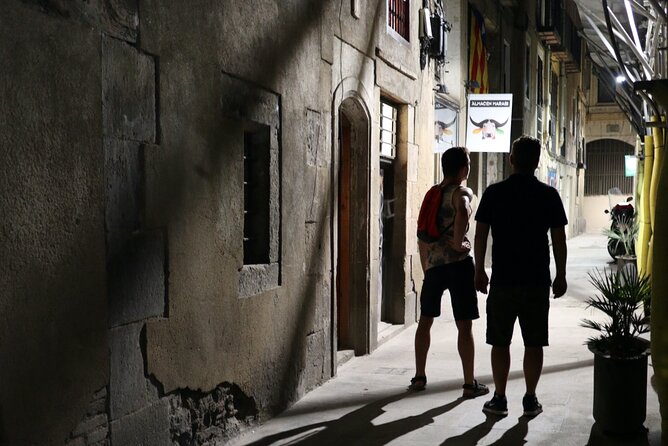
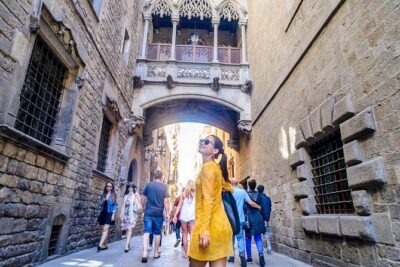
Your longest stop is El Born, around two hours in the medieval neighborhood. This is the part where the guide’s job becomes more than pointing. You start noticing the layout of the streets, the way the neighborhood feels built for wandering, and why the old center still shapes daily life.
In practical terms, this is where you’ll get oriented. El Born sits close to major squares and major landmarks, but it feels different from the big-tourist lanes. The tour uses that contrast on purpose: you move from major landmarks back into the smaller streets so you understand how the city’s layers overlap.
Then you get a key moment that many visitors miss: the guide explains what El Born actually means. Even if you’ve heard the name before, having the explanation at the right spot makes the word stick. You’ll also encounter Mercat del Born, a major historic market area where the space itself helps you grasp how locals use the neighborhood.
A short follow-on walk through Passeig del Born ties the story to the streets. That matters because Barcelona’s history is not only in plaques; it’s in the way streets funnel you toward squares, markets, and churches. When you understand that flow, the Gothic Quarter later feels less like random alleys and more like an intentional map.
Modernism in the middle of the old city
After El Born, the tour drops in two quicker Modernism-style landmarks that add contrast. First is the Palace of Catalan Music, a major sight with a 15-minute stop. Admission isn’t included, so treat this like a smart window into the architecture rather than a full interior visit.
Next comes Arco di Trionfo, another compact stop with history and legends attached. This is where the tour helps you expand your mental picture of Barcelona beyond one era. You’ll see how the city later celebrated ideas and identity with bold design, then you’ll move back toward older neighborhoods to connect the eras.
The value here is timing. These short stops keep your attention fresh after the longer El Born segment, and they prevent the walk from feeling like a single-theme history class. If you like architecture, you’ll appreciate how the guide points out cues you can actually spot while walking.
Mercat del Born to Picasso-area streets: the maze effect
When the tour shifts toward the Picasso-area streets, it does something clever: it teaches you how to “read” a neighborhood by foot. You’ll pass through little streets and the guide helps you keep track of what you’re seeing as the route threads between landmarks.
The tour includes a stop where you pass by the Picasso Museum area. You’re not promised a long visit inside, but that isn’t the point. The benefit is the way the guide frames why this area matters and how it sits within the older city fabric. If you do plan to visit the museum later, you’ll come back with a mental map and a better sense of why the neighborhood around it works the way it does.
I also like this part because it feels close to how locals move through the center. The city’s best moments are often not the largest buildings, but the in-between streets where you can slow down and notice details. Even with a guide keeping the pace, you still get that small-city feeling that you can carry forward on your own.
Correus: a big, functional landmark with stories
Next up is Correus, described as Barcelona’s major post office building and a magnificent landmark you come across during the walk. This is a smart stop because it’s not a “tourist-only” place. Post offices are the kind of buildings that matter to everyday systems, yet Barcelona often turns even practical structures into major architectural statements.
The tour uses a brief window to show you how to look. Instead of only telling you what it is, the guide helps you connect the building’s presence to the city’s identity and movement—people, mail, communication, and the flow of city life. It’s the kind of stop that makes later street observations easier because you start asking better questions of your surroundings.
If you’re the type who likes to understand how cities function, this stop pays off. Even if you never send a letter there, you’ll leave with a better sense of why Barcelona’s historic center looks the way it does.
- Barcelona: Hola Barcelona Public Transport Travel Card★ 4.5 · 20,985 reviews
- Barcelona: 24 or 48-Hour Hop-On Hop-Off Bus Tour★ 4.4 · 20,872 reviews
- Barcelona: Park Guell Guided Tour with Skip The Line Entry★ 4.7 · 17,563 reviews
Barri Gòtic: the 2000-year-old heart of Barcelona
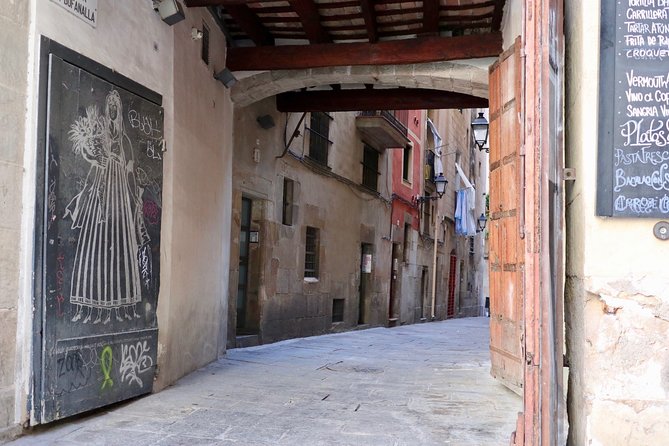
The heart of the tour is the walk through the Gothic Quarter (Barri Gòtic), lasting about 1 hour 20 minutes. This section is where the “why” of Barcelona becomes concrete. The guide helps you discover the Gothic Quarter where Barcelona’s story starts—over 2,000 years ago.
What I like most is that the tour doesn’t treat the Gothic Quarter as a set of isolated sights. It explains how the old parts connect, and you start noticing patterns: where you see Roman-era clues, where medieval influence takes over, and where later styles add their own stamp.
The itinerary includes stops that act like anchors. You visit Plaça de Sant Just, dating back to Roman times and full of stories, and you also reach Placa de Sant Jaume, described as the heart of Roman Barcelona where you understand why Barcelona was founded there. Those moments matter because squares are where the city’s history shows its face in a way alleys rarely can.
You can also use this portion of the tour to reset your bearings. If you’ve been lost already, or if you’ve been photographing without really absorbing, this is the segment that helps you reorient quickly. By the end of the Barri Gòtic walk, the neighborhood often feels less like a maze and more like a designed layout you can navigate on your own.
Roman squares and the finish at Plaça Sant Felip Neri
Near the end, the tour wraps with Plaça Sant Felip Neri, a small square full of history and atmosphere. Finishing in a lesser-pressured pocket like this is a good choice. You don’t end at a noisy bus-stop pinch point where everyone scrambles for the next plan.
This final stop is also useful for a practical reason. You can decompress after a concentrated old-center walk, then continue your evening on foot without needing immediate transit. If you’re planning dinner nearby, ending here gives you a natural starting area in the Gothic Quarter.
At this stage, you’ll likely find you’re noticing the small cues the guide pointed out earlier: street scale, building front patterns, how squares sit at story crossroads, and how different eras share the same street network. It’s the kind of effect that makes you feel more confident exploring after the tour ends.
Price, walking time, and value that makes sense
The price is $101.53 per person for about 2 hours 30 minutes. For Barcelona, that’s in the private-tour range, and the value depends on what you want.
Here’s the practical angle: this route includes many sight stops with admission-free viewing, so you’re paying mainly for guide time and interpretation. The only clearly marked admission-not-included stop is the Palace of Catalan Music, which appears to be a short visit, likely centered on seeing the landmark rather than doing a full ticketed interior experience.
You’ll also benefit from the private format. With fewer interruptions, you can ask follow-up questions and get explanations that fit your interests. In a city where history is layered, that can be more valuable than chasing paid entrances—especially if you’re traveling with a schedule that allows just one or two guided highlights.
A couple of details that affect comfort and planning:
- The tour is best if you can walk for about 2.5 hours.
- It’s offered in English, and service animals are allowed.
- You can use a mobile ticket, and it’s near public transportation.
One more booking tip: the experience is often booked about 52 days in advance. If you’re traveling in high season or want a specific day/time, don’t wait until the last minute.
Should you book this private Barcelona Feeling tour?
Book it if you want a structured, story-based walk that helps you understand the city’s center fast. The big payoff is the combination of long time in El Born, a solid chunk in Barri Gòtic, and a guide who keeps the route readable through explanations like what El Born means and why Barcelona began around Plaça de Sant Jaume.
Skip it if you’re mainly chasing long museum interiors or you want a slower pace with lots of standalone, destination-like time at each stop. This is a walking-oriented experience with shorter sights strung together by narrative, so your comfort with that style matters.
If you’re the type who likes to ask questions and learn the logic behind the streets, you’re exactly the target audience. And finishing at Plaça Sant Felip Neri lets you roll straight into the Gothic Quarter instead of ending in a random transit corridor.
FAQ
How long is the private tour?
The tour runs for about 2 hours 30 minutes.
Where does the tour start and end?
It starts at Hotel Ohla Barcelona, Via Laietana, 49, Ciutat Vella, 08003 Barcelona and ends at Plaça de Sant Felip Neri, Ciutat Vella, 08002 Barcelona, in the heart of the Gothic Quarter.
Is this tour private?
Yes. It’s a private tour/activity, limited to your group only.
Are entrance tickets included for the sights?
Most stops are listed as admission ticket free, while the Palace of Catalan Music is listed as admission ticket not included.
What language is the tour offered in, and can I participate if I walk slowly?
The tour is offered in English, and most people can participate as long as you can walk for about 2.5 hours.
What if I need to cancel?
You can cancel for a full refund up to 24 hours in advance of the experience start time.
If you want, tell me your travel dates and your walking comfort level, and I’ll help you decide whether this route fits your day plan.
Private Days Built Around You
- Montserrat Monastery Small Group or Private Tour Hotel pick-up
★ 5.0 · 5,144 reviews - Tour Welcome Barcelona with Local Guide in Eco Tuk Tuk Private
★ 5.0 · 1,882 reviews - Barcelona Private Tour by Sidecar Motorcycle
★ 5.0 · 1,750 reviews - Barcelona: Private Group Bike Tour
★ 4.8 · 1,420 reviews - Barcelona Helicopter, Sailboat & Old Town Private Walking Tour
★ 5.0 · 1,395 reviews
More Ways to Tour Barcelona
- Barcelona: Casa Batlló Entry with Self-Audioguide Tour
★ 4.7 · 25,359 reviews - Barcelona: 24 or 48-Hour Hop-On Hop-Off Bus Tour
★ 4.4 · 20,872 reviews - Barcelona: Park Guell Guided Tour with Skip The Line Entry
★ 4.7 · 17,563 reviews - Barcelona: Sagrada Familia Skip-the-Line Entry Ticket & Tour
★ 4.8 · 12,789 reviews - Barcelona: FC Barcelona Museum “Barça Immersive Tour” Ticket
★ 4.4 · 10,944 reviews
More Barcelona Tours on Our Radar
- Barcelona: Sagrada Familia Entry Ticket with Audio Guide
★ 4.6 · 105,312 reviews - Barcelona: Park Güell Admission Ticket
★ 4.4 · 76,534 reviews - Barcelona: Casa Batlló Entry with Self-Audioguide Tour
★ 4.7 · 25,359 reviews - Barcelona: Montjuïc Cable Car Roundtrip Ticket
★ 4.5 · 22,368 reviews - Barcelona: Hola Barcelona Public Transport Travel Card
★ 4.5 · 20,985 reviews
Just Rated Around Barcelona
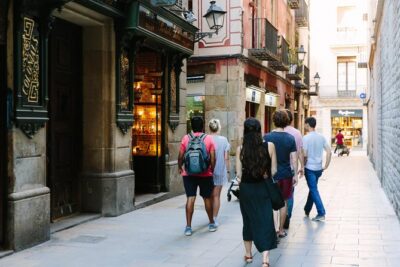




Private, compared.
 ★ 5.0Montserrat Monastery Small Group or Private Tour Hotel pick-upFrom $1145,144 reviews
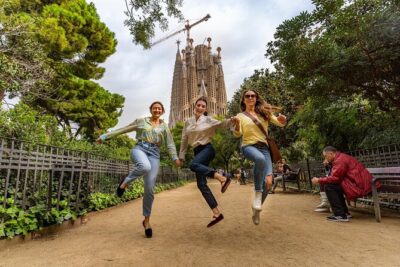 ★ 5.0Tour Welcome Barcelona with Local Guide in Eco Tuk Tuk PrivateFrom $281,882 reviews
 ★ 5.0Barcelona Private Tour by Sidecar MotorcycleFrom $1991,750 reviews
 ★ 4.8Private Group Bike TourFrom $411,420 reviews
 ★ 5.0Barcelona Helicopter, Sailboat & Old Town Private Walking TourFrom $5131,395 reviews
 ★ 4.7Helicopter, Boat Ride & Old Town Private TourFrom $5001,357 reviews
 ★ 4.9Private City Tour by Eco Tuk TukFrom $331,339 reviews
 ★ 4.5Sagrada Familia & Gaudi Tour Private or Small Group with TicketsFrom $901,188 reviews