Reviewed · BARCELONA
Explore hidden streets of Barcelona with a local
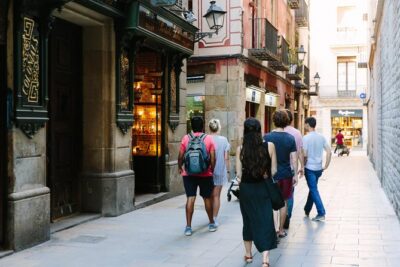
Barcelona’s best secrets are walking-distance away. This Barcelona local walk threads you through El Born and the Barri Gòtic, with stories that explain what you’re seeing and why it matters. I like that it’s built for real street-level discovery—narrow medieval lanes, Roman-era squares, and landmark stops you can’t fully “get” from a map alone. I also like the format: a small-group option (with just six people on private/small-group departures) plus a guide who keeps the pace moving. One drawback to consider: it’s an info-heavy walk, so it may feel long and less fun for young kids.
You’ll start at Hotel Ohla Barcelona (Via Laietana, 49) and finish in the Plaça de Sant Felip Neri area, deep in the Gothic Quarter. The route is about 2.5 hours of walking with a moderate fitness level, and it runs in English with multiple departure times so you can fit it into a busy visit. Most stops are free to view from the street, though a couple of major sights—like the Palau de la Música Catalana area—have time included but entry isn’t included.
In This Review
- Key highlights to expect
- Why El Born and the Gothic Quarter Are the Smart Combo
- Meeting at Ohla Barcelona and Ending at Plaça Sant Felip Neri
- El Born: Medieval Streets, the Meaning of the Neighborhood, and Mercat del Born
- What you’ll notice as you walk
- Palace of Catalan Music: A Main Landmark, With Time to Look Closely
- Arc de Triomf: Modernism Legends in a Clear, History-Rich Stop
- Barcelona’s Grand Post Office Moment
- The Gothic Quarter’s Roman Spine: Sant Just, Sant Jaume, and the City’s Foundation
- Plaça de Sant Just (about 15 minutes)
- Plaça de Sant Jaume (about 10 minutes)
- Plaça de Sant Felip Neri (final stop, about 10 minutes)
- How the Guide Changes Everything (Christian, Stefan, and the Storytelling Style)
- Price and Value: What $55.51 Gets You in 2.5 Hours
- Timing, Shoes, and Getting the Most From a 2.5-Hour Walk
- Should You Book This El Born and Gothic Quarter Local Walk?
- FAQ
- How long is the tour?
- What neighborhoods are covered?
- Is the tour in English?
- How big is the group?
- What’s included in the price?
- Are admission tickets included?
- Where does the tour start and end?
- Do I need a food or drink plan?
- Is cancellation free?
Key highlights to expect
- El Born first, including the meaning of El Born and a maze of small streets (with a pass by the Picasso Museum area)
- Mixed eras in one loop: medieval lanes, Modernism landmarks, and Roman-era squares in the Gothic Quarter
- Palau de la Música Catalana stop is on the route, but entry is not included
- Arc de Triomf and Mercat del Born break up the walk with clear, photo-friendly sights
- Small group feel (private or up to six on small-group options), with the tour max set at 15
- End in the Gothic Quarter’s charm at Plaça Sant Felip Neri, right where the old-city atmosphere peaks
Why El Born and the Gothic Quarter Are the Smart Combo
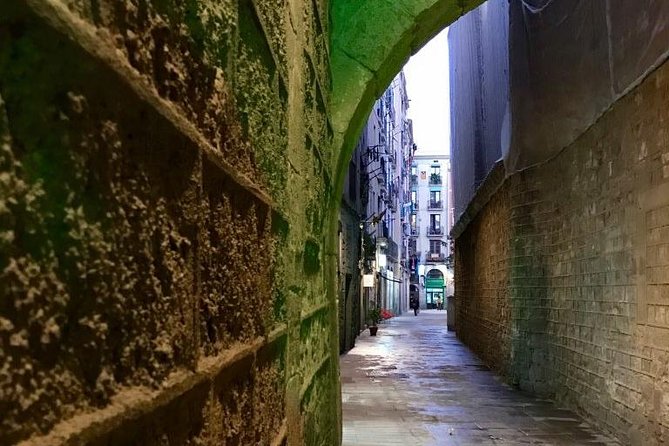
If you only do the big sights, Barcelona can feel like a highlight reel. This route fixes that. El Born gives you the medieval street texture first—tight lanes, historic corners, and a neighborhood identity that’s older than most guidebooks make it sound. Then the walk lands you in the Gothic Quarter, where the city’s story stretches back more than 2,000 years and the “why is this here?” questions start popping up naturally.
What makes this combo work is pacing. You spend a solid chunk of time in El Born (about 1 hour 40 minutes), then you move into the Barri Gòtic for around 1 hour 20 minutes. That gives you enough time to notice details that you usually miss when you’re sprinting between tickets and photos.
And you don’t just get landmarks. You get explanations tied to the streets themselves—names, legends, and the way each square and building connected to daily life.
Torn between options? Line this one up against other Barcelona picks.
Meeting at Ohla Barcelona and Ending at Plaça Sant Felip Neri
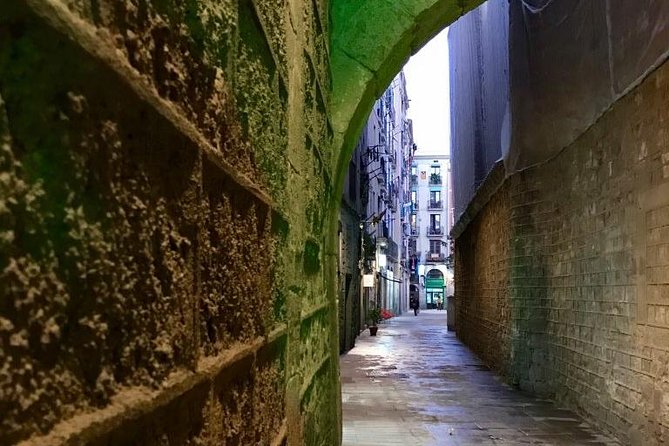
Starting at Hotel Ohla Barcelona, Via Laietana 49 is practical because it’s in Ciutat Vella and near public transportation. That matters when you’re doing one of those “only one afternoon for the old city” plans.
The tour ends at Plaça de Sant Felip Neri, a small square that’s easy to enjoy right away because you’re no longer walking “to the next thing.” You’re in the Gothic Quarter’s cozy pocket, where it’s simple to continue on foot afterward—grab a drink, wander a few lanes, or simply decompress.
This also means you can pair the tour with something else on either side. Since it’s multiple tour times, you can choose the slot that matches your energy level rather than forcing your schedule around the tour.
El Born: Medieval Streets, the Meaning of the Neighborhood, and Mercat del Born
El Born is where the city feels like it’s still thinking in medieval time. You’ll spend about two hours here, and the emphasis is on understanding the place—not just passing it.
A unique feature of this portion is that the guide explains what El Born actually means. Neighborhood names in Barcelona aren’t random labels; they point to history, land use, and identity. Once you hear it, the streets stop being just pretty. They become evidence.
What you’ll notice as you walk
- A maze of little streets where you learn how locals move through the area
- A pass by the Picasso Museum area, which is a useful orientation even if you’re not going inside
- Stops that connect the neighborhood to real structures, not just viewpoints
You also hit Mercat del Born (about 15 minutes). This is a great stop because markets are where a city’s rhythm shows. Even if you’re not shopping, you’ll see how the architecture supports the idea of a bustling public life. In this neighborhood, the market isn’t an isolated building—it’s part of why the lanes matter.
If you like tours that help you “read” a place as you walk, El Born is the section that delivers most strongly.
Palace of Catalan Music: A Main Landmark, With Time to Look Closely
Next you get the Palace of Catalan Music stop (around 15 minutes). This is one of those buildings people recognize immediately, even from a quick street glance. The important detail: admission isn’t included for this stop.
That can be a positive or a negative depending on your style. I like having a look and learning the story without being locked into a long ticket line. But if you’re hoping for a full interior visit during the tour, plan for extra time and a separate ticket if you want to go in.
Either way, this stop gives you a Modernist punctuation mark after medieval streets. It’s also a nice break before you head toward the bigger, more ceremonial feel of Arc de Triomf.
- Barcelona: Hola Barcelona Public Transport Travel Card★ 4.5 · 20,985 reviews
- Barcelona: 24 or 48-Hour Hop-On Hop-Off Bus Tour★ 4.4 · 20,872 reviews
- Barcelona: Park Guell Guided Tour with Skip The Line Entry★ 4.7 · 17,563 reviews
Arc de Triomf: Modernism Legends in a Clear, History-Rich Stop
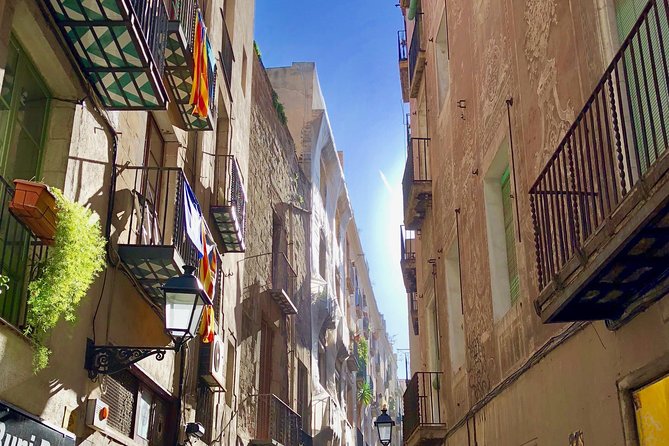
Then comes Arc de Triomf (about 15 minutes). This is an easy one to appreciate because it’s open, visible, and it gives your legs a chance to slow down for a moment of observation.
You’re not just staring at the arch—you’re hearing history and legends tied to it. That’s what changes the experience. Barcelona has plenty of monuments that can feel like “check the box” stops. Here, the stories help you understand why this arch shows up in the city’s visual memory.
Arc de Triomf is also a good transition point. You go from the Modernist landmark mood into the older, more lived-in feel of the market area and then onward to the Gothic Quarter.
Barcelona’s Grand Post Office Moment
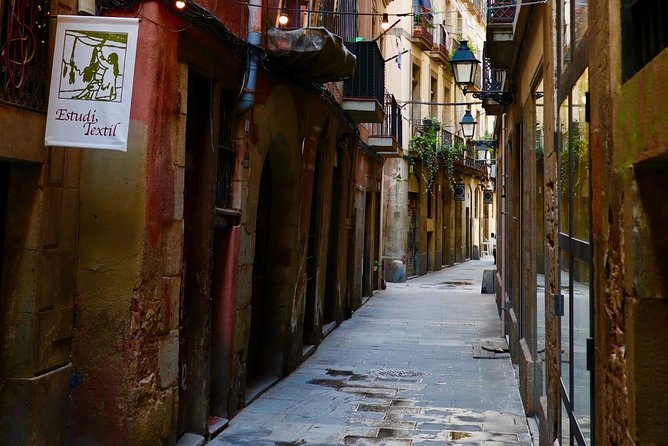
At some point in the El Born walk, you’ll encounter the major post office of Barcelona, described as a magnificent building you come across during the route.
Even without an interior visit (the tour doesn’t list entry here), this kind of stop is valuable. It signals how Barcelona’s old-city neighborhoods weren’t only about churches and kings. They were also about modern services—communication and infrastructure—layered into the city’s long timeline.
I also like that this stop works as a “breather” landmark. It’s a moment to orient your eyes, reset your pace, and keep moving through the maze with a better sense of direction.
The Gothic Quarter’s Roman Spine: Sant Just, Sant Jaume, and the City’s Foundation
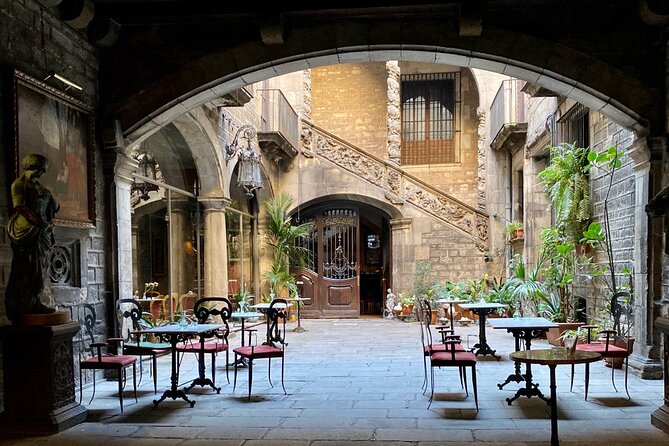
When you enter the Barri Gòtic, the tour leans hard into time depth. You’re looking at a neighborhood where the city was founded more than 2,000 years ago.
You’ll spend about 1 hour 20 minutes here, and the stops are focused on squares that act like historical anchors.
Plaça de Sant Just (about 15 minutes)
You’ll learn that Plaça de Sant Just dates back to Roman times and comes with plenty of stories. The square doesn’t feel random once you’ve heard that. It becomes part of a larger pattern: Roman planning reshaped later street life.
Plaça de Sant Jaume (about 10 minutes)
Then comes Plaça de Sant Jaume, the heart of Roman Barcelona. This is where you get the “why here?” explanation—why the city’s origin points to this location. You’ll also get the feeling that the Gothic Quarter isn’t only medieval spectacle; it’s built on earlier choices that still echo in the layout.
Plaça de Sant Felip Neri (final stop, about 10 minutes)
Finally, the tour ends at Plaça Sant Felip Neri, described as a little square full of history and atmosphere. This is a smart ending because it’s calm enough to enjoy after the walking portion, and it feels like a real neighborhood stop rather than a traffic circle with a million tour buses.
How the Guide Changes Everything (Christian, Stefan, and the Storytelling Style)
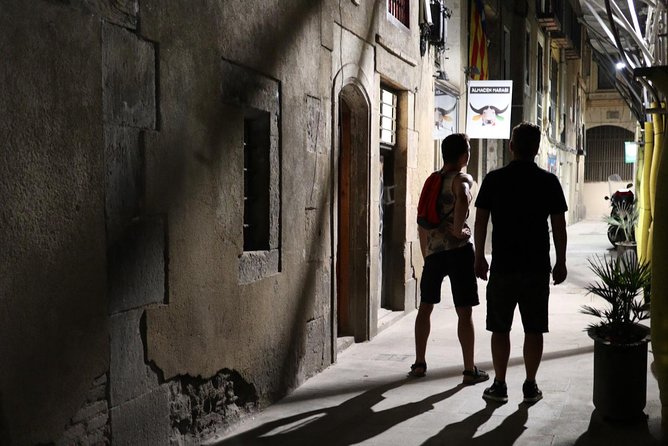
A good walking tour can become a string of facts. A great one changes how you walk.
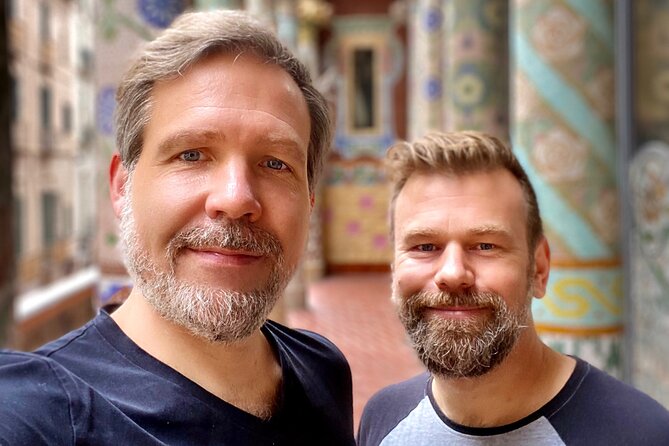
The best praise for this experience centers on guides who tell stories with energy and relevance. Names that show up include Christian and Stefan, and the common thread is that they don’t just recite dates. They explain legends, connect landmarks to neighborhood meaning, and share extra practical tips that go beyond the route.
You’ll also notice the intensity. One comment I take seriously: this isn’t framed as a kid-friendly stroller-and-snacks tour. The info level is high and the walk is sustained. For adults, that’s a feature. For families with very young children, you might find it harder to keep attention.
Group size matters too. The tour offers a private option and small-group departures (including six people in the small-group setup), while the overall max is 15. I like that ceiling because it usually means you can ask questions and still keep the flow.
Price and Value: What $55.51 Gets You in 2.5 Hours
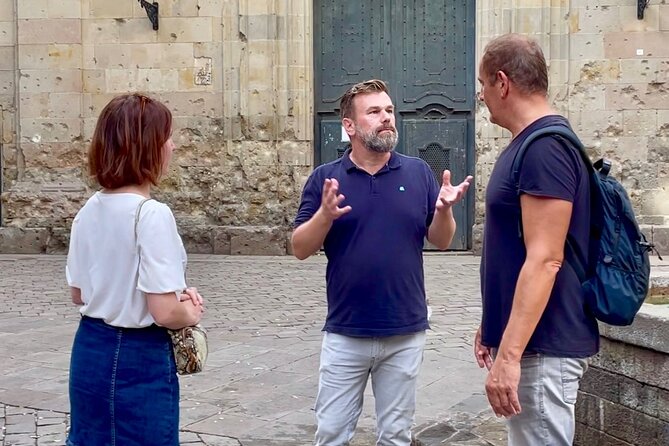
At $55.51 per person for roughly 2 hours 30 minutes, this isn’t a “cheap and cheerful” tour, but it also isn’t priced like a ticketed museum day. You’re paying mainly for the guide and the route design through areas where it’s genuinely easier to understand the city with a local.
Here’s where the value adds up:
- Professional guide included for the whole walk
- Most of what you see is free from the street (multiple stops list admission ticket as free)
- You get a structured route across El Born and the Gothic Quarter without having to plan the sequence yourself
- It’s offered in English, so you’re not stuck guessing at meanings
- Group discounts exist, so splitting the cost with others can make it even more attractive
The main thing to watch is what isn’t included. The Palau de la Música Catalana stop is not included for admission. So if you want inside access there, you’ll likely need to budget extra time and possibly another ticket on a different schedule.
Still, for many people, the best use of this tour is as an orientation experience. It helps you later decide what to return to—whether that’s a cathedral interior, a museum, or just another hour lost in the lanes.
Timing, Shoes, and Getting the Most From a 2.5-Hour Walk
This is about 2.5 hours of walking, with a moderate physical fitness level listed. That doesn’t mean you need to be an athlete. It does mean you should treat it like a real walking activity.
My practical advice:
- Wear comfortable shoes with good grip. El Born and the Gothic Quarter can be uneven.
- Bring water, especially in warmer months. The schedule includes multiple short stops, but you’re still on your feet.
- Use the tour timing to match your day. Pick a slot when you’re not exhausted from transit and museum marathons.
Because the tour ends in a small square, you’ll feel that “post-walk calm” if you plan a low-effort activity next. If you schedule something intense right after, your legs might vote no.
Should You Book This El Born and Gothic Quarter Local Walk?
Book it if you want an afternoon that helps you understand Barcelona’s layers instead of just collecting photos. It’s especially worth it if you like street-level history, enjoy legends and explanations, and want to walk with a local guide in a small-group setting. The pacing is built for El Born first, then the Gothic Quarter—so you’ll leave with a much clearer sense of where the city’s story started and how it evolved.
I’d think twice if you’re bringing very young kids or anyone who struggles with sustained walking and an info-heavy format. This route is best when people are ready to listen and look closely.
If you’re deciding between “tour-only highlights” and “a guided way to actually read the old city,” this one leans toward the second choice—practical, story-driven, and very easy to build into a smart first or second day in Barcelona.
FAQ
How long is the tour?
The walking time is about 2 hours 30 minutes (approximately), including time at each stop.
What neighborhoods are covered?
You’ll explore El Born and the Gothic Quarter (Barri Gòtic), with stops that connect multiple eras of the city.
Is the tour in English?
Yes. The tour is offered in English.
How big is the group?
Options include a private tour or a small group of six people, and the experience has a maximum of 15 travelers.
What’s included in the price?
A professional guide is included. You get guided walking and storytelling throughout the experience.
Are admission tickets included?
Some stops are listed as free, but the stop at the Palace of Catalan Music lists admission as not included.
Where does the tour start and end?
It starts at Hotel Ohla Barcelona, Via Laietana, 49 (Ciutat Vella) and ends at Plaça de Sant Felip Neri (Ciutat Vella).
Do I need a food or drink plan?
No food or drinks are included, so you’ll want to plan your own snack or meal before or after.
Is cancellation free?
Yes. Free cancellation is available up to 24 hours in advance for a full refund.
More Barcelona Tours on Our Radar
- Barcelona: Sagrada Familia Entry Ticket with Audio Guide
★ 4.6 · 105,312 reviews - Barcelona: Park Güell Admission Ticket
★ 4.4 · 76,534 reviews - Barcelona: Casa Batlló Entry with Self-Audioguide Tour
★ 4.7 · 25,359 reviews - Barcelona: Montjuïc Cable Car Roundtrip Ticket
★ 4.5 · 22,368 reviews - Barcelona: Hola Barcelona Public Transport Travel Card
★ 4.5 · 20,985 reviews