
Reviewed · TOURS
From Barcelona: Medieval Villages Day Tour
Medieval villages plus big views make this day tour click fast. You get three Catalonia stops that feel like different chapters of the region’s story, starting with Besalú’s preserved Middle Ages and ending at Tavertet’s cliff-top views. I especially love the mix of guided walks and real free time to wander at your own pace, plus the guide-led storytelling that turns stone streets into something you can picture. One thing to keep in mind: you’re traveling for about 10 hours, so if you hate long days or want maximum time per village, you may feel the schedule is tight.
In This Review
- Key Points at a Glance
- Starting from Barcelona: Meet Near Palau de la Música
- Besalú’s Arcaded Streets and 12th-Century Mikveh
- Castellfollit de la Roca: A Basalt Cliff Micro-Town
- Rupit on Your Own: Hanging Bridge, Sant Miquel, Castle Ruins
- Cingles de Tavertet Stops: Iberian Wall and Funerary Urns
- Tavertet’s 48 Preserved Houses and Sant Cristòfol
- How the Timing Works: Guided Walks Plus Real Wandering Time
- Price and Value for 10 Hours of Catalonia
- Who This Tour Fits Best
- Should You Book This Medieval Villages Day Tour?
- FAQ
- How long is the Medieval Villages day tour?
- Where do I meet the guide in Barcelona?
- What’s included in the price?
- Is food included?
- What language is the tour guide speaking?
- What villages are included?
Key Points at a Glance
- Besalú’s arcaded streets, mikveh (12th century), and old Jewish site make history feel close
- Rupit gives you a solid 2 hours of free time for the hanging wooden bridge and cobblestone lanes
- The route includes an offbeat basalt stop at Castellfollit de la Roca
- Cingles de Tavertet offers cliff viewpoints plus stops tied to ancient burial and the Iberian Wall
- Tavertet preserves 48 houses (17th–18th centuries) and centers around an 11th-century Romanesque church
- Most departures run in a small minivan, which keeps the day feeling personal
Starting from Barcelona: Meet Near Palau de la Música
Your day begins in central Barcelona, at the Explore Catalunya office directly across from the Palau de la Música, off Via Laietena. That’s a handy meeting point if you’re already exploring the Eixample and the Gothic Quarter area—less commuting stress before you even leave the city.
Once you’re with the group, you’ll head out by minivan into Catalonia’s countryside. This isn’t a “sit on the bus until you arrive” kind of tour. The drive matters here because your guide uses the travel time to set the scene—how this part of Catalonia developed, why these villages survived, and what you should pay attention to when you step out of the vehicle. In the reviews, guides like Berta, Núria, Sergi, David, and Steven come up often for being friendly, responsive, and good at keeping questions flowing.
Practical tip: wear shoes you trust on uneven medieval stone. Even when the walking is “guided,” you’re still on old streets, steps, and viewpoints.
Torn between options? Line this one up against other Barcelona picks.




Besalú’s Arcaded Streets and 12th-Century Mikveh
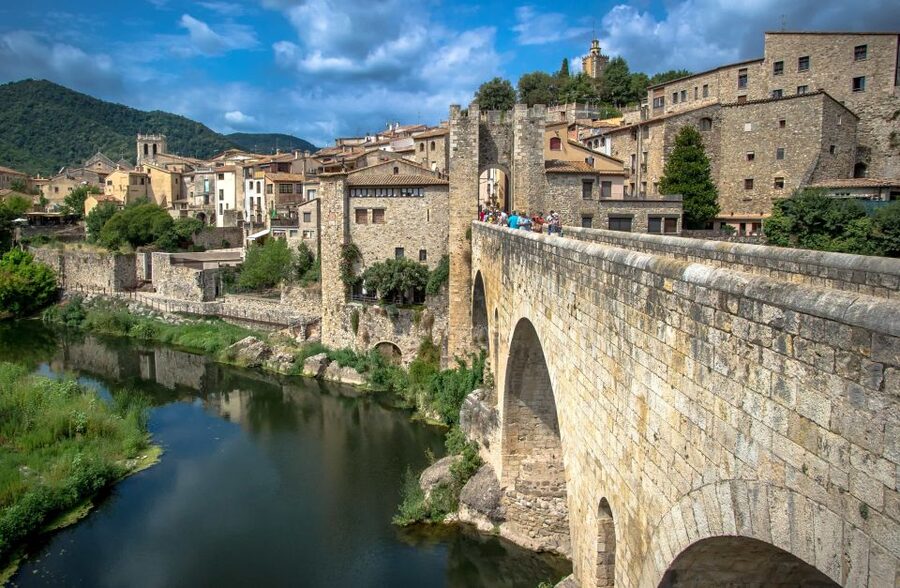
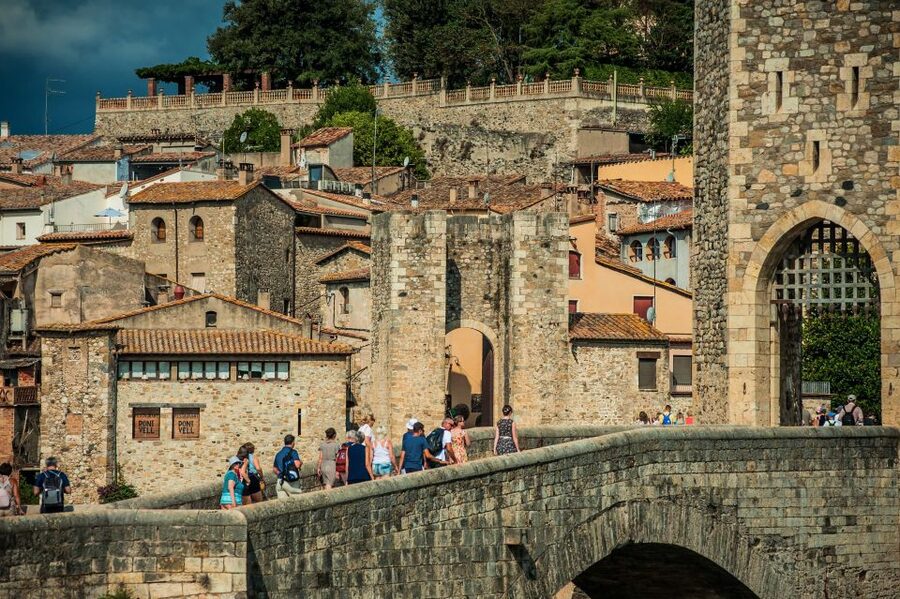
Besalú is the kind of place that makes you slow down without trying. The town’s medieval character shows up right away: arcaded streets, stone-lined corners, and a bridge that anchors the old-town feel. Your guided walk here is built around the village’s Middle Ages—what was here, who lived here, and how the town’s layout helped it function.
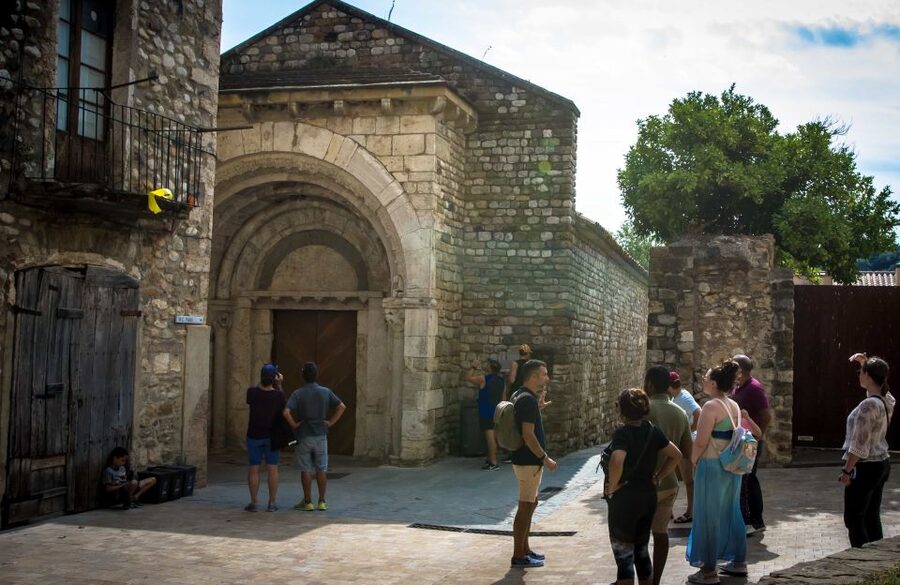
Two things I like a lot about this stop. First, your visit goes beyond postcard views and includes real historical anchors. You can see the restored mikveh, an old Jewish bath dating to the 12th century, along with remains of a medieval synagogue. That adds depth fast, because you’re not just looking at “old buildings”—you’re seeing evidence of community life.
Second, Besalú is a strong “start” for the day. By the time you reach the other villages, you’ll already understand the rhythms of Catalan medieval towns: how people built close-knit centers, how bridges and paths mattered, and how power and faith shaped the streets.
Possible consideration: some people find they want a bit more time in Besalú. The best solution is simple—if you love it, use your free moments to linger near the main historic lanes instead of racing for the next viewpoint.
Castellfollit de la Roca: A Basalt Cliff Micro-Town
On the way from Besalú toward Rupit, you’ll pass by Castellfollit de la Roca, described as one of Catalonia’s smallest towns, with about 1,000 inhabitants living in a tight footprint at the edge of a basalt precipice.
Even if this isn’t your longest stop, it’s one of those “how is this real?” places. The town’s setting is dramatic and unusual: basalt cliffs, tight built space, and that perched feeling you can’t fake with pictures. It’s also a great mental warm-up for what comes next, because the day keeps shifting from medieval architecture to wild terrain.
If you’re the kind of traveler who enjoys quick-but-memorable viewpoints, this is a good fit. Just don’t expect it to replace the longer wandering time you’ll have in Rupit.
Rupit on Your Own: Hanging Bridge, Sant Miquel, Castle Ruins
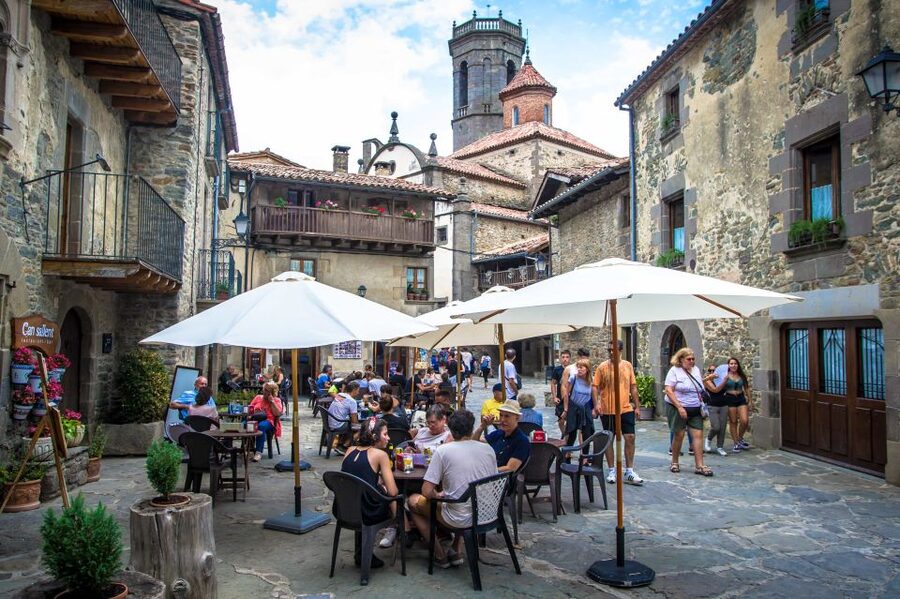
Rupit is where the tour slows down for you. You’ll arrive and get about 2 hours of free time to explore the village at your own pace, while your guide gives you the grounding story during the guided parts. This is the right balance: you get context, but you’re not trapped in a long lecture.
What makes Rupit worth that time:
- Cobblestone streets lined with country houses from the 16th century
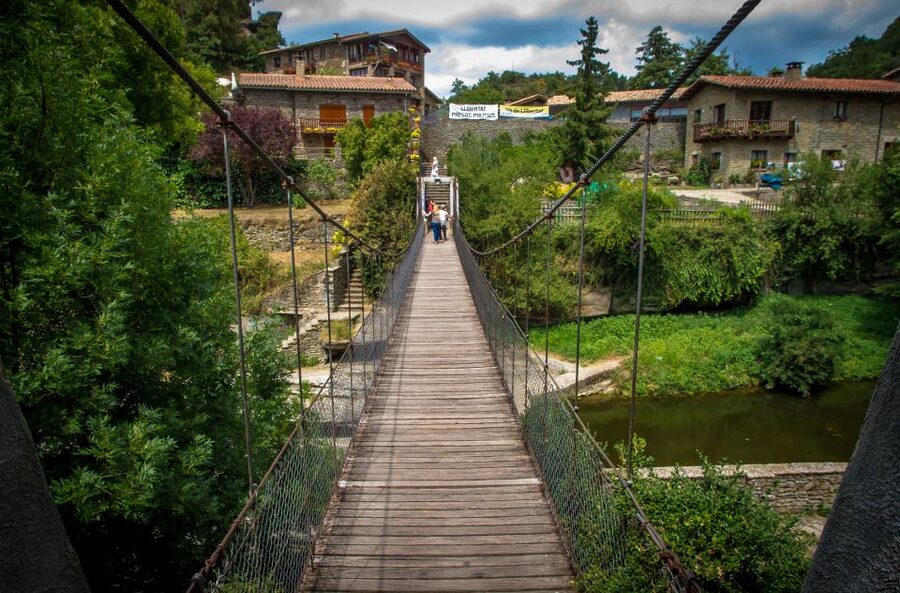
- The famous hanging wooden bridge, which is both scenic and a fun way to stretch your legs
- The Baroque-era Church of Sant Miquel
- The remains of the Castle of Rupit, perched on a rocky peak
I love that the village feels walkable in loops. You can start with the bridge area, wander into lanes, then circle back toward the church and castle ruins. If you like taking photos, this is a safe bet—Rupit keeps giving you angles.
Food note: you can purchase lunch at a local restaurant. Since meals aren’t included, you’ll want to choose a place that’s convenient to where you’ll be walking next. If the lines look long, don’t panic—your free time is flexible enough to swap plans.
Possible drawback: Rupit’s free time is generous, but some people still want more minutes here and in the other stops. If you’re someone who would gladly spend half a day in one village, plan to enjoy this as a highlights circuit.
Cingles de Tavertet Stops: Iberian Wall and Funerary Urns
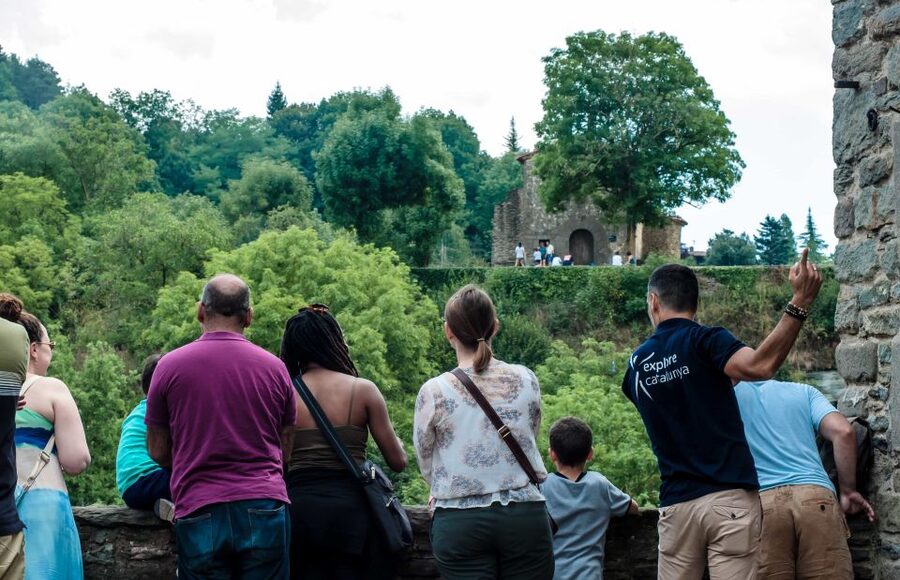
Next comes the big scenery shift—drive up toward the Cingles de Tavertet sandstone cliffs. This is not just a “pretty ride.” You also stop for history tied to the older layers of the area.
On the route, you’ll pass a megalithic tomb described as a field of funerary urns, and then the Iberian Wall before reaching the village of Tavertet. That matters because it places the medieval villages in a longer timeline. Yes, the day is about medieval life, but you’re also seeing how humans shaped and used this territory long before.
If you’re coming from Barcelona and mostly thinking in “city history” mode, these stops recalibrate you. The cliffs and stone features make you feel the geography that likely influenced settlement patterns—where people could live, watch for threats, and build roads and paths.
Quick practical thought: cliffs can mean wind and sudden light changes. A light layer helps, even in warmer months, and it’s smart to keep water handy.
- Barcelona: Hola Barcelona Public Transport Travel Card★ 4.5 · 20,985 reviews
- Barcelona: 24 or 48-Hour Hop-On Hop-Off Bus Tour★ 4.4 · 20,872 reviews
- Barcelona: Park Guell Guided Tour with Skip The Line Entry★ 4.7 · 17,563 reviews
Tavertet’s 48 Preserved Houses and Sant Cristòfol
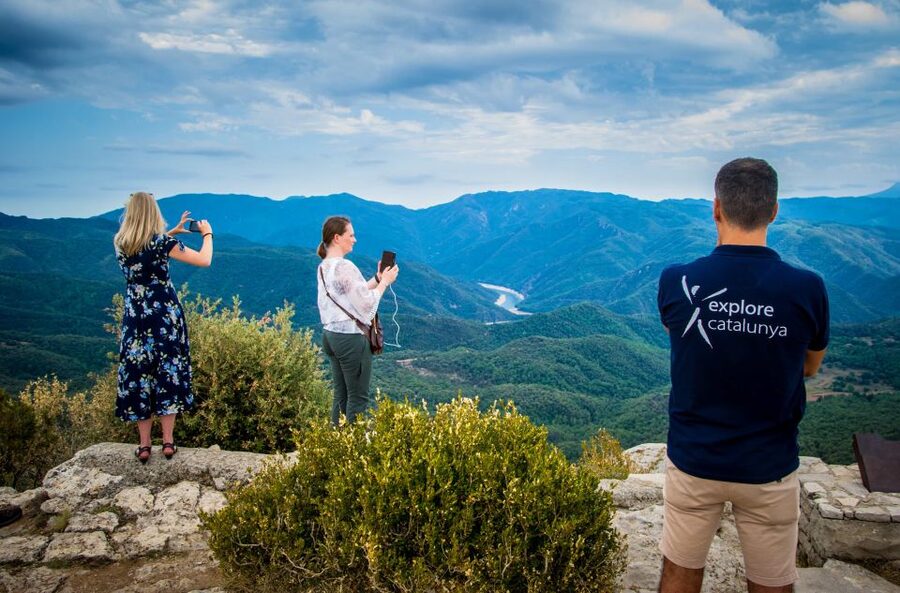
Tavertet is a small village with a big sense of place. It’s been declared a National Property of Cultural Interest because 48 houses from the 17th and 18th centuries are preserved. That’s why the streets feel unusually intact: the village layout is still readable, and the built environment holds its shape.
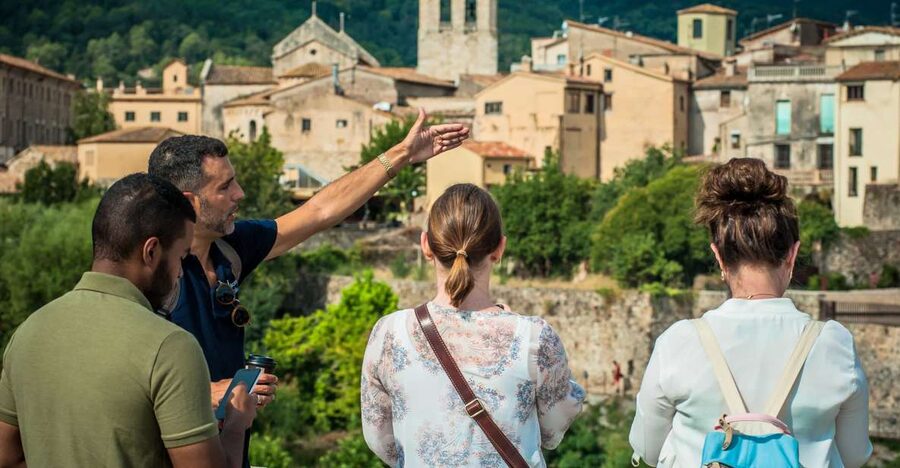
Your guide tours Tavertet with you, pointing out what you should notice. The centerpiece is the 11th-century Romanesque Church of Sant Cristòfol. Romanesque churches tend to feel sturdy and simple—thick stone, rounded forms, and a quiet seriousness. Here, that style fits the village setting perfectly.
You also get a short break for coffee at your own expense, or you can walk to the viewpoint. From there, you get stunning views over Panta de Sau Lake. This is one of the best parts of the day if you like “pause and look” moments—no rushing, just letting the vista do the work.
Possible consideration: Tavertet is smaller than the other two villages. If you want a lot of shop time or a long list of attractions, you might find it quieter. But if you’re after calm, stone, church, and viewpoints, it’s the payoff stop.
How the Timing Works: Guided Walks Plus Real Wandering Time
This tour works because it mixes three travel ingredients:
1) Guided history (so you know what you’re seeing)
2) Free time (so you can choose how you spend it)
3) Drive-and-view breaks (so the scenery isn’t just “between stops”)
In Besalú, you get a guided walk through the medieval core. In Rupit, you get that key block of free time to wander. In Tavertet, you get a guided look at the village’s preserved houses and church, plus time to grab coffee or head to the viewpoint.
That pacing is also why so many people in the feedback liked the overall value. You’re not paying for just transportation. You’re paying for interpretation and time.
Still, be honest about your preferences. If you want deeper time in one village—especially Besalú—this kind of one-day circuit can feel a bit compressed. If you’re happy with a “best-of” sampler and you like comparisons between towns, you’ll likely feel satisfied.
Price and Value for 10 Hours of Catalonia
At $117 per person for a 10-hour day from Barcelona, the value comes from what’s bundled: a local English-speaking guide and transportation. Food and drinks aren’t included unless specified, so you should budget for lunch in Rupit and a coffee stop in Tavertet.
Is it pricey? Compared with DIY bus rides, yes. Compared with what you’d pay for three separate village experiences plus a knowledgeable guide to connect the dots, it starts to make sense. This day trip saves you the headache of arranging transfers and figuring out which corners are worth your time.
One more value factor: the reviews frequently point to comfortable small-group van rides, with many groups reporting being in a 9-seater vehicle and small numbers onboard. That kind of size matters. It’s easier to ask questions, easier to hear the guide, and easier to move at a human pace in the villages.
If you’re traveling as a couple, solo, or with friends who want structure but still want freedom, this is the sweet spot.
Who This Tour Fits Best
This tour is a strong match if you:
- Love medieval towns but don’t want to plan a whole day of logistics
- Enjoy history you can see in real places—mikveh remains, church architecture, old streets
- Want big views without hiking for hours
- Like the feel of a small group rather than a large coach crowd
It may be less ideal if:
- You want lots of shopping time in each village
- You hate long days with multiple stops
- You need slow, extended pacing (the schedule is designed for variety, not for one place all day)
A smart move: if you’re someone who easily gets travel fatigue, bring a snack for the road and plan a calmer lunch. Rupit is your best bet for a sit-down meal.
Should You Book This Medieval Villages Day Tour?
I’d book it if you want a clean “highlights circuit” of Catalonia’s medieval side, with real stops like Besalú’s mikveh and Tavertet’s preserved houses, plus scenery stops at Cingles de Tavertet. For the price, you’re really buying three guided experiences and the route itself—the part most people underestimate when they travel solo.
Skip it or reconsider if you crave lots of unstructured time in only one village. This day is built for variety: Besalú, Rupit, Tavertet, and the in-between cliff and basalt stops.
FAQ
How long is the Medieval Villages day tour?
The tour lasts 10 hours.
Where do I meet the guide in Barcelona?
You meet at the Explore Catalunya office, directly across from the Palau de la Musica, off Via Laietena.
What’s included in the price?
The tour includes a local guide and transportation.
Is food included?
Food and drinks are not included unless specified. You’ll be able to purchase lunch in Rupit and get coffee in Tavertet at your own expense.
What language is the tour guide speaking?
The live tour guide speaks English.
What villages are included?
You’ll visit Besalú, Rupit, and Tavertet. The route also includes stops such as Castellfollit de la Roca and viewpoints/cliff areas tied to Cingles de Tavertet.
More Ways to Tour Barcelona
- Barcelona: Casa Batlló Entry with Self-Audioguide Tour
★ 4.7 · 25,359 reviews - Barcelona: 24 or 48-Hour Hop-On Hop-Off Bus Tour
★ 4.4 · 20,872 reviews - Barcelona: Park Guell Guided Tour with Skip The Line Entry
★ 4.7 · 17,563 reviews - Barcelona: Sagrada Familia Skip-the-Line Entry Ticket & Tour
★ 4.8 · 12,789 reviews - Barcelona: FC Barcelona Museum “Barça Immersive Tour” Ticket
★ 4.4 · 10,944 reviews
More Barcelona Tours on Our Radar
- Barcelona: Sagrada Familia Entry Ticket with Audio Guide
★ 4.6 · 105,312 reviews - Barcelona: Park Güell Admission Ticket
★ 4.4 · 76,534 reviews - Barcelona: Casa Batlló Entry with Self-Audioguide Tour
★ 4.7 · 25,359 reviews - Barcelona: Montjuïc Cable Car Roundtrip Ticket
★ 4.5 · 22,368 reviews - Barcelona: Hola Barcelona Public Transport Travel Card
★ 4.5 · 20,985 reviews
Just Rated Around Barcelona





Tours, compared.
 ★ 4.7Casa Batlló Entry with Self-Audioguide TourFrom $3425,359 reviews
 ★ 4.424 or 48-Hour Hop-On Hop-Off Bus TourFrom $3920,872 reviews
 ★ 4.7Park Guell Guided Tour with Skip The Line EntryFrom $3117,563 reviews
 ★ 4.8Sagrada Familia Skip-the-Line Entry Ticket & TourFrom $6712,789 reviews
 ★ 4.4FC Barcelona Museum “Barça Immersive Tour” TicketFrom $3510,944 reviews
 ★ 4.4City Sightseeing Hop-On Hop-Off Bus TourFrom $3910,061 reviews
 ★ 4.5Fast Track Sagrada Familia Guided TourFrom $668,795 reviews
 ★ 5.0Montserrat Half-Day Tour with Tapas and Gourmet WinesFrom $557,359 reviews