
Reviewed · GUIDED
Guided Tour at Catalonia’s Royal Academy of Medicine
The building is seriously cool. A 50-minute guided visit to Catalonia’s Royal Academy of Medicine turns Barcelona’s neoclassical architecture into a real lesson in surgery training, with Ventura Rodríguez’s anatomical amphitheater at the center. You’ll also walk the halls and hear how medicine, science, and major historical names are tied to this site.
What I really like is how you get two kinds of learning at once: architecture you can physically sense, and medical history explained in a way that feels human, not textbook. I also like that you’ll get a clear highlight—where the first X-ray experiment took place in Spain—so the tour connects past and breakthrough science without losing the plot.
One thing to consider: the visit includes steps, and it’s not suitable for people with pre-existing medical conditions. If that’s you, plan carefully.
In This Review
- Key highlights worth showing up for
- Why the Royal Academy of Medicine feels like medical training in stone
- Entering the neoclassical building on Carme Street
- Ventura Rodríguez’s anatomical amphitheater: the main event
- How the guide connects science names to real rooms
- The first X-ray experiment in Spain: history meets a breakthrough
- Price, time, and what you’re really paying for
- Who this tour suits best (and who should skip it)
- Should you book this Barcelona Royal Academy of Medicine tour?
- FAQ
- FAQ
- How long is the Royal Academy of Medicine guided tour?
- How much does the tour cost?
- Where do I meet for the tour?
- Do I need a confirmation email before the tour begins?
- What languages are offered for the live guide?
- Is an audio guide included?
- Is the tour wheelchair accessible?
- What should I bring or avoid?
- What’s the cancellation policy?
Key highlights worth showing up for
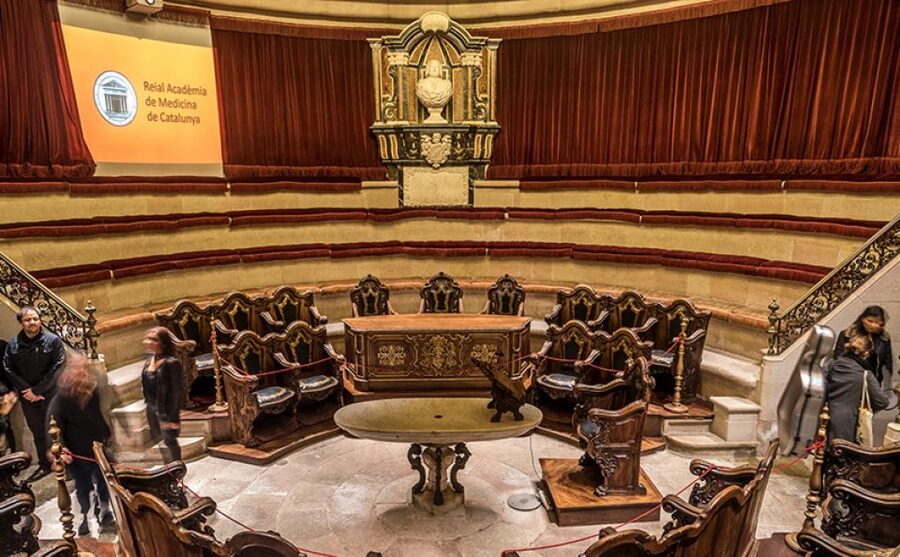
- Ventura Rodríguez’s anatomical amphitheater: one of the last of its kind remaining in Spain, and among Europe’s oldest.
- A guide-led story through the building: medicine and surgery are explained through spaces that were designed for training.
- The first X-ray experiment in Spain: you’ll pinpoint where it happened, not just hear a vague reference.
- Walking the Academy halls: you’re not stuck staring at one room the whole time.
- Strong guide experience: English, Spanish, or Catalan live guides, with an audio guide available in 7 languages.
Why the Royal Academy of Medicine feels like medical training in stone

You don’t have to be a medical student to feel what this place is doing. The Academy was built as an institution, and the visit explains how that purpose shaped the space—especially in the anatomy amphitheater. Even if you only catch the basics, you leave with a better sense of how surgery education worked back then.
The tone here is practical. You’re not touring a museum display behind glass and calling it history. You’re shown how people studied—by using architecture as a teaching tool. That’s a big deal, because it helps you understand that medicine isn’t just ideas. It’s also settings, tools, and training routines.
The best part is how the tour keeps history moving. You’ll hear names that matter in medical science, plus the surprising technology link to the first X-ray experiment in Spain.
More days walked with a local guide

Entering the neoclassical building on Carme Street
Your tour starts at the Royal Academy of Medicine of Catalonia, Carme Street 47 (08001 Barcelona). Before you go, you’ll need the confirmation email from Sternalia. Between tour groups, the main door stays closed, and the guide opens it again about 5–10 minutes before the next session—so don’t arrive and wander in circles.
Once inside, expect the flow to be guided and paced. It’s a 50-minute tour, so the guide focuses on what you can realistically absorb: the story of the Academy, the significance of key spaces, and the connections between research and the building itself.
You’ll also have an audio guide available in multiple languages (Chinese, English, French, German, Russian), even if you take the live tour in Spanish, Catalan, or English. That combination is useful if your group’s language level varies, or if you want to re-check a key detail after the tour.
Ventura Rodríguez’s anatomical amphitheater: the main event

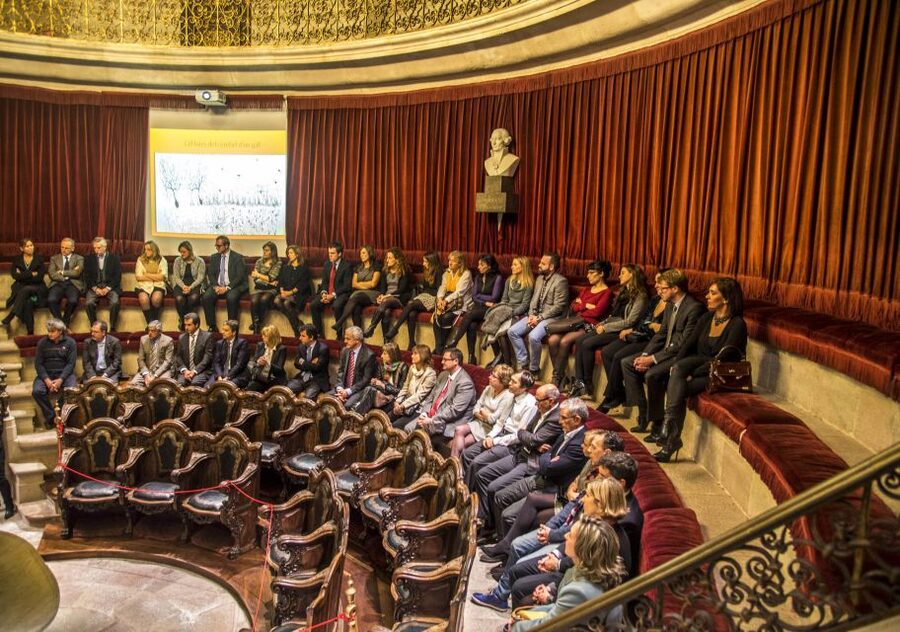
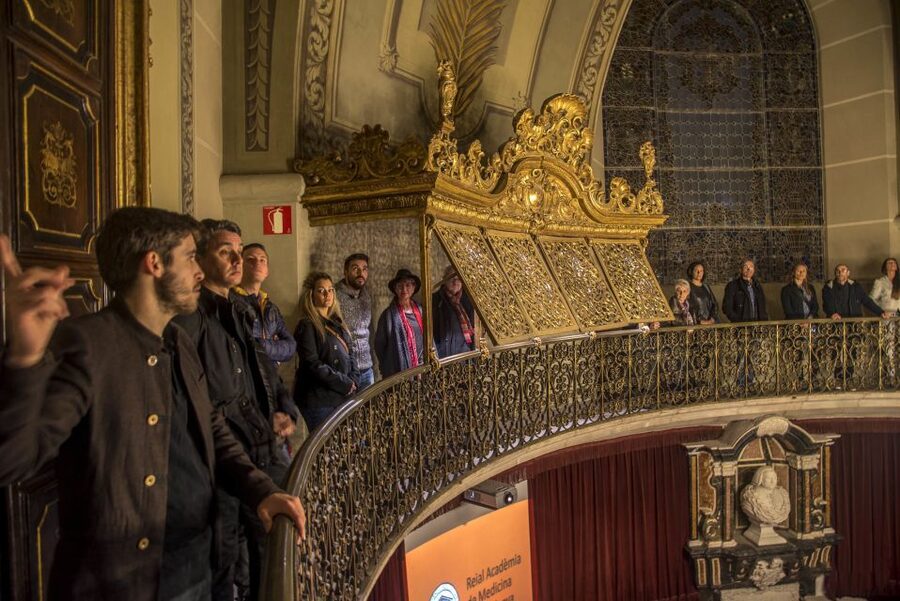
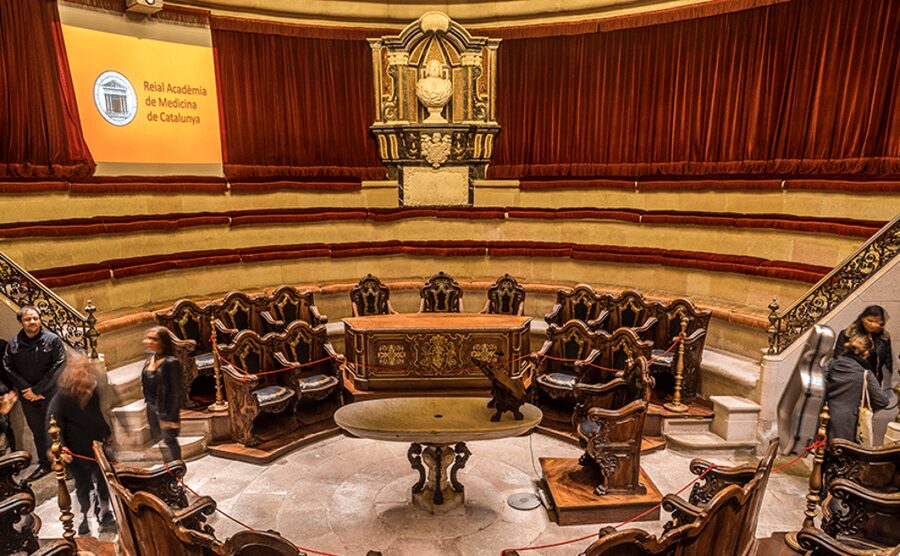
The star is the anatomical amphitheater built by Ventura Rodríguez. This is the kind of space that makes you slow down without trying. It was created for the training of surgeons in the 18th century, and you can see why the design matters for learning.
The tour frames the amphitheater as more than a dramatic architectural feature. It’s presented as the teaching environment itself: a place where instruction happened, not just a historic room to pose in. When you look at the structure, you can understand the logic—how a class setting and observation space shaped what students could learn.
This is also where you get one of the tour’s most valuable “wow” facts: you’ll visit the last anatomical amphitheater remaining in Spain and one of the oldest around Europe. That turns the visit from nice-and-old into truly rare. In travel terms, it’s the sort of sight you can’t swap for another stop on your itinerary without losing something.
Practical note: the amphitheater and the rest of the visit do include steps. The tour is listed as wheelchair accessible, but steps are specifically mentioned, so if you use a wheelchair or have mobility limits, you’ll want to plan ahead and be ready for parts of the route that may be harder.
How the guide connects science names to real rooms
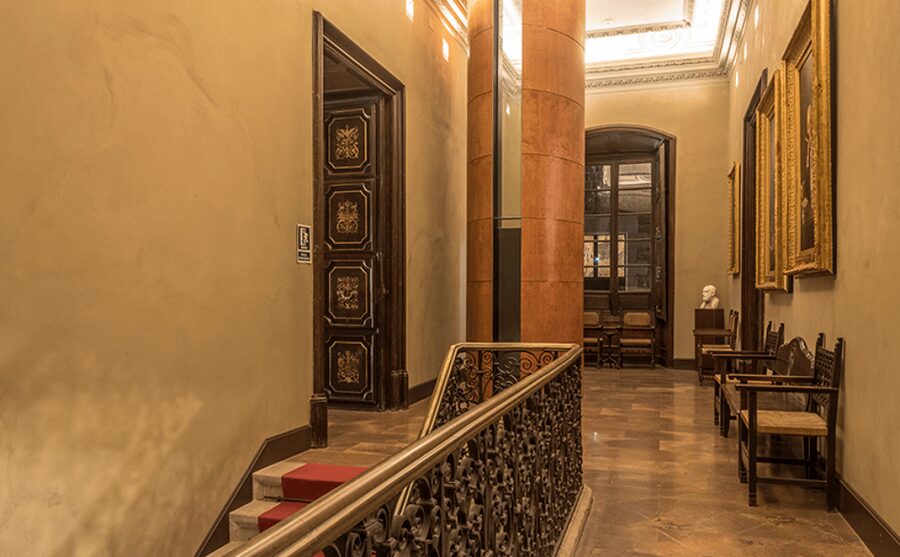
As you move through the Academy, the guide ties the building to medical and surgical figures you’ve likely heard in other contexts. The names given in the tour include Pere Virgili, Antoni de Gimbernat, and Santiago Ramón y Cajal. The value here is not name-dropping for its own sake. The tour connects these figures to the Academy’s role in opening doors to a new era of medicine and surgery.
This is where the guided aspect really matters. If you were walking around alone, you might understand it’s a historic institution. With a guide, you understand why it mattered and how it functioned. It’s the difference between seeing a beautiful building and getting the building’s job description.
And the pacing fits most people. At 50 minutes, you’re not stuck in a long lecture. You get the highlights—enough to feel informed—without the risk of zoning out.
If you’re traveling with a group, live guidance in Spanish, Catalan, or English also helps. The tour can work for mixed-language visitors because the audio guide is there as backup.
The first X-ray experiment in Spain: history meets a breakthrough
One of the tour’s standout themes is the moment when older medical training meets modern scientific experiments. The big highlight here is discovering where the first X-ray experiment took place in Spain.
That matters because X-rays are one of those inventions everyone recognizes, but most people don’t know the local history behind the breakthroughs. This tour gives you a point in space you can remember—so the story doesn’t float away the moment you leave. You’ll walk through the Academy and learn how this setting ties into a technological shift in medicine.
This is also a smart way to experience science history. Instead of only telling you what happened, the tour grounds it in a specific place. You can stand there and connect the dots between architecture, institutions, and scientific progress.
And yes, it’s a technical detail, but the tour keeps it approachable. The goal isn’t to teach physics. It’s to show how discovery happens inside institutions, and how those institutions leave physical fingerprints.
- Barcelona: Hola Barcelona Public Transport Travel Card★ 4.5 · 20,985 reviews
- Barcelona: 24 or 48-Hour Hop-On Hop-Off Bus Tour★ 4.4 · 20,872 reviews
- Barcelona: Park Guell Guided Tour with Skip The Line Entry★ 4.7 · 17,563 reviews
Price, time, and what you’re really paying for
The price is $16 per person for a 50-minute guided visit. That’s good value for a few reasons.
First, you’re paying for more than entry. The tour includes Academy entrance fees, a live guided component, and an audio guide available in multiple languages. Second, you’re seeing a rare site: an anatomical amphitheater with special historical significance. Third, you get an experience that’s compact enough to fit into a typical Barcelona day without needing a whole half-day plan.
If you’re wondering whether this fits your schedule, think of it as a focused add-on. It’s not an all-day museum slog. It’s a short, guided story in a place that was built for training—then you’re done.
A small timing reality: because the main door is closed between tours, arrive close to your slot. The guide reopens it 5–10 minutes before the next group, and that’s part of how the experience stays smooth.
Who this tour suits best (and who should skip it)
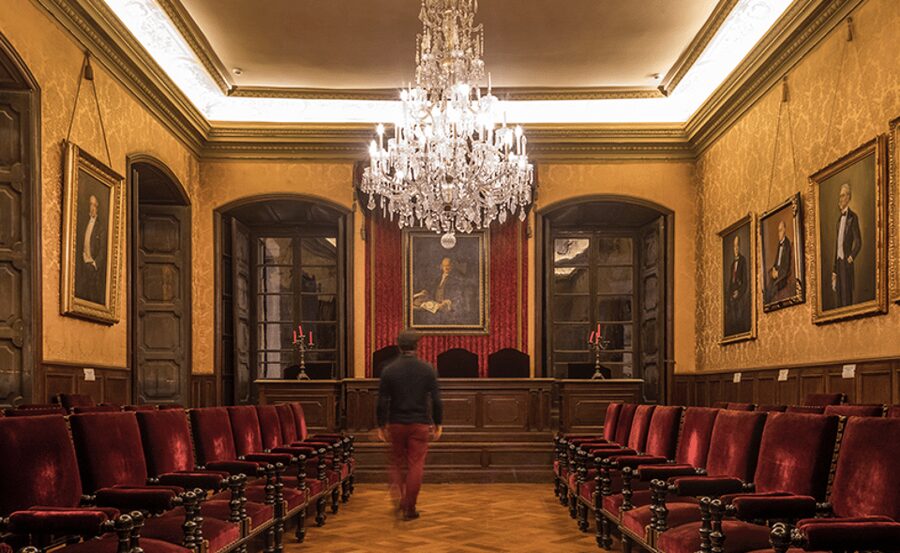
This works especially well if you like history that has a physical shape. If you’re the kind of traveler who enjoys understanding how people lived and learned—through buildings, systems, and design—you’ll get a lot out of the Academy.
It also makes sense if you’re visiting with students, medical-curious folks, or anyone who likes science history. The tour is set up to explain key medical and surgical themes without requiring a medical background. You’ll leave with names, context, and at least one memorable “where it happened” fact.
One more clear caution: the tour is listed as not suitable for people with pre-existing medical conditions, and there are steps during the visit. If either of those is relevant, you’ll want to choose your pace and accommodations carefully.
Should you book this Barcelona Royal Academy of Medicine tour?
If you want a short, high-impact history stop, I’d book it. The Ventura Rodríguez amphitheater alone is a strong reason, and the added details—medicine training, major science names like Pere Virgili and Santiago Ramón y Cajal, plus the location tied to the first X-ray experiment in Spain—make this feel like more than a quick look around.
Skip it if you need fully step-free movement throughout the route, or if pre-existing medical conditions make a guided visit with steps a bad fit. But if you can handle that and you enjoy story-driven architecture, this is a very solid use of time in Barcelona.
FAQ
FAQ
How long is the Royal Academy of Medicine guided tour?
The tour lasts 50 minutes.
How much does the tour cost?
It costs $16 per person.
Where do I meet for the tour?
You meet at Catalonia’s Royal Academy of Medicine, Carme Street number 47, 08001 Barcelona.
Do I need a confirmation email before the tour begins?
Yes. You need the confirmation email from Sternalia before the tour starts.
What languages are offered for the live guide?
The live tour guide is available in Spanish, Catalan, and English.
Is an audio guide included?
Yes. An audio guide is included and is available in Chinese, English, French, German, and Russian.
Is the tour wheelchair accessible?
The activity is listed as wheelchair accessible, but the visit includes steps, so it’s worth planning if you use mobility aids.
What should I bring or avoid?
Bring comfortable clothes. Alcohol and drugs are not allowed.
What’s the cancellation policy?
Free cancellation is available up to 3 days in advance for a full refund.
With a Local Guide in Barcelona
- Barcelona: Sagrada Familia Entry Ticket with Audio Guide
★ 4.6 · 105,312 reviews - Barcelona: Park Guell Guided Tour with Skip The Line Entry
★ 4.7 · 17,563 reviews - Fast Track Sagrada Familia Guided Tour
★ 4.5 · 8,795 reviews - Park Guell Guided Tour with Skip the Line Ticket
★ 4.5 · 6,996 reviews - Barcelona: Sagrada Familia Skip-the-Line Guided Tour
★ 4.3 · 5,365 reviews
More Ways to Tour Barcelona
- Barcelona: Casa Batlló Entry with Self-Audioguide Tour
★ 4.7 · 25,359 reviews - Barcelona: 24 or 48-Hour Hop-On Hop-Off Bus Tour
★ 4.4 · 20,872 reviews - Barcelona: Park Guell Guided Tour with Skip The Line Entry
★ 4.7 · 17,563 reviews - Barcelona: Sagrada Familia Skip-the-Line Entry Ticket & Tour
★ 4.8 · 12,789 reviews - Barcelona: FC Barcelona Museum “Barça Immersive Tour” Ticket
★ 4.4 · 10,944 reviews
More Barcelona Tours on Our Radar
- Barcelona: Sagrada Familia Entry Ticket with Audio Guide
★ 4.6 · 105,312 reviews - Barcelona: Park Güell Admission Ticket
★ 4.4 · 76,534 reviews - Barcelona: Casa Batlló Entry with Self-Audioguide Tour
★ 4.7 · 25,359 reviews - Barcelona: Montjuïc Cable Car Roundtrip Ticket
★ 4.5 · 22,368 reviews - Barcelona: Hola Barcelona Public Transport Travel Card
★ 4.5 · 20,985 reviews
Just Rated Around Barcelona






Guided, compared.
 ★ 4.6Sagrada Familia Entry Ticket with Audio GuideFrom $39105,312 reviews
 ★ 4.7Park Guell Guided Tour with Skip The Line EntryFrom $3117,563 reviews
 ★ 4.5Fast Track Sagrada Familia Guided TourFrom $668,795 reviews
 ★ 4.5Park Guell Guided Tour with Skip the Line TicketFrom $386,996 reviews
 ★ 4.3Sagrada Familia Skip-the-Line Guided TourFrom $655,365 reviews
 ★ 5.0Montserrat, Girona & Costa Brava Guided Day Trip from BarcelonaFrom $1335,128 reviews
 ★ 4.9Sagrada Familia Priority Access Guided TourFrom $584,917 reviews
 ★ 4.3Sagrada Familia Guided Tour with Tower AccessFrom $854,729 reviews