Reviewed · BARCELONA
Intensive Ceramic Handbuilding Course
Clay days beat museum days. This intensive ceramic handbuilding course in Barcelona pairs studio time with the freedom to see the city between classes, all taught in a small workspace by Wendy and Eric at Taller Gingell. It’s designed for real skill-building, not just making a souvenir.
Two things I really like: you get personalized attention in a group capped at eight, and the course is set up so you don’t have to source anything—aprons, tools, clay, and kiln firings are all included. You can also choose up to five items to be fired, which keeps it practical and focused.
One trade-off to plan for: this is a Monday-to-Friday, full-days-in-the-studio type of commitment, with five consecutive sessions. If your ideal Barcelona trip is mostly late mornings and spontaneous afternoons, this course will feel structured.
In This Review
- Key highlights to know before you book
- Taller Gingell’s Barcelona handbuilding course: small group, big focus
- How the 5-day schedule works (and why it’s such good value)
- What you’ll learn: handbuilding skills plus creative options
- What you’ll make: functional ware, sculptural pieces, and up to five kiln-fired items
- Studio basics: what’s included, what to bring, and how the kiln part feels
- Language and teaching style: English or Spanish with close feedback
- Where you start in Barcelona (and how to plan your sightseeing time)
- Price and value: what $612.78 buys you in real clay time
- Who should book this course, and who might hesitate
- Should you book it? My quick call
- FAQ
- How long is the intensive handbuilding course?
- What time does the course start, and where do I meet?
- Do I need prior ceramics experience?
- Will the instruction be in English or Spanish?
- What’s included in the course price?
- How many items can I have kiln fired?
- Is shipping included for finished ceramics?
- What is the cancellation policy?
Key highlights to know before you book
- Up to eight people means you actually get eyes on your work (not a quick walk-by)
- 20 hours over 5 days with technique demos early, then guided making for the rest of each class
- Everything is included: aprons, modeling tools, clay, kiln firings, and even studio WiFi
- You choose up to five kiln-fired pieces, from functional ware to sculptural work and custom stamps
- Wendy and Eric teach in an open, friendly studio atmosphere with clear, precise feedback
- English or Spanish instruction is available based on your preference
Taller Gingell’s Barcelona handbuilding course: small group, big focus
If you want ceramics that go beyond basic pinching or a quick painting session, this is the kind of workshop that makes you slow down and learn how to control the clay. The setting is Taller Gingell in Barcelona, and it’s run by Wendy and Eric—an instructor duo that keeps the studio calm and the teaching practical.
What matters most for most people? The course is small. With a maximum of eight participants, you’re not stuck waiting for your turn. You can ask questions while you’re shaping forms, fixing thickness, or refining details. That’s a big difference between a “class experience” and actual improvement.
The other strength is the balance of instruction and making. The schedule is built so you get technique guidance first, then you immediately apply it. That rhythm helps your hands learn faster than if you just watch demos and hope the rest clicks later.
One more practical bonus: the studio has WiFi included, which can help if you want to look up references, share progress photos, or just stay connected while you work.
Torn between options? Line this one up against other Barcelona picks.




How the 5-day schedule works (and why it’s such good value)
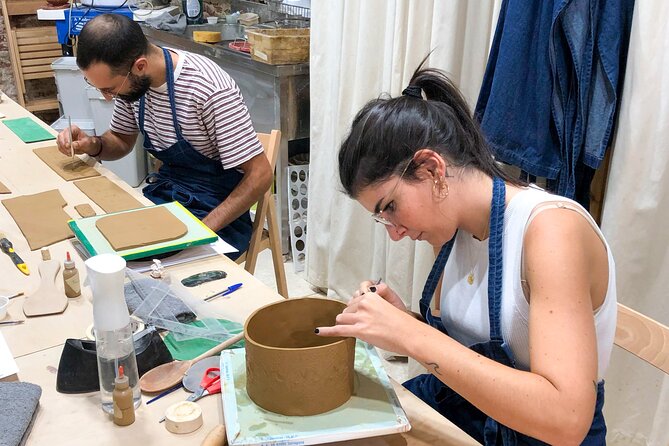
This course runs for five consecutive days, Monday through Friday. It’s a total of about 20 hours of teaching and studio work, structured as five four-hour classes with a start time of 10:00 am.
Each class follows the same pattern:
- First two hours: technique introduction and demonstrations
- Second two hours: your individual construction time, with dedicated instruction as you work
That “demo first, build after” format is ideal for handbuilding because most ceramics skills are physical. You learn by doing—rolling consistent slabs, joining pieces cleanly, shaping forms without warping, and adding details with control. The course’s structure supports that.
Also, because classes are consecutive (no long gaps), you don’t lose momentum. The clay skills you practice Monday are still fresh by Tuesday. If you’ve ever tried to learn pottery from scattered workshops, this tight schedule is the fix.
What you’ll learn: handbuilding skills plus creative options
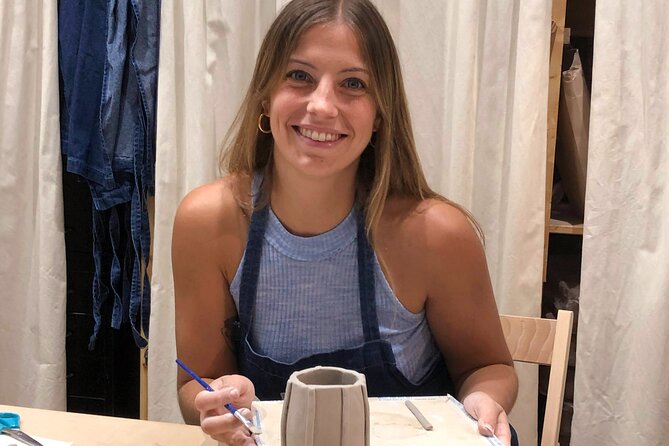
This is a handbuilding course, so you’re building directly with clay using techniques that can make both functional pieces and sculptural ones. The goal is to give you a foundation you can use after the course, not just a finished object you have to start over from scratch.
By the end of the week, the skills you leave with depend on what you choose to make, but the course is set up to cover multiple approaches within handbuilding. Past students have described expanding into areas like:
- sculpting and handbuilding (shaping forms by hand)
- mold making
- kiln testing glazes and under glazes
- creating ceramic stamps and using them as part of your designs
You’ll also have room to make pieces in your own style. Some students reported designing their own course ideas with Wendy and Eric, and that flexibility matters. It’s common to feel boxed in when you’re the only beginner in a class that’s focused on one set project. Here, you have input.
And the course isn’t limited to one “beginner starter kit.” It’s built for all levels, so if you’re improving from something you already know, you still get new techniques and more precise guidance.
What you’ll make: functional ware, sculptural pieces, and up to five kiln-fired items
One clear detail helps you plan: each student can select up to five items to kiln fire. That’s important because it turns “I might make anything” into “I can make a focused set of pieces worth finishing.”
Based on what students have taken home, you could end up with things like a teapot, vase, cups, and custom ceramic stamps. Those aren’t just random examples—those items fit the handbuilding focus and show the range from practical tableware to decorative texture and form.
The best part for most people is that you’re not doing everything alone. With guided construction time, you can ask how to:
- keep walls even and shapes stable
- create joins that hold (especially for vessels)
- approach surface details and stamping patterns
- think ahead about firing and finishing
If you’re hoping to leave with a small “body of work,” this structure works well. You’ll produce pieces, learn the process behind them, and then (ideally) keep building on it after you’re home.
Studio basics: what’s included, what to bring, and how the kiln part feels
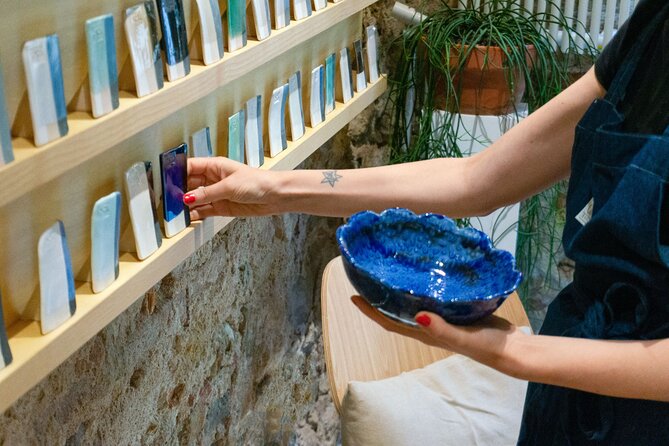
This is one of those courses where the logistics are refreshingly simple. The price includes:
- aprons
- ceramic modeling tools
- clay
- kiln firings
- WiFi
That means you don’t need to bring specialty items. Your apron is ready for you when you arrive, and you can show up as you are.
The one thing that may come up later is shipping. Shipping is not included if you want your ceramics sent elsewhere. If that matters to you, plan for how you’ll transport finished items back.
One extra studio detail that came up in student experiences: water is taken care of. You’re encouraged to stay hydrated during the week, and filtered water is available in the studio. It sounds minor, but for a hands-on course, it genuinely helps.
Also, because kiln firings are included, your work doesn’t just sit unfinished at the “bisque stage” forever. Your pieces are handled through the firing steps as part of the course process.
- Barcelona: Hola Barcelona Public Transport Travel Card★ 4.5 · 20,985 reviews
- Barcelona: 24 or 48-Hour Hop-On Hop-Off Bus Tour★ 4.4 · 20,872 reviews
- Barcelona: Park Guell Guided Tour with Skip The Line Entry★ 4.7 · 17,563 reviews
Language and teaching style: English or Spanish with close feedback
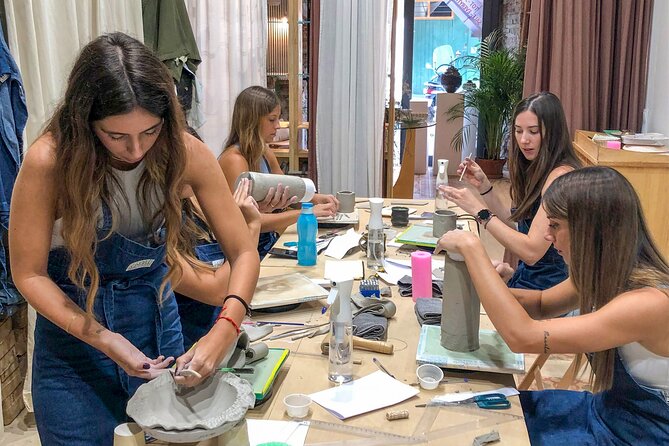
You don’t need prior ceramics experience. That’s written clearly, and it’s backed up by how the course is described: open, friendly, and supportive, with instruction in Spanish and/or English based on your preferences.
If you’re choosing between courses in Barcelona, pay attention to this. Ceramics teaching has a lot of technical moments where wording matters: how you hold the tool, how you interpret thickness, what “smooth enough” means, and how joins should feel. Having instruction available in the language you’re comfortable with makes you learn faster and stress less.
The teaching approach also seems to be very hands-on. Multiple students described Wendy and Eric as following what they do, giving suggestions in real time, and keeping the studio atmosphere pleasant and focused. Some even mentioned getting photos taken during the process. That’s not guaranteed for everyone, but it points to the studio culture: you’re making things, but you’re also being guided, noticed, and supported.
Where you start in Barcelona (and how to plan your sightseeing time)
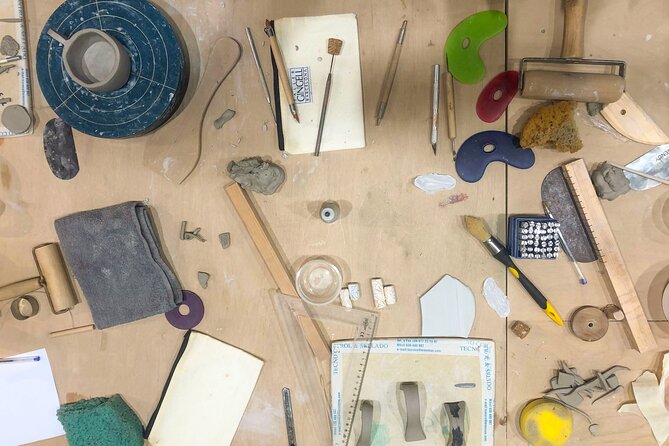
The meeting point is Carrer de Salvà, 71, in the Sants-Montjuïc area (08004 Barcelona). Classes start at 10:00 am, and the activity ends back at the meeting point.
Because your daily course window is fixed, the best way to “combine crafting and sightseeing” is to treat mornings as your studio block and afternoons (and evenings) as your exploring time. This course is the kind where you can do a real Barcelona day around it, without rushing back and forth.
Sants-Montjuïc is also a practical base. The course location is near public transportation, which helps if you want to zigzag across the city after class instead of committing to one neighborhood.
If you’re budgeting your energy, this is a good schedule. You’ll use your hands heavily in the morning and early afternoon, then you can switch to walking, cafes, and light museum time afterward.
Price and value: what $612.78 buys you in real clay time
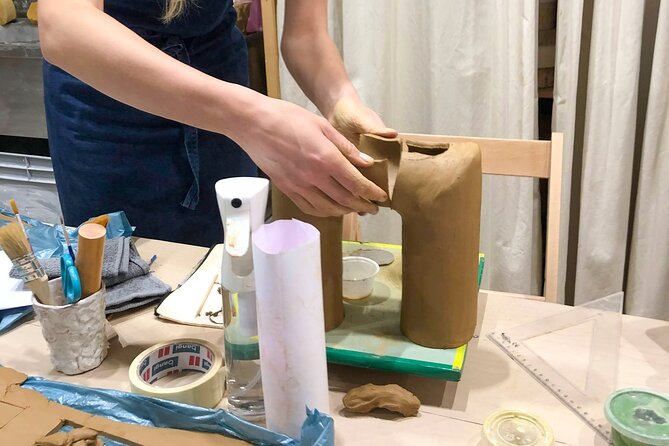
At $612.78 per person for five days, the price can look high at first glance—until you break down what’s covered.
You’re paying for:
- 20 hours of guided teaching and studio work
- materials: clay, tools, and aprons
- process costs: kiln firings
- a small class size (up to eight), which supports the personal instruction component
- studio extras: WiFi is included
You’re also limited to choosing up to five items for firing. That can be a value point, because it prevents the course from turning into “make a lot of things with no finished results.” It also encourages you to focus your energy on fewer, better pieces.
One more value cue: it’s typically booked about 19 days in advance on average. That suggests the slots are not random and fill up at a steady pace. If you want your preferred dates, booking earlier usually makes sense.
And if you’re traveling with someone, the experience is listed as offering group discounts. That can make the overall deal better if you can share the course time with a friend or partner.
Who should book this course, and who might hesitate
This is a great match if you want:
- a real handbuilding skill upgrade, not a casual craft day
- small-group coaching with real feedback while you work
- a structured week that produces finished, fired pieces
- flexibility to make functional pieces, sculptural items, and decorative stamps
- instruction in English and/or Spanish based on your preference
You might hesitate if:
- you hate a tight schedule and don’t want to be in the studio most weekdays
- you expect to make many more than five fired objects
- you need your pieces shipped internationally (shipping isn’t included)
If you can commit to the week, you’ll likely feel it in your hands by day three or four. That’s when technique becomes muscle memory instead of theory.
Should you book it? My quick call
I’d book this intensive ceramic handbuilding course if you’re serious about learning, you like structured practice, and you want a course where your work gets attention and firing. The small group size, the “technique then build” format, and the fact that materials and kiln firings are included make the value feel solid.
If you’re coming to Barcelona and want one hands-on day that won’t swallow your trip, this may not be the best fit. It’s a commitment. But for five days of focused making with Wendy and Eric at Taller Gingell, it’s the kind of experience that can genuinely change how you think about clay.
FAQ
How long is the intensive handbuilding course?
It runs for about 5 days with five consecutive four-hour classes, Monday through Friday, for a total of around 20 hours of teaching and studio work.
What time does the course start, and where do I meet?
The course starts at 10:00 am. The meeting point is Carrer de Salvà, 71, Sants-Montjuïc, 08004 Barcelona, Spain, and the activity ends back at the same meeting point.
Do I need prior ceramics experience?
No prior ceramics experience is necessary. The course is suitable for all levels.
Will the instruction be in English or Spanish?
Instruction is in Spanish and/or English based on your preferences.
What’s included in the course price?
Included items are aprons, ceramic modeling tools, clay, kiln firings, and WiFi.
How many items can I have kiln fired?
Each student can select up to five items to be kiln fired.
Is shipping included for finished ceramics?
Shipping is not included if you want items shipped.
What is the cancellation policy?
You can cancel for a full refund if you cancel at least 24 hours before the experience’s start time. Free cancellation is available, but refunds are not given for cancellations made less than 24 hours before the start time.
If you want, tell me your current pottery experience level and what kind of pieces you’re aiming for (cups, sculptural forms, stamps, etc.). I’ll help you decide whether this week-long format matches your goals.
More Barcelona Tours on Our Radar
- Barcelona: Sagrada Familia Entry Ticket with Audio Guide
★ 4.6 · 105,312 reviews - Barcelona: Park Güell Admission Ticket
★ 4.4 · 76,534 reviews - Barcelona: Casa Batlló Entry with Self-Audioguide Tour
★ 4.7 · 25,359 reviews - Barcelona: Montjuïc Cable Car Roundtrip Ticket
★ 4.5 · 22,368 reviews - Barcelona: Hola Barcelona Public Transport Travel Card
★ 4.5 · 20,985 reviews