
Reviewed · WALKING TOURS
Jewish Walking Tour Barcelona by Expert Jewish Guide 2h
Follow the footsteps of Barcelona’s Jewish past. This 2-hour walk links key spots in the Gothic Quarter, from Plaça de Sant Jaume to the Major Synagogue area and MUHBA – El Call, with a guide who puts the stones and street layout into historical context.
I like this experience for two big reasons. First, the route is built around real places you can stand in front of, not vague stories, so you can connect architecture to what happened over centuries. Second, the guides bring energy and story craft—on this tour you might be led by people like Ella or Dina, who are praised for clear explanations and for pointing out details you would likely miss on your own.
One drawback to plan for: admission costs aren’t included. The stops list admission tickets as not included, and there’s also a €5 per person donation requested onsite at the synagogue, so budget a little extra beyond the tour price.
In This Review
- Key things I’d circle before you go
- Why this Jewish Quarter walk feels different than a quick sightseeing loop
- Price and value: what $96.79 buys you in Barcelona
- Starting at Conesa Entrepans: the easiest way to get on track
- Plaça de Sant Jaume: the political heart and a doorway to Jewish Barcelona
- Major Synagogue stop: seeing one of Europe’s oldest synagogue sites
- MUHBA – El Call: winding lanes, daily life, and hard history
- Plaça del Rei: where Jewish leaders served kings and history shifted
- What the best guides do: names like Ella, Dina, and Alan keep showing up
- Walking time, pace, and why 2 hours is a sweet spot
- Tickets, the €5 synagogue donation, and how to avoid surprises
- Who should book this tour (and who might skip it)
- Should you book Jewish Walking Tour Barcelona with Expert Jewish Guide?
- FAQ
- How long is the Jewish Walking Tour Barcelona?
- How much does the tour cost?
- What language is the tour offered in?
- Where is the meeting point?
- What is included in the price?
- Are tickets or entrance fees included?
- Is hotel pickup included?
- Is this tour private?
- What is the cancellation policy?
- Is the tour easy to fit into a travel day?
Key things I’d circle before you go
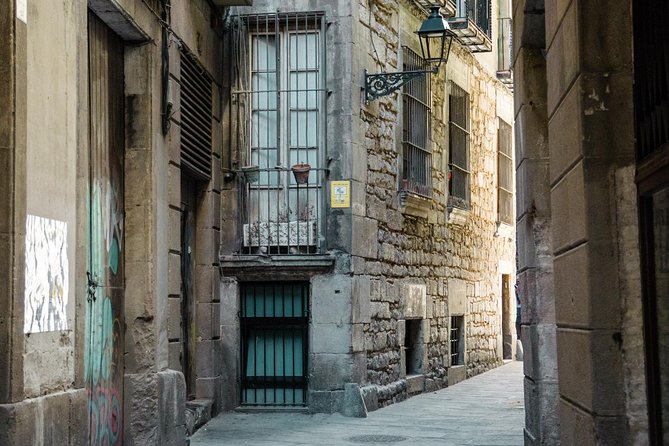
- 2 hours, 4 focused stops that keep the story moving through the old Jewish Quarter
- Major Synagogue + MUHBA – El Call for both landmark sights and the lived-in maze between them
- Small-group / private-for-your-group format so you’re not just following a herd
- English-guided tour with guides praised for answering questions and reading the buildings
- On-site donation guidance (€5) plus admission tickets not included, so you can plan ahead
Why this Jewish Quarter walk feels different than a quick sightseeing loop
Barcelona’s Gothic Quarter can feel like one long photo stop. This tour gives you a spine to hang those photos on: who lived here, what roles Jews played in the city, and why the same streets can carry both everyday life and tragedy.
You’ll walk at a comfortable pace for about two hours, hitting four anchor points. The timing is tight enough to keep you engaged, but not so rushed that you can’t look up and notice details like doorways, street turns, and how the city’s power centers sit nearby.
This is a good pick if you want cultural depth without turning the day into a classroom. It’s street history—made for real shoes and real questions.
More Barcelona streets to take slowly




Price and value: what $96.79 buys you in Barcelona
At $96.79 per person for about 2 hours, this isn’t a budget add-on. The value is that you’re paying for a professional local guide and a structured route that connects sites that are easy to spot on a map with meaning you’re unlikely to guess.
Also, the tour includes a guided focus on Jewish monuments and key neighborhoods, not just one building. You’re covering multiple stops in a compact area, which matters in Barcelona where time can evaporate fast once you start walking.
One more value point: it’s booked fairly far ahead on average (about 48 days), which usually signals demand. If this is on your must-do list, don’t wait until the last week.
Starting at Conesa Entrepans: the easiest way to get on track
Your meeting point is Conesa Entrepans at Carrer de la Llibreteria, 1, in Ciutat Vella (Gòtic). It also ends back at the meeting point, which is practical when your day is already full of museums and tapas plans.
The tour is said to be near public transportation. That helps because this area can be a bit of a crawl when crowds stack up, especially around main Gothic Quarter streets.
You’ll receive confirmation at booking time, and the tour uses a mobile ticket. So bring your phone, keep the ticket ready, and you’ll save yourself a bit of standing-around time.
Plaça de Sant Jaume: the political heart and a doorway to Jewish Barcelona
Stop 1 is Plaça de Sant Jaume, about 15 minutes. This square sits at a symbolic crossroads of power—Catalonia’s political heart—so it’s a smart starting point.
Why it matters: the tour isn’t only about religious buildings. It also frames Jewish life in relation to the city’s rulers, laws, and social structures. Starting at a power center helps you understand why the story of a neighborhood can change so dramatically when political winds shift.
You’ll likely get context before you slip into the smaller lanes. That kind of setup makes the next stops far easier to follow.
Major Synagogue stop: seeing one of Europe’s oldest synagogue sites
Stop 2 is the Major Synagogue, around 30 minutes. The tour description highlights it as an ancient synagogue site, described as one of the oldest synagogues in Europe.
Even if you’ve read about Jewish history before, this kind of stop changes the scale of what you’re thinking about. You’re not just learning that something existed—you’re learning how the site sits inside a living city, and how architecture can preserve layers of meaning.
Practical note: admission tickets are not included for this stop. Also, there’s a €5 per person donation requested onsite at the synagogue area, so have a little cash or plan for the onsite process.
More days walked with a local guide
- Barcelona: Sagrada Familia Entry Ticket with Audio Guide★ 4.6 · 105,312 reviews
- Barcelona: Park Guell Guided Tour with Skip The Line Entry★ 4.7 · 17,563 reviews
- Fast Track Sagrada Familia Guided Tour★ 4.5 · 8,795 reviews
MUHBA – El Call: winding lanes, daily life, and hard history
Stop 3 is MUHBA – El Call, about 30 minutes. This is where Barcelona’s Jewish Quarter turns from landmarks into atmosphere.
The tour description focuses on winding alleys and the sense of centuries of Jewish life—and the shadows that came with it. That’s important, because El Call isn’t just about survival. It’s about community patterns: where people moved, how neighborhoods functioned, and how daily life can be interrupted by persecution and forced change.
This stop is also the one where a guide’s storytelling style really shows. In the reviews, Dina is specifically praised for using maps and visual aids, which can help you understand how you’re moving through space rather than just standing still and listening.
If you like history that connects to the physical city, this is often the emotional center of the tour.
Plaça del Rei: where Jewish leaders served kings and history shifted
Stop 4 is Placa Del Rei, also about 30 minutes. The framing here is powerful: where Jewish leaders served kings, and where history changed in ways that affected the whole community.
This stop helps balance the heaviness of earlier themes. You get to see how integration, influence, and visibility could exist in the same city even when later events turned hostile.
It also helps you understand Barcelona as more than a backdrop. The Gothic Quarter layout becomes a record of who held power, who depended on it, and how quickly fortunes could flip.
What the best guides do: names like Ella, Dina, and Alan keep showing up
A walking tour lives or dies on the guide. On this one, you’ll see the same patterns in the praise: warm delivery, strong pacing, and a habit of pointing out what you’d otherwise overlook.
Guides such as Ella and Dina are described as especially strong on historical and architectural context. Ella is praised for making the narrow streets of Del Call feel alive and for offering helpful recommendations. Dina is praised for a historical review of Jewish presence in Barcelona and for using visual supports like maps to clarify the route.
You’ll also see names like Lilac, Eyal, Leilah, Rina, Lilach, and Alan highlighted for a similar reason: guides who answer questions and focus on details, not just dates. Some reviews mention long-time local perspective—people living in the area for decades—which can add texture to how the story lands in the city today.
If you care about good questions and clear answers, choose a day when you can arrive a few minutes early. That small buffer lets you settle in before the guide launches into the route.
Walking time, pace, and why 2 hours is a sweet spot
Two hours is long enough to get a story that connects across multiple sites. It’s also short enough that you don’t feel trapped once you’re standing in a windy Gothic Quarter street.
The stops are timed fairly evenly: 15 minutes at the first square, then 30 minutes at each of the three Jewish Quarter-related sites. That rhythm helps if you like structure, because you always know what’s coming next.
And yes, weather can happen. One review notes that even with torrential rain, the guide kept the time full of information. So if your schedule is tight, don’t automatically drop this because of a cloudy forecast—just wear layers.
Tickets, the €5 synagogue donation, and how to avoid surprises
Here’s the budgeting reality. Admission tickets are not included at multiple stops, and the synagogue area requests a €5 per person donation onsite.
So while the tour price covers the guide and the walking route, you should treat it as a guided experience where a small extra amount may come up during the tour itself. I recommend bringing that spare money and being ready for onsite payment or donation instructions.
Also, since food and drinks are not included, plan a meal before or after. This tour keeps moving, and you don’t want a hungry, distracted finish when you’re still trying to absorb the last stop at Plaça del Rei.
Who should book this tour (and who might skip it)
This tour is a strong fit for you if:
- You want Jewish Barcelona explained in context through actual street-level sites
- You enjoy architecture and city layout as part of history
- You like asking questions and getting direct answers from a local guide
- You’d rather spend your time walking than reading a guidebook in place
You might consider a different option if:
- You’re not interested in historical context beyond what a signboard provides
- You want an all-in-one price with no onsite donations or extra ticket costs
Because the tour is said to be private for your group, it also makes sense if you’re traveling with friends or family who want to share the experience without merging into a huge crowd.
Should you book Jewish Walking Tour Barcelona with Expert Jewish Guide?
If your goal is to understand Barcelona’s Jewish Quarter in a way that makes the city feel smarter after you leave, I think you should book it.
The reasons are practical: you get a structured route with four meaningful stops, a guide who can translate architecture and street layout into story, and a time window that fits easily into a normal travel day. The reviews repeatedly emphasize guides who stay warm, answer questions, and point out small details that give the streets their weight.
Just be ready for the one real catch: donations and admission costs aren’t included, and the synagogue area requests €5 per person onsite. If you plan for that, the rest is straightforward.
If you do book, I’d also do one small prep step: read nothing complicated. Just skim your own notes on the Gothic Quarter. Then show up, follow the route, and let the guide turn the stones into a clear timeline you can actually remember.
FAQ
How long is the Jewish Walking Tour Barcelona?
The tour is about 2 hours (approx.).
How much does the tour cost?
The price is $96.79 per person.
What language is the tour offered in?
The tour is offered in English.
Where is the meeting point?
The meeting point is Conesa Entrepans, Carrer de la Llibreteria, 1, Ciutat Vella, 08002 Barcelona, Spain.
What is included in the price?
It includes a professional local guide and a 2-hour walking tour of Jewish monuments.
Are tickets or entrance fees included?
No. Admission tickets are not included for the synagogue-related stops, and a €5 per person donation is kindly requested onsite at the synagogue.
Is hotel pickup included?
No. Hotel pickup and drop-off are not included.
Is this tour private?
Yes. It is described as private, and only your group participates.
What is the cancellation policy?
There is free cancellation. You can cancel up to 24 hours in advance for a full refund.
Is the tour easy to fit into a travel day?
It’s walking-based and near public transportation, and most travelers can participate. Since it’s a guided route through the area, you’ll want to wear comfortable walking shoes and allow the full 2 hours.
More of Barcelona on Foot
- Barcelona Tapas and Wine Experience Small-Group Walking Tour
★ 5.0 · 5,804 reviews - Barcelona: Tapas Walking Tour with Food, Wine, and History
★ 4.8 · 4,261 reviews - Barcelona: Food Walking Tour with Tapas and Wine
★ 4.9 · 2,180 reviews - Barcelona Tapas Walking Tour: Food, Wine & History
★ 4.5 · 1,928 reviews - Barcelona Helicopter, Sailboat & Old Town Private Walking Tour
★ 5.0 · 1,395 reviews
More Ways to Tour Barcelona
- Barcelona: Casa Batlló Entry with Self-Audioguide Tour
★ 4.7 · 25,359 reviews - Barcelona: 24 or 48-Hour Hop-On Hop-Off Bus Tour
★ 4.4 · 20,872 reviews - Barcelona: Park Guell Guided Tour with Skip The Line Entry
★ 4.7 · 17,563 reviews - Barcelona: Sagrada Familia Skip-the-Line Entry Ticket & Tour
★ 4.8 · 12,789 reviews - Barcelona: FC Barcelona Museum “Barça Immersive Tour” Ticket
★ 4.4 · 10,944 reviews
More Barcelona Tours on Our Radar
- Barcelona: Sagrada Familia Entry Ticket with Audio Guide
★ 4.6 · 105,312 reviews - Barcelona: Park Güell Admission Ticket
★ 4.4 · 76,534 reviews - Barcelona: Casa Batlló Entry with Self-Audioguide Tour
★ 4.7 · 25,359 reviews - Barcelona: Montjuïc Cable Car Roundtrip Ticket
★ 4.5 · 22,368 reviews - Barcelona: Hola Barcelona Public Transport Travel Card
★ 4.5 · 20,985 reviews
Just Rated Around Barcelona





Walking Tours, compared.
 ★ 5.0Barcelona Tapas and Wine Experience Small-Group Walking TourFrom $835,804 reviews
 ★ 4.8Tapas Walking Tour with Food, Wine, and HistoryFrom $784,261 reviews
 ★ 4.9Food Walking Tour with Tapas and WineFrom $1002,180 reviews
 ★ 4.5Barcelona Tapas Walking Tour: Food, Wine & HistoryFrom $661,928 reviews
 ★ 5.0Barcelona Helicopter, Sailboat & Old Town Private Walking TourFrom $5131,395 reviews
 ★ 4.8Old Town and Gothic Quarter Walking TourFrom $211,393 reviews
 ★ 4.9City Walking Tour with a Local GuideFrom $291,384 reviews
 ★ 5.0Guided Food Walking Tour with Tapas and WineFrom $95848 reviews
Browse the lists this tour appears in