Reviewed · BARCELONA
Online Experience: Zoom around panoramic Barcelona
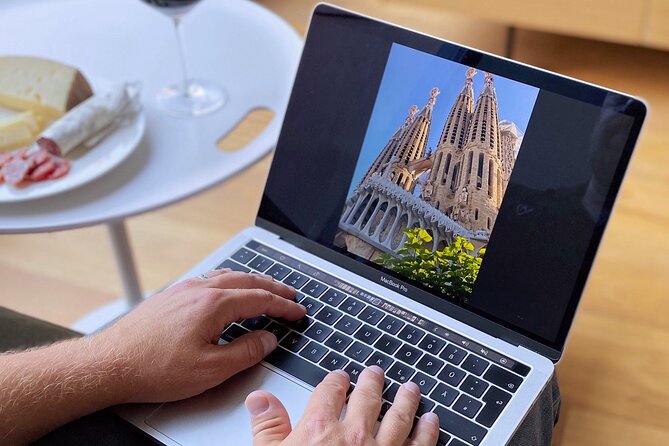
Barcelona from your couch, with real stories. This Zoom tour recreates a full day of sights by moving you past major stops like Montjuïc, Casa Batlló, and the Sagrada Família setup, plus you can ask questions as you go. I like that it’s interactive, and I also like the mix of famous architecture and local, everyday places like Mercat de Sants. One thing to consider: you’re watching on-screen, so if you crave tactile, street-level Barcelona energy, this won’t replace an in-person visit.
The guide for my session, Christian, kept the pace friendly and the explanations clear. You get photos, context, and an at-home way to get your bearings fast. The biggest drawback is also the obvious one—it requires a steady internet connection, and you’ll be dealing with screen time instead of stepping out into the neighborhoods.
If you’re new to Barcelona, or you’re short on time, or you’re traveling with mobility limitations, this is a smart way to see the city’s shape and major sights without the walking stress. It also works well as a planning tool: by the end, you’ll know what you want to see up close later.
In This Review
- Key highlights at a glance
- What this Zoom tour is really good for
- How the 1 hour 15 minutes moves (and why the order matters)
- Mercat de Sants: starting with a market that grounds the city
- Montjuïc views: learning the city from above
- Casa Batlló: Gaudí and Modernisme explained in plain terms
- Playa de la Barceloneta: a virtual lunch moment by the sea
- Sagrada Família: the Google Earth 3D flight that makes design make sense
- Recinte Modernista de Sant Pau: a quieter stop near the crowds
- El Raval and the live-music bar: finishing with culture, not just sights
- Price and value: why $53 can be a bargain (for the right trip)
- Who should book this (and who might skip it)
- FAQ
- FAQ
- How long is the Zoom around panoramic Barcelona experience?
- What places does the tour cover?
- Do I need an internet connection?
- Is there any admission fee mentioned for the stops?
- Will I get a mobile ticket?
- How big is the group?
- Are service animals allowed?
- How do I account for time zones when booking?
- Should you book this Zoom tour?
Key highlights at a glance
- Live Q&A on Zoom: you can ask questions throughout, not just sit and watch
- Panoramic route across iconic stops: Montjuïc views, Gaudí buildings, beach time, and more
- 3D-style Sagrada Família viewing: uses a Google Earth flight approach to explain the design
- Less-famous detour near Sagrada Família: Recinte Modernista de Sant Pau gets attention
- Small group feel (up to 100): a virtual format that still feels guided
- Mobile ticket and confirmation: easy to handle digitally once you book
What this Zoom tour is really good for
This experience is built for one main goal: helping you understand Barcelona like a local would on a first day. You get a guided route that strings together architecture, neighborhoods, and viewpoints into a clear story. The best part is the pacing. In about an hour and a quarter, you cover enough variety that your brain starts mapping the city.
For me, the value comes from two things. First, the tour is interactive, not a passive slideshow. Second, it’s a tour that includes both headline attractions and everyday Barcelona moments, like markets and the feel of specific districts. You don’t just learn names. You learn what each place is doing in the city’s overall layout.
The one thing to weigh is that it’s virtual. You’ll see, hear, and learn, but you won’t smell the bakeries around a market hall or feel the sea breeze at Barceloneta. If your trip’s all about immersion through your senses, keep this as a supplement—not the whole story.
Also, it’s designed for people who want to participate from anywhere. That makes it a strong option if you’re visiting outside Barcelona, or if getting around in person is difficult. And even if you do plan to be in Barcelona later, this kind of first-pass tour can save you a lot of guesswork.
Torn between options? Line this one up against other Barcelona picks.


How the 1 hour 15 minutes moves (and why the order matters)
The route is organized like a sensible first-day loop. It starts with a traditional market, climbs up for viewpoints, then moves through major architecture, coastal time, and two neighborhoods that tell different stories about daily life. The flow matters because Barcelona can feel like a puzzle when you’re new. This sequence helps you build the picture.
You also get built-in momentum. Each stop is timed tightly, so you’re not stuck for ages on one building. That’s good in a virtual setting. It keeps energy up and helps you remember the key ideas.
The tour includes a mix of straightforward “what you’re seeing” and deeper explanation. At the Sagrada Família segment, for example, you’ll get a 3D-style look using Google Earth, so you understand the church’s design intent rather than only seeing a front façade.
Mercat de Sants: starting with a market that grounds the city
You begin at Mercat de Sants, and that choice is smarter than it sounds. Many virtual tours open with the most famous architecture. This one starts with an everyday place that locals use—an instant reminder that Barcelona isn’t only postcards.
At this stop, you get an overview of the traditional market halls that dot the city. The point isn’t to lecture you on food. It’s to give you a mental model for how Barcelona’s neighborhoods function: daily needs first, sightseeing second.
What I like here is that it sets the tone for the whole day. After a market explanation, the later stops feel less like random monuments and more like pieces of a lived-in city.
Potential drawback: because you’re not actually inside the hall, you may not get the full sensory picture. Still, the context can make a later in-person market visit more meaningful.
Montjuïc views: learning the city from above
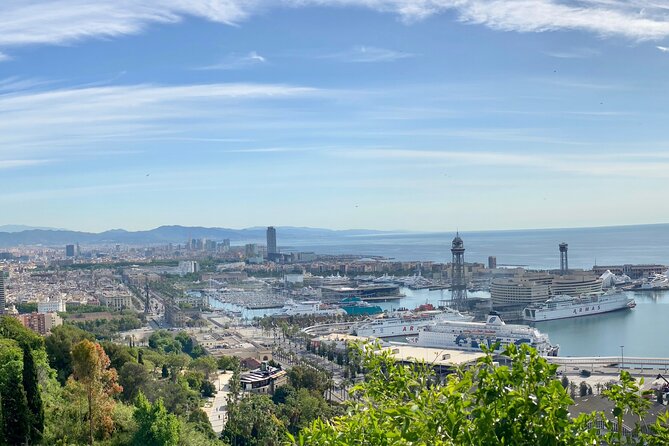
Next comes Montjuïc, where you climb up (virtually, via the tour route) to get panoramic perspective. This is a big deal for first-time visitors. Barcelona has a dramatic spread—coastline, hills, and districts stepping into each other. When you can see the city’s layout, everything else starts to click.
The tour spends about 20 minutes here, focusing on getting a better understanding of the city’s arrangement. In practical terms, this means you’ll be better prepared when you walk around later, because you’ll know what direction “feels” like what.
I also think this is one of the strongest segments for the Zoom format. A panoramic viewpoint is hard to replicate through words alone, but it’s perfect for a guided virtual tour because the guide can frame what you’re looking at.
What to watch for: keep an eye on how the coastline and neighborhoods relate. Even if you don’t memorize everything, you’ll likely remember the big visual relationships.
Casa Batlló: Gaudí and Modernisme explained in plain terms
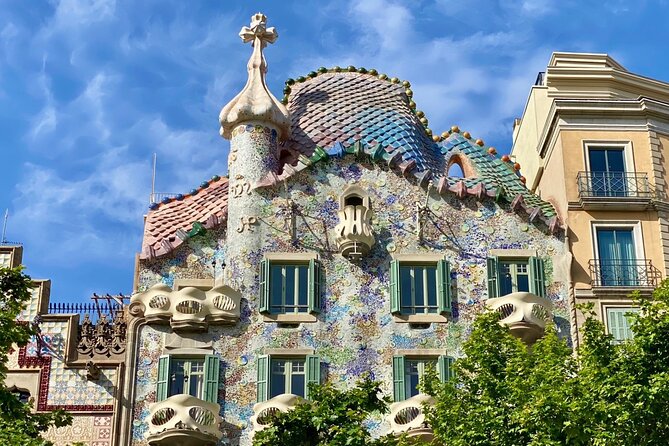
Then you move to Casa Batlló, one of Gaudí’s best-known Modernisme (Modernist) works. The tour uses this stop to connect you to Gaudí’s approach and to the style of architecture happening around him.
You’re given time to understand what makes the building significant—without turning it into a school lecture. The goal is for you to recognize key ideas so that when you later see it in person (or even in photos), it won’t just look like an impressive façade. You’ll have a clearer idea of why it’s designed the way it is.
Possible drawback: Casa Batlló is famous, and the real-life experience depends a lot on being there. Zoom can show details, but it can’t replace scale and tactile feel. Still, as a learning-first stop, it’s excellent.
- Barcelona: Hola Barcelona Public Transport Travel Card★ 4.5 · 20,985 reviews
- Barcelona: 24 or 48-Hour Hop-On Hop-Off Bus Tour★ 4.4 · 20,872 reviews
- Barcelona: Park Guell Guided Tour with Skip The Line Entry★ 4.7 · 17,563 reviews
Playa de la Barceloneta: a virtual lunch moment by the sea
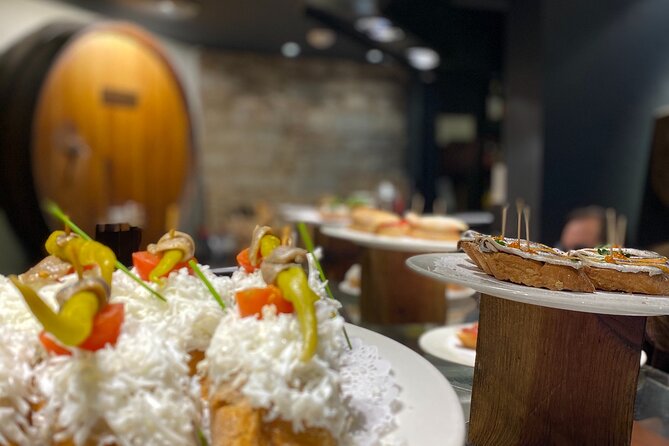
After the architectural focus, you get a breather at Playa de La Barceloneta. The tour frames this as a virtual lunch at the beach, then shifts into Spanish tapas and lunch menus.
I love that this isn’t just “here’s the beach.” It’s a mini lesson on what you might order and how to think about a casual meal in Spain. That’s practical. When you’re in Barcelona for real, you’ll be less likely to overthink what to eat.
It’s also a nice pacing tool. After buildings and viewpoints, a beach segment gives your brain a reset.
Consideration: this part is still virtual. If you’re expecting a full seaside mood—wind, salt air, the sound of waves—you won’t get that. But you will get useful context for how Barcelona food moments often work.
Sagrada Família: the Google Earth 3D flight that makes design make sense
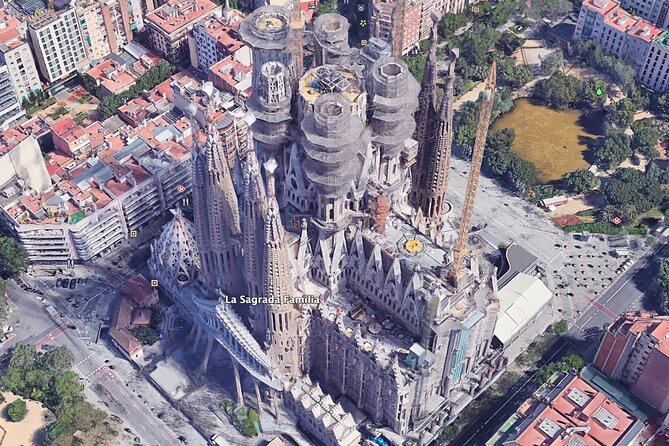
One of the tour’s most useful segments is at Basilica de la Sagrada Familia. Instead of only looking at the exterior, you’ll get a 3D-style “flight” view using Google Earth.
You get about 10 minutes here, with the guide explaining the church’s design. That matters because Sagrada Família can feel like a confusing jumble of shapes from the ground. A virtual 3D approach helps you understand how the whole idea connects.
If you’ve ever stared at Sagrada Família photos and thought, Okay, but where do all the parts fit, this segment is designed for that exact problem. You’re basically being taught how to read the building.
Time check: because the segment is short, don’t panic if you can’t absorb every detail. Treat it like orientation. You can use what you learn to decide what to focus on during a later in-person visit.
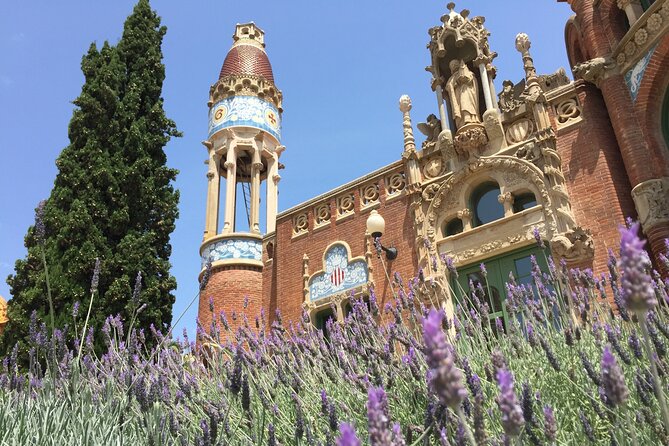
Recinte Modernista de Sant Pau: a quieter stop near the crowds
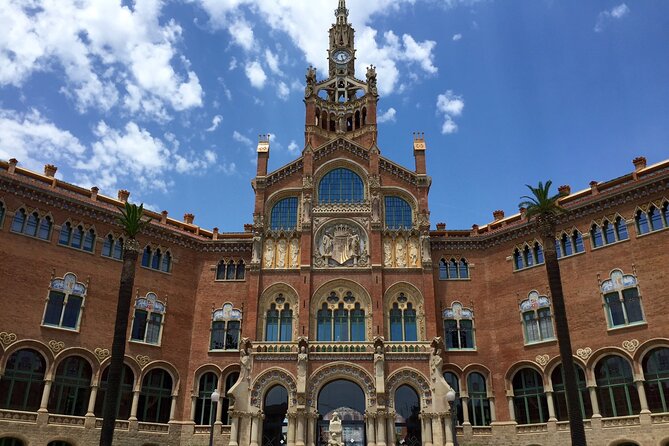
Right near Sagrada Família, you visit Recinte Modernista de Sant Pau. The tour frames it as a place not many visitors focus on, even though it’s only a few minutes away from the big name church.
This is the “smart choice” part of the day. You get a stunning setting and a Modernist connection without the same level of nonstop attention. In a virtual format, that still shines because the guide can emphasize the design elements and the sense of place.
Why it’s valuable: one of the classic Barcelona issues is spending all your time at the top three attractions and missing everything else. This stop helps you balance that out. Even if you don’t visit Sant Pau later, you’ll know it’s worth your time.
El Raval and the live-music bar: finishing with culture, not just sights
The tour threads through the Gothic Quarter and then finishes in a bar area tied to El Raval, with a live music concept. You’ll also learn about a special flamenco-show concept tied to this stop.
I like ending this way because it shifts Barcelona from monuments to lived culture. You don’t just leave with buildings in your head. You leave with an idea of how a night out can feel—music, performance, and the personality of the neighborhoods.
Practical thought: because this is virtual, the “bar” part is more about context and explanation than the full sensory experience. Still, it helps if you’re trying to plan evenings once you’re there.
Price and value: why $53 can be a bargain (for the right trip)
At $53 for about 1 hour 15 minutes, the best value depends on what you’re trying to get out of Barcelona.
If you’re short on time, the tour is a fast way to get context for multiple big sights—Mercat de Sants, Montjuïc viewpoints, Casa Batlló, the beach area, Sagrada Família, Sant Pau, and more. That’s a lot for one paid slot, especially when you consider how much walking and transit you’d otherwise need for a first-pass day.
If you’re not in Barcelona right now, this is even more of a value play. You still get a guided route and a sense of where things are, plus you can ask questions. That can make your eventual in-person time feel more intentional.
If you’re already in Barcelona and want the full experience of each place, you’ll still want to visit in person. But as a “set-up your priorities” purchase, this can save money and time later by helping you decide what’s worth your limited on-the-ground energy.
Who should book this (and who might skip it)
Book it if you want:
- A first look at Barcelona that helps you orient fast
- Interactive Q&A while you learn about major landmarks
- A tour that can work even with mobility challenges
- A planning boost before you spend real money and real time on specific sites
You might skip it if:
- Your goal is pure, street-level experience and you want to feel the city through your senses
- You don’t want any screen time at all
- Your internet connection is unreliable
FAQ
FAQ
How long is the Zoom around panoramic Barcelona experience?
It lasts about 1 hour 15 minutes.
What places does the tour cover?
You’ll pass through Mercat de Sants, Montjuïc, Casa Batlló, Playa de La Barceloneta, Basilica de la Sagrada Família, Recinte Modernista de Sant Pau, the Gothic Quarter, and then finish around El Raval with a live-music bar concept.
Do I need an internet connection?
Yes. An internet connection is required to join the Zoom experience.
Is there any admission fee mentioned for the stops?
For the listed segments, the tour notes admission ticket free for the stops shown.
Will I get a mobile ticket?
Yes. The experience includes a mobile ticket.
How big is the group?
The tour has a maximum of 100 travelers.
Are service animals allowed?
Yes. Service animals are allowed.
How do I account for time zones when booking?
The tour provides guidance for time zones: if you’re in EST, add 6 hours. If you’re in PST, add 9 hours for the booking time slot.
Should you book this Zoom tour?
If you want an efficient, guided first day in Barcelona—especially one with Q&A—I think it’s an easy yes. The route covers enough ground to help you understand the city’s rhythm, and the Sagrada Família Google Earth-style 3D approach is a smart way to make the design less confusing. For $53, it’s also a good value when you compare it to the cost and time of trying to “see everything” before you even know what you like.
I’d book it if you’re planning a future in-person trip, visiting from outside Barcelona, or dealing with mobility limits. Skip it only if you’re looking for full sensory immersion, because this is a guided screen experience first, not a substitute for walking the streets.
More Barcelona Tours on Our Radar
- Barcelona: Sagrada Familia Entry Ticket with Audio Guide
★ 4.6 · 105,312 reviews - Barcelona: Park Güell Admission Ticket
★ 4.4 · 76,534 reviews - Barcelona: Casa Batlló Entry with Self-Audioguide Tour
★ 4.7 · 25,359 reviews - Barcelona: Montjuïc Cable Car Roundtrip Ticket
★ 4.5 · 22,368 reviews - Barcelona: Hola Barcelona Public Transport Travel Card
★ 4.5 · 20,985 reviews