
Reviewed · PRIVATE
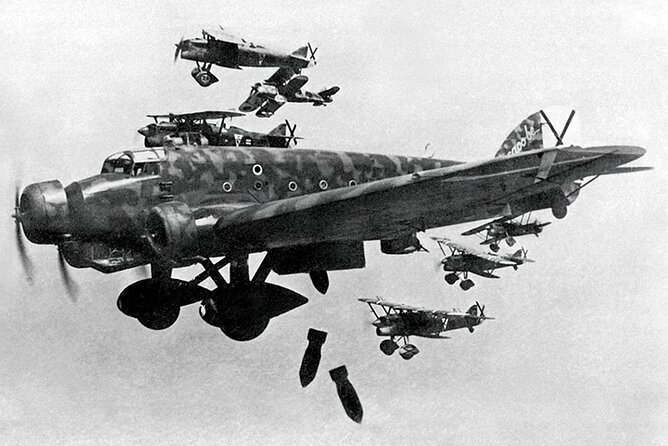
Private Tour Spanish Civil War & Franco’s Dictatorship
A Spanish Civil War tour in Barcelona hits different. You walk past places tied to the conflict and Franco-era oppression, with a guide steering the story street by street. Two things I really like are the private, English-speaking format (you get real attention) and the way the tour links headlines to specific corners of the city. One thing to consider: it runs about 2.5 hours outdoors, so you’ll want good weather and comfy shoes.
You’ll also get a tight, practical route that still covers big themes: the fighting in Barcelona, working-class resistance (including anarchism), and the cultural squeeze under dictatorship. And yes, the guide matters. In the feedback I’ve seen, Yannis gets singled out for being both passionate and solidly prepared, which is exactly the kind of energy you want when the subject is heavy. A possible drawback is simple: this isn’t a quick surface sweep. You’ll need to pay attention, because the tour is built to explain meaning, not just point at buildings.
If you’re the kind of traveler who wants context—why events happened, who suffered, and what survived—this is a strong fit. The stops are spread across central Barcelona (easy to follow), and many sights are treated as free from the tour’s side, so you’re mostly paying for the guidance and the narrative thread.
In This Review
- Key highlights worth your attention
- Walking Barcelona’s Spanish Civil War, not a textbook version
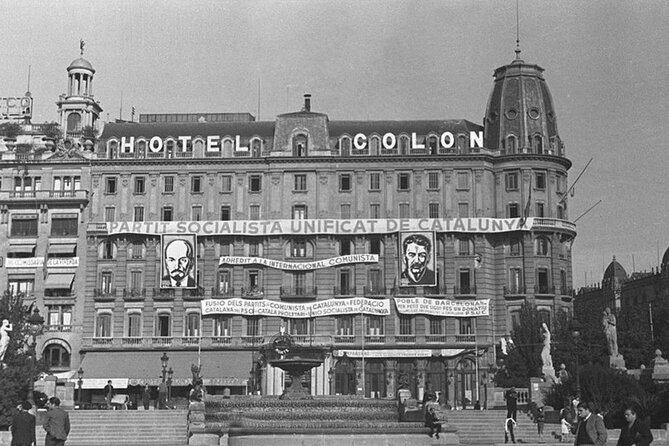
- Starting at Plaça de Catalunya: where the Telefonica fight enters the story
- La Rambla and the mention of George Orweel: tracing war-time presence
- Plaza de Vicenc Martorell and the Raval: working-class suffering, resistance, anarchism
- Antic Hospital de la Santa Creu: a 15th-century setting for war’s aftermath
- Basilica de Santa Maria del Pi and the International Brigades
- Plaça Sant Felip Neri: visible air-raid damage and Axis context
- Guide quality: why Yannis stands out in the feedback
- Price and value: what you’re paying for at $181.41 per person
- Who should book this Spanish Civil War tour in Barcelona?
- Practical tips before you go
- Should you book this private tour?
- FAQ
- FAQ
- How long is the private Spanish Civil War & Franco’s Dictatorship tour?
- What language is the tour offered in?
- Is this tour private or shared?
- What’s included in the price?
- Is admission included for the stops?
- Where does the tour start and where does it end?
- What happens if the weather is bad?
- When will I receive confirmation after booking?
- Are service animals allowed?
- Is lunch or food provided?
Key highlights worth your attention
- Private tour format means your guide can pace the story to your group and questions
- Barcelona landmarks are used like a living timeline, from street life to wartime damage
- Working-class resistance and anarchism get real focus, not a footnote
- International Brigades are tied to a church stop, showing how the war clings to everyday places
- Air-raid damage in the city is discussed directly, with context about Axis involvement
Walking Barcelona’s Spanish Civil War, not a textbook version

The best conflict tours do one job: they make history feel anchored. This one works because you’re not stuck in a classroom voice. You move through Barcelona’s city fabric—plazas, a major promenade area, a historic hospital, and churches—and the guide uses each stop to explain a different layer of the Spanish Civil War and what followed under Franco’s dictatorship.
The format helps too. It’s a private tour, for your group only, offered in English. That’s a big deal for a topic this sensitive: you can ask follow-ups, and your guide isn’t splitting attention across strangers. For me, that’s one of the clearest “value” signals here—what you’re really buying is focused interpretation, not just a walk.
And the pacing is sensible. At roughly 2 hours 30 minutes, the tour is long enough to build momentum, but not so long that you start zoning out. The stops are also close enough that you’re not constantly thinking about logistics.
More private days built around you


Starting at Plaça de Catalunya: where the Telefonica fight enters the story
You begin at Foot Locker, Pl. de Catalunya 20. The tour kicks off around Plaça de Catalunya, a natural gateway into the city’s wartime geography.
This first stop is about framing. The guide sets the stage for the Spanish Civil War in Barcelona and points to the fight over the Telefonica building. Even if you know the names and dates, the “why here, why now” is what makes this opening matter. A building like Telefonica connects the war to communication and power—who controls information, who controls coordination, and what that meant on the ground.
Practical tip: this is a good moment to get your bearings. You’ll be orienting to the rest of the route, and the guide’s overview will make later stops click.
La Rambla and the mention of George Orweel: tracing war-time presence
Next comes La Rambla, where the tour touches the hotel where George Orweel stayed during the Spanish Civil War.
Now, let’s be honest: “literary wartime sightings” can turn into trivia on some tours. Here, it’s used as a doorway. It’s a reminder that the conflict drew outside attention, and that Barcelona wasn’t just a local crisis—it was part of a wider struggle for political legitimacy and understanding.
The stop lasts about 20 minutes, so you’re not stuck listening forever. It’s long enough for the guide to connect names and timing to the city atmosphere at the time, without turning the tour into a biography.
If you like your history with people in it—who noticed, who wrote, who traveled—this stop gives you that human angle without derailing the main theme.
Plaza de Vicenc Martorell and the Raval: working-class suffering, resistance, anarchism
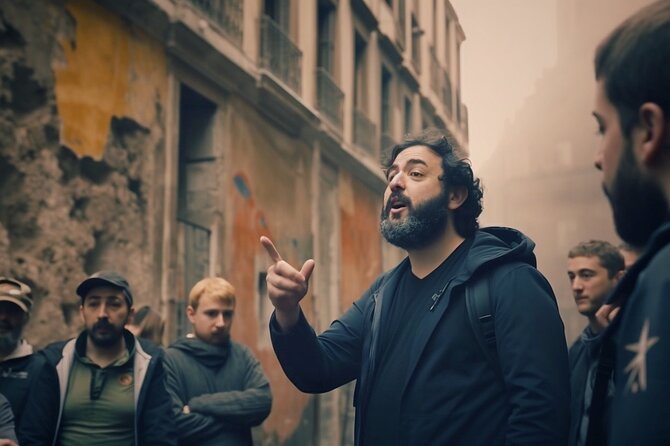
Your route then heads to Plaza de Vicenc Martorell, right in the orbit of the Raval. This is where the tour’s tone gets more grounded.
The guide explains the Raval neighborhood as a center of working-class suffering, resistance, and anarchism. That combination matters. Too many simplified narratives treat the Spanish Civil War like only factions and flags. This stop highlights daily pressure—who bore the cost, and how some people organized against it.
Why I think this works well on a walking tour: the Raval is the kind of area where you can still feel layers. Even without seeing war scenes directly, the neighborhood’s identity helps you understand why resistance wasn’t an abstract idea. It was survival, politics, and community at the same time.
This stop is about 20 minutes, which keeps it focused. If you’re prone to burnout when historical topics get grim, the tour balances this heaviness with other stops that broaden the picture.
Antic Hospital de la Santa Creu: a 15th-century setting for war’s aftermath
Next is Antic Hospital de la Santa Creu, a 15th-century hospital. The guide talks about wounded soldiers and civilians passing through these kinds of places, and then connects that suffering to the end of the war and the cultural oppression under the dictatorship.
This is one of those stops where location helps your brain do the work. Hospitals are built for bodies and pain, but the tour doesn’t stop at medical logistics. It connects the war’s violence to what happens after the fighting ends—how authoritarian power shapes culture, memory, and daily life.
The emotional tone shifts here. You go from resistance and conflict to the quieter, longer punishment of dictatorship: what people were forced to lose, and what was controlled.
Timing is about 20 minutes, which is just enough to understand the point without feeling like you’re being “processed” through tragedy. It’s heavy, but it stays purposeful.
- Barcelona: Hola Barcelona Public Transport Travel Card★ 4.5 · 20,985 reviews
- Barcelona: 24 or 48-Hour Hop-On Hop-Off Bus Tour★ 4.4 · 20,872 reviews
- Barcelona: Park Guell Guided Tour with Skip The Line Entry★ 4.7 · 17,563 reviews
Basilica de Santa Maria del Pi and the International Brigades
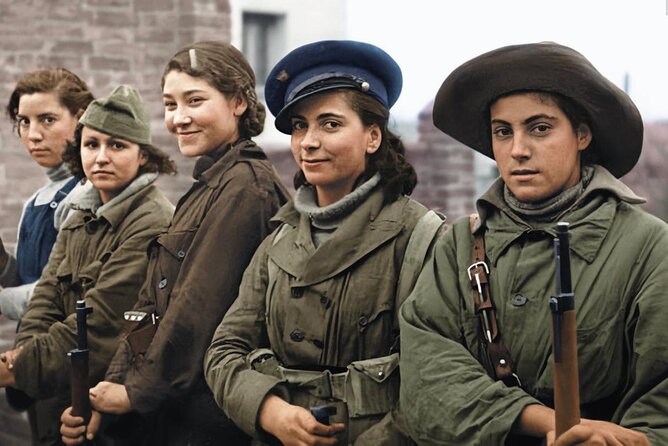
Then you head to Basilica de Santa Maria del Pi. The tour says the church hides a little-known remnant of the Spanish Civil War in plain sight, and the guide uses that to discuss the International Brigades.
This is a smart way to teach: instead of asking you to imagine what you can’t see, the tour points to something physical. Even if you’re not sure what you’re looking for at first, the guide’s framing helps you notice what matters.
International Brigades are often treated as a general historical theme—foreign volunteers, solidarity, and ideology. Here, the connection to a specific site brings it down from the global scale to the local one. You start to see how the war was present not just in battlefields, but inside ordinary structures and communities.
This stop runs about 30 minutes, so it’s given enough time for context. If you care about the political dimensions of the war, this is a standout.
Plaça Sant Felip Neri: visible air-raid damage and Axis context
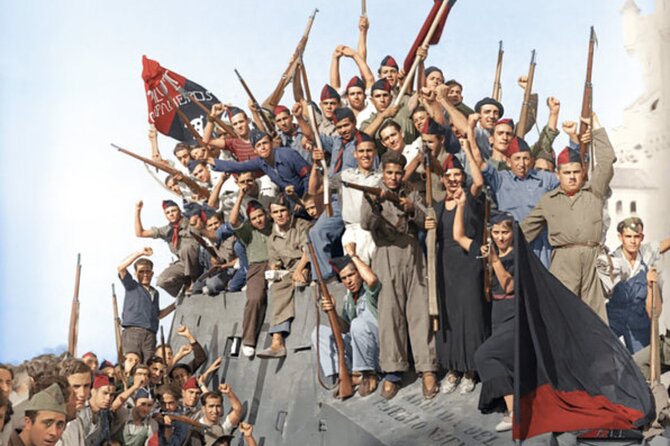
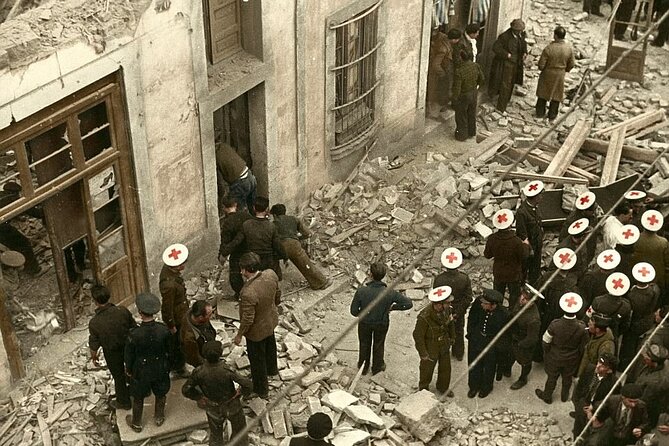
Your final stop is Plaça Sant Felip Neri, discussed as the place in Barcelona with some of the most visible damage from aerial bombings. The guide explains the tragedy of the bombing and the involvement of the Axis powers.
This is where the tour becomes sharply visual. Rather than telling you how destructive the war was, you’re shown the kind of damage that can remain in city stone and facades for decades. It’s a hard lesson, delivered without melodrama.
The stop lasts around 30 minutes, which is good because you don’t want this part rushed. The guide needs time to connect the bombing to the broader conflict, not just to shock you.
At the end, the tour finishes near Plaça Nova (close to the cathedral). It’s a convenient landing spot if you want to keep exploring after the story settles in.
Guide quality: why Yannis stands out in the feedback
For a tour like this, you’re paying for interpretation. The subject matter is complex, and the city locations can easily become generic if the guide isn’t careful.
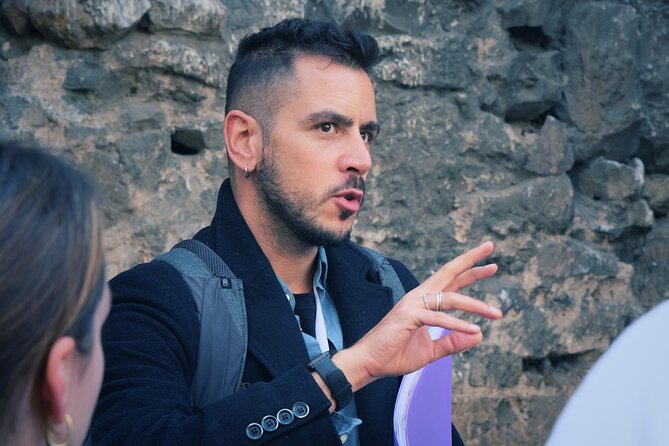
The name Yannis comes up strongly in the kind of feedback that matters most: people describe him as both highly passionate and genuinely prepared, with insights into the conflict and the conditions that led to it. That combo—energy plus competence—is exactly what makes a history tour feel like a conversation rather than a lecture.
If you’re booking because you want clarity on causes and consequences (not just a list of events), this guide reputation is a reassuring signal.
Price and value: what you’re paying for at $181.41 per person
At $181.41 per person for a private tour lasting about 2 hours 30 minutes, the math only makes sense if you’re using the private format well.
Here’s where the value comes from:
- You’re not sharing your guide’s attention with a crowd.
- The tour is structured around multiple specific sites, so you’re paying for a guided storyline across the city.
- The interpretation focuses on complex themes: resistance, anarchism, the International Brigades, and dictatorship’s cultural oppression.
If you’re traveling solo, it may feel pricey compared with group tours. If you’re traveling with another person or family members who actually want context, the price starts to make more sense because you’re buying attention and pacing.
Also, the tour is offered in English with mobile ticket support, which reduces friction. You’re spending less mental energy on logistics and more on the walk.
Who should book this Spanish Civil War tour in Barcelona?
This is a great match if you:
- want a private walking tour with real conversation time
- care about the Spanish Civil War beyond battle dates
- like learning through place—plazas, churches, and a historic hospital
- appreciate darker history presented with context and care
It may be less ideal if you:
- want a light, casual sightseeing stroll
- dislike listening for extended explanations outdoors
- have very limited mobility or hate standing/walking (the stops are in central areas, but it’s still a walking tour)
Practical tips before you go
A few small things make the day easier:
- Wear comfortable shoes. The route is central but it’s still a walk.
- Plan for good weather. If conditions aren’t right, the tour may be offered on a different date or refunded.
- Since no lunch or drinks are included, either eat before you start or plan to grab something right after.
Should you book this private tour?
I’d book it if you want your Barcelona history to have teeth. The tour ties the Spanish Civil War and Franco-era dictatorship to clear, specific places—Telefonica’s conflict, Raval working-class resistance and anarchism, a 15th-century hospital’s wartime role, International Brigades referenced inside a church, and air-raid damage you can still see.
Choose it especially if you’re traveling with someone who also likes context and discussion. The private format is doing real work here.
If you’re only looking for quick background and photo stops, you might prefer something lighter. But if you want a guided explanation that connects events to real corners of Barcelona, this one is a strong choice.
FAQ
FAQ
How long is the private Spanish Civil War & Franco’s Dictatorship tour?
It’s about 2 hours 30 minutes (approx.).
What language is the tour offered in?
The tour is offered in English.
Is this tour private or shared?
This is a private tour/activity, with only your group participating.
What’s included in the price?
An expert tour guide is included.
Is admission included for the stops?
Admission tickets are noted as free for the listed stops.
Where does the tour start and where does it end?
It starts at Foot Locker, Pl. de Catalunya, 20, Ciutat Vella, 08002 Barcelona. It ends at Plaça Nova, Ciutat Vella, 08002 Barcelona, close to the Cathedral.
What happens if the weather is bad?
This experience requires good weather. If it’s canceled due to poor weather, you’ll be offered a different date or a full refund.
When will I receive confirmation after booking?
You’ll receive confirmation at booking time, unless you book within 2 days of travel, in which case confirmation is received within 48 hours, subject to availability.
Are service animals allowed?
Yes, service animals are allowed.
Is lunch or food provided?
No. No food or drink is included in the tour.
Private Days Built Around You
- Montserrat Monastery Small Group or Private Tour Hotel pick-up
★ 5.0 · 5,144 reviews - Tour Welcome Barcelona with Local Guide in Eco Tuk Tuk Private
★ 5.0 · 1,882 reviews - Barcelona Private Tour by Sidecar Motorcycle
★ 5.0 · 1,750 reviews - Barcelona: Private Group Bike Tour
★ 4.8 · 1,420 reviews - Barcelona Helicopter, Sailboat & Old Town Private Walking Tour
★ 5.0 · 1,395 reviews
More Ways to Tour Barcelona
- Barcelona: Casa Batlló Entry with Self-Audioguide Tour
★ 4.7 · 25,359 reviews - Barcelona: 24 or 48-Hour Hop-On Hop-Off Bus Tour
★ 4.4 · 20,872 reviews - Barcelona: Park Guell Guided Tour with Skip The Line Entry
★ 4.7 · 17,563 reviews - Barcelona: Sagrada Familia Skip-the-Line Entry Ticket & Tour
★ 4.8 · 12,789 reviews - Barcelona: FC Barcelona Museum “Barça Immersive Tour” Ticket
★ 4.4 · 10,944 reviews
More Barcelona Tours on Our Radar
- Barcelona: Sagrada Familia Entry Ticket with Audio Guide
★ 4.6 · 105,312 reviews - Barcelona: Park Güell Admission Ticket
★ 4.4 · 76,534 reviews - Barcelona: Casa Batlló Entry with Self-Audioguide Tour
★ 4.7 · 25,359 reviews - Barcelona: Montjuïc Cable Car Roundtrip Ticket
★ 4.5 · 22,368 reviews - Barcelona: Hola Barcelona Public Transport Travel Card
★ 4.5 · 20,985 reviews
Just Rated Around Barcelona





Private, compared.
 ★ 5.0Montserrat Monastery Small Group or Private Tour Hotel pick-upFrom $1145,144 reviews
 ★ 5.0Tour Welcome Barcelona with Local Guide in Eco Tuk Tuk PrivateFrom $281,882 reviews
 ★ 5.0Barcelona Private Tour by Sidecar MotorcycleFrom $1991,750 reviews
 ★ 4.8Private Group Bike TourFrom $411,420 reviews
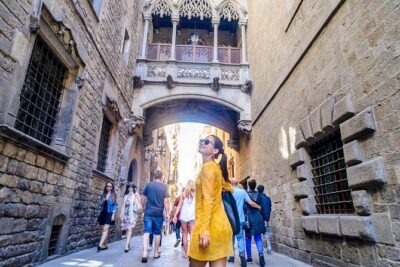 ★ 5.0Barcelona Helicopter, Sailboat & Old Town Private Walking TourFrom $5131,395 reviews
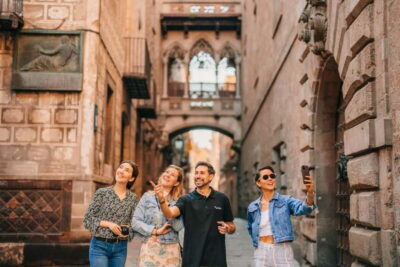 ★ 4.7Helicopter, Boat Ride & Old Town Private TourFrom $5001,357 reviews
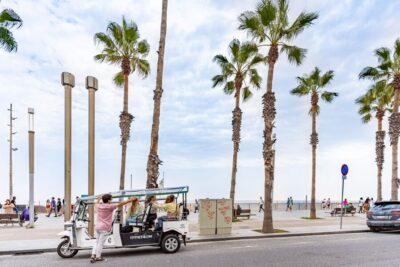 ★ 4.9Private City Tour by Eco Tuk TukFrom $331,339 reviews
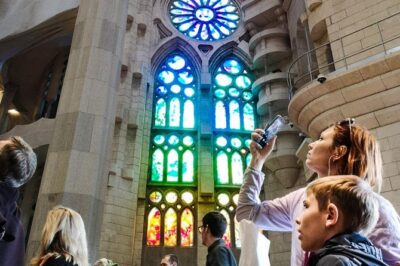 ★ 4.5Sagrada Familia & Gaudi Tour Private or Small Group with TicketsFrom $901,188 reviews