
Reviewed · PRIVATE
Segway Flexible Private Tour in Barcelona
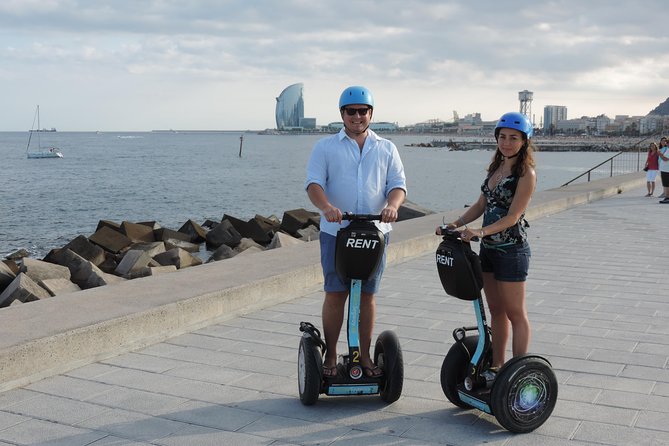
Segwaying Barcelona saves your legs. This private tour lets you set your route and cruise past ancient walls, Olympic-era spots, and Gaudí sights fast, with training before you ride. I like that you get real guidance for how to handle the Segway in traffic-adjacent streets, and I also like how much ground you cover without turning your day into a shuffle-fest. One catch: the big-ticket sights are mostly viewed from the outside, so you may still need tickets if you want to go in (like Sagrada Família).
You also get small-group spacing by local rules, so you’re not doing close-contact riding. The guides are a big reason people rave about this experience, with names like Ivan, Felipe, Pablo, and Lunis showing up in the kind of feedback that usually means patient coaching and clear explanations. Plan to arrive on time for the check-in and practice so the rest of your ride stays smooth.
Key highlights you should know before you go
- Flexible route control so your guide can match what you want to see
- Segway training first, so a first-timer can feel confident fast
- A smart mix of neighborhoods: Port Vell, Eixample Modernism, and Ciutadella green space
- Outside viewing for major icons since entrance tickets aren’t included for several landmarks
- Weather-ready gear with raincoats, plus bottled water and mandatory helmets
In This Review
- Why this flexible private Segway tour feels efficient (and fun)
- Segway training, safety, and the rules that keep it comfortable
- From Torre Romana to Port Vell: Barcelona’s old harbor story in minutes
- Las Ramblas to the shipyards: Gothic stone, then straight to the sea
- Olympic Port to Barceloneta and La Monumental: beach + spectacle
- Gaudí highlights without the gate lines: Sagrada Família views and more
- Eixample straight shots: Arc de Triomf, Modernist lamps, and Ciutadella Park
- Ciutadella’s exhibition buildings: greenhouses, fountains, and monuments
- El Born and the waterfront fortifications: history you can see
- Price and value: is $58.87 worth it?
- Who this Segway tour is best for in Barcelona
- Should you book a Segway Flexible Private Tour in Barcelona?
- FAQ
- How long is the Segway Flexible Private Tour in Barcelona?
- Where does the tour start and end?
- Is this tour truly private?
- What is the minimum age to ride?
- What weight limits apply for riding the Segway?
- What equipment is included?
- Are tickets or entrance fees included for the sights?
- What language are the guides available in?
Why this flexible private Segway tour feels efficient (and fun)
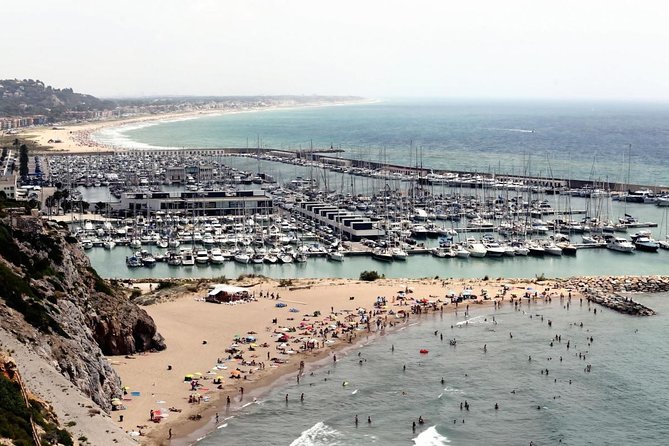
Barcelona is perfect for walking, but some days you want less effort and more getting-to-the-view-parts. This Segway tour is built for exactly that: quick hops between areas, frequent photo pauses, and a guide who can adjust on the fly.
The private setup matters. You’re not stuck with the pace of a large group, and you can tell your guide what you care about most—Roman leftovers, Olympic sites, or Gaudí architecture. If you’re short on time or you want a “see a lot in one day” move without wasting it on long transfers, this is a strong option.
And yes, it’s fun. The Segway is an easy way to feel like you’re moving through the city with purpose, not just wandering until your feet revolt.
Segway training, safety, and the rules that keep it comfortable
Before you roll out, you’ll get a training session and the equipment you need. Helmets are mandatory and provided in different sizes, and raincoats are available if the weather turns. Bottled water is included, which sounds small until you’re halfway through a sunny ride and grateful you didn’t have to hunt for it.
A few practical limits are worth knowing up front:
- Age: minimum age is 12, but local law requires 16+ to ride a Segway. If someone is younger, you’ll use electric bicycles suited for children (tour price stays the same).
- Weight: minimum 45 kg (100 lbs) and maximum 117 kg (260 lbs) for Segway riders.
- Group handling: there’s no fixed participant cap listed, but by local law riders are split into groups of up to 6 participants plus 1 guide, with at least 50 meters between groups.
- No riding under influence: the tour is forbidden for anyone under the influence of alcohol, drugs, or strong medicine.
If you’ve never ridden one before, this is the part you’ll appreciate most. The guides give you the skills so you can drive in city conditions. The goal is simple: you should feel in control quickly, not tense and stiff.
More private days built around you


From Torre Romana to Port Vell: Barcelona’s old harbor story in minutes
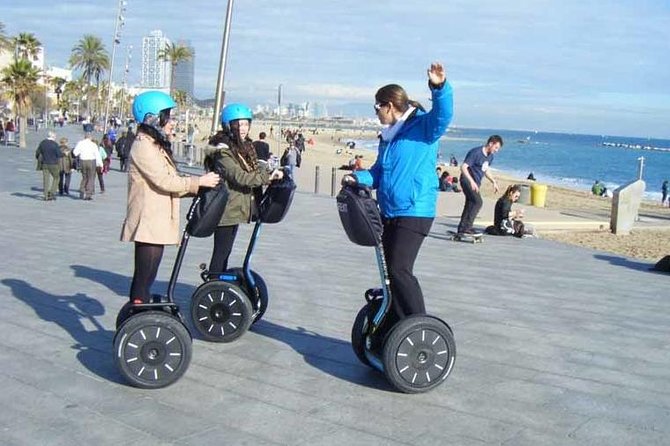
The tour starts at Carrer del Correu Vell (Ciutat Vella), right in the historic core. From there, you’ll begin with a real time machine moment: Torre Romana, a 4th-century AD tower that’s part of Barcelona’s ancient Roman walls. It’s short on drama compared to the big monuments later in the day, but that’s the point. It quietly anchors you in the origin story of the city, the Roman colony of Barcino.
From the Roman wall area, the route heads toward Port Vell, Barcelona’s old harbor. Today it’s a modern marina, but you still get the sense of how this city grew around water, trade, and movement. If you like seeing how one place turns into another across centuries, Port Vell is a satisfying stop.
You’ll also pass Cara de Barcelona, a colorful sculpture created by Roy Lichtenstein for the 1992 Olympics. It’s a pop-art-meets-Barcelona kind of moment, and it helps connect Olympic-era identity with the city’s longer love affair with art and design. Even from the outside, it’s the kind of object that makes people stop and look up from their phones.
Finally, you’ll reach the Christopher Columbus monument. This 60-meter column at the end of Las Ramblas is one of Barcelona’s recognizable landmarks, and the sea-facing angle is a reminder of how the city imagines its own role in bigger world stories.
Las Ramblas to the shipyards: Gothic stone, then straight to the sea
After the Columbus column, the tour moves into the area of the old maritime infrastructure: the Les Drassanes Reials (Royal Shipyards). These are Gothic-era buildings from the 13th century, originally used to build and repair ships. Today they’re tied to the Maritime Museum, but even without entry, the complex gives you a sense of Barcelona as a working port, not only an art museum on wheels.
Then comes the switch to energy level: Las Ramblas. You’ll glide along Barcelona’s most famous boulevard—shops, cafés, flower stalls, street performers. This isn’t a quiet “listen to the city” stretch. It’s a city stage. If you like people-watching, it’s ideal. If you hate crowds, you’ll appreciate that you’re seeing it from a moving point of view rather than being trapped in it inch-by-inch.
Olympic Port to Barceloneta and La Monumental: beach + spectacle
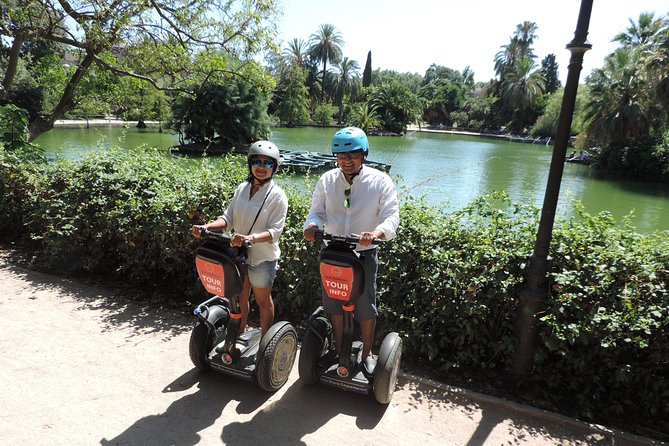
Next you’ll ride toward the 1992 Olympic zone, including Port Olimpic. You can pick up how the Olympics reshaped this waterfront. It’s one of the best examples of how a major event can permanently change a neighborhood’s layout and identity.
Then you head toward Barceloneta, the historic seaside district that used to be a fishing quarter and is now known for sandy beach life and seafood along the promenade. From the Segway, it’s easy to feel how close Barcelona’s neighborhoods are to the water—walkable, but also a world apart when you’re comparing street texture and pace.
A short stop brings you near La Monumental, the former bullring built in 1914 with Moorish and Byzantine architectural influences. Today it’s used for concerts, exhibitions, and events. Even if you don’t go inside, you get a strong visual contrast: a big performance venue that used to host one tradition and now supports others.
Gaudí highlights without the gate lines: Sagrada Família views and more
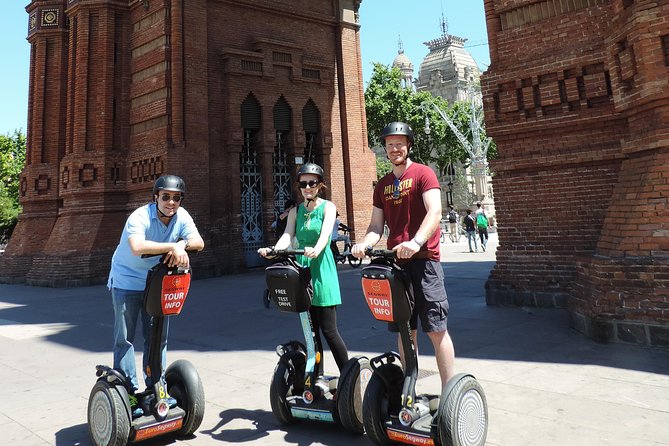
This is usually the main reason people book. The route brings you to Basilica de la Sagrada Família, designed by Antoni Gaudí. Construction began in 1882 and continues today, and the UNESCO status isn’t just a sticker here. The basilica’s spires and detailed façades are built to pull your eyes upward, even when you’re only stopping for a short look.
Important practical note: entry isn’t included for Sagrada Família on this tour. That means you get the visual hit and photo time, but not the interior experience. If you want to see it inside, you’ll need to plan that separately.
Right nearby you’ll pass Plaça de Gaudí and Plaça de la Sagrada Família. These are the green, open spots where the basilica becomes easier to frame in photos and easier on your legs. They’re also great for a quick pause so you can reset your camera settings and your brain.
From there the tour shifts into “Modernist architecture blocks,” and it’s a lot of fun to cover this style by motion. You’ll see Palau Macaya (a Modernist building finished in 1901), then Casa de les Punxes with its castle-like pointed towers (finished in 1905), plus Palau del Baró de Quadras (finished in 1904). These stops help you see that Gaudí isn’t the only name worth chasing in Barcelona’s Modernist wave. Josep Puig i Cadafalch shows up again and again, and the buildings give you a feel for the era’s theatrical design.
Then you reach the big two Gaudí exteriors most people dream about: La Pedrera – Casa Milà and Casa Batlló. Both are UNESCO-listed Gaudí works, and both are shown from the outside on this tour. That’s not a deal-breaker; it’s actually a time-saver. But if you were hoping to tour interiors, you’ll need separate tickets.
As you cruise along Passeig de Gràcia, you’ll recognize the boulevard instantly. It’s where luxury shopping meets architecture tourism. Even if shopping isn’t your thing, the street design and the clustered façades make it worth slowing down for a few photos.
- Barcelona: Hola Barcelona Public Transport Travel Card★ 4.5 · 20,985 reviews
- Barcelona: 24 or 48-Hour Hop-On Hop-Off Bus Tour★ 4.4 · 20,872 reviews
- Barcelona: Park Guell Guided Tour with Skip The Line Entry★ 4.7 · 17,563 reviews
Eixample straight shots: Arc de Triomf, Modernist lamps, and Ciutadella Park
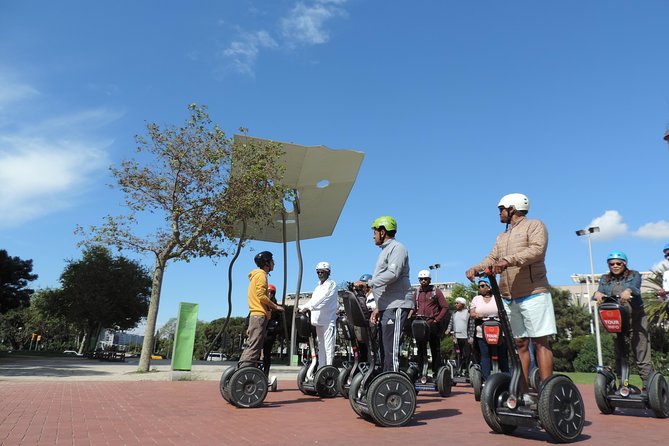
After the Gaudí stretch, the route continues through the city’s grid-like heart. You’ll ride past Plaça de Tetuan and along Passeig de Sant Joan, a wide tree-lined avenue connecting toward Gràcia. This is where the city feels more like neighborhoods stitched together, less like a single attraction line.
The stop at Arc de Triomf is quick but satisfying. Built in 1888 as the entrance to the Universal Exhibition, the Neo-Mudéjar brickwork and sculptural details make it a great photo moment. It’s the kind of monument you can appreciate even without reading every plaque.
Along the way, you’ll see the Fanals de Pere Falqués i Urpí, decorative street lamps designed in the early 20th century. They add a subtle “only-in-Barcelona” feeling. It’s proof the city’s design language goes beyond the famous buildings.
There’s also a monument tied to Barcelona’s modernization: the Rius i Taulet Monument, honoring Mayor Francisco Rius i Taulet and the 1888 Universal Exhibition work. If you like how politics, exhibitions, and infrastructure show up in stone and bronze, this moment clicks.
Then you move into a total mood change: Parc de la Ciutadella. This park is one of Barcelona’s largest green spaces, with gardens, fountains, a lake, and historic structures from the 1888 Universal Exhibition era. It’s also a great place to feel how Barcelona can be both city-hard and nature-soft in the same day.
Ciutadella’s exhibition buildings: greenhouses, fountains, and monuments
Ciutadella isn’t just trees. It has a whole set of exhibition-era structures, and the tour uses the park well so you don’t waste time hunting them down.
You’ll see Castell dels Tres Dragons, a Modernist building designed for the 1888 Universal Exhibition. It originally served as a café-restaurant and later housed the Zoology Museum. Entry isn’t included here, but the exterior architecture is worth a quick look.
Nearby, the tour points you to Homenatge a l’Exposició Universal de 1888, plus the glass-and-iron Hivernacle and the shaded Umbráculo greenhouses. These spots make the park feel different from a typical city park. They also give you a pleasant pause from your main sight route.
You’ll also ride past the Pèrgola del Monumental, a Modernist pergola tied to the 1929 International Exhibition. Then it’s time for the showpiece: Cascada Monumental, a grand fountain with dramatic sculptures and waterfalls, designed for the 1888 Universal Exhibition with contributions from a young Antoni Gaudí. Even when you’re only there for a short stop, it’s a “how did they build this here” kind of moment.
The tour also takes you by the Gran Lago in the park, where rowing boats and walking paths surround the water. It’s a good reset point for your energy level.
If you want a cultural anchor inside the park, the tour includes the Parliament of Catalonia building, a neoclassical structure in a former arsenal setting. You’ll also pass Plaça de Joan Fiveller and an equestrian statue of General Joan Prim. These are small stops, but they add local context to a space that can otherwise feel like just a scenic break.
Near the end of the park loop, there’s Homenatge a Picasso, a 1983 tribute to Pablo Picasso. The park becomes a kind of outdoor gallery, not only a place to rest.
El Born and the waterfront fortifications: history you can see
Leaving Ciutadella, the route reaches El Born Centre de Cultura i Memòria, set in a restored 19th-century market building. It also preserves archaeological remains from the 1700s city. Entry isn’t the focus, but the idea is: Barcelona’s history is layered, and you can feel it under the streets.
Then the tour travels through El Born, a historic neighborhood known for narrow medieval streets and a strong arts-and-food vibe. It’s a good match for the “see it from above and then down into the mood” approach, because this part of Barcelona is all about atmosphere.
Next stop: Estació de Franca. This station is known for a classical-modernist mix, including large iron-and-glass roofs and marble details. It’s both a transport hub and a historic landmark, which makes it a neat change from monuments.
You’ll also be near Basílica de Santa Maria del Mar, one of the best examples of Catalan Gothic architecture. Like several other major sights on this route, entry isn’t included, but the proportions and windows are often what people notice even from outside.
On the waterfront edge, you’ll see the Pla de Palau lampposts designed by Antoni Gaudí, a set of wrought-iron lamps with organic forms. It’s a small thing, but it’s a very Barcelona thing: design that keeps repeating in the street-level details.
Finally, the route reaches Baluard de Migdia i Muralla de Mar, remains of the 17th-century city walls near the harbor. You get military history and scenic water views in the same sweep. The tour also includes Casa Llotja de Mar, originally a 14th-century merchants’ exchange that later served as a stock exchange and art school, with Gothic and Neoclassical architecture.
Price and value: is $58.87 worth it?
At about $58.87 per person, this tour is priced like you’re buying time savings and ease, not like a museum ticket. And that’s the key way to judge value.
You’re paying for:
- A private customized route through multiple neighborhoods
- Segway use plus helmets and training
- A guide/instructor to keep things safe and moving
- Stops that cover Roman origins, Olympic waterfront, Gaudí icons, and major parks without you doing all the walking
You’re not paying for:
- Entrance to several big interiors, including major Gaudí sites and other landmark buildings
So the value depends on your priorities. If you mostly want the sights and photos, this price can feel like a bargain. If you want to spend long stretches inside major attractions, you’ll end up adding tickets anyway, and a different tour style might be a better fit.
Who this Segway tour is best for in Barcelona
This tour shines for three types of people:
- First-time Barcelona visitors who want an overview that includes both Gaudí and the waterfront
- Families with teens who want motion and flexibility instead of long walking days
- Anyone who dislikes steep hills or heavy walking, since this route connects very different areas without draining your energy
It’s also smart if you’re visiting with limited time and you want the city’s highlights lined up into one ride. If you hate crowds and prefer quiet, you’ll still be able to see busy streets, but you’ll be moving through them rather than stuck standing in them.
Should you book a Segway Flexible Private Tour in Barcelona?
I’d book this if your main goal is getting great coverage of Barcelona’s big “wow” zones without spending the entire day walking. The combination of private routing, training support, and a guide who helps you hit Roman, Modernist, and Olympic highlights in one flow is a strong match for many trip styles.
Skip it (or plan extra tickets) if you know you’ll want long interior visits at places like Sagrada Família, La Pedrera, and Casa Batlló. In that case, treat this as the outside-and-overview day, then follow up with your must-enter buildings.
If you do book, be ready to arrive early for practice, wear comfortable shoes, and bring your ID. Then let the guide shape the route around what you care about most. This tour is built for that kind of day.
FAQ
How long is the Segway Flexible Private Tour in Barcelona?
The duration is listed as approximately 5 minutes to 3 hours, depending on the route and timing you choose.
Where does the tour start and end?
The tour starts at Carrer del Correu Vell, 6, Ciutat Vella, 08002 Barcelona, Spain and ends back at the same meeting point.
Is this tour truly private?
Yes. It is described as a private tour, and only your group will participate. By local laws, riders may be divided into smaller groups of up to 6 participants plus 1 guide with at least 50 meters between groups.
What is the minimum age to ride?
The minimum age to participate is 12, but local law requires riders to be at least 16 to ride a Segway. For younger participants, the provider supplies electric bicycles suited for children at the same tour price.
What weight limits apply for riding the Segway?
Segway riders must be between 45 kg (100 lbs) and 117 kg (260 lbs).
What equipment is included?
You receive a mandatory helmet (with free rental in multiple sizes), use of the Segway, bottled water, and raincoats in case of bad weather.
Are tickets or entrance fees included for the sights?
Entrance is not included for museums and other buildings, and tickets are specifically noted as not included for some major sites such as Sagrada Família, La Pedrera, Casa Batlló, Castell dels Tres Dragons, and Basílica de Santa Maria del Mar.
What language are the guides available in?
The tour is offered in English, and it may be operated by multi-lingual guides.
Private Days Built Around You
- Montserrat Monastery Small Group or Private Tour Hotel pick-up
★ 5.0 · 5,144 reviews - Tour Welcome Barcelona with Local Guide in Eco Tuk Tuk Private
★ 5.0 · 1,882 reviews - Barcelona Private Tour by Sidecar Motorcycle
★ 5.0 · 1,750 reviews - Barcelona: Private Group Bike Tour
★ 4.8 · 1,420 reviews - Barcelona Helicopter, Sailboat & Old Town Private Walking Tour
★ 5.0 · 1,395 reviews
More Ways to Tour Barcelona
- Barcelona: Casa Batlló Entry with Self-Audioguide Tour
★ 4.7 · 25,359 reviews - Barcelona: 24 or 48-Hour Hop-On Hop-Off Bus Tour
★ 4.4 · 20,872 reviews - Barcelona: Park Guell Guided Tour with Skip The Line Entry
★ 4.7 · 17,563 reviews - Barcelona: Sagrada Familia Skip-the-Line Entry Ticket & Tour
★ 4.8 · 12,789 reviews - Barcelona: FC Barcelona Museum “Barça Immersive Tour” Ticket
★ 4.4 · 10,944 reviews
More Barcelona Tours on Our Radar
- Barcelona: Sagrada Familia Entry Ticket with Audio Guide
★ 4.6 · 105,312 reviews - Barcelona: Park Güell Admission Ticket
★ 4.4 · 76,534 reviews - Barcelona: Casa Batlló Entry with Self-Audioguide Tour
★ 4.7 · 25,359 reviews - Barcelona: Montjuïc Cable Car Roundtrip Ticket
★ 4.5 · 22,368 reviews - Barcelona: Hola Barcelona Public Transport Travel Card
★ 4.5 · 20,985 reviews
Just Rated Around Barcelona




Private, compared.
 ★ 5.0Montserrat Monastery Small Group or Private Tour Hotel pick-upFrom $1145,144 reviews
 ★ 5.0Tour Welcome Barcelona with Local Guide in Eco Tuk Tuk PrivateFrom $281,882 reviews
 ★ 5.0Barcelona Private Tour by Sidecar MotorcycleFrom $1991,750 reviews
 ★ 4.8Private Group Bike TourFrom $411,420 reviews
 ★ 5.0Barcelona Helicopter, Sailboat & Old Town Private Walking TourFrom $5131,395 reviews
 ★ 4.7Helicopter, Boat Ride & Old Town Private TourFrom $5001,357 reviews
 ★ 4.9Private City Tour by Eco Tuk TukFrom $331,339 reviews
 ★ 4.5Sagrada Familia & Gaudi Tour Private or Small Group with TicketsFrom $901,188 reviews