
Reviewed · WALKING TOURS
Street Art, Sculptures & Crime Stories Walking Tour – Barcelona
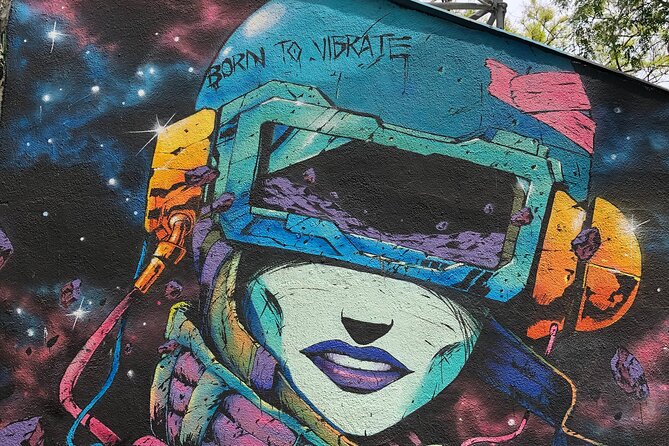
Barcelona’s street art has a story behind every wall. This 2.5-hour walk through El Raval, the Gothic Quarter, La Rambla, and El Born turns murals, mosaics, and even crime-era tales into a route you can picture later. I love that the group stays small (up to 15 people), so the guide can actually slow down and answer questions. I also love the focus on context: you’re not just looking at art, you’re learning why it’s there and what it’s reacting to.
One possible drawback: it’s a true walking tour. If you want long stops inside lots of indoor sites, or you hate moving fast in hot or wet weather, this might feel a bit intense.
In This Review
- Street Art As a City Map: What You’re Really Buying
- Raval’s Dark Past in Big Murals and Tiny Alleys
- La Rambla Without the Usual Script: Miró in Plain Sight
- Gothic Quarter’s Old Stones, New Messages
- El Born / La Ribera: Optical Illusions and Execution-Era Legends
- Price, Timing, and Group Size: Is It Good Value?
- Practical Tips for Getting the Most From the Walk
- Who This Tour Suits Best (and Who Might Skip It)
- Should You Book This Barcelona Street Art Tour?
- FAQ
- FAQ
- How long is the Street Art, Sculptures & Crime Stories Walking Tour in Barcelona?
- Where does the tour start and where does it end?
- What is the price per person?
- What language is the tour offered in?
- What group size should I expect?
- Is a mobile ticket used?
- Are admission tickets included?
- Are snacks included?
- What are the cancellation terms?
- Is it okay to bring a service animal?
Street Art As a City Map: What You’re Really Buying
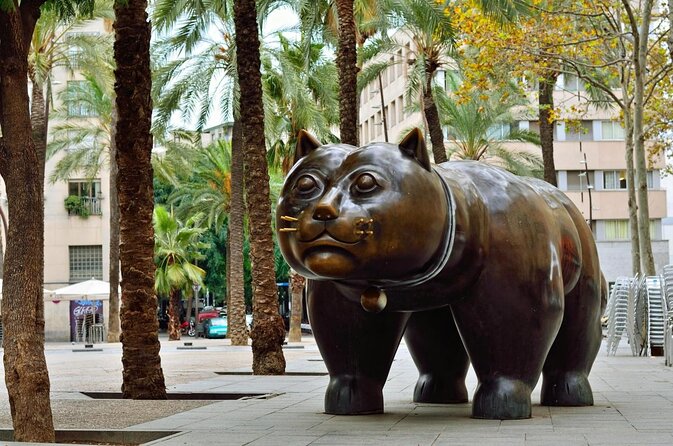
This is the kind of Barcelona tour that helps you read the city like a book. The route stitches together four districts that people often treat as separate neighborhoods. Instead, you’ll see a common theme: how art can react to pressure—social, political, and personal—and how street corners become memory banks.
The price is $108.37 per person for about 2 hours 30 minutes. That can sound steep until you factor in what’s actually included: a local guide, a mobile ticket, a small group size (max 15), and paid access at two stops. You’re also getting a list of recommendations after the tour, which is handy if you’re trying to skip random trial-and-error for coffee and lunch.
Also, this tour is offered in English and can be customized for your group. That matters if you’re bringing a friend who wants more art, or you’re more into the crime stories and historical references than the aesthetics.
Raval’s Dark Past in Big Murals and Tiny Alleys
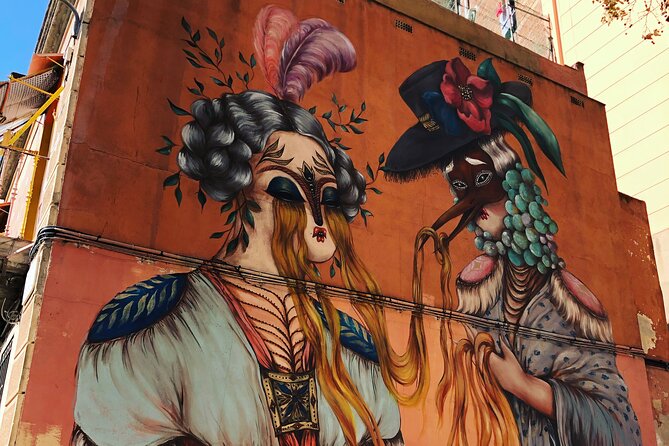
You start in El Raval, and it’s a smart first stop because it sets the tone fast. Raval is described as Barcelona’s rebellious heart—multicultural, political, and full of street art that points back to the neighborhood’s darker past and its current intensity.
What you’ll look for here:
- Large-scale murals tied to social struggles and local legends
- Small, careful pieces tucked into alleys and around doorways
- The site connected to a dramatic historical killing that inspired neighborhood art
- Iconic mosaics that hint at Raval’s rebellious spirit
This is where the street art starts acting like storytelling. Instead of treating graffiti as decoration, you’ll connect pieces to events and attitudes. That’s also where the “crime stories” part becomes more than a marketing line. You’ll hear how a specific violent incident left a cultural imprint, and you’ll notice how later artists responded to the neighborhood’s tension.
If you’re the kind of person who likes to spot details other people miss—letters, symbols, small figures in corners—Raval is the place to train your eyes.
More Barcelona streets to take slowly




La Rambla Without the Usual Script: Miró in Plain Sight
Then you shift to La Rambla, where the street itself behaves like an open-air gallery. Flower stalls, street performers, and heavy foot traffic can make it feel like chaos if you’re just strolling. The value of a guide is that they help you focus on what matters instead of getting swept along.
This stop is about quick hits and smart noticing:
- You’ll find Joan Miró’s mosaic artwork embedded in the pavement, something millions walk over without looking down
- You’ll also meet contemporary street art with bigger ideas—identity, freedom, and daily life in the city
Here’s the practical reason I like this segment: it gives you a clean contrast with Raval. One neighborhood asks you to look for hidden messages in side streets. La Rambla asks you to slow down your eyes by a few inches. It’s a reminder that some of the most famous art in Barcelona is right where you’d never bother stopping.
Also, admission is free at this stop, which helps keep the overall cost feeling more fair.
Gothic Quarter’s Old Stones, New Messages
Next comes the Gothic Quarter, which is where Barcelona layers time. Medieval arches and the feel of the old city make it easy to get swept up in the drama of the streets. But the tour nudges you toward the collision: ancient Roman and Gothic heritage side by side with modern street art.
What’s on the walk here:
- Modern murals that fit into Gothic arches and Roman ruins
- Contemporary pieces hidden in ancient alleys and courtyards
- An early Barcelona connection to Picasso’s work (created during his early days in the city)
- Urban installations that reinterpret medieval legends
This stop is short—about 20 minutes—but it’s built for impact. The contrast is the point. When you see thousand-year-old stone and vibrant spray paint in the same line of sight, you understand why street art can feel like the city talking back to itself.
Admission is included at this stop. Even if you’re not the type to chase every museum ticket, this is part of why the tour price holds up: you’re not just walking past streets for free.
El Born / La Ribera: Optical Illusions and Execution-Era Legends
The finish is in El Born / La Ribera, which is often where people start talking about street art photos. The neighborhood blends creative energy with a darker legend history—medieval executions are part of the storytelling you’ll hear as you move through the streets.
This is also the longest segment on the route, about 40 minutes, and it’s where you get the most playful and eye-bending art.
What you’ll aim for:
- Optical illusion street art that tricks the eye and bends reality
- The so-called staring building facade—an eerie modernist structure with windows and details that seem to watch you as you pass
- Murals around Santa Caterina Market, including the roof described as wavy and Gaudí-inspired
What I like about ending here is that it gives your brain a reward. By the time you reach Born, you’ve already learned how to connect art to place and memory. Now you can enjoy the art for its tricks and style—without losing the meaning.
You’ll also finish near Ciutadella, with the tour ending at Carrer Antic de Sant Joan, 7 in Ciutat Vella (near Born).
Price, Timing, and Group Size: Is It Good Value?
At $108.37 per person for roughly 2 hours 30 minutes, value depends on how you like touring.
Here’s why it can feel like a good deal:
- Small group size (max 15) means more interaction and fewer blank stares while the guide talks
- You get a mobile ticket and a guide who connects art to story and context
- Admission tickets are included at two stops (Raval and the Gothic Quarter), while La Rambla and Born/La Ribera are free at those points
- The tour includes a list of recommendations after the walk
There’s also timing logic. You’re out long enough to cover four distinct zones, but not so long that you’ll feel ruined afterward. For many people, that’s a sweet spot in Barcelona. You can do this in the morning or afternoon and still have time to wander on your own later.
Opening hours run from 7:00 AM to 8:00 PM daily (for the listed range). Start and end locations are close enough to public transit that you can pair it with other plans without a big commute headache.
One practical consideration: this isn’t a “sit and soak in art” pace. It’s a walking-with-focus tour. If you plan your day around that, you’ll get more out of it.
Not quite right? Other Barcelona tours we have been out on
- Barcelona Street Art and Graffitti Bicycle Tour★ 5.0 · 361 reviews
- Barcelona Street Art Tour with Exclusive Artist Studios Visit★ 5.0 · 152 reviews
- Raval Street Art and Graffiti Guided Tour in Barcelona★ 5.0 · 81 reviews
Practical Tips for Getting the Most From the Walk
A street art tour is all about timing your attention. Here are a few ways to make it work better for you.
- Wear shoes you don’t mind walking in for a while. The route moves through El Raval, the Gothic Quarter, and Born, and you’ll be changing streets constantly.
- Bring water, especially if you’re touring outside in warmer months. It’s not mentioned as included, and the tour does not list snacks.
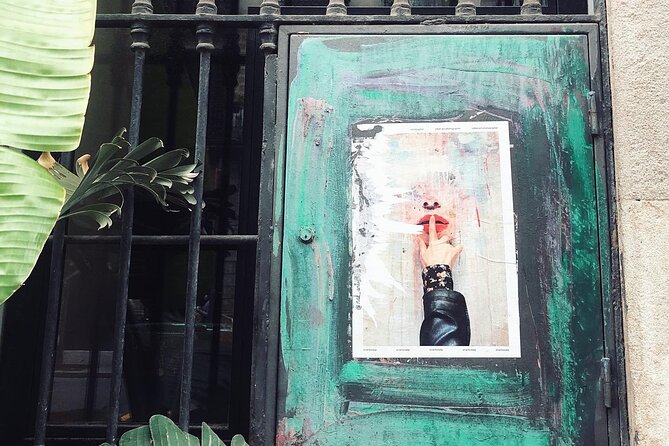
- Look for the “small work in the corner” rule. The Raval segment specifically mentions hidden pieces in alleys and around doorways. If you only look straight ahead, you’ll miss half the point.
- Use the guide’s food and coffee advice. The tour includes a list of recommendations after the walk, and guides in this tour style have been known to share practical picks for lunch and coffee. Ask for what fits your mood: quick bite vs. longer sit-down.
- Bring your curiosity about crime stories, but keep it balanced. The route uses those stories to explain art choices and neighborhood change, not just to shock you.
If you want to maximize photos, do it with your eyes first. The best images often come after you understand what the artist is reacting to.
Who This Tour Suits Best (and Who Might Skip It)
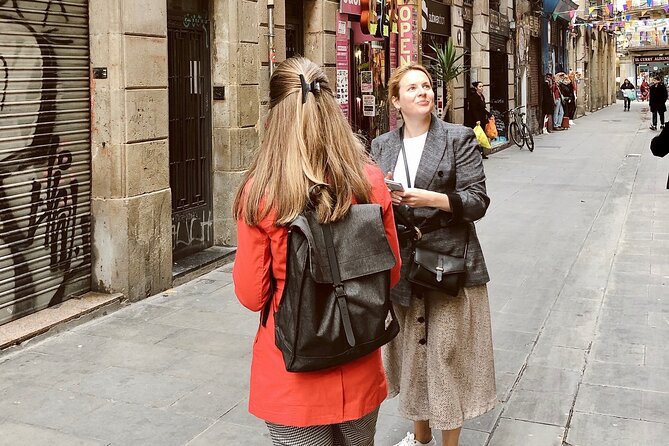
This tour is a great match if:
- You like street art that has meaning, not just color
- You want history and neighborhood context without doing a full-day museum marathon
- You prefer a small group with a guide who can answer questions
- You enjoy walking routes that end in an area you’ll likely want to keep exploring
You might skip it if:
- You hate walking or you’re recovering from an injury
- You mostly want indoor attractions, or you need long seated breaks
- You’d rather do a pure museum day and save street-level wandering for free time
Should You Book This Barcelona Street Art Tour?
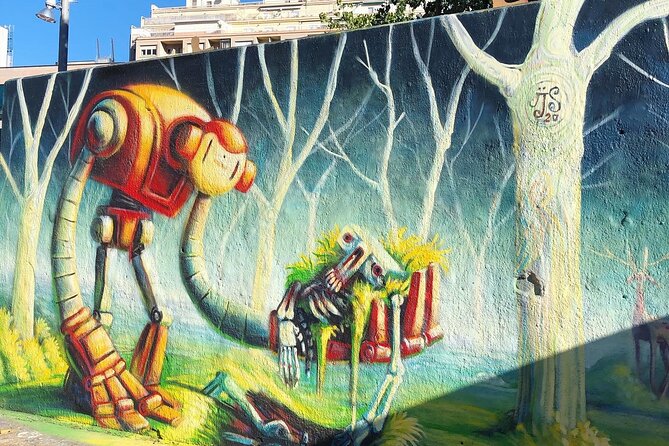
If you’re deciding between a generic highlights walk and something more focused, I’d lean toward this. The combination of districts (Raval → La Rambla → Gothic Quarter → Born), the mix of street art styles, and the way the tour connects art to neighborhood stories makes it feel like a Barcelona-specific experience rather than a copy-paste city circuit.
It’s also a good choice for solo travelers, couples, and small groups who want a guided route but still plan to wander independently afterward. You’ll finish in Born, which is exactly where you’ll want to keep going.
If you book, consider this before you commit:
- Check the weather for your time slot since it’s a walking tour.
- Remember snacks aren’t included.
- If you’re flexible, booking earlier can help since the tour is often reserved about a month in advance on average.
- If your plans might shift, it offers free cancellation up to 24 hours before the experience starts.
FAQ
FAQ
How long is the Street Art, Sculptures & Crime Stories Walking Tour in Barcelona?
The tour lasts about 2 hours 30 minutes.
Where does the tour start and where does it end?
It starts at Carrer Nou de la Rambla, 105, Ciutat Vella, 08001 Barcelona, Spain and ends at Carrer Antic de Sant Joan, 7, Ciutat Vella, 08003 Barcelona, Spain, finishing in Born near Ciutadella.
What is the price per person?
The price is $108.37 per person.
What language is the tour offered in?
The tour is offered in English.
What group size should I expect?
The tour has a maximum of 15 travelers.
Is a mobile ticket used?
Yes, the tour includes a mobile ticket.
Are admission tickets included?
Admission tickets are included at El Raval (Stop 1) and the Gothic Quarter (Stop 3). La Rambla (Stop 2) and El Born / La Ribera (Stop 4) are listed as free.
Are snacks included?
No, snacks are not included.
What are the cancellation terms?
You can cancel for a full refund up to 24 hours before the experience starts.
Is it okay to bring a service animal?
Service animals are allowed.
More of Barcelona on Foot
- Barcelona Tapas and Wine Experience Small-Group Walking Tour
★ 5.0 · 5,804 reviews - Barcelona: Tapas Walking Tour with Food, Wine, and History
★ 4.8 · 4,261 reviews - Barcelona: Food Walking Tour with Tapas and Wine
★ 4.9 · 2,180 reviews - Barcelona Tapas Walking Tour: Food, Wine & History
★ 4.5 · 1,928 reviews - Barcelona Helicopter, Sailboat & Old Town Private Walking Tour
★ 5.0 · 1,395 reviews
More Ways to Tour Barcelona
- Barcelona: Casa Batlló Entry with Self-Audioguide Tour
★ 4.7 · 25,359 reviews - Barcelona: 24 or 48-Hour Hop-On Hop-Off Bus Tour
★ 4.4 · 20,872 reviews - Barcelona: Park Guell Guided Tour with Skip The Line Entry
★ 4.7 · 17,563 reviews - Barcelona: Sagrada Familia Skip-the-Line Entry Ticket & Tour
★ 4.8 · 12,789 reviews - Barcelona: FC Barcelona Museum “Barça Immersive Tour” Ticket
★ 4.4 · 10,944 reviews
More Barcelona Tours on Our Radar
- Barcelona: Sagrada Familia Entry Ticket with Audio Guide
★ 4.6 · 105,312 reviews - Barcelona: Park Güell Admission Ticket
★ 4.4 · 76,534 reviews - Barcelona: Casa Batlló Entry with Self-Audioguide Tour
★ 4.7 · 25,359 reviews - Barcelona: Montjuïc Cable Car Roundtrip Ticket
★ 4.5 · 22,368 reviews - Barcelona: Hola Barcelona Public Transport Travel Card
★ 4.5 · 20,985 reviews
Just Rated Around Barcelona




Walking Tours, compared.
 ★ 5.0Barcelona Tapas and Wine Experience Small-Group Walking TourFrom $835,804 reviews
 ★ 4.8Tapas Walking Tour with Food, Wine, and HistoryFrom $784,261 reviews
 ★ 4.9Food Walking Tour with Tapas and WineFrom $1002,180 reviews
 ★ 4.5Barcelona Tapas Walking Tour: Food, Wine & HistoryFrom $661,928 reviews
 ★ 5.0Barcelona Helicopter, Sailboat & Old Town Private Walking TourFrom $5131,395 reviews
 ★ 4.8Old Town and Gothic Quarter Walking TourFrom $211,393 reviews
 ★ 4.9City Walking Tour with a Local GuideFrom $291,384 reviews
 ★ 5.0Guided Food Walking Tour with Tapas and WineFrom $95848 reviews
Browse the lists this tour appears in