
Reviewed · TARRAGONA TOURS
Tarragona and Sitges Small Group Tour – Roman History & Culture
Roman aqueducts meet beach time in one day. This full-day, English-led small-group trip turns a comfortable minivan ride into a real day of Roman Tarragona sights plus a slower, seaside Sitges break, with guides such as Sergio and Enrique often singled out for great storytelling. You start in central Barcelona near the Palau de la Música and return with the feeling you saw two different Catalonia worlds in a single shot.
I especially like that you get to walk the Pont del Diable aqueduct top, standing on stone that dates back around the late 1st century BC era. Then the Tarragona Old Quarter gives you that rare mix of Roman remains tucked into today’s streets, including the forum/circus area and sea views tied to amphitheater ruins.
One thing to watch: the day is packed, and Sitges can feel crowded (especially if it’s a Sunday). If you want lots of beach time plus a long sit-down lunch, you may want to move with purpose during your free window.
In This Review
- Key highlights worth planning for
- From Palau de la Música to the minivan: how the day starts
- Pont del Diable (Les Ferreres): walking a Roman aqueduct you can cross
- Tarragona Old Quarter: forum, circus, cathedral area, and the sea-facing payoff
- Roc de Sant Gaieta: a short coastal reset before Sitges
- Sitges beaches, cafes, and boutiques: what the 3-hour break really gives you
- Why this itinerary feels like value (not just a long bus day)
- Guides you’ll likely remember: what stands out from real day-to-day execution
- Who should book this Tarragona and Sitges day trip
- Should you book this tour?
- FAQ
- How long is the Tarragona and Sitges tour?
- Where do I meet the tour, and where does it end?
- Is the tour offered in English?
- How big is the group?
- Are entrance fees included for the Tarragona sites?
- Can I cancel and get a refund?
Key highlights worth planning for
- Pont del Diable (Les Ferreres): actually cross the aqueduct top, not just look at it from below
- Tarragona’s Roman layers: forum and circus areas placed inside the city’s modern layout
- Circus tunnels and Placa de la Font: see the space where stands and spectators once gathered
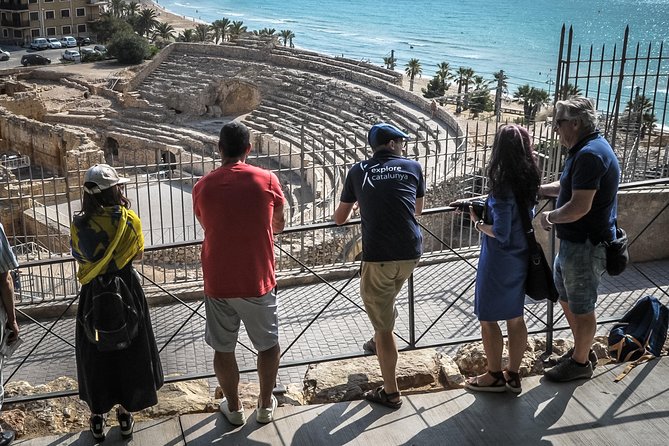
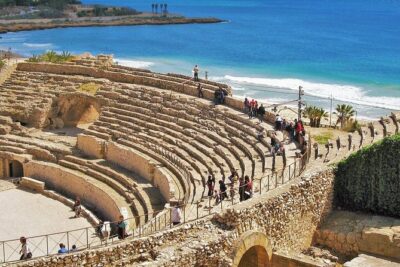
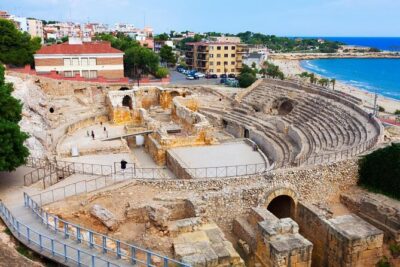
- Seaview moments: views over the Roman amphitheater area make the ruins feel bigger than photos
- Sitges free time: beach strolls, cafes, boutiques, and optional swimming if you bring a towel
From Palau de la Música to the minivan: how the day starts
The tour starts early in central Barcelona, meeting at C/ Palau de la Música, 1 near the famous concert hall. You get a pre-departure window (about 8:15am) to meet your guide, use the restroom, and grab a coffee if you want. When it’s time to go, you leave around 8:30am and head out of the city in an air-conditioned minivan.
This matters more than you’d think. You’re going to spend your best energy outside the bus, so you want comfort for the drive and a clear plan once you arrive. The route itself takes about 90 minutes to Tarragona, and the guide uses that time to give you a quick Barcelona context before you start noticing the Roman footprints further south.
Other easy escapes down to Sitges


Pont del Diable (Les Ferreres): walking a Roman aqueduct you can cross
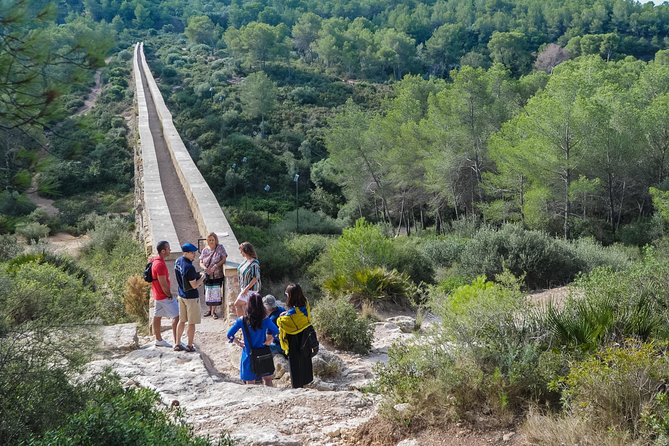
Around 10:00am, you reach the star photo moment outside Tarragona: the Roman aqueduct called Pont del Diable or Les Ferreres. This is part of the water-supply network from roughly the late Republican/early imperial period (the tour lists the 1st century BC). The headline: you can walk across the top of it, moving from one side to the other while you look down at the valley.
I love how physical this stop is. Most ruins in Europe feel like you’re observing from the ground. Here you’re on the structure, feeling the scale and the engineering at human height. It’s one of those rare times where you stop thinking, Wait, that’s really old, and start thinking, Someone built this for a real city, with real daily needs.
Practical note: wear shoes you trust. The walk is part of the attraction, and you’ll want a solid grip and comfortable footing.
Tarragona Old Quarter: forum, circus, cathedral area, and the sea-facing payoff
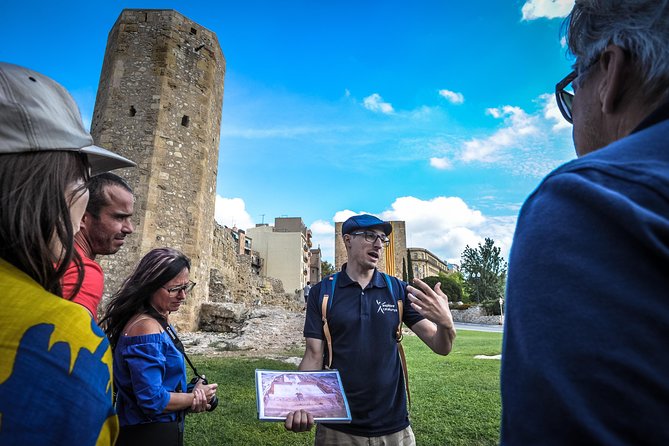
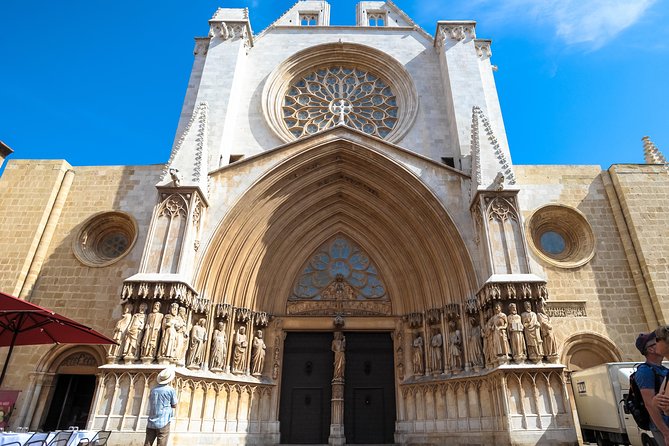
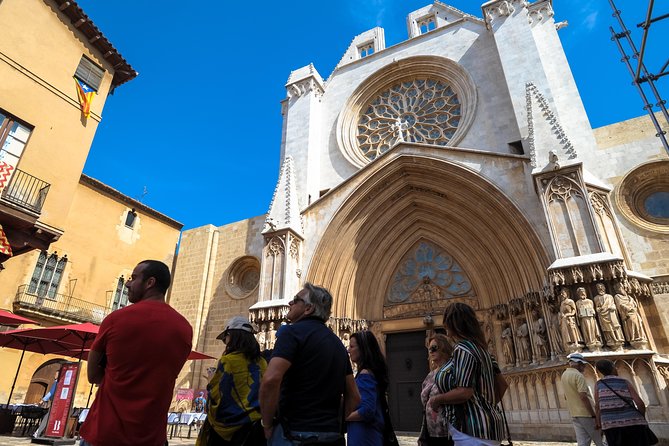
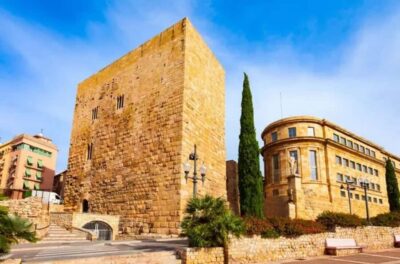
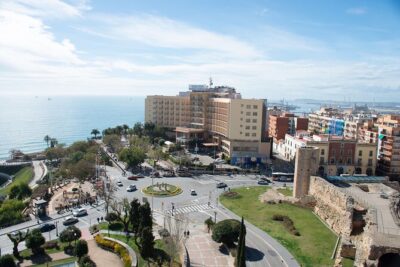
By about 11:00am, you enter Tarragona’s Old Quarter. You go through the ancient walls and step into a place where the modern city sits on top of older ground. That overlap is the whole point: you can see how Romans planned a civic center, and you can also see how later centuries kept building without erasing what was there.
A few highlights within the Tarragona portion:
- Archaeological walkway and surviving walls: you get stone remnants that still look built for people to move through, not just admire from afar.
- Medieval layers nearby: you pass older structures in the same general area, so it doesn’t feel like a single isolated ruin.
- Cathedral area: the stop includes time around the cathedral, and if your day falls on a Sunday you may find the Sunday morning antique market vibe happening nearby.
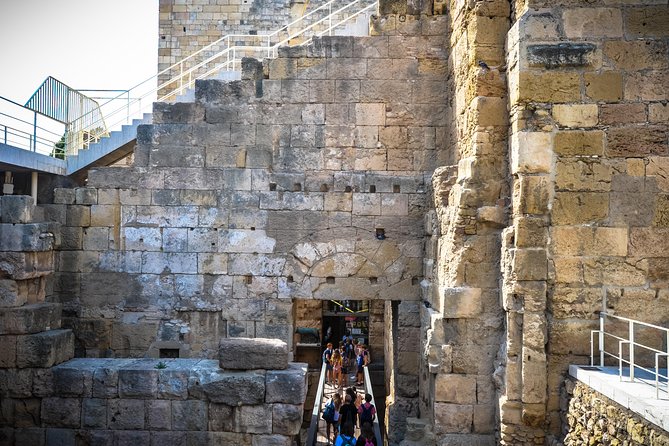
Then you move toward the Roman civic core: the Roman Forum and the nearby Roman Circus. One of the most memorable parts is that you walk through underground passageways linked to the circus stands. You’re not just seeing a floor plan; you’re tracing how infrastructure supported public spectacle.
You also reach Placa de la Font, a major square located inside the Roman circus space. It’s the kind of place where the scale clicks. If you stand still for a minute, the setting makes it easy to imagine crowds packed around a track, with the city functioning around entertainment and politics.
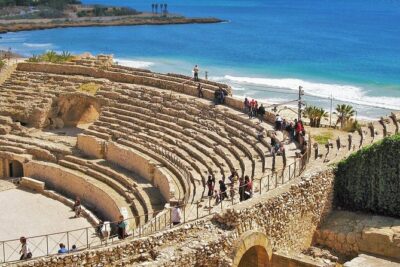
The tour also frames the amphitheater area with sea views. You get a visual break from stones-on-top-of-stones, and you can picture why Tarragona mattered. After that, you meet back with your guide at around 1:00pm to continue as a group.
Roc de Sant Gaieta: a short coastal reset before Sitges
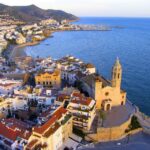
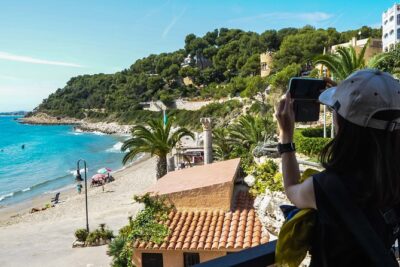
Right after the Tarragona portion, you head toward Sitges with a quick stop at Roc de Sant Gaieta around 1:30pm. This is a small rocky-shore shoreline village with tiny white houses, and your time here is about 20 minutes.
This brief pause is useful. It breaks up the day before you reach the beach town energy of Sitges. You get sea air, a few photos, and a moment to shift gears from ancient stone to modern coastal life.
Sitges beaches, cafes, and boutiques: what the 3-hour break really gives you
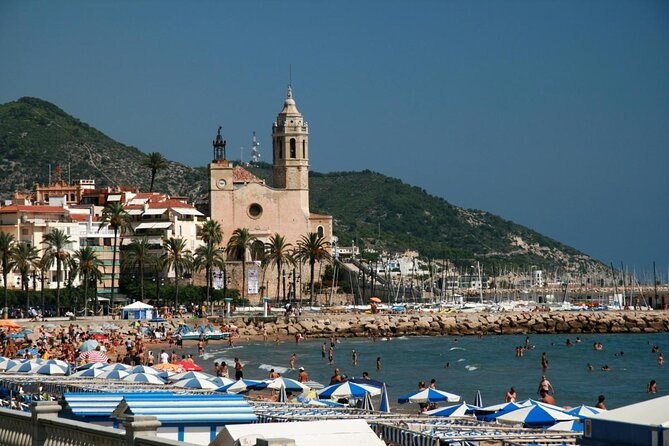
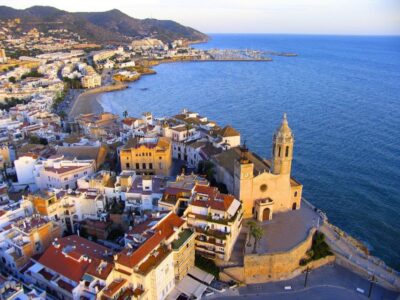
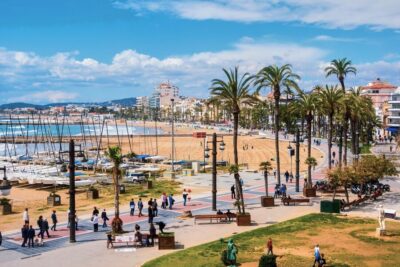
You arrive in Sitges around 2:30pm for a 3-hour block of free time. Sitges today is a fashionable seaside town with a long sandy Playa de Sitges, plus side streets full of cafes and shops. The tour idea here is simple: you’ll see the town’s whitewashed fisher-houses and then you can drift toward the seafront when you’re ready.
Here’s the best way to use your time:
- Start with a slow walk through the shady, narrow streets, then
- Let yourself pop into a cafe when you want a break, then
- Pick one beach angle to sit and reset.
Sitges has a “vacation town” feel without being only about beach photos. You can treat this as lunch time plus wandering time. If you want a quick dip, you can also do that, since the tour explicitly notes an opportunity to go swimming and recommends bringing a swimming costume and a beach towel.
You leave Sitges around 5:30pm, and the day winds down with you heading back toward central Barcelona. You finish between about 7:00pm and 7:15pm around Plaça de Catalunya, with drop-off sometimes adjusted depending on conditions.
More Roman Tarragona to wander
- Tarragona & Sitges Small Group Full-Day Tour★ 4.5 · 79 reviews
- Tarragona Private Tour with Hotel Pick Up★ 5.0 · 51 reviews
- Private Tarragona and Sitges Tour with Hotel pick-up from Barcelona★ 5.0 · 45 reviews
Why this itinerary feels like value (not just a long bus day)
At $119.48 per person for a day that runs about 10 hours 30 minutes, the value comes from the mix of included, guided time plus real free time to enjoy the places.
You’re paying for:
- A professional guide who handles the story so you’re not guessing at what you’re seeing
- Air-conditioned minivan transport between two destinations
- A schedule that hits Tarragona’s main Roman highlights and still leaves you with enough Sitges time to enjoy the seaside
You also get one of the best “per-minute” advantages: your Tarragona stops aren’t random. They’re connected civic pieces, from aqueduct engineering to forum/circus spaces and views over the amphitheater area.
Price check logic: if you’re trying to do Roman Tarragona on your own from Barcelona, you’ll spend time managing transit, timing, and figuring out which ruins matter most. Here, you’re guided through the most important pieces and then you’re given time to breathe at the beach.
Guides you’ll likely remember: what stands out from real day-to-day execution
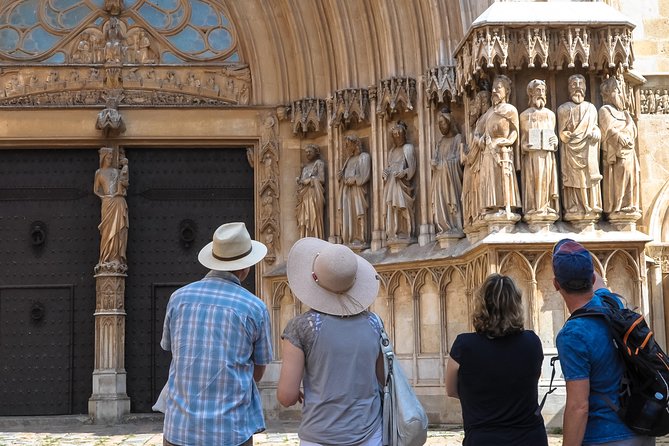
A big part of why this tour rates around 4.4 with 339 reviews is consistency. Many guides are praised by name, and the pattern is clear: the tour sticks to the itinerary, runs on time, and gives space for questions.
Names that show up often include Sergio, Henrique, Xavier, Jordi, and Rod/Stephen/Steven. People mention guides as friendly and prepared, with clear explanations that help you connect what you’re seeing in Tarragona to what kind of Roman city you’re walking through.
One practical tip: when your guide points out a spot like Placa de la Font or the circus passages, take a second and slow down. Those moments land better when you stop walking for five minutes and let the setting click.
Who should book this Tarragona and Sitges day trip
This tour fits best if you want:
- A Roman-focused day without giving up a beach town break
- A small-group format where you can ask questions and move as a group
- An English-led day trip that starts early and ends back in central Barcelona
It’s also a good match for first-time Barcelona visitors who feel they need “one great extra day outside the city.” You’ll see a Roman site most people skip, then you’ll still get a classic Mediterranean afternoon.
If you’re the kind of traveler who hates schedules, you might find it tight. But if you can handle a full day with smart pacing, the mix works well: Roman structures in the morning, sea views and beaches later.
Should you book this tour?
I think you should book it if Pont del Diable is on your wish list and you also want a real Sitges experience rather than a quick pass-through. The best part is the pairing: Roman Tarragona gives you hard scale and civic planning, and Sitges gives you atmosphere, shopping, and the option to relax by the water.
Skip it if you want a leisurely day with long museum time or you’re determined to spend most of your afternoon on one beach spot with zero time pressure. This is still a day trip with a plan, and your free time in Sitges is timed for walking, browsing, and optional swimming, not for endless lounging.
FAQ
How long is the Tarragona and Sitges tour?
It runs about 10 hours 30 minutes.
Where do I meet the tour, and where does it end?
You meet at C/ Palau de la Música, 1, Ciutat Vella, 08010 Barcelona. You end around Plaça de Catalunya, Eixample, 08002 Barcelona.
Is the tour offered in English?
Yes, it operates in English only.
How big is the group?
It’s a small-group tour. The tour information lists a maximum of 8 travelers, and it may also appear with a cap up to 15 depending on how it is listed.
Are entrance fees included for the Tarragona sites?
Entrance fees for museums and monuments in Tarragona are not included. Some stops listed on the route show ticket-free access, but you should plan that not everything is guaranteed free.
Can I cancel and get a refund?
Yes. You can cancel up to 24 hours in advance for a full refund.
If you want, tell me your travel dates and whether you care more about Roman ruins or beach time, and I’ll suggest the best way to use your Sitges hours.
More Barcelona Tours on Our Radar
- Barcelona: Sagrada Familia Entry Ticket with Audio Guide
★ 4.6 · 105,312 reviews - Barcelona: Park Güell Admission Ticket
★ 4.4 · 76,534 reviews - Barcelona: Casa Batlló Entry with Self-Audioguide Tour
★ 4.7 · 25,359 reviews - Barcelona: Montjuïc Cable Car Roundtrip Ticket
★ 4.5 · 22,368 reviews - Barcelona: Hola Barcelona Public Transport Travel Card
★ 4.5 · 20,985 reviews
Roman Days in Tarragona
- Tarragona and Sitges Tour with Small Group and Hotel Pick Up
★ 5.0 · 1,211 reviews - From Barcelona: Tarragona & Sitges Full Day Tour with Pickup
★ 4.8 · 428 reviews - Tarragona & Sitges Small Group Full-Day Tour
★ 4.5 · 79 reviews - Tarragona Private Tour with Hotel Pick Up
★ 5.0 · 51 reviews - Private Tarragona and Sitges Tour with Hotel pick-up from Barcelona
★ 5.0 · 45 reviews
Slip Away to Sitges
- Tarragona and Sitges Tour with Small Group and Hotel Pick Up
★ 5.0 · 1,211 reviews - From Barcelona: Tarragona & Sitges Full Day Tour with Pickup
★ 4.8 · 428 reviews - Montserrat Monastery with Easy Hike & Sitges Tour from Barcelona
★ 5.0 · 179 reviews - From Sitges: Bike Tour and Winery Visit with Free Hotel Pick Up.
★ 5.0 · 101 reviews - 2 Wineries Small Group Tour with Free Hotel PickUp from Sitges
★ 5.0 · 83 reviews
Just Rated Around Barcelona






Tarragona Tours, compared.
 ★ 5.0Tarragona and Sitges Tour with Small Group and Hotel Pick UpFrom $1201,211 reviews
 ★ 4.8From Barcelona: Tarragona & Sitges Full Day Tour with PickupFrom $116428 reviews
 ★ 4.5Tarragona & Sitges Small Group Full-Day TourFrom $11779 reviews
 ★ 5.0Tarragona Private Tour with Hotel Pick UpFrom $27651 reviews
 ★ 4.5From Barcelona: Excursion to Montserrat, Tarragona, and SitgesFrom $7649 reviews
 ★ 5.0Private Tarragona and Sitges Tour with Hotel pick-up from BarcelonaFrom $32445 reviews
 ★ 5.0Private Full-Day Tarragona and SitgesFrom $21622 reviews
 ★ 4.5Tarragona and Sitges Private Day Trip from BarcelonaFrom $48020 reviews
Browse the lists this tour appears in