
Reviewed · WINE TOURS
Viticulture and Wine-Tasting 3-Hour Trip from Barcelona
Alt Penedès wine in just three hours. This trip from Barcelona to Bodega J. Miquel Jané is interesting because you get both a hands-on vineyard walk and a guided look at what happens after grapes become wine, including the thinking behind cellar work. I especially like how the pacing stays tight and readable, so you leave with a real sense of how viticulture connects to flavor.
A second thing I like: you finish with a guided tasting and an aperitif, not just a showroom sip. One possible drawback: you’re on a schedule, and transportation isn’t included, so you’ll want a plan for getting to the meeting point in Guardiola de Font-Rubí.
The good news is the group size stays small (max 20), so questions don’t feel like an interruption. You’ll also get a booklet with tasting tips, which helps you make sense of what you just experienced right after you’re done. Expect something practical, not a lecture that keeps stretching.
In This Review
- Key Things That Make This Wine Tour Worth Your Time
- Alt Penedès in a Hurry: The 3-Hour Shape of the Day
- Meeting at Celler Miquel Jané: Plan Your Start and Stay Comfortable
- Stop at Bodega J. Miquel Jané: Vineyard Walk and Viticulture Basics
- Inside the Winery: Processing, Techniques, and Aging Clues
- The Wine Tasting and Aperitif: What You’ll Eat and How to Taste
- Price, Value, and the Real Cost of a Short Winery Trip
- Who Should Book This (and Who Might Find It Too Short)
- Should You Book This 3-Hour Wine Tour?
- FAQ
- How long is the Viticulture and Wine-Tasting trip?
- Where does the tour meet?
- What time does the tour start?
- What’s included in the ticket price?
- Is food included?
- Do they offer a vegetarian option?
- Is there a minimum age?
- Is transportation to the winery included?
- Is the cancellation policy flexible?
Key Things That Make This Wine Tour Worth Your Time
- Vineyard + cellar in one 3-hour block, so it all clicks together.
- Guided tasting with snacks, paired with a real explanation of what you’re tasting.
- Aperitif of local cheeses and hams, so you’re not just drinking through the visit.
- A booklet on wine tasting, useful for ordering at bars after you get home.
- Smart-casual dress code keeps it easy to join without planning your whole day.
Alt Penedès in a Hurry: The 3-Hour Shape of the Day
This is a short tour by design, and that’s a big part of the value. Instead of spending half a day just getting to the countryside, you’re out in Alt Penedès long enough to understand the basics—then you’re back at the start point again.
At about 3 hours, you’ll cover the full arc:
you’ll see how vines are managed, then you’ll move indoors to how the winery processes wine, and finally you’ll taste wines with food. It’s a great format if you like learning, but you also like getting back to Barcelona while the day still feels like your own.
The tour is priced at $42.99 per person, which lands in the “worth considering” range for a guided experience with tasting included. What makes it feel reasonable is that you’re not paying just for access to a winery. You’re paying for someone to guide you through the logic—vine to cellar to the glass—plus the food for the tasting.
One more practical point: this isn’t an all-you-can-drink situation. The tasting is part of a planned visit, with an aperitif included, and that usually means you’ll leave satisfied, not worn out.
More Catalan plates and pours to try

Meeting at Celler Miquel Jané: Plan Your Start and Stay Comfortable
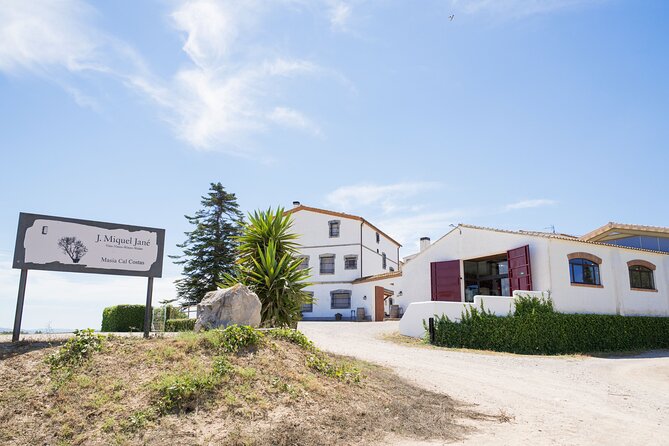
Your tour meets at Masia Cal Costas, S/N, 08736 Guardiola de Font-Rubí. The start time listed is 11:00 am, and the activity ends back at the meeting point.
That matters because you’re responsible for getting there. Transportation to and from the winery isn’t included, so you’ll want to check your route ahead of time (public transport is noted as nearby, which is helpful). If you’re building the rest of your day, don’t assume you can roll in last-minute; wineries and vineyard roads don’t run like city sidewalks.
Dress is smart-casual, which I like. You don’t need special gear, but you also shouldn’t show up in flip-flops if there’s uneven ground around vineyards. Bring a light layer too—outdoors can feel cooler than you expect, even in pleasant weather.
Finally, keep the group size in mind. With a maximum of 20 travelers, you’ll likely have more chances to ask questions than on huge coach tours. That’s not a guarantee, but it’s a nice advantage.
Stop at Bodega J. Miquel Jané: Vineyard Walk and Viticulture Basics
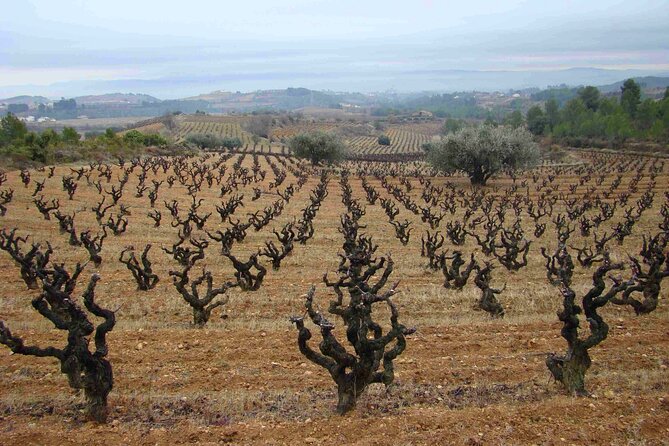
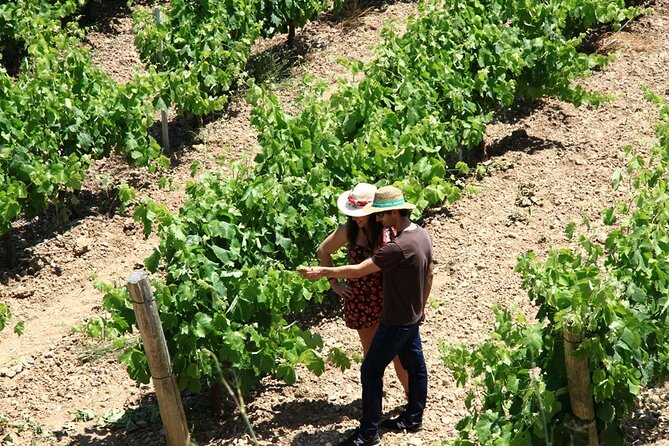
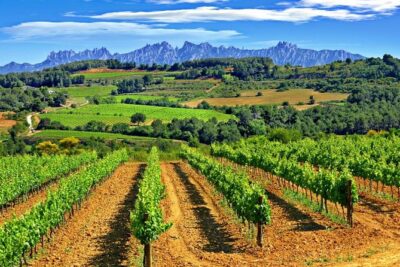
The first main experience is at Bodega J. Miquel Jané in Alt Penedès. After meeting your local guide, the tour starts with a guided visit to the vineyards, where you learn tips about viticulture—how vines are cared for and why those choices influence the grapes.
This is where the tour can feel especially valuable, even for people who don’t think of themselves as wine people. You’ll hear practical explanations tied to what you’re looking at: how vineyards are managed, and what’s going on in the background of the wines you’ll taste later.
In at least one detailed account of the experience, there was a clear moment that made the vineyards feel more real: tasting grapes right where they grow, followed by a walkthrough that includes how wine grapes move into the production process. Even if you don’t get that exact extra moment every time, you can still count on a vineyard-focused start rather than a quick photo stop.
What to watch for during the vineyard part:
- Ask why the guide focuses on specific vine practices you can see.
- Pay attention to the guide’s wording when they connect those practices to taste later.
- If you’re sensitive to timing, know you’ll be outdoors first, then indoors. That helps you plan your pace.
Inside the Winery: Processing, Techniques, and Aging Clues
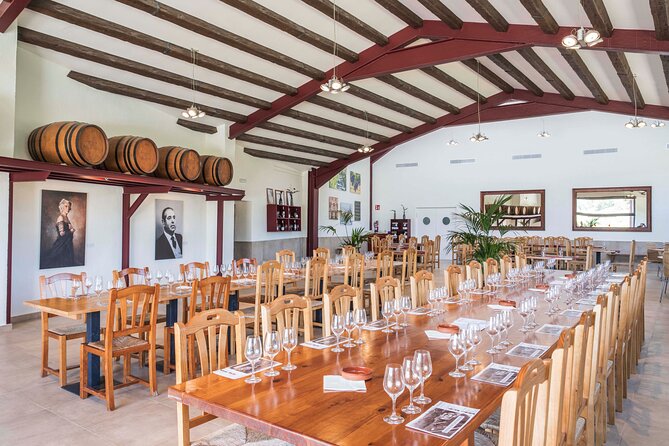
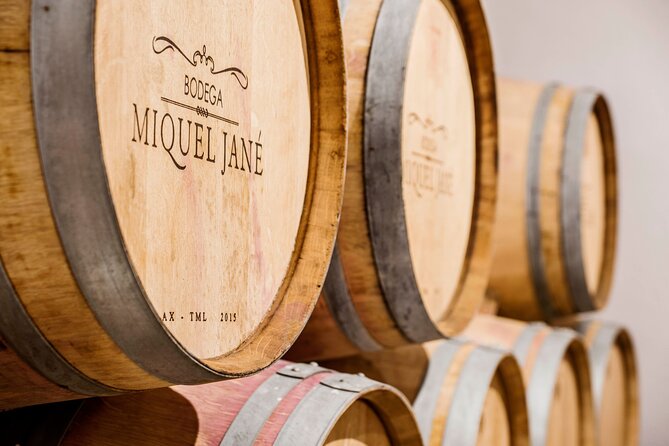
After the vineyard walk, you shift into the winery itself. The guide will show you how wines get processed and you’ll see different techniques of winemaking. Aging is part of this too—so you’re not just learning what happens, but why it matters.
This section is the one that turns wine tasting from random into pattern recognition. When you understand the steps—how the winemaking choices shape aroma and taste—it becomes easier to describe what you’re experiencing rather than just saying it’s good.
There’s also a production-focused moment included in the experience flow: a visit that shows the process around bottling. That kind of practical view is often what separates a basic tasting from a more satisfying one. You get to see the chain of steps, not just end results.
Then comes a tasting-ready transition. You’ll get set up for the tasting portion with snacks and an aperitif, which matters because food changes how wine reads on your palate. If you’ve ever tasted wine when you were hungry and then again after eating, you already know why this is smart.
The Wine Tasting and Aperitif: What You’ll Eat and How to Taste
The tasting part is where your effort pays off. You’ll have the opportunity to taste several internationally-awarded wines, with a delicious aperitif of local cheeses and hams.
This is a classic pairing approach: salty, savory foods help you notice fruit, acidity, and texture. And because it’s guided, you’re not stuck trying to figure out wine language on your own. You can listen, ask questions, and try the wines again in your head as the explanation lines up with what you’re tasting.
One review description highlighted a tasting of four wines, plus a tasting booklet afterward. While the exact number can vary depending on how the day runs, the overall structure is consistent: you get a small flight, plus snacks, plus guidance on how to approach tasting.
Here’s my practical advice for getting more out of it:
- Take notes in your phone right after each wine. You’ll thank yourself later when you’re comparing what you liked.
- Don’t try to “win” wine vocabulary. If you can say it tastes fresher, heavier, drier, or more aromatic, you’re doing it right.
- Taste with one change at a time. If you switch between bites and sips constantly, it’s harder to learn.
At the end, you receive a booklet with helpful hints and tips on wine tasting. That booklet is underrated. When you leave with a simple framework, you can carry the experience into wine shops and tastings later instead of forgetting it by the next day.
More cellar doors within reach of Barcelona
- Barcelona: Montserrat, Cogwheel, Black Madonna & Winery Tour★ 4.8 · 5,633 reviews
- Barcelona: Tapas Walking Tour with Food, Wine, and History★ 4.8 · 4,261 reviews
- Montserrat Lunch & Wine at Farmhouse Small Group from Barcelona★ 5.0 · 2,368 reviews
Price, Value, and the Real Cost of a Short Winery Trip
At $42.99 per person for about 3 hours, this sits in the “good deal if you want structure” category. You’re paying for:
a local guide,
a vineyard experience,
a winery cellar visit,
a tasting with snacks and an aperitif.
What you’re not paying for is transportation. That’s the biggest value question. If you already have an easy way to reach the meeting point, the tour likely feels like a fair price. If you have to spend extra time and money getting there, the total cost rises fast.
Group size also affects value. With a maximum of 20 travelers, you’re more likely to get real attention during explanations and questions, which makes the tasting less generic.
Booking timing can also help. This tour is commonly booked around 58 days in advance, which suggests it’s not an afterthought. If you know your dates, booking early is usually a smart move—not because it’s flashy, but because wine tours in and around Barcelona can fill up in peak season.
Who Should Book This (and Who Might Find It Too Short)
This tour is a strong match if you:
- Want a guided wine education without committing to a full day.
- Like hands-on learning: vines outdoors, production indoors, tasting at the end.
- Prefer smaller groups and a structured tasting with food.
It may be less ideal if you:
- Want a deep, slow, hours-long winery experience. Three hours is efficient, not leisurely.
- Need guaranteed transport from central Barcelona. Since transportation isn’t included, you’ll want to sort that part yourself.
- Are looking for a heavy focus on meal-style dining. The food here is tasting snacks plus aperitif, not a full lunch.
For mixed groups—friends where some love wine and some don’t—this is still a good compromise. The vineyard explanation and the food pairing help keep the experience understandable, even if you’re not chasing complicated wine jargon.
Should You Book This 3-Hour Wine Tour?
If you want a compact, well-paced introduction to Alt Penedès wine culture, I think this is a solid booking. The combination of vineyard walk + cellar processing + tasting with cheese and ham makes it more than just a passive tour. And the fact that you leave with a tasting booklet is exactly the kind of practical souvenir that pays off later.
Book it if you can get to the meeting point comfortably for a 11:00 am start and you’re happy with a short, structured experience. Consider skipping or looking for a longer tour if your main goal is slow, detailed tasting time or if transport is a headache for you.
FAQ
How long is the Viticulture and Wine-Tasting trip?
It runs for about 3 hours.
Where does the tour meet?
The meeting point is Masia Cal Costas, S/N, 08736 Guardiola de Font-Rubí, Barcelona, Spain (Celler Miquel Jané).
What time does the tour start?
The listed start time is 11:00 am.
What’s included in the ticket price?
Your ticket includes a local guide and wine tasting with snacks.
Is food included?
You’ll have an aperitif of local cheeses and hams with the tasting. A full meal isn’t listed as included.
Do they offer a vegetarian option?
Yes. A vegetarian option is available—you should request it at booking.
Is there a minimum age?
The minimum age is 12 years old.
Is transportation to the winery included?
No. Transportation to/from the winery is not included.
Is the cancellation policy flexible?
Yes. You can cancel for free up to 24 hours in advance for a full refund.
Cellar Doors Near Barcelona
- Montserrat Half-Day Tour with Tapas and Gourmet Wines
★ 5.0 · 7,359 reviews - Montserrat & Cogwheel Train, Gourmet Wine Tasting & Tapas/Lunch
★ 5.0 · 6,290 reviews - Barcelona Tapas and Wine Experience Small-Group Walking Tour
★ 5.0 · 5,804 reviews - Barcelona: Montserrat, Cogwheel, Black Madonna & Winery Tour
★ 4.8 · 5,633 reviews - Montserrat with Black Madonna & Medieval Winery with Tapas/Lunch
★ 5.0 · 5,209 reviews
Plates and Pours Across Barcelona
- Montserrat & Cogwheel Train, Gourmet Wine Tasting & Tapas/Lunch
★ 5.0 · 6,290 reviews - Barcelona: Tablao Flamenco Cordobes with Food/Drink Options
★ 4.6 · 4,368 reviews - Barcelona: Tapas Walking Tour with Food, Wine, and History
★ 4.8 · 4,261 reviews - Barcelona: Food Walking Tour with Tapas and Wine
★ 4.9 · 2,180 reviews - Barcelona Tapas Walking Tour: Food, Wine & History
★ 4.5 · 1,928 reviews
More Barcelona Tours on Our Radar
- Barcelona: Sagrada Familia Entry Ticket with Audio Guide
★ 4.6 · 105,312 reviews - Barcelona: Park Güell Admission Ticket
★ 4.4 · 76,534 reviews - Barcelona: Casa Batlló Entry with Self-Audioguide Tour
★ 4.7 · 25,359 reviews - Barcelona: Montjuïc Cable Car Roundtrip Ticket
★ 4.5 · 22,368 reviews - Barcelona: Hola Barcelona Public Transport Travel Card
★ 4.5 · 20,985 reviews
Just Rated Around Barcelona


Wine Tours, compared.
 ★ 5.0Montserrat Half-Day Tour with Tapas and Gourmet WinesFrom $557,359 reviews
 ★ 5.0Montserrat & Cogwheel Train, Gourmet Wine Tasting & Tapas/LunchFrom $816,290 reviews
 ★ 5.0Barcelona Tapas and Wine Experience Small-Group Walking TourFrom $835,804 reviews
 ★ 4.8Montserrat, Cogwheel, Black Madonna & Winery TourFrom $555,633 reviews
 ★ 5.0Montserrat with Black Madonna & Medieval Winery with Tapas/LunchFrom $655,209 reviews
 ★ 4.8Tapas Walking Tour with Food, Wine, and HistoryFrom $784,261 reviews
 ★ 5.0Montserrat Lunch & Wine at Farmhouse Small Group from BarcelonaFrom $952,368 reviews
 ★ 4.9Food Walking Tour with Tapas and WineFrom $1002,180 reviews
Browse the lists this tour appears in