
Reviewed · GOTHIC QUARTER TOURS
Barcelona: 360 Old Town Tour with Artists
Old Town history, told like cinema. This walking tour uses professional actor-guides to turn Barcelona’s oldest districts—El Raval, the Gothic Quarter, and El Born—into a story you can walk through, with performance-style storytelling that feels straight from a film. I especially liked how the guides connect people and events (passion, betrayal, mystery) to what you’re seeing on the street, and how the small group size keeps the pace thoughtful instead of rushed.
One thing to plan around: the route is active and the suitability info is a bit mixed. The tour says wheelchair accessible, but it also lists wheelchair users and people with mobility impairments as not suitable—so check with the provider before you book, and make sure comfortable shoes and your walking comfort are on your side.
In This Review
- Key points to know before you go
- Why this Old Town walk feels different than a standard guided tour
- Meeting at Plaça de la Universitat: the start matters
- Teatre Goya and Carrer de Joaquín Costa: the “opening scene” zone
- Barcelona Museum of Contemporary Art and Casa de Misericòrdia: Old streets, multiple eras
- Gran Teatre del Liceu and La Rambla: big-city drama in walking distance
- Basilica de Santa Maria del Pi and Barcelona Cathedral: sacred space as story engine
- Sant Felip Neri Square: a small stop with good payoff
- Temple of Augustus and Bishop’s Bridge: Rome-to-Barcelona layering
- St. Mary of the Sea Cathedral and the walk to Mercat del Born
- The actor-guide factor: you’re paying for performance, not just directions
- Timing and pace: 3 hours, lots of stops, real walking
- Price and value: $23 for a story-driven group tour
- Who should book this tour, and who should skip it
- A few practical tips before you step out
- FAQ
- Is the tour 3 hours long?
- How much does it cost?
- Where do I meet the tour?
- What neighborhoods does the tour cover?
- What’s included in the price?
- Are food and drinks included?
- What languages are available?
- Is the group small?
- Is the tour suitable for children?
- Can I use flash photography?
- Should you book this tour?
Key points to know before you go
- Actor-guides use theatrical performance to tell hidden stories tied to the places you pass.
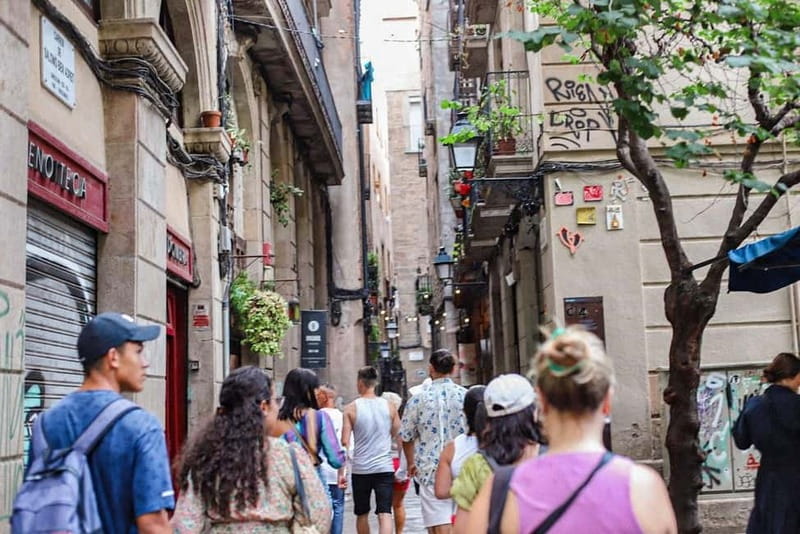
- You cover three Old Town areas: El Raval, the Gothic Quarter, and El Born in about 3 hours.
- You get a structured route with photo stops and guided moments, not just free roaming.
- Expect lots of “cinematic” storytelling from artist-guides who also work in film and performance.
- One short pause for drinks/snacks can happen during the walk, but food and drinks are not listed as included—plan to buy what you want.
Why this Old Town walk feels different than a standard guided tour
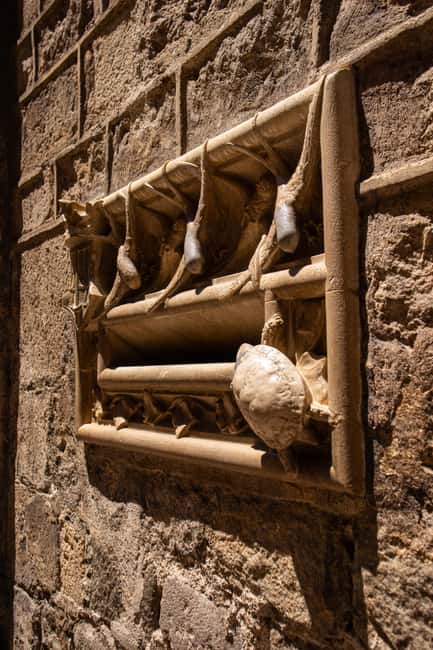
This isn’t a slow history lecture. The format is designed like a mini movie you move through: the guide acts, tells, and pauses at the right moments, so the street becomes part of the plot. The tour centers on stories you might not hear on a typical “landmarks only” route—tales of passion, betrayal, and mystery that the tour frames as being hidden for years.
I like that the experience treats Barcelona’s Old Town like it has characters, not just buildings. You’re walking through neighborhoods strongly associated with outlaws, revolutionaries, and secret societies, and the storytelling follows those themes as you go.
And you’re not stuck with a giant crowd. The tour limits groups to 10 participants, which matters because it keeps the guide’s attention where it should be: on you, your questions, and the next scene in the story.
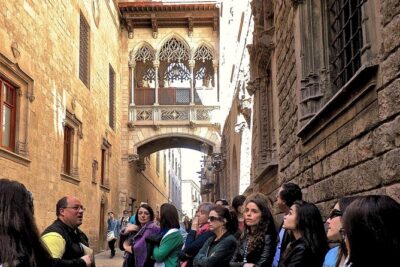
Deeper into the lanes of the Barri Gòtic


Meeting at Plaça de la Universitat: the start matters
The tour starts near the metro station Universitat, and your meeting point is by blue umbrellas. Plaça de la Universitat is easy enough to reach, but it’s still worth arriving a few minutes early so you’re not hunting around when the group is already forming.
At the start, you’ll get the tone of the tour quickly—this is where the guide sets expectations that the walk is guided, story-driven, and performance-oriented. The guide you get may be a different artist than the ones I saw people mention later (for example, David, Javier, or Emma), but the style is consistent: you’re there for the stories, not just photos.
Teatre Goya and Carrer de Joaquín Costa: the “opening scene” zone
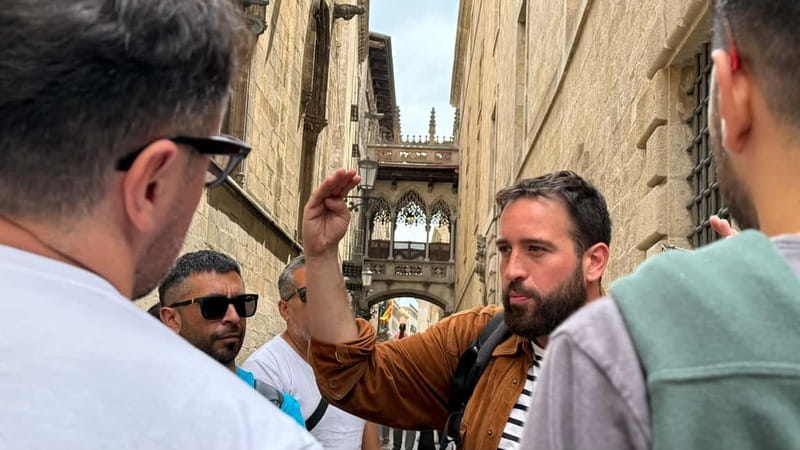
The first stop is Teatre Goya, with a short photo moment and guided walking. Even if you don’t know the theater details in advance, the theme makes sense: theater at the start is basically a promise. You’re going to be seeing Barcelona through performance-style storytelling for the full walk.
From there, you move along Carrer de Joaquín Costa for guided explanation. This stretch is useful because it helps you get bearings fast. You’re still near the start, but the guide is already connecting street-level locations to bigger themes, so the history doesn’t feel like it’s waiting for the “main attractions.”
Barcelona Museum of Contemporary Art and Casa de Misericòrdia: Old streets, multiple eras
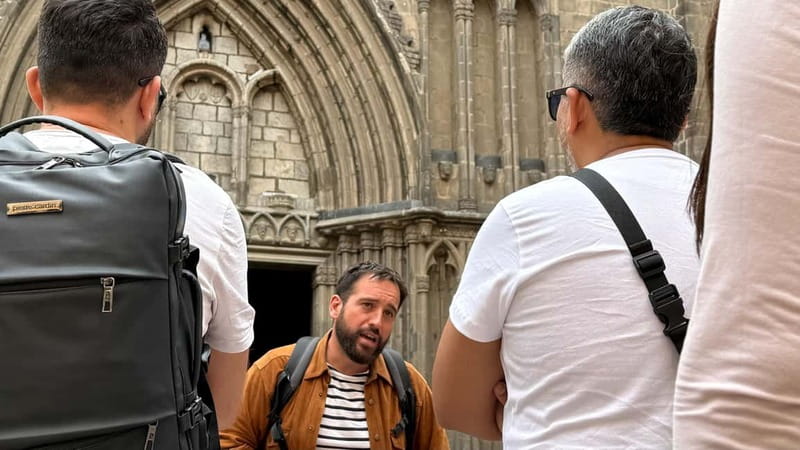
Next you reach Barcelona Museum of Contemporary Art, again with a photo stop and guided time. Even though this is a contemporary institution, it fits the tour’s main idea: Barcelona keeps layering time on top of itself. The guide uses that contrast to keep the story moving—Old Town isn’t frozen in medieval time; it’s a living city with past and present sitting side by side.
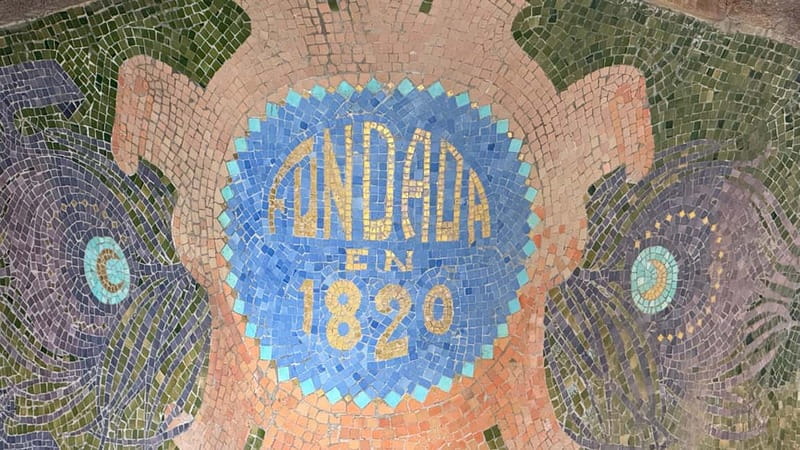
After that, you stop at Fundació Privada Casa de Misericòrdia de Barcelona for a photo moment plus guided time. Then comes the Old Hospital de la Santa Creu, where you’ll have photo time, a visit, and guided context.
Here’s why I think these stops work so well for most people: hospitals and care institutions are where social history hides in plain sight. You get more than legends; you also see places tied to real human needs across centuries. Even when you don’t go inside for long, the guide’s framing helps you read the area instead of just passing it.
Gran Teatre del Liceu and La Rambla: big-city drama in walking distance
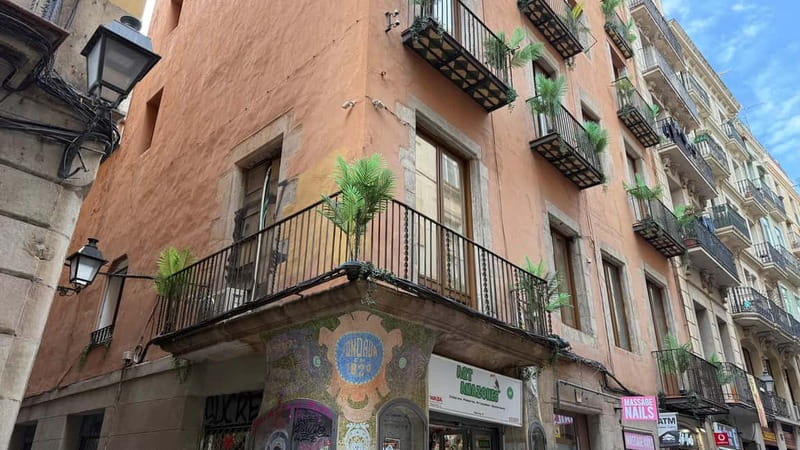
Then the walk turns to the Grand Theater of Liceu for a photo stop and guided sightseeing time. You’ll also have a walking segment, which keeps your feet moving while the guide continues the narrative arc.
From there, you head to La Rambla for another photo stop and guided sightseeing while you walk. La Rambla can be packed and noisy in real life, so a guided approach helps you keep your focus. The guide’s job here is to prevent the street from becoming just crowds and motion.
If you like people-watching and street energy, you’ll probably enjoy this part. If you prefer quiet, keep an eye on your pacing and your patience—this section is more “city life” than “medieval lane.”
- Barcelona: Hola Barcelona Public Transport Travel Card★ 4.5 · 20,985 reviews
- Barcelona: 24 or 48-Hour Hop-On Hop-Off Bus Tour★ 4.4 · 20,872 reviews
- Barcelona: Park Guell Guided Tour with Skip The Line Entry★ 4.7 · 17,563 reviews
Basilica de Santa Maria del Pi and Barcelona Cathedral: sacred space as story engine
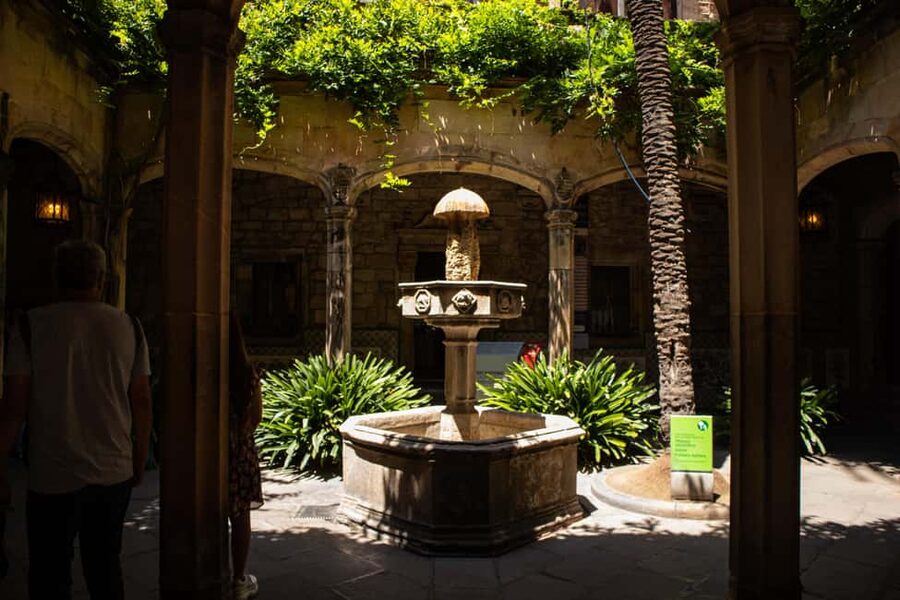
You’ll next pause at Basilica de Santa Maria del Pi for a photo stop plus guided sightseeing.
After that comes Barcelona Cathedral, again with a photo stop and guided walking time, plus some time for sightseeing and shopping. (So yes—this is one of the few moments where you may have a short chance to browse nearby shops.)
This is a smart setup for a story tour. Religious sites often serve as anchors for community memory. Even without focusing on specific architectural details, the guide can connect the cathedral area to the tour’s themes—where the “mystery” and “betrayal” stories feel less like fantasy and more like the kind of folklore people build over generations.
Sant Felip Neri Square: a small stop with good payoff
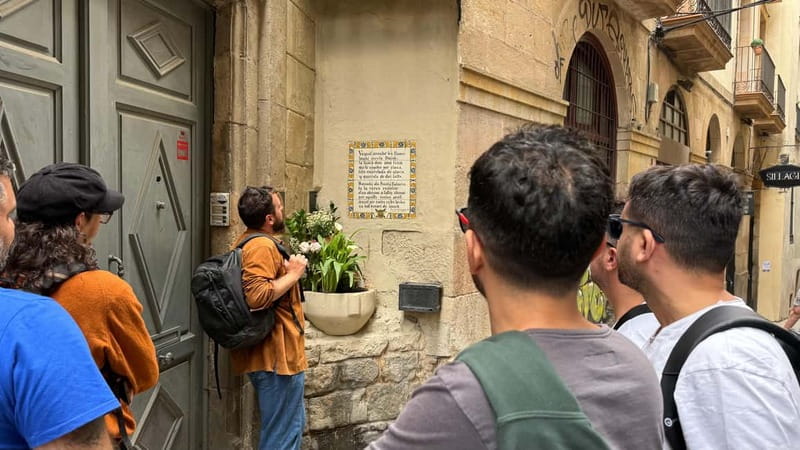
At Sant Felip Neri Square, you’ll have a photo stop and guided time.
Squares like this matter because they act like scene breaks. After longer walks and busier streets, you get a calmer pocket where you can absorb what you’ve heard and refocus for the next segment. If you’re the kind of traveler who forgets half of what you hear while walking, these short pauses are helpful.
Temple of Augustus and Bishop’s Bridge: Rome-to-Barcelona layering
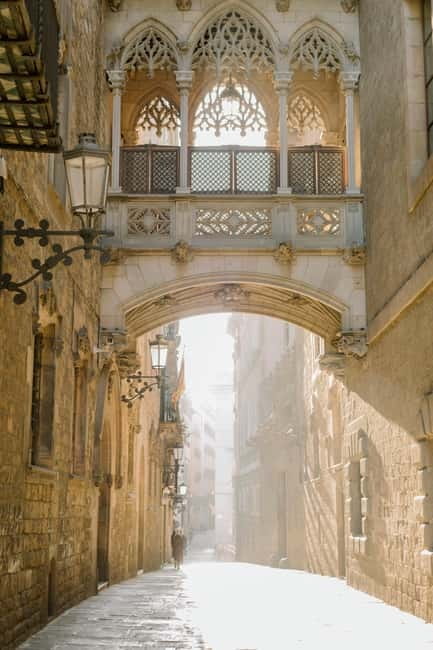
Next are two very “time-layered” stops: the Temple of Augustus, Barcelona (with guided explanation and sightseeing) and then Bishop’s Bridge (guided time).
These moments are where the tour’s “hidden stories” angle clicks for a lot of people. Even if you only spend minutes at each spot, the guide’s storytelling helps you imagine what the area might have looked like across eras. It’s less about memorizing facts and more about connecting the city’s physical remnants to human stories.
Also, bridges and viewpoints often work well for a guided walk because they give the guide natural opportunities to point out changes in the surrounding streetscape—again, without turning this into a classroom.
St. Mary of the Sea Cathedral and the walk to Mercat del Born
The tour finishes with St. Mary of the Sea Cathedral, with guided time, sightseeing, and a walk segment that includes scenic views. The route then ends at Mercat del Born.
Ending at Mercat del Born is a practical move. It’s a lively area where you can keep the evening going on your own terms—grab a snack, wander nearby streets, or just decompress after three hours of story and walking.
If your feet are tired, you’ll appreciate the structure. You don’t have to decide your next step immediately; you finish somewhere that gives you options.
The actor-guide factor: you’re paying for performance, not just directions
The strongest praise in the tour feedback is about the guide style—people specifically mention actor-guides who also work as movie directors, and the storytelling coming across as cinematic. That matters because it changes how you remember places. A guide who performs can turn a stop that might otherwise be forgettable into something with emotional hooks.
Specific names that showed up in feedback include David and Javier, both described as actors and movie directors, plus Emma described as an actor/guide with communication and knowledge. While you can’t guarantee any one person, it gives you a sense of what “great” looks like for this tour: you want a guide who tells the story like it matters.
If you’re the type of traveler who thinks, I’ll read the plaques later, this tour is for you. You’re swapping the plaque-reading time for a guided narrative you can carry with you.
Timing and pace: 3 hours, lots of stops, real walking
This is a 3-hour walking tour. That duration is long enough to cover multiple neighborhoods and several landmark stops, but short enough that you’re not committing your whole day to it.
Here’s what to plan for:
- You’ll have frequent stops for photos and guided moments.
- You’ll do walking segments between sites, including busier areas like La Rambla.
- You’ll want your energy for standing, moving, and listening for the whole time.
So, if you like a structured walk with frequent story beats, you’ll likely enjoy it. If you prefer slow, lingering sightseeing at fewer locations, you might find the pace too structured.
And one practical note: flash photography isn’t allowed. If you’re planning street photos, keep your camera settings in mind so you’re not relying on flash.
Price and value: $23 for a story-driven group tour
At $23 per person for about 3 hours, the price is positioned as value—especially because it includes professional actor guide time and theatrical performances.
What you’re really buying is interpretation. You’re not just getting directions between places; you’re getting a guided narrative that connects neighborhoods—El Raval, the Gothic Quarter, and El Born—into one coherent storyline.
One extra “value” detail: the guide experience appears to include moments where people end up with drinks and tapas on a terrace. Food and drinks are not listed as included, so think of it as a possible break where you can choose what you want. If you want a meal included, you should plan to add that on your own before or after the tour.
Who should book this tour, and who should skip it
I’d recommend this tour if:
- You enjoy storytelling and performance-style guiding.
- You want to connect multiple Old Town areas in a few hours.
- You’re curious about the darker side of local legends—mystery, betrayal, outlaws, and secret societies.
- You like walking but still want structure.
I’d think twice or confirm details if:
- You need special mobility support. The info says wheelchair accessible, but it also lists wheelchair users and people with mobility impairments as not suitable. Check before you go.
- You’re traveling with kids. It’s not suitable for children under 10.
- You want a purely factual, museum-style experience. This is story-first.
A few practical tips before you step out
Bring comfortable walking shoes. You’ll be on your feet and moving between stops often.
Dress for the weather. You’re outside for the full walk, and Barcelona can change mood quickly.
Bring your camera, but remember: no flash.
If you’re sensitive to cancellations or schedule changes, keep your booking details handy and plan to confirm the meeting time the day of the tour. There have been problems mentioned where a tour didn’t happen as expected, so it’s smart to be prepared.
FAQ
Is the tour 3 hours long?
Yes. The walking tour lasts 3 hours.
How much does it cost?
It’s priced at $23 per person.
Where do I meet the tour?
Meet near the metro station Universitat (blue umbrellas).
What neighborhoods does the tour cover?
You’ll cover El Raval, the Gothic Quarter, and El Born.
What’s included in the price?
You get a professional actor guide, theatrical performances, and the walking tour through those neighborhoods.
Are food and drinks included?
Food and drinks are not included.
What languages are available?
The live guide is available in English, Spanish, French, and Italian.
Is the group small?
Yes, it’s limited to 10 participants.
Is the tour suitable for children?
No, it’s not suitable for children under 10.
Can I use flash photography?
No, flash photography isn’t allowed.
Should you book this tour?
If you like Barcelona’s Old Town but get bored by facts alone, this tour is a strong pick. For $23, you’re paying mainly for actor-style storytelling across three historic areas, with enough structure to make the walk feel like one connected experience.
I’d book it if you can handle walking for 3 hours and you’re open to a performance-heavy guide style. I’d double-check mobility suitability first, because the tour’s accessibility info is contradictory. If that’s not a concern, you’re set up for a memorable way to see Old Town—where the streets feel like they have a plot.
More Ways to Tour Barcelona
- Barcelona: Casa Batlló Entry with Self-Audioguide Tour
★ 4.7 · 25,359 reviews - Barcelona: 24 or 48-Hour Hop-On Hop-Off Bus Tour
★ 4.4 · 20,872 reviews - Barcelona: Park Guell Guided Tour with Skip The Line Entry
★ 4.7 · 17,563 reviews - Barcelona: Sagrada Familia Skip-the-Line Entry Ticket & Tour
★ 4.8 · 12,789 reviews - Barcelona: FC Barcelona Museum “Barça Immersive Tour” Ticket
★ 4.4 · 10,944 reviews
More Barcelona Tours on Our Radar
- Barcelona: Sagrada Familia Entry Ticket with Audio Guide
★ 4.6 · 105,312 reviews - Barcelona: Park Güell Admission Ticket
★ 4.4 · 76,534 reviews - Barcelona: Casa Batlló Entry with Self-Audioguide Tour
★ 4.7 · 25,359 reviews - Barcelona: Montjuïc Cable Car Roundtrip Ticket
★ 4.5 · 22,368 reviews - Barcelona: Hola Barcelona Public Transport Travel Card
★ 4.5 · 20,985 reviews
Lost in the Gothic Quarter
- Barcelona in 1 Day: Sagrada Familia, Park Guell,Old Town & Pickup
★ 5.0 · 13,541 reviews - Barcelona all included: Sagrada, Park Güell, Montjuic & Gothic
★ 5.0 · 2,169 reviews - Barcelona: Sagrada Familia, Modernism, and Old Town Tour
★ 4.7 · 1,621 reviews - Barcelona Gothic Quarter Tapas & Taverns Food & Wine Tour
★ 5.0 · 1,470 reviews - Barcelona Helicopter, Sailboat & Old Town Private Walking Tour
★ 5.0 · 1,395 reviews
Just Rated Around Barcelona





Gothic Quarter Tours, compared.
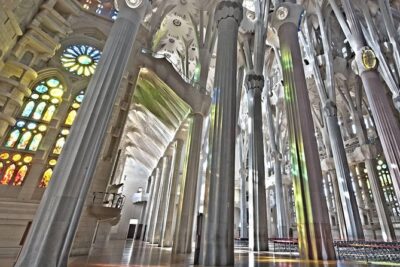 ★ 5.0Barcelona in 1 Day: Sagrada Familia, Park Guell,Old Town & PickupFrom $12013,541 reviews
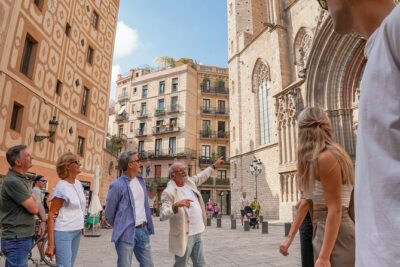 ★ 5.0Barcelona all included: Sagrada, Park Güell, Montjuic & GothicFrom $1192,169 reviews
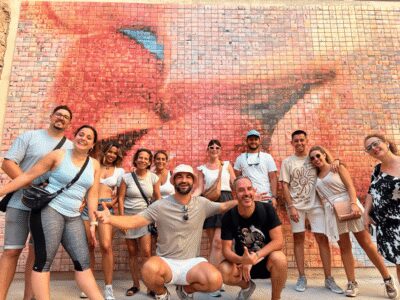 ★ 4.7Sagrada Familia, Modernism, and Old Town TourFrom $521,621 reviews
 ★ 5.0Barcelona Gothic Quarter Tapas & Taverns Food & Wine TourFrom $1311,470 reviews
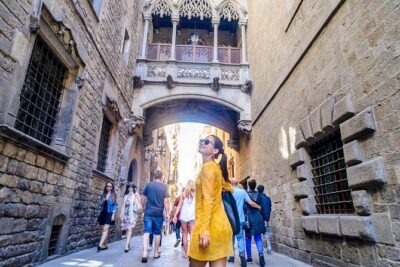 ★ 5.0Barcelona Helicopter, Sailboat & Old Town Private Walking TourFrom $5131,395 reviews
 ★ 4.8Old Town and Gothic Quarter Walking TourFrom $211,393 reviews
 ★ 4.7Helicopter, Boat Ride & Old Town Private TourFrom $5001,357 reviews
 ★ 5.0Barcelona Old Town & Gothic Quarter Small Group TourFrom $221,308 reviews
Browse the lists this tour appears in