
Reviewed · PAELLA COOKING CLASSES
Barcelona Authentic Paella and Sangria Cooking Class
Paella in Barcelona starts with a toast. You start with cava and then cook paella, sangria, and Spanish Catalan cream with a chef. I love the small-group format and how hosts like Luc and Christina keep things interactive, even when people are new to cooking. One possible drawback: the venue setup can vary, so check the location details carefully before you head out.
This is a 2.5-hour, English-led class in Sant Martí that ends back at the meeting point. You’ll get a starter of Spanish pan tomaquet, then your main paella (with options for seafood, chicken, or vegetarian-friendly versions), and finally the classic sweet finish.
I also like that you can ask questions while things are happening, not just after the food is plated, which makes the lesson feel practical instead of scripted.
In This Review
- Key highlights
- What this Barcelona paella class includes (and why it matters)
- The welcome cava and your first hands-on moment with pan tomaquet
- Cooking paella in a small group: how the lesson usually feels
- Paella options: seafood, chicken, and vegetarian-friendly choices
- Sangria and wine: the part that makes the meal feel like an evening
- Catalan cream dessert: a sweet finish that feels very local
- Where you meet in Sant Martí, and why the venue can change your experience
- Timing, group size, and how this class keeps it friendly
- Price in Barcelona: what $120.94 is really paying for
- Who should book this Barcelona paella and sangria class
- Before you go: smart tips to avoid common hassles
- Should you book it? My honest take
- FAQ
- How long is the Barcelona paella and sangria cooking class?
- What does the class cost?
- What do we eat during the class?
- Do you make sangria during the class?
- Can you choose different paella options?
- Is the class offered in English?
- Where do we meet, and does it end nearby?
- How big is the group?
- What’s the cancellation policy?
Key highlights
- Cava welcome before you even touch the ingredients
- Three-course meal built around pan tomaquet, paella, and Catalan cream
- Paella customization options include seafood, chicken, and vegetarian-friendly choices
- Sangria included as part of the experience, with sangria or wine at the meal
- Small groups (max 20) so the chef can correct what you’re doing
- Venue can vary from apartment-style kitchens to outdoor spaces, so confirm details
What this Barcelona paella class includes (and why it matters)
This is not a sit-and-watch cooking demo. It’s a guided, hands-on workshop where you learn the steps, contribute during prep, then eat what you made. You’ll begin with a glass of cava, which sets a relaxed, celebratory tone right away. After that, the day moves in a simple flow: starter, main, sweet finish.
The menu is straightforward and very Spanish: Spanish pan tomaquet first, then paella as the main event, and Catalan cream for dessert. Even if you’ve eaten paella in restaurants before, cooking it is a different experience. You get to understand how the ingredients fit together and why the timing and heat matter more than you might expect.
You also get sangria or wine with the meal. That’s not just a nice extra. It changes the vibe: people talk, ask questions, and share tips while they’re eating. For a lot of visitors, that’s the moment the class turns into a real evening out, not just a ticketed activity.
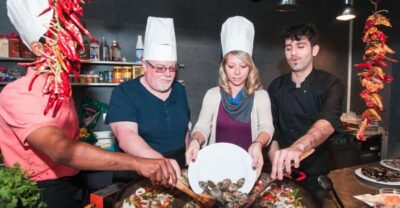
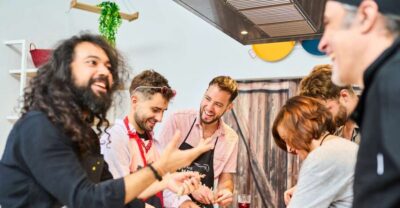
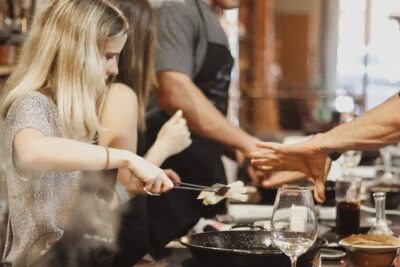
Other kitchens where you'll cook the paella

The welcome cava and your first hands-on moment with pan tomaquet
The class starts with that first pour of cava from the chef. It’s a small thing, but it helps you settle in. You’re more likely to ask questions when you feel comfortable, and you’ll want to. This class is built around interaction, not performance.
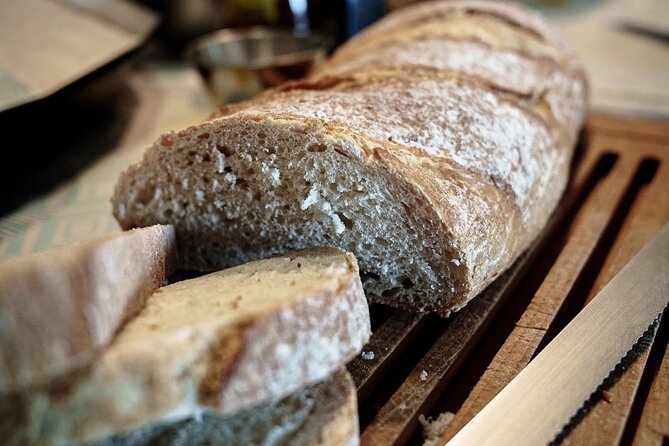
Then comes the starter: Spanish pan tomaquet. In plain terms, it’s tomato rubbed bread with olive oil, and the flavors are simple but addictive. One nice touch from what you’ll see during the class is how the bread gets treated like an ingredient, not just a side. You’ll chop or prep items connected to the tomato-olive oil mix, so you can taste the logic behind the flavor right away.
If you’re thinking about doing this as a couples activity or a family outing, pan tomaquet is a good “starter win.” It’s fast, flavorful, and low-stress. You get proof of progress before the more demanding part of the meal.
Cooking paella in a small group: how the lesson usually feels
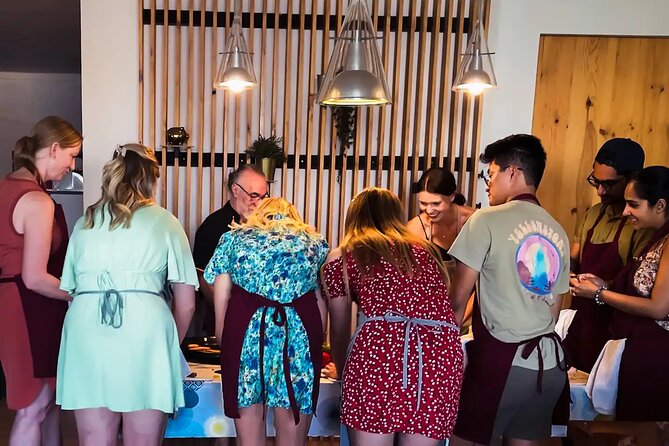
Paella is the headline, but the real value is how the chef guides you through the process. This is a group setting, so you’re not cooking alone. That means you’ll benefit from seeing how others handle the same step, and the tutor can help when something doesn’t look right.
In practice, hands-on time can vary depending on the flow of the class. Some sessions feel very participatory, while others may have parts of the prep done already to keep things on schedule. Either way, you should expect to be involved in key prep tasks like chopping and mixing, then taking part in the cooking steps when your group gets its turn.
What I like about paella teaching done this way is that it gives you a usable mental model. You’re not just copying a recipe. You’re learning how an instructor thinks about the dish: what matters first, what can wait, and what you should watch while the pan is doing its thing.
Also, the chefs tend to bring more than technique. You’ll often hear little bits of context about the dish and Barcelona food culture. That extra chatter doesn’t feel like homework. It makes the whole meal feel more rooted in place.
Paella options: seafood, chicken, and vegetarian-friendly choices
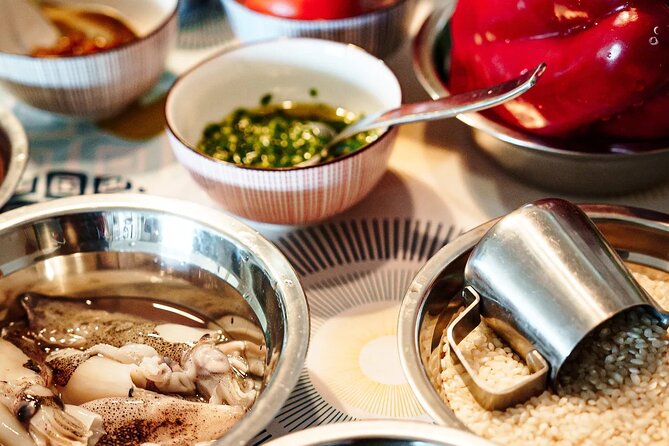
The class offers paella that you can customize. Depending on how the group is set up, you’ll see choices like seafood, chicken, or vegetarian-friendly versions. That flexibility is a real plus if you’re traveling with mixed preferences.
One thing to consider: sometimes the setup can be more limited than the headline suggests. If you’re set on a specific non-seafood option, confirm at booking that your paella choice will be available for your date and your group.
If you want a tip for planning your order: decide early what you actually want to taste. Seafood paella and chicken paella can be very different meals, and vegetarian-friendly paella can still be deeply satisfying if it’s built with flavor-forward ingredients. Don’t leave it until the last minute, or you risk ending up with the nearest available option.
Sangria and wine: the part that makes the meal feel like an evening
Sangria is part of the cooking experience here, not only the afterthought. You’ll learn how to make it during the class, and then you’ll be able to enjoy sangria or wine along with your meal. That matters because it turns the table into something social.
Sangria also helps you relax while the paella is cooking and the timing gets a little tense. Even if you’re watching a pan and thinking, is this rice supposed to look like that, you can stay calm because the evening is already in motion.
From the chef perspective, sangria is useful too. It gives you an easy “first win” drink lesson, and it often helps the group loosen up so people talk to the instructor and each other.
If you’re the kind of person who worries about being the only non-cook in a class: this drink part helps a lot. It’s less intimidating than the paella pan, and it gives you something to contribute while you wait for the main event to come together.
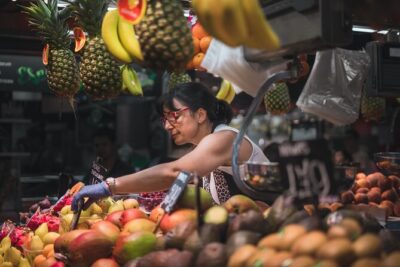
More Barcelona kitchens to roll your sleeves up in
- Barcelona: Paella Cooking Experience & Boqueria Market Tour★ 4.8 · 3,661 reviews
- Barcelona Paella Cooking Class with Market Visit, Tapas & Sangria★ 5.0 · 2,531 reviews
- Barcelona Interactive Spanish Cooking Experience★ 4.5 · 2,155 reviews
Catalan cream dessert: a sweet finish that feels very local
You end with Spanish Catalan cream. This is one of those desserts that feels both familiar and special. It’s not just cake or cookies. Catalan cream is silky and comforting, and it gives the meal a proper Spanish finish.
The dessert stage is also where the class becomes more about sharing than learning. By then, you’ve cooked the main dish, and you’re just enjoying. If your group is visiting Barcelona for a few days, this is a good way to end a day without switching gears to another long activity.
If you’re deciding between a few food experiences in Barcelona, don’t ignore the dessert. Too many classes stop at the main meal. Here, the sweet finish is included and ties the whole three-course theme together.
Where you meet in Sant Martí, and why the venue can change your experience
You’ll meet at Carrer de Badajoz, 115, Sant Martí, 08018 Barcelona. The activity ends back at the meeting point, so you’re not stuck figuring out transportation after a late meal.
Getting to the meeting place is usually straightforward since it’s near public transportation. You’ll also use a mobile ticket, which is handy if you don’t want to fumble with paper while walking.
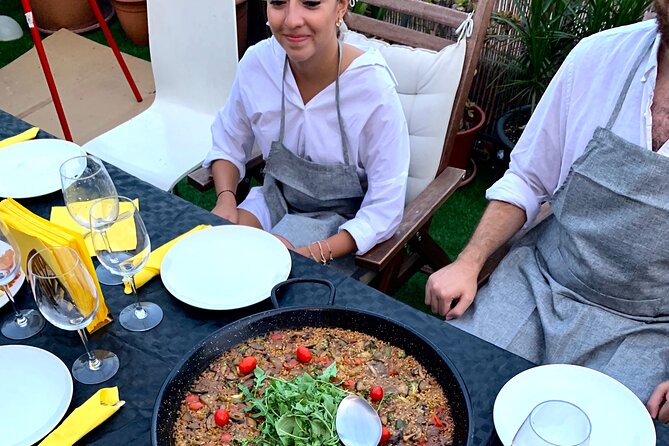
Now the honest part. The venue can vary. Some setups feel like a rooftop-style treat or an outdoor-feeling space. Other times it’s an apartment-style kitchen or an indoor room with limited outdoor access. Once, the setting even felt more industrial than scenic, and it wasn’t easy to spot the location because there was no clear signage.
So here’s your practical advice: treat the address as important, and double-check the instructions right before you go. If you’re expecting a view moment, you might get it, but don’t bet your whole evening on it. A cooking class is still the point, but the setting affects how good the “photo moment” feels afterward.
If you show up calm, flexible, and ready to cook, the venue swing is less painful. If you really care about a specific vibe, confirm details early.
Timing, group size, and how this class keeps it friendly
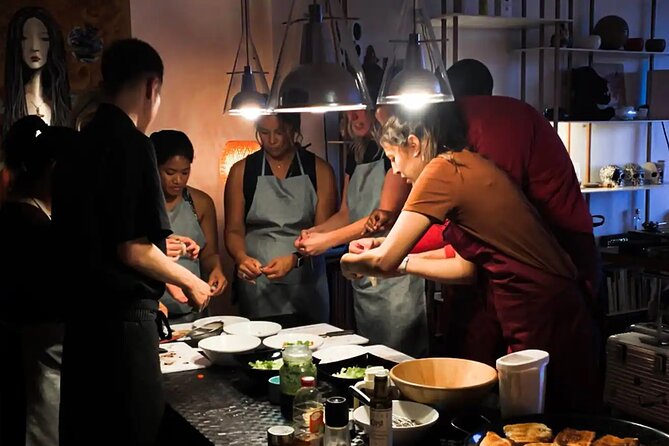
The class runs about 2 hours 30 minutes. It’s long enough to learn the steps and sit down for the full meal, but short enough that it doesn’t swallow your whole night.
Group size is capped at 20 travelers. That cap matters. When groups are too big, you become a spectator. Here, the smaller ceiling makes it more likely you’ll get a real chance to contribute and talk to the chef.
In the best cases, the group can feel even smaller and more intimate. That’s when you get the most direct guidance, more back-and-forth, and less waiting your turn.
If you’re traveling with kids or a wider age range, this format can work well because the pace is steady and the meal is structured. It’s not just cooking time. It’s cooking plus dining, which helps keep the energy up.
Price in Barcelona: what $120.94 is really paying for
At $120.94 per person, this class is not a budget-only activity. You’re paying for more than instruction. You’re paying for the ingredients, the chef’s time, and a three-course meal that includes drinks.
Here’s how that can make sense in real travel terms: a solid dinner in Barcelona with wine is already a meaningful cost for most people. Add in the fact that you’re learning a core Spanish skill (paella, plus how sangria fits into the meal), and you’ve got both a meal and an experience lesson.
You’re also paying for the small-group advantage. Maximum 20 people means the chef can help more directly than a larger event.
Still, price requires you to be clear about what you want. If your top priority is a scenic venue, you might be happier with an experience that guarantees a specific outdoor view. If your top priority is learning the food and eating a meal you helped make, this is the type of class that can deliver strong value.
Who should book this Barcelona paella and sangria class
I’d point this toward three types of travelers:
- Couples and small groups who want a fun shared activity with dinner included
- Food-focused travelers who like hands-on cooking over passive tours
- People who enjoy a social dinner vibe, where you meet other travelers and swap stories
Chefs you might encounter include Luc, Christina, Benjamin, Tommy, Patrick, Martinho, and Alphonso, based on past sessions. The names vary, but the common thread is an instructor who interacts with the group and keeps the process clear.
One more fit note: if you are very strict about getting a certain kind of venue, you should confirm the latest location details at booking time and again close to your start. The cooking itself is the constant. The atmosphere can shift.
Before you go: smart tips to avoid common hassles
A paella class is simple on paper, but small details can make a difference.
First, arrive a few minutes early. That helps you get oriented before the chef starts. Second, if you’re using navigation, copy the exact meeting point address: Carrer de Badajoz, 115. There have been cases where the saved address didn’t match the actual location, and signage wasn’t always obvious.
Third, be ready for some ingredients to be prepped already. That’s normal for timing. If you want max hands-on time, tell the chef early that you’d like to participate as much as possible.
Fourth, check your paella preference before you show up. The class advertises seafood, chicken, and vegetarian-friendly options, but practical availability can depend on how the session is set up.
Lastly, if your dates are tight, build a little flexibility into your schedule. Cooking classes sometimes get adjusted. Having a backup plan keeps the evening from feeling like a stress test.
Should you book it? My honest take
If you want a real Spanish cooking evening in Barcelona with paella you helped make, sangria you made, and a dessert finish that tastes like you actually stayed for dessert, this is a strong choice. The small group size and the chef-led, interactive setup are the main reasons it works.
Book it if you’ll enjoy learning, cooking, and then eating together, even if the venue isn’t exactly what you pictured from photos. Skip it or confirm extra carefully if your top priority is a guaranteed rooftop view, or if you need a very specific dietary version.
Overall, this class is at its best when you treat it like an evening activity: show up curious, cook what you can, and plan to linger at the table once the paella hits.
FAQ
How long is the Barcelona paella and sangria cooking class?
It’s listed at about 2 hours 30 minutes.
What does the class cost?
The price is $120.94 per person.
What do we eat during the class?
You’ll have a three-course meal: Spanish pan tomaquet as a starter, paella as the main, and Spanish Catalan cream for dessert.
Do you make sangria during the class?
Yes. The experience includes sangria, and the shared meal is accompanied by sangria or wine.
Can you choose different paella options?
The class offers the paella as customizable with seafood, chicken, or vegetarian-friendly options.
Is the class offered in English?
Yes, the experience is offered in English.
Where do we meet, and does it end nearby?
You meet at Carrer de Badajoz, 115, Sant Martí, 08018 Barcelona, Spain, and the activity ends back at the meeting point.
How big is the group?
The tour has a maximum of 20 travelers.
What’s the cancellation policy?
You can cancel for a full refund up to 24 hours in advance. If you cancel less than 24 hours before the start time, you won’t receive a refund. If it’s canceled because a minimum number of travelers isn’t met, you’ll be offered a different date/experience or a full refund.
Apron On in Barcelona
- Barcelona: Paella Cooking Experience & Boqueria Market Tour
★ 4.8 · 3,661 reviews - Barcelona Paella Cooking Class with Market Visit, Tapas & Sangria
★ 5.0 · 2,531 reviews - Barcelona Interactive Spanish Cooking Experience
★ 4.5 · 2,155 reviews - Barcelona: Paella Cooking Class with Market Visit and More
★ 4.9 · 711 reviews - Paella Cooking Class with Professional Chef: Four Course Dinner
★ 5.0 · 561 reviews
More Barcelona Tours on Our Radar
- Barcelona: Sagrada Familia Entry Ticket with Audio Guide
★ 4.6 · 105,312 reviews - Barcelona: Park Güell Admission Ticket
★ 4.4 · 76,534 reviews - Barcelona: Casa Batlló Entry with Self-Audioguide Tour
★ 4.7 · 25,359 reviews - Barcelona: Montjuïc Cable Car Roundtrip Ticket
★ 4.5 · 22,368 reviews - Barcelona: Hola Barcelona Public Transport Travel Card
★ 4.5 · 20,985 reviews
Back in the Paella Kitchen
- Barcelona: Paella Cooking Experience & Boqueria Market Tour
★ 4.8 · 3,661 reviews - Barcelona Paella Cooking Class with Market Visit, Tapas & Sangria
★ 5.0 · 2,531 reviews - Barcelona Food Tour: Tapas, Paella, Sangria & 8+ Local Tastings
★ 5.0 · 1,275 reviews - Girona & Costa Brava Small Group Tour From Barcelona with Paella!
★ 4.5 · 1,098 reviews - Paella Experience and Bottomless Wine in Barcelona
★ 5.0 · 1,037 reviews
Just Rated Around Barcelona


Paella Cooking Classes, compared.
 ★ 4.8Paella Cooking Experience & Boqueria Market TourFrom $853,661 reviews
 ★ 5.0Barcelona Paella Cooking Class with Market Visit, Tapas & SangriaFrom $1142,531 reviews
 ★ 5.0Barcelona Food Tour: Tapas, Paella, Sangria & 8+ Local TastingsFrom $1171,275 reviews
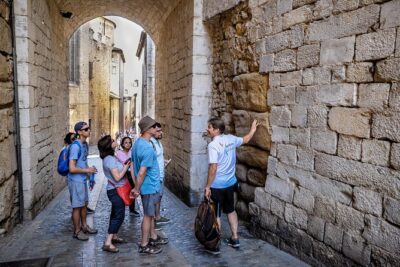 ★ 4.5Girona & Costa Brava Small Group Tour From Barcelona with Paella!From $1391,098 reviews
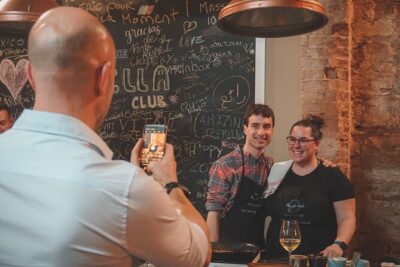 ★ 5.0Paella Experience and Bottomless Wine in BarcelonaFrom $2411,037 reviews
 ★ 4.9Paella Cooking Class with Market Visit and MoreFrom $95711 reviews
 ★ 5.0Paella Cooking Class with Professional Chef: Four Course DinnerFrom $211561 reviews
 ★ 5.0Tossa de Mar: Kayak & Snorkel Tour with Paella from BarcelonaFrom $156421 reviews
Browse the lists this tour appears in