
Reviewed · WALKING TOURS
Barcelona El Raval Dark History Walking Tour
Barcelona’s Raval has a darker side, and it’s real.
This 2-hour walking tour takes you through Ciutat Vella and down toward Jardins de les Tres Xemeneies, using real buildings and streets to tell harder, stranger stories than the usual brochure route. You’ll cover topics like a foundling wheel, autopsies, and the grittier past of Avenida del Paralelo.
Two things I really like: the small group size (max 15) keeps it human, and the guides bring strong energy and clear storytelling, with standout mentions for Eoghan, Zeynep, Callum, Cal, Albert, and Andres. One consideration: the theme is called dark history, so you should be ready for uncomfortable subjects, not just pretty views.
In This Review
- Key things to know before you go
- A Two-Hour Raval Story That Feels Like Knowing the City
- Small Group, Big Difference: How the Tour Stays Comfortable
- Start at Plaça de Castella: The Route Builds Momentum Fast
- Stop-by-Stop Through the Raval’s Hard Stories
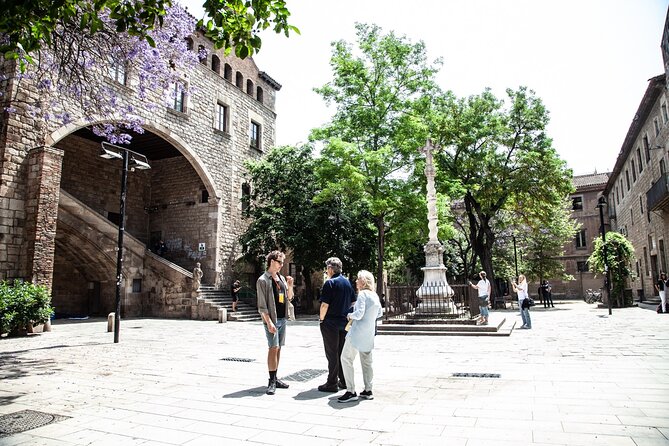
- Fundació Privada Casa de Misericòrdia de Barcelona: The Foundling Wheel
- Carrer de Joaquín Costa: Crime in the Street Name
- Real Academia de Medicina de Cataluña: Autopsies and the Former Hospital of la Santa Creu
- Sant Pau del Camp: Barcelona’s Oldest Church and a Violent Past
- Avenida del Paralelo: The Chinese District and Nightlife’s Seedier Edge
- Jardins de les Tres Xemeneies: From Industry to Graffiti Art
- Why the “Dark” Label Doesn’t Mean a Grim Experience All the Way Through
- Price and Value: $33.42 for a 2-Hour Neighborhood Reset
- The Guide Makes It: Eoghan, Zeynep, Callum, Cal, Albert, and Andres
- Who Should Book This Raval Dark History Walk
- Should You Book It?
- FAQ
- How long is the Barcelona El Raval Dark History Walking Tour?
- What does it cost?
- How many people are in the group?
- Where does the tour start and end?
- Is lunch included?
- Can I get a refund if I cancel?
Key things to know before you go
- Max 15 people means you get more back-and-forth and easier pacing.
- Free admission at every stop on the route keeps the trip feeling good value.
- Six focused stops move you from foundling care to medicine to nightlife to street art.
- Local guide + mobile ticket makes it straightforward to show up and follow along.
- End point at Jardins de les Tres Xemeneies gives you a strong finish and an easy place to keep exploring.
- Guides’ recommendations (food and things to do) are a common highlight in the feedback.
A Two-Hour Raval Story That Feels Like Knowing the City
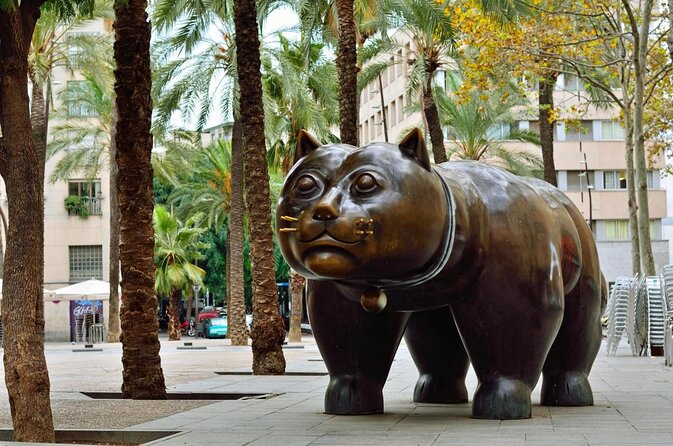
If you want Barcelona the way locals think about it, this is a smart starting point. The Raval gets described in lots of ways, but this tour sticks to what you can actually see: churches, institutional buildings, streets that shaped nightlife, and corners of the city that now look different than they used to.
What makes it work is the tone. The stories lean gritty, but the walk itself stays relaxed. You’re not just hearing facts—you’re learning how different parts of the neighborhood connect: care and abandonment, medicine and death, nightlife and communities, industry and today’s graffiti scene.
I also like that it’s built for people who feel a little bored by the classic hits. You’ll still see major-looking places, but the route is designed to guide you into the “wait, I never noticed that” Barcelona.
More Barcelona streets to take slowly




Small Group, Big Difference: How the Tour Stays Comfortable
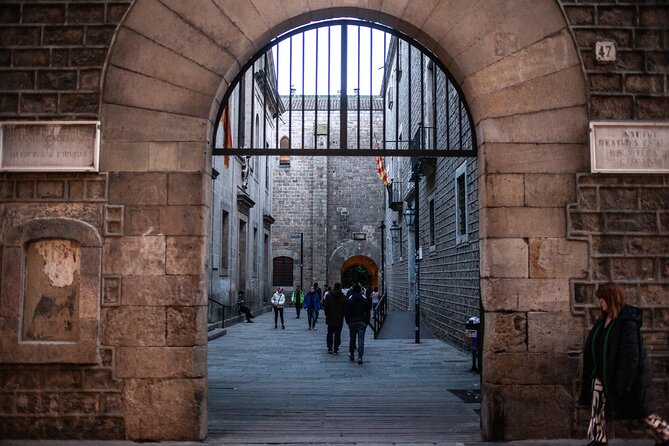
This is capped at no more than 15 travelers, and that matters more than you’d think. In a big group, you just follow along and hope you catch the key point. In a small group, you can ask things, and the guide can adjust pacing if people are lagging or curious.
It also shows up in how the tour is described. Several guides were praised for being patient and making sure everyone stays engaged, including giving helpful introductions so the group feels at ease quickly. That can be huge in the Raval, where you want to feel safe and oriented rather than “on your own.”
If you like conversational tours where you learn a neighborhood’s logic (not just isolated trivia), this format supports that.
Start at Plaça de Castella: The Route Builds Momentum Fast
You begin at Parròquia de Sant Pere Nolasc Mercedaris, Pl. de Castella, 6, in Ciutat Vella. The tour then ends at Plaça de Les Tres Xemeneies, Av. del Paral·lel, 49, in Sants-Montjuïc, with the finish at the gardens area (Jardines de las Tres Chimeneas).
The practical value of that setup: it’s a compact 2-hour route that gradually shifts the “mood” of the neighborhood. You’re not just walking in circles. The day ends in an area where you can keep exploring on foot and still feel like you chose something different.
And because it’s near public transportation, you’re not trapped if your timing is off.
Stop-by-Stop Through the Raval’s Hard Stories
The tour is built as six stops, with about 20 minutes at each. Each one is different in function—religion, medicine, street history, nightlife, industry—so you keep getting new angles instead of the same theme repeated.
Fundació Privada Casa de Misericòrdia de Barcelona: The Foundling Wheel
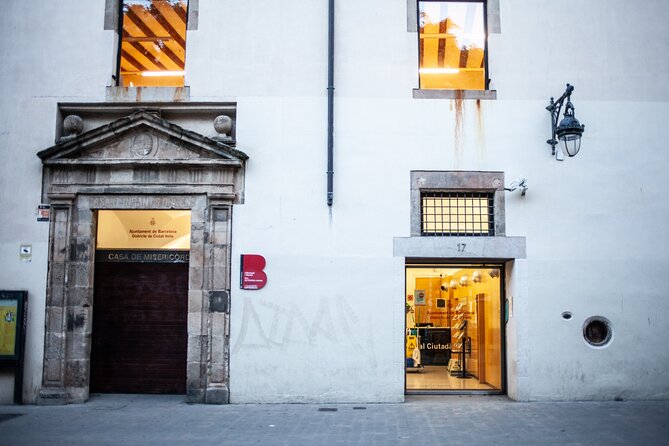
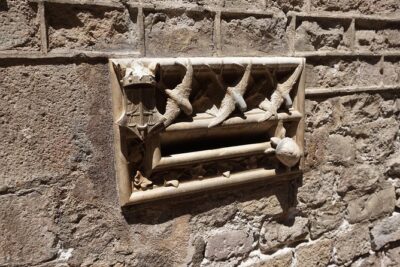
The first stop is at the Fundació Privada Casa de Misericòrdia de Barcelona, where the tour points out a foundling wheel for unwanted infants that’s hidden in plain sight.
This is the kind of place where you start to understand what the neighborhood has carried over time: not just glamour or spectacle, but real human outcomes. The emotional punch here is in how ordinary the structure can look until someone tells you what it used to be.
Why it’s a great opener: it sets the tone for the whole walk. You begin with a direct, physical reminder that institutions can be both practical and heartbreaking.
More of the old Barcelona to walk
- Barcelona: Tapas Walking Tour with Food, Wine, and History★ 4.8 · 4,261 reviews
- Barcelona Tapas Walking Tour: Food, Wine & History★ 4.5 · 1,928 reviews
- Barcelona Erotic Museum – Explore Art, History & Fun★ 4.4 · 450 reviews
Carrer de Joaquín Costa: Crime in the Street Name
Next you’ll stand on Carrer de Joaquín Costa for a story tied to a villain and crimes that the tour describes as truly chilling.
This stop is less about a single doorway and more about how street names and local legends keep history close. In Barcelona, the city layers meaning on top of architecture, and this is one of those moments where a street corner turns into a narrative.
Potential drawback: if you’re hoping for purely “things you can photograph nicely,” this part is more about mood and story than scenery.
Real Academia de Medicina de Cataluña: Autopsies and the Former Hospital of la Santa Creu
At Real Academia de Medicina de Cataluña, the tour connects the building to the former Hospital of la Santa Creu, known for autopsies.
Even if you’re not into medical history, the point here is bigger than one building. It’s about how the Raval held institutions that served darker needs, and how those activities shaped perceptions of place.
I like this stop because it’s specific. You’re not told vague “this area was rough.” You’re shown an actual institutional identity, and the tour frames it with clear context.
Sant Pau del Camp: Barcelona’s Oldest Church and a Violent Past
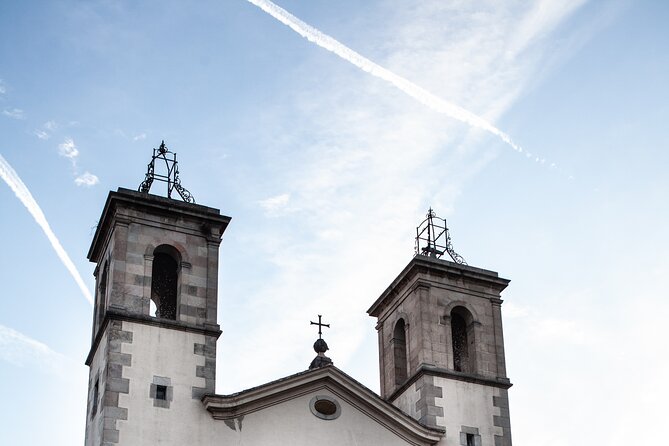
Then you reach Sant Pau del Camp, described as Barcelona’s oldest church. The tour also notes that it was once a monastery with a violent history.
This is a key shift. You’re no longer only in civic or institutional spaces. You’re in a religious site, which changes how the stories land. A place of worship often makes you assume calm. The tour complicates that, which is exactly why it feels different from the typical “pretty church” stop.
Drawback to consider: because the tour leans into violence and dark context, this is not a stop for someone who wants light, feel-good history only.
Avenida del Paralelo: The Chinese District and Nightlife’s Seedier Edge
Avenida del Paralelo is where the tour turns toward the neighborhood’s more 20th-century nightlife identity, described as the hub of seedier evenings and tied to the Chinese district.
This is one of the stops that helps you understand why the Raval isn’t just one thing. It’s layered. Industrial-era buildings, communities, and entertainment history all coexist in the same walking radius.
If you like urban history that’s tied to real social life—not just monuments—this stop delivers. It also helps you connect what you’re seeing now with what used to happen in the same streets.
Jardins de les Tres Xemeneies: From Industry to Graffiti Art
The final stop is Jardins de les Tres Xemeneies at Plaça de Les Tres Xemeneies. The tour frames it as once the center of industrial Barcelona, now a place that’s especially loved by graffiti art lovers.
That ending choice is smart. You start with foundling care, move through medicine and monasteries, shift into nightlife, and then close with a space where modern street art takes over the frame. It helps the tour feel balanced, even with the heavy topics earlier.
If you want a “where do we go next?” finish, you’ve got it. Jardins de les Tres Xemeneies gives you a visual reset and an easy place to continue your evening.
Why the “Dark” Label Doesn’t Mean a Grim Experience All the Way Through
The name can sound scary, but the way the tour is built is more useful than sensational. It’s essentially a neighborhood orientation with edges. You’ll learn about real institutions and the kind of stories that usually get skipped when people only chase postcard Barcelona.
And the group experience seems to be part of the formula. Many guides were praised for being personable, helpful, and for balancing talk with stops that let you look around and reset. One of the most repeated themes is that the guides don’t just recite facts; they explain how the city’s past connects to what you see today.
Price and Value: $33.42 for a 2-Hour Neighborhood Reset
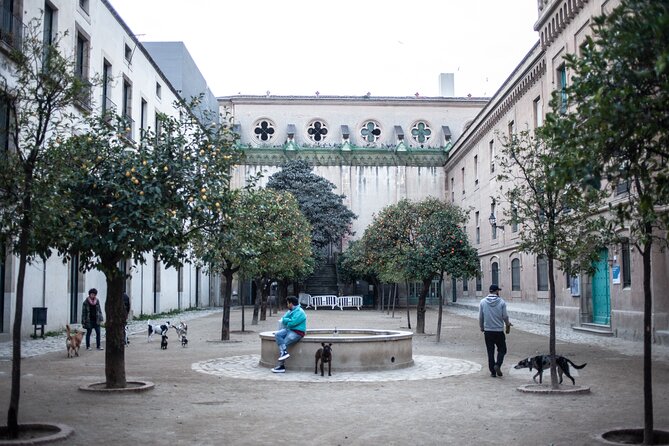
At $33.42 per person for about 2 hours, this isn’t the cheapest option in Barcelona. But it often feels like good value because several of the stops are free to enter (the tour notes free admission tickets at each of the six points).
You’re also paying for something harder to replicate on your own: a local guide who can connect the dots between buildings, street names, and the neighborhood’s social shifts.
If you’ve already spent time in the big sights and you’re craving a more personal city story, this price can feel fair. It’s a focused use of time with a clear route and a strong finish point.
One practical note: it’s common for this tour to be booked ahead (around 21 days on average), so if you’re traveling at a peak time, don’t leave it to the last minute.
The Guide Makes It: Eoghan, Zeynep, Callum, Cal, Albert, and Andres
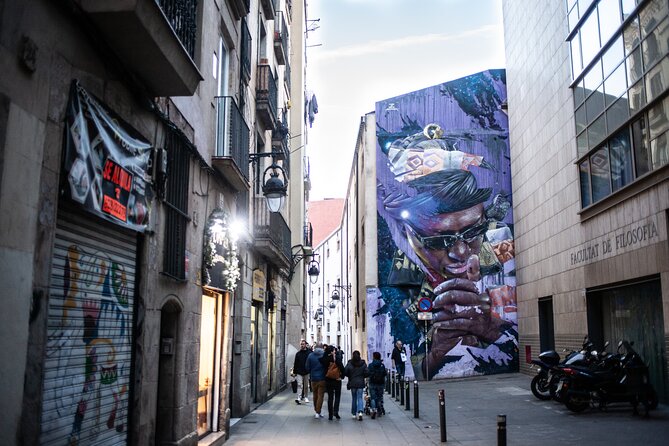
This tour’s standout trait is the human delivery. Multiple guides earned praise for being charming, funny, and strongly invested in the neighborhood.
- Eoghan is repeatedly praised for passion and storytelling power, plus a great sense of humor.
- Zeynep was singled out for being informative and showing plenty of sights people wouldn’t normally find.
- Callum was praised for keeping the group engaged and for offering lots of recommendations.
- Cal earned credit for making people feel safe and welcomed from the start.
- Albert received notes for being very informative.
- Andres was praised for letting people explore an area they might have skipped.
The practical takeaway for you: if you care about learning in a way that doesn’t feel like a lecture, this tour’s guide style is a big part of why people recommend it.
Who Should Book This Raval Dark History Walk
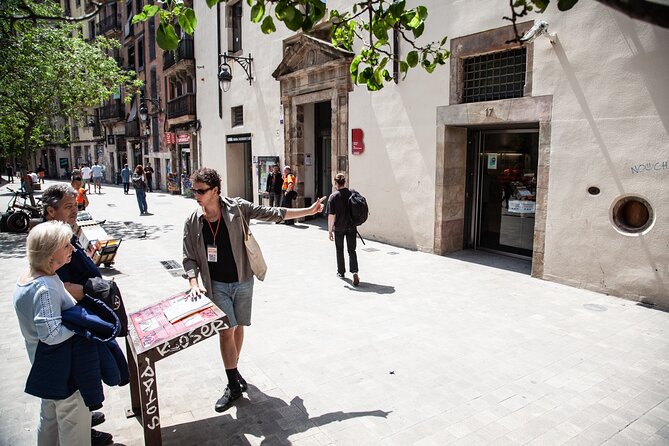
I’d point you toward this tour if you:
- want more than main attractions and you like neighborhood-level stories
- enjoy walking tours that mix street context with real buildings
- are curious about Barcelona’s harder social layers, not just its polished image
- appreciate a small group where you can stay engaged and ask questions
I’d think twice if you:
- strongly dislike uncomfortable topics (the tour’s focus is dark history, including autopsies and violent pasts)
- want a purely uplifting, light itinerary
Should You Book It?
Yes, if you want a sharp, guided orientation to one of Barcelona’s most complicated neighborhoods. The route is tight, the stops are specific, and the free-admission structure helps the $33.42 price feel anchored in real value. The small group size and the repeated praise for guides like Eoghan, Zeynep, Callum, Cal, Albert, and Andres suggest you’re likely to get more than a generic script.
If you’re booking because you want the “gritty side” without feeling lost, this is one of the best ways to get oriented fast.
FAQ
How long is the Barcelona El Raval Dark History Walking Tour?
It’s about 2 hours.
What does it cost?
The price is $33.42 per person.
How many people are in the group?
The tour has a maximum of 15 travelers.
Where does the tour start and end?
It starts at Parròquia de Sant Pere Nolasc Mercedaris, Pl. de Castella, 6, Ciutat Vella, and ends at Plaça de Les Tres Xemeneies, Av. del Paral·lel, 49, with the tour ending at Jardines de les Tres Chimeneas.
Is lunch included?
No. Lunch is not included.
Can I get a refund if I cancel?
Yes. You can cancel for a full refund if you cancel at least 24 hours before the experience starts. Free cancellation ends if you cancel less than 24 hours before start time.
More of Barcelona on Foot
- Barcelona Tapas and Wine Experience Small-Group Walking Tour
★ 5.0 · 5,804 reviews - Barcelona: Tapas Walking Tour with Food, Wine, and History
★ 4.8 · 4,261 reviews - Barcelona: Food Walking Tour with Tapas and Wine
★ 4.9 · 2,180 reviews - Barcelona Tapas Walking Tour: Food, Wine & History
★ 4.5 · 1,928 reviews - Barcelona Helicopter, Sailboat & Old Town Private Walking Tour
★ 5.0 · 1,395 reviews
More Ways to Tour Barcelona
- Barcelona: Casa Batlló Entry with Self-Audioguide Tour
★ 4.7 · 25,359 reviews - Barcelona: 24 or 48-Hour Hop-On Hop-Off Bus Tour
★ 4.4 · 20,872 reviews - Barcelona: Park Guell Guided Tour with Skip The Line Entry
★ 4.7 · 17,563 reviews - Barcelona: Sagrada Familia Skip-the-Line Entry Ticket & Tour
★ 4.8 · 12,789 reviews - Barcelona: FC Barcelona Museum “Barça Immersive Tour” Ticket
★ 4.4 · 10,944 reviews
More Barcelona Tours on Our Radar
- Barcelona: Sagrada Familia Entry Ticket with Audio Guide
★ 4.6 · 105,312 reviews - Barcelona: Park Güell Admission Ticket
★ 4.4 · 76,534 reviews - Barcelona: Casa Batlló Entry with Self-Audioguide Tour
★ 4.7 · 25,359 reviews - Barcelona: Montjuïc Cable Car Roundtrip Ticket
★ 4.5 · 22,368 reviews - Barcelona: Hola Barcelona Public Transport Travel Card
★ 4.5 · 20,985 reviews
Just Rated Around Barcelona


Walking Tours, compared.
 ★ 5.0Barcelona Tapas and Wine Experience Small-Group Walking TourFrom $835,804 reviews
 ★ 4.8Tapas Walking Tour with Food, Wine, and HistoryFrom $784,261 reviews
 ★ 4.9Food Walking Tour with Tapas and WineFrom $1002,180 reviews
 ★ 4.5Barcelona Tapas Walking Tour: Food, Wine & HistoryFrom $661,928 reviews
 ★ 5.0Barcelona Helicopter, Sailboat & Old Town Private Walking TourFrom $5131,395 reviews
 ★ 4.8Old Town and Gothic Quarter Walking TourFrom $211,393 reviews
 ★ 4.9City Walking Tour with a Local GuideFrom $291,384 reviews
 ★ 5.0Guided Food Walking Tour with Tapas and WineFrom $95848 reviews
Browse the lists this tour appears in