
Reviewed · GOTHIC QUARTER TOURS
Gothic Quarter & Beyond: Leisurely Local Discoveries
A Gothic Quarter tour that feels like a conversation with history. I like the small group size (up to 12) because it means lots of questions with less rushing, and I also like that you get to eat like a local with a traditional snack along the way. One consideration: it’s a walking tour with several short stops, so if you hate uneven streets or long standing breaks, you’ll want to plan your pace.
What makes this one special is the mix of famous landmarks and the quieter bits Barcelona hides in plain sight. You start near Palau de la Música, then work your way through centuries of convent life, chapels, temples, and museums—plus you’ll learn how the city reused old buildings as Barcelona grew. The tour is offered in English, and it runs about 3 hours 30 minutes.
In This Review
- Key highlights to look for
- Entering Barcelona’s Gothic Quarter: why 3.5 hours is the sweet spot
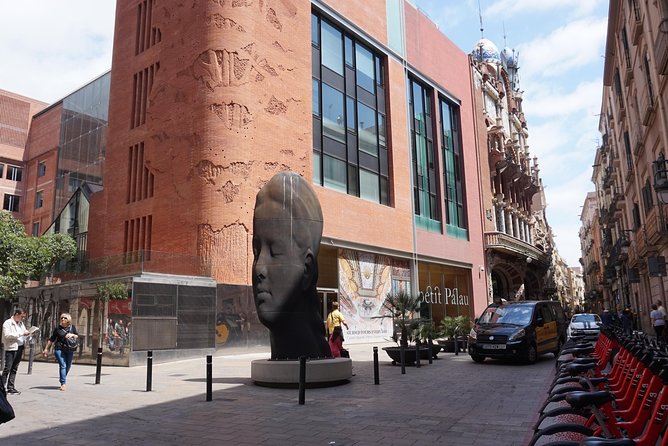
- Start at Palau de la Música: the meeting point that sets the tone
- Centre Cívic Convent de Sant Agustí: when a convent becomes a city hub
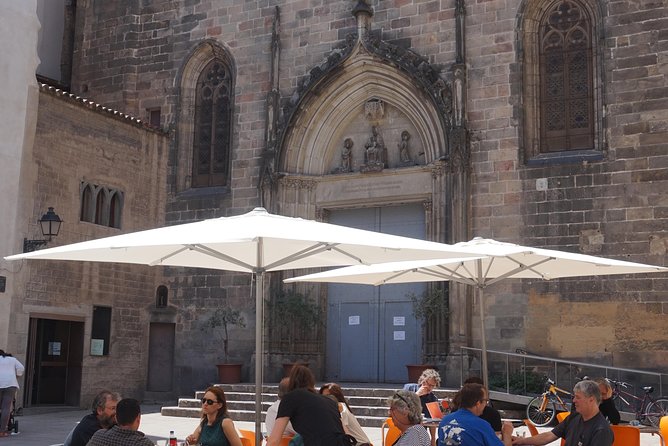
- Sant Pere de les Puelles: Romanesque bones and a monastery’s big changes
- Capella d’en Marcús: a chapel built for travelers and the poorest
- Basilica dels Sants Just i Pastor: a 14th-century church in a quieter corner
- MUHBA Temple d’August: surviving Roman columns in a tiny courtyard
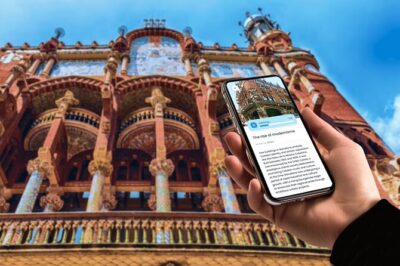
- Palau de la Música Catalana: UNESCO architecture with real musical spirit
- Museu Frederic Marès: object stories inside a former palace
- The snack and the local advice that make it feel grounded
- Price and value: what $61.54 buys you
- Small-group logistics that actually matter (not just fine print)
- Who this tour fits best
- Should you book this Gothic Quarter walk?
- FAQ
- How long is the tour?
- How many people are in the group?
- What language is the tour offered in?
- Where does the tour start and end?
- Are admission tickets included for the stops?
- What if the weather is bad?
- What is the cancellation policy?
Key highlights to look for
- Small-group Q&A time with room for questions instead of one-way listening
- Traditional snack included, plus practical ideas for what to do next
- Photo-friendly “in-between” corners you might miss on your own
- Free-admission stops that keep your day budget-friendly
- A smart mix of Romanesque, medieval, and UNESCO-level sights
Entering Barcelona’s Gothic Quarter: why 3.5 hours is the sweet spot
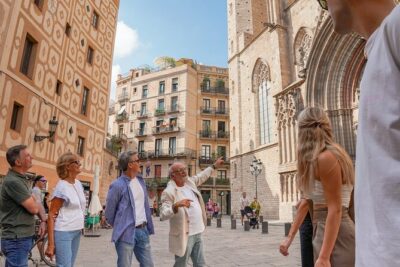
This is the kind of tour that helps you get oriented fast without turning the day into a checklist. You’re not stuck on one monument for ages; you’re moving through a web of medieval streets and building types, which makes the architecture feel connected instead of random.
The walking time matters. At about 3 hours 30 minutes, you get enough stops to see how Barcelona layers centuries on top of each other, but you still have time afterward to choose your own lunch, browse nearby shops, and explore at a slower pace. And because the group stays small, the guide can point out what to look for before you even notice it yourself.
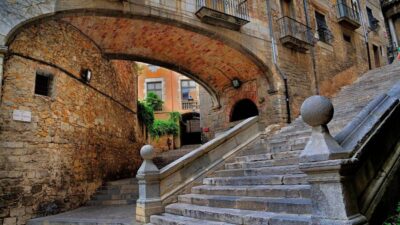
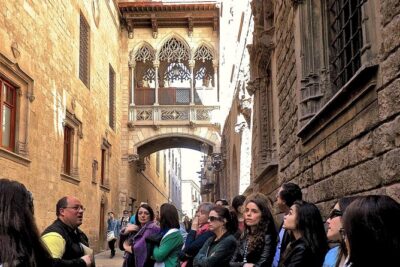
Deeper into the lanes of the Barri Gòtic
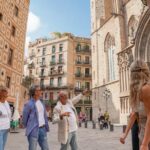


Start at Palau de la Música: the meeting point that sets the tone
Your day begins at Carrer del Palau de la Música, right by the Palau de la Música area (Ciutat Vella). That location is more than just an address—it’s a good “anchor” for your bearings. If you’re thinking, Where do I even start in this maze of streets?—starting here helps a lot.
You’ll finish near Museu Frederic Marès, at Plaça Sant Iu. That end point is also useful: it leaves you in the heart of the Gothic Quarter rather than dropping you at the edge of the map.
Centre Cívic Convent de Sant Agustí: when a convent becomes a city hub
Stop one is the Centre Cívic Convent de Sant Agustí, a site with two different lives. The original convent began being built in 1349, but the Augustinians had to abandon it when the Fortress of the Ciutadella came along. Later, between 1728 and 1750, a new convent and church were created.
What I like here is that it’s not just a pretty exterior story. The old convent buildings today serve modern roles: the Ciutat Vella Civic Centre, the Barcelona Photographic Archive, and the Chocolate Museum. That mix gives you a great lesson in how Barcelona reuses space instead of constantly starting over.
Practical note: this stop is brief, and a lot happens through explanation. If you’re the type who wants deep time lines, ask your guide questions at the wing and church elements that survived restoration. The ticket is free here, so you don’t feel like you’re paying extra to stand in a hallway.
Sant Pere de les Puelles: Romanesque bones and a monastery’s big changes
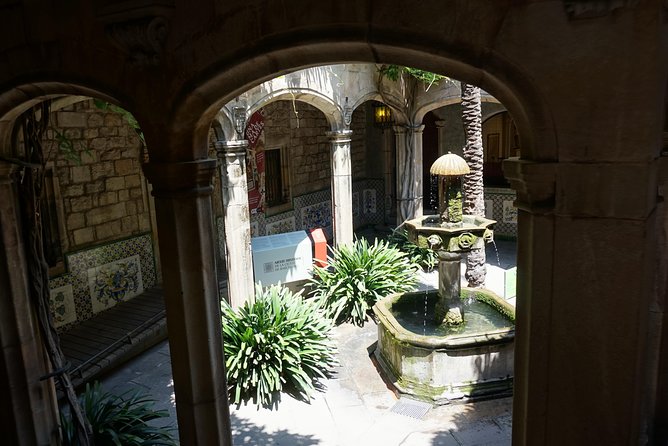
Next you reach Sant Pere of the Puelles, whose roots go back to 945 AD. It was Barcelona’s first convent of Benedictine nuns at the time it was consecrated, and the building started outside the city walls when that area functioned differently than it does now.
The story turns complicated in a way that makes it feel real. Sant Pere de les Puelles goes through attacks by Arab troops, fires, and eventual expulsion of its religious community in the 19th century. The nuns ended up moving to a permanent site in Sarrià-Sant Gervasi in 1879.
Why it’s worth stopping: you get to see Romanesque-era ideas surviving through centuries of change, and you learn how the city’s safety, religion, and borders shaped buildings. Drawback? Since the stop is short, you’ll want to listen closely to the explanation of what’s old versus what’s later. Bring your curiosity and you’ll leave with a much clearer mental map.
Capella d’en Marcús: a chapel built for travelers and the poorest
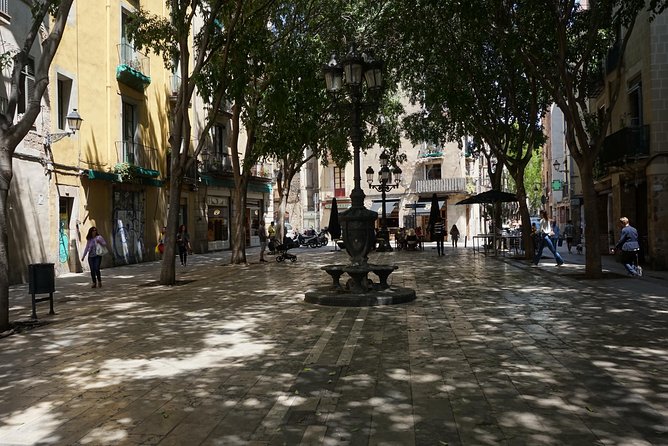
At Capella d’en Marcús, you meet a very human version of medieval Barcelona. Bernat Marcús sponsored the construction of a small chapel in 1166 for travelers, with an added purpose: acting as a kind of hospital for the poorest people in the city.
It also sits in an important geographic clue—the chapel was on the old Roman road leading to France. That means when you look around here, you’re not just seeing a chapel. You’re seeing a travel route, and you’re seeing how people planned care along movement corridors.
This one is quick, so don’t expect a long visit. Instead, use it like a checkpoint stop: pause, look, then let your guide connect the building to the idea of travel and charity.
- Barcelona: Sagrada Familia Entry Ticket with Audio Guide★ 4.6 · 105,312 reviews
- Barcelona: Park Güell Admission Ticket★ 4.4 · 76,534 reviews
- Barcelona: Casa Batlló Entry with Self-Audioguide Tour★ 4.7 · 25,359 reviews
Basilica dels Sants Just i Pastor: a 14th-century church in a quieter corner
The Basilica dels Sants Martirs Just i Pastor is described as possibly the city’s oldest church, though the bigger point is simpler: it’s a 14th-century building in one of the Gothic Quarter’s prettiest spots that many people skip.
Here’s what you gain from this stop. Barcelona’s Gothic Quarter can feel loud and crowded when you follow the most obvious routes. This church offers a calmer pocket, and you start noticing details like the way medieval devotion shaped the city layout around it.
Short stop means you’ll get highlights, not a full independent exploration. If you love church architecture, take a moment to look slowly at the parts your guide calls out—then move on. The tour’s pace is designed to keep your energy for the later stops.
MUHBA Temple d’August: surviving Roman columns in a tiny courtyard
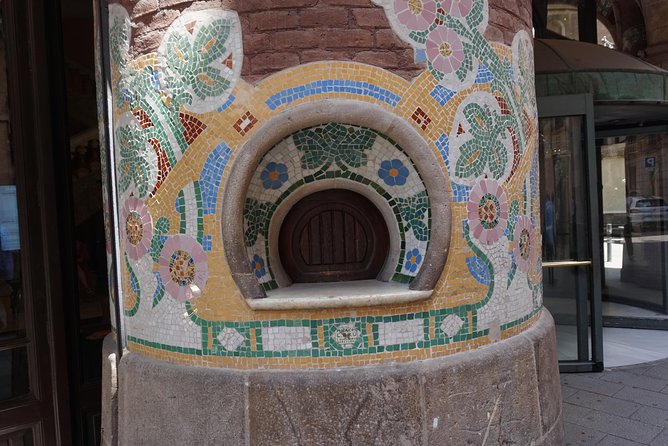
Now comes one of the most satisfying “wait, what is that?” moments of the day: the MUHBA Temple d’August. In a small medieval courtyard on Carrer Paradís, you can see four columns from the Temple of Augustus. They’ve survived for more than 2,000 years.
I love this stop because it makes time travel feel physical. You’re not just hearing dates; you’re looking at stone that has outlasted empires and city plans. And because it’s in a courtyard setting, you also get a good photo moment without needing to fight for space the way you might at more famous sights.
If you’re wondering about value: the ticket is free and the moment is memorable. Just be ready for the stop to be brief, and don’t rush your photos—stand still for a second and frame it like a courtyard scene, not just a close-up.
Palau de la Música Catalana: UNESCO architecture with real musical spirit
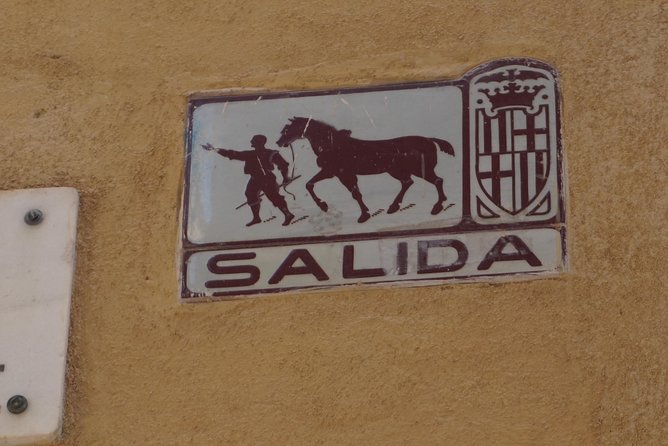
You’ll see the Palau de la Música Catalana as part of the walk, and it’s a standout for a reason: it’s the only concert hall in the world declared a UNESCO World Heritage Site.
The architect Domènech i Montaner designed it as the home for the Orfeó Català choir, and it was funded by public donations. That matters for your visit because it reframes the building. This isn’t just elite architecture. It’s a community project turned into a world-famous cultural space.
A practical consideration: because this is Barcelona and this quarter draws people, plan to keep moving at a comfortable pace. If you tend to freeze when you see something beautiful, remind yourself to grab your bearings, listen for the key explanation, then take your time with photos.
Museu Frederic Marès: object stories inside a former palace
The day ends at Museu Frederic Marès, located in the heart of the Gothic Quarter. Part of it is in what was once the royal palace area connected to the Counts of Barcelona, so even before you hit the collections, the setting already has status.
Frederic Marès collected artworks and objects throughout his life, and the museum keeps those items together in a way that’s personal rather than purely academic. I like museum days that feel like they’re telling you what one person cared about, because it makes the collection feel more approachable.
This stop is another quick one. If you’re museum-leaning, you’ll probably want to extend your time after the tour ends so you can slow down with the objects that catch your eye.
The snack and the local advice that make it feel grounded
This tour includes a traditional snack—exactly the kind of detail that turns a sightseeing walk into a lived-in day. It’s also where the guide’s local perspective shines.
In my experience-style notes, the guide support doesn’t stop at monuments. With Laura as the kind of guide who was clear and easy to understand, I’d expect useful ideas for where to go next—like lunch choices and shopping suggestions near your route. That is real value because it saves time after the tour when your brain is tired.
If you’re food-motivated: eat the snack, but also treat it as a warm-up. You’ll likely find yourself wanting a proper meal soon after, especially since this route lands you in a zone packed with options.
Price and value: what $61.54 buys you
At $61.54 per person for about 3 hours 30 minutes, the math works out best if you value guidance and saved decision time. You’re not only paying for walking and explanations—you’re paying for someone to connect the dots across convent history, medieval street-level institutions, Roman remnants, and UNESCO-level design.
Also, many stops are free admission, so you’re not stacking ticket costs on top of your tour fee. That keeps the day more predictable if you’re on a budget. The tour is limited to a maximum of 12 travelers, which helps keep the experience more interactive rather than crowded.
One more value point: you get the photo angle thinking. The tour builds in lots of chances to snap pictures of lesser-known spots rather than only giving you opportunities at the busiest corners.
Small-group logistics that actually matter (not just fine print)
This is offered in English and uses a mobile ticket. Confirmation happens at booking, and the tour is designed so most people can participate. Service animals are allowed, which is good to know if you travel with one.
Weather matters. The tour requires good weather, which makes sense because you’re outside for the walk and stopping frequently. If conditions are poor, you’ll be offered a different date or a full refund.
One more practical detail: it’s often booked about 27 days in advance on average. If you’re traveling during busier weeks, give yourself a little buffer so you have time options.
Who this tour fits best
This one is a strong match if you:
- like walking tours but don’t want a huge group
- want lots of chances to ask questions
- enjoy “between-the-famous” stops where the streets do the talking
- care about architectural variety (Romanesque, medieval chapels, Roman leftovers, UNESCO hall)
It may be less ideal if you:
- want a long, sit-down visit at each major attraction
- dislike short stops and prefer museum hours instead of quick orientation points
- struggle with standing for a few minutes at multiple sites
Should you book this Gothic Quarter walk?
If you want the Gothic Quarter to feel like a story—not a pile of stops—you should book it. The combination of free-admission sites, a small group, and a guide who can explain clearly makes it a high-return day for your time. The Palau de la Música and the temple columns give big “wow” moments, while convent and chapel stops add the context that helps everything click.
If you’re already fully confident navigating on your own and you don’t care about guided explanation, you might skip it. But if you want a practical route that also teaches you what you’re looking at, this is a smart use of an afternoon.
FAQ
How long is the tour?
It lasts about 3 hours 30 minutes.
How many people are in the group?
The tour has a maximum of 12 travelers.
What language is the tour offered in?
The tour is offered in English.
Where does the tour start and end?
It starts at Carrer del Palau de la Música (C/ Palau de la Música, Ciutat Vella, 08003 Barcelona) and ends at Museu Frederic Mares (Plaça Sant Iu, 5, Ciutat Vella, 08002 Barcelona).
Are admission tickets included for the stops?
The stops listed on the itinerary show free admission tickets.
What if the weather is bad?
The tour requires good weather. If it’s canceled due to poor weather, you’ll be offered a different date or a full refund.
What is the cancellation policy?
You can cancel for a full refund up to 24 hours before the experience start time. If you cancel less than 24 hours before, the amount paid is not refunded.
More Barcelona Tours on Our Radar
- Barcelona: Sagrada Familia Entry Ticket with Audio Guide
★ 4.6 · 105,312 reviews - Barcelona: Park Güell Admission Ticket
★ 4.4 · 76,534 reviews - Barcelona: Casa Batlló Entry with Self-Audioguide Tour
★ 4.7 · 25,359 reviews - Barcelona: Montjuïc Cable Car Roundtrip Ticket
★ 4.5 · 22,368 reviews - Barcelona: Hola Barcelona Public Transport Travel Card
★ 4.5 · 20,985 reviews
Lost in the Gothic Quarter
- Barcelona in 1 Day: Sagrada Familia, Park Guell,Old Town & Pickup
★ 5.0 · 13,541 reviews - Barcelona all included: Sagrada, Park Güell, Montjuic & Gothic
★ 5.0 · 2,169 reviews - Barcelona: Sagrada Familia, Modernism, and Old Town Tour
★ 4.7 · 1,621 reviews - Barcelona Gothic Quarter Tapas & Taverns Food & Wine Tour
★ 5.0 · 1,470 reviews - Barcelona Helicopter, Sailboat & Old Town Private Walking Tour
★ 5.0 · 1,395 reviews
Just Rated Around Barcelona


Gothic Quarter Tours, compared.
 ★ 5.0Barcelona in 1 Day: Sagrada Familia, Park Guell,Old Town & PickupFrom $12013,541 reviews
 ★ 5.0Barcelona all included: Sagrada, Park Güell, Montjuic & GothicFrom $1192,169 reviews
 ★ 4.7Sagrada Familia, Modernism, and Old Town TourFrom $521,621 reviews
 ★ 5.0Barcelona Gothic Quarter Tapas & Taverns Food & Wine TourFrom $1311,470 reviews
 ★ 5.0Barcelona Helicopter, Sailboat & Old Town Private Walking TourFrom $5131,395 reviews
 ★ 4.8Old Town and Gothic Quarter Walking TourFrom $211,393 reviews
 ★ 4.7Helicopter, Boat Ride & Old Town Private TourFrom $5001,357 reviews
 ★ 5.0Barcelona Old Town & Gothic Quarter Small Group TourFrom $221,308 reviews
Browse the lists this tour appears in