
Reviewed · COSTA BRAVA DAY TRIPS
Barcelona: Girona & Medieval Catalonia with Costa Brava
Medieval streets, sea air, and smart guiding. This day tour links Girona and the Costa Brava into one smooth, story-driven outing packed with iconic stone sights, tight photo stops, and real local context.
I especially like how the guide keeps the day coherent, so you’re not just hopping from place to place—you understand what you’re looking at and why it mattered.
The second big win for me is the mix of postcard views with proper history: Girona’s old town and Jewish Quarter on one side, then Tossa de Mar’s walled medieval core on the other. Do note it’s a long day (11 hours, with plenty of coach time), so if you hate sitting on buses for hours, plan accordingly.
In This Review
- Key highlights you’ll feel right away
- Start at Estación de Francia: how the day gets moving
- Girona’s old town and cathedral: the medieval maze, explained
- The Jewish Quarter and Arab Baths: history you can actually picture
- The Eiffel Bridge and the Cul de la Lleona: why Girona’s icons are worth slowing down
- Tossa de Mar’s Vila Vella: walking a coastal medieval fortress
- If your option includes Besalú or Pals: how to make that extra time pay off
- Timing over 11 hours: a long day that still feels organized
- Price and what you really get for about $104
- What to bring: small choices that make the day easier
- Who this tour is best for (and who should skip it)
- Should you book this Barcelona to Girona and Costa Brava tour?
- FAQ
- How long is the tour?
- What areas does the tour cover?
- Is food included?
- What languages is the tour offered in?
- Where is the meeting point in Barcelona?
- How can I get to the meeting point?
- Is the tour wheelchair accessible?
- FAQ (continued)
- Is there free cancellation?
- Can I reserve now and pay later?
Key highlights you’ll feel right away
- Bilingual guiding (English and Spanish) that explains what you’re seeing in plain terms
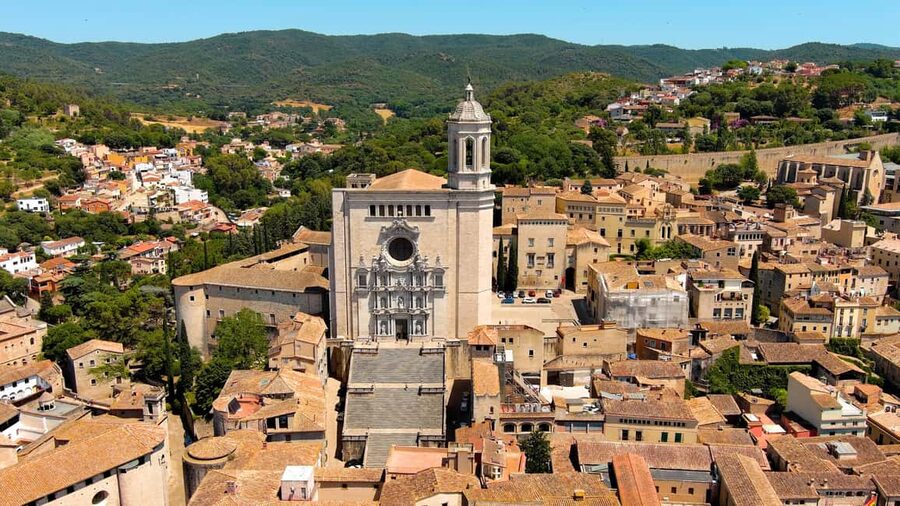
- Girona’s medieval lineup: cathedral, old town, Jewish Quarter, and the Eiffel Bridge
- Arab Baths + Cul de la Lleona: a surprisingly memorable stop for culture fans
- Tossa de Mar’s Vila Vella: walking a real fortified medieval town above the sea
- Iconic coastal viewpoints built into the walking routes, not left to chance
- Some departures may add extra medieval towns like Besalú or Pals, depending on the option you choose
Start at Estación de Francia: how the day gets moving
Your day begins at Estación de Francia, where the guide waits with an Amigo Tours sign at the main entrance. That’s a great choice in Barcelona because the station is easy to reach and you can get oriented fast before the group funnels in.
Getting there is simple:
- Metro: take line L4 to Barceloneta, then exit to Plaça Pau Vila
- Bus: line 47 also gets you there
This matters more than it sounds. When the meeting point is clear and central, you don’t waste your morning playing transport roulette.
Once you’re on board, you get transportation from the meeting point, plus a professional guided tour delivered in English and Spanish at the same time. So even if you’re traveling with someone who prefers another language, you’re not split up.
More days out to Girona's old town


Girona’s old town and cathedral: the medieval maze, explained
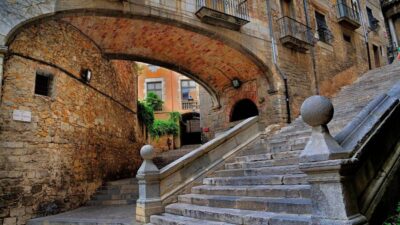
Girona is one of those places where the streets feel engineered for wandering. You’ll see the historic center unfold at walking pace, and the guide’s job is to help you read it like a map instead of a blur.
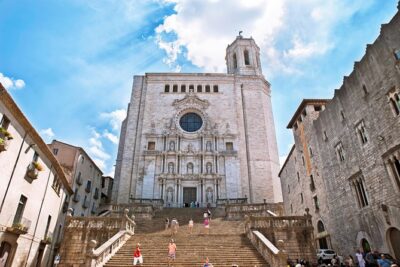
One highlight is Girona Cathedral. Even if you’re not the type to hunt for architectural details, it gives you a starting point for the city’s medieval identity. The cathedral sits within a broader old-town fabric, so it works as both a landmark and a navigation tool.
Then comes the flow: small lanes, stone façades, and the kind of layered city planning where every corner seems slightly different from the last. I like tours where the guiding is practical—pointing out what’s worth your camera time, yes, but also helping you understand how these neighborhoods connect.
You’ll also have time to simply walk. That’s not a filler perk. It’s what makes Girona feel like a living place, not a checklist.
The Jewish Quarter and Arab Baths: history you can actually picture
Girona’s historic Jewish Quarter is one of the reasons this trip is more than a scenic day out. It’s the kind of district where the architecture and street layout carry meaning, even before you hear a word about it.
What I value here is the pairing: the Jewish Quarter sets a cultural context, then the tour moves you into sights that anchor that context in physical places.
A standout is the Arab Baths. These aren’t just a “see it once” stop. They’re a reminder that Catalonia’s past wasn’t one straight line. It was layers of influence, trade, belief, and daily life. Standing where people once used baths—an everyday ritual—makes history feel less like a textbook.
And then there’s the Cul de la Lleona, the famous local feature with a name you’ll remember. Stops like this are why Girona works for people who like facts, but also for people who just want moments that feel oddly specific and memorable.
The Eiffel Bridge and the Cul de la Lleona: why Girona’s icons are worth slowing down
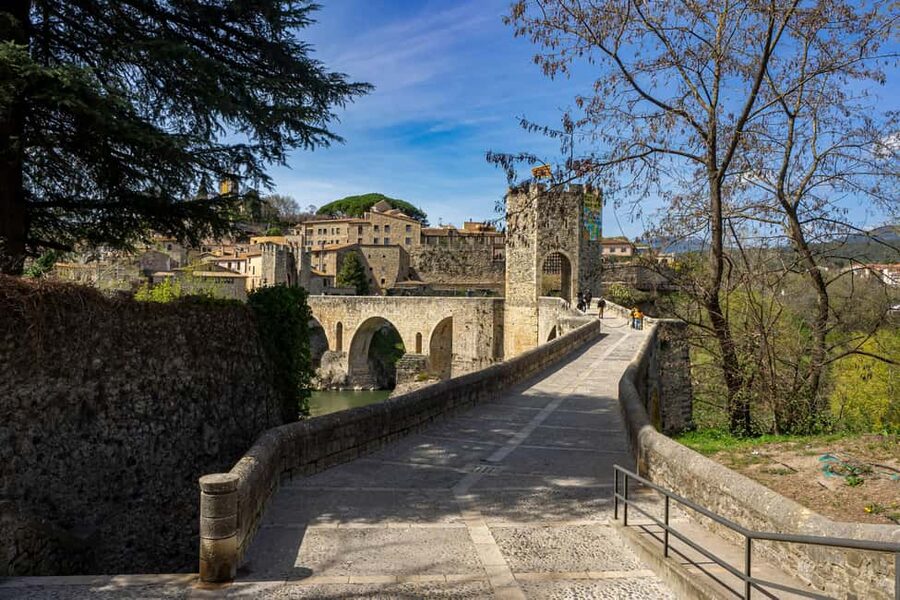
Girona has a talent for turning clever details into instant icons. The Eiffel Bridge is a perfect example. It’s the kind of spot where you’ll want to stop, look, and take photos—because the view is dramatic enough to justify the detour.
But it’s also a place where the guide’s pacing pays off. Instead of rushing you across, you get time to stand and orient yourself. That helps the bridge fit into the rest of the walk, rather than feeling like a random photo op.
The same goes for the Cul de la Lleona stop. It’s easy for quirky landmarks to become a punchline. Here, the value is that it gets tied into the city’s character and medieval storytelling, so you leave knowing what it represents and why it’s famous.
If you enjoy photography, Girona is strong. Plan for walking comfort and keep your camera ready—there are multiple angles where the old town frames the shot.
Tossa de Mar’s Vila Vella: walking a coastal medieval fortress
After Girona, you shift from inland medieval streets to the coast. That’s a big part of why this trip feels satisfying: you get two different moods in one day.
Tossa de Mar’s main star is Vila Vella, the walled medieval old town. The description calls it the only surviving fortified medieval town on the Catalan coast, and that’s exactly what you feel when you walk in and look around. The walls and watchtower structure make the city feel protected, deliberate, and built for defense—yet it’s also built for views.
As you wander the cobbled lanes, you’ll keep hitting those “wait, look at that” moments: sea views framed by stone, the coastline stretching outward, and the feeling that you’re moving through an old world while the present keeps shining through.
This part is especially good if you like places where history isn’t fenced off like a museum. Here, you walk the real paths, under the real walls.
One practical tip: bring comfortable shoes and treat this as a walk-first experience. The medieval lanes are charming, but they don’t care about fashion shoes.
More of the Costa Brava coastline
- Barcelona Costa Brava Kayak, Snorkel & Cliff Jump Day Tour★ 5.0 · 3,872 reviews
- Barcelona: Costa Brava Kayak, Snorkel & Cliff Jump & Lunch★ 4.9 · 2,391 reviews
- From Barcelona: Costa Brava Kayak & Snorkel Tour with Picnic★ 4.5 · 2,024 reviews
If your option includes Besalú or Pals: how to make that extra time pay off
Some versions of this day are described as adding additional medieval stops such as Besalú and Pals. That can be a bonus if you like variety without booking a second trip.
Here’s how to approach these add-ons without getting overloaded:
- Use the coach time as your recovery break, so your walking energy stays high later
- In Pals, if you’re offered the chance, consider going up the clock tower area for extra views (it’s specifically recommended for gorgeous panoramas)
Even if your option is only Girona + Tossa de Mar, the same advice applies: keep your eyes on the guiding theme of the day—medieval Catalonia tied to landscape and architecture—so every stop feels intentional.
Timing over 11 hours: a long day that still feels organized
This excursion runs 11 hours (690 minutes). That’s long on paper, but it works because the day is structured around sightseeing blocks rather than a free-for-all.
A reality check: yes, there’s a good chunk of coach time. One of the most common “how was it?” notes is that it’s a long day with time on the bus. The difference here is that you don’t feel dragged from stop to stop. The tour focuses on letting you actually explore each place.
It helps that the transfers are handled by a professional driver, and that the pacing keeps the walking stops meaningful instead of rushed. When the timing fits the sights, your energy doesn’t evaporate by midday.
For planning your own day: set expectations early. You’ll be walking, you’ll be looking a lot, and you’ll want at least one snack break. Since food and drinks are not included, you’ll need to buy or bring something on your own schedule.
Price and what you really get for about $104
The price listed is $104 per person. For a day trip from Barcelona, that’s not just “transportation in a van” money. You’re paying for three value drivers:
- Guided experience across multiple major sights (not just a driver and silence)
- Transportation from the meeting point, which saves you from planning trains/buses and switching routes
- Bilingual interpretation (English and Spanish) running at the same time, so the guide can keep one shared group rhythm
The main thing not included is food and drinks. That’s common on this style of tour, but it’s worth factoring into your budget. If you know you get hungry, plan for a meal purchase or bring snacks so the day doesn’t turn into a hangry sprint.
Also consider what this buys you emotionally. When you spend the day in Girona and Tossa de Mar with guidance, you spend less time trying to figure out the story and more time enjoying the streets.
What to bring: small choices that make the day easier
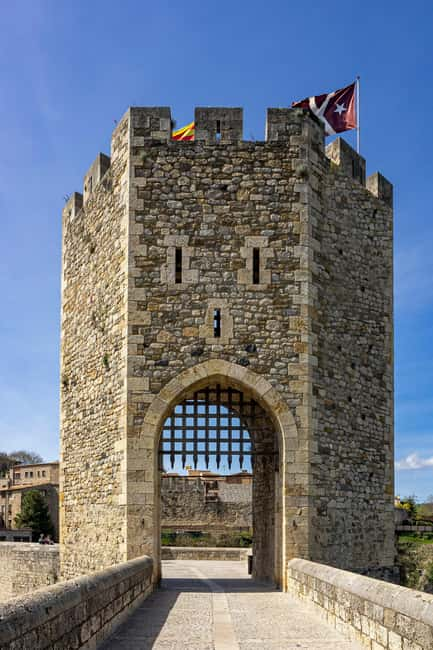
This tour is straightforward. Still, a few things can make your experience smoother:
- Comfortable shoes: you’ll be on foot through old-town streets and around fortified areas
- Camera or phone storage: Girona and Tossa de Mar give you plenty of chances for photos
- A light snack strategy: since food isn’t included, you don’t want hunger to steal your best view time
Also keep in mind that this experience is not suitable for wheelchair users. If accessibility matters for your group, you’ll want to choose a different format.
Who this tour is best for (and who should skip it)
This is a strong match if you:
- love medieval cities and want a guided explanation, not just sightseeing
- enjoy architecture and small details, like the Arab Baths and quirky Girona icons
- want Costa Brava sea views without dealing with ticket lines and transit logistics
- plan one long day instead of trying to cobble together two separate trips
You might want to skip it if you:
- dislike long coach rides and lose patience fast with bus time
- need wheelchair accessibility
- want a day with lots of free, unstructured time for wandering without any set rhythm
Should you book this Barcelona to Girona and Costa Brava tour?
I’d book it if you want a high-impact day that feels guided, not chaotic. Girona gives you medieval density and clever icons, while Tossa de Mar delivers the coast drama with Vila Vella’s walls and watchtower views. You’ll likely come away with the feeling that Catalonia’s past isn’t locked in one place—it shows up in streets, buildings, and even the oddball landmarks that make people stop and look.
Do it with realistic expectations: it’s a long day, and you’ll want to wear good shoes and plan for food on your own. If you’re good with that trade, this is one of the easier ways to get medieval Catalonia plus Costa Brava scenery in a single swing.
FAQ
How long is the tour?
The duration is 11 hours (690 minutes).
What areas does the tour cover?
You’ll explore medieval Girona, including the old town and historic Jewish Quarter, plus highlights like Girona’s cathedral and the Eiffel Bridge. You’ll also visit Tossa de Mar, walking through Vila Vella, the walled medieval old town.
Is food included?
No. Food and drinks are not included.
What languages is the tour offered in?
The live guide provides commentary in English and Spanish.
Where is the meeting point in Barcelona?
Meet at the main entrance of Estación de Francia with an Amigo Tours sign.
How can I get to the meeting point?
You can reach Estación de Francia via metro line L4 to Barceloneta (then exit to Plaça Pau Vila) or by bus line 47.
Is the tour wheelchair accessible?
No. It is not suitable for wheelchair users.
FAQ (continued)
Is there free cancellation?
Yes. You can cancel up to 24 hours in advance for a full refund.
Can I reserve now and pay later?
Yes. The option says reserve now & pay later is available, so you can book your spot and pay nothing today.
More Barcelona Tours on Our Radar
- Barcelona: Sagrada Familia Entry Ticket with Audio Guide
★ 4.6 · 105,312 reviews - Barcelona: Park Güell Admission Ticket
★ 4.4 · 76,534 reviews - Barcelona: Casa Batlló Entry with Self-Audioguide Tour
★ 4.7 · 25,359 reviews - Barcelona: Montjuïc Cable Car Roundtrip Ticket
★ 4.5 · 22,368 reviews - Barcelona: Hola Barcelona Public Transport Travel Card
★ 4.5 · 20,985 reviews
Along the Costa Brava
- Girona & Costa Brava Small-Group Tour with Pickup from Barcelona
★ 5.0 · 6,955 reviews - Montserrat, Girona & Costa Brava Guided Day Trip from Barcelona
★ 5.0 · 5,128 reviews - Barcelona Costa Brava Kayak, Snorkel & Cliff Jump Day Tour
★ 5.0 · 3,872 reviews - Barcelona: Costa Brava Kayak, Snorkel & Cliff Jump & Lunch
★ 4.9 · 2,391 reviews - From Barcelona: Costa Brava Kayak & Snorkel Tour with Picnic
★ 4.5 · 2,024 reviews
Girona, One More Time
- Girona & Costa Brava Small-Group Tour with Pickup from Barcelona
★ 5.0 · 6,955 reviews - Montserrat, Girona & Costa Brava Guided Day Trip from Barcelona
★ 5.0 · 5,128 reviews - Girona & Dali Museum Small Group Tour with Pick-up from Barcelona
★ 5.0 · 2,965 reviews - Barcelona: Girona & Costa Brava Small Group Tour with Pickup
★ 4.8 · 1,938 reviews - From Barcelona: Girona, Figueres, Dalí Museum, and Cadaqués
★ 4.7 · 1,928 reviews
Just Rated Around Barcelona


Costa Brava Day Trips, compared.
 ★ 5.0Girona & Costa Brava Small-Group Tour with Pickup from BarcelonaFrom $1206,955 reviews
 ★ 5.0Montserrat, Girona & Costa Brava Guided Day Trip from BarcelonaFrom $1335,128 reviews
 ★ 5.0Barcelona Costa Brava Kayak, Snorkel & Cliff Jump Day TourFrom $1023,872 reviews
 ★ 4.9Costa Brava Kayak, Snorkel & Cliff Jump & LunchFrom $1002,391 reviews
 ★ 4.5From Barcelona: Costa Brava Kayak & Snorkel Tour with PicnicFrom $712,024 reviews
 ★ 4.8Girona & Costa Brava Small Group Tour with PickupFrom $1161,938 reviews
 ★ 4.7Montserrat, Girona & Costa Brava Guided Day TripFrom $1291,455 reviews
 ★ 4.9From Barcelona: Costa Brava Day Tour with Boat TripFrom $671,279 reviews
Browse the lists this tour appears in