
Reviewed · GOTHIC QUARTER TOURS
Barcelona: Gothic Quarter Walking Tour
Step into Barcelona’s oldest streets. This 2-hour guided walk turns the Gothic Quarter into a clear timeline, from Roman traces to medieval alley life, with expert explanations that make the stone make sense. I especially love how you see the Barcelona Cathedral and its famous gargoyles after learning what this neighborhood used to be, and I also like the stop at Mercat de la Boqueria, where the sights and smells help you understand Barcelona’s food culture without needing a full meal plan. One thing to keep in mind: it’s a walking-heavy loop through lively, busy areas, so if you want lots of slow breaks, you may feel a bit rushed.
You’ll start at Pl. d’Urquinaona, 6, then follow a smart route through Ciutat Vella, down La Rambla, and into the older church-and-market world of El Born. The guide handles the pacing and context, and you can choose private group options if you want something more personal. Languages include English, French, Italian, and Spanish, with guides sharing local history in a way that’s practical rather than lecture-mode.
In This Review
- Key Highlights You’ll Care About
- Gothic Quarter in 2 Hours: What You Actually See
- Starting at Pl. d’Urquinaona and Getting Oriented Fast
- Roman Traces and Medieval Alleys: How the Gothic Quarter Grew
- La Rambla and Plaça Reial: Street Energy Without the Chaos
- Mercat de la Boqueria: A Market Stop That Still Feels Useful
- Barcelona Cathedral and Gargoyles: Details You Can Actually Spot
- El Born: Where Old Streets Meet New Energy
- Basilica de Santa Maria del Mar: Catalan Gothic Built by the People
- Walking Pace, Shoes, and Who This Tour Is Perfect For
- Is $29 a Good Deal for the Gothic Quarter Core Loop?
- Should You Book This Guided Gothic Quarter Walk?
- FAQ
- Where does the tour start?
- How long is the Barcelona: Gothic Quarter Walking Tour?
- What’s included in the price?
- Is food or drink included?
- What languages are available for the live guide?
- Can I book a private group?
- Is the tour wheelchair accessible?
- What is the cancellation window?
Key Highlights You’ll Care About
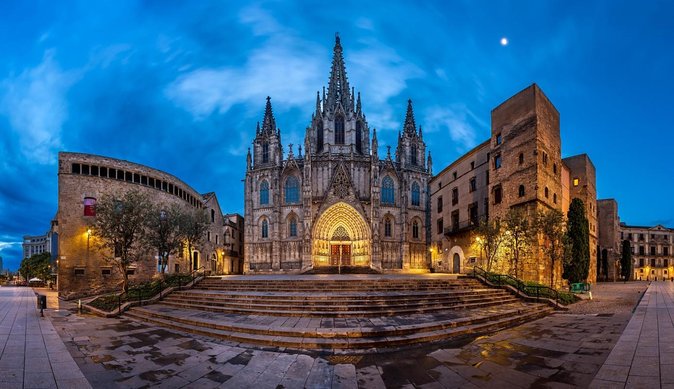
- Roman remains in plain sight: learn how the area evolved from a Roman village into a medieval maze of stories
- Gargoyle spotting with context at Barcelona Cathedral, so the details feel intentional, not random
- La Rambla + Plaça Reial rhythm: street life, then a calmer square break in between
- Mercat de la Boqueria by the book: what to look for and where the energy comes from
- El Born and Santa Maria del Mar: neighborhood identity and Catalan Gothic architecture built by local people
Gothic Quarter in 2 Hours: What You Actually See
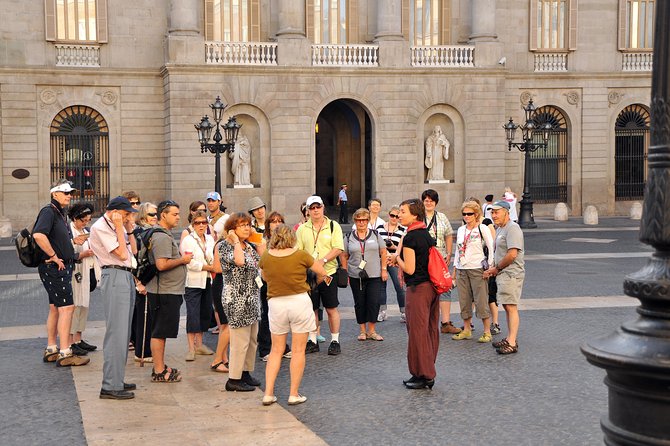
A good neighborhood walk should do two things: help you read what you’re seeing, and prevent the classic tourist problem of staring at buildings without understanding why they matter. This tour does both.
In two hours, you move through Barcelona’s oldest layers—Roman remnants tucked into the city fabric, then medieval streets and architecture that grew into today’s Gothic Quarter character. The timing matters. In a compact window like this, you’ll notice patterns faster: where the streets feel older, where the big religious landmarks change the scale, and how the city’s energy shifts street by street.
I also like that the route isn’t only “cathedrals and photos.” You get a real mix: church architecture, narrow historic lanes, and the everyday pulse of places like La Rambla and the Boqueria market. That balance helps the Gothic Quarter feel like a living part of the city, not a museum that only opens for sightseeing.
Deeper into the lanes of the Barri Gòtic
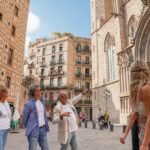


Starting at Pl. d’Urquinaona and Getting Oriented Fast
Your meeting point is Pl. d’Urquinaona, 6, and that’s useful because it puts you close to the movement of central Barcelona. From there, you quickly transition from the broader city flow into Ciutat Vella’s older street logic.
The guide’s job here is simple but valuable: help you get your bearings early so the rest of the walk feels connected. Instead of bouncing between landmarks, you’re following a story—Roman village roots, medieval expansion, and the way later areas like El Born grew a distinct identity. If you’re visiting Barcelona for the first time, this is exactly the kind of early orientation that makes later self-guided wandering easier.
Also, if you’ve ever tried to map the Gothic Quarter on your own, you know it can feel like a maze that keeps changing. A guided route helps you avoid the dead-ends and lets you focus on what matters: the architecture, the urban layout, and the legends the area is known for.
Roman Traces and Medieval Alleys: How the Gothic Quarter Grew
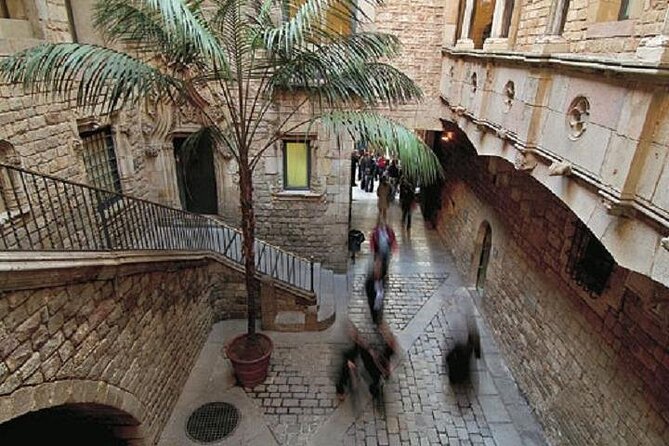
The heart of the experience is the Gothic Quarter itself. You’re not just passing by old walls—you’re learning how the neighborhood grew.
You’ll hear how this area moved from a Roman village into a medieval marvel. That big shift is what makes the Gothic Quarter so fun to walk. Roman remains are scattered around the zone, so you can spot evidence of an ancient past without needing a separate museum ticket (at least in terms of what this tour emphasizes). Then, as you continue, the medieval alley network takes over the mood: tighter lanes, more history per corner, and architecture that reflects the centuries when people shaped the city around power, faith, and daily life.
One of my favorite parts is when guides connect the look of the buildings to the timeline. A stone wall doesn’t mean much until you know what era it belongs to. When you understand that progression—Roman roots, then medieval growth—the Gothic Quarter stops feeling like random scenery. It becomes legible.
La Rambla and Plaça Reial: Street Energy Without the Chaos
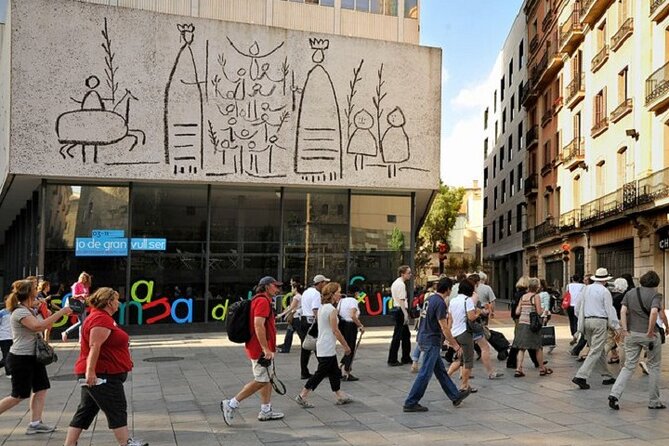
After the older lanes, you transition toward La Rambla. This is a familiar name to most people, but the tour helps you see it with better context: you’re walking along an iconic avenue filled with bars, restaurants, and street artists.
La Rambla can be loud, busy, and very visual. The practical advantage of having a guide is timing and interpretation. You don’t need to guess what’s worth your attention. You get a sense of how the area functions as a public space—people showing up, performers working, and the neighborhood supporting daily life around it.
Then you get a breather at Plaça Reial, a Napoleonic-era square known for artists and travelers. That stop matters more than it sounds. Squares like this act as a reset button: you pause in open space, regroup your thoughts, and let the earlier medieval streets settle in your mind before you head toward the big cathedral stop.
If you’re the type who starts losing track mid-day, these built-in transitions are smart.
Mercat de la Boqueria: A Market Stop That Still Feels Useful
Mercat de la Boqueria is where Barcelona shows off its daily rhythm—colors, noise, and a full-on gastronomic atmosphere. On this tour, it’s not framed as a food tasting carnival with complicated plans. It’s more about understanding the market environment and what it represents.
You’ll visit the market during the walk, which is the ideal way to experience it if you don’t want to spend an extra half-day doing a standalone market visit. You can watch how the stalls work, see the variety in a compact space, and use the market as a visual shortcut for Barcelona’s food culture.
Since food and drink aren’t included, you’re free to keep it flexible. If you’re hungry, you can grab something simple. If you’re not, you can still enjoy the market just for the atmosphere and the details—signs, displays, and the overall bustle.
Tip I’d give you: treat the Boqueria stop like a sensory checkpoint, not a mission. Look around, enjoy the scene, and decide in the moment if you want to snack.
More Barcelona streets to take slowly
- Barcelona Tapas and Wine Experience Small-Group Walking Tour★ 5.0 · 5,804 reviews
- Barcelona: Tapas Walking Tour with Food, Wine, and History★ 4.8 · 4,261 reviews
- Barcelona: Food Walking Tour with Tapas and Wine★ 4.9 · 2,180 reviews
Barcelona Cathedral and Gargoyles: Details You Can Actually Spot
The tour’s cathedral moment is one of the best parts because it comes with explanation, not just a landmark photo.
You’ll see Barcelona Cathedral, known for its impressive gargoyle sculptures. That’s a good anchor point for beginners, because gargoyles are distinctive and easy to notice. But what makes the visit better is the way the guide ties the cathedral to the Gothic Quarter’s medieval story—why it’s here, why the area’s architecture developed the way it did, and how the neighborhood’s identity shaped what got built.
Cathedrals can be overwhelming if you don’t know what to look for. A guide helps you “zoom in” mentally: details become meaningful, and you stop treating it like a single big facade. Instead, you start noticing design choices and sculpture elements as part of the larger medieval picture.
This is also where the tour benefits from guide personality. I’ve heard about guides like Teresa, described as passionate about the history of her city and able to explain it in a way that changes how you keep seeing Barcelona afterward. That’s the sweet spot: you leave with a new lens.
El Born: Where Old Streets Meet New Energy
Next up is El Born, an area that blends old and new. It’s one of those neighborhoods where the streets feel historic, but the vibe is very current—shops, dining, and people moving through.
On a walking tour, El Born works as a connective tissue. You’ve been in Gothic lanes and major monuments; now you’re in a district that helps you understand how Barcelona keeps using its older bones rather than abandoning them. You get a sense that the past isn’t far away—it’s under your feet, along the streetfronts, and in the way people still gather here.
If your day is going to include a lot of independent wandering after this tour, El Born is a great place to familiarize yourself with early. You’ll know where you’d like to return, and you’ll have a better feel for the neighborhood layout.
Basilica de Santa Maria del Mar: Catalan Gothic Built by the People
The tour finishes with St. Mary of the Sea Cathedral—also known as Basilica de Santa Maria del Mar—and this stop is a strong payoff.
This church is described as a stunning example of Catalan Gothic architecture, built by the people of the neighborhood themselves. That detail matters. Many travelers see grand Gothic churches as purely elite projects, but this one connects to the idea that local communities shaped their own religious and cultural spaces. When a guide makes that point clearly, you’ll likely look at the building with different expectations—less like a distant monument, more like a community achievement you can still feel.
Architectural styles can be tough to appreciate if no one helps you. Here, the tour gives you a reason to pay attention. You’re not only walking past a pretty church. You’re learning what kind of Gothic it is and why locals wanted it.
Walking Pace, Shoes, and Who This Tour Is Perfect For
This is a 2-hour guided walk, so it’s designed for movement rather than long lingering. You’ll be on your feet through historic alleys and busy streets, plus you’ll spend time at major stops like the cathedral and the market. That means comfortable shoes aren’t optional.
The best-fit traveler is someone who wants the Gothic Quarter story explained without spending the whole day researching. If you like architecture and enjoy learning how neighborhoods form over time, you’ll get a lot from the guide’s thread connecting Roman traces, medieval growth, and later Barcelona street life.
It’s also a good choice for first-timers who want structure. Even if you plan to explore on your own afterward, having this route in your head makes the rest of your trip easier.
If you want a more personal pace, there’s private group availability. And if mobility is a concern, the tour is wheelchair accessible, which is a meaningful reassurance when you’re dealing with older city areas.
Is $29 a Good Deal for the Gothic Quarter Core Loop?
At $29 per person for a two-hour guided experience, this is priced like a practical, entry-level history and landmark walk. The value comes from the combination: you don’t just get one monument. You get the Gothic Quarter story, plus La Rambla, the Mercat de la Boqueria, a major cathedral visit, and a Catalan Gothic church stop.
You’re also paying for interpretation. A guided route can save you time and confusion, especially in Ciutat Vella, where it’s easy to wander without a clear plan. And because the tour focuses on key sights that people actually want to see, you’re unlikely to feel like you’re paying for filler.
Food and drink aren’t included, so if you want snacks as part of the market experience, budget for that separately. But that flexibility can be a plus. You can snack lightly or skip it and keep your day moving.
Should You Book This Guided Gothic Quarter Walk?
If your goal is to understand Barcelona faster—Roman-to-medieval city growth, plus the everyday energy of Rambla and Boqueria—this is an easy yes. The best part is the way the guide ties architecture and neighborhood change into one coherent route.
I’d especially recommend it if:
- you want a structured first-day walk in Ciutat Vella
- you care about details like cathedral sculpture and historical context
- you prefer guided explanation over reading every plaque yourself
Only skip it if you strongly dislike crowded, lively areas (La Rambla and the market can be active) or if you know you need long pause time. In that case, a slower pacing tour—or more time for independent exploration—might suit you better.
Overall, for $29 and two hours, you’re getting a smart mix of history, architecture, and city life. And once you’ve got that storyline in your head, Barcelona’s old streets start making sense in a way that lasts.
FAQ
Where does the tour start?
The starting location is Pl. d’Urquinaona, 6.
How long is the Barcelona: Gothic Quarter Walking Tour?
It lasts 2 hours.
What’s included in the price?
The tour includes a knowledgeable guide and a customizable tour format.
Is food or drink included?
No. Food and drink are not included.
What languages are available for the live guide?
English, French, Italian, and Spanish.
Can I book a private group?
Yes, private group availability is offered.
Is the tour wheelchair accessible?
Yes, it is wheelchair accessible.
What is the cancellation window?
You can cancel up to 24 hours in advance for a full refund.
More Ways to Tour Barcelona
- Barcelona: Casa Batlló Entry with Self-Audioguide Tour
★ 4.7 · 25,359 reviews - Barcelona: 24 or 48-Hour Hop-On Hop-Off Bus Tour
★ 4.4 · 20,872 reviews - Barcelona: Park Guell Guided Tour with Skip The Line Entry
★ 4.7 · 17,563 reviews - Barcelona: Sagrada Familia Skip-the-Line Entry Ticket & Tour
★ 4.8 · 12,789 reviews - Barcelona: FC Barcelona Museum “Barça Immersive Tour” Ticket
★ 4.4 · 10,944 reviews
More Barcelona Tours on Our Radar
- Barcelona: Sagrada Familia Entry Ticket with Audio Guide
★ 4.6 · 105,312 reviews - Barcelona: Park Güell Admission Ticket
★ 4.4 · 76,534 reviews - Barcelona: Casa Batlló Entry with Self-Audioguide Tour
★ 4.7 · 25,359 reviews - Barcelona: Montjuïc Cable Car Roundtrip Ticket
★ 4.5 · 22,368 reviews - Barcelona: Hola Barcelona Public Transport Travel Card
★ 4.5 · 20,985 reviews
Lost in the Gothic Quarter
- Barcelona in 1 Day: Sagrada Familia, Park Guell,Old Town & Pickup
★ 5.0 · 13,541 reviews - Barcelona all included: Sagrada, Park Güell, Montjuic & Gothic
★ 5.0 · 2,169 reviews - Barcelona: Sagrada Familia, Modernism, and Old Town Tour
★ 4.7 · 1,621 reviews - Barcelona Gothic Quarter Tapas & Taverns Food & Wine Tour
★ 5.0 · 1,470 reviews - Barcelona Helicopter, Sailboat & Old Town Private Walking Tour
★ 5.0 · 1,395 reviews
Just Rated Around Barcelona
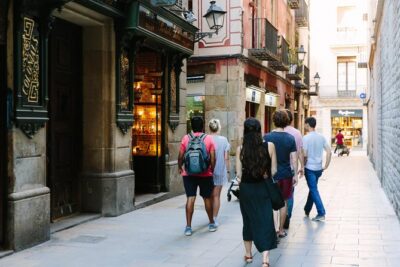





Gothic Quarter Tours, compared.
 ★ 5.0Barcelona in 1 Day: Sagrada Familia, Park Guell,Old Town & PickupFrom $12013,541 reviews
 ★ 5.0Barcelona all included: Sagrada, Park Güell, Montjuic & GothicFrom $1192,169 reviews
 ★ 4.7Sagrada Familia, Modernism, and Old Town TourFrom $521,621 reviews
 ★ 5.0Barcelona Gothic Quarter Tapas & Taverns Food & Wine TourFrom $1311,470 reviews
 ★ 5.0Barcelona Helicopter, Sailboat & Old Town Private Walking TourFrom $5131,395 reviews
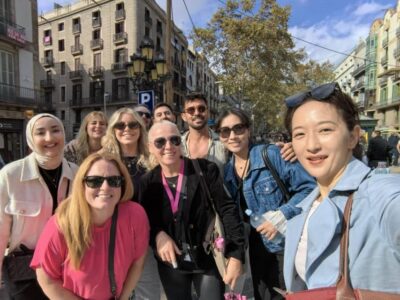 ★ 4.8Old Town and Gothic Quarter Walking TourFrom $211,393 reviews
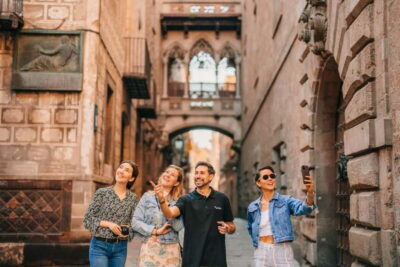 ★ 4.7Helicopter, Boat Ride & Old Town Private TourFrom $5001,357 reviews
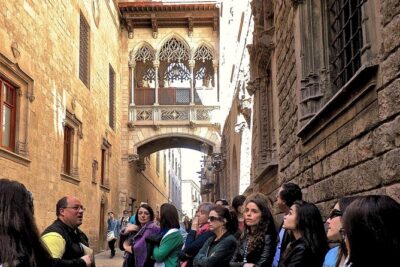 ★ 5.0Barcelona Old Town & Gothic Quarter Small Group TourFrom $221,308 reviews
Browse the lists this tour appears in