
Reviewed · GOTHIC QUARTER TOURS
Barcelona & Gothic to Modern. Regular Tour
One walk, and suddenly Barcelona makes sense. This 3-hour architecture tour takes you from Roman Barcino to later eras, guided by architect Enric Miralles’ way of seeing buildings. I love the clear, structured explanations that link architecture to politics and everyday life, and I also love the hands-on fieldwork style stop at the market at the end. One possible drawback: this is not a casual “look and smile” stroll—it asks you to think like an architect, so it may feel more academic if you’re not in that mood.
You’ll cover the Gothic and La Ribera quarters with a route that purposely connects major turning points—carolingian times, the post-Franco era, Olympic Barcelona, and even the chapter that led to el forat de la vergonya (the hole of shame). The tour is built to show how the same streets can hold conflicting memories at once. The group stays small (up to 20), but you’ll want good walking shoes and a willingness to stop often.
In This Review
- Key things I’d mark on your planning map
- How Enric Miralles Turns Streets Into Evidence
- The Route at a Glance: A Timeline You Can Walk
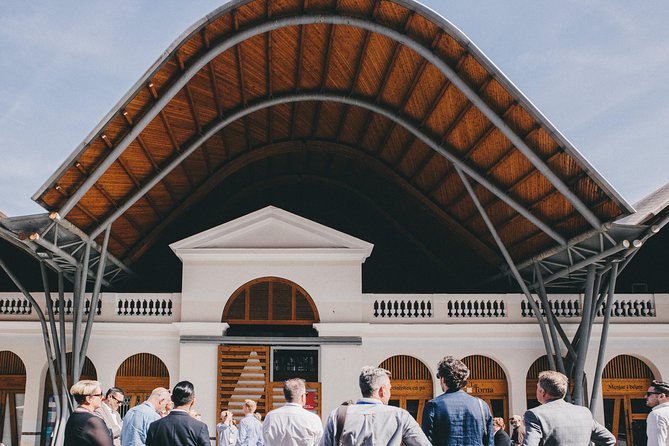
- Mercado de Santa Caterina: Where Fieldwork Meets Architecture
- Basilica de Santa Maria del Mar: Gothic Built for Belief—and People
- Catedral de Barcelona: Power, Faith, and City Politics in Stone
- MUHBA Temple d’August: Roman Layers You Can Actually Feel
- What the Guide Format Feels Like (And Who It Suits Best)
- Value for Your Time: Why This Beats Wandering Alone
- Planning Tips So You Enjoy It More
- Should You Book Barcelona: Gothic to Modern?
- FAQ
- How long is the Barcelona Gothic to Modern regular tour?
- Where does the tour start?
- What are the main stops on the walk?
- Is the tour offered in English?
- Is it a mobile-ticket experience?
- Can I get a full refund if I cancel?
Key things I’d mark on your planning map
- Enric Miralles’ lens: architecture tied to power, politics, and cultural imagination, not just dates
- A strong “then and now” chain across Roman, medieval, modern, and Olympic-era Barcelona
- Four major stops that represent different eras: Santa Caterina, Santa Maria del Mar, the Cathedral, and MUHBA Temple d’August
- Architecture microguide included for follow-along looking after the tour
- Fieldwork at the market to help you test how Miralles reads a city
How Enric Miralles Turns Streets Into Evidence

If you’ve ever looked at a historic district and thought, I like the vibe, but why is it shaped that way?—this tour is made for you. The big idea is simple: buildings don’t just happen. They respond to money, religion, ideology, disasters, rebuilding, and what a city chooses to ignore or highlight.
What makes this tour feel different is that it’s framed as an initiation into how Enric Miralles thinks. You’re not just collecting pretty facts. You’re learning a method for looking at surfaces—walls, openings, street patterns, materials—and then connecting those clues to bigger forces. That’s why the walk is built around multiple historical “jumps,” not one long medieval-only loop.
You’ll also notice the approach is carefully linked to cause and effect. Expect topics like how power shows up in religious architecture, how political shifts change urban priorities, and how cultural imagination can influence what gets preserved or demolished. It’s the kind of tour that helps you stop seeing Barcelona as a museum and start seeing it as a working argument between eras.
The small group size (max 20) matters here. In a smaller crowd, it’s easier for a guide to address your level, clarify terms, and keep the pace from turning into a lecture you can’t catch up with.
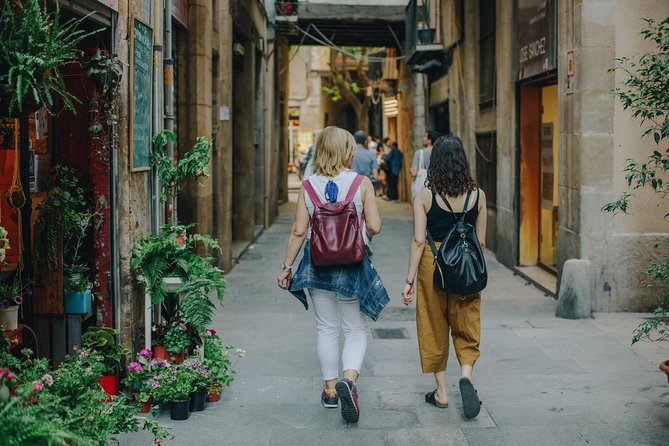
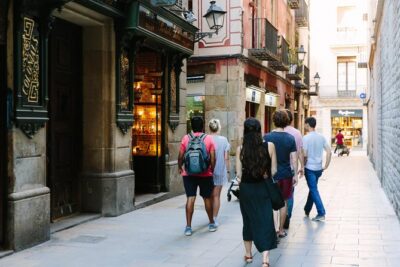
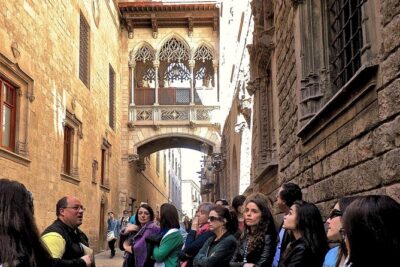
Deeper into the lanes of the Barri Gòtic
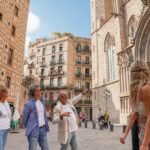


The Route at a Glance: A Timeline You Can Walk
The tour runs about 3 hours, starting at 10:30 am. You begin at the Barcino Sculpture, Plaça Nova 40 (Ciutat Vella). It ends back at the meeting point, so you’re not left reverse-engineering directions while thinking about buttresses and timelines.
Even though you’ll be walking through familiar tourist territory, the route is arranged like a living timeline:
- You start with the Roman layer of Barcelona (Barcino), then keep tracking what changes and what survives.
- You move through medieval and Gothic expressions of faith and civic life.
- You jump into later modern transformations, including the post-Franco period and Olympic-era restructuring.
- The story doesn’t shy away from uncomfortable urban outcomes, including el forat de la vergonya—a reminder that development can leave scars as well as landmarks.
That “timeline by streets” format is a huge value. On your own, it’s easy to treat Barcelona’s buildings like isolated photos. On this walk, the city becomes a connected narrative.
Mercado de Santa Caterina: Where Fieldwork Meets Architecture
You start at the Mercado de Santa Caterina, and you end there too—because markets are the best teachers of urban life. You’re not looking at stone from a distance; you’re watching the city’s daily rhythm. Markets show you how supply chains, neighborhood needs, design decisions, and local identity all collide in public space.
This stop is also where the tour leans into fieldwork. The guide will help you apply Miralles’ method—basically, learning how to check what you’re seeing against what you think it means. You’ll be guided to notice processes and how places get shaped over time, not just what’s on the postcard today.
Practical note: markets can be lively and busy, so keep an eye on where the group gathers and plan for a bit of movement in tighter spaces. If you want to photograph quietly, give yourself a moment before you fully rejoin the group.
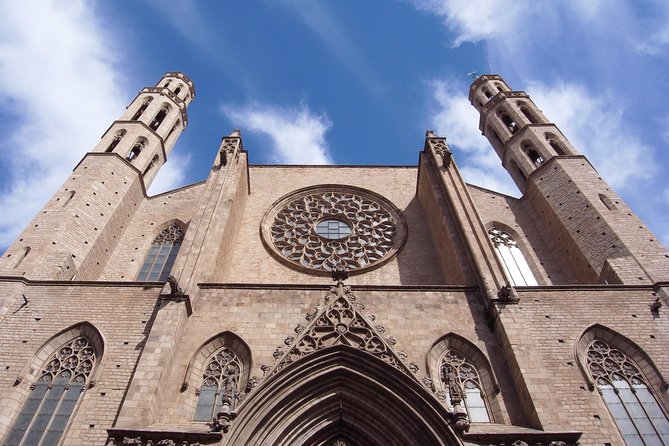
Basilica de Santa Maria del Mar: Gothic Built for Belief—and People
Next up is Basilica de Santa Maria del Mar, one of the most compelling Gothic churches in Barcelona. What I like about this stop on a Miralles-style tour is that you’re not only focusing on the building’s look. You’re also thinking about what it represented when it was being built and why that mattered to the community around it.
Gothic architecture can feel intimidating if you’re just hunting for names of elements. But the tour’s framing helps you see the “why” behind the design: social identity, religious purpose, and the way a city organizes meaning through stone and space. You’re meant to read the church as a real participant in civic life, not just a dramatic backdrop.
A drawback to consider here: if you prefer a more purely story-driven tour, churches can turn into “explain mode” pretty quickly. This experience is still engaging, but the emphasis is on architecture-as-evidence. If that’s your thing, you’ll probably feel rewarded fast.
Catedral de Barcelona: Power, Faith, and City Politics in Stone
From Santa Maria del Mar, the shift to Catedral de Barcelona gives you a bigger sense of scale and authority. Cathedrals tend to be built to project more than devotion—they project legitimacy. In a tour like this, that political layer becomes part of the architecture reading process.
You can expect the guide to connect the cathedral’s features to the historical forces behind them—how priorities change, how new needs translate into design decisions, and how Barcelona’s identity keeps rewriting itself. Even if you’re not an architecture person, you’ll get tools to decode what you’re looking at instead of relying on vibes alone.
If you’re the type who likes to ask questions, bring curiosity. The tour’s method rewards interaction: you’ll likely be encouraged to compare what you’re seeing at one stop to what you just learned at the previous one.
- Barcelona: Hola Barcelona Public Transport Travel Card★ 4.5 · 20,985 reviews
- Barcelona: 24 or 48-Hour Hop-On Hop-Off Bus Tour★ 4.4 · 20,872 reviews
- Barcelona: Park Guell Guided Tour with Skip The Line Entry★ 4.7 · 17,563 reviews
MUHBA Temple d’August: Roman Layers You Can Actually Feel
Then comes MUHBA Temple d’August, and this stop is a reality check—in the best way. It grounds the whole tour in Roman Barcelona, reminding you that modern neighborhoods sit on older decisions, older foundations, and older sacred or political spaces.
Roman remnants have a different mood than Gothic churches. The logic of the design can feel different too, which makes it a great contrast within one walk. You’re not just collecting styles; you’re tracking a city’s continuity and change. The guide’s approach helps you see how later eras reuse, reinterpret, or cover over the past.
One more practical point: sites like this can have uneven footing and outdoor-to-indoor transitions depending on how the visit is managed. Wear shoes that handle cobblestones and take your time when the group pauses.
What the Guide Format Feels Like (And Who It Suits Best)
This experience is offered in English with a maximum of 20 travelers, which usually means more room for conversation and less chaos at each stop. It also includes a mobile ticket, and an architecture microguide, which can help you keep your bearings once the walk ends.
The tour is designed to be understandable, but it’s still architecture-first. The best match is someone who enjoys:
- history that connects to the built environment
- thinking in layers (Roman → medieval → modern)
- learning a repeatable way to look at buildings
A reader who might struggle a bit is someone who only wants quick photo stops and a broad, casual tour of highlights. This walk aims to help you see past the surface—so you’ll get more out of it if you’re ready to slow down.
Value for Your Time: Why This Beats Wandering Alone
If you spend a day wandering the Gothic Quarter on your own, you’ll see plenty. The question is whether you’ll understand what you’re seeing. This tour’s value is that it turns “I noticed that” into “I know why it’s there.”
You’re getting:
- a focused set of stops that represent major Barcelona eras
- an approach tied to architecture method, not just storytelling
- time-efficient learning in about 3 hours, instead of days of reading and guessing
And that matters because Barcelona can be overwhelming in the best way. With the guide’s structure, the city stops feeling like a pile of landmarks and starts feeling like a connected system of decisions.
Also, the topic range is smart. It’s not only churches and old streets. The route explicitly touches later chapters—post-Franco rebuilding, Olympic-era transformation, and the urban shame of el forat de la vergonya. That keeps the story grounded in reality, not just nostalgia.
Planning Tips So You Enjoy It More
A few practical things help this tour land well:
- Arrive a few minutes early at Plaça Nova to avoid stress before you start.
- Bring a notebook or notes app if you like to remember building logic. The explanations are detailed and worth saving.
- Plan on weather: the experience requires good weather, and if conditions are poor, you may be offered another date or a refund.
- Wear comfortable shoes. This is a walk with repeated stops, not a “sit and view” experience.
- If you’re traveling with someone who wants a lighter pace, you can still do it together—just set expectations that the architecture thinking is part of the point.
Should You Book Barcelona: Gothic to Modern?
I’d book this if you want more than sightseeing. If you like architecture but also enjoy the human stuff—religion, politics, rebuilding, and why cities make hard choices—this tour gives you a strong mental map fast.
I wouldn’t book it if your goal is mostly casual, quick stops and minimal standing around. This walk is at its best when you’re ready to look with care and accept that you’ll leave with new ways to read Barcelona, not just new photos.
FAQ
How long is the Barcelona Gothic to Modern regular tour?
It lasts about 3 hours.
Where does the tour start?
The tour starts at Barcino Sculpture, Plaça Nova, 40, Ciutat Vella, 08002 Barcelona, Spain.
What are the main stops on the walk?
The tour includes Mercado de Santa Caterina, Basilica de Santa Maria del Mar, Catedral de Barcelona, and MUHBA Temple d’August.
Is the tour offered in English?
Yes, it is offered in English.
Is it a mobile-ticket experience?
Yes, you get a mobile ticket.
Can I get a full refund if I cancel?
Yes—free cancellation is available. You can cancel up to 24 hours before the experience for a full refund.
If you tell me your travel dates and whether you’re more into architecture details or big-picture history, I can suggest the best way to pair this with other Barcelona stops.
More Ways to Tour Barcelona
- Barcelona: Casa Batlló Entry with Self-Audioguide Tour
★ 4.7 · 25,359 reviews - Barcelona: 24 or 48-Hour Hop-On Hop-Off Bus Tour
★ 4.4 · 20,872 reviews - Barcelona: Park Guell Guided Tour with Skip The Line Entry
★ 4.7 · 17,563 reviews - Barcelona: Sagrada Familia Skip-the-Line Entry Ticket & Tour
★ 4.8 · 12,789 reviews - Barcelona: FC Barcelona Museum “Barça Immersive Tour” Ticket
★ 4.4 · 10,944 reviews
More Barcelona Tours on Our Radar
- Barcelona: Sagrada Familia Entry Ticket with Audio Guide
★ 4.6 · 105,312 reviews - Barcelona: Park Güell Admission Ticket
★ 4.4 · 76,534 reviews - Barcelona: Casa Batlló Entry with Self-Audioguide Tour
★ 4.7 · 25,359 reviews - Barcelona: Montjuïc Cable Car Roundtrip Ticket
★ 4.5 · 22,368 reviews - Barcelona: Hola Barcelona Public Transport Travel Card
★ 4.5 · 20,985 reviews
Lost in the Gothic Quarter
- Barcelona in 1 Day: Sagrada Familia, Park Guell,Old Town & Pickup
★ 5.0 · 13,541 reviews - Barcelona all included: Sagrada, Park Güell, Montjuic & Gothic
★ 5.0 · 2,169 reviews - Barcelona: Sagrada Familia, Modernism, and Old Town Tour
★ 4.7 · 1,621 reviews - Barcelona Gothic Quarter Tapas & Taverns Food & Wine Tour
★ 5.0 · 1,470 reviews - Barcelona Helicopter, Sailboat & Old Town Private Walking Tour
★ 5.0 · 1,395 reviews
Just Rated Around Barcelona





Gothic Quarter Tours, compared.
 ★ 5.0Barcelona in 1 Day: Sagrada Familia, Park Guell,Old Town & PickupFrom $12013,541 reviews
 ★ 5.0Barcelona all included: Sagrada, Park Güell, Montjuic & GothicFrom $1192,169 reviews
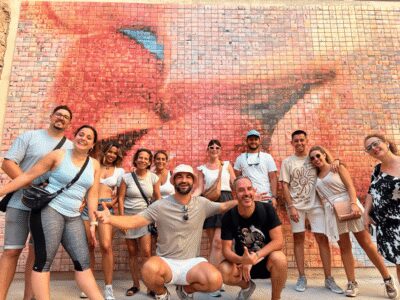 ★ 4.7Sagrada Familia, Modernism, and Old Town TourFrom $521,621 reviews
 ★ 5.0Barcelona Gothic Quarter Tapas & Taverns Food & Wine TourFrom $1311,470 reviews
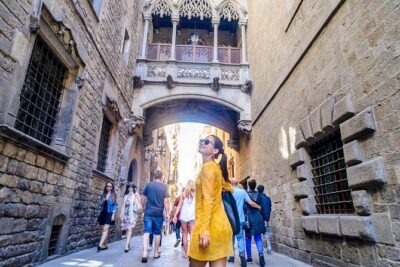 ★ 5.0Barcelona Helicopter, Sailboat & Old Town Private Walking TourFrom $5131,395 reviews
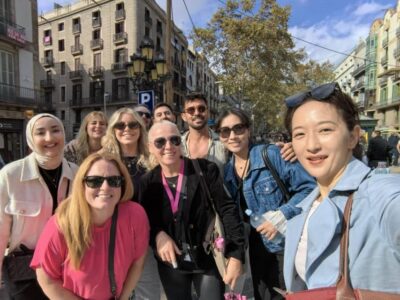 ★ 4.8Old Town and Gothic Quarter Walking TourFrom $211,393 reviews
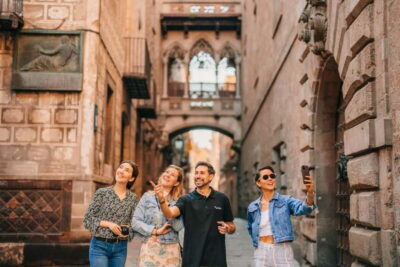 ★ 4.7Helicopter, Boat Ride & Old Town Private TourFrom $5001,357 reviews
 ★ 5.0Barcelona Old Town & Gothic Quarter Small Group TourFrom $221,308 reviews
Browse the lists this tour appears in