
Reviewed · MUSEUMS
Barcelona: Museum of Forbidden Art Entry Ticket
A museum about forbidden art sounds risky. In Barcelona, it’s also seriously smart. I like how Museu de l’Art Prohibit turns censorship into a real conversation, using works associated with artists like Picasso and Banksy to explain what gets challenged and why. The one catch to plan around: the venue has day-to-day opening hours, so you’ll want to double-check dates before you lock anything in.
You’ll visit a small but focused collection inside the modernist Casa Garriga Nogués area near Passeig de Gràcia, with the option to use a free interactive digital guide in Catalan, Spanish, or English. I also love that the ticket doesn’t feel like a shortcut: you get the exhibition plus access to the terrace area, and the museum provides free Wi‑Fi to help you use the guide. A possible drawback is that it’s not suitable for kids under 13, so plan for a more adult-minded outing.
In This Review
- Key things to know before you go
- What Museu de l’Art Prohibit is really about
- The setting: Casa Garriga Nogués near Passeig de Gràcia
- Your ticket: what the $14 admission really covers
- Security and rules you should not ignore
- Using the free digital guide on your phone
- Inside the exhibition: how the collection is meant to be read
- The artists you’ll run into (and what to look for)
- The terrace area: a breather with a point
- How long to plan in your Barcelona day
- Price and logistics: what feels worth it
- Who this museum suits best
- Should you book Museu de l’Art Prohibit?
- FAQ
- How much does the Barcelona Museum of Forbidden Art ticket cost?
- What does the ticket include?
- Is the digital guide included, and what languages are available?
- Where is the museum located in Barcelona?
- Are there age limits?
- Do I need to bring ID?
- What items are not allowed inside?
- Is the museum wheelchair accessible?
Key things to know before you go
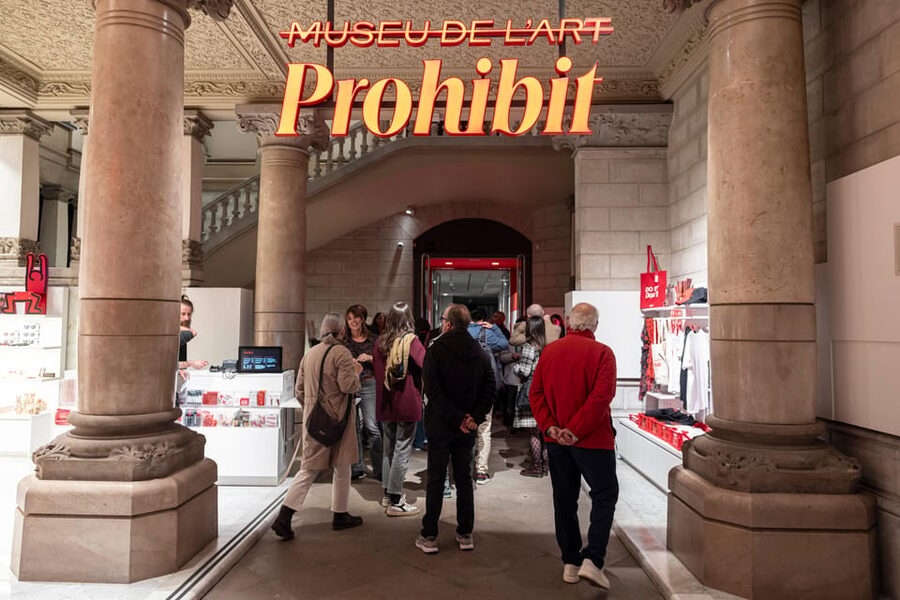
- World’s first and only collection focused on censored and prohibited art
- 200+ artworks tied to censorship, with context you can read on-site
- Free interactive digital guide on your device (Catalan, Spanish, English)
- Modernist setting in Casa Garriga Nogués, a short walk from major sights
- Terrace access included, plus free Wi‑Fi for guide use
- Rules are strict: no bags, no food or drinks, no pets
What Museu de l’Art Prohibit is really about
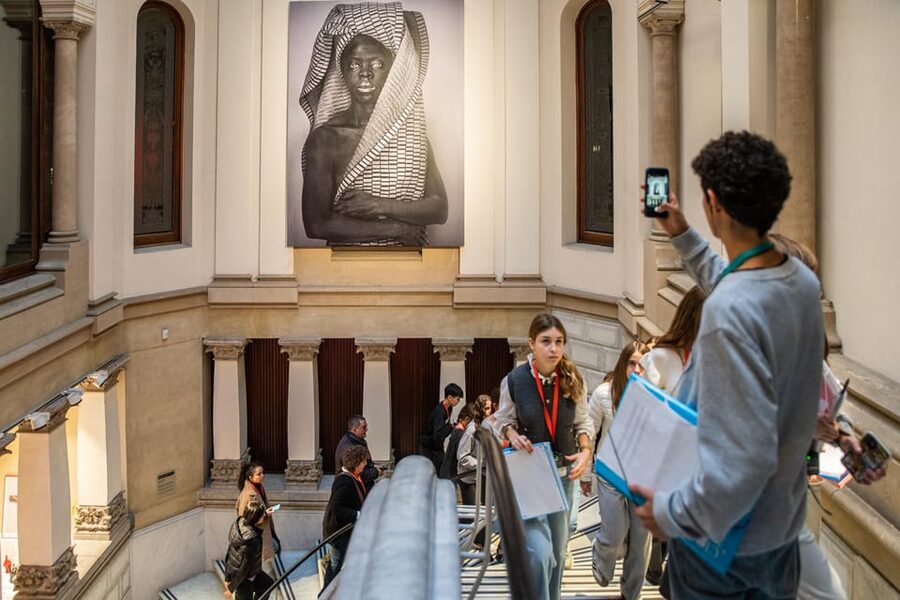
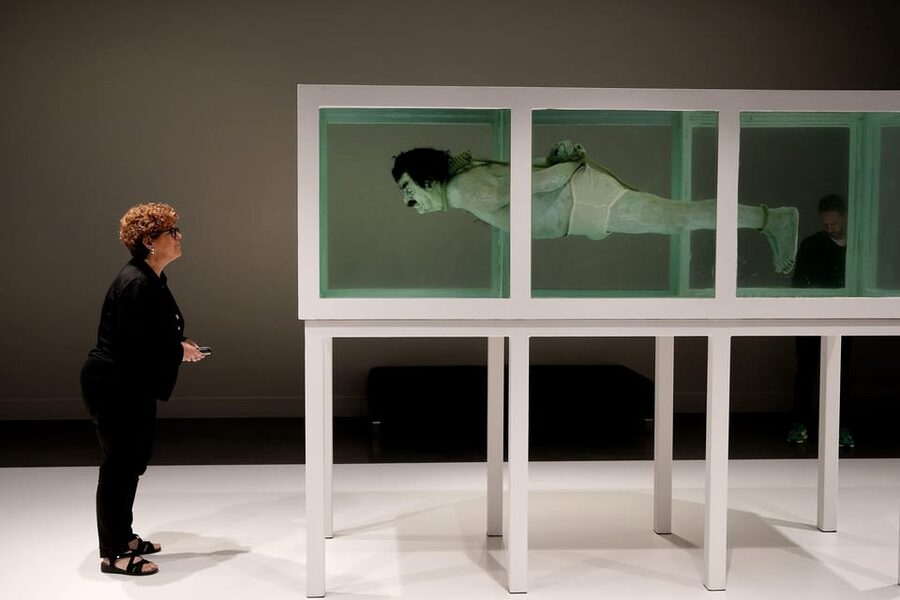
This isn’t a “shock value” stop. The heart of the experience is the idea that art doesn’t just get made—it also gets blocked, removed, censored, or labeled dangerous. The Museu de l’Art Prohibit builds a collection around that pressure. It presents censored and prohibited works (and related pieces) by artists such as Pablo Picasso, Andy Warhol, Goya, Ai Weiwei, Banksy, Abel Azcona, Ines Doujak, Robert Mapplethorpe, Tania Bruguera, Gustav Klimt, Miquel Barceló, and Keith Haring.
What makes this museum feel different from a typical art museum is the focus on meaning. You’re not only looking at a work; you’re also being guided toward the question underneath it: who decided it was unacceptable, and what cultural or political fault line did it hit?
If you enjoy art history, media literacy, or simply wondering why certain images get people worked up, you’ll probably find the experience both thought-provoking and surprisingly readable.
More Barcelona tickets worth grabbing

The setting: Casa Garriga Nogués near Passeig de Gràcia
The museum is set in Casa Garriga Nogués, a modernist building dating from the early 20th century. That matters more than you might expect. You’re not just stepping into a white-box gallery. The building puts you in a Barcelona rhythm where architecture and culture feel linked.
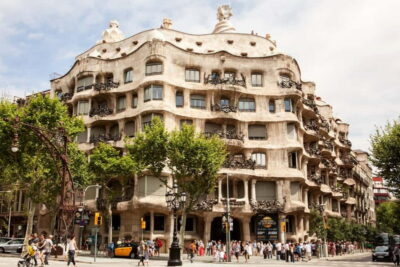
Location helps too. It’s about a one-minute walk from Passeig de Gràcia, and you’re close to major icons like Casa Batlló and La Pedrera. This makes it an easy plug-in stop if you’re doing a morning or afternoon stretch around that neighborhood. You can see the big-ticket sights, then step somewhere quieter and more cerebral without changing your area.
One practical note: because it sits in a busy corridor, plan to enter when you can focus. If you’re arriving right after a long walk in the heat, the first thing you’ll do is pass security, so give yourself a little buffer.
Your ticket: what the $14 admission really covers
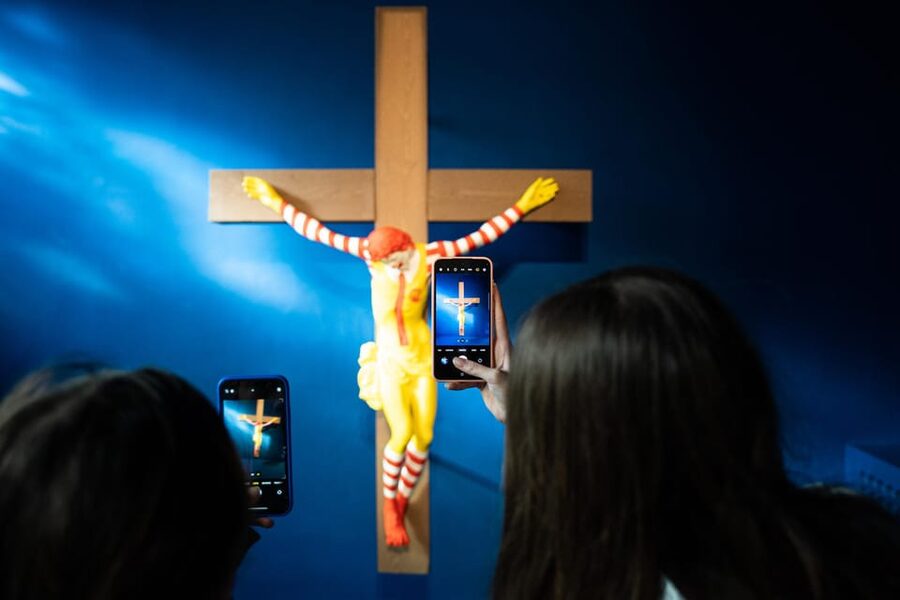
At around $14 per person, the ticket pricing is fairly straightforward. You’re buying access to:
- The exhibition at Museu de l’Art Prohibit
- The terrace area
- A free interactive digital guide with multimedia content
- Free Wi‑Fi
The digital guide is the feature that makes this ticket feel like more than “just entry.” It’s designed to help you understand the context and impact of the prohibited artworks. And it’s available in Catalan, Spanish, and English.
This is the kind of museum where paying attention is part of the value. If you read the guide prompts and facts, you’ll get more out of each room. If you rush and skip the context, it can still be interesting, but the museum is clearly built to reward slow, curious looking.
Security and rules you should not ignore
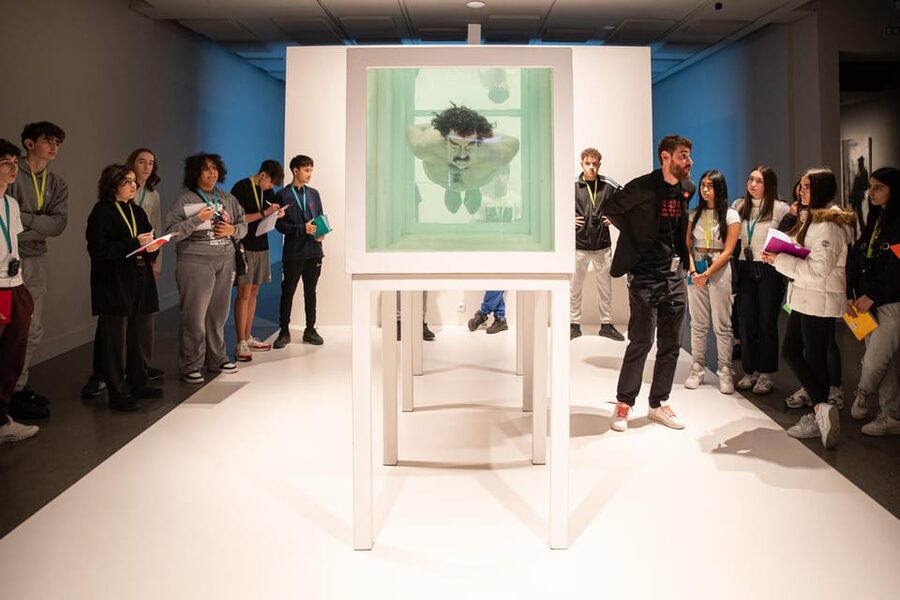
This is a museum with real rules. Before you enter the galleries, all visitors go through security control.
Also, keep in mind what isn’t allowed:
- Pets
- Food and drinks
- Bags
That last one can affect your day. If you’re carrying a daypack from your hotel or from a shopping stretch, you’ll want to plan what you can leave behind. Since the museum doesn’t allow bags, you may need to keep your essentials minimal when you arrive.
Bring:
- A passport or ID card
- For children, the same ID requirement
The ID detail sounds minor until it becomes an issue. It’s one of those “why didn’t I check” moments that can waste time right when you want to start.
Using the free digital guide on your phone
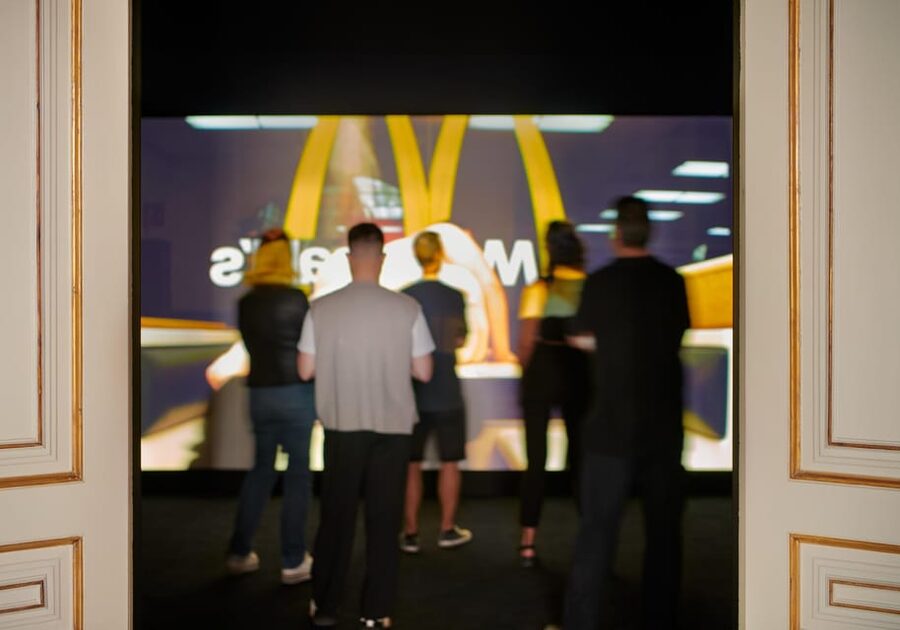
The museum encourages you to use a free interactive digital guide on your personal device. You don’t need a paper booklet. The guide includes information and multimedia content, and you can choose Catalan, Spanish, or English.
Here’s how to make it work well:
- Start the guide near the beginning of your visit so the context sticks.
- Use the guide as a “translator” for what you’re seeing, especially if a censorship event happened long ago.
- Let the guide shape your pace. Some works feel faster to interpret; others become much more meaningful once you understand the pressure around them.
Because the museum offers free Wi‑Fi, you don’t have to burn your mobile data to access the guide content. That’s a small detail, but it matters when you’re trying to keep the day smooth.
More Barcelona galleries to duck into
- Barcelona: FC Barcelona Museum “Barça Immersive Tour” Ticket★ 4.4 · 10,944 reviews
- Barcelona: Park Güell and Gaudí House Museum Entry Ticket★ 4.5 · 6,326 reviews
- Barcelona: Picasso Museum Skip-the-Line Guided Tour★ 4.5 · 3,355 reviews
Inside the exhibition: how the collection is meant to be read
The collection brings together over 200 artworks that have faced censorship. That’s a big number, but the museum’s approach helps you process it: it’s not only listing famous names. It’s linking the art to why it was targeted.
As you move through the exhibition, you’ll likely notice a pattern. Censorship isn’t just about nudity or profanity, even if those are common reasons. It’s often about power—who is comfortable with certain messages, who controls public space, and who gets to decide what is acceptable to show.
That’s where the museum can feel extra relevant today. Censorship isn’t a dusty, “back then” topic. It’s a recurring tool used in different ways across time. The museum’s strength is that it treats censorship as something you can study and question, not just something you react to.
The artists you’ll run into (and what to look for)
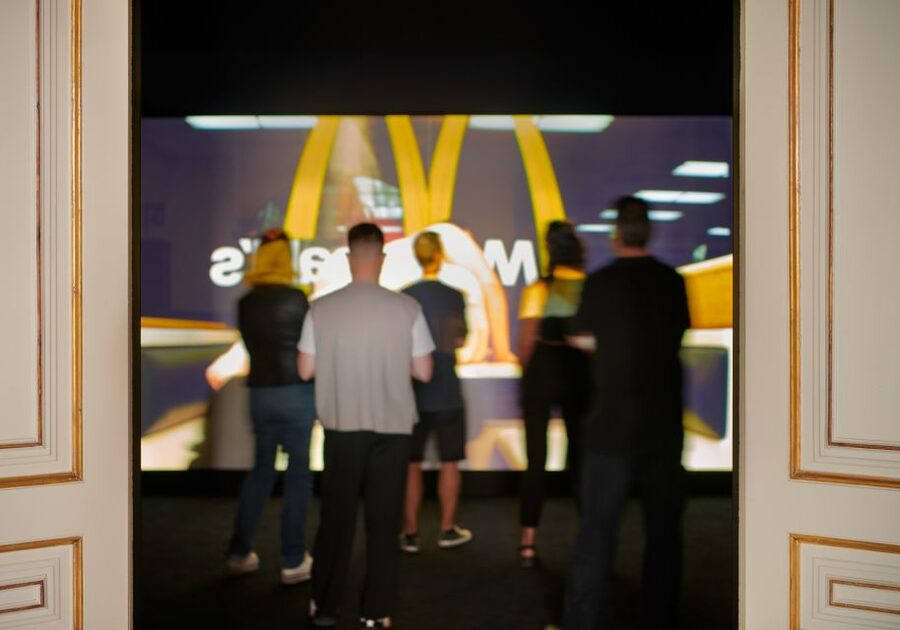
You’ll see a mix of global, modern, and contemporary figures tied to censorship stories. The museum highlights works connected to artists including:
- Pablo Picasso
- Andy Warhol
- Goya
- Ai Weiwei
- Banksy
- Abel Azcona
- Ines Doujak
- Robert Mapplethorpe
- Tania Bruguera
- Gustav Klimt
- Miquel Barceló
- Keith Haring
Rather than treating the artist names as a checklist, I suggest you look for the “why” behind each case. The museum’s digital guide is set up to help you connect each prohibited work to its specific controversy—what it challenged, what symbols it used, and what public nerves it struck.
If you tend to focus on the art style, slow down. Here, the style often matters less than the message and the social reaction around it.
The terrace area: a breather with a point
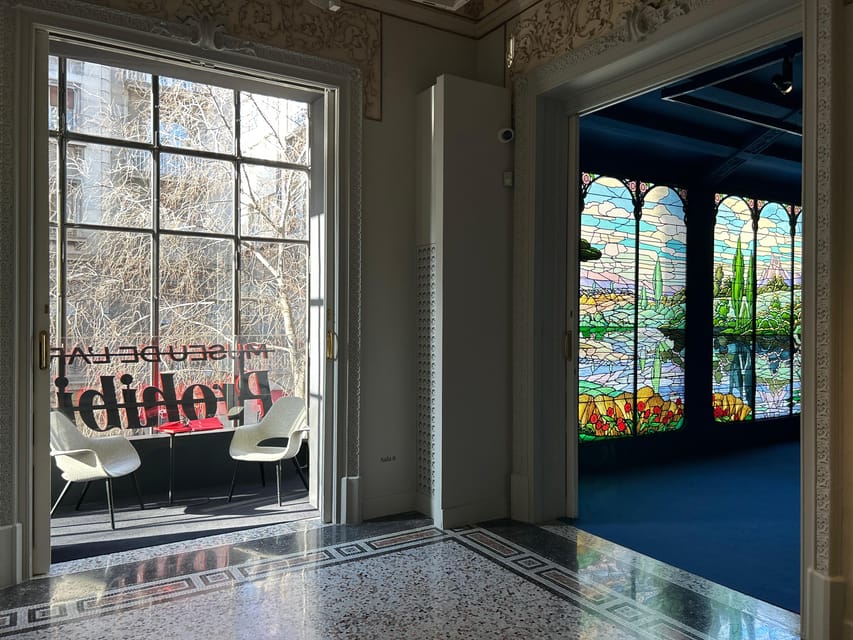
Access to the terrace area is included with admission. This is the spot to reset before you continue. It’s also a good time to think about what you just learned while the day’s noise fades.
Don’t expect the terrace to replace the exhibition. Instead, treat it like a pause button. You’ll be moving from heavy ideas back into normal life, and a short outdoor break keeps the visit from feeling too intense.
How long to plan in your Barcelona day
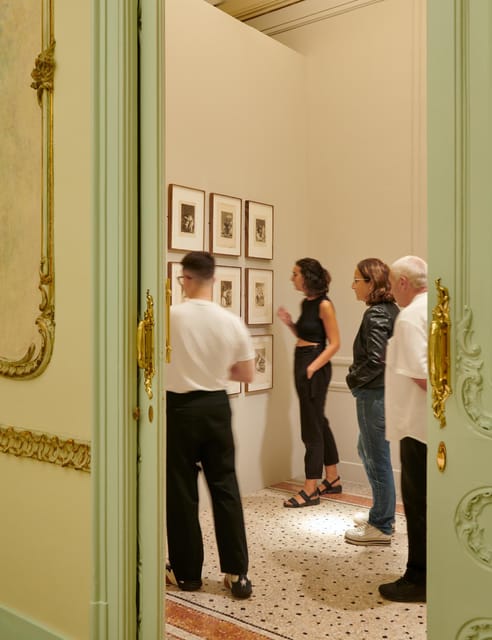
The ticket is valid for 1–180 days, but you still need to check availability to see starting times. That usually means your time plan needs flexibility.
In practice, you’ll want to allocate enough time to:
- get through security calmly,
- spend time in the exhibition,
- and still have a moment for the terrace and gift shop (if you want it).
Since the museum uses a digital guide, your visit length can change depending on how much you read. If you like context, build in extra time. If you prefer a faster circuit, you can still enjoy the collection, but you’ll likely miss some of the background that makes the censorship stories land.
Price and logistics: what feels worth it
For about $14, this feels like strong value for a niche museum with a clear educational angle. You’re not just paying for entry; you’re paying for context delivered through the free digital guide, plus terrace access and Wi‑Fi.
Compared with bigger “name” museums, the advantage here is focus. This isn’t trying to cover everything. It’s built around one theme: prohibited and censored art. That tight focus can be a relief when your Barcelona day already includes major sights like Casa Batlló and La Pedrera.
One logistical consideration: opening days matter. In one experience, a ticket purchased for a Tuesday didn’t match the museum’s closure, and the fix was simply going the next day. The lesson is simple: before you travel, confirm the museum is open on the day you intend to visit.
Who this museum suits best
This is a great match if you:
- enjoy art with political or social context,
- like “why did this get censored?” questions,
- want a different angle from classic museum stops,
- and are comfortable reading interpretive information (via the guide).
It’s less ideal if:
- you’re visiting mainly for hands-on kids entertainment (it’s not suitable for children under 13),
- you can’t travel light and don’t want to deal with restrictions on bags,
- or you prefer museums with minimal rules.
Should you book Museu de l’Art Prohibit?
I’d book it if you want a meaningful Barcelona stop that isn’t just another gallery room. The best part is the combination of a strong central theme (censored and prohibited art) and the practical help of a free digital guide in your preferred language. At around $14, the value holds up, especially if you’re the kind of person who likes to understand the story behind the art.
Skip it only if your visit style is purely casual and fast, or if you’re traveling with kids under 13. If you’re okay with the house rules and you plan around opening days, this is the kind of museum that sticks with you for the right reasons.
FAQ
How much does the Barcelona Museum of Forbidden Art ticket cost?
The entry ticket is listed at $14 per person.
What does the ticket include?
Your ticket includes access to the exhibition and the terrace area, plus a free interactive digital guide and free Wi‑Fi.
Is the digital guide included, and what languages are available?
Yes, the digital guide is included. It’s available in Catalan, Spanish, and English.
Where is the museum located in Barcelona?
It’s in the Casa Garriga Nogués area, about a one-minute walk from Passeig de Gràcia, near Casa Batlló and La Pedrera.
Are there age limits?
Yes. It is not suitable for children under 13.
Do I need to bring ID?
Yes. You should bring a passport or ID card (and the same for children).
What items are not allowed inside?
Pets, food and drinks, and bags are not allowed.
Is the museum wheelchair accessible?
Yes, the museum is wheelchair accessible.
Barcelona Galleries to Duck Into
- Barcelona: FC Barcelona Museum “Barça Immersive Tour” Ticket
★ 4.4 · 10,944 reviews - Barcelona: Park Güell and Gaudí House Museum Entry Ticket
★ 4.5 · 6,326 reviews - Barcelona: Picasso Museum Skip-the-Line Guided Tour
★ 4.5 · 3,355 reviews - Moco Museum Barcelona: Modern & Contemporary Art
★ 4.6 · 3,229 reviews - Girona & Dali Museum Small Group Tour with Pick-up from Barcelona
★ 5.0 · 2,965 reviews
More Barcelona Tickets Worth Buying
- Barcelona: Sagrada Familia Entry Ticket with Audio Guide
★ 4.6 · 105,312 reviews - Barcelona: Park Güell Admission Ticket
★ 4.4 · 76,534 reviews - Barcelona: Montjuïc Cable Car Roundtrip Ticket
★ 4.5 · 22,368 reviews - Barcelona Aquarium: Entry Ticket
★ 4.4 · 16,717 reviews - Barcelona: Sagrada Familia Skip-the-Line Entry Ticket & Tour
★ 4.8 · 12,789 reviews
More Barcelona Tours on Our Radar
- Barcelona: Sagrada Familia Entry Ticket with Audio Guide
★ 4.6 · 105,312 reviews - Barcelona: Park Güell Admission Ticket
★ 4.4 · 76,534 reviews - Barcelona: Casa Batlló Entry with Self-Audioguide Tour
★ 4.7 · 25,359 reviews - Barcelona: Montjuïc Cable Car Roundtrip Ticket
★ 4.5 · 22,368 reviews - Barcelona: Hola Barcelona Public Transport Travel Card
★ 4.5 · 20,985 reviews
Just Rated Around Barcelona




Museums, compared.
 ★ 4.4FC Barcelona Museum “Barça Immersive Tour” TicketFrom $3510,944 reviews
 ★ 4.5Park Güell and Gaudí House Museum Entry TicketFrom $336,326 reviews
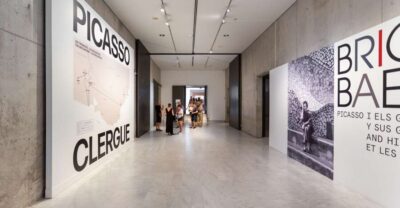 ★ 4.5Picasso Museum Skip-the-Line Guided TourFrom $443,355 reviews
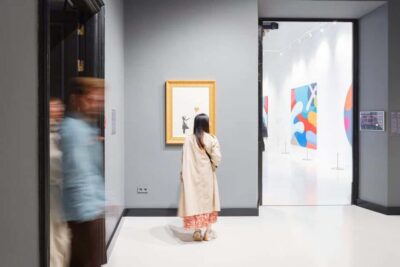 ★ 4.6Moco Museum Barcelona: Modern & Contemporary ArtFrom $183,229 reviews
 ★ 5.0Girona & Dali Museum Small Group Tour with Pick-up from BarcelonaFrom $1202,965 reviews
 ★ 4.4Barcelona Card: 25+ Museums and Free Public TransportationFrom $692,265 reviews
 ★ 4.7From Barcelona: Girona, Figueres, Dalí Museum, and CadaquésFrom $701,928 reviews
 ★ 4.7From Barcelona: Girona&Dalí Museum Day Trip with Small GroupFrom $871,874 reviews
Browse the lists this tour appears in