
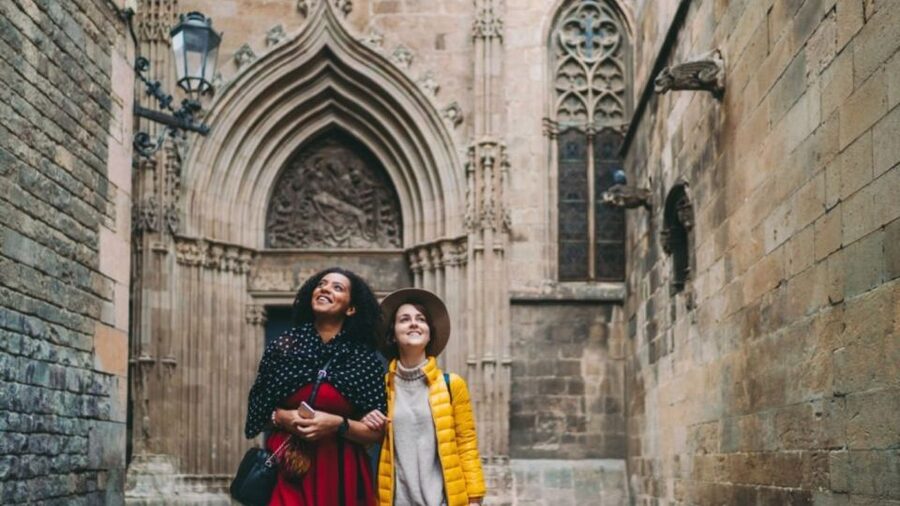
Reviewed · GOTHIC QUARTER TOURS
Barcelona Old Town Private Walking Tour with Local Historian
Old Barcelona’s story starts in stone. This 3-hour private walk strings together Roman ruins, medieval streets, and living neighborhoods with a local historian.
I love the slow pace (about 3 km) and the way the guide explains what you’re seeing right in front of you. If you happen to get guides like Inez or Alessandro from past groups, you get a confident mix of history, archaeology, art, and straight answers, with real patience when questions pop up.
One thing to consider: this tour focuses on exterior viewing. If you want to go inside major sites for long stays, you’ll need to plan that separately.
In This Review
- Key highlights at a glance
- Why This Old Town Walk Works: Roman Roots to Real Streets
- Meeting at Plaça Nova and Reading Barcelona’s Roman Wall
- Palau de la Música Catalana and the Market Route: Art Meets Local Life
- Santa Maria del Mar and the Story Behind the Ribera
- El Born and Plaça Sant Jaume: Power, Craft, and City Pride
- Gothic Quarter, Temple of Augustus, and the Jewish Quarter Stops
- La Rambla to Plaça Reial: A Gentle Finish You Can Extend
- Price and Value: Paying for a Private Historian (and Skipping Ticket Lines)
- Pace, Group Size, and What You’ll Take Away in 3 Hours
- Should You Book This Barcelona Old Town Private Tour?
- FAQ
- Where does the tour start?
- How long is the tour, and how much walking is involved?
- Is the tour private?
- Do I need tickets for the sights?
- What languages are available for the live guide?
- Is the tour wheelchair accessible?
- What should I bring and wear?
- FAQ
- Can I cancel and get a refund?
- Do I have to pay immediately?
Key highlights at a glance
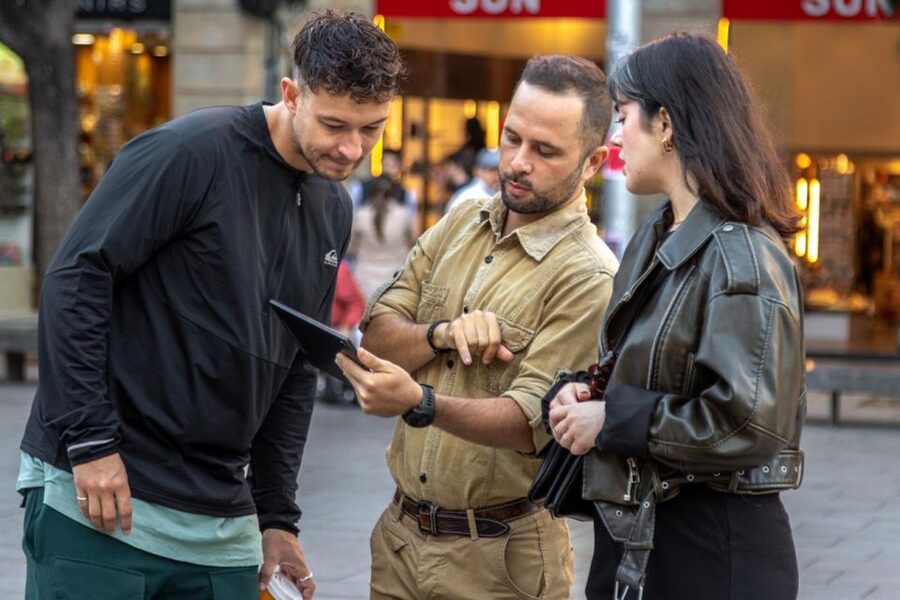
- Roman Barcelona right from the start at Plaça Nova, by the Roman walls and aqueduct area
- Private historian-led pacing across about 3 km over 3 hours
- No ticket needed for stops since monuments are explored from outside only
- Gothic Quarter plus El Born with story-driven context and local rhythm
- Jewish Quarter atmosphere handled with care and clear historical framing
- Tour ends near Plaça Reial, an easy landing spot for your next plan
Why This Old Town Walk Works: Roman Roots to Real Streets
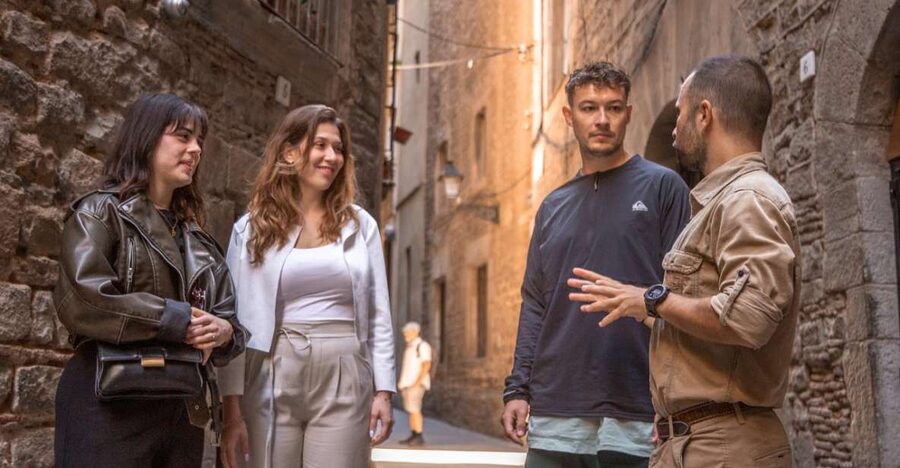
Barcelona’s Old Town can feel like a postcard until someone helps you read it. This tour does that job. You’ll connect the dots from Roman beginnings to medieval Barcelona, then to the neighborhoods that still shape daily life today.
What makes it work is the guide format. You’re not shuffling through stops with a megaphone and a stopwatch. It’s private, story-driven, and designed for a relaxed pace. You’ll walk narrow lanes and open squares without feeling rushed, and the guide keeps the meaning attached to each corner you turn.
Here’s the practical win: you spend those 3 hours seeing the city’s “why,” not just the “what.” That’s where the value lives, especially if you’ve visited Barcelona before and thought you’d already seen the classics.
And yes, the route covers major landmarks and then slows down around the details—plazas, churches, and the kind of alley you’d miss if you were only following your phone map.
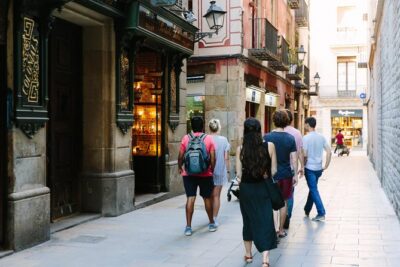
Deeper into the lanes of the Barri Gòtic


Meeting at Plaça Nova and Reading Barcelona’s Roman Wall
You meet at Plaça Nova, 40. Look for the sculpture called Barcino, placed in front of the Roman wall area, next to the aqueduct. That’s a smart setup because it tells you what this tour wants to do: start at the foundations.
From there, the walk gives you a way to interpret the older parts of the city. Roman Barcelona wasn’t just a “first chapter.” It influenced how the city organized space, corridors, and access points long after the Romans left.
At this stage, you’ll likely notice how the Old Town’s geography nudges your route. Small changes in elevation and street widths start to make sense when the guide explains how people moved and where power and trade concentrated. It turns random stones into a map you can actually read.
A tip: wear shoes you can trust. Even at a “slow-paced” speed, you’re on cobblestones and old surfaces that ask for grip. If your feet are happy, your brain stays tuned to the stories.
Palau de la Música Catalana and the Market Route: Art Meets Local Life
One of my favorite parts of an Old Town walk is when it shifts from monuments to local everyday energy. This route does that early.
You’ll head toward the Palace of Catalan Music area (Palau de la Música Catalana). Even though the tour is exterior-focused, the guide’s job is to help you see what people point at later—shapes, styles, and the cultural setting that surrounds the building. It’s not about getting tickets. It’s about building a mental picture you can carry when you’re looking at photos afterward or passing by again.
Next is Santa Caterina Market. Markets in Barcelona aren’t just for shopping; they’re part of the city’s social engine. A good guide helps you understand why markets belong in the Old Town story—because food, craft, and daily routines anchor the past in the present.
Why this matters for you: it breaks up the “church-and-cathedral only” rhythm. It’s also a good time to ask questions. In this middle segment, guides can often connect medieval living patterns to later Catalan identity, and you’ll feel the timeline snap into place.
Possible drawback: if you’re expecting a food tour or a chance to browse inside, don’t. This is built as a walking history experience with external viewing and commentary. You can still stop for a snack on your own afterward.
Santa Maria del Mar and the Story Behind the Ribera
After the market zone, the tour heads toward St. Mary of the Sea Cathedral—Santa Maria del Mar—and the surrounding area in the Ribera (Barri de la Ribera). This is where medieval Barcelona stops being abstract.
Santa Maria del Mar carries a reputation because it represents a particular moment: a city organized enough, and with enough civic confidence, to pour labor and money into a major church. Even from outside, the guide can explain what that says about the people who built it and what their priorities looked like.
Then you’ll move into the Ribera and El Born area (the tour treats these as connected parts of the Old Town experience). The point isn’t to name every facade. It’s to understand why certain neighborhoods developed the way they did, and how the city’s social and religious life shaped the street layout you walk through today.
This section often feels like a shift in atmosphere. Streets tighten. Plazas appear. You start seeing the Old Town as a living set of rooms rather than a hallway of sights.
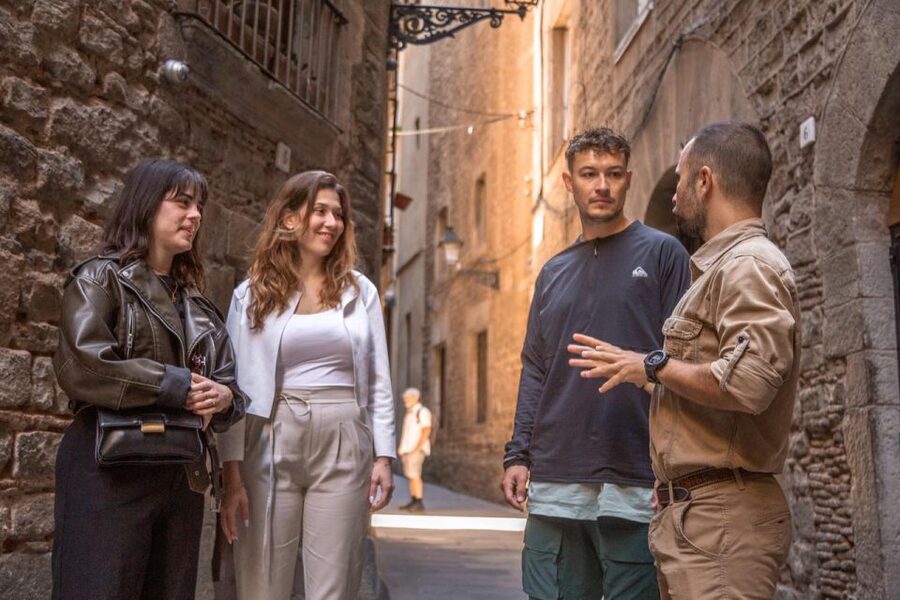
One more practical note: because this is a private tour with a maximum of 10 people, the guide can keep the explanation tuned to your interests. If you care more about architecture or more about everyday life, it tends to show up in how much time is spent on different corners.
El Born and Plaça Sant Jaume: Power, Craft, and City Pride
El Born isn’t just a neighborhood stop. It’s a bridge between medieval Barcelona and the Barcelona you’ll recognize today.
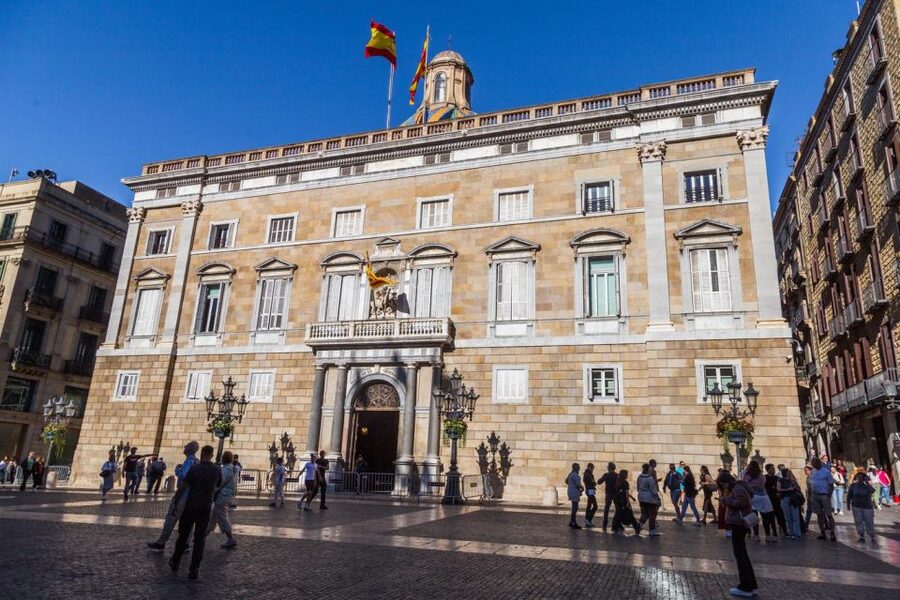
You’ll also pass through Plaça Sant Jaume. This square matters because it’s a place where political and civic identity gets expressed in stone and layout. A guide’s commentary here can help you see why squares weren’t “leftover empty space.” They were designed for gatherings, announcements, and the public face of authority.
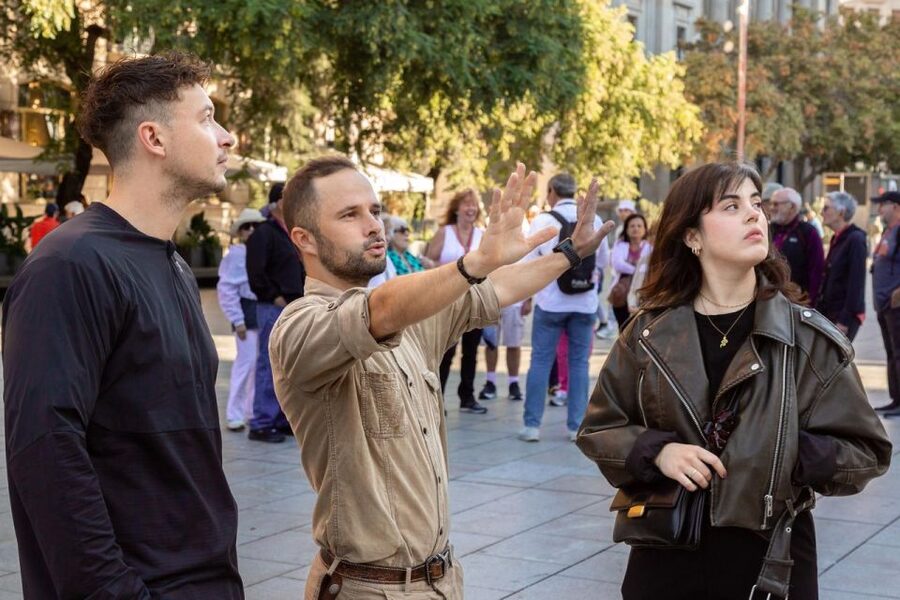
While you walk, your guide is effectively doing two things at once:
- explaining the building or street you’re looking at
- using it to explain the bigger story of how the city organized itself
That’s why this works better than a checklist tour. You’re not trying to memorize. You’re learning how to interpret.
If you’re traveling with someone who gets impatient with slow history, this kind of tour is still a good bet because the route doesn’t feel like a lecture. You’re outside, walking, seeing, and getting a little context as you go.
Small consideration: medieval streets can mean less shade. If it’s hot or rainy, you’ll feel it. The tour runs in all weather conditions, so dress like Barcelona weather can change its mind quickly.
More Barcelona streets to take slowly
- Barcelona Tapas and Wine Experience Small-Group Walking Tour★ 5.0 · 5,804 reviews
- Barcelona: Tapas Walking Tour with Food, Wine, and History★ 4.8 · 4,261 reviews
- Barcelona: Food Walking Tour with Tapas and Wine★ 4.9 · 2,180 reviews
Gothic Quarter, Temple of Augustus, and the Jewish Quarter Stops
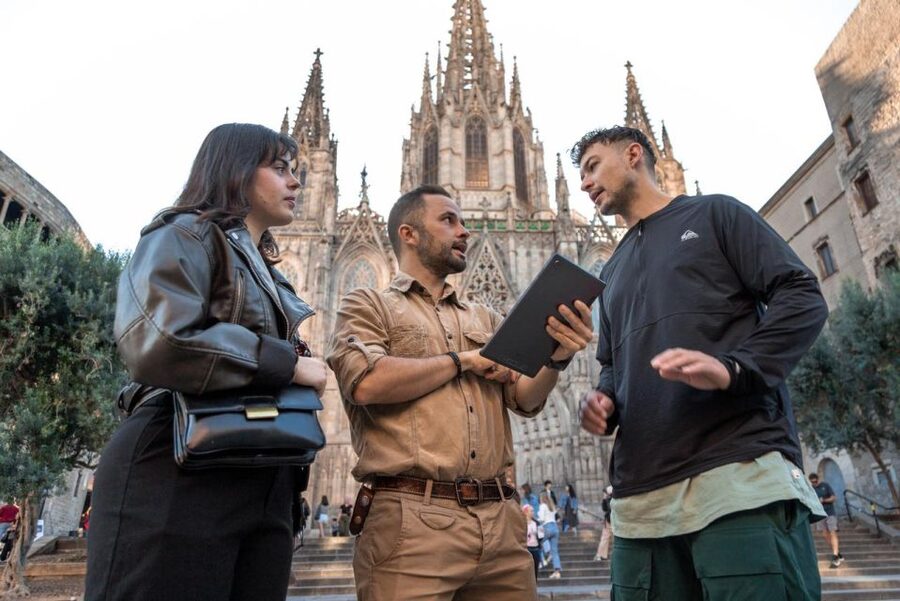
This is the section that most people end up remembering the most. You’ll spend time in the Gothic Quarter, and the route includes some very specific points: the Temple of Augustus and the Ancient Synagogue, plus Placa Sant Felip Neri and the Gothic Quarter’s key spaces.
Let’s talk about the Temple of Augustus first. Roman pieces in the middle of medieval streets can feel like an “impossible” contrast until someone explains what it means for continuity. It’s not just an artifact. It’s a reminder that later eras built on what came before, repurposing space and keeping the city layered.
Then comes the Jewish Quarter atmosphere, including the Ancient Synagogue stop. A guide can handle this well by tying the physical location to the larger story—community life, history’s pressures, and the way neighborhoods keep traces even after times change. This is one of those moments where “what you see” and “what it means” are inseparable.
Finally, you’ll reach Plaça Sant Felip Neri and spend time around the Gothic Quarter’s church-and-square rhythm. In this part of the walk, you’ll likely start noticing patterns: how plazas relate to streets, how churches function as anchors, and how the city’s old layers create a sense of depth.
If you want proof that this tour does more than name places, look at the feedback from previous groups. Guides like Alessandro were praised for the blend of history, archaeology, art, and cultural heritage, delivered clearly. That kind of framing is exactly what makes stops like Augustus and the synagogue land with meaning instead of just being a photo op.
La Rambla to Plaça Reial: A Gentle Finish You Can Extend
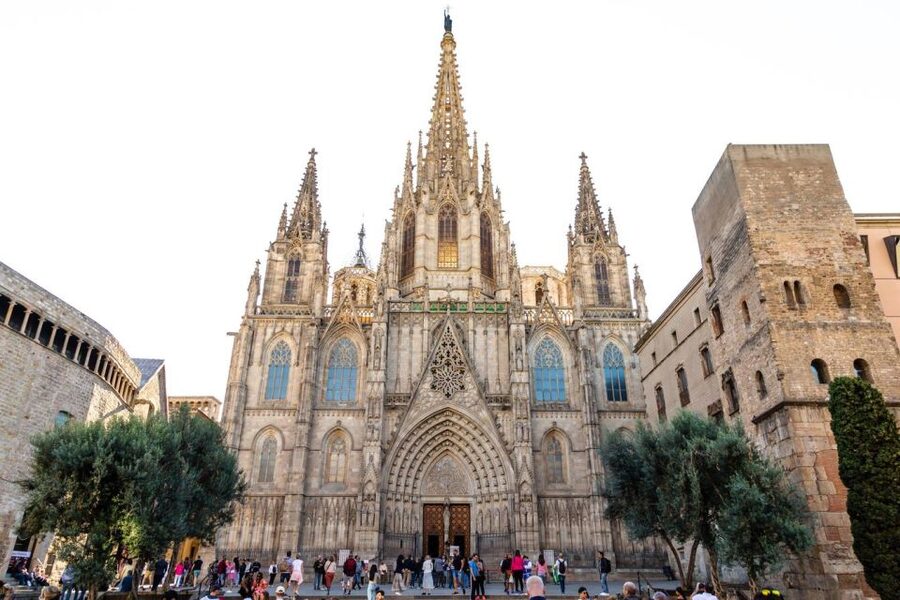
The tour doesn’t end in the middle of nowhere. It finishes at Plaça Reial. Before that, you’ll walk along La Rambla.
La Rambla can be a love-it-or-avoid-it street. On this tour, it’s treated as part of the Old Town-to-modern city transition, not just a famous name. You’ll get a sense of how the city’s social energy shifts as you move toward a more open, “public face” kind of Barcelona.
Ending at Plaça Reial is a smart move because it’s a natural hangout space. After 3 hours, you’re likely ready for a coffee, a snack, or just a slower walk with no history homework.
If you’re thinking ahead: plan a post-tour meal or drink nearby. You’ll have just enough energy to enjoy the evening, and you’ll already understand what neighborhood you’re in and why it matters.
And remember, this is all external viewing. That’s good if you want to keep momentum and avoid ticket logistics, but it also means you may want to return later for interior time if a specific site really grabs you.
Price and Value: Paying for a Private Historian (and Skipping Ticket Lines)
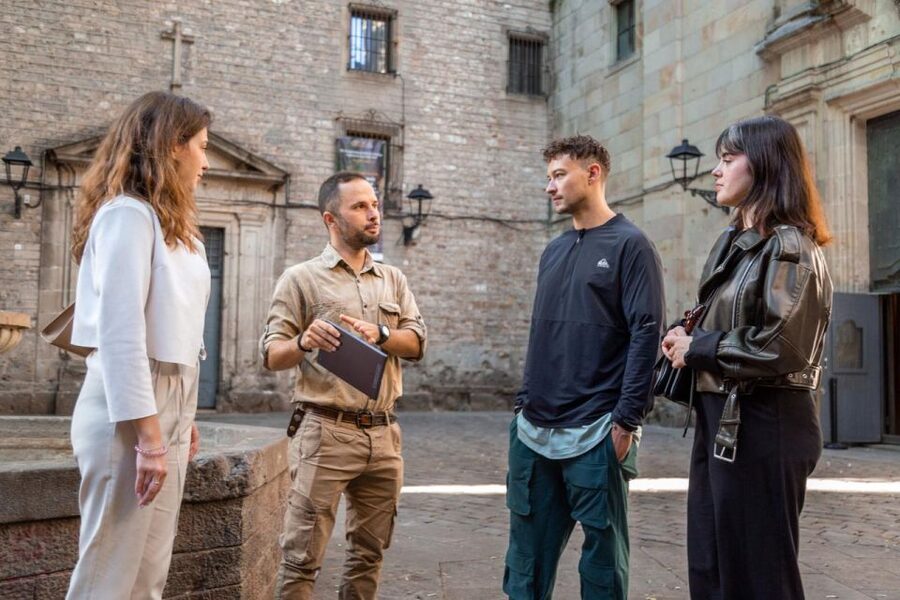
At $191 per person for a 3-hour private tour, the price is not cheap in absolute terms. But it can be strong value depending on your travel style.
Here’s why:
- It’s private, with a small group size (up to 10), and led by a local historian/licensed expert.
- It’s slow-paced with about 3 km of walking, so you’re paying for time, interpretation, and attention.
- Most stops are exterior visits, meaning you’re not paying for entrance tickets during the tour.
For many people, the real expense isn’t just money. It’s frustration—trying to figure out what you’re looking at while crowds move past you. A good guide turns that uncertainty into understanding fast.
The review pattern here is clear: people praised guides for being patient and for having real depth across history, archaeology, and art. When you’re paying for a private guide, you want exactly that—someone who can connect details into a coherent story without rushing.
If you’re traveling solo or as a couple, private tours often make sense because you’re buying a tailored experience. If you’re a family, you’ll likely appreciate the relaxed pace and the chance to ask questions without feeling like you’re interrupting a big group.
Where the price may feel less worth it: if you only want quick landmarks for photos, you could do a self-guided walk. But if you want the “why,” the tour is priced like education, not just sightseeing.
Pace, Group Size, and What You’ll Take Away in 3 Hours
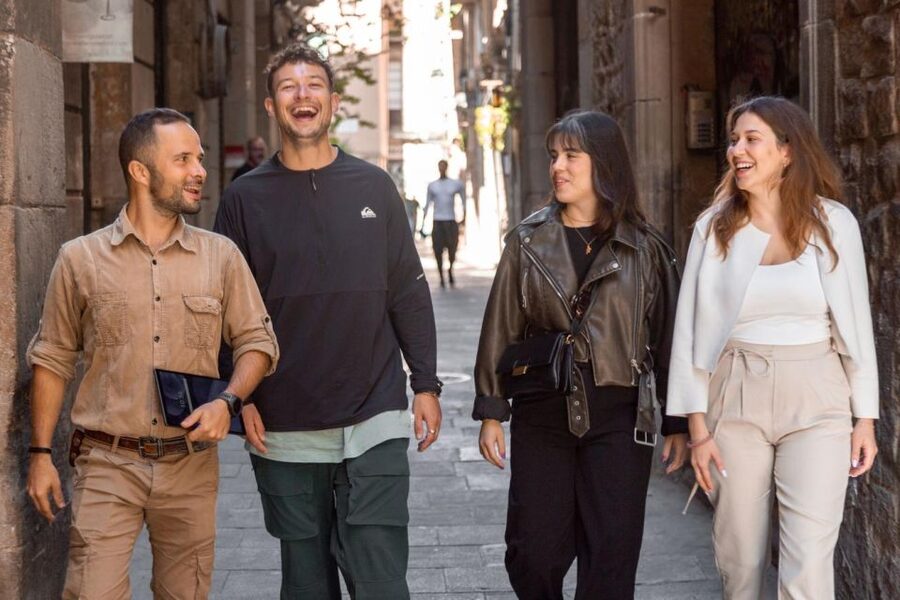
This tour is designed around clarity at walking speed. You cover roughly 3 km in 3 hours, which is slow enough to actually register details and photos you might take won’t feel like you’re constantly sprinting to keep up.
The private format (maximum of 10 participants) matters. In busy Old Town streets, small groups move better and guides can adjust when someone lingers on a doorway, or when your questions steer the focus.
Languages are also a practical win: the guide is available in English, Spanish, and Greek. If language is your comfort zone, you’ll likely enjoy the storytelling more because you won’t be mentally translating.
What to bring is simple: comfortable shoes. It’s also smart to dress for weather because the tour runs in all conditions. If you go prepared, the “walking history” part stays fun instead of turning into endurance.
Best fit: you’ll enjoy this most if you like context. If you’re the type who reads the plaque next to a building, or you want to understand how Barcelona became Barcelona, this format hits the sweet spot.
Should You Book This Barcelona Old Town Private Tour?
I’d book it if you want a guided “timeline you can walk.” The combination of Roman-start logic, medieval streets and churches, plus the Jewish Quarter context, gives you a more complete Barcelona picture than a surface-level stroll.
I’d skip or supplement it if your dream trip includes lots of interior visits and long ticketed entry experiences. Because this tour is exterior-only, it’s built for understanding and orientation, not for staying inside multiple major sites.
For most visitors, the decision comes down to one question: do you want Barcelona explained, or do you want Barcelona photographed? This tour leans hard toward explained—and the guide names mentioned in past groups (like Inez and Alessandro) point to the exact kind of care you hope for when you’re paying for a private historian-led route.
FAQ
Where does the tour start?
The meeting point is Plaça Nova, 40. Look for the Barcino sculpture in front of the Roman wall area, next to the aqueduct.
How long is the tour, and how much walking is involved?
The tour lasts 3 hours and covers about 3 km (1.8 miles) at a slow pace.
Is the tour private?
Yes. It’s a private tour with a maximum of 10 participants.
Do I need tickets for the sights?
No. The monuments are explored externally, so tickets to attractions are not required for this experience.
What languages are available for the live guide?
The live guide offers the tour in English, Spanish, and Greek.
Is the tour wheelchair accessible?
Yes, the tour is wheelchair accessible.
What should I bring and wear?
Wear comfortable shoes. The tour operates in all weather conditions, so dress for the elements.
FAQ
Can I cancel and get a refund?
Yes. Free cancellation is available up to 24 hours in advance for a full refund.
Do I have to pay immediately?
No. You can reserve now and pay later to keep your plans flexible.
More Ways to Tour Barcelona
- Barcelona: Casa Batlló Entry with Self-Audioguide Tour
★ 4.7 · 25,359 reviews - Barcelona: 24 or 48-Hour Hop-On Hop-Off Bus Tour
★ 4.4 · 20,872 reviews - Barcelona: Park Guell Guided Tour with Skip The Line Entry
★ 4.7 · 17,563 reviews - Barcelona: Sagrada Familia Skip-the-Line Entry Ticket & Tour
★ 4.8 · 12,789 reviews - Barcelona: FC Barcelona Museum “Barça Immersive Tour” Ticket
★ 4.4 · 10,944 reviews
More Barcelona Tours on Our Radar
- Barcelona: Sagrada Familia Entry Ticket with Audio Guide
★ 4.6 · 105,312 reviews - Barcelona: Park Güell Admission Ticket
★ 4.4 · 76,534 reviews - Barcelona: Casa Batlló Entry with Self-Audioguide Tour
★ 4.7 · 25,359 reviews - Barcelona: Montjuïc Cable Car Roundtrip Ticket
★ 4.5 · 22,368 reviews - Barcelona: Hola Barcelona Public Transport Travel Card
★ 4.5 · 20,985 reviews
Lost in the Gothic Quarter
- Barcelona in 1 Day: Sagrada Familia, Park Guell,Old Town & Pickup
★ 5.0 · 13,541 reviews - Barcelona all included: Sagrada, Park Güell, Montjuic & Gothic
★ 5.0 · 2,169 reviews - Barcelona: Sagrada Familia, Modernism, and Old Town Tour
★ 4.7 · 1,621 reviews - Barcelona Gothic Quarter Tapas & Taverns Food & Wine Tour
★ 5.0 · 1,470 reviews - Barcelona Helicopter, Sailboat & Old Town Private Walking Tour
★ 5.0 · 1,395 reviews
Just Rated Around Barcelona





Gothic Quarter Tours, compared.
 ★ 5.0Barcelona in 1 Day: Sagrada Familia, Park Guell,Old Town & PickupFrom $12013,541 reviews
 ★ 5.0Barcelona all included: Sagrada, Park Güell, Montjuic & GothicFrom $1192,169 reviews
 ★ 4.7Sagrada Familia, Modernism, and Old Town TourFrom $521,621 reviews
 ★ 5.0Barcelona Gothic Quarter Tapas & Taverns Food & Wine TourFrom $1311,470 reviews
 ★ 5.0Barcelona Helicopter, Sailboat & Old Town Private Walking TourFrom $5131,395 reviews
 ★ 4.8Old Town and Gothic Quarter Walking TourFrom $211,393 reviews
 ★ 4.7Helicopter, Boat Ride & Old Town Private TourFrom $5001,357 reviews
 ★ 5.0Barcelona Old Town & Gothic Quarter Small Group TourFrom $221,308 reviews
Browse the lists this tour appears in