
Reviewed · TICKETS
Barcelona : Titanic VR Immersive Experience Ticket
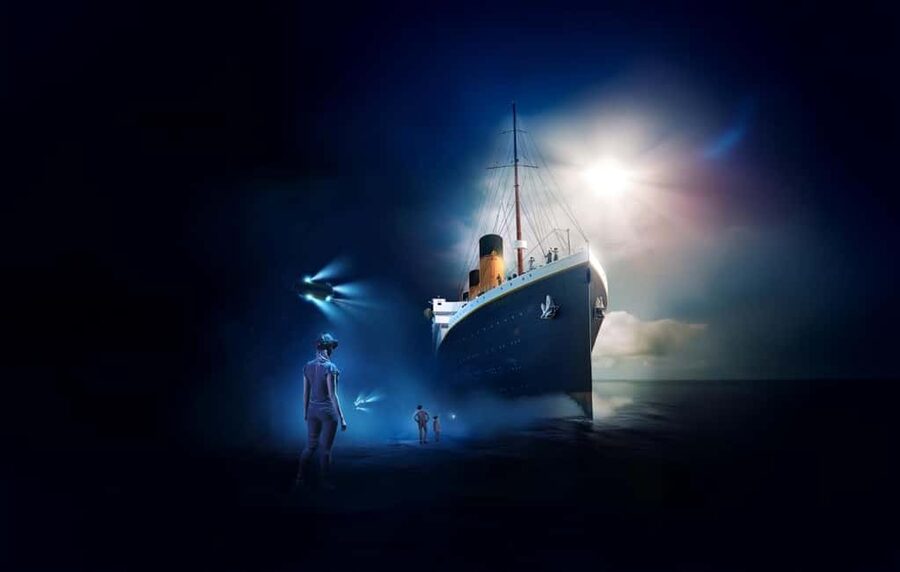
A famous ship, shown in full VR scale. This 45-minute Titanic experience in Barcelona lets you travel to the Atlantic depths and then step back to the maiden-voyage world of the most infamous ocean liner.
Two things I really like: the guided storytelling that keeps you oriented, and the careful effort behind the visuals. This isn’t just generic 3D. It’s built from research and cross-checked sources, using documentation such as Cité de la Mer in Cherbourg-en-Cotentin and NOAA archives.
One possible drawback: it’s VR, so it’s not a good fit if you have epilepsy, heart issues, or a pacemaker, and the minimum age is 8.
In This Review
- Key Highlights You’ll Feel Fast
- What This Titanic VR Ticket Is Really Like (and Why It Works)
- The 45-Minute Flow: From the Atlantic Depths to the Maiden Voyage
- Step 1: Getting Set for the VR Story
- Step 2: The Atlantic at 3,800 Meters
- Step 3: Exploring the Remains and Learning the Secrets
- Step 4: Reconstructed Titanic and the Maiden Voyage
- Step 5: The Guide Narration Keeps the Story Coherent
- Value for Money: Is €/$26 a Good Deal?
- Who This VR Experience Suits Best (and Who Might Want a Different Plan)
- Practical Tips Before You Go
- How the Eclipso Approach Shows Up Here
- Should You Book This Titanic VR Ticket in Barcelona?
- FAQ
- How long is the Titanic VR experience in Barcelona?
- Where is this experience located?
- What’s the price per person?
- What age is the experience suitable for?
- What languages are available?
- Is the experience wheelchair accessible?
- Who should avoid this VR experience?
- Can I cancel for a refund?
Key Highlights You’ll Feel Fast

- 3,800 meters under the Atlantic: you get the distance-and-scale feeling right away
- Reconstructed Titanic scenes: you board the ship again through advanced VR rebuilding
- Two years of research: detailed sourcing and cross-checking aim for fidelity
- A virtual guide with narration: you learn as you go, not just watch screens
- 45 minutes: long enough for a story, short enough to fit a busy Barcelona day
What This Titanic VR Ticket Is Really Like (and Why It Works)
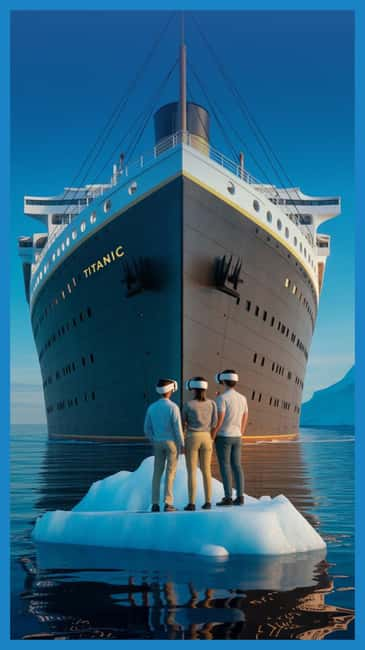
This is a guided VR experience in Barcelona run by Eclipso, built around the Titanic’s real-world story. You won’t be wandering a museum hall at your own pace. Instead, you follow a narrative route—at least that’s how the design is meant to land: you’re taken from the underwater remains into a reconstructed time period tied to the ship’s history.
That “guided route” matters more than it sounds. Without it, VR can turn into seat-filler viewing: you move your head, nod at details, and then forget what you saw. With a virtual guide providing historical and cultural narration, you get a reason for what you’re looking at. You also get the emotional beats—because Titanic isn’t only engineering trivia. It’s people, decisions, and consequences.
Also, the experience is built to be research-driven. The project took two years of exhaustive research and included source cross-checking to recreate the ship, passengers, and key events with the greatest fidelity possible. In plain terms: it aims to feel like the Titanic you’ve heard about, not a loose science-fiction version.
More Barcelona tickets worth grabbing




The 45-Minute Flow: From the Atlantic Depths to the Maiden Voyage
You’re scheduled for a total runtime of 45 minutes. Within that time, expect a clear progression: start with the underwater setting, then shift into the reconstructed Titanic experience, guided by narration that ties the visuals to context.
Step 1: Getting Set for the VR Story
Before you start, you’ll be guided into the experience setup. The key point for you is to treat it like an indoor show where you’ll want to stay focused. VR works best when you don’t rush your attention.
If you wear glasses, be prepared for any standard VR fitting process the site uses (not listed here), and if you’re bringing kids aged 8+, make sure they’re ready to follow instructions for the full 45 minutes.
Step 2: The Atlantic at 3,800 Meters
The experience takes you 3,800 meters below the surface of the Atlantic. That detail isn’t there just for drama. It helps explain scale and atmosphere—how far down you are, and what that distance means for what you’re seeing. Even without scientific background, the visual framing tends to make the Titanic feel like it’s truly part of the deep ocean world, not placed there for convenience.
This is also where the experience earns its “wow” factor. If you like ships, history, or underwater visuals, this section is the part you’ll talk about later.
Step 3: Exploring the Remains and Learning the Secrets
From the underwater view, you’ll explore the ship’s remains. The goal is discovery: not only seeing features, but connecting them to what the story means. Because the experience is built with research cross-checking, the reconstruction isn’t just decorative. It’s intended to correspond to what documentation supports.
Here’s what I think makes this section valuable for you: it lets you understand Titanic as a physical object with real-world clues. Instead of only reading about the disaster, you can look around at what survived, what changed, and how that shapes the narrative.
- Barcelona: Sagrada Familia Entry Ticket with Audio Guide★ 4.6 · 105,312 reviews
- Barcelona: Park Güell Admission Ticket★ 4.4 · 76,534 reviews
- Barcelona: Casa Batlló Entry with Self-Audioguide Tour★ 4.7 · 25,359 reviews
Step 4: Reconstructed Titanic and the Maiden Voyage
Then comes the time jump. Using reconstruction technology, you board the Titanic for its maiden voyage—presented in a VR format that aims for historical fidelity.
This switch is a big part of why this ticket feels different from a generic “VR documentary.” You’re not stuck at one emotional temperature. The underwater remains section is sobering. The maiden-voyage reconstruction tends to feel more alive and human-scale, because you’re experiencing the ship as it was meant to be at the start.
If you’re traveling with mixed ages—teens who want spectacle and adults who want context—this structure usually fits both.
Step 5: The Guide Narration Keeps the Story Coherent
A virtual guide accompanies you throughout, sharing historical and cultural details with storytelling precision. That does two jobs at once:
- It reduces the chance you’ll miss important information while watching
- It gives you a timeline so the scenes feel like parts of one story
Eclipso’s brand positioning is basically “unknown worlds through VR expeditions,” but in this case the “unknown world” is the history you already know—seen through a format that makes you feel present.
Value for Money: Is €/$26 a Good Deal?

Price listed is $26 per person, for a 45-minute experience. For many visitors, that’s a fair trade in Barcelona because it’s time-efficient. You’re not committing to a half-day tour, and you’re not hoping a museum line or exhibit timing works out.
Where the value gets stronger is the “research + cross-checking” angle. If a VR experience leans mostly on pretty visuals, the price can feel steep. Here, the promise is that the visuals and events were rebuilt from extensive documentation, including resources from Cité de la Mer and NOAA archives. You’re paying for a guided reconstruction effort—not only playback of generic footage.
That said, VR value depends on you. If you know you’re sensitive to VR environments or you don’t enjoy headsets, no ticket price can fix that. If VR suits you, though, this is priced in a way that feels doable without feeling like a splurge.
Who This VR Experience Suits Best (and Who Might Want a Different Plan)
This ticket is a strong fit if you:
- Enjoy history that includes real people, not just dates
- Like ship engineering and want a “see it” approach
- Want an indoor activity that can be a solid plan in a packed Barcelona itinerary
- Are traveling with friends or family and need something that holds attention for close to an hour
It’s also wheelchair accessible, which is a good point for planning. You can keep your day structured without guessing whether you’ll find accessible alternatives nearby.
But it’s not for everyone. It isn’t suitable for people with heart problems, epilepsy, or pacemakers, and the minimum age is 8.
If you’re traveling with kids, I’d look at this as a guided learning moment with spectacle. If your child is likely to get restless after a short attention span, you might find 45 minutes a stretch. On the other hand, if they’re Titanic fans already, that time limit can actually help—because the experience is focused.
Practical Tips Before You Go
These are the small choices that make VR experiences smoother.
- Plan on staying present for the full 45 minutes. This isn’t the kind of attraction where you can drift in and out.
- Pick the right language. The host or greeter and narration are available in English, Spanish, French, and Traditional Chinese. Choose what you’ll understand best so the guide’s storytelling lands.
- Respect the health limits. If you’re in a risk group listed by the provider, skip this one—VR isn’t worth extra stress.
- Expect something more like a guided story than a free-roam exhibition. You’re meant to follow the narrative flow.
Also, you’ll likely notice that the overall tone is built to be emotional as well as educational. Titanic isn’t treated like a toy ship here; it’s framed as history with weight.
How the Eclipso Approach Shows Up Here
Eclipso is presented as more than a brand—it’s a gateway to VR expeditions. In this Titanic experience, that translates into structured “virtual expeditions” with a virtual guide and a narrative approach.
What I like about that for you as a visitor: it reduces the mental load. You don’t need to interpret everything on your own. You’re told what matters, and you can spend your attention looking at the ship details, the reconstructed spaces, and the transition between deep-ocean remains and the maiden voyage world.
It also explains why the experience leans on documentation and source cross-checking. The story is only convincing if the visuals and the timeline line up with what’s supported by records.
Should You Book This Titanic VR Ticket in Barcelona?
If you want a 45-minute, guided VR experience that aims for historical fidelity, this is an easy yes. The format is time-efficient, the storytelling structure helps the experience make sense, and the research-first approach gives the visuals credibility.
You might skip it if you’re worried about VR comfort, you fall into the provider’s health limitations, or you simply don’t like headset-based attractions.
Bottom line: for history lovers, ship fans, and families with kids 8+, it’s a smart way to experience Titanic in Barcelona without turning your day into a complicated logistics puzzle.
FAQ
How long is the Titanic VR experience in Barcelona?
It lasts 45 minutes.
Where is this experience located?
It’s in Barcelona, in Catalonia, Spain.
What’s the price per person?
The ticket is listed at $26 per person.
What age is the experience suitable for?
The minimum age is 8 years.
What languages are available?
The host or greeter is available in English, Spanish, French, and Traditional Chinese.
Is the experience wheelchair accessible?
Yes, it’s listed as wheelchair accessible.
Who should avoid this VR experience?
It’s not suitable for people with heart problems, epilepsy, or pacemakers.
Can I cancel for a refund?
Yes. Free cancellation is available up to 24 hours in advance for a full refund.
More Barcelona Tickets Worth Buying
- Barcelona: Sagrada Familia Entry Ticket with Audio Guide
★ 4.6 · 105,312 reviews - Barcelona: Park Güell Admission Ticket
★ 4.4 · 76,534 reviews - Barcelona: Montjuïc Cable Car Roundtrip Ticket
★ 4.5 · 22,368 reviews - Barcelona Aquarium: Entry Ticket
★ 4.4 · 16,717 reviews - Barcelona: Sagrada Familia Skip-the-Line Entry Ticket & Tour
★ 4.8 · 12,789 reviews
More Barcelona Tours on Our Radar
- Barcelona: Sagrada Familia Entry Ticket with Audio Guide
★ 4.6 · 105,312 reviews - Barcelona: Park Güell Admission Ticket
★ 4.4 · 76,534 reviews - Barcelona: Casa Batlló Entry with Self-Audioguide Tour
★ 4.7 · 25,359 reviews - Barcelona: Montjuïc Cable Car Roundtrip Ticket
★ 4.5 · 22,368 reviews - Barcelona: Hola Barcelona Public Transport Travel Card
★ 4.5 · 20,985 reviews
Just Rated Around Barcelona





Tickets, compared.
 ★ 4.6Sagrada Familia Entry Ticket with Audio GuideFrom $39105,312 reviews
 ★ 4.4Park Güell Admission TicketFrom $2576,534 reviews
 ★ 4.5Montjuïc Cable Car Roundtrip TicketFrom $2222,368 reviews
 ★ 4.4Barcelona Aquarium: Entry TicketFrom $3416,717 reviews
 ★ 4.8Sagrada Familia Skip-the-Line Entry Ticket & TourFrom $6712,789 reviews
 ★ 4.4FC Barcelona Museum “Barça Immersive Tour” TicketFrom $3510,944 reviews
 ★ 4.5Park Guell Guided Tour with Skip the Line TicketFrom $386,996 reviews
 ★ 5.0Park Guell and Sagrada Familia Tour with Skip the Line TicketsFrom $1196,384 reviews