
Reviewed · GOTHIC QUARTER TOURS
Barcelona’s El Raval and the Gothic Quarter: A Self-Guided Audio Tour
One phone, two centuries of Barcelona street stories. This self-guided audio walk through El Raval and the Gothic Quarter turns major sights into a pay-attention experience, not a rush. I especially like the offline maps and audio plus the freedom to pause whenever you want. The main drawback: GPS can sometimes feel a little off on narrow lanes, so use the on-screen map instead of trusting your position blindly.
It starts at Font de Canaletes on La Rambla and loops you back to the same place. You’ll cover a tight circuit of old Barcelona, from the red-light-era corners of El Raval to Gothic landmarks like the Cathedral of Barcelona and Pont de Bisbe, with a few memorable oddballs in between (hello, Botero cat). Also, bring your own smartphone and headphones, since those aren’t included.
In This Review
- Key Points Before You Go
- Start at Font de Canaletes and Skip the Crowds
- How the VoiceMap Audio Works (and How to Make It Smooth)
- El Raval After La Rambla: Mercy, Markets, and the City’s Darker Corners
- Palau Güell and the Under-the-Radar Gaudí Moment
- Gothic Quarter Highlights: Cathedral Energy and Bishops Bridge
- Hidden Lanes and Art Connections: Picasso’s Les Demoiselles
- Coffee Break Energy (Without Turning This into a Food Tour)
- El Peto and the Roman-to-Modern Thread
- Timing, Pace, and What to Expect on the Ground
- Price and Value: $11.99 for Repeatable Sightseeing
- Who Should Book This (and Who Might Want Something Else)
- Should You Book Barcelona’s El Raval and the Gothic Quarter Audio Tour?
- FAQ
- How much does the Barcelona El Raval and Gothic Quarter self-guided audio tour cost?
- About how long does the tour take?
- Is the tour available in English?
- Can I use the audio and maps offline?
- Do I need to bring a smartphone and headphones?
- Where does the tour start and end?
- Are entrance tickets to attractions included?
- Is there lifetime access to the tour?
- What time of day can I do it?
Key Points Before You Go
- Offline audio and maps mean less stress and fewer data worries
- Map on screen helps you avoid getting lost in tight medieval streets
- Lifetime access lets you repeat the walk anytime you want
- Short and flexible timing fits a 75–90 minute window without hauling a group
- A mix of famous and weird stops, from Boqueria origins to El Peto
- No ticket stops keeps it simple if you don’t want museum lines
Start at Font de Canaletes and Skip the Crowds
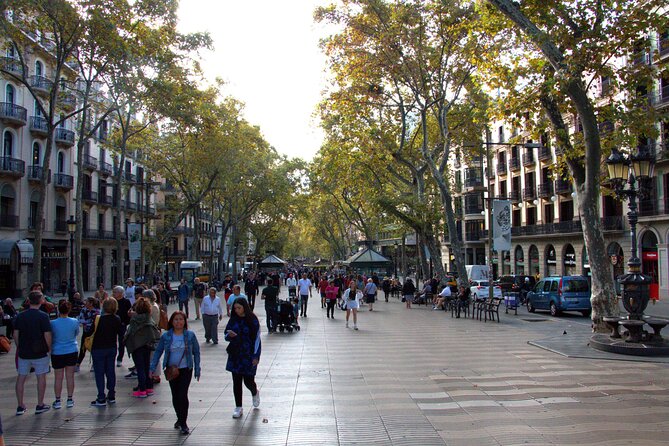
Starting on La Rambla near Font de Canaletes is smart because it’s central and easy to find. From there, the route guides you into two of Barcelona’s oldest neighborhoods, where the streets get narrower and the vibe changes fast. This is the kind of walk that works well when you want atmosphere without waiting around for a group to catch up.
The biggest value here is control. You’re not stuck at the pace of a person with a clipboard. If you want to stand and listen to one story longer (or snap a photo and move on), the audio lets you do it. That’s also why this tour is ideal for people who hate the pressure of timed sightseeing.
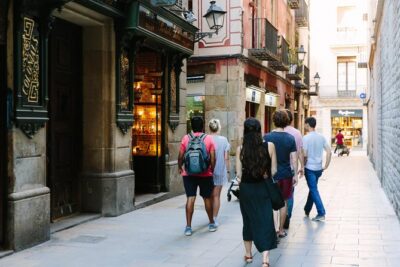
Deeper into the lanes of the Barri Gòtic


How the VoiceMap Audio Works (and How to Make It Smooth)
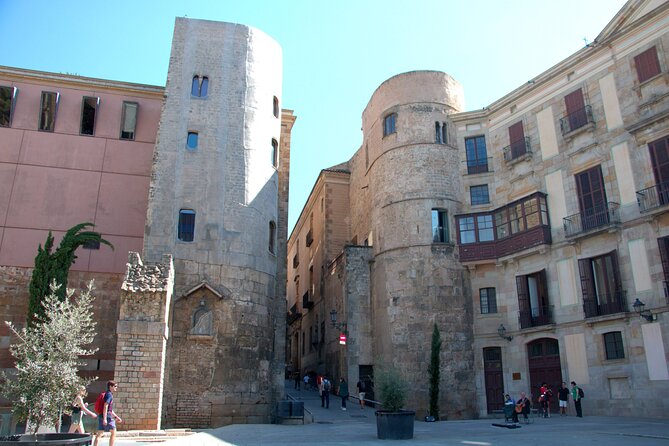
This tour runs through the VoiceMap app in English, with offline access to audio, maps, and geodata. That matters in Barcelona because old streets can mean spotty signal, and your phone’s battery life can take a hit if you rely on constant data.
Here’s what I’d do to keep things easy:
- Download the audio and maps first so you aren’t scrambling mid-walk.
- Start the walk where the tour tells you to. Some users found it a little confusing at the beginning, which usually means the app wasn’t started at the right spot.
- Trust the on-screen map if GPS seems jumpy. One common complaint is that GPS orientation/position can confuse you in dense areas with tall buildings and narrow lanes.
On the plus side, multiple people praised the audio itself as clear and easy to follow through the city. You can also pause and come back later, which makes this feel less like a “tour” and more like guided wandering.
El Raval After La Rambla: Mercy, Markets, and the City’s Darker Corners
Leaving La Rambla, the walk shifts into El Raval, a neighborhood that once held some of the densest urban living in Europe and later became known for red-light activity. The audio doesn’t just point at buildings—it uses these streets to explain how people lived, struggled, and survived.
One of the standout themes is hardship turned into institutional memory. You’ll learn about how destitute mothers once had a way to leave unwanted babies through a hole in the wall at the House of Mercy. Even if you’re not usually into grim history, this is the kind of story that changes how you look at a place.
Then the tour moves into food and daily life with a stop that’s easy to love: Mercat de la Boqueria, operating since the 1100s. You don’t need tickets to enjoy the idea here—the market is part of the city’s long-running routine, not a modern gimmick. If you like food stops as waypoints, this is a great moment to slow down and take in the energy.
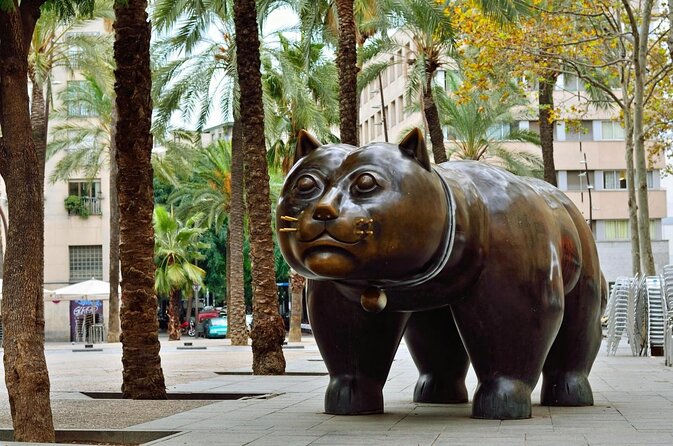
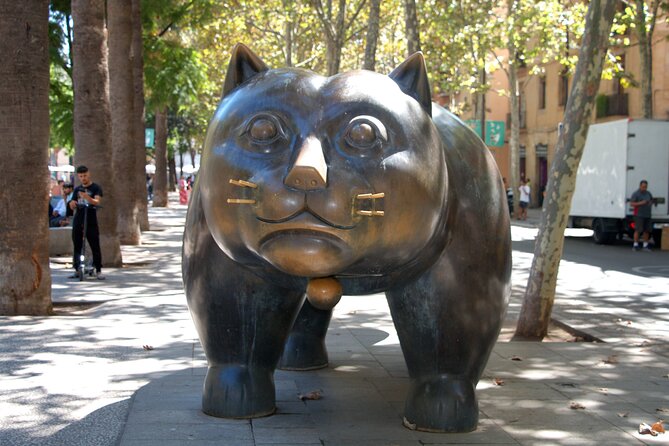
And yes, you’ll get a funny-but-memorable art break: Fernando Botero’s feline statue, El Gato de Botero. The audio highlights the chance to rub the crown jewels. That’s a small thing, but it’s exactly the kind of interactive detail that makes a self-guided walk feel human, not robotic.
Palau Güell and the Under-the-Radar Gaudí Moment
Gaudí is everywhere in Barcelona, but most tours rush toward the big, loud sites. This one takes you to Palau Güell, described as one of Gaudí’s more understated buildings. The result is a different kind of feeling: less spectacle, more texture and scale.
Because it’s self-guided, you can spend extra time if you want to look closely at the architecture, or you can keep moving if you’d rather save time for the next square. Either way, it breaks the pattern of doing the same famous-Gaudí checklist everyone else does.
Gothic Quarter Highlights: Cathedral Energy and Bishops Bridge
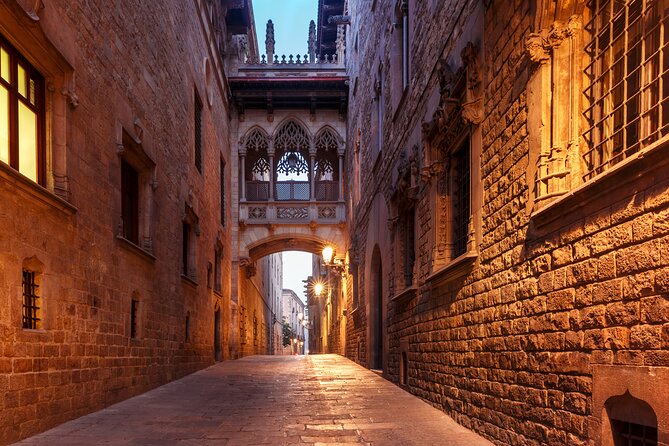
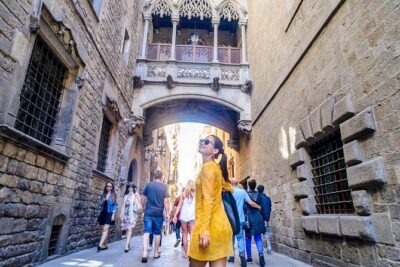
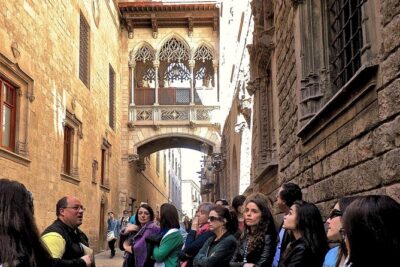
Once you shift into the Gothic Quarter, the tour leans into neo-gothic and medieval landmarks. You’ll see major anchors like the Cathedral of Barcelona and Pont de Bisbe (the Bishops Bridge).
This is the part of the walk where you’ll feel the neighborhood’s “stage set” quality. Tall buildings, tight street edges, and big landmark facades all work together. The key is that you’re not trapped in a group stare-fest. If you like to read a bit, stop, and then look again from a slightly different angle, this is the section that rewards that habit.
The audio also guides you through a sequence of popular squares such as Plaça de Sant Jaume, Plaça Nova, and Plaça Sant Felip Neri. Squares in the Gothic Quarter aren’t just places to pass through—they’re where you can pause, breathe, and let the stories land.
More days walked with a local guide
- Barcelona: Sagrada Familia Entry Ticket with Audio Guide★ 4.6 · 105,312 reviews
- Barcelona: Park Guell Guided Tour with Skip The Line Entry★ 4.7 · 17,563 reviews
- Fast Track Sagrada Familia Guided Tour★ 4.5 · 8,795 reviews
Hidden Lanes and Art Connections: Picasso’s Les Demoiselles
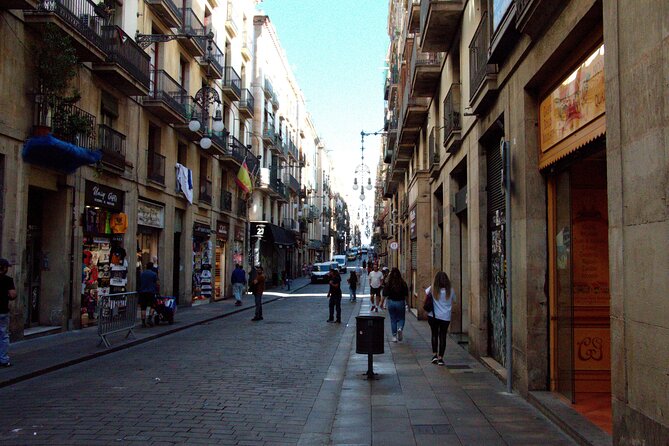
One of my favorite things about self-guided audio tours is how they can connect dots across time. Here, you’ll walk through Carrer d’Avinyo, the street said to have inspired Picasso’s Les Demoiselles d’Avignon. Even if you’re only half-familiar with the artwork, the “why this street matters” angle helps the neighborhood feel less random.
You’ll also hear about Can Culleretes, where the audio shares two origin stories. The fun twist is that you get to decide which version makes more sense to you as you walk through the surroundings.
That “choose what you believe” tone is a smart use of audio storytelling. It keeps the walk from turning into a straight lecture.
Coffee Break Energy (Without Turning This into a Food Tour)
The route includes Meson del Cafe, where you can look for the city’s best coffee and—yes—the audio even mentions the possibility of bumping into the mayor. I’d treat that part as playful local flavor, not a scheduling strategy.
What’s actually useful is the timing. This sort of stop in the middle or later part of a walking route gives you an easy reset. If you’ve been in El Raval’s denser lanes and you’re starting to feel your feet, a quick pause with a drink can make the rest of the walk feel more relaxed.
El Peto and the Roman-to-Modern Thread
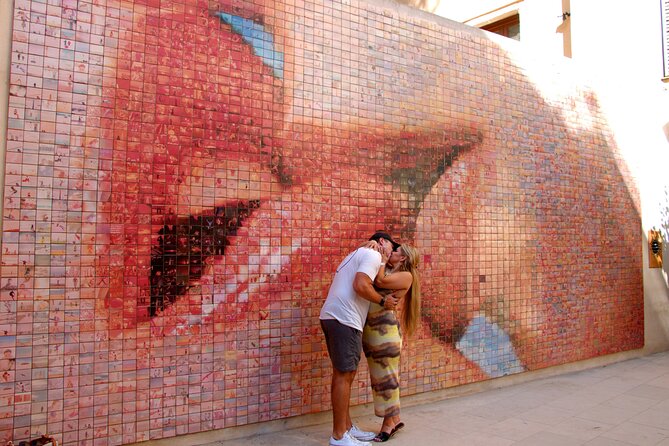
Near the end, you’ll encounter El Peto, a kissing mural made up of 4,000 photographic images of “freedom,” donated by the public. It’s one of those Barcelona details that sounds strange until you see what it’s doing. It shifts the tone from architecture-and-dates to something more personal: people contributing to a public statement.
Before that, the tour ties the whole area together with a longer view of Barcelona’s growth. You’ll hear how the small fortified Roman village of Barcino developed into the Barcelona you know today. The audio also points you to where tombs of the dead once lined the ancient village wall.
That Roman thread is valuable because it helps you stop seeing the Gothic Quarter as just “old buildings.” You’re walking through layers, and the stories make those layers feel connected.
Timing, Pace, and What to Expect on the Ground
The tour is listed at about 1 hour 15 minutes to 1 hour 30 minutes. That’s a great slot if you’re trying to fit a meaningful experience between other plans. It’s short enough that you won’t feel like you’re sacrificing the rest of your day, and long enough to cover real variety—El Raval, market life, Gaudí’s quieter side, and Gothic landmark energy.
One thing to keep in mind: this route includes narrow lanes and hidden alleys, plus repeated stop-and-start moments at squares. If you don’t like turning corners, scanning for street signs, and making small navigation decisions, you might find it mentally tiring. But if you enjoy wandering with purpose, it feels natural.
Also, the early part may feel a bit spread out. At least one person noted the first sites were a little distant, then it got much better after. I’d interpret that as: don’t judge the tour too early. Let the audio set the rhythm.
Price and Value: $11.99 for Repeatable Sightseeing
At $11.99 per person, this is priced like a budget-friendly way to do a high-value walk. You’re not paying for a museum ticket or a timed entry. Instead, you’re paying for guidance: clear audio, a built-in map, and a story structure that makes the route worth taking even if you’ve visited Barcelona before.
Lifetime access is a bigger deal than it sounds. You can come back later in the trip, repeat sections when your memory needs refreshing, or use it on a different trip without paying again. For the cost, that flexibility is where the real value lives.
Who Should Book This (and Who Might Want Something Else)
This tour is a strong fit if you want:
- A self-paced walk through two historic neighborhoods
- Clear audio that helps you understand what you’re seeing
- A route that mixes big names and surprising details (Boqueria, Botero cat, Palau Güell, El Peto)
- A way to explore without committing to tickets or a tight group schedule
You may want to consider a different option if you:
- Know your phone navigation struggles in dense areas, and you’re the kind of person who hates troubleshooting
- Want a fully human guide giving context in real time (this is audio-led, not a live guide)
For most travelers, it’s a smart “do this instead of only wandering” plan—especially if you like to pause, listen, and make the streets do the talking.
Should You Book Barcelona’s El Raval and the Gothic Quarter Audio Tour?
I think you should book it if you want a thoughtful walking route with offline-ready guidance and the freedom to go at your own speed. The stops connect history, art, and daily life in a way that feels practical, not preachy. And the price is low enough that you can treat it as a solid foundation for your day rather than a high-stakes commitment.
If you rely heavily on GPS and get frustrated by app navigation, don’t skip this entirely—just plan ahead. Download offline files, start at the correct point, and treat the on-screen map as your primary compass.
FAQ
How much does the Barcelona El Raval and Gothic Quarter self-guided audio tour cost?
It costs $11.99 per person.
About how long does the tour take?
Expect roughly 1 hour 15 minutes to 1 hour 30 minutes.
Is the tour available in English?
Yes, the tour is offered in English.
Can I use the audio and maps offline?
Yes. The tour includes offline access to audio, maps, and geodata.
Do I need to bring a smartphone and headphones?
Yes. A smartphone and headphones are not included, so you’ll need both to use the app.
Where does the tour start and end?
It starts at Font de Canaletes on La Rambla (La Rambla, 133, Ciutat Vella, 08002 Barcelona) and ends back at the same meeting point.
Are entrance tickets to attractions included?
No. Tickets or entrance fees are not included for any museums or attractions on the route.
Is there lifetime access to the tour?
Yes. You get lifetime access, so you can take the tour again anytime you like.
What time of day can I do it?
The activity runs daily from 12:00 AM to 11:59 PM.
More Ways to Tour Barcelona
- Barcelona: Casa Batlló Entry with Self-Audioguide Tour
★ 4.7 · 25,359 reviews - Barcelona: 24 or 48-Hour Hop-On Hop-Off Bus Tour
★ 4.4 · 20,872 reviews - Barcelona: Park Guell Guided Tour with Skip The Line Entry
★ 4.7 · 17,563 reviews - Barcelona: Sagrada Familia Skip-the-Line Entry Ticket & Tour
★ 4.8 · 12,789 reviews - Barcelona: FC Barcelona Museum “Barça Immersive Tour” Ticket
★ 4.4 · 10,944 reviews
More Barcelona Tours on Our Radar
- Barcelona: Sagrada Familia Entry Ticket with Audio Guide
★ 4.6 · 105,312 reviews - Barcelona: Park Güell Admission Ticket
★ 4.4 · 76,534 reviews - Barcelona: Casa Batlló Entry with Self-Audioguide Tour
★ 4.7 · 25,359 reviews - Barcelona: Montjuïc Cable Car Roundtrip Ticket
★ 4.5 · 22,368 reviews - Barcelona: Hola Barcelona Public Transport Travel Card
★ 4.5 · 20,985 reviews
Lost in the Gothic Quarter
- Barcelona in 1 Day: Sagrada Familia, Park Guell,Old Town & Pickup
★ 5.0 · 13,541 reviews - Barcelona all included: Sagrada, Park Güell, Montjuic & Gothic
★ 5.0 · 2,169 reviews - Barcelona: Sagrada Familia, Modernism, and Old Town Tour
★ 4.7 · 1,621 reviews - Barcelona Gothic Quarter Tapas & Taverns Food & Wine Tour
★ 5.0 · 1,470 reviews - Barcelona Helicopter, Sailboat & Old Town Private Walking Tour
★ 5.0 · 1,395 reviews
Just Rated Around Barcelona





Gothic Quarter Tours, compared.
 ★ 5.0Barcelona in 1 Day: Sagrada Familia, Park Guell,Old Town & PickupFrom $12013,541 reviews
 ★ 5.0Barcelona all included: Sagrada, Park Güell, Montjuic & GothicFrom $1192,169 reviews
 ★ 4.7Sagrada Familia, Modernism, and Old Town TourFrom $521,621 reviews
 ★ 5.0Barcelona Gothic Quarter Tapas & Taverns Food & Wine TourFrom $1311,470 reviews
 ★ 5.0Barcelona Helicopter, Sailboat & Old Town Private Walking TourFrom $5131,395 reviews
 ★ 4.8Old Town and Gothic Quarter Walking TourFrom $211,393 reviews
 ★ 4.7Helicopter, Boat Ride & Old Town Private TourFrom $5001,357 reviews
 ★ 5.0Barcelona Old Town & Gothic Quarter Small Group TourFrom $221,308 reviews
Browse the lists this tour appears in