
Reviewed · GIRONA DAY TRIPS
Girona: Volcano Area, Besalú, and Banyoles Lake Tour
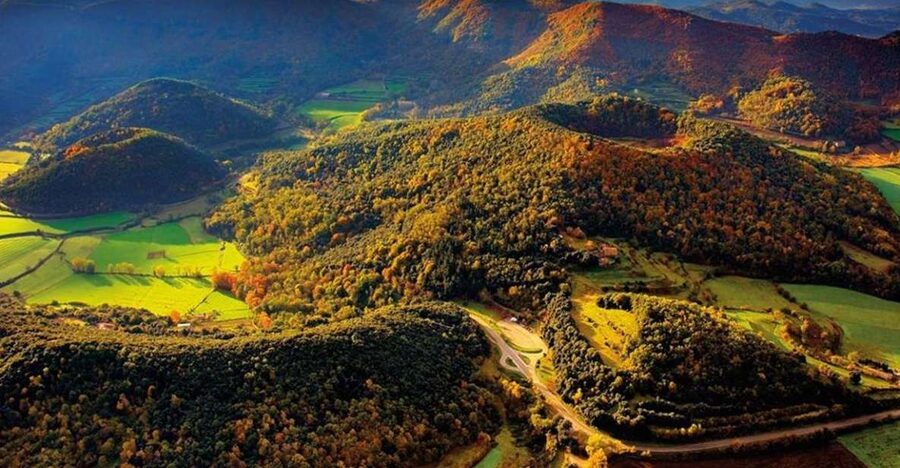
Volcano mornings, medieval afternoons. This Girona full-day tour is interesting because you get a volcano crater stop plus real village history, then you finish at Banyoles Lake. It’s a fast way to understand why this part of Catalonia feels so different from the coast and the big cities.
I especially like two parts: the guided Besalú visit (including the area’s medieval Jewish heritage) and the hike inside the volcanic zone where you can see how this landscape formed. With a small group (limited to 6), you’re not stuck in a crowd.
One consideration: this day includes active walking, so it isn’t a good match if you have limited mobility. Also, food is not included, even though lunch is built into the schedule.
In This Review
- Key things that make this tour worth it
- The day plan: how you move from volcano to villages to Banyoles
- Besalú: medieval streets and a Jewish heritage lesson
- Practical notes
- La Garrotxa Volcanic Zone: the crater hermitage and the “okay, wow” hike
- What to do for a smoother hike
- Santa Pau: castle views, church charm, and village life
- A good rhythm
- Castellfollit de la Roca: the basalt cliff photo stop
- How to maximize this stop
- Banyoles Lake: a calm finish with shoreline time
- Tip for the last stretch
- Price and value: is $162 reasonable for what you get?
- Guides, group size, and the small details that change everything
- Who this tour is best for (and who should skip it)
- Should you book the Girona Volcano Area, Besalú, and Banyoles Lake Tour?
- FAQ
- How long is the Girona Volcano Area, Besalú, and Banyoles Lake Tour?
- What does the tour include besides the guide?
- What languages are available for the live guide?
- How big is the group?
- Is lunch included in the price?
- Is the tour suitable for wheelchair users or limited mobility?
Key things that make this tour worth it
- A crater visit on an extinct volcano: you go beyond looking from afar and walk in the volcanic terrain.
- Besalú’s medieval Jewish story: a guided stop that explains the town’s importance in the region.
- Castellfollit de la Roca for basalt cliff photos: a photo stop that’s made for quick, satisfying sightseeing.
- Santa Pau village with castle-and-church energy: you see a strong medieval core surrounded by volcanic views.
- Small group pace (up to 6): more questions, less waiting, and easier conversations.
- End-of-day unwind at Banyoles Lake: walk the shoreline and enjoy the slower finish.
The day plan: how you move from volcano to villages to Banyoles
This is an 8-hour loop built to change your scenery every so often, without dragging you into travel fatigue. You start with a guided medieval town (Besalú), then you shift into the volcanic world near the pre-Pyrenees, and you close with a calmer moment at the largest lake in Catalonia.
You’ll ride in a van for short transfers between stops, which matters because the geology and villages are spread out. You also get bottled water, which is a small thing that makes the hike feel less annoying in warm weather.
If you like days where you learn while you walk, this format works well. You’re not just standing and taking pictures—you’re getting context, then seeing it with your own eyes.
More days out to Girona's old town

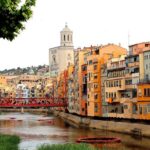
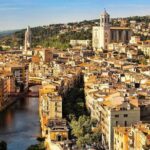
Besalú: medieval streets and a Jewish heritage lesson
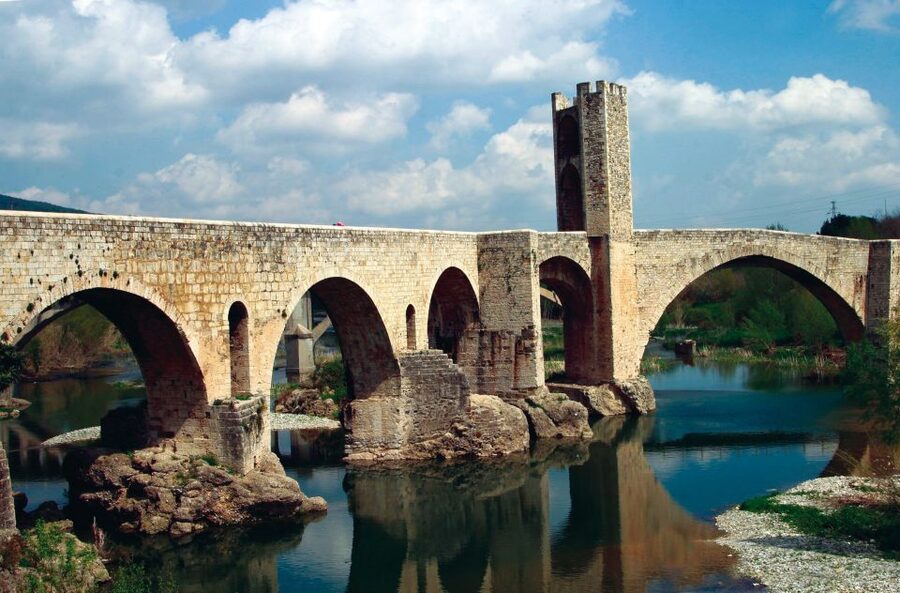
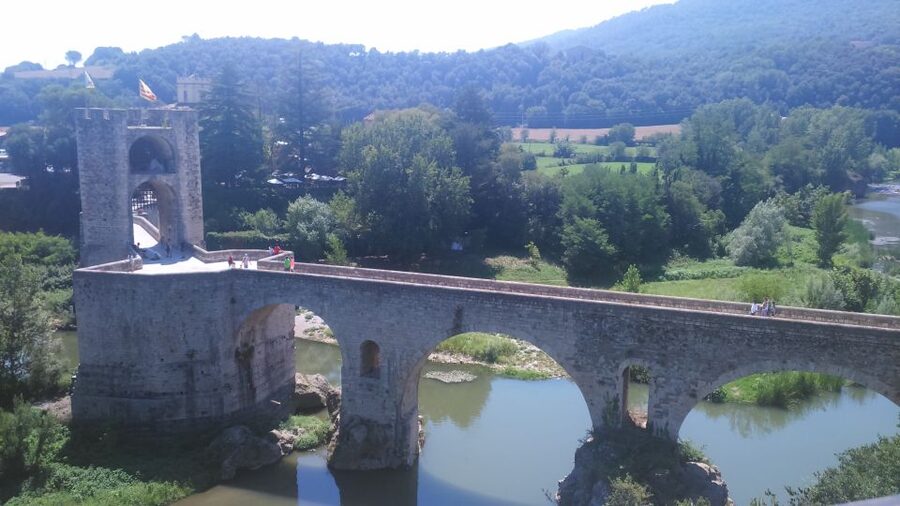
Besalú is the first big “wow” because it feels like you stepped into a different pace of time. The stop includes a guided visit plus local snacks, so you’re not arriving hungry or rushed.
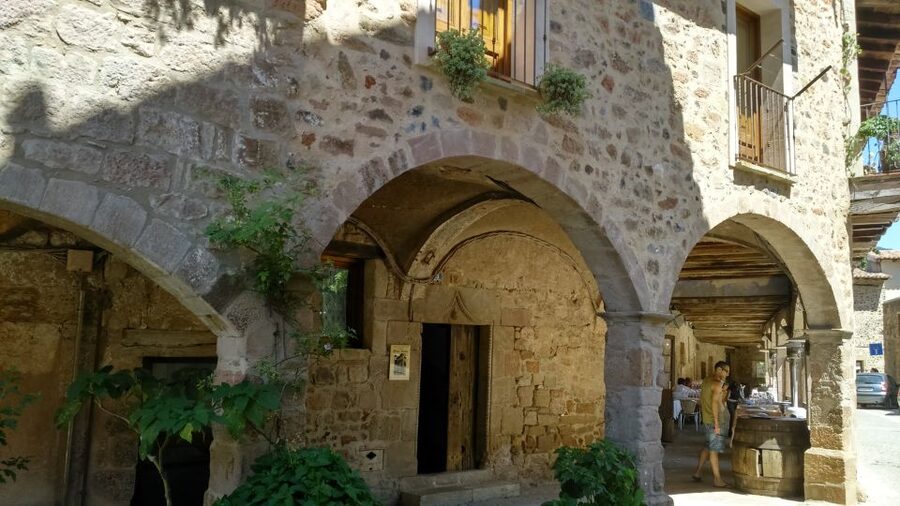
What I like here is the focus. You’re not only looking at stone buildings—you’re hearing why the town mattered in the Middle Ages, including its role in the region’s Jewish community, described as the second most important in Girona Province. That detail changes how you read the town. Instead of thinking of Besalú as pretty, you start connecting the places to people and community life.
A guided town visit also helps you spot what you might miss on your own. When someone points out the historical threads, the narrow lanes and medieval architecture turn from scenery into a story.
Practical notes
- The stop is about 75 minutes, so you get real time for both the tour and a snack.
- Wear comfortable shoes. Even if the pace feels gentle, medieval streets aren’t always flat.
La Garrotxa Volcanic Zone: the crater hermitage and the “okay, wow” hike
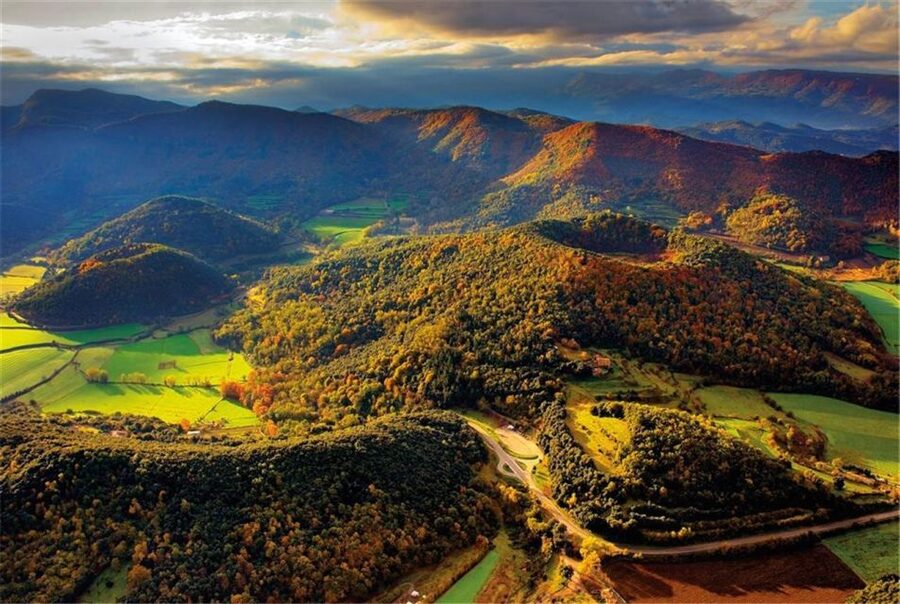
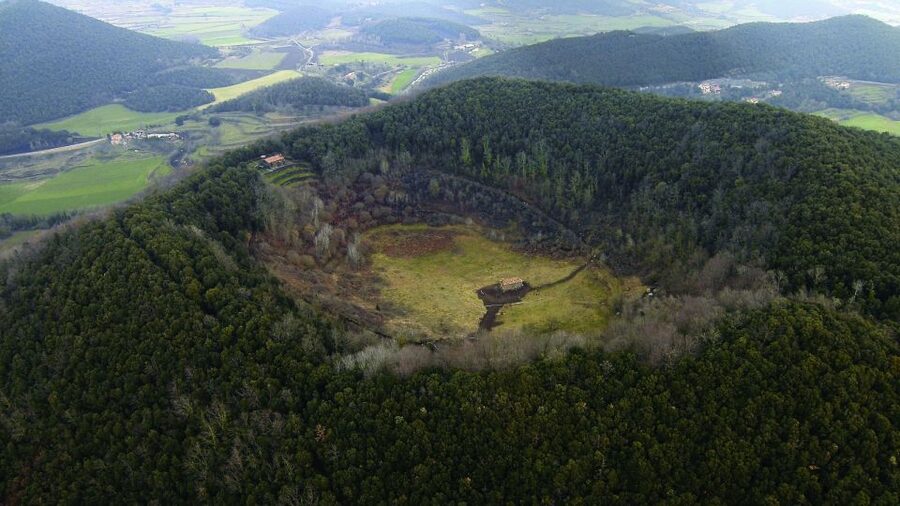
This is the center of the experience. The tour heads into the La Garrotxa Natural Park volcanic area, known for more than 40 volcanoes in this zone, with none considered active for thousands of years. That “inactive for a long time” detail is important: you’re hiking on ancient shapes, not dealing with anything dramatic like vents or fumes.
The hike segment includes about an hour of walking. In the crater area, there’s even a medieval hermitage located in the middle of a crater. That’s the kind of contrast that makes this area memorable—human history built into a volcanic setting.
From the experience notes people share, the climb into and around the crater can be a bit challenging. You don’t need to be an athlete, but you should expect some effort on uneven ground. If you’re the type who likes “earned views,” this is where the tour delivers.
What to do for a smoother hike
- Bring comfortable shoes you trust on rough paths.
- A sun hat helps because volcanic terrain can mean less shade than forested hikes.
- Take it steady. The goal is to enjoy the geology and the guide’s explanations, not to sprint.
- Girona History and Legends Tour Small Group from Girona★ 5.0 · 299 reviews
- Catamaran ride -Costa Brava with barbecue and drinks. Familiar.★ 4.5 · 278 reviews
- Boat Trip to Cadaqués from Roses with STOP 1:30h/2H/ in Cadaqués★ 4.5 · 276 reviews
Santa Pau: castle views, church charm, and village life
After the volcanic hike, you get lunch time in Santa Pau. Lunch isn’t included in the ticket price, but the schedule gives you enough time to eat without turning it into a scavenger hunt. The upside of paying for lunch yourself is choice: you can order what suits your tastes and budget at the moment.
Santa Pau itself is the kind of village that makes you understand why tourists travel inland here. It has a medieval core and a strong sense of place, with a huge castle and a nice church as major landmarks. It’s also described as a village surrounded by volcanoes, which matters because it changes the background. You’re not viewing geology only from a trail—you’re seeing it as part of daily life and the village’s visual identity.
There’s also a guided visit (about 40 minutes). This is where the day connects better. Earlier you learned the volcanic basics and the crater story. Now you’re seeing how that environment shapes what people built and where they settled.
A good rhythm
The Santa Pau segment works because you’re not just walking all day. You get fuel at lunch, then you return to sightseeing with fresh energy.
Castellfollit de la Roca: the basalt cliff photo stop
Next comes Castellfollit de la Roca, famous for its basaltic cliff setting. This is a shorter stop (a photo moment plus a guided visit), but it’s one of those “take the photo, and then look again” places. The basalt rock formations give you strong shapes and sharp textures, and you’ll likely find yourself pausing longer than you expected just to frame the view.
Because the stop includes guidance, you’re not only guessing what you’re looking at. You get a quick explanation for why the cliff looks the way it does, and that makes the photos more satisfying.
How to maximize this stop
- Have your camera ready. The best angles are often from a few key spots.
- Expect you’ll want at least a couple of minutes longer than you planned—basalt cliffs have that effect.
Banyoles Lake: a calm finish with shoreline time
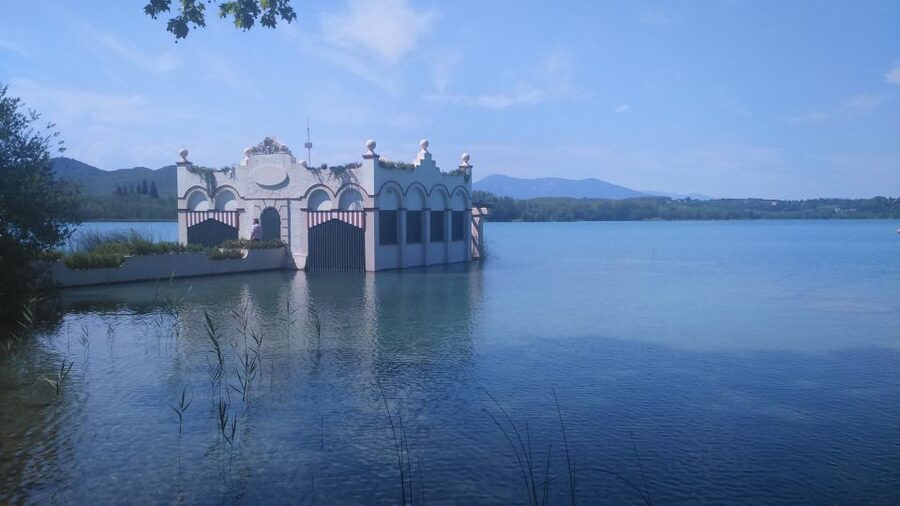
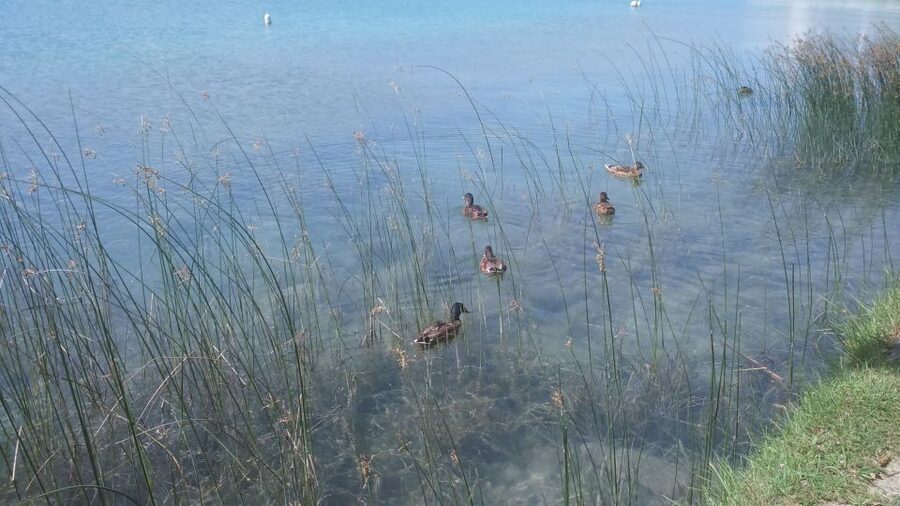
The day ends at Lake of Banyoles, described as the largest lake in Catalonia. After hiking and village walking, this is exactly the kind of reset you want: flatter ground, open sky, and a slower pace.
You get a visit plus about 30 minutes to walk. The tour also mentions an opportunity to walk along the shore or sail, depending on how the day runs. Even if you stick to the shoreline, the point is the same: you close the loop on a day that started with volcanoes and ends with water.
I like the timing here. By late day, your legs aren’t fresh, but you’re not stuck with long sightseeing commitments. You can enjoy the lake without feeling rushed.
Tip for the last stretch
Keep your water bottle handy and use that easy pace to stretch out your calves. It’s a simple way to make the final hour more comfortable.
Price and value: is $162 reasonable for what you get?
At $162 per person, this tour isn’t the cheapest way to see the Girona area—but it’s priced like a guided small-group day with multiple “big hits.”
Here’s what you’re paying for:
- A live guide throughout (plus bottled water)
- Several different areas in one day: Besalú, volcanic zone hiking, Santa Pau, Castellfollit de la Roca, and Banyoles Lake
- A small group size (limited to 6), which is a real quality factor on walking days
Food is not included, which is the main tradeoff. You’ll need to budget for lunch. Still, the value can feel solid because the tour gives you the structure so you’re not piecing together transport and timing between distant places. People also comment that the lunch break is good fuel for the rest of the day, which fits the way the day flows.
If you’re traveling with someone who would rather not plan buses and parking for separate stops, this price starts to look more fair.
Guides, group size, and the small details that change everything
This is a live guided tour with Spanish and English. The guide is part of the value, and the experience notes you’ll see emphasize enthusiasm and knowledge. Guides such as Pau and Eduardo are mentioned for being well informed and energetic, with a patient, attentive approach.
For you, that means two things:
- You’ll get clearer explanations at places like Besalú and the crater zone, not just “look at this.”
- You can ask questions without feeling like you’re slowing a big bus tour down.
Transportation is handled by van. It’s clean, comfortable, and safe based on the kind of feedback people share, and that matters when you’re traveling back-to-back stops in one day.
Who this tour is best for (and who should skip it)
This works best if you:
- Like mixing nature and history in the same day
- Enjoy guided walks where context matters
- Want to see Girona Province without turning your vacation into a logistics project
- Prefer small-group pacing
It’s not a great choice if you:
- Have mobility limitations or use a wheelchair
- Want a fully flat, low-walking day
- Can’t handle a hike segment that includes uneven ground in volcanic terrain
If you’re unsure, the simplest test is this: can you comfortably walk for about an hour on outdoor paths, plus village walking on top?
Should you book the Girona Volcano Area, Besalú, and Banyoles Lake Tour?
Book it if you want a single day that covers a surprising mix: medieval Besalú with Jewish heritage context, an active-feeling walk in the volcanic zone crater area, Santa Pau’s castle-and-church charm, a basalt cliff photo stop, and an easy finish at Banyoles Lake.
Skip it (or look for a gentler alternative) if mobility is a concern, since the tour is not recommended for limited mobility and isn’t suitable for wheelchair users. Also, plan on paying for lunch since food isn’t included.
If your ideal day is structured, guided, and off the coastal tourist track, this is a strong pick for Catalonia.
FAQ
How long is the Girona Volcano Area, Besalú, and Banyoles Lake Tour?
The tour lasts 8 hours.
What does the tour include besides the guide?
You get a live guide and bottled water. Food is not included.
What languages are available for the live guide?
The live guide works in Spanish and English.
How big is the group?
The group is limited to 6 participants.
Is lunch included in the price?
No. Food is not included, even though lunch time is part of the schedule in Santa Pau.
Is the tour suitable for wheelchair users or limited mobility?
No. The tour is not recommended for people with limited mobility and is not suitable for wheelchair users.
More Ways to Tour Girona
- Girona: Game of Thrones Small Group Tour
★ 4.9 · 816 reviews - Girona: Small Group Walking Tour
★ 4.8 · 680 reviews - Game Of Thrones Walking Tour in Girona
★ 5.0 · 406 reviews - Girona History and Legends Tour Small Group from Girona
★ 5.0 · 299 reviews - Girona History, Legends, and Food Walking Tour with food tasting
★ 5.0 · 195 reviews
More Barcelona Tours on Our Radar
- Medieval Three Villages Small Group Day Trip from Barcelona
★ 5.0 · 994 reviews - Girona: Game of Thrones Small Group Tour
★ 4.9 · 816 reviews - Girona: Small Group Walking Tour
★ 4.8 · 680 reviews - Game Of Thrones Walking Tour in Girona
★ 5.0 · 406 reviews - Girona History and Legends Tour Small Group from Girona
★ 5.0 · 299 reviews
Girona, One More Time
- Girona: Game of Thrones Small Group Tour
★ 4.9 · 816 reviews - Girona: Small Group Walking Tour
★ 4.8 · 680 reviews - Game Of Thrones Walking Tour in Girona
★ 5.0 · 406 reviews - Girona History and Legends Tour Small Group from Girona
★ 5.0 · 299 reviews - Girona History, Legends, and Food Walking Tour with food tasting
★ 5.0 · 195 reviews
Just Rated Around Girona
Girona Day Trips, compared.
 ★ 5.0Girona & Costa Brava Small-Group Tour with Pickup from BarcelonaFrom $1206,955 reviews
 ★ 5.0Montserrat, Girona & Costa Brava Guided Day Trip from BarcelonaFrom $1335,128 reviews
 ★ 5.0Girona & Dali Museum Small Group Tour with Pick-up from BarcelonaFrom $1202,965 reviews
 ★ 4.8Girona & Costa Brava Small Group Tour with PickupFrom $1161,938 reviews
 ★ 4.7From Barcelona: Girona, Figueres, Dalí Museum, and CadaquésFrom $701,928 reviews
 ★ 4.7From Barcelona: Girona&Dalí Museum Day Trip with Small GroupFrom $871,874 reviews
 ★ 4.7Montserrat, Girona & Costa Brava Guided Day TripFrom $1291,455 reviews
 ★ 4.5Girona & Costa Brava Small Group Tour From Barcelona with Paella!From $1391,098 reviews
Browse the lists this tour appears in