
Reviewed · GOTHIC QUARTER TOURS
Gothic Quarter – Private Tour
Barcelona’s Gothic Quarter tells stories on every corner. This private walk threads Rambla history, Roman remains, medieval streets, and big-ticket Gothic landmarks into one smooth old-town route.
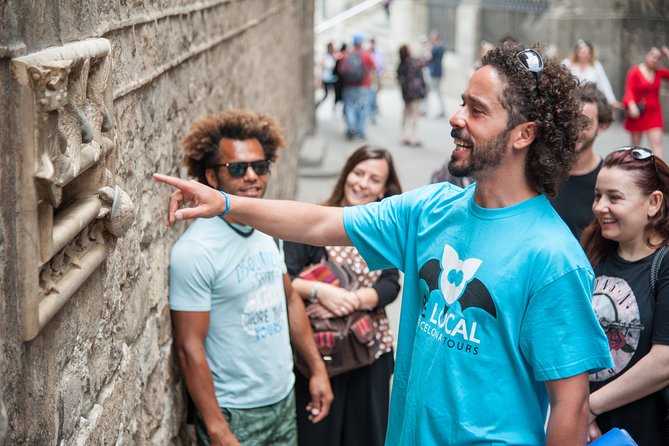
I especially love the local guide storytelling—I’m talking about clear timelines, political context, and the kind of quirky details that make stone feel alive. I also like that the tour stays flexible for real life: from slower walking to families where everyone stays engaged.
One thing to plan for: meeting up can be a little tricky. Plaça de Catalunya is huge, so arrive early and watch for the guide’s company card and instructions—otherwise you can waste time circling.
In This Review
- Key highlights I’d build your day around
- Why Barcelona’s Gothic Quarter is best with a guide (and not just Google Maps)
- Starting at Plaça de Catalunya and heading into the medieval maze
- Rambla: the historic spine of Barcelona
- Medieval narrow streets, churches, and power in stone
- Roman burial site stops: seeing Barcino’s layers
- A charming street with churrerías and the city’s everyday side
- A 14th-century Catalan Gothic church stop you’ll actually notice
- The old Jewish Quarter: alleys with medieval flavor
- A hidden square with bomb marks and a baroque church
- Neo-Gothic bridge: design with a curious history of symbols
- The medieval palace that signals Barcelona’s governing power
- Roman Barcino temple remains hidden in a corner
- Plaça del Rei: Gothic and neo-Gothic royal power, plus Santa Ágata
- Finish at the Cathedral of Santa Creu i Santa Eulàlia
- How long it takes, what it costs, and if it’s worth it
- Who should book this Gothic Quarter private walk?
- Should you book it? My quick call
- FAQ
- How long is the Gothic Quarter private tour?
- What’s the price per person?
- Is this tour private?
- Where does the tour start and end?
- Is pickup available?
- What language is the tour in?
- Is transport included?
- Is a mobile ticket provided?
- Are service animals allowed?
- What’s the weather policy?
- FAQ
- Can I cancel for a full refund?
- Is the tour suitable for most people?
- Is there public transportation nearby?
Key highlights I’d build your day around
- Rambla to Roman Barcino to medieval palaces in one 2.5-hour loop
- Catalan Gothic church stops that show how Barcelona’s style evolved
- Roman outdoor tombs and hidden temple remains you’d miss on your own
- Jewish Quarter alleys and medieval street texture rather than just postcard photos
- Neo-Gothic bridge with a story about symbols (and why people still talk about it)
- Santa Creu i Santa Eulàlia Cathedral as the dramatic Gothic finish
Why Barcelona’s Gothic Quarter is best with a guide (and not just Google Maps)
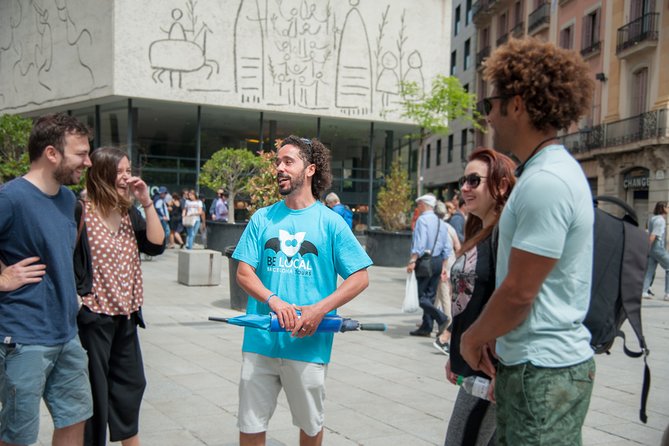
The Gothic Quarter is one of those places where the streets trick your brain. You’ll turn a corner and suddenly you’re in a medieval maze. Then, three minutes later, you’re staring at Roman-era evidence of another city layer entirely. If you wander without a framework, it’s easy to admire details but miss the bigger story.
That’s where this tour earns its keep. It’s a private, 2.5-hour walking experience built to connect the timeline—Roman burial spaces, medieval Barcelona, Jewish Quarter remnants, Gothic churches, then the government and royal-power sites that still shape the city today. It’s not just sightseeing. It’s cause-and-effect.
And the best part for you? It’s private, so you don’t have to keep up with a pack. That matters in Barcelona, where the streets are narrow, the corners show up fast, and the “short walk” often turns into a lot more steps than you expected.
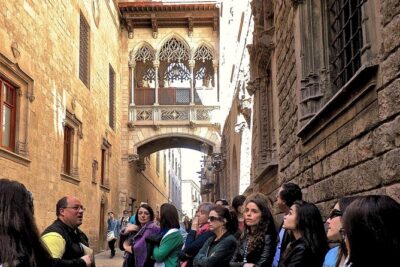
Deeper into the lanes of the Barri Gòtic


Starting at Plaça de Catalunya and heading into the medieval maze
Most tours start in a tourist-friendly spot. This one starts right at Plaça de Catalunya, which makes sense because it’s central and easy to reach. The meeting is at Plaça de Catalunya (L’Eixample), and it can end at Pl. de Correus in Ciutat Vella.
If you’re offered pickup, it’s limited to within 0.5 km of Catalunya Square. You’ll want to confirm details when you book, especially if you’re staying off the main streets. The guide also carries a company card, so you’re not just hunting for a person in a sea of people.
Here’s a practical tip that really helps: plan to arrive 10 minutes early. Plaza Catalunya can feel like a transit hub on steroids. Once you find your guide, the walking gets easier because you’re no longer trying to guess where “the old part” begins.
Rambla: the historic spine of Barcelona
The tour kicks off with the Rambla—one of Barcelona’s most famous avenues, packed with history and identity. Even if you’ve heard of it, you’ll get something more useful than name recognition: you’ll learn why this stretch matters and how it ties into the city’s public life over time.
This is also a smart warm-up. You start on a broader street with more room to orient yourself, so when you slip into the narrower medieval lanes later, you’re not lost.
Medieval narrow streets, churches, and power in stone
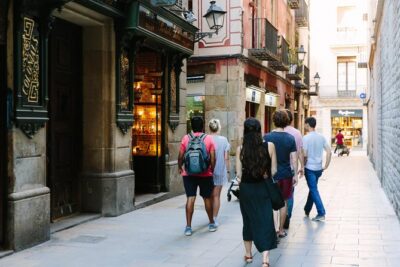
Next you move into one of the most fascinating areas of Barcelona’s old core: medieval narrow streets with churches and palaces from different eras. This is where the tour earns points for pacing and context.
In a normal walk, you might see a church and think, pretty. With a good guide, you start noticing patterns: where religious buildings sit relative to civic power, why certain streets feel tightly drawn, and how the city kept reinventing itself without wiping out the past.
One drawback to know upfront: the streets are narrow and often uneven. If you’re carrying a bag, go light. If you’re traveling with mobility needs, it helps that the guide can be flexible—some past groups specifically appreciated pacing adjustments.
Roman burial site stops: seeing Barcino’s layers
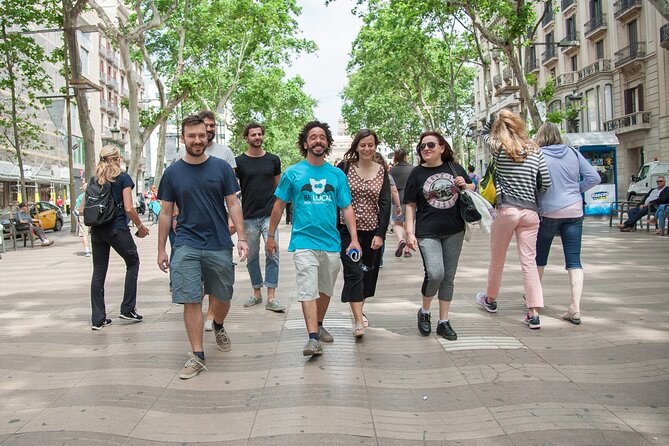
Barcelona didn’t start as a medieval city. Long before the Gothic Quarter took shape, the area held Roman life—so the tour includes a stop at an old imperial burial site where you can see numerous Roman outdoor tombs.
That moment changes the way you look at everything else. You’ll realize the Gothic Quarter isn’t just old-looking. It’s built on real ground from multiple eras. Even if Roman remains are partial or outdoors, the impact is strong when you’re told what you’re looking at and why it survived.
The big value here for you: it reduces the “random ruins” feeling. Instead of fragments, you get a connected timeline.
More private days built around you
- Montserrat Monastery Small Group or Private Tour Hotel pick-up★ 5.0 · 5,144 reviews
- Tour Welcome Barcelona with Local Guide in Eco Tuk Tuk Private★ 5.0 · 1,882 reviews
- Barcelona Private Tour by Sidecar Motorcycle★ 5.0 · 1,750 reviews
A charming street with churrerías and the city’s everyday side
Then you hit a more human moment: a wonderful street in the neighborhood where you’ll find traditional churrerías and details tied to Barcelona’s past. This is the section where the tour becomes more than architecture.
It’s also a good chance to reset and remember that the Gothic Quarter isn’t museum-only. It’s lived-in. The guide can point you toward spots for pastries and chocolate shops too (one group highlighted exactly that kind of recommendation), which is perfect if you’re trying to turn a history walk into a full morning.
A 14th-century Catalan Gothic church stop you’ll actually notice
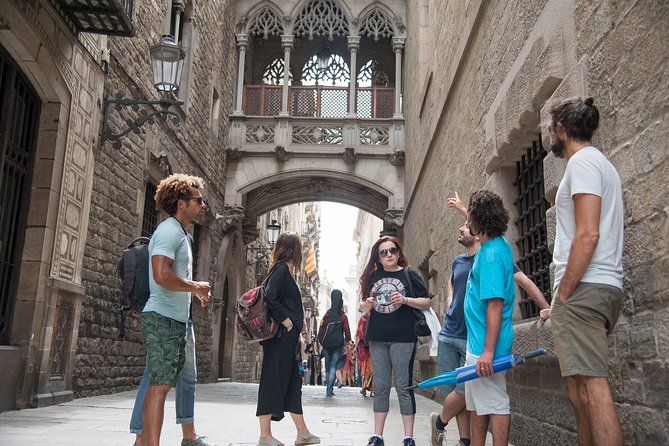
The itinerary includes a wonderful 14th-century church, described as a masterful example of Catalan Gothic architecture in the heart of the Gothic Quarter.
Catalan Gothic can be hard to appreciate if you don’t know what to look for. On this tour, you’re not left squinting at stone and hoping it makes sense. You get enough context to recognize the style traits and understand why the church is placed where it is.
If you’re into architecture, this stop is one of the “slow down and look up” moments. If you’re not, the guide still helps you make sense of the why behind the wow.
The old Jewish Quarter: alleys with medieval flavor
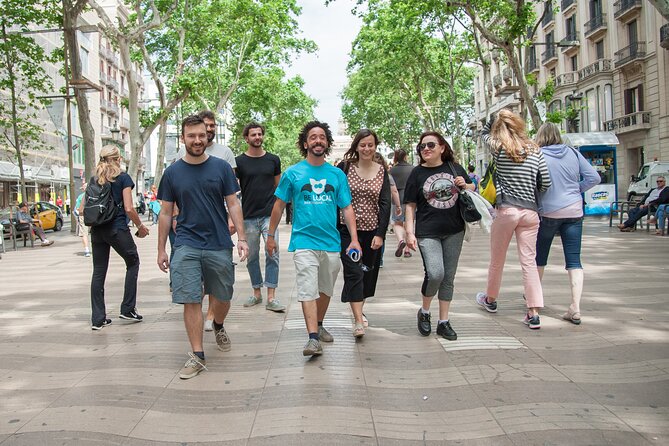
Next comes the old Jewish Quarter—alleyways with a medieval atmosphere where a large Jewish community once lived. This area is emotional and complex, and it helps to have a guide framing the spaces in a careful way.
You’ll walk through the feeling of the neighborhood rather than just checking off buildings. And because the streets are narrow, you’ll understand how the urban layout supported daily life—how people moved, where community space mattered, and how the city’s layers overlap.
This stop is also good for first-timers because it explains what you’re seeing in a neighborhood that can look similar to other “old city” areas unless someone tells you what’s special here.
A hidden square with bomb marks and a baroque church
Not every stop is a famous postcard. The tour includes a beautiful hidden square where there’s a baroque church that shows marks from the Spanish Civil War bombings.
This is one of those moments that sticks, because it reminds you history isn’t locked in the distant past. It’s also in the present surface—scars on walls that you’d otherwise walk past without noticing.
If you’re traveling with teenagers or skeptical friends, this kind of stop usually works because it connects architecture to real events.
Neo-Gothic bridge: design with a curious history of symbols
Then comes an elaborate neo-Gothic bridge famous for its spectacular design—and with a history involving “disturbing” symbols.
You’ll get more than a visual description. The payoff is hearing the story behind the symbolism and why it’s been discussed. It adds a twist to the tour. Gothic Quarter walks can sometimes feel like a straight line of churches and tombs. This one throws in a strange, memorable narrative that makes the bridge more than an Instagram moment.
The medieval palace that signals Barcelona’s governing power
The route continues to an old medieval palace, described as a symbol of Barcelona’s past power, and it’s noted as the seat of the Government of the Autonomous region of Catalonia.
Even if you don’t care about politics, this stop matters for understanding how power moved from era to era—and how cities keep using key buildings as anchors. Barcelona didn’t just build cathedrals. It built administration and authority in the same city center.
For you, this is where the tour stops feeling like separate history facts and starts sounding like an explanation of how Barcelona functions.
Roman Barcino temple remains hidden in a corner
A standout “blink and you miss it” moment follows: remains of the temple of the ancient Roman city of Barcino in a corner hidden from view.
This kind of stop is why I like guided walks. When you’re on your own, you might not even realize what you’re standing next to. With a guide, you notice the Roman layer and can place it in the larger story you’ve been hearing.
It’s also a good break from constant awe. You’ll slow down, look closer, and actually process what you’ve been learning.
Plaça del Rei: Gothic and neo-Gothic royal power, plus Santa Ágata
Next is an enchanting Gothic and neo-Gothic square that includes the old Royal Palace of the Kings of Aragon and the Chapel of Santa Ágata.
This is a strong pairing because it mixes royal administration and sacred space. The square layout helps you “see” how power was staged. You’ll also appreciate the chapel’s presence as part of the royal-religious blend that defined much of medieval rule.
If you like to take photos, this is a good one. But don’t rush the details. The value is understanding how the buildings relate to each other in one shared space.
Finish at the Cathedral of Santa Creu i Santa Eulàlia
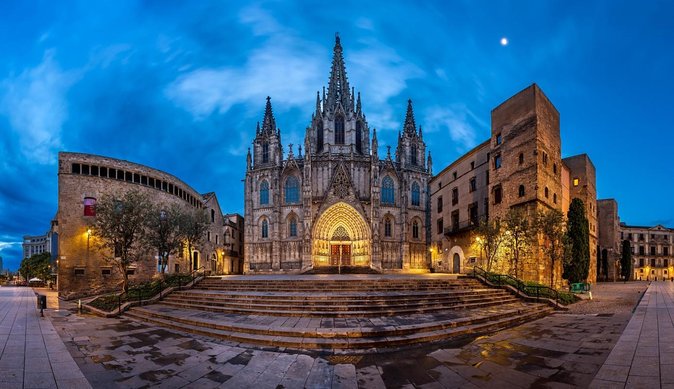
The tour ends with the Cathedral of Santa Creu i Santa Eulàlia, one of the most impressive churches in Barcelona, with a splendid neo-Gothic façade over a medieval structure.
This is a fitting finale for a route that’s covered multiple eras. You start with Rambla’s historic identity, pass Roman traces, walk through medieval lanes, and then land at a cathedral that literally shows layered time.
If you’re wondering what makes the neo-Gothic façade different from what you’ve seen earlier, the guide’s commentary helps. And once you reach it, you can look back over the route mentally and connect the dots.
How long it takes, what it costs, and if it’s worth it
This experience runs about 2 hours 30 minutes and is priced at $66.52 per person. It’s booked on average about 33 days in advance, which tells me it’s popular enough that you shouldn’t wait until the last week if your schedule is tight.
What you’re really paying for is not just a checklist of sights. You’re paying for:
- A local guide to connect eras (Roman to medieval to Gothic)
- A private group format so you can move at your own speed
- Pickup offered within a limited radius of Plaça de Catalunya (when available for your situation)
- GST included, which simplifies budgeting
- Mobile ticket convenience
Is it pricey? Compared with self-guided wandering, yes. But it’s often good value if you want context without spending hours researching. If this is your first trip to Barcelona, the “Do this early” logic is real: you’ll walk the city afterward with better instincts for what matters and why.
And if you’re traveling as a family, the private format helps keep everyone engaged. One group specifically enjoyed how the guide worked to engage kids and adults, using humor to keep attention from drifting.
Who should book this Gothic Quarter private walk?
I’d point you toward this tour if:
- It’s your first time in Barcelona and you want orientation fast.
- You like history, but you want it explained with a story arc, not a lecture.
- You care about architecture details like Catalan Gothic and neo-Gothic.
- You want flexibility for your group’s pace rather than a rigid timetable.
I’d think twice if:
- You dislike walking and tight streets.
- You want lots of stop-and-go photo time without guidance. (This tour is focused on guided movement and interpretation.)
Should you book it? My quick call
Yes—if you want the Gothic Quarter to make sense, book this. The route ties together Roman, medieval, Jewish Quarter context, and major Gothic landmarks into a timeline you can actually remember. And the guides’ style seems to land well with different group types, from history lovers to families, which is not something every city walk can claim.
If you’re short on time, this is still a smart use of it. You’ll leave with more than photos. You’ll have a mental map of Barcelona’s layers.
FAQ
How long is the Gothic Quarter private tour?
It’s approximately 2 hours 30 minutes.
What’s the price per person?
The price is $66.52 per person.
Is this tour private?
Yes. It’s a private tour/activity, so only your group participates.
Where does the tour start and end?
The start is Plaça de Catalunya, L’Eixample, 08002 Barcelona. The end is Pl. de Correus, 9999, Ciutat Vella, 08002 Barcelona (Sant Jaume Square area is referenced as well).
Is pickup available?
Pickup is offered if you’re within 0.5 km of Catalunya Square. The guide will carry a company card.
What language is the tour in?
The tour is offered in English.
Is transport included?
No. Transport is not included.
Is a mobile ticket provided?
Yes, the tour uses a mobile ticket.
Are service animals allowed?
Yes, service animals are allowed.
What’s the weather policy?
This experience requires good weather. If it’s canceled due to poor weather, you’ll be offered a different date or a full refund.
FAQ
Can I cancel for a full refund?
You can cancel up to 24 hours in advance for a full refund.
Is the tour suitable for most people?
Most travelers can participate.
Is there public transportation nearby?
Yes, it’s near public transportation.
More Ways to Tour Barcelona
- Barcelona: Casa Batlló Entry with Self-Audioguide Tour
★ 4.7 · 25,359 reviews - Barcelona: 24 or 48-Hour Hop-On Hop-Off Bus Tour
★ 4.4 · 20,872 reviews - Barcelona: Park Guell Guided Tour with Skip The Line Entry
★ 4.7 · 17,563 reviews - Barcelona: Sagrada Familia Skip-the-Line Entry Ticket & Tour
★ 4.8 · 12,789 reviews - Barcelona: FC Barcelona Museum “Barça Immersive Tour” Ticket
★ 4.4 · 10,944 reviews
More Barcelona Tours on Our Radar
- Barcelona: Sagrada Familia Entry Ticket with Audio Guide
★ 4.6 · 105,312 reviews - Barcelona: Park Güell Admission Ticket
★ 4.4 · 76,534 reviews - Barcelona: Casa Batlló Entry with Self-Audioguide Tour
★ 4.7 · 25,359 reviews - Barcelona: Montjuïc Cable Car Roundtrip Ticket
★ 4.5 · 22,368 reviews - Barcelona: Hola Barcelona Public Transport Travel Card
★ 4.5 · 20,985 reviews
Lost in the Gothic Quarter
- Barcelona in 1 Day: Sagrada Familia, Park Guell,Old Town & Pickup
★ 5.0 · 13,541 reviews - Barcelona all included: Sagrada, Park Güell, Montjuic & Gothic
★ 5.0 · 2,169 reviews - Barcelona: Sagrada Familia, Modernism, and Old Town Tour
★ 4.7 · 1,621 reviews - Barcelona Gothic Quarter Tapas & Taverns Food & Wine Tour
★ 5.0 · 1,470 reviews - Barcelona Helicopter, Sailboat & Old Town Private Walking Tour
★ 5.0 · 1,395 reviews
Just Rated Around Barcelona




Gothic Quarter Tours, compared.
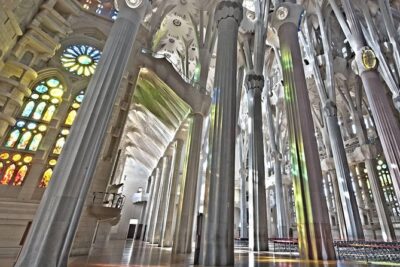 ★ 5.0Barcelona in 1 Day: Sagrada Familia, Park Guell,Old Town & PickupFrom $12013,541 reviews
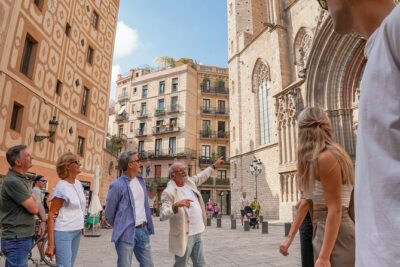 ★ 5.0Barcelona all included: Sagrada, Park Güell, Montjuic & GothicFrom $1192,169 reviews
 ★ 4.7Sagrada Familia, Modernism, and Old Town TourFrom $521,621 reviews
 ★ 5.0Barcelona Gothic Quarter Tapas & Taverns Food & Wine TourFrom $1311,470 reviews
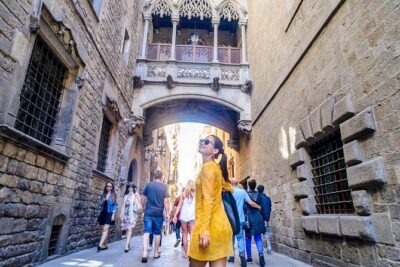 ★ 5.0Barcelona Helicopter, Sailboat & Old Town Private Walking TourFrom $5131,395 reviews
 ★ 4.8Old Town and Gothic Quarter Walking TourFrom $211,393 reviews
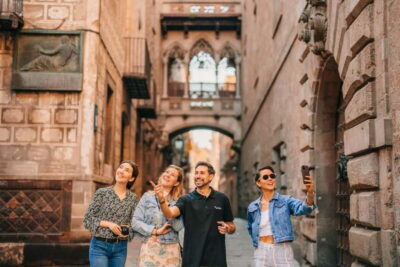 ★ 4.7Helicopter, Boat Ride & Old Town Private TourFrom $5001,357 reviews
 ★ 5.0Barcelona Old Town & Gothic Quarter Small Group TourFrom $221,308 reviews
Browse the lists this tour appears in