
Reviewed · WALKING TOURS
Horta Labyrinth Walking Tour in Barcelona
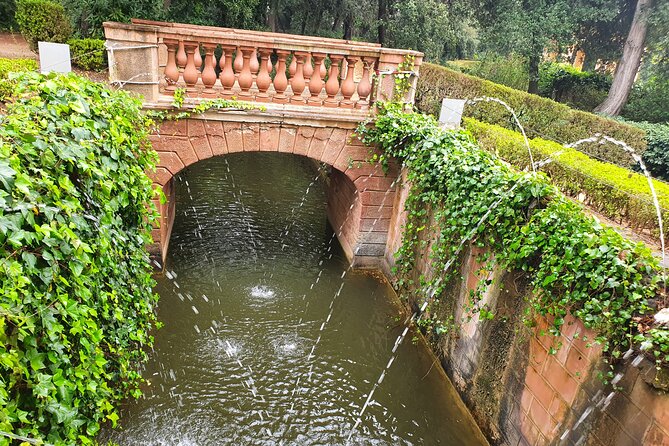
A quiet maze can beat big-city sightseeing. This 1h45 guided stroll through Parque del Laberint d’Horta mixes neoclassical gardens with myth, fountains, and a real cypress labyrinth. I love how much story you get per step, including the families behind the park and the legend details you’d miss wandering alone. I also like that it’s cool and shaded for a Barcelona break. One thing to consider: if the hedges and shrubs are still thin or trimmed differently that season, you might find easier paths through the labyrinth than you expect.
The park’s origins go back to 1794, and the garden design draws from French neoclassical and English romantic styles. You’ll spend most of the walk inside this green world, moving from palace spaces to quieter corners that feel tucked away, even though you’re in the city. The downside is size and pacing: it’s a compact tour, so it’s best if you want a focused garden visit rather than a long, roaming day.
In This Review
- Key things to know before you go
- Entering a 1794 Garden Built for Walking
- Meeting Point at the Horta Velodrome: Easy to Find, Easy to Leave
- The Story Begins With Families, Myth, and Garden Design
- Marqués de Alfarrás and the Subirana Tower: Architectural Anchors in Green
- Water, Heraldry, and Plaza Moments: Pelícano, Lions, and the Clock Square
- Climbing to the Belvedere and Carlos IV’s Pavilion
- Egeria’s Cave: Myth You Can Point To
- The Labyrinth: Cut Cypresses and Royal Footsteps
- Price and Value: What $16.22 Buys You
- Who This Tour Fits Best (and Who Might Prefer DIY)
- Should You Book the Horta Labyrinth Walking Tour?
- FAQ
- How much is the Horta Labyrinth walking tour?
- How long is the tour?
- What time does the tour start?
- Where do we meet?
- Where does the tour end?
- Is this a mobile ticket experience?
- Is admission included?
- How large is the group?
- Are service animals allowed?
- Do I need good weather for this experience?
- Is there free cancellation?
Key things to know before you go
- 1h45 timed visit starting at 10:00 am so you’ll get in, walk, and get back out without stretching your day.
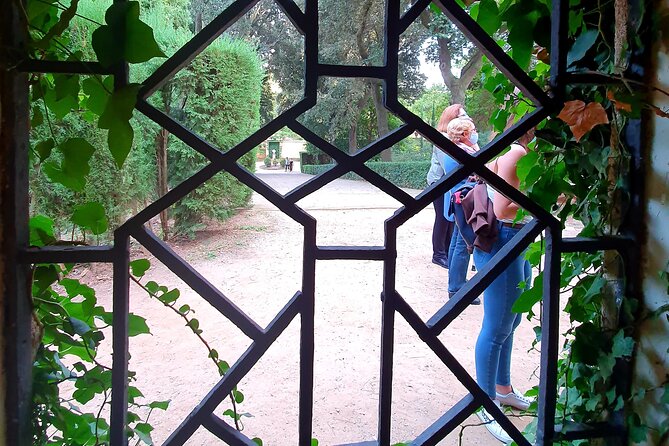
- Max group size of 20 which keeps the guide talk audible in the garden paths.
- Mobile ticket means less paper fuss and easier check-in.
- A guided route through major named spots like the Marqués de Alfarrás palace, Plaza de los Leones, and the Plaza del Reloj.
- The tour ends at the Horta Velodrome area rather than back at the exact first stop.
- Good-weather dependent experience, since the garden walk is outdoors.
Entering a 1794 Garden Built for Walking
If you only know Barcelona for buildings and beaches, this park is a friendly left turn. Parque del Laberint d’Horta was created in 1794 and designed by Domenico Bagutti, inspired by French neoclassical and English romantic garden ideas. That mix matters here. You’re not just looking at plants—you’re walking through spaces shaped like scenes.
I especially like that the tour doesn’t treat the garden like a photo stop. The guide explains the Desvalls and Lupià families, the original owners, and ties that ownership to what you’re seeing. You start to notice how the garden is arranged: views, water features, and myth-themed corners all placed for movement.
The best practical part is that you get a structured route. The park has enough named areas that you can easily wander for a long time. This tour keeps you on a clear path from grand architecture down to the playful maze.
More Barcelona streets to take slowly




Meeting Point at the Horta Velodrome: Easy to Find, Easy to Leave
This experience meets near Pg. de la Vall d’Hebron in the Horta-Guinardó area, and it’s tied to the Horta Velodrome zone. The start point is listed at Pg. de la Vall d’Hebron, 169. The tour ends at Pg. de la Vall d’Hebron, 185 at the Velodrome area, with the meeting described as at/near the park entrance area.
Why I think that’s useful: ending near a known landmark helps you plan the rest of your day without retracing every step. Also, the experience is described as near public transportation, so you’re not stuck with a long transfer after a 1h45 walking visit.
One small thing to watch: because the tour finishes away from where it began, don’t plan to hop on a tight schedule right after. Give yourself a little buffer to get oriented and continue your day.
The Story Begins With Families, Myth, and Garden Design
Before you even hit the big sights, the guide starts with the human backstory. You’ll learn about the Desvalls and Lupià families, the original owners, and how the park functions as both a designed garden and a kind of stage.
Then comes the mythology angle. The route repeatedly points you toward Greek mythology references as you move between sections. That turns the walk from plants-only into a narrative trail.
If you like gardens for atmosphere, this is a good fit. If you prefer pure architecture, it still works—because the architecture is woven into the garden’s layout. Either way, you’ll leave with more than just a few photos. You’ll understand why certain spots feel important and how they connect.
Marqués de Alfarrás and the Subirana Tower: Architectural Anchors in Green
Early on, you’re guided past major highlights tied to specific structures—this is not a generic “follow the path” walk.
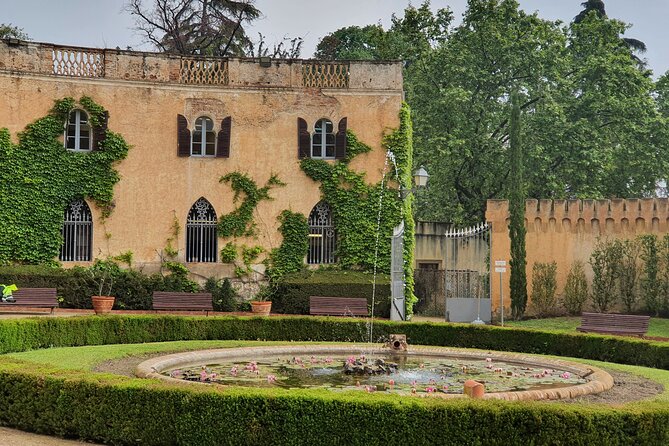
Two stops that anchor the experience are the palace of the Marqués de Alfarrás and the Subirana tower. These are the moments when the park stops feeling like a private garden and starts feeling like a miniature estate built for status, spectacle, and strolling.
For your planning, here’s what to look for: architecture here is part of the garden choreography. You’ll see how buildings and towers relate to open plazas and water features nearby. That makes it easier to keep orientation as you move deeper into the park.
A possible drawback with any estate-garden combo: if you’re expecting a tour that stays fully focused on interior rooms or lots of “inside” time, this isn’t that. You’re outside most of the way, so bring that mindset. The “inside” here is the design—paths, courtyards, and sculptural moments.
Water, Heraldry, and Plaza Moments: Pelícano, Lions, and the Clock Square
As the walk continues, the scenery shifts from palace-style structure to symbolic garden details.
You’ll see the heraldic fountain of the Pelícano, plus the domestic garden area. The Pelícano fountain is a nice example of how this park mixes storytelling with ornament. Instead of random water, it’s linked to meaning and design.
Then you move through the open plaza areas, including Plaza de los Leones. It’s one of those places that feels like a garden “pause button,” where you can take a breath and look around. From there, the tour continues to areas like the garden of the Boxes and the Plaza del Reloj. The “Boxes” concept (as named) hints at the kind of geometric, clipped structure you can spot as you walk—another reminder that this place is designed, not just grown.
What I like for value: you’re getting multiple distinct “garden types” in a short span. It’s easy to get bored in a large park. This route breaks it up so you always have a new visual goal.
- Barcelona: Sagrada Familia Entry Ticket with Audio Guide★ 4.6 · 105,312 reviews
- Barcelona: Park Güell Admission Ticket★ 4.4 · 76,534 reviews
- Barcelona: Casa Batlló Entry with Self-Audioguide Tour★ 4.7 · 25,359 reviews
Climbing to the Belvedere and Carlos IV’s Pavilion
Next, the tour works the elevation and the contrast. You’ll go up to the Belvedere, which is the park’s viewpoint moment. Even if tree cover limits far-off views, you still get that useful feeling of height—your eye can scan the garden layout, and the path makes more sense.
After that, the highlight for many people is the pavilion of Carlos IV, inspired by the architecture of Palladio. This is where the garden turns extra formal and architectural. You’ll feel the change in atmosphere: more structured space, more “designed monument” energy.
If you care about design history, this stop helps connect the dots between the 1794 origin story and the garden’s style influences. For the rest of us, it’s still satisfying. It’s a strong photo moment, but it’s also a useful “reset point” before the myth corner and the maze.
Egeria’s Cave: Myth You Can Point To
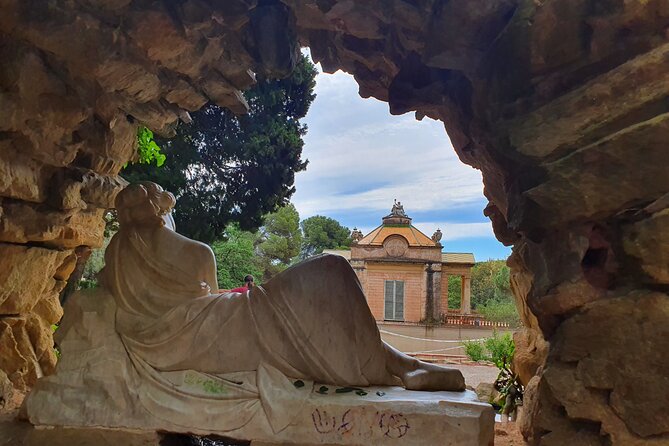
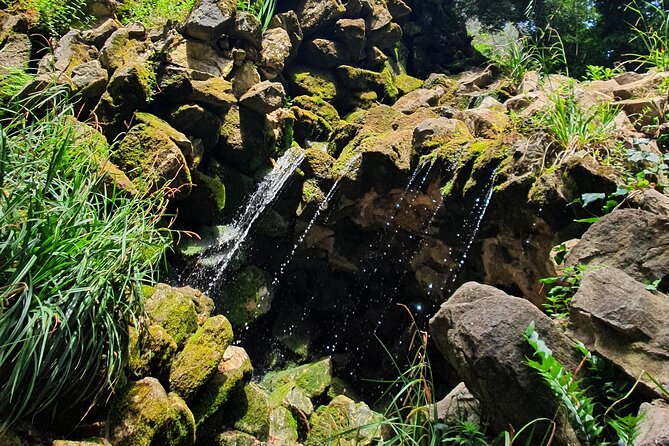
One of the most memorable segments is the cave of the nymph Egeria. If you’re the type who likes myth to have a physical place, this is for you. Instead of hearing a story and forgetting it, you stand in a spot tied to that legend.
Practically, it also adds a change in scenery. A cave-like area feels different from plazas and formal hedges. Even if the exact look varies by season and maintenance, the idea is the same: myth and garden meet in a more mysterious mood.
It’s also a nice lead-in to the final act. Once you’ve spent time on story and symbolism, the labyrinth doesn’t feel random. It feels like the emotional payoff.
The Labyrinth: Cut Cypresses and Royal Footsteps
The finishing touch is the labyrinth itself—made with cut cypresses. This is the reason many people come to Parque del Laberint d’Horta, and the tour ends with that payoff in mind.
Here’s what to expect in real terms: you’ll walk into a hedged maze area where the route forces you to slow down, change direction, and pay attention. The guide’s focus on the meaning of the park helps. This isn’t just a “fun maze.” The site notes that royals such as kings Carlos IV, Fernando VII, and Alfonso XII walked through the labyrinth.
One consideration from the experience vibe: some people have noted that in certain seasons the shrubs may not look fully grown, making it easier to cheat a bit on shortcuts. That doesn’t ruin the point—if anything, it’s a reminder to keep the spirit of it playful. Go with a mindset of exploring, not speed-running.
If you’re with kids, the labyrinth tends to work on both levels. It’s fun to try to find your way, and it’s also a gentle way to keep everyone engaged when you’re on a structured walking tour.
Price and Value: What $16.22 Buys You
At $16.22 per person, this tour isn’t just paying for movement. You’re paying for a guide to connect the garden design to names, families, and mythology, and you’re getting a timed route that hits the park’s major named areas.
The experience is listed with an admission ticket as free, so you should not need to buy a separate entry ticket just to access the garden for the walk. That matters for value, because it turns the price into more of a guided experience cost than an extra admission on top.
It’s also a short commitment: about 1 hour 45 minutes. That’s the sweet spot for a garden visit when you still want energy for lunch, museums, or beach time later. And with a maximum of 20 people, it usually stays manageable.
Where the value can shift for you: if you’re mainly looking for a long, self-directed wander and don’t care about garden symbolism or named architectural stops, a paid guide might feel unnecessary. If you want the stories and structure, it’s a smart way to get more out of less time.
Who This Tour Fits Best (and Who Might Prefer DIY)
I think this works best if you like one of these styles:
- You want garden design with a guided story, not just a walk.
- You like a route where you don’t have to figure out what to see next.
- You’re traveling with mixed ages and want something that’s interesting for both adults and kids.
It may be less satisfying if:
- You need a huge amount of time in one place. This is compact and ends at the Velodrome area.
- You expect a fully maze-focused experience with lots of time inside the labyrinth. The labyrinth is the highlight, but it’s still one part of a 1h45 route.
Also, because the experience is outdoors and listed as needing good weather, you’ll get the best results when conditions are decent for walking and exploring hedges and paths.
Should You Book the Horta Labyrinth Walking Tour?
I’d book it if you want a structured way to experience Parque del Laberint d’Horta, especially if you care about what you’re seeing—families, myth, and why certain plazas and buildings are placed where they are. For $16.22 and about 1h45, it’s a practical break from big sightseeing days, and the labyrinth ending is a satisfying finish.
I’d think twice if you’re hoping for a long, independent wander or if your main goal is purely the maze with lots of time to get lost. Also, check the vibe of the day: the tour requires good weather, and seasonal hedge growth can affect how challenging the labyrinth feels.
If you’re a planner and you like your Barcelona with a bit of cool shade and story, this is a strong choice.
FAQ
How much is the Horta Labyrinth walking tour?
The price is listed at $16.22 per person.
How long is the tour?
It’s approximately 1 hour 45 minutes.
What time does the tour start?
The listed start time is 10:00 am.
Where do we meet?
The meeting point is at Pg. de la Vall d’Hebron, 169, near the entrance area of the Horta Velodrome.
Where does the tour end?
The tour ends at the Horta Velodrome area, Pg. de la Vall d’Hebron, 185.
Is this a mobile ticket experience?
Yes, the experience uses a mobile ticket.
Is admission included?
The activity details list an admission ticket as free.
How large is the group?
The tour has a maximum of 20 travelers.
Are service animals allowed?
Yes, service animals are allowed.
Do I need good weather for this experience?
Yes. The experience requires good weather, and if it’s canceled due to poor weather you’ll be offered a different date or a full refund.
Is there free cancellation?
Yes. Free cancellation is available up to 24 hours in advance for a full refund.
More of Barcelona on Foot
- Barcelona Tapas and Wine Experience Small-Group Walking Tour
★ 5.0 · 5,804 reviews - Barcelona: Tapas Walking Tour with Food, Wine, and History
★ 4.8 · 4,261 reviews - Barcelona: Food Walking Tour with Tapas and Wine
★ 4.9 · 2,180 reviews - Barcelona Tapas Walking Tour: Food, Wine & History
★ 4.5 · 1,928 reviews - Barcelona Helicopter, Sailboat & Old Town Private Walking Tour
★ 5.0 · 1,395 reviews
More Ways to Tour Barcelona
- Barcelona: Casa Batlló Entry with Self-Audioguide Tour
★ 4.7 · 25,359 reviews - Barcelona: 24 or 48-Hour Hop-On Hop-Off Bus Tour
★ 4.4 · 20,872 reviews - Barcelona: Park Guell Guided Tour with Skip The Line Entry
★ 4.7 · 17,563 reviews - Barcelona: Sagrada Familia Skip-the-Line Entry Ticket & Tour
★ 4.8 · 12,789 reviews - Barcelona: FC Barcelona Museum “Barça Immersive Tour” Ticket
★ 4.4 · 10,944 reviews
More Barcelona Tours on Our Radar
- Barcelona: Sagrada Familia Entry Ticket with Audio Guide
★ 4.6 · 105,312 reviews - Barcelona: Park Güell Admission Ticket
★ 4.4 · 76,534 reviews - Barcelona: Casa Batlló Entry with Self-Audioguide Tour
★ 4.7 · 25,359 reviews - Barcelona: Montjuïc Cable Car Roundtrip Ticket
★ 4.5 · 22,368 reviews - Barcelona: Hola Barcelona Public Transport Travel Card
★ 4.5 · 20,985 reviews
Just Rated Around Barcelona





Walking Tours, compared.
 ★ 5.0Barcelona Tapas and Wine Experience Small-Group Walking TourFrom $835,804 reviews
 ★ 4.8Tapas Walking Tour with Food, Wine, and HistoryFrom $784,261 reviews
 ★ 4.9Food Walking Tour with Tapas and WineFrom $1002,180 reviews
 ★ 4.5Barcelona Tapas Walking Tour: Food, Wine & HistoryFrom $661,928 reviews
 ★ 5.0Barcelona Helicopter, Sailboat & Old Town Private Walking TourFrom $5131,395 reviews
 ★ 4.8Old Town and Gothic Quarter Walking TourFrom $211,393 reviews
 ★ 4.9City Walking Tour with a Local GuideFrom $291,384 reviews
 ★ 5.0Guided Food Walking Tour with Tapas and WineFrom $95848 reviews
Browse the lists this tour appears in