Reviewed · BARCELONA
Introduction to Artisan Ceramics
Handmade ceramics in three hours beats tour photos. I like the small-group setup and the certified artisan teaching, and you get everything you need on-site. One thing to plan for: your work needs drying time, so the final piece is usually ready after the class.
In this workshop, you make your own cup, bowl, or plate using beginner-friendly techniques. You’ll shape the form by hand, then add texture and decoration while the team handles the kiln firings and glazing after class.
You don’t have to be an artist. The studio provides aprons and tools, and the vibe is open and friendly—no skills required. If you’re staying just a day or two in Barcelona, keep an eye on the follow-up options for your finished ceramics.
In This Review
- Key things you’ll notice right away
- Getting to Carrer de Salvà 71 and meeting the artisan team
- Your 3-hour ceramics workshop: clay, tools, and beginner-friendly flow
- Cup, bowl, or plate: sculpting by hand, then adding texture and decoration
- Glazing and kiln firings: what happens after class
- Picking up later or getting it shipped via DHL
- Price and value: what $58.65 buys you in Barcelona
- Who should book this workshop (and who should think twice)
- Practical tips to get the best result without stressing over perfection
- Should you book Artisan Ceramics in Barcelona?
- FAQ
- How long is the ceramics workshop?
- How many people are in the group?
- Is the workshop offered in English?
- Do I need prior ceramics experience or to bring tools?
- What’s included in the workshop price?
- Where does the workshop take place?
- What happens after I finish my ceramic piece?
- What is the cancellation policy?
Key things you’ll notice right away
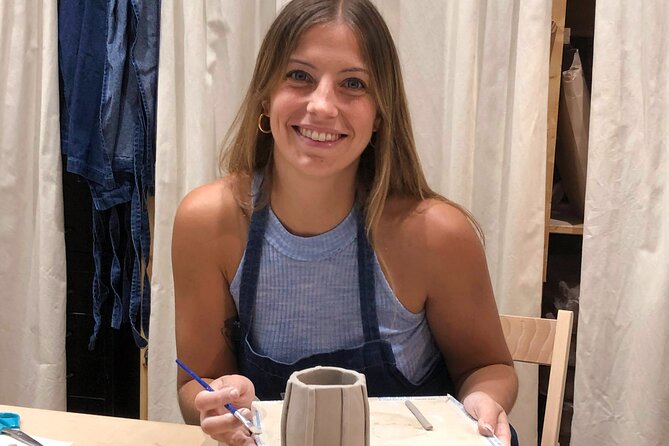
- Max 8 people means more attention while you’re shaping clay
- Everything supplied: apron, clay, tools, plus glazing and decoration supplies
- Hands-on from the start: you sculpt by hand, then texture and decorate
- Kiln firings and glazing included so you’re not waiting on technical steps
- Flexible finishing options: pick up or ship later, or swap for a ready-made item
Getting to Carrer de Salvà 71 and meeting the artisan team
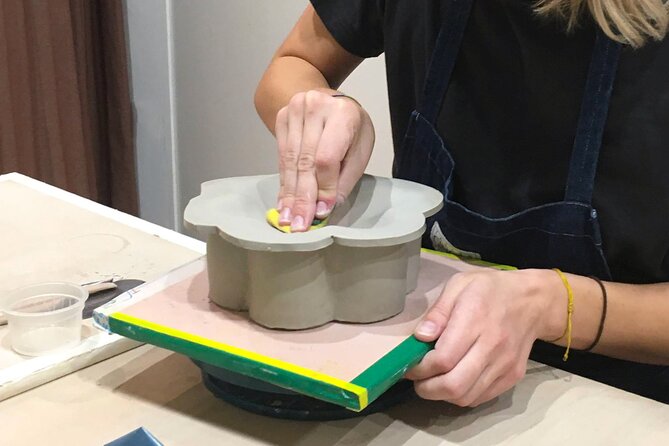
This workshop starts at Carrer de Salvà, 71, in the Sants-Montjuïc area of Barcelona. The activity ends back at the same meeting point, so you’re not stuck figuring out where to go next with clay on your hands.
What I like about this setup is the low-friction feel. You don’t need a pile of gear, and you’re not joining a huge herd. The class is capped at eight travelers, and it’s offered in English, which keeps the pace friendly if you’re not confident with Spanish.
From the teaching side, you’ll work with a certified artisan. In at least one recent session, the instruction was led by Wendy and Eric, and the teaching approach is welcoming and clear—especially helpful if you think you’ll be bad at it (you won’t be the first). The studio is also set up as a casual workshop space where you can arrive with a friend or come solo.
There’s also Wi‑Fi listed as included. That’s a small detail, but it’s handy if you want to check transit routes, message someone back home, or look up later how to care for ceramics.
Torn between options? Line this one up against other Barcelona picks.




Your 3-hour ceramics workshop: clay, tools, and beginner-friendly flow
The session is about three hours, and the rhythm is simple: you start with the basics of the ceramics process, then you get busy making something. No prior experience is required, and the workshop is designed as a first try at clay—more “learn by doing” than “watch someone else do it.”
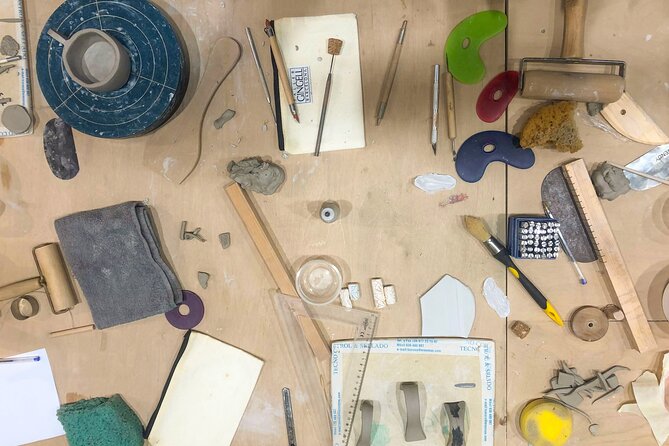
Here’s the practical value for you: everything key to making a piece is included, so the barrier to entry stays low. You’ll have an apron ready, plus the ceramic modeling tools and clay. That matters in Barcelona, where you’d otherwise be hunting for studio supplies, paying extra for materials, or showing up without the right basics.
In class, you learn about:
- the ceramics process in general
- clays and how they behave
- decoration techniques you can actually use on your own piece
The teaching time isn’t just theory. You’ll move from intro to hands-on work quickly, which is exactly what you want from a vacation activity. This is the kind of experience where you leave with a real object—not just a photo of your hands holding a blob of clay.
Cup, bowl, or plate: sculpting by hand, then adding texture and decoration
Once the aprons and tools come out, you’ll make your own ceramic item—a cup, bowl, or plate. You get to choose what you’re working on, which is a bigger deal than it sounds. A smaller piece can feel less intimidating if you’re nervous; a bigger surface gives you more room for patterns if you’re feeling creative.
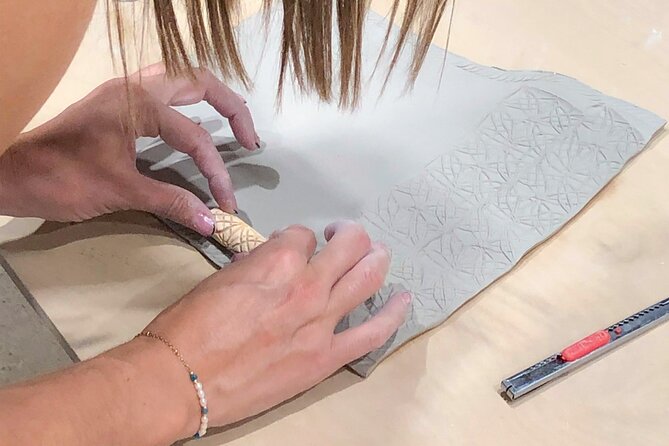
The core technique you’ll practice is sculpting by hand. That means you’re shaping the form yourself instead of building from templates or watching a screen. After the form is complete, you shift into the fun part: adding texture and decorations.
This is where the workshop shines for beginners. You’re not expected to already know how to make a tidy, professional-looking piece. The class gives you a foundation for how decoration is applied, and it keeps the process approachable. You’re learning methods you could repeat later if you decide this becomes a hobby.
Also, the “equipment provided” part is genuinely helpful. Tools can be expensive and confusing. Having the right modeling tools on-hand means you spend your class time learning techniques, not asking where to find stuff or improvising.
Glazing and kiln firings: what happens after class
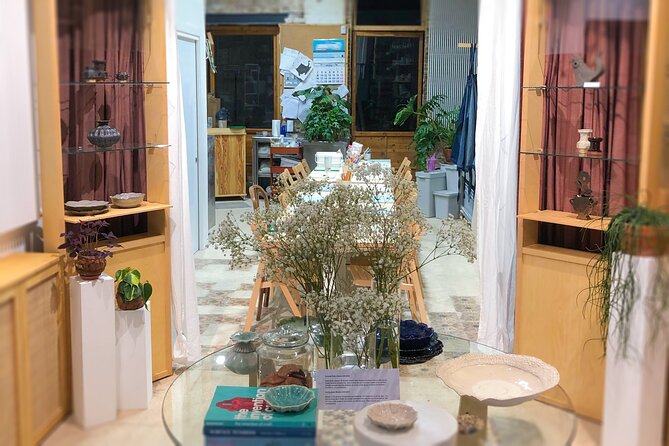
Your piece doesn’t become finished the moment you stop working. Like real ceramics, it needs time to dry, and the studio handles the production steps that require technical equipment.
The workshop includes kiln firings, plus glazing and decoration. So while you’re in the studio making the form and decorating it, the clay still has its next stages to go through after you’re done. That’s the trade-off for getting a true handmade result: the final look takes a bit of waiting.
The drying timeline matters for your travel plans. Your ceramics take time to dry, and the studio offers two options depending on how fast you need it.
If you can wait a week or two, the process stays simple and normal. If you can’t, they provide a way to avoid disappointing souvenir timing.
Picking up later or getting it shipped via DHL
Here’s the most travel-friendly part: you get choices for what happens after the class, once your ceramic is ready.
Option 1 (later): about 1 to 2 weeks later, your piece is ready to pick up or mail. If you want it mailed, shipping isn’t included in the workshop price, and the studio ships worldwide via DHL.
Option 2 (sooner): if you’re just visiting Barcelona and can’t wait, you can leave your creation and select one item from their finished handmade collection, listed as a €25 value.
Both options are meant to solve the same problem: timing. If you’re flying soon, you can still leave with something finished. If you’re staying longer, you can wait for your exact piece to be ready.
A practical caution: because shipping costs aren’t included, budget for that if you want the mailed option. If you’re tight on luggage space or time, going for the completed handmade swap can be easier than managing DHL paperwork and extra costs.
- Barcelona: Hola Barcelona Public Transport Travel Card★ 4.5 · 20,985 reviews
- Barcelona: 24 or 48-Hour Hop-On Hop-Off Bus Tour★ 4.4 · 20,872 reviews
- Barcelona: Park Guell Guided Tour with Skip The Line Entry★ 4.7 · 17,563 reviews
Price and value: what $58.65 buys you in Barcelona
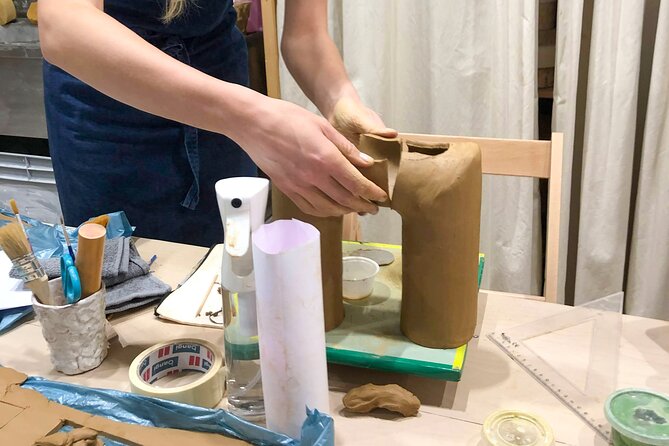
At $58.65 per person, this workshop isn’t priced like a “just show up and watch” class. It’s structured more like a true small studio session where you’re paying for the materials and the technical finishing steps.
From what’s included, the value is clear:
- aprons
- ceramic modeling tools
- clay
- kiln firings
- glazing and decoration
And there’s also Wi‑Fi listed as included. That doesn’t make the piece cheaper, but it improves the on-the-spot comfort.
What’s not included is shipping if you choose to mail your finished item. So the real cost depends on which finishing option you select after the workshop.
To judge value in a city like Barcelona: you’re not just paying for time at a table. You’re paying for studio access, firing, glazing, and the transformation from raw clay to a finished ceramic object. If you’ve ever tried to do ceramics at home, you know the kiln and firing part is where costs usually jump.
Also, group discounts are mentioned. So if you go with a friend or small group, it can end up feeling like a better deal than solo. With a class size capped at eight, you still keep the attention you’d want from a smaller format.
Who should book this workshop (and who should think twice)
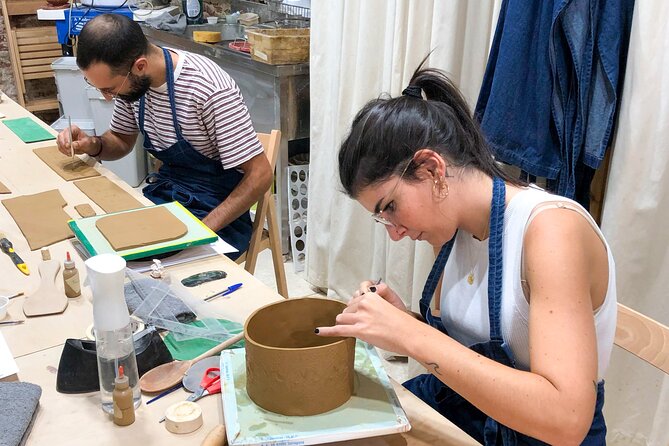
This is a great fit if:
- you want a hands-on activity, not a passive tour
- you like crafts and want a real souvenir with story attached
- you’re in Barcelona for a short stretch and want something doable in three hours
- you’re a beginner who wants guidance without feeling judged
It’s also ideal if you’re traveling with a friend. The studio setting is described as open and friendly, and you can come on your own too.
You might want to think twice if:
- you absolutely need your handmade piece immediately (drying time means your exact piece isn’t ready right away)
- you don’t want to deal with any follow-up options at all—because you’ll either pick up later, ship later, or choose a finished handmade item instead
Still, the presence of the “leave your creation and select a finished item” option makes this more flexible than many ceramics experiences. You’re not stuck waiting with empty hands.
Practical tips to get the best result without stressing over perfection
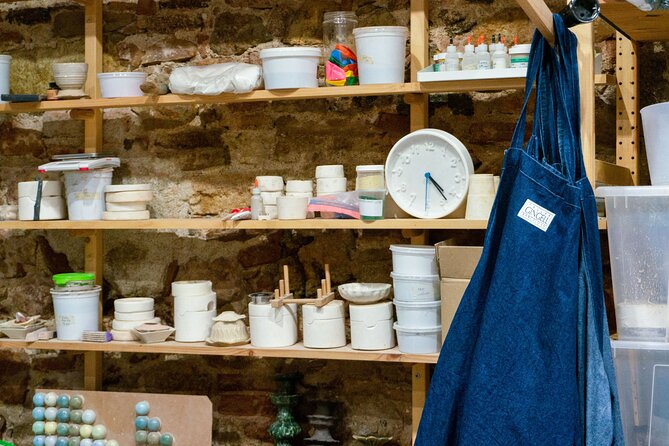
Ceramics can look intimidating, but this workshop is built for first-timers. Your best strategy is to treat it like learning time. You don’t need to aim for a museum piece. You’re building a foundation in sculpting, texture, and decoration.
A few practical moves that help you enjoy the session more:
- Pick the simplest form you like. Cup, bowl, or plate—choose what feels fun, not what looks hardest.
- Focus on texture and decoration decisions early rather than leaving them to the last minute of the three-hour window.
- Expect a little mess and minor bumps. Clay is forgiving in a way that feels fun, not stressful.
- If you’re nervous, watch how the instructor explains the process. Instruction is part of the value here, and learning from an expert makes a difference.
Because aprons and tools are provided, don’t spend your mental energy on bringing the perfect supplies. Spend it on enjoying the hands-on part.
And when you leave, remember the key reality: your work still needs drying, and the studio finishes steps like firing and glazing. That’s normal. It’s also why you can relax during the class and not worry about technical steps you won’t control.
Should you book Artisan Ceramics in Barcelona?
I’d book it if you want a real-made souvenir and a beginner-friendly art lesson in a small group. The eight-person cap, English instruction, and included materials and technical finishing steps make it feel fair for the price.
Book it especially if you like the idea of sculpting by hand and learning clays and decoration techniques you can reuse later. Even if you never become a hobbyist, you’ll still leave with a tangible result, plus a story that beats another sightseeing stop.
If timing is your biggest constraint—like you’re leaving Barcelona very soon—choose based on the finishing options. The later pickup or DHL shipping route works if you can wait 1 to 2 weeks. If you can’t, the option to select a finished handmade item lets you walk away satisfied without waiting.
FAQ
How long is the ceramics workshop?
It runs for about 3 hours.
How many people are in the group?
The experience has a maximum of 8 travelers.
Is the workshop offered in English?
Yes, it’s offered in English.
Do I need prior ceramics experience or to bring tools?
No skills are required. You don’t need to bring anything special because the studio provides an apron and supplies like clay and modeling tools.
What’s included in the workshop price?
Included items are aprons, ceramic modeling tools, clay, kiln firings, Wi‑Fi, and glazing and decoration. Shipping is not included.
Where does the workshop take place?
It starts at Carrer de Salvà, 71, Sants-Montjuïc, 08004 Barcelona, Spain, and it ends back at the meeting point.
What happens after I finish my ceramic piece?
Your piece needs time to dry. About 1 to 2 weeks later, you can pick it up or have it mailed via DHL. Shipping is not included in the workshop price. If you cannot wait, you can leave your creation and select one finished handmade item (listed at a €25 value).
What is the cancellation policy?
Free cancellation is available up to 24 hours in advance for a full refund.
More Barcelona Tours on Our Radar
- Barcelona: Sagrada Familia Entry Ticket with Audio Guide
★ 4.6 · 105,312 reviews - Barcelona: Park Güell Admission Ticket
★ 4.4 · 76,534 reviews - Barcelona: Casa Batlló Entry with Self-Audioguide Tour
★ 4.7 · 25,359 reviews - Barcelona: Montjuïc Cable Car Roundtrip Ticket
★ 4.5 · 22,368 reviews - Barcelona: Hola Barcelona Public Transport Travel Card
★ 4.5 · 20,985 reviews