
Reviewed · GOTHIC QUARTER TOURS
Luca’s Hidden Old Barcelona: the Gothic and El Born Tour
History has a way of sticking. This small-group walk through Barcelona’s Gothic Quarter and El Born makes the old city feel readable, not random. I like how Luca keeps the tour personal with a tight max group size and a guide who clearly loves the details, so you’re not just staring at stone—you’re getting the story behind it.
I also love the smart mix of sights with free access. You’ll hit major anchors like Placa de Sant Jaume and MUHBA sites such as the Temple d’August columns and El Call, plus a Gaudi-linked stop at Esglesia de Sant Felip Neri, all while you cover a lot of ground on foot without spending extra on most entrances.
One consideration: this is walking in real street conditions. If you’re heat-sensitive, plan for sun exposure—one review noted a brutally hot side of the street—and the tour isn’t suitable for reduced mobility, though Luca can adjust pacing and a private option may be possible.
In This Review
- Key takeaways before you go
- Entering the old city at Placa de Sant Jaume
- MUHBA Temple d’August: seeing Roman Barcelona in plain sight
- Gothic Cathedral outdoors: why the exterior is the story
- The Gothic Quarter’s signature corners
- El Call at MUHBA and Esglesia de Sant Felip Neri
- El Born / La Ribera: medieval streets and everyday life
- Basilica de Santa Maria del Mar: the church people keep loving
- El Fossar de les Moreres and the Madrid–Barcelona conflict
- Passeig del Born: medieval entertainment in a modern walk
- Price and logistics: $13.27 for a lot of walking value
- The Luca factor: energy, humor, and visual notes
- Who this tour fits best (and who should skip it)
- Quick pre-trip checklist
- Should you book Luca’s Hidden Old Barcelona: the Gothic and El Born Tour?
- FAQ
- How long is the Luca’s Hidden Old Barcelona: the Gothic and El Born Tour?
- Where does the tour start and end?
- What’s included in the tour price?
- Is the tour offered in English?
- Is the tour accessible for people with reduced mobility?
- What’s the cancellation and refund policy?
Key takeaways before you go
- Small-group feel (max 15): easier questions, better pace control, less crowd stress.
- Roman-to-medieval timeline: MUHBA stops connect centuries in a way you won’t get wandering alone.
- Catalan conflict sites included: El Fossar de les Moreres gives context beyond sightseeing photos.
- Free admissions dominate: most stops are free, and the one ticketed element is clearly outside-only.
- Luca’s style: energetic, funny, and big on visual references and practical recommendations after the tour.
Entering the old city at Placa de Sant Jaume
The tour starts in Placa de Sant Jaume, right in Ciutat Vella’s political heartbeat. This square has been the go-to power center for about 2,000 years, which sounds like trivia until you stand there and realize why so many decisions, protests, and identities got tied to this exact patch of ground.
Expect a quick setup from Luca so the rest of the walk lands with meaning. You’ll get the sense that Barcelona’s old streets weren’t built only for beauty—they were built for control, speech, ceremony, and later, resistance. It’s a strong first stop because it frames the Gothic Quarter and El Born as more than architecture.
What to watch for: look up while you talk politics. In this area, the building faces and sight lines matter. Even if you don’t catch every detail, the square gives you the mental map for everything that follows.
Deeper into the lanes of the Barri Gòtic


MUHBA Temple d’August: seeing Roman Barcelona in plain sight
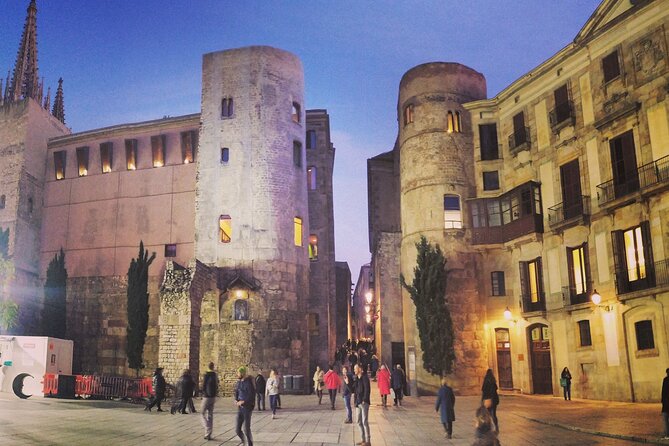
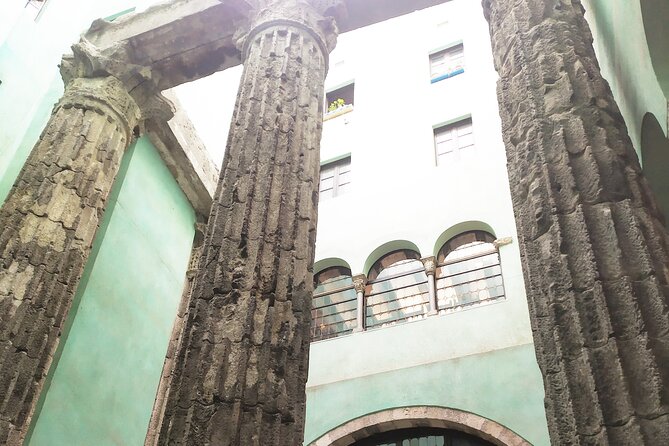
Next comes MUHBA Temple d’August, a stop that’s pure payoff if you like “wait, that’s Roman?” moments. You’re looking at four surviving columns from a huge temple dedicated to Augustus—an artifact from a time when this city was doing imperial math on a grand scale.
This stop matters because it breaks the common expectation that the “old Barcelona” you see is only medieval. Here, you get proof that the city’s layers are stacked, and the newer city didn’t erase the old one—it built around it.
Why you’ll probably enjoy it: the columns are visually simple, but the explanation turns them into a timeline. It’s also a good way to take a breath before the walking ramps up again.
Gothic Cathedral outdoors: why the exterior is the story
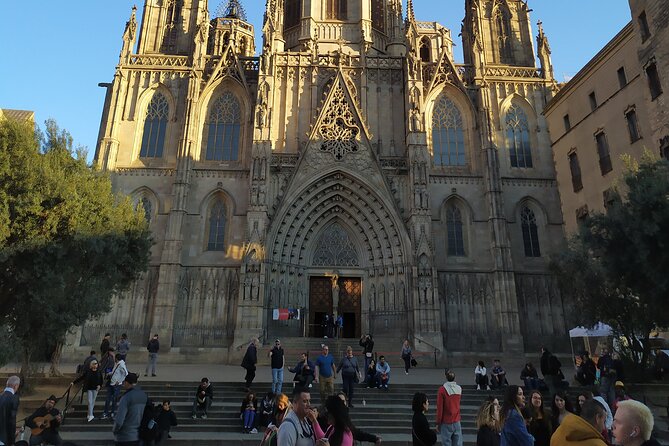
You’ll spend time at the Catedral de Barcelona, focusing on the outside. That’s intentional. Cathedral exteriors are where you can spot changes in taste, the slow evolution of styles, and how faith and power wanted to look to passersby.
Ticket note: the outside viewing is included; interior admission is not part of this stop.
Small heads-up: Gothic facades can feel like “all the same” if you’re just scanning. Luca’s job here is to point out what’s genuinely distinctive, and to help you separate real Gothic features from later imitations. If you’re curious about how cities fake authenticity, this stop is a good place to sharpen your eye.
The Gothic Quarter’s signature corners
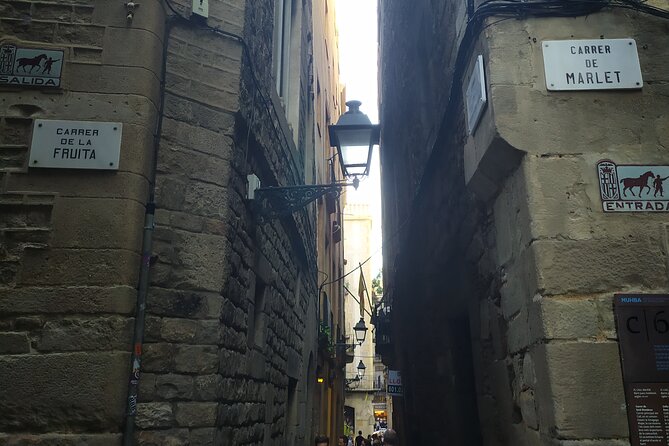
After the cathedral, the walk continues into the Gothic Quarter’s core, where winding streets and tight turns are half the experience. This is where the quarter starts to feel like a maze you can actually navigate, not a tourist photo set.
You’ll pause for one of the main features of the Gothic quarter (the kind of standout spot that makes the area famous). The value isn’t the landmark alone—it’s the way Luca explains why the place is shaped the way it is, and how the neighborhood’s design relates to the lived experience of earlier residents.
Practical tip: keep your phone handy, but also keep looking at street-level details. The charm here isn’t only the big postcard views—it’s the small evidence of how people moved, worked, and gathered.
El Call at MUHBA and Esglesia de Sant Felip Neri
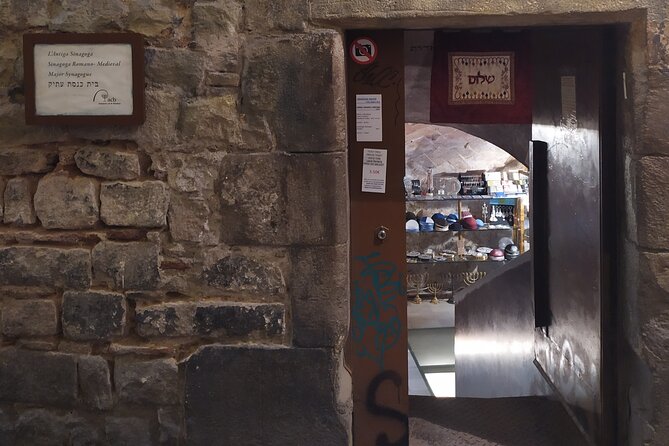
One of the strongest segments is MUHBA – El Call, the medieval Jewish neighborhood. This stop gives you a way to read the Gothic Quarter as a patchwork of communities, not one uniform “old city” theme. In walking form, the El Call area helps you understand how neighborhoods can carry identity long after the people who shaped them are gone—or forced out.
Then comes Esglesia de Sant Felip Neri, described as Gaudi’s favorite church in his lifetime. That’s a fun detail because it ties you to a Barcelona figure you may already know. But the deeper point is the contrast: cute little squares and gentle facades can still sit close to a dark chapter, and Luca connects the setting to the Spanish Civil War context.
Why this pair works: El Call focuses on community history; Sant Felip Neri adds a later layer of conflict. Together, they help you see how Barcelona’s old spaces were repeatedly reshaped by who had power and who didn’t.
Watch your step: you’ll be on uneven old-city streets. Wear shoes you’d trust for 2+ hours of walking.
- Barcelona: Park Güell Admission Ticket★ 4.4 · 76,534 reviews
- Barcelona: Casa Batlló Entry with Self-Audioguide Tour★ 4.7 · 25,359 reviews
- Barcelona: Montjuïc Cable Car Roundtrip Ticket★ 4.5 · 22,368 reviews
El Born / La Ribera: medieval streets and everyday life
After the quieter, heavier history, you shift into El Born / La Ribera. This is one of the city’s medieval neighborhood heartbeats, and the tone changes just enough to keep the walk fun.
El Born is a great place to connect the dots between architecture and daily movement. You’ll get a sense of how neighborhoods functioned when entertainment, commerce, and community life were closer together—and more public than we’re used to now.
If you’re trying to choose only one neighborhood to explore thoroughly: El Born is a strong bet because it feels like both a past place and a living neighborhood. And because this tour threads it in mid-walk, you don’t feel like you’re “starting over.”
Basilica de Santa Maria del Mar: the church people keep loving
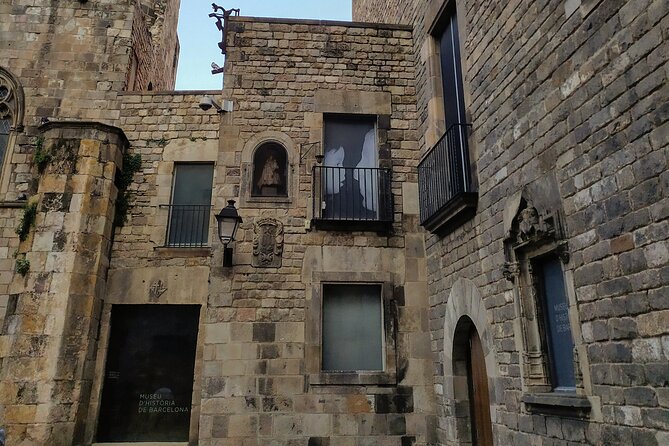
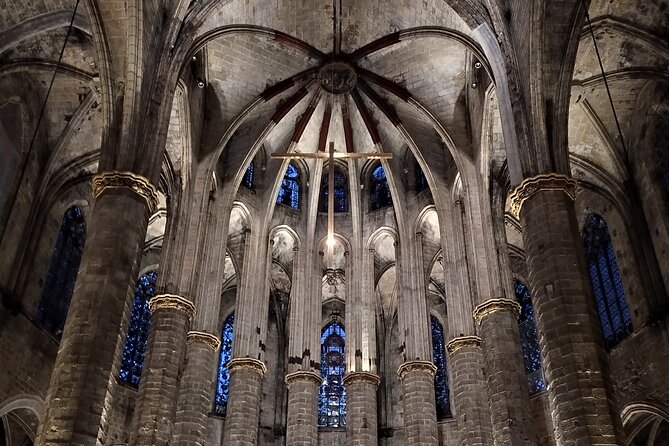
You’ll stop at the Basilica de Santa Maria del Mar, described as Barcelona’s most loved church. Even if you’re not going inside, the pause is worth it because this is one of those buildings that people talk about with affection, not just respect.
Why it matters on a history walk: the church becomes a benchmark. Luca’s explanation helps you connect the surrounding streets and social context to the kinds of communities that built and maintained places like this. In other words, it’s not just a pretty stop; it’s a clue.
El Fossar de les Moreres and the Madrid–Barcelona conflict
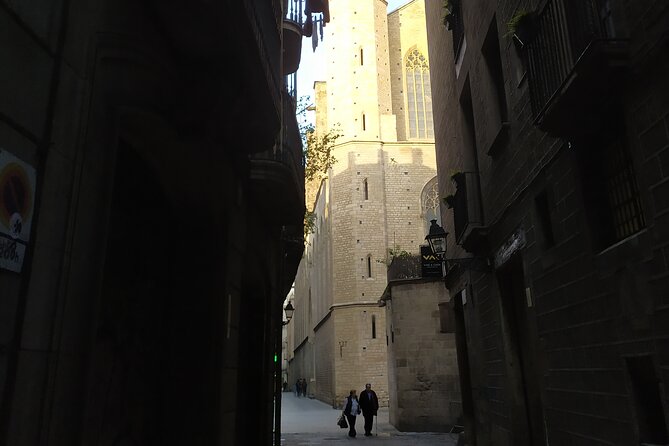
The emotional center of the walk is El Fossar de les Moreres. This is presented as a key stop for understanding the political conflict between Madrid and Barcelona—exactly the kind of context that turns a “cool old cemetery story” into something you can use while you travel.
If you’ve heard Catalonia mentioned as a political issue but you’re not sure how it shows up in real places, this stop helps bridge that gap. You’ll leave with a clearer idea of why history in Barcelona doesn’t sit quietly in museums. It lives in street-level memorials and in the way neighborhoods are remembered.
Important tone note: this is where the mood can get more serious. If you want a tour that balances both architecture and politics without pretending politics is separate from place, this is a good match.
Passeig del Born: medieval entertainment in a modern walk
To wrap things up, the walk reaches Passeig del Born, described as a medieval entertainment square. This is a smart final move. Earlier stops were about power, community, conflict, and identity. Ending with entertainment gives you a reminder that cities aren’t only where big events happen—they’re where people lived, laughed, ate, and gathered too.
Even if you only take in a few streets, the section helps you reframe what the “old city” means. It’s not just solemn stone. It’s also social life.
Good for photos: look for angles where the street shape frames the square. The medieval layout is part of why the neighborhood still feels theatrical when you walk through it.
Price and logistics: $13.27 for a lot of walking value
At $13.27 per person for about 2 hours 15 minutes, this is one of the better “history per dollar” options in central Barcelona—especially because most stops are free. You’re paying mainly for Luca’s guidance and the stop sequence that turns scattered sites into a coherent story.
A few practical points that affect your experience:
- Group size: max 15. Many tours at popular spots feel like cattle pens. Here you should feel freer to ask questions.
- Language: offered in English. From the tour feedback, Luca’s English is easy to follow.
- Distance: reviews mention about three miles total. That’s manageable for most people, but still plan for steady walking.
- Tickets: most stops are free. The cathedral outside is not included (so you shouldn’t expect to pay for entrances here, but you also won’t be doing interior access as part of the plan).
What you’ll get after: Luca’s follow-through shows up in reviews—especially a follow-up email with extra recommendations, including food and sightseeing suggestions.
The Luca factor: energy, humor, and visual notes
A consistent theme is Luca’s energy. One review highlighted a binder with photos Luca used as references—exactly the kind of tool that helps you understand what you’re seeing instead of guessing. Another mentioned his humor and a more pointed, critical take on historical figures, which makes the stories feel less like a textbook and more like lived debate.
You’ll also likely notice a conversational rhythm. Reviews describe Luca checking in with the group and comparing ideas back to where people are from, which helps the tour feel less scripted.
If you like guides who answer questions: this is a good pick. The small-group size supports that.
Who this tour fits best (and who should skip it)
This tour is a strong match if you:
- want a first-day orientation to Barcelona’s old neighborhoods
- care about history tied to real locations (not just architecture)
- like walking tours that stay organized but still feel human
You might want to choose something else if you:
- need wheelchair-friendly routing; this tour is not suitable for reduced mobility, though pacing adjustments and private alternatives may be possible
- dislike serious political context; the conflict framing at El Fossar de les Moreres is part of the point
Quick pre-trip checklist
- Wear comfortable, grippy shoes for uneven streets.
- Bring water. The route is mostly outdoors.
- If it’s hot, pick clothing that lets you handle sun and shade shifts. One review described it as extremely hot and humid on a sunny side.
- Keep your phone charged for the mobile ticket.
Should you book Luca’s Hidden Old Barcelona: the Gothic and El Born Tour?
If you want your Barcelona old-town time to feel guided, specific, and grounded in real place-based history, I think this is an easy yes. The price is low, the walk is focused, and the stop mix hits the sweet spot: Roman leftovers at MUHBA, the religious and community layers of El Call and Sant Felip Neri, and the political context of El Fossar de les Moreres—then it finishes with the lively, human side of the city at Passeig del Born.
Book it especially if:
- you’re spending a short time in Barcelona and want a fast way to learn the old-city structure
- you like small groups and want a guide who will actually explain what you’re looking at
FAQ
How long is the Luca’s Hidden Old Barcelona: the Gothic and El Born Tour?
It runs for about 2 hours 15 minutes.
Where does the tour start and end?
It starts at Pl. de Sant Jaume, 3, Ciutat Vella, 08002 Barcelona, Spain, and ends at El Born Centre de Cultura i Memòria Mercat del Born, Plaça Comercial, 12, Ciutat Vella, 08003 Barcelona, Spain.
What’s included in the tour price?
The tour includes a professional guide. Most stops listed are free, and the cathedral stop is described as outside-only with admission not included.
Is the tour offered in English?
Yes, the tour is offered in English.
Is the tour accessible for people with reduced mobility?
The tour is not suitable for people with reduced mobility. The information says the pace can be adapted for your own needs, and a private experience could be arranged.
What’s the cancellation and refund policy?
Free cancellation is available up to 24 hours in advance for a full refund. Canceling less than 24 hours before start time does not provide a refund.
More Ways to Tour Barcelona
- Barcelona: Casa Batlló Entry with Self-Audioguide Tour
★ 4.7 · 25,359 reviews - Barcelona: 24 or 48-Hour Hop-On Hop-Off Bus Tour
★ 4.4 · 20,872 reviews - Barcelona: Park Guell Guided Tour with Skip The Line Entry
★ 4.7 · 17,563 reviews - Barcelona: Sagrada Familia Skip-the-Line Entry Ticket & Tour
★ 4.8 · 12,789 reviews - Barcelona: FC Barcelona Museum “Barça Immersive Tour” Ticket
★ 4.4 · 10,944 reviews
More Barcelona Tours on Our Radar
- Barcelona: Sagrada Familia Entry Ticket with Audio Guide
★ 4.6 · 105,312 reviews - Barcelona: Park Güell Admission Ticket
★ 4.4 · 76,534 reviews - Barcelona: Casa Batlló Entry with Self-Audioguide Tour
★ 4.7 · 25,359 reviews - Barcelona: Montjuïc Cable Car Roundtrip Ticket
★ 4.5 · 22,368 reviews - Barcelona: Hola Barcelona Public Transport Travel Card
★ 4.5 · 20,985 reviews
Lost in the Gothic Quarter
- Barcelona in 1 Day: Sagrada Familia, Park Guell,Old Town & Pickup
★ 5.0 · 13,541 reviews - Barcelona all included: Sagrada, Park Güell, Montjuic & Gothic
★ 5.0 · 2,169 reviews - Barcelona: Sagrada Familia, Modernism, and Old Town Tour
★ 4.7 · 1,621 reviews - Barcelona Gothic Quarter Tapas & Taverns Food & Wine Tour
★ 5.0 · 1,470 reviews - Barcelona Helicopter, Sailboat & Old Town Private Walking Tour
★ 5.0 · 1,395 reviews
Just Rated Around Barcelona



Gothic Quarter Tours, compared.
 ★ 5.0Barcelona in 1 Day: Sagrada Familia, Park Guell,Old Town & PickupFrom $12013,541 reviews
 ★ 5.0Barcelona all included: Sagrada, Park Güell, Montjuic & GothicFrom $1192,169 reviews
 ★ 4.7Sagrada Familia, Modernism, and Old Town TourFrom $521,621 reviews
 ★ 5.0Barcelona Gothic Quarter Tapas & Taverns Food & Wine TourFrom $1311,470 reviews
 ★ 5.0Barcelona Helicopter, Sailboat & Old Town Private Walking TourFrom $5131,395 reviews
 ★ 4.8Old Town and Gothic Quarter Walking TourFrom $211,393 reviews
 ★ 4.7Helicopter, Boat Ride & Old Town Private TourFrom $5001,357 reviews
 ★ 5.0Barcelona Old Town & Gothic Quarter Small Group TourFrom $221,308 reviews
Browse the lists this tour appears in