
Reviewed · SELF-GUIDED TOURS
Mon St Benet Self Guided Medieval Experience
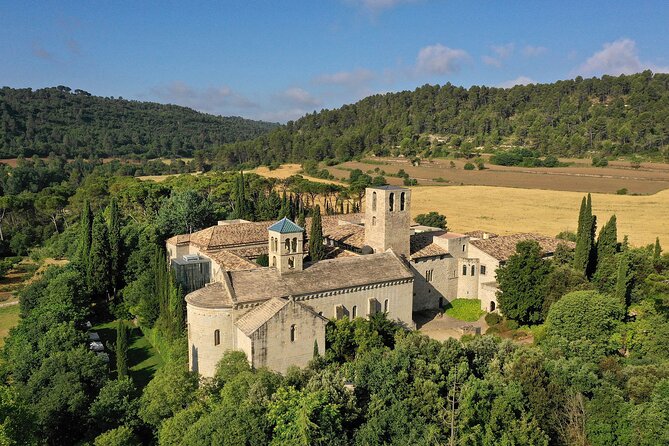
Món Sant Benet turns a monastery visit into a guided story. For $18.51, you get a one-hour, self-guided loop through the cloister, church, and wine cellar at a site outside Barcelona with medieval settings plus modern food-science nearby.
What I like most is how the visit is built around a themed audio production, including videos, so it feels planned rather than random wandering. I also like that you cover several key monastery areas in a short time, including the Montserrat gallery cells and artifacts from a long timeline.
One consideration: you’ll need to handle your own logistics to get there, since transportation isn’t included, and the whole experience is about 1 hour.
In This Review
- Key things to know before you go
- Sant Benet de Bages: medieval calm with modern food-science next door
- Your one-hour route: cloister, church, wine cellar, and Montserrat gallery cells
- Stop 1: Mon Sant Benet complex and the themed monastery experience
- What the “artifacts over 1,000 years” means for your experience
- The audioguide show: how the audio and video moments work
- Why the outside-of-Barcelona setting helps (and how to plan your time)
- What’s included vs. what’s on you
- Included
- Not included
- A tip for getting the most from a short visit
- Price and booking timing: a low-cost medieval stop that won’t derail your day
- Who should book this self-guided medieval experience?
- Should you book Mon St Benet?
- FAQ
- How long is the Mon St Benet self-guided medieval experience?
- What’s included with the ticket?
- What areas of the monastery will I visit?
- Do I need transportation that’s separate from the tour?
- Is lunch or drinks provided?
- Is there free cancellation?
Key things to know before you go
- Audio explains as you walk: the narration and explanations are set up to activate on their own, which keeps you moving.
- Multiple monastery stops, tight timing: cloister, church, wine cellar, and the Montserrat gallery cells are all on one route.
- Videos are part of the show: short, on-topic video moments help fill in context without dragging.
- A working site, not a dead museum: you’re in a larger complex that also includes a culinary research center, restaurants, and shops.
- Small-group scale: the experience listing caps at 40 travelers, which usually helps the pace stay comfortable for a self-guided visit.
Sant Benet de Bages: medieval calm with modern food-science next door
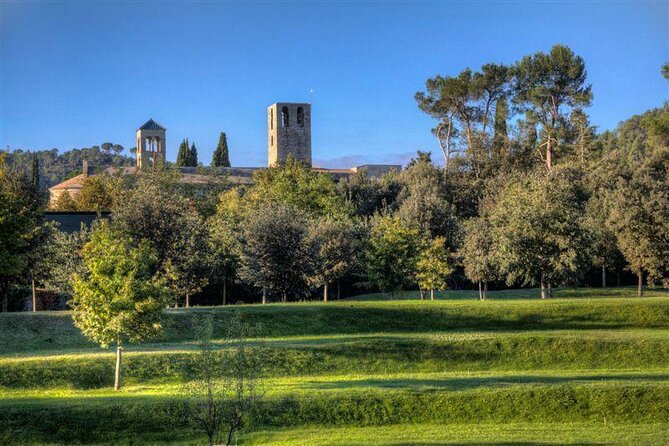
This is the kind of stop that surprises people in a good way. One part of the complex is a medieval monastery that’s been around for a very long time. The other part is modern—an international culinary research center and a cluster of restaurants and shops—so you get history without feeling like you’ve stepped into a forgotten ruin.
The practical win is that you’re not trying to “figure it out.” Your visit runs on an audioguide designed for the main areas of the site, so you know where to go and what you’re looking at. The route covers the big-ticket monastery spaces: the church, the cloister, the wine cellar, and the cells in the Montserrat gallery. For many people, that’s exactly what you want on a tight day near Barcelona.
The vibe is also outdoorsy, in a good way. You’re in natural grounds just outside the city, so even if you only spend about an hour, you’ll likely come away with that rare mix: quiet stone rooms plus fresh air and a sense of place.
More days walked with a local guide
Your one-hour route: cloister, church, wine cellar, and Montserrat gallery cells
Think of this visit as a loop around the monastery’s main features, paced by your audio. You don’t need to be a medieval expert. The production does the heavy lifting by turning architecture and objects into a story you can follow while you walk.
Stop 1: Mon Sant Benet complex and the themed monastery experience
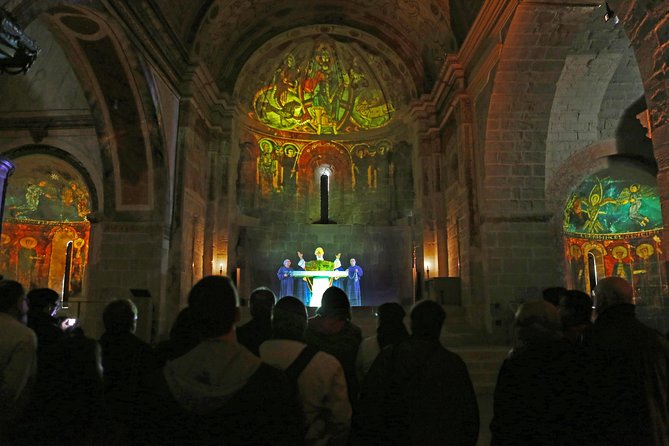
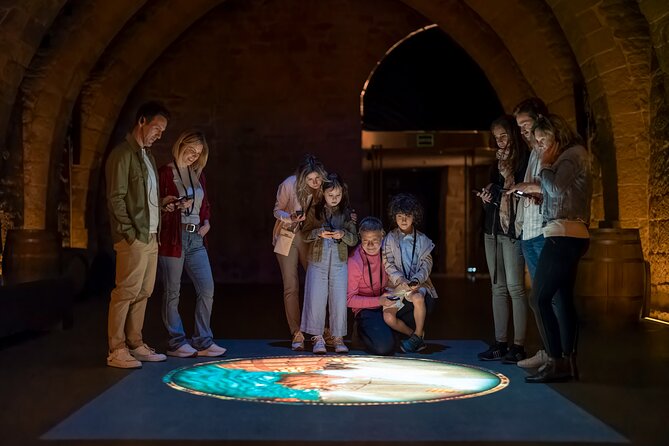
You start at Món Sant Benet’s medieval monastery setting, where the visit is presented as a museum production called One thousand years of sensations. It’s meant to make the past feel closer—using voices, everyday noises, and past images triggered along your route. The goal isn’t to overwhelm you with dates. It’s to help you connect spaces to lived routine.
You’ll move through the principal areas of the monastery site:
- The church: This is where the architecture and layout start to make sense. Churches in monastic complexes were more than buildings; they structured the day and shaped community life.
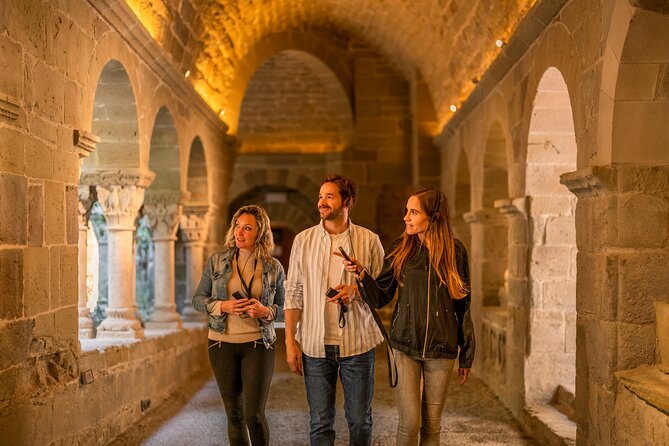
- The cloister: If you’ve ever felt the “breathing” of a quiet courtyard space, you’ll understand why cloisters matter. They connect movement, light, and daily rhythm.
- The wine cellar: This is where the practical side of monastic life comes in. A monastery wasn’t only prayer and study. It also produced food and drink, and it needed storage and careful processes.
- Cells in the Montserrat gallery: The Montserrat gallery cells add a more human scale to the visit. Even without a lot of background, you can grasp that these were small, lived-in spaces within a larger religious world.
The route is built so you see key zones instead of getting stuck in one room. The upside is efficiency. The trade-off is that if you’re the kind of person who wants to linger for an hour in one space, you may find the total time a bit tight.
What the “artifacts over 1,000 years” means for your experience
The site emphasizes artifacts created across its long timeline. In plain terms, that helps you avoid a common problem at historic sites: you visit a building, but you never get the sense of what people actually made or used there.
Even when you only have an hour, seeing objects and getting context through audio helps the monastery stop being a backdrop and become a working environment—spiritual, practical, and social.
The audioguide show: how the audio and video moments work
The audioguide is the heart of this visit, and it’s clearly designed to reduce friction. The explanations are set to activate on their own as you move through the monastery. That detail matters more than it sounds. It means you’re not constantly stopping to scan plaques or guessing whether you’re in the right spot.
You’ll also encounter video moments built into the experience. The key point from a strong review pattern is that these videos are the right length and focused, and they don’t feel like filler. That’s a big deal when you’re touring something as quiet as a monastery—long media sessions can break the atmosphere. Here, the videos are meant to support what you’re seeing.
If you like experiences that feel “guided” without a human group leader, this approach is a good match. You’re free to move at your own pace, but you still get direction.
One more practical thought: bring the mindset that this is a themed production. If you go in expecting only silent sightseeing, you’ll miss the fun. The audio is part of the architecture of your day.
Not quite right? Other Barcelona tours we have been out on
- Casa Batllo Admission Ticket with Intelligent Audio Guide★ 4.5 · 3,168 reviews
- Barcelona: Mies van der Rohe Pavilion Ticket and Audio Guide★ 4.6 · 380 reviews
- Barcelona: Montjuïc Cable Car Ticket with Audio Guide★ 3.9 · 270 reviews
Why the outside-of-Barcelona setting helps (and how to plan your time)
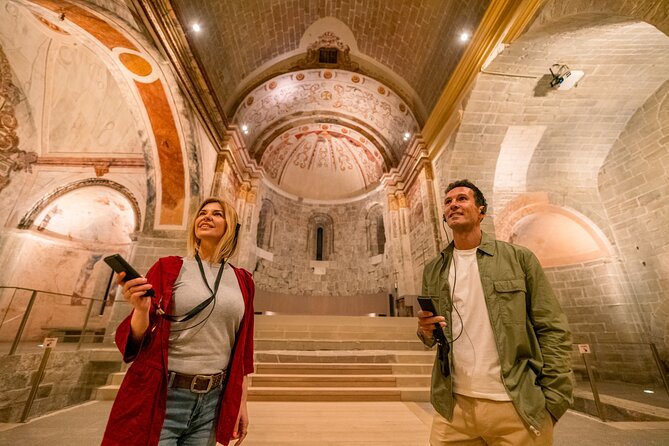
Sant Benet de Bages sits just outside Barcelona, in natural surroundings. That matters because the monastery isn’t competing with city noise. You get a calmer environment, and you can take a breather between sections.
The visit is short—about 1 hour—so it fits into a day without swallowing it. I’d plan it as either:
- a focused cultural break between busier sights, or
- a final stop when you want something calmer and more reflective before dinner.
Since transportation isn’t included, your day plan should account for the trip to the complex. If you’re staying in central Barcelona, you’ll want to leave extra time for transit and a little buffer for arrival.
What’s included vs. what’s on you
This is where the value becomes clearer.
Included
- Audioguide (this is the main value driver)
- Your admission covers the monastery experience route
Not included
- Transportation to/from the attraction
- Drinks
- Hotel pickup and drop-off
- Lunch
The big “value” question isn’t just the price. It’s what you get for that price. At $18.51 with the audioguide included and a tight route that hits multiple monastery areas, you’re paying for a structured, self-guided story—not just access to a building.
A tip for getting the most from a short visit
Since you only have about an hour, don’t overthink it when you arrive. Follow the flow of the audio and keep your eyes up at the key spaces as you pass through them. You’ll learn more if you treat the audio as your primary wayfinding tool.
Price and booking timing: a low-cost medieval stop that won’t derail your day
At $18.51 per person, this isn’t the kind of ticket you regret. For many people near Barcelona, it’s a sweet spot: it’s affordable, it’s short, and it’s specific. You’re not paying for an all-day excursion that you might not fully use.
The complex is also set up as an all-in-one cultural and leisure area, with a culinary research center, restaurants, and shops on-site. So even if you finish the medieval route quickly, you’re not stuck searching for something to do right away.
A practical detail: the experience is typically booked about 5 days in advance on average. That suggests demand is steady. If you have a tight schedule, book ahead so you’re not juggling last-minute options.
Who should book this self-guided medieval experience?
This works best for travelers who want:
- a self-guided visit that still feels structured,
- a quick hit of monastery highlights (church, cloister, wine cellar, gallery cells),
- an audio-first experience that uses video and sound design to explain the space.
It’s also a strong choice if you’re traveling with people who can’t agree on what kind of tour they want. One person gets the medieval setting. Another person gets the modern culinary-research context and nearby places to eat.
On the other hand, if you want deep guided explanations from a live person for every room, you might find the audio format limiting. And if you’re hoping for a half-day archaeology-style wander, the 1 hour duration can feel short.
Should you book Mon St Benet?
Yes—if your goal is a calm, well-organized medieval experience just outside Barcelona that doesn’t eat your whole day. I’d book it if you like audio-guided storytelling, want to see several key monastery spaces in one loop, and appreciate design details like explanations that start automatically.
If your top priority is transportation included, a guided group, or a longer deep-dive visit, then you might want to compare it with other options. Here, the trade is clear: you pay for a tight, audio-led route, and you plan your own travel to get there.
If you’re making a day around Barcelona and want something different from the usual city sights, this is a smart, low-stress add-on.
FAQ
How long is the Mon St Benet self-guided medieval experience?
It lasts about 1 hour.
What’s included with the ticket?
The ticket includes an audioguide. Admission to the monastery experience is included.
What areas of the monastery will I visit?
You’ll visit the monastery church, cloister, wine cellar, and the cells in the Montserrat gallery, along with artifacts and the surrounding natural grounds.
Do I need transportation that’s separate from the tour?
Yes. Transportation to/from the attraction isn’t included, and there’s no hotel pickup or drop-off.
Is lunch or drinks provided?
No. Drinks and lunch are not included.
Is there free cancellation?
Yes. You can cancel for a full refund up to 24 hours in advance of the experience start time.
More Self-Guided Tours in Barcelona
- Barcelona: Sagrada Familia Entry Ticket with Audio Guide
★ 4.6 · 105,312 reviews - Casa Batllo Admission Ticket with Intelligent Audio Guide
★ 4.5 · 3,168 reviews - Barcelona: Mies van der Rohe Pavilion Ticket and Audio Guide
★ 4.6 · 380 reviews - Barcelona: Montjuïc Cable Car Ticket with Audio Guide
★ 3.9 · 270 reviews - Montjuïc Cable Car Entry Voucher with Audio Tour on Your Phone
★ 3.5 · 37 reviews
With a Local Guide in Barcelona
- Barcelona: Sagrada Familia Entry Ticket with Audio Guide
★ 4.6 · 105,312 reviews - Barcelona: Park Guell Guided Tour with Skip The Line Entry
★ 4.7 · 17,563 reviews - Fast Track Sagrada Familia Guided Tour
★ 4.5 · 8,795 reviews - Park Guell Guided Tour with Skip the Line Ticket
★ 4.5 · 6,996 reviews - Barcelona: Sagrada Familia Skip-the-Line Guided Tour
★ 4.3 · 5,365 reviews
More Barcelona Tours on Our Radar
- Barcelona: Sagrada Familia Entry Ticket with Audio Guide
★ 4.6 · 105,312 reviews - Barcelona: Park Güell Admission Ticket
★ 4.4 · 76,534 reviews - Barcelona: Casa Batlló Entry with Self-Audioguide Tour
★ 4.7 · 25,359 reviews - Barcelona: Montjuïc Cable Car Roundtrip Ticket
★ 4.5 · 22,368 reviews - Barcelona: Hola Barcelona Public Transport Travel Card
★ 4.5 · 20,985 reviews
Just Rated Around Barcelona





Self-Guided Tours, compared.
 ★ 4.6Sagrada Familia Entry Ticket with Audio GuideFrom $39105,312 reviews
 ★ 4.5Casa Batllo Admission Ticket with Intelligent Audio GuideFrom $543,168 reviews
 ★ 4.6Mies van der Rohe Pavilion Ticket and Audio GuideFrom $10380 reviews
 ★ 3.9Montjuïc Cable Car Ticket with Audio GuideFrom $32270 reviews
 ★ 3.5Montjuïc Cable Car Entry Voucher with Audio Tour on Your PhoneFrom $3337 reviews
 ★ 4.5The Gothic Trail – Ghosts of Barcelona Exploration GameFrom $733 reviews
 ★ 3.5Gaudi and La Sagrada Familia Exterior Self-Guided Audio TourFrom $525 reviews
 ★ 4.5Sagrada Familia Skip The Queue With Audio Guide TourFrom $14320 reviews
Browse the lists this tour appears in