
Reviewed · TICKETS
Olot: Espai Cràter Volcanology Center Entry Ticket
A volcano you can step into. Espai Cràter in Olot lets you experience volcanology from the inside of the inactive Puig del Roser, and I love that you’re not stuck with just posters. I especially like the hands-on CRÀTER 360 journey, where volcanoes go way beyond Earth. One drawback to plan for: this is an entry ticket, not transportation, so you’ll handle getting there and fitting it into your day.
This volcanology center isn’t a single room. It’s a campus made up of several spaces tied to research and education, plus state-of-the-art audiovisual experiences that make the science feel practical instead of schoolbook-dry. At around $8 per person for a full day of access, it’s the kind of stop that feels like good value because you’ll actually do things there.
If you’re visiting with kids, you’ll probably have an easier time—there are child-friendly exhibits and educational games. If you’re traveling solo or as a couple, you’ll still get plenty out of it, as long as you enjoy learning through visuals, models, and interactive tech rather than quiet guided storytelling.
In This Review
- Key things I’d circle on your map
- Entering Puig del Roser: The coolest part isn’t the gadgets
- The campus flow: Sala Magma, the Bufador Classroom, and the Seismic Zone
- Sala Magma’s science-first setup and why it matters to you
- The 15 m² La Garrotxa model: fast context for first-timers
- Video-mapping and educational games: learning that sticks
- CRÀTER 360: from Mont Erebus to Jupiter’s Io
- Value for $8: what you’re really paying for
- Practical details that affect your day
- Who should book this ticket
- Should you book Espai Cràter?
- FAQ
- Where do I exchange my voucher?
- How long is the experience?
- What is included in the entry ticket?
- Is transportation included?
- Can I cancel and get a full refund?
- Can I reserve now and pay later?
- Are there starting times?
- Is Espai Cràter wheelchair accessible?
- What volcano do I enter?
- What does CRÀTER 360 include?
Key things I’d circle on your map
- Enter the inactive Puig del Roser for a firsthand sense of what this volcanic terrain means
- CRÀTER 360 goes from ocean depths to Jupiter’s Io, mixing Earth and space volcano science
- Educational games and video-mapping make the inner workings of volcanoes feel understandable
- La Garrotxa in a 15 m² model gives you geographic context fast
- A full campus of spaces connects hands-on learning with research-style areas like the Seismic Zone
Entering Puig del Roser: The coolest part isn’t the gadgets
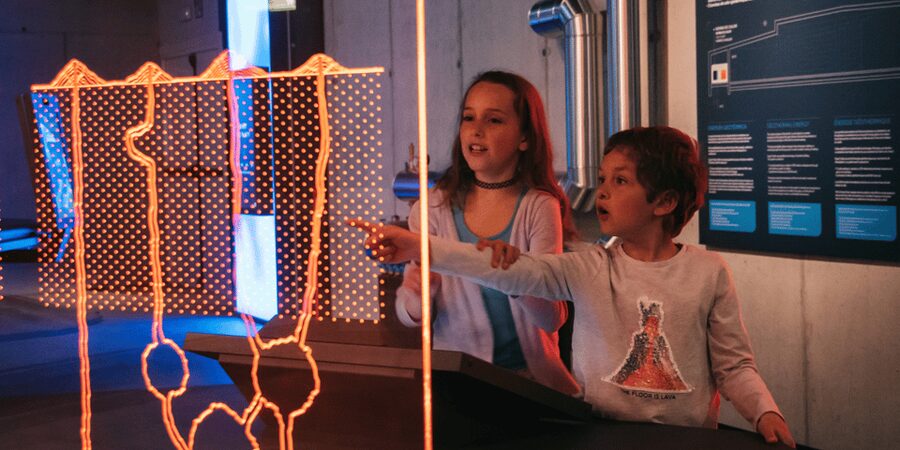
The headline here is simple: you get to enter an inactive volcano, Puig del Roser. That changes the whole vibe. Instead of learning about volcanoes at a distance, you’re stepping into a real volcanic structure, which makes the information feel grounded. Even if you only skim, the setting keeps reminding you that this is physical geology, not a slideshow.
I like that this isn’t presented as a stunt. The center frames the volcano as part of earth sciences and how volcanoes affect society. So you’re not just watching effects—you’re learning causes and context, the way any volcanologist would want to understand risk and impact.
The tradeoff is what you might not expect from a ticket like this: you’ll get the most out of your visit if you stay curious and actually participate. This isn’t a museum where you can wander for ten minutes and call it done. Give it time, because the “from inside the volcano” aspect is most valuable when you connect it to what comes next.
More Girona tickets worth grabbing

The campus flow: Sala Magma, the Bufador Classroom, and the Seismic Zone
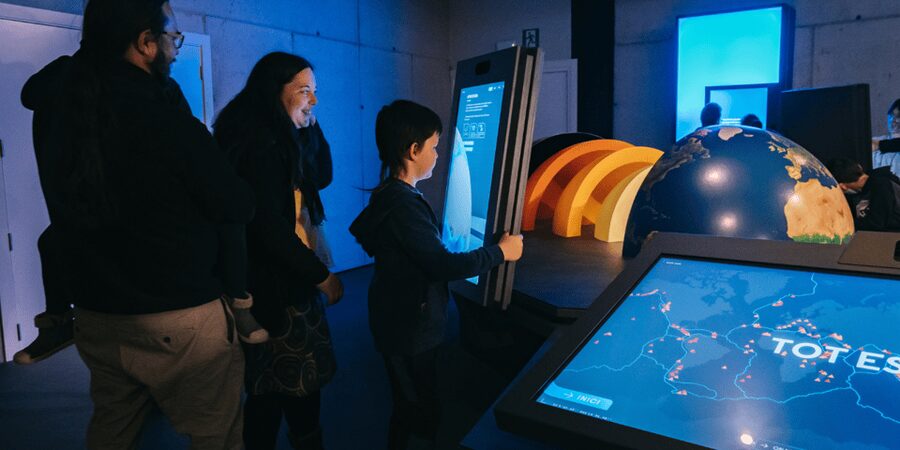
Espai Cràter is organized like a small learning world. You’re not just walking through one exhibit hall; you’re moving across buildings on the campus, each with its own role in the experience.
Here’s how I’d think about it for planning:
- Sala Magma is part of the site’s cultural and corporate setup, so it functions as a showcase space. Even when it isn’t hosting an event, its presence reinforces that this center talks to more than just classrooms.
- Bufador Classroom is aimed at educational activities, which is exactly what you want when the goal is turning big ideas into kid-friendly learning.
- Seismic Zone is designed for work and research in volcanology, giving the center a more serious backbone behind the fun.
You don’t need a science degree to enjoy any of it. But this layout matters for your expectations: you’re likely to experience a mix of media, models, and interaction that’s meant to work together.
Sala Magma’s science-first setup and why it matters to you
One thing I appreciate is that the center doesn’t feel like it was built just for tourism. It’s a multidisciplinary hub that displays information and research on volcanoes, earth sciences, and their impact on society. That wording isn’t just marketing fluff—it signals that the exhibits are built to connect volcano mechanics to real-world outcomes.
You’ll notice the center uses state-of-the-art audiovisual displays and other tech-driven experiences. That’s a big help if you learn better by seeing systems at work instead of reading long explanations. It’s also a good fit for mixed groups, where one person wants stories and another person wants visuals.
If there’s a drawback, it’s pacing. When a site leans heavily on media and technology, you can get tired faster than you would in a slower, text-based museum. Bring your attention, take small breaks if needed, and keep an eye on the interactive parts, because that’s where the center’s “real science” tone pays off.
The 15 m² La Garrotxa model: fast context for first-timers
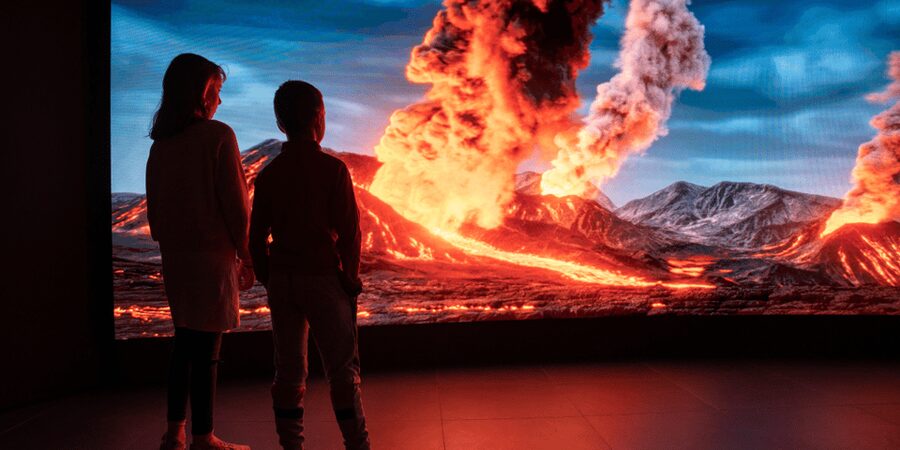
After you’ve taken in the volcano setting, you’ll want the bigger picture. Espai Cràter provides it with a 15 m² model that explains the geological formation of La Garrotxa, described as the best example of volcanic terrain in Spain.
For you, the value here is scale and orientation. A small model can do something a wall of panels can’t: it helps you form a mental map. Once you see the formation concept visually, the rest of the exhibits tend to click more quickly. You’ll also be better able to connect what you’re learning to the region you’re standing in (even if you haven’t studied local geology before).
This is one of those stops I’d prioritize early or mid-visit. If you do it too late, you might understand the mechanics but miss the “why this place” context. If you do it right after you enter Puig del Roser, it acts like a steering wheel—suddenly your visit feels less random.
Video-mapping and educational games: learning that sticks
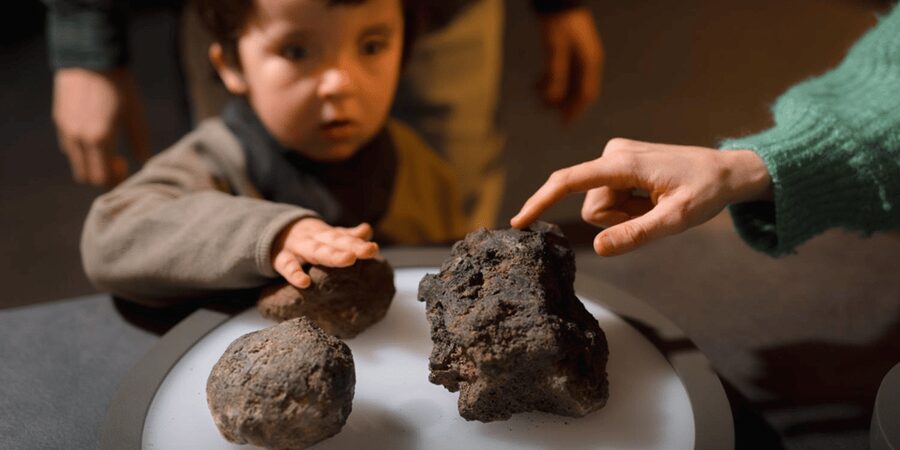
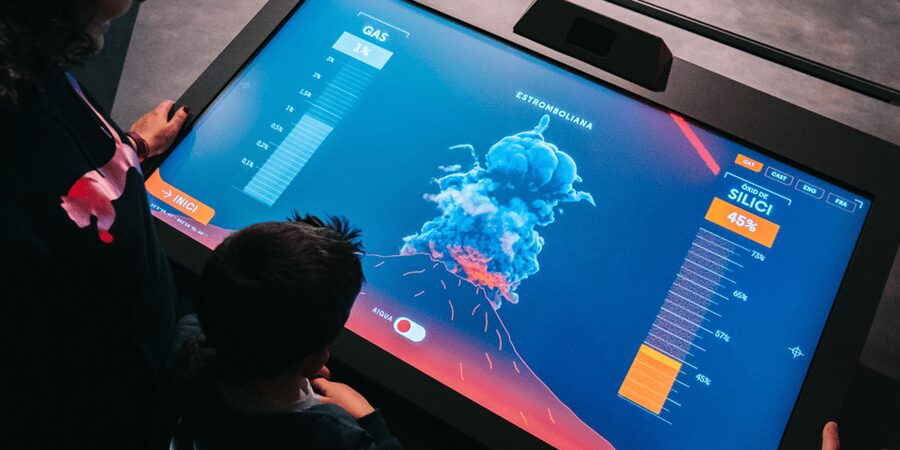
A key part of Espai Cràter is interactivity. The center uses audiovisual displays, immersive experiences (in the sense of sensory presentation), educational games, and technology such as video mapping. The goal is to show what’s happening inside a volcano and how volcanic processes connect to real impacts.
I like video mapping in this kind of space because it turns “inner workings” into something you can follow. Instead of imagining magma and layers from static diagrams, you can track the idea as it’s presented. For kids, it usually means fewer “I’m bored” moments. For adults, it can make complex concepts feel more linear.
A practical note: interactive tech can move quickly, and sometimes the best parts happen while you’re watching something you can’t pause. So if you’re a reader-type, don’t just watch—take a moment when you can to absorb what’s being explained and then come back to the physical setting afterward. The volcano entrance will help it make sense.
- Medieval Three Villages Small Group Day Trip from Barcelona★ 5.0 · 994 reviews
- Girona: Game of Thrones Small Group Tour★ 4.9 · 816 reviews
- Girona: Small Group Walking Tour★ 4.8 · 680 reviews
CRÀTER 360: from Mont Erebus to Jupiter’s Io
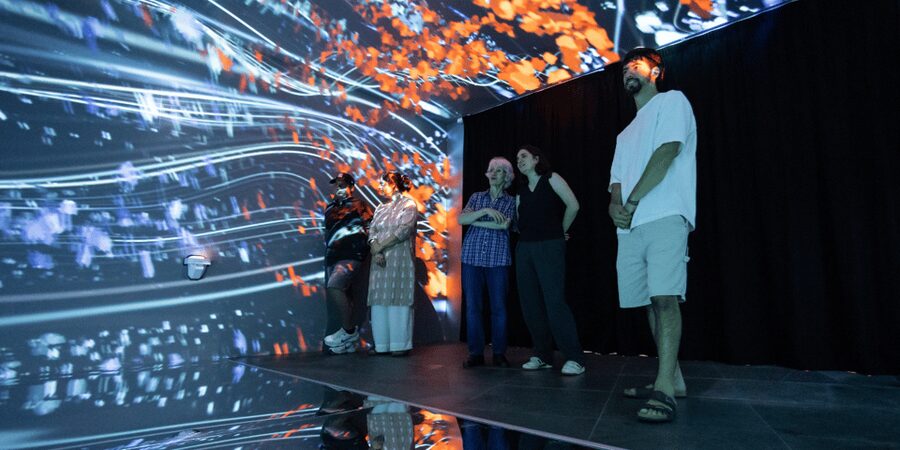
If you’re only going to remember one area, make it CRÀTER 360. This new space is built for a sensory journey that starts at the bottom of the ocean and then stretches out to volcanoes in other planets. The route is big and specific: it includes Mont Erebus in Antarctica, eruptions in the Pacific, and Jupiter’s moon Io.
For me, the genius of CRÀTER 360 is that it reframes volcanology as a universal process. You’re not learning Earth geology in a box; you’re learning a mechanism that shows up across environments. That makes the whole experience feel more “modern science” and less like a regional attraction.
What to consider: this kind of show can be intense in a good way, but it can also be a lot of visuals in a short period. If you’re sensitive to strong light, fast transitions, or high-impact sound, pace yourself. Plan to sit, watch, and then take a calmer stop afterward with something more static like models or exhibits.
Value for $8: what you’re really paying for
At about $8 per person for a 1-day entry ticket, this experience can be a standout value, especially in a place like Olot where you’re paying for time, not just a quick photo stop. The reason it feels worth it is that you’re not buying a single highlight. You’re buying access to a full learning circuit: the Puig del Roser entry, interactive technology, child-friendly exhibits, and CRÀTER 360.
Even if you don’t love every exhibit, the center still gives you multiple ways to learn—physical setting, models, hands-on games, and a big audiovisual journey. That mix increases the odds you’ll get something out of your visit, whether you’re into science, visuals, or family-friendly activities.
If your schedule is tight, you’ll still be fine—this is designed as a full day. But if you’re the type who wants only “one thing,” you might find it slightly more than you need. In that case, commit to CRÀTER 360 and the volcanic entry, then fill in the rest at your own pace.
Practical details that affect your day
Your ticket is an entry pass to Espai Cràter. You’ll exchange your voucher for the actual ticket at the reception desk on site. The experience is listed as valid 1 day, and starting times depend on availability, so you’ll want to check what time slots are open when you book.
Also note what’s not included: transportation isn’t part of the price. That means you’ll want to plan your local rides, walking routes, or parking (depending on how you’re getting there). If you’re staying nearby, you can keep your day simple.
Good news if mobility is a concern: it’s wheelchair accessible. That’s exactly the kind of practical detail you want to see for a place with indoor media and walk-through spaces.
Who should book this ticket
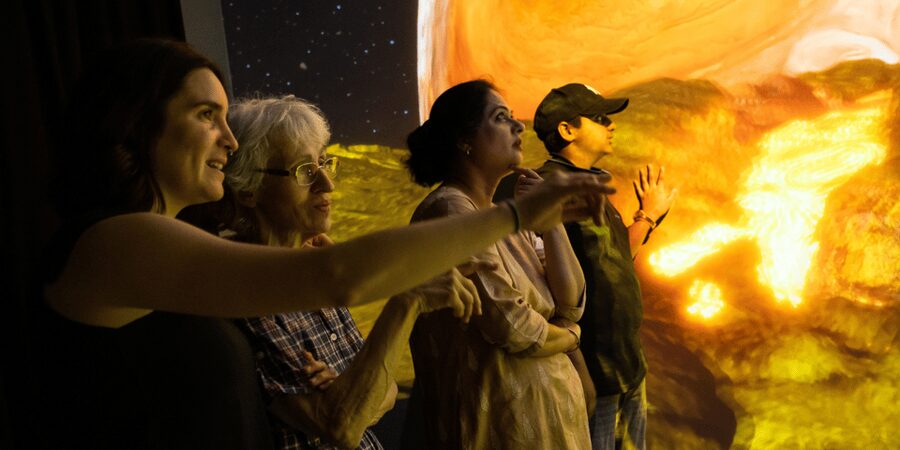
This is a great fit if any of these describe you:
- You want a science visit that doesn’t feel like homework
- You enjoy hands-on exhibits and tech like video-mapping
- You’re visiting with kids who learn better through games and visuals
- You like big, cinematic educational experiences like CRÀTER 360
It’s also worth considering if you’re a solo traveler who likes structured learning. The campus layout gives you a natural path through the content, and the volcano entrance makes it memorable without needing a long drive.
If you’re the kind of visitor who only likes guided narration or quiet galleries with lots of reading, you might find the heavy audiovisual approach less satisfying. Still, the physical volcano setting and the La Garrotxa model help balance the experience.
Should you book Espai Cràter?
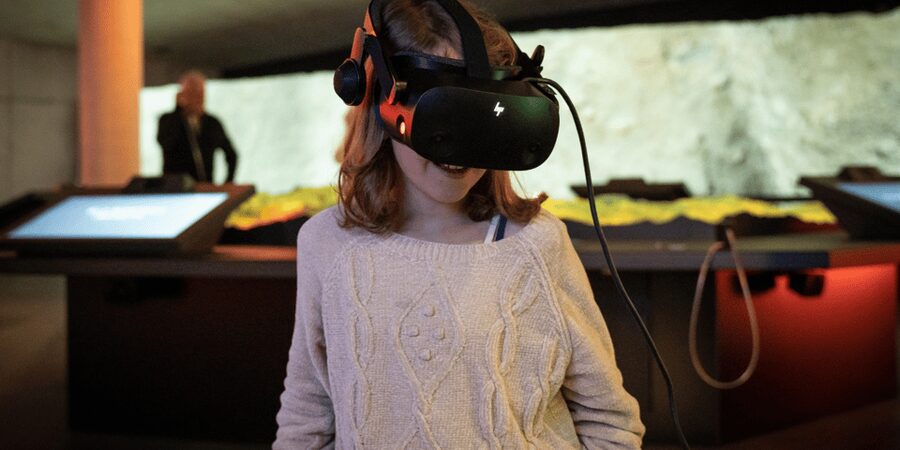
Yes, if you’re looking for a day that’s both fun and grounded in real geology. The combination of entering Puig del Roser, interactive educational games, and the planet-scale CRÀTER 360 show is a strong mix for the price. At $8, you’re not taking a huge risk—more like buying a ticket to a one-day science adventure.
Skip it only if you hate audiovisual show formats or if your time is so limited that you can’t slow down enough to take in the interactive parts. Otherwise, this is exactly the kind of place where you’ll leave with more than just a photo: you’ll have a better mental model of how volcanology works, from Earth to space.
FAQ
Where do I exchange my voucher?
Exchange your voucher for a ticket at the reception desk of Espai Cràter.
How long is the experience?
The ticket is listed as valid for 1 day, with the experience duration noted as 1 day.
What is included in the entry ticket?
The entry ticket includes admission to Espai Cràter.
Is transportation included?
No. Transportation is not included.
Can I cancel and get a full refund?
Yes. You can cancel up to 24 hours in advance for a full refund.
Can I reserve now and pay later?
Yes. There is a reserve now & pay later option.
Are there starting times?
Check availability to see starting times.
Is Espai Cràter wheelchair accessible?
Yes, it is wheelchair accessible.
What volcano do I enter?
You enter the inactive volcano Puig del Roser.
What does CRÀTER 360 include?
CRÀTER 360 is a sensory journey from the bottom of the ocean to volcanoes on other planets, including Mont Erebus in Antarctica, eruptions in the Pacific, and Jupiter’s Io volcano.
More Girona Tickets Worth Buying
- Cadaqués & Dalí House-Museum day trip from Girona (tickets included)
★ 5.0 · 13 reviews - Ticket pass to Girona Cathedral, Sant Felix and Girona Art Museum
★ 4.0 · 11 reviews - Girona: Museum of Cinema Entry Ticket
★ 4.6 · 8 reviews
More Barcelona Tours on Our Radar
- Medieval Three Villages Small Group Day Trip from Barcelona
★ 5.0 · 994 reviews - Girona: Game of Thrones Small Group Tour
★ 4.9 · 816 reviews - Girona: Small Group Walking Tour
★ 4.8 · 680 reviews - Game Of Thrones Walking Tour in Girona
★ 5.0 · 406 reviews - Girona History and Legends Tour Small Group from Girona
★ 5.0 · 299 reviews
Just Rated Around Girona



Tickets, compared.
 ★ 4.6Sagrada Familia Entry Ticket with Audio GuideFrom $39105,312 reviews
 ★ 4.4Park Güell Admission TicketFrom $2576,534 reviews
 ★ 4.5Montjuïc Cable Car Roundtrip TicketFrom $2222,368 reviews
 ★ 4.4Barcelona Aquarium: Entry TicketFrom $3416,717 reviews
 ★ 4.8Sagrada Familia Skip-the-Line Entry Ticket & TourFrom $6712,789 reviews
 ★ 4.4FC Barcelona Museum “Barça Immersive Tour” TicketFrom $3510,944 reviews
 ★ 4.5Park Guell Guided Tour with Skip the Line TicketFrom $386,996 reviews
 ★ 5.0Park Guell and Sagrada Familia Tour with Skip the Line TicketsFrom $1196,384 reviews