
Reviewed · PICASSO MUSEUM TOURS
Picasso Small Group Walking Tour with Museum Skip the Line Ticket
Picasso’s Barcelona is a real-life art lesson. This small-group walking tour connects the places he frequented with the paintings you’ll see later at the Picasso Museum, with a guide who ties the city to his early style. I like that it blends street-level stops like El Quatre Gats with museum time, so it feels like one story instead of two separate activities. A second thing I like is the skip-the-line entry to the museum, which saves a lot of time in one of the busiest art sites in town. One consideration: you’ll be on your feet for about 2 hours, and the museum itself can feel hot inside during peak times.
The vibe here is very practical: you walk central Barcelona with a small group (max 10), then you get help picking out the key works once you’re inside. In the guide roll call from past groups, names like Alex, Iris, Marco, Pilar, Sylvia, Alli, and Danielle show up for a reason: people praise their energy, pacing, and plain-language explanations of how Picasso’s work changed over time. One possible drawback to plan for is that a couple of people reported an unexpected language mix-up, so I’d double-check your booking shows English before you start.
You’re paying about $48.06 for a guided street tour plus museum admission, and the value comes from pairing the two—seeing where the ideas were born, then seeing how they turned into paint. Since it is typically booked around a month ahead, I’d aim to reserve early if you’re traveling during busy weeks.
In This Review
- Key things to know before you go
- Why Picasso’s Barcelona years (1895–1905) feel different
- Meeting at Plaça de Catalunya and walking like a student of the arts
- Quick practical tip
- El Quatre Gats: the café stop that changes how you picture Picasso
- Llotja Mar and the art training link you will not get from a guidebook
- The Frisos del Col-legi d’Arquitectes: Picasso’s only open-air works
- La Ribera to the museum: turning a neighborhood stroll into a clear story
- Beating museum lines with skip-the-line entry
- Inside the Picasso Museum: what the guide helps you notice
- Price and value: what $48.06 really buys you
- Who should book this Picasso street-and-museum tour
- Should you book it? My take for most first-time Picasso fans
- FAQ
- How long is the Picasso Small Group Walking Tour?
- What does the tour cost?
- Is the tour offered in English?
- How big is the group?
- Where do I meet the guide?
- Where does the tour end?
- What is included with the ticket?
- Does the tour skip the lines at the museum?
- Is food or drinks included?
- Can I bring a service animal?
- What is the cancellation window?
Key things to know before you go
- Skip-the-line access to the Picasso Museum: fewer delays, more time with the art
- Small group size (max 10): better chances to ask questions and stay together
- Stops tied to 1895–1905: a focus on Picasso’s Barcelona years, not just random landmarks
- El Quatre Gats and Llotja Mar: early creative hangouts and training spaces you can actually point at
- Frisos del Col-legi d’Arquitectes: Picasso’s three open-air friezes are a standout stop
- Museum highlights focused on early work: you’re guided toward major pieces from his formative period
Why Picasso’s Barcelona years (1895–1905) feel different
This tour is built around the period when Picasso lived in Barcelona from 1895 to 1905, years when he was learning fast and soaking up the local art scene. That matters because you do not just see where Picasso walked—you see how the city’s culture likely fed his early experiments.
Barcelona in that era had a mix of ambition, classes, and creative chatter. The guide uses that backdrop to explain what you’re looking at, then connects it to what comes next at the museum: the artworks made when Picasso was still finding his footing. If you’ve ever stood in front of a museum wall thinking, I get that it is important, but I do not know why, this format is aimed right at that problem.
The tour also helps you “read” the city. Instead of treating Barcelona like a photo set, you move through older streets with a purpose, and each pause adds context. That is a big reason the experience gets consistently strong marks for education and engagement.
Other ways to see the Picasso collection
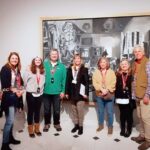
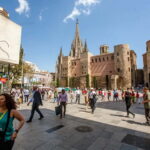
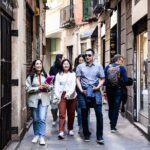
Meeting at Plaça de Catalunya and walking like a student of the arts
You start at the Oficina d’atenció turística, Plaça de Catalunya 17 (central Barcelona). That is a smart launch point: it is easy to reach by public transport, and you can orient yourself quickly before your walk begins.
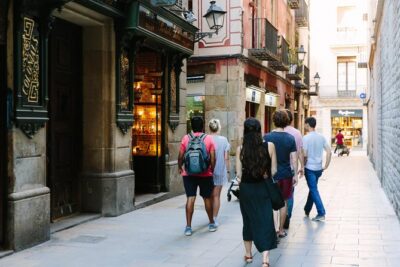
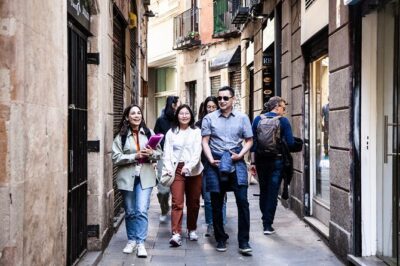
From there, expect a guided route through older parts of the city—one of the big themes is Picasso’s everyday world: cafés, training spaces, and the kinds of public places where a young artist would look, talk, and learn. Some of the route is described as bohemian thoroughfares, and others mention the Gòtic area and squares, which makes sense given how many of Picasso’s early Barcelona hangouts sit in the historic core.
The walking portion is roughly 2 hours total (including time that carries you toward the museum). With a group capped at 10, the pace is usually easier to manage than larger tours. Still, bring comfortable shoes. You want to be able to stop, look up, and listen without needing a recovery break every 10 minutes.
Quick practical tip
Before you go in, you’ll get the most out of the museum if you arrive ready to look closely. The guide helps you target the highlights, but you still want to let your eyes do the work when a painting connects back to a street stop you just saw.
El Quatre Gats: the café stop that changes how you picture Picasso
One of the most specific, memorable stops is El Quatre Gats, a well-known Barcelona café linked to the artist’s social circle. This is not just a name-drop. The guide uses it to explain how young artists built networks—people meeting to trade ideas, critique work, and fuel each other’s ambition.
That makes the stop feel alive. You can stand in the general area and connect the cultural energy of a café scene to Picasso’s early development. It also helps if you have only ever seen Picasso as the final, famous figure. Here, you get him as a working young artist surrounded by conversation and risk-taking.
El Quatre Gats is also a great “memory anchor.” A lot of Picasso’s work changes over time, and the tour is trying to keep that story coherent. The café moment gives your brain a human-scale reference point.
Llotja Mar and the art training link you will not get from a guidebook
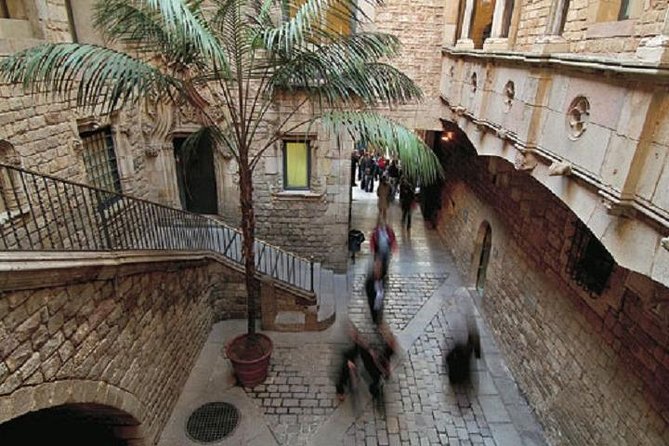
Another key stop is Llotja Mar, described as an art school where Picasso honed his craft. This part of the experience matters because it puts Picasso’s creativity in the real world of instruction and practice.
If you care about how artists learn, this stop is a reminder that style does not appear out of thin air. Training, critique, and time spent making things are part of the story—then later you see those choices show up on the canvas.
You will also get a quick look at details tied to Barcelona’s teaching and artistic culture. It is the kind of stop that feels small from the outside, but once the guide frames it, it starts to make sense.
More Barcelona tickets worth grabbing
- Barcelona: Sagrada Familia Entry Ticket with Audio Guide★ 4.6 · 105,312 reviews
- Barcelona: Park Güell Admission Ticket★ 4.4 · 76,534 reviews
- Barcelona: Montjuïc Cable Car Roundtrip Ticket★ 4.5 · 22,368 reviews
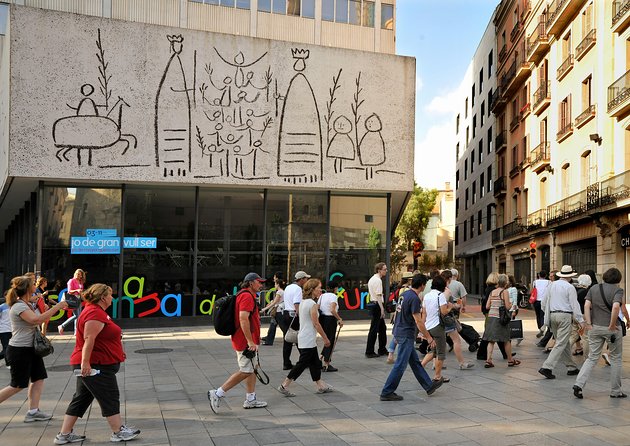
The Frisos del Col-legi d’Arquitectes: Picasso’s only open-air works
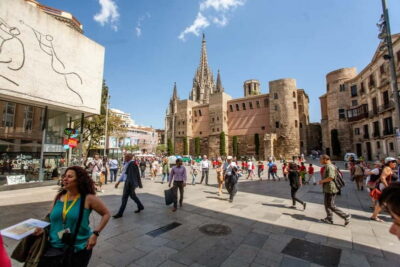
Then comes a particularly cool moment: the tour pauses at the Frisos del Col-legi d’Arquitectes, where you can admire three friezes linked to Picasso. The important claim here is that these are described as his only open-air works.
That single fact changes the stop from sightseeing to something more meaningful. Open-air art is exposed to light, weather, and the daily flow of pedestrians. So when you see these friezes on a building facade, it is a different kind of presentation than a museum gallery. You are seeing Picasso’s work in the middle of the city’s everyday motion.
The guide’s job here is crucial. People who enjoy this tour often do so because the guide explains techniques and how the paintings connect back to early years. That same explanation style tends to make small exterior details click into place.
La Ribera to the museum: turning a neighborhood stroll into a clear story
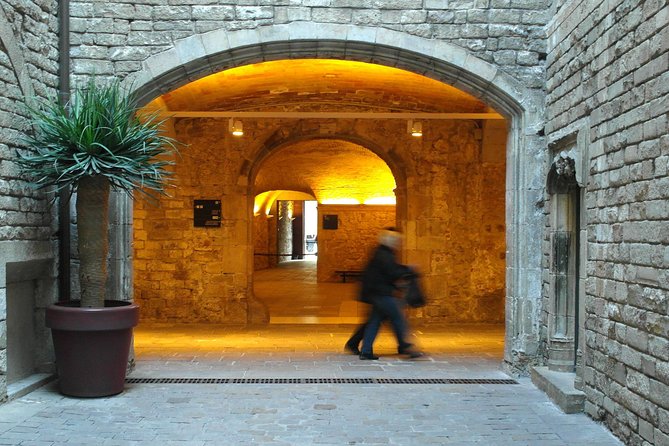
As you make your way toward the Picasso Museum, the route includes a stroll through La Ribera, a historic quarter often associated with old Barcelona atmosphere. This part is less about one single “must-see” object and more about pacing your attention.
Walking through the area gives your brain time to reset after the street-specific stops. It also sets you up for the museum, where the focus becomes intense: there are thousands of artworks, and without guidance it is easy to get lost in the scale.
If you want to do the museum efficiently, this tour format helps. You are not trying to see everything. You’re trying to see the right things first.
Beating museum lines with skip-the-line entry
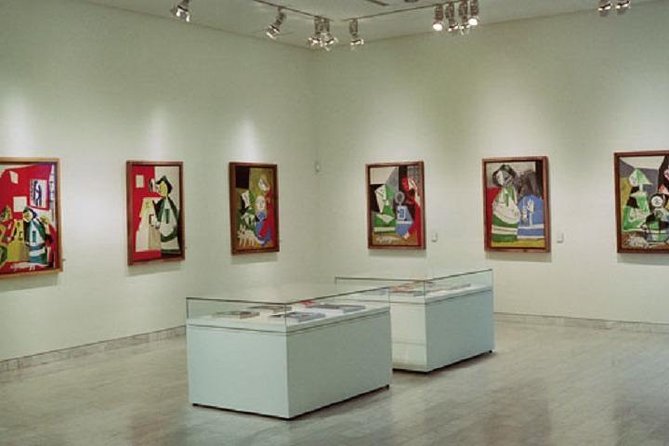
The museum is famous, and it often has long lines. The major practical win here is the skip-the-line ticket, which lets you move inside without waiting with everyone else.
That time savings matters because the Picasso Museum is not just large—it is concentrated with meaning. Once you are inside, you want enough energy to follow the guide’s highlights and let the early-work storyline land.
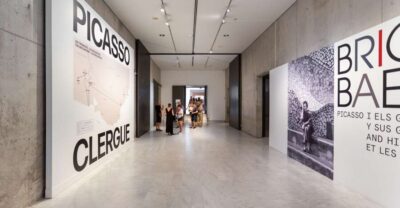
The museum visit is where the tour connects the dots. You’ll see over 4,000 artworks across the museum’s collection, and the guide helps you navigate to major highlights, many tied to Picasso’s early years. That is a good fit if you are new to Picasso or if you have seen some pieces before but want the timeline explained in plain language.
Inside the Picasso Museum: what the guide helps you notice
Once you’re in, the guide leads you through the museum’s key areas rather than letting you wander aimlessly. Past groups praised guides for being engaging and for explaining how Picasso’s work evolved, and that approach shows up in the way the tour is designed: street stops first, then early-life painting highlights.
The museum is not only about seeing art. It is also about learning how to look:
- what changes in technique over time
- how early people and events influenced his output
- why certain works matter in the bigger arc
There is also a very practical comfort note from people who attended: the museum can be warm inside. If that affects you, wear light layers and plan for a slower pace at the start. Take the first few minutes to warm up, then settle into the artwork.
Group size also affects the museum experience. With a cap of 10, the guide can keep everyone together and answer questions without turning the visit into a race. Some people specifically called out guides like Alex and Iris for encouraging questions and keeping a steady pace.
Price and value: what $48.06 really buys you
At $48.06 per person, you’re paying for two things: a guided walking tour plus admission to the Picasso Museum. The value is not only the ticket. It is the pairing.
If you tried to do this on your own, you’d have to figure out:
- which Barcelona locations connect to Picasso’s early years
- how to sequence them so they tell a story
- how to choose what to see first inside the museum
You also risk losing time to museum queues. The skip-the-line entry is a big deal in a place where waiting can eat your afternoon.
One more value angle: the tour is typically booked about 32 days in advance on average. That tells me this is a well-used route, likely because it hits the sweet spot for people who want the Picasso story without turning their trip into spreadsheets.
Who should book this Picasso street-and-museum tour
This tour is a strong match if:
- you want a first pass through Picasso that makes his evolution easier to understand
- you like history that connects to real streets, not just plaques
- you prefer a guide to point out key works and explain techniques
- you want a small group with a pace that allows questions
You might consider skipping it if:
- you want a totally self-directed museum visit with zero walking
- you hate heat indoors, since the museum can feel uncomfortable for some people
- you are very sensitive to language issues and do not want to risk any mismatch (I’ll give you a fix in the FAQ)
Should you book it? My take for most first-time Picasso fans
If your goal is to leave Barcelona feeling like you actually understand Picasso’s early years in the city, this is an efficient way to do it. The walking portion gives context, and the museum portion turns that context into real visual evidence, with skip-the-line entry doing the practical heavy lifting.
My favorite part is the logic: streets first, paintings second. When the guide points you toward highlights created during Picasso’s formative early life, you’re not starting from scratch. You already have a sense of the cafés, the training spaces, and the places where he moved around.
If you are short on time and want the best return per hour, this tour is a solid pick.
FAQ
How long is the Picasso Small Group Walking Tour?
The tour is about 2 hours (approx.).
What does the tour cost?
The price is listed as $48.06 per person.
Is the tour offered in English?
Yes, it is offered in English.
How big is the group?
The maximum group size is 10 travelers.
Where do I meet the guide?
The meeting point is Oficina d’atenció turística, Plaça de Catalunya 17, L’Eixample, 08002 Barcelona, Spain.
Where does the tour end?
The tour ends at Carrer de Montcada 23, Ciutat Vella, 08003 Barcelona, Spain.
What is included with the ticket?
The tour includes a professional guide and admission to the Picasso Museum.
Does the tour skip the lines at the museum?
Yes. The experience includes a skip-the-line museum entrance ticket.
Is food or drinks included?
No. Food and drinks are not included.
Can I bring a service animal?
Yes. Service animals are allowed.
What is the cancellation window?
Free cancellation is available up to 24 hours in advance for a full refund.
More Ways to Tour Barcelona
- Barcelona: Casa Batlló Entry with Self-Audioguide Tour
★ 4.7 · 25,359 reviews - Barcelona: 24 or 48-Hour Hop-On Hop-Off Bus Tour
★ 4.4 · 20,872 reviews - Barcelona: Park Guell Guided Tour with Skip The Line Entry
★ 4.7 · 17,563 reviews - Barcelona: Sagrada Familia Skip-the-Line Entry Ticket & Tour
★ 4.8 · 12,789 reviews - Barcelona: FC Barcelona Museum “Barça Immersive Tour” Ticket
★ 4.4 · 10,944 reviews
More Barcelona Tours on Our Radar
- Barcelona: Sagrada Familia Entry Ticket with Audio Guide
★ 4.6 · 105,312 reviews - Barcelona: Park Güell Admission Ticket
★ 4.4 · 76,534 reviews - Barcelona: Casa Batlló Entry with Self-Audioguide Tour
★ 4.7 · 25,359 reviews - Barcelona: Montjuïc Cable Car Roundtrip Ticket
★ 4.5 · 22,368 reviews - Barcelona: Hola Barcelona Public Transport Travel Card
★ 4.5 · 20,985 reviews
More of the Picasso Museum
- Barcelona: Picasso Museum Skip-the-Line Guided Tour
★ 4.5 · 3,355 reviews - Picasso Museum Skip-the-Line Guided Tour
★ 4.5 · 1,079 reviews - Barcelona: Small Group Picasso Tour with Picasso Museum
★ 4.6 · 698 reviews - Picasso Museum and Walking Tour Plus Optional Wine & Food Tasting
★ 5.0 · 596 reviews - Barcelona: Picasso Museum Entry, Digital Guide & Born Walk
★ 3.6 · 148 reviews
Just Rated Around Barcelona





Picasso Museum Tours, compared.
 ★ 4.5Picasso Museum Skip-the-Line Guided TourFrom $443,355 reviews
 ★ 4.5Picasso Museum Skip-the-Line Guided TourFrom $441,079 reviews
 ★ 4.6Small Group Picasso Tour with Picasso MuseumFrom $47698 reviews
 ★ 5.0Picasso Museum and Walking Tour Plus Optional Wine & Food TastingFrom $48596 reviews
 ★ 3.6Picasso Museum Entry, Digital Guide & Born WalkFrom $39148 reviews
 ★ 4.6Skip-the-Line Guided Tour of the Picasso MuseumFrom $42127 reviews
 ★ 3.9Picasso Museum Guided TourFrom $42124 reviews
 ★ 4.3Picasso Museum and Walking Tour Plus Wine Tasting UpgradeFrom $47111 reviews
Browse the lists this tour appears in