
Reviewed · TOURS
Sweet Barcelona Tour
Barcelona tastes better with a sweet trail. This 2-hour guided walk turns central Barcelona into a stop-by-stop candy map, from Cacaolat origins to chocolate cake legends, with mobile tickets and lots of tastings along the way.
I especially like the family-friendly pace: short stops, plenty of interaction, and guides who handle kids well, including Delores and Oliver, plus Cristina when she’s leading. I also like the variety of sweet culture—you’re not stuck on one type of dessert, and you still get a sense of the city’s older food traditions as you walk.
One thing to consider: it’s very sugar-focused, so if you mostly prefer savory food, you may feel a bit overwhelmed after a few tastings.
In This Review
- Key moments to look forward to on the Sweet Barcelona Tour
- La Rambla to the Gothic Quarter: why this route feels like Barcelona
- Price and value: what you’re paying for in 2 hours
- How the tastings and walking actually feel
- Stop 1: Granja M. Viader and the Cacaolat origin story
- Stop 2: Mercat de la Boqueria’s sweet-and-fruit “food theater”
- Stop 3: Escribà on Carrer de la Rambla and the cake-for-everyone angle
- Stop 4: Plaza del Pi, Santa Maria del Pi, and the outdoor market feel
- Stop 5: Carrer Petritxol, old cafés, and the turrón tastings
- Stop 6: Barcelona Cathedral square and the Roman walls lesson
- Stop 7: La Colmena for merengues and old-school candy
- Stop 8: Cafès El Magnífico, Barcelona’s first coffee store
- Stop 9: Santa Maria del Mar, stones from Montjuïc, and Gothic scale
- Stop 10: Bubó Barcelona and the chocolate cake prize angle
- Stop 11: Botifarres shop and the sweet-chocolate sausage twist
- Stop 12: Casa Gispert and the oldest roasting oven in Europe
- Stop 13: Brunells, centenary ovens, and the artisan butter croissant
- Who this tour suits best (and who should plan differently)
- Getting the most out of your sweet-tooth day
- Should you book Sweet Barcelona Tour?
- FAQ
- What is the duration of the Sweet Barcelona Tour?
- How much does the tour cost per person?
- Where do we meet for the tour?
- Where does the tour end?
- What time does the tour start?
- Is it a private tour?
- What’s included in the tour?
- Do we get a mobile ticket?
- Is the tour suitable for families and kids?
- Are service animals allowed?
- Can I get a refund if I cancel?
Key moments to look forward to on the Sweet Barcelona Tour
- Cacaolat backstory at Granja M. Viader, plus a taste of the chocolate drink tied to its 1930s invention
- La Boqueria’s fruit-and-sweet sections in a market with roots going back to the 1840s
- Iconic pâtisserie stops like Escribà and La Colmena for merengues, candies, and signature cakes
- Chocolate-and-churros origins on Carrer Petritxol, with a Christmas classic like turrón
- Old Barcelona landmarks outside the shops: Roman walls, Roman gates, and major Gothic basilicas
- Sweet-meets-original-Bercelona stops such as Cafès El Magnífico and Casa Gispert
La Rambla to the Gothic Quarter: why this route feels like Barcelona
This tour runs through the center of Barcelona, with your start at Font de Canaletes on La Rambla (La Rambla, 133). From there, you move through the older streets where food shops have been operating for generations, and the stops are timed so you’re always doing something: tasting, walking, or learning.
The best part is that it’s not only about the desserts. You also get brief views of landmark architecture along the way, so the city feels connected to the food instead of random shop-to-shop wandering. That is handy if it’s your first time in Barcelona.
Also, it’s a private tour, meaning it’s just your group. That typically makes it easier to enjoy the pace with kids or slow walkers, because the guide can keep things moving without juggling strangers.
Torn between options? Line this one up against other Barcelona picks.

Price and value: what you’re paying for in 2 hours
At $248.72 per person for about 2 hours, you’re paying for three things: guided storytelling, multiple tastings, and shop access in a tight route. You’re not just buying snacks on your own—you’re getting a curated loop of historically themed stops, including places tied to big food names and Barcelona firsts.
The itinerary also notes admission tickets as free at the stops listed, and the tour includes samples plus one artisan pastry. So the cost isn’t only covering the guide; it’s also covering the food portion.
Is it “cheap”? No. But if you want to taste many types of Barcelona sweets without planning each shop yourself, the value can feel fair—especially for families who’d rather pay for the structure than chase cues and menus.
How the tastings and walking actually feel
Expect a walking tour with short stop times, usually around 5 to 20 minutes each. That matters because you don’t end up stuck in one line for an hour. You get a steady flow of tastes, plus quick context from the guide.
Tasting totals are spread across the route so you’re not forced to eat everything at once. You’ll sample things like chocolate drinks, nougat-style sweets, merengues, candies, and several pastry types. Your sugar level will rise, but it won’t all hit at the same minute.
And yes, you’ll have a mobile ticket. That’s one less thing to manage in a busy area like La Rambla.
Stop 1: Granja M. Viader and the Cacaolat origin story
You start at Granja M. Viader, a traditional cheese and milk shop dating back to 1870. This is one of the tour’s anchor points because it ties a familiar Barcelona chocolate drink to a specific place and timeline: Cacaolat was created in the 1930s.
What you do here is simple and fun: you taste Cacaolat, their traditional chocolate drink. It’s a great first bite because it sets the theme—this isn’t just modern dessert culture, it’s tied to older daily habits, like milk-and-chocolate traditions.
Quick reality check: a chocolate drink early can be a lot if you usually prefer lighter sweets. If you’re sensitive to thick chocolate, take small sips and save the rest for later in the route.
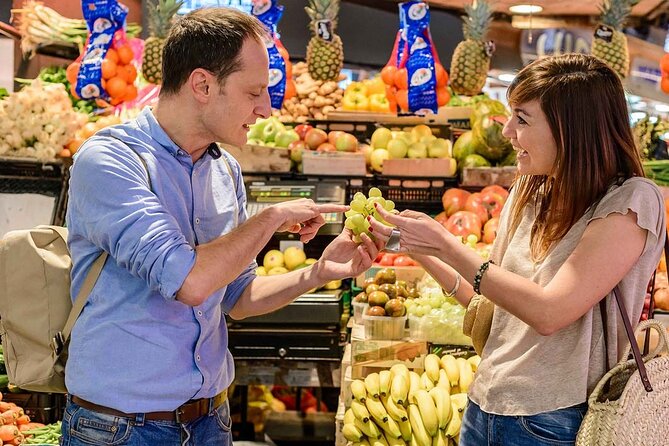
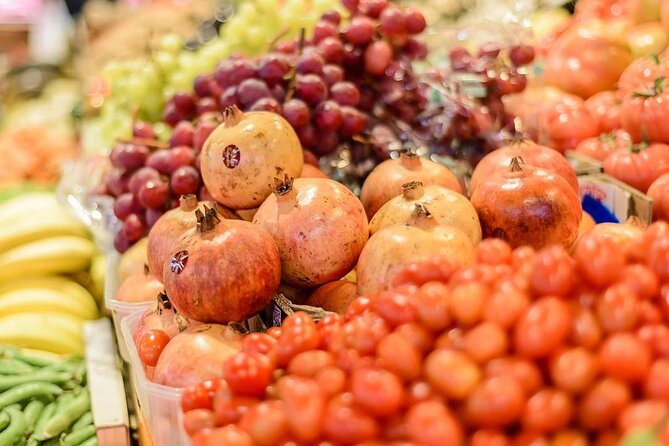
Stop 2: Mercat de la Boqueria’s sweet-and-fruit “food theater”
Next comes Mercat de la Boqueria, one of Barcelona’s best-known markets. Here you focus on the fruit and sweet sections. The market has strong roots too: it’s been operating since 1840, and the building has a former convent connection (St Joseph).
I like this stop because it widens the tour beyond pastry counters. Markets show you how sweets sit inside everyday food life—alongside fresh fruit, snacks, and local buying habits.
Also, it helps break up the heavy pastry rhythm. Fruit and sweet stalls give you texture variety right after a chocolate drink.
- Barcelona: Sagrada Familia Entry Ticket with Audio Guide★ 4.6 · 105,312 reviews
- Barcelona: Park Güell Admission Ticket★ 4.4 · 76,534 reviews
- Barcelona: Casa Batlló Entry with Self-Audioguide Tour★ 4.7 · 25,359 reviews
Stop 3: Escribà on Carrer de la Rambla and the cake-for-everyone angle
You then reach Escribà Rambla, the famous pâtisserie tied to chef Christian Escribà. This is where the tour gets extra “wow” without turning into a museum. You learn how this shop connects to major events and famous occasions—like cakes linked to the U2 concert in Barcelona and the Oscar-winning film All about my mother.
You get a short stop here, so it’s not a long demo. The point is to show you a pastry institution that has become part of Barcelona’s public story, not just a place for locals to grab a treat.
Stop 4: Plaza del Pi, Santa Maria del Pi, and the outdoor market feel
At Plaza del Pi, you’re in a different mood: a traditional outdoor market atmosphere during festivities, plus the Gothic Basilica of Santa Maria del Pi nearby. This stop works because it gives the route a “street” texture between shop interiors.
It’s also a practical break. You can reset your appetite, look around, and feel the neighborhood scale before continuing toward the next sweet lanes.
Stop 5: Carrer Petritxol, old cafés, and the turrón tastings
Carrer Petritxol is one of Barcelona’s classic sweet streets. The tour explains that this area is tied to the tradition of chocolate and churros (and melindros). That link matters because it shows how dessert culture spreads—through cafés, routines, and neighborhood foot traffic.
Then you taste turrón, a nougat delicacy traditionally eaten during Christmas time. Even if you’re traveling outside December, this stop makes the season feel real. It’s also a nice contrast after chocolate-heavy tasting.
If you don’t love nougat, you can usually pace yourself here. The key is to taste enough to recognize the flavors, not to power through.
Stop 6: Barcelona Cathedral square and the Roman walls lesson
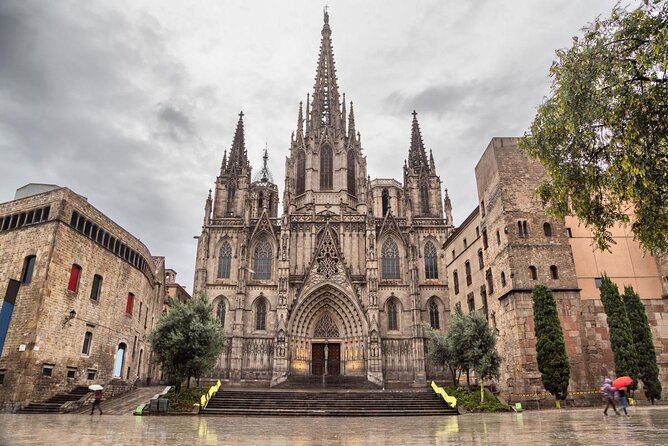
You move into the Cathedral square area, where you’ll see Roman walls and learn about the Roman gate. The tour also points out the front of the Cathedral of Barcelona.
This stop is short, but it gives you context for why Barcelona’s old streets feel so layered. Food shops are one layer; stone monuments are another. Walking between them makes the city feel cohesive.
It’s a good choice for families too. Kids often lose patience when a stop turns into a lecture, but Roman walls and gate stories are visual and easy to follow.
Stop 7: La Colmena for merengues and old-school candy
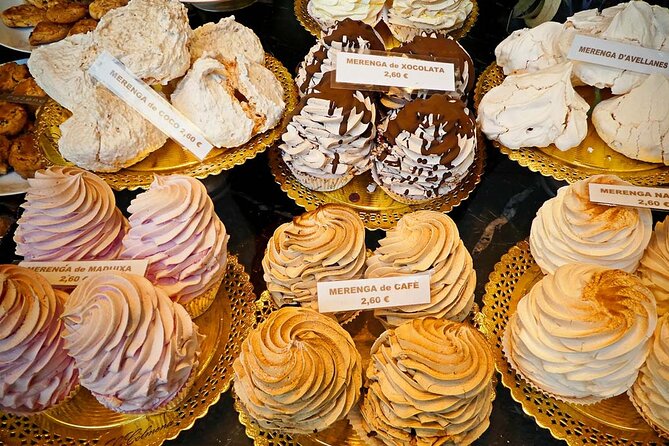
Next is La Colmena, an older pâtisserie known for merengues and candies. You’ll taste a candy made using the traditional method described for the shop.
I like this stop because it shifts from showpiece pastries to something smaller and more specific. Merengues and old candy-making traditions are the kinds of flavors that are hard to recreate at home, so tasting matters more than just looking.
If you’re traveling with kids, this can be a favorite stop because the sweets tend to feel collectible and snackable.
Stop 8: Cafès El Magnífico, Barcelona’s first coffee store
Right after the candy, you hit Cafès El Magnífico, described as the first coffee store in the city. This stop is only about 5 minutes, but it’s a smart pacing tool. Coffee helps “reset” your palate between sweets, especially when the tour keeps moving.
You’re not switching into a full coffee experience here. It’s more like a quick historical marker that also gives you a taste-management break.
Stop 9: Santa Maria del Mar, stones from Montjuïc, and Gothic scale
At Basílica de Santa Maria del Mar, you’re mainly outside the church (about a 10-minute look). The tour explains how it was built with people carrying stones from the hill of Montjuïc down to the downtown area as a sacrifice.
Even for adults, this kind of construction story makes the building feel human-sized. And for kids, it turns the church into a story they can picture, not just a tall wall.
It’s a good reminder that sweets have a social role. Markets, churches, and cafés were all meeting points—people gathered, celebrated, and ate.
Stop 10: Bubó Barcelona and the chocolate cake prize angle
You then reach Bubó Barcelona, another pâtisserie with a big chocolate reputation. It’s described as having won a best chocolate cake prize in 2005, which gives you a clear reason for the attention.
This stop is short (about 5 minutes), and the tour is set up so you can get the point quickly: this is a chocolate stop that’s meant to leave a strong memory.
If you’re following this route with someone who doesn’t like chocolate cake, this is the one place they may want to sit out or switch to smaller tastes. The tour is sweet-driven, but not everyone loves chocolate cake.
Stop 11: Botifarres shop and the sweet-chocolate sausage twist
The itinerary includes a Botifarres (sausages) shop famous for a unique sweet and chocolate sausage. It’s unusual by design, and that’s what makes it memorable.
This is a good moment to think like a traveler: part of the fun of food tours is tasting things you can’t easily find elsewhere. Barcelona’s candy-and-chocolate traditions have their own local oddities, and this is one of them.
Stop 12: Casa Gispert and the oldest roasting oven in Europe
At Casa Gispert, you’re in a nuts shop known for having the oldest roasting oven in Europe (as described by the tour). You’ll spend about 10 minutes here.
This stop matters because it adds another category beyond pastries: nuts. Nuts also bring a different texture and a salty edge that makes the overall sweet route less one-note.
If you’re watching sugar intake, nuts can be your best friend on a tour like this. Still, it’s all about taste choices—you don’t need to eat everything offered.
Stop 13: Brunells, centenary ovens, and the artisan butter croissant
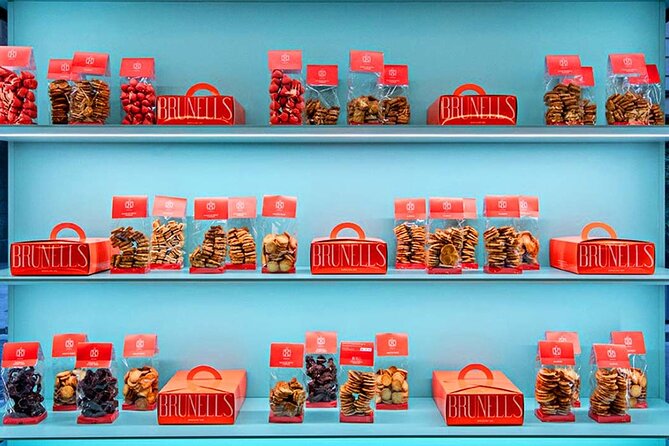
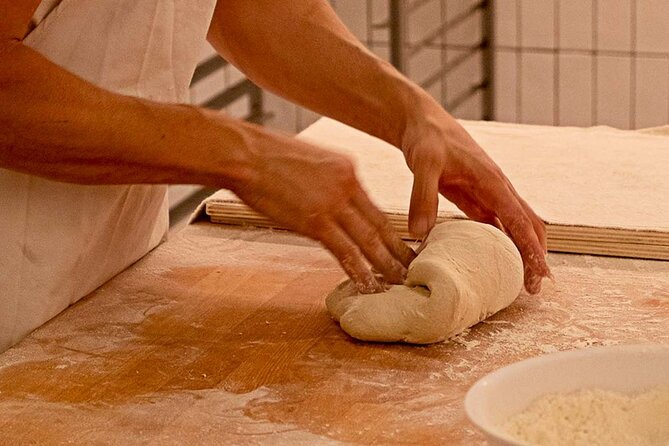
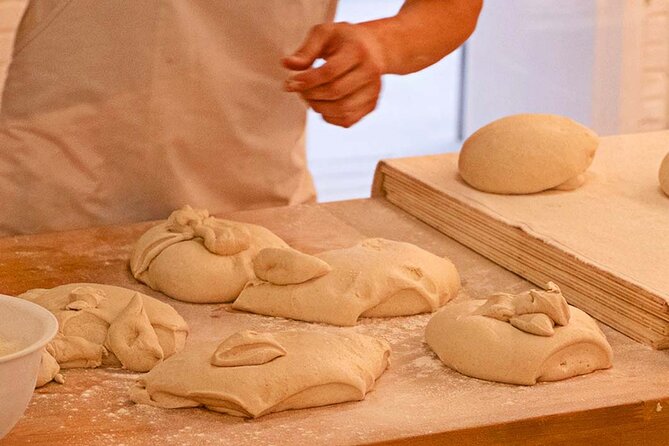
The tour ends at Brunells (Carrer de la Princesa, 22, near Jaume I metro stop and close to the Picasso Museum). This is described as home to the Best Artisan Butter Croissant in Spain 2020, and you’ll taste a traditional bakery product plus see a centenary oven.
Finishing with a croissant makes sense. Butter pastry is satisfying, not just sugary. It also gives you something you can keep thinking about when you walk away, because croissants are a “signature” food you can compare across cities.
Practical note: because this is your endpoint, arrive with a plan for what you’ll do next. The area around Jaume I and the Picasso Museum is easy to flow into if you’re continuing sightseeing.
Who this tour suits best (and who should plan differently)
This tour is a strong match if you’re:
- A family traveling with kids who need short, moving stops. The guide style is built for kid-friendly pacing.
- A food lover who wants several Barcelona sweet traditions in one compact route.
- A first-timer who wants old streets, landmark exteriors, and pastry storytelling without heavy planning.
It may be less ideal if you:
- Prefer savory food most of the time.
- Don’t like strong chocolate flavors or nougat-style sweets.
- Expect a long museum-like architecture tour. This is food-forward, with landmark views sprinkled in.
Getting the most out of your sweet-tooth day
A couple small tips can make a big difference.
- Go in hungry enough to taste, but not so hungry that everything feels heavy. The tour moves fast enough that your stomach might not catch up.
- Pace your tastings. You don’t have to finish every single sample in one go.
- Wear comfortable shoes. You’re on a walking route through central streets and squares.
And if you’re lucky with the guide assignment, you can get a lot out of it. Delores and Oliver are described as excellent with kids, while Cristina is noted as professional and focused on making the route easy to enjoy.
Should you book Sweet Barcelona Tour?
If you want a guided, sweet-focused walk that mixes tastings with quick hits of Barcelona’s older architecture, I’d book it. It’s short, structured, and built for people who would rather eat their way through the city than plan 10 separate pastry stops.
I’d think twice only if sweets aren’t your main interest, or if you know you’ll be unhappy with lots of chocolate and candy flavors in a single afternoon window. For most people with a sweet tooth—and especially families—this is the kind of tour that makes the city feel personal fast.
FAQ
What is the duration of the Sweet Barcelona Tour?
The tour runs for about 2 hours.
How much does the tour cost per person?
The listed price is $248.72 per person.
Where do we meet for the tour?
You meet at Font de Canaletes on La Rambla, address La Rambla, 133, Ciutat Vella, 08002 Barcelona, Spain.
Where does the tour end?
The tour ends at Brunells, Carrer de la Princesa, 22, Ciutat Vella, 08003 Barcelona, Spain.
What time does the tour start?
The start time is 12:30 pm.
Is it a private tour?
Yes. Only your group participates.
What’s included in the tour?
It includes samples and one artisan pastry, plus snacks during the tour.
Do we get a mobile ticket?
Yes, the tour uses a mobile ticket.
Is the tour suitable for families and kids?
The tour is described as ideal for families and foodies with a sweet tooth, and it’s designed to be child-friendly with tastings and interactive experiences.
Are service animals allowed?
Yes, service animals are allowed.
Can I get a refund if I cancel?
You can cancel for a full refund if you cancel at least 24 hours before the experience start time. If you cancel within 24 hours of the start time, the amount paid is not refunded.
More Ways to Tour Barcelona
- Barcelona: Casa Batlló Entry with Self-Audioguide Tour
★ 4.7 · 25,359 reviews - Barcelona: 24 or 48-Hour Hop-On Hop-Off Bus Tour
★ 4.4 · 20,872 reviews - Barcelona: Park Guell Guided Tour with Skip The Line Entry
★ 4.7 · 17,563 reviews - Barcelona: Sagrada Familia Skip-the-Line Entry Ticket & Tour
★ 4.8 · 12,789 reviews - Barcelona: FC Barcelona Museum “Barça Immersive Tour” Ticket
★ 4.4 · 10,944 reviews
More Barcelona Tours on Our Radar
- Barcelona: Sagrada Familia Entry Ticket with Audio Guide
★ 4.6 · 105,312 reviews - Barcelona: Park Güell Admission Ticket
★ 4.4 · 76,534 reviews - Barcelona: Casa Batlló Entry with Self-Audioguide Tour
★ 4.7 · 25,359 reviews - Barcelona: Montjuïc Cable Car Roundtrip Ticket
★ 4.5 · 22,368 reviews - Barcelona: Hola Barcelona Public Transport Travel Card
★ 4.5 · 20,985 reviews
Just Rated Around Barcelona

Tours, compared.
 ★ 4.7Casa Batlló Entry with Self-Audioguide TourFrom $3425,359 reviews
 ★ 4.424 or 48-Hour Hop-On Hop-Off Bus TourFrom $3920,872 reviews
 ★ 4.7Park Guell Guided Tour with Skip The Line EntryFrom $3117,563 reviews
 ★ 4.8Sagrada Familia Skip-the-Line Entry Ticket & TourFrom $6712,789 reviews
 ★ 4.4FC Barcelona Museum “Barça Immersive Tour” TicketFrom $3510,944 reviews
 ★ 4.4City Sightseeing Hop-On Hop-Off Bus TourFrom $3910,061 reviews
 ★ 4.5Fast Track Sagrada Familia Guided TourFrom $668,795 reviews
 ★ 5.0Montserrat Half-Day Tour with Tapas and Gourmet WinesFrom $557,359 reviews