
Reviewed · 2-HOUR EXPERIENCES
The wonders of architecture 2 hours on foot in Barcelona
Barcelona in two hours, by looking up. This architecture walk is built around color, contrast, and real construction details, moving from medieval landmarks to Gaudí’s masterpieces without wasting time. I especially like how the guide’s stories make each façade and ornament feel personal, and how the route crosses the city’s old-versus-modern line at Plaça Catalunya. One consideration: most of the big buildings have admission tickets not included, so plan extra time and cost if you want to go inside.
You start at Plaça de Ramon Berenguer el Gran in Ciutat Vella (10:30 am) and end at Casa Batlló on Pg. de Gràcia, so the walk naturally finishes in the modernist zone. I also like that it uses a mobile ticket, and it’s designed for a small group (maximum 10), which helps keep the tour relaxed instead of rushed.
This is friendly, street-level touring with a guide who explains in French. If you’re visiting with kids, it can work well too, as long as you’re the type who enjoys pointing out shapes and details rather than sprinting from stop to stop.
In This Review
- Key highlights to know before you go
- A two-hour architecture route you can actually finish
- Price and what you’re really paying for
- Getting there: start in Ciutat Vella, end in Eixample
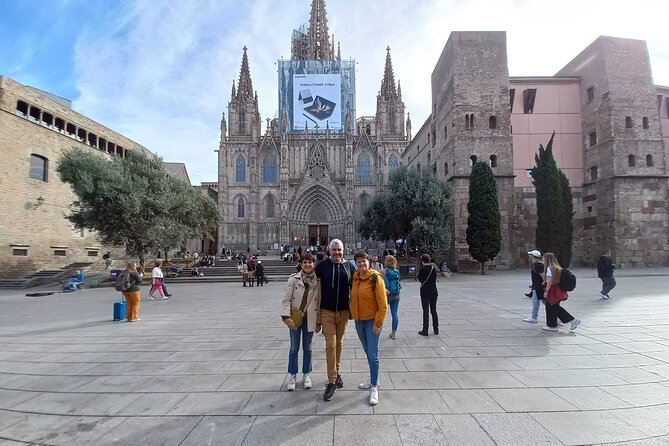
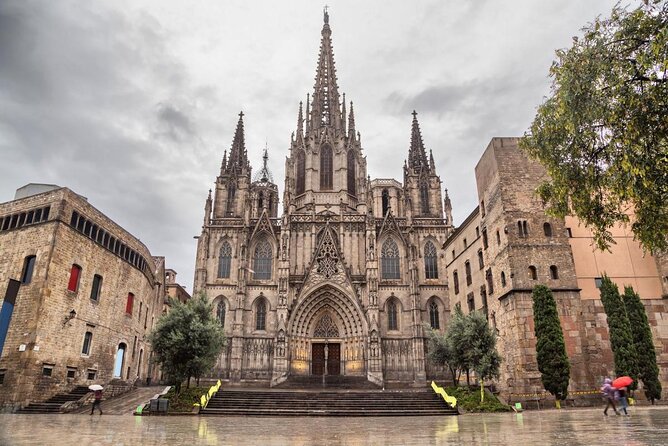
- Stop 1: Barcelona Cathedral and the stories behind the stone
- Stop 2: Palau de la Música Catalana’s architecture and myth
- Stop 3: Plaça Catalunya, the old-city versus modern-city line
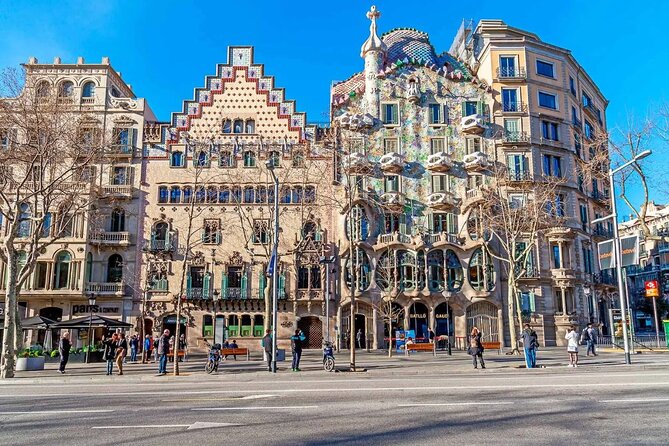
- Stop 4: Casa Lleó i Morera and the Apple of Discord
- Stop 5: Casa Amatller, another Apple of Discord face-off
- Stop 6: Casa Batlló and the Gaudí details you can spot fast
- The guide experience: relaxed, story-driven, and adaptable
- Practical tips so you get more out of each stop
- Who this tour is best for
- Should you book this architecture walk?
- FAQ
- How long is the Barcelona architecture walk?
- What does the price include?
- Where do I meet, and where does the tour end?
- What time does the tour start?
- How big is the group?
- Is the tour offered in French, and what if the weather is bad?
Key highlights to know before you go
- A tight 2-hour route: fast stops that still leave time for the “look closer” moments
- Gothic to Modernism in one sweep: Barcelona Cathedral to Gaudí in a short walk
- Palau de la Música Catalana focus: deep attention to design and Catalonia’s founding myths
- The Apple of Discord duo: Casa Lleó i Morera and Casa Amatller side-by-side in the same block
- Small group energy: up to 10 people, so questions and pace stay human
- Mobile ticket: fewer paper hassles on the day
A two-hour architecture route you can actually finish
Barcelona’s buildings don’t just sit there. They argue, they decorate, they flirt with geometry, and they tell stories in stone. What I like about this tour format is that it treats architecture like something you can learn by sight, not something you need a museum ticket for.
In two hours, you’re not trying to “cover everything.” You’re training your eye. You’ll spend short stretches at each stop—around 10 to 15 minutes—so you get momentum, then you move on while the ideas are still fresh.
Because the group is capped at 10, the guide can slow down when something grabs attention. That matters in Barcelona, where one quiet side detail can be the whole point.
Not quite right? Other Barcelona tours we have been out on



Price and what you’re really paying for
The price is $29.67 per person for about 2 hours, and that’s on the reasonable side for a guided walking experience in a major city. Here’s the key detail: admission is not included for most of the stops. Plaça Catalunya is free, but the major buildings come with “ticket not included” notes.
So the value depends on how you travel:
- If you’re happy doing street-level viewing and learning the design language from the outside, you’ll likely feel the price is fair.
- If you want interior access at multiple stops, budget extra for tickets and possibly a longer day.
In my view, the best value comes from what the guide adds: construction anecdotes, cultural context, and quick “how to read this building” tips. Without that, you’d be left with a quick glance and a photo. With it, you start noticing why the building looks the way it does.
Getting there: start in Ciutat Vella, end in Eixample
The meeting point is Plaça de Ramon Berenguer el Gran in Ciutat Vella. The tour begins at 10:30 am. The walk ends at Casa Batlló (Pg. de Gràcia, 43, L’Eixample).
That matters because it’s not just a random route. You begin in the older fabric of the city, where Gothic and medieval layers are easier to feel. Then you work your way toward the modernist world around Pg. de Gràcia.
It’s also near public transportation, which is practical. You’ll likely want to arrive a few minutes early so you’re not figuring out the last turns while the group gathers.
Stop 1: Barcelona Cathedral and the stories behind the stone
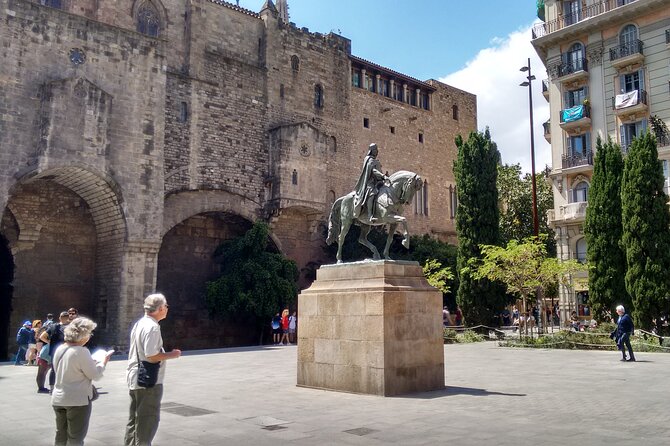
The first stop is Barcelona Cathedral. Even if you’ve seen Gothic churches before, this one has a local flavor. Your focus here is not a checklist of features. It’s the details and the anecdotes that surrounded the construction.
Expect the guide to point out how the building developed through time—how Gothic design choices connect to what people needed and believed when they built. In a short stop, that kind of storytelling is powerful. It turns “cool façade” into “I understand what I’m looking at.”
One practical note: admission is not included here. So if you want to go inside, plan to add that separately. If you’re staying outside for the stop time, you can still get a lot out of the structure and design elements at street level.
Stop 2: Palau de la Música Catalana’s architecture and myth
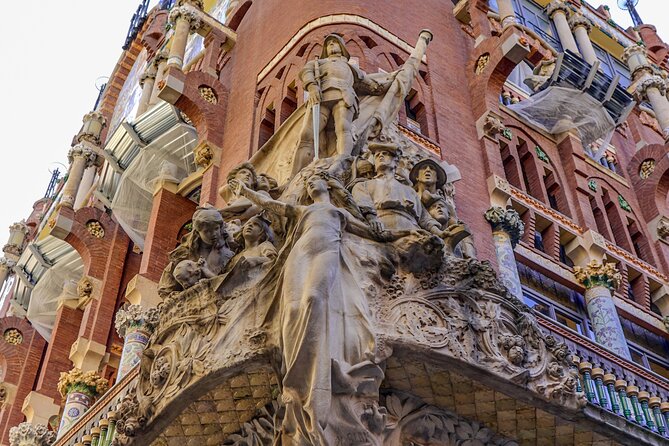
Next up is the Palace of Catalan Music, with a strong emphasis on architecture and founding myths of Catalonia. This is the kind of stop where a guide earns their fee.
The building type alone—an iconic music palace—signals that you’ll be looking for flair: ornament, rhythm, and craftsmanship. But the tour angle is cultural. Instead of treating the palace as just “pretty,” the guide ties visual features to Catalan identity and the stories people build around their origins.
Again, admission is not included. That doesn’t mean you’ll get nothing. It means you should treat this stop as viewing and learning from the outside and the approach. If you later decide you want the full interior experience, you’ll already know what to watch for.
- Barcelona: Hola Barcelona Public Transport Travel Card★ 4.5 · 20,985 reviews
- Barcelona: 24 or 48-Hour Hop-On Hop-Off Bus Tour★ 4.4 · 20,872 reviews
- Barcelona: Park Guell Guided Tour with Skip The Line Entry★ 4.7 · 17,563 reviews
Stop 3: Plaça Catalunya, the old-city versus modern-city line
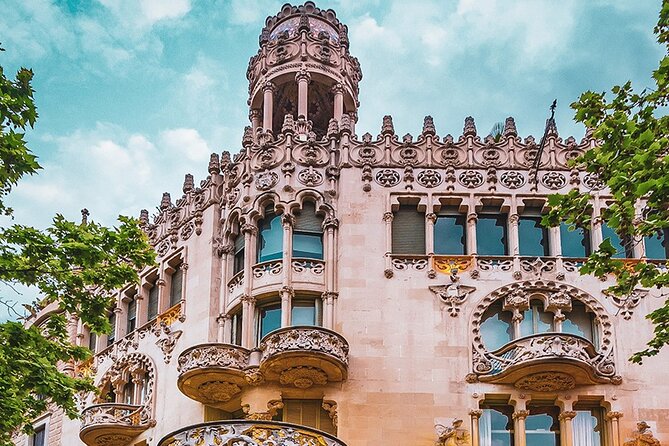
You’ll pause at Plaça Catalunya, the border between the old and the modern city. This is a smart inclusion because it resets your mental map.
As you stand here, you’re in a transition zone. The tour uses this stop to help you feel how Barcelona reorganized itself over time: older quarters give way to more planned streets and modern growth patterns. It’s not just geography. It’s an architectural shift you can sense.
This one is also free. That’s handy because it keeps the pace efficient and prevents your short 2-hour window from turning into a ticket-buying marathon.
Stop 4: Casa Lleó i Morera and the Apple of Discord
Then you move into the Eixample block known for the Apple of Discord—three famous modernist houses that sit near each other like a design showdown.
Your first of the pairing stops is Casa Lleó i Morera. You’ll spend about 10 minutes here, focused on what makes it distinct within the block. The guide will likely help you compare it rather than treat it as a single isolated work.
This is where architectural education becomes fun. When you’re told what to look for—shape choices, decorative intent, and how the façade communicates status—you start seeing the “competition” in the architecture. Different styles, different messages, same street-energy.
Admission is not included. So think of this as street-level reading. If you want to step inside later, you can, but you don’t need that to appreciate how the building works visually.
Stop 5: Casa Amatller, another Apple of Discord face-off
Right after that comes Casa Amatller. It’s another stop in the Apple of Discord set, and it works best when you treat it as a comparison.
The guide’s job here is to keep your eyes from going on autopilot. You’re looking for contrasts: how one building leans into different motifs, how ornament feels like it’s performing, and how the overall design communicates a particular taste.
This stop is also about 10 minutes and has admission not included. That’s normal for a short walk. The goal is to leave with the sense that Barcelona’s modernist wealth wasn’t just “a style,” it was a personality—and it was visible in stone.
Stop 6: Casa Batlló and the Gaudí details you can spot fast
The walk ends at Casa Batlló on Pg. de Gràcia, which is one of the easiest places to understand why Gaudí became Gaudí. The stop here lasts about 15 minutes and is focused on the wonders of the building.
Even if you’ve seen photos before, Casa Batlló rewards close attention in person. The key is learning what features matter and why. The guide helps you read the façade like a puzzle: flowing forms, symbolism, and the feeling that the building is designed to move.
Admission is not included for this stop in the tour info, so your experience here may focus on what you can observe from outside during the time slot. If you want the interior, you’ll need to plan that separately.
Still, finishing at Casa Batlló is a smart move. You end where the visual payoff is strong, and you can decide right after the tour whether you want to keep exploring inside, grab a coffee nearby, or simply wander the rest of Pg. de Gràcia with new eyes.
The guide experience: relaxed, story-driven, and adaptable
The vibe is friendly and relaxed. The tour is run by passionate guides, and it’s described as in French. If you don’t speak French fluently, you can still enjoy a lot of the architecture focus. And if you do speak the language, you’ll get extra value from the anecdotes and the cultural framing.
The small-group limit is a big part of why this tour feels good. With a maximum of 10 people, the guide can respond to the group’s energy, slow down when questions pop up, and keep things moving without that “herded group” feeling.
From what’s shared about guides associated with this company, you may run into leaders like Florence or Valérie. The consistent theme in their descriptions is that they tell stories in a natural way, and they’re happy to share practical tips beyond just the buildings. One nice bonus from this style: the guide doesn’t just point at details—they often help you connect those details to how to enjoy Barcelona afterward, including where to eat.
If rain shows up, it’s still possible the guide will keep the tour going as best as they can. But the experience also notes good weather is required, so if conditions are poor, you should expect the operator to offer an alternate date or a refund.
Practical tips so you get more out of each stop
Here are the small things that make this tour feel worth it, even though it’s short:
- Bring comfortable shoes. You’re walking between Ciutat Vella and Eixample, and the stops encourage careful looking.
- Wear layers. Morning in Barcelona can swing, and you’ll be outside for the whole route.
- Save your big interior ticket buys for the sites you truly want to enter. The tour is built to teach you to see, not to force you into multiple entrances.
- Take a photo, then look again. The guide’s “what to notice” approach works best when you pause twice: once to capture the image and once to study the features.
Also, because it ends at Casa Batlló, you can turn the finish into a springboard. Pg. de Gràcia is a natural place to continue your stroll, especially if you like modernist architecture.
Who this tour is best for
This tour is a good fit if you:
- love architecture and want a short, focused way to learn how to “read” façades
- prefer a guided walk over self-guided wandering
- want to see major landmarks without committing to a full day of timed entrances
It’s also a workable choice for families with kids who like noticing details. The format—short stops, stories, and frequent visual payoff—tends to work better than long museum sessions.
If you’re the type who only values interiors and expects ticketed access at every stop, you might feel the time is too short. But you can use the tour as a preview, then decide what to enter later.
Should you book this architecture walk?
Book it if you want a fast, story-led way to connect Barcelona’s architecture across eras—Gothic craft at Barcelona Cathedral, Catalonia identity at Palau de la Música Catalana, the urban transition at Plaça Catalunya, and the modernist “Apple of Discord” drama leading into Casa Batlló.
I’d also book it if you like small-group tours with a guide who makes the city feel understandable. The price is fair for what you get, especially because the experience is built around learning from details, not stacking ticket lines.
Skip or adjust expectations if you only care about interiors. Admission is not included for most stops, so plan extra tickets if that’s your priority. And check the weather situation since the experience notes good weather is needed.
FAQ
How long is the Barcelona architecture walk?
It runs for about 2 hours.
What does the price include?
The tour is priced at $29.67 per person. Admission tickets are not included for most stops (Plaça Catalunya is free).
Where do I meet, and where does the tour end?
You meet at Plaça de Ramon Berenguer el Gran in Ciutat Vella and end at Casa Batlló on Pg. de Gràcia, 43 in L’Eixample.
What time does the tour start?
The start time listed is 10:30 am.
How big is the group?
The maximum group size is 10 travelers.
Is the tour offered in French, and what if the weather is bad?
The tour is described as being guided in French. It requires good weather; if it’s canceled due to poor weather, you’ll be offered a different date or a full refund.
More 2-Hour Experiences in Barcelona
- Barcelona: 2-Hour City Sights Guided Segway Tour
★ 4.9 · 610 reviews - Barcelona: 2-Hour Sailboat Tour with Snacks and Drinks
★ 4.8 · 357 reviews - 2-Hour Sailing Tour in Barcelona with Open Bar & Snacks
★ 5.0 · 318 reviews - Barcelona 2-Hour Gothic Walking Tour
★ 4.7 · 317 reviews - Jewish Walking Tour Barcelona by Expert Jewish Guide 2h
★ 5.0 · 297 reviews
More Barcelona Tours on Our Radar
- Barcelona: Sagrada Familia Entry Ticket with Audio Guide
★ 4.6 · 105,312 reviews - Barcelona: Park Güell Admission Ticket
★ 4.4 · 76,534 reviews - Barcelona: Casa Batlló Entry with Self-Audioguide Tour
★ 4.7 · 25,359 reviews - Barcelona: Montjuïc Cable Car Roundtrip Ticket
★ 4.5 · 22,368 reviews - Barcelona: Hola Barcelona Public Transport Travel Card
★ 4.5 · 20,985 reviews
Just Rated Around Barcelona
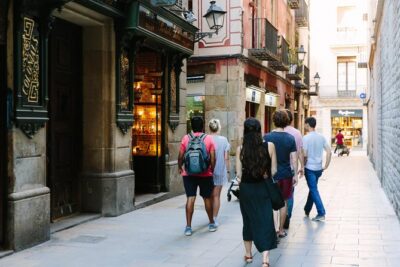





2-Hour Experiences, compared.
 ★ 4.92-Hour City Sights Guided Segway TourFrom $27610 reviews
 ★ 4.82-Hour Sailboat Tour with Snacks and DrinksFrom $53357 reviews
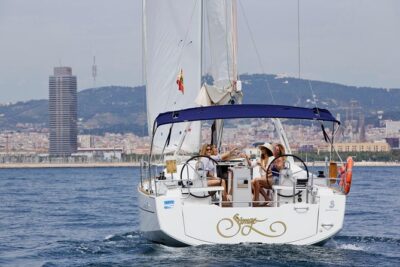 ★ 5.02-Hour Sailing Tour in Barcelona with Open Bar & SnacksFrom $54318 reviews
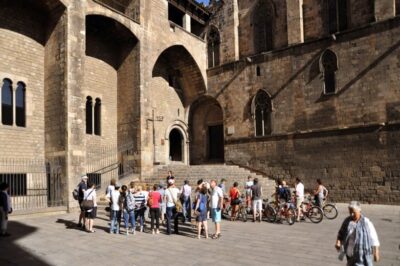 ★ 4.7Barcelona 2-Hour Gothic Walking TourFrom $32317 reviews
 ★ 5.0Jewish Walking Tour Barcelona by Expert Jewish Guide 2hFrom $96297 reviews
 ★ 4.5Boat Trip to Cadaqués from Roses with STOP 1:30h/2H/ in CadaquésFrom $36276 reviews
 ★ 4.8Barcelona Grand 2-Hour Segway TourFrom $32240 reviews
 ★ 4.92-Hour Segway TourFrom $29216 reviews
Browse the lists this tour appears in