
Reviewed · GOTHIC QUARTER TOURS
Walking tour of the Gothic Quarter of Barcelona + Cathedral
Barcelona’s Gothic Quarter tells stories fast. This 3-hour walk through the Gothic Quarter plus the area around Barcelona Cathedral is built to help you see the city as a single timeline instead of a pile of old buildings. I also like that the guide brings you past the usual street-level views into courtyards and architectural details you’d probably miss if you were trying to piece it all together alone.
What I really liked, though, was the way the tour ends at the Basilica de Santa Maria del Pi, where the focus shifts from outside impressions to a more personal feel for Barcelona’s religious art and street-level atmosphere. One thing to consider: most of the stops along the way are described as not accessed inside, so if you’re hoping for lots of interior time in multiple monuments, manage your expectations.
In This Review
- Key highlights you’ll notice right away
- Why this Gothic Quarter walk feels efficient (and not just sightseeing)
- Where you start at Plaça de l’Àngel—and how to use the route well
- The Roman-to-medieval setup: Temple d’August, Plaça del Rei, and power centers
- Basílica dels Sants Màrtirs Just i Pastor (viewing-focused stop)
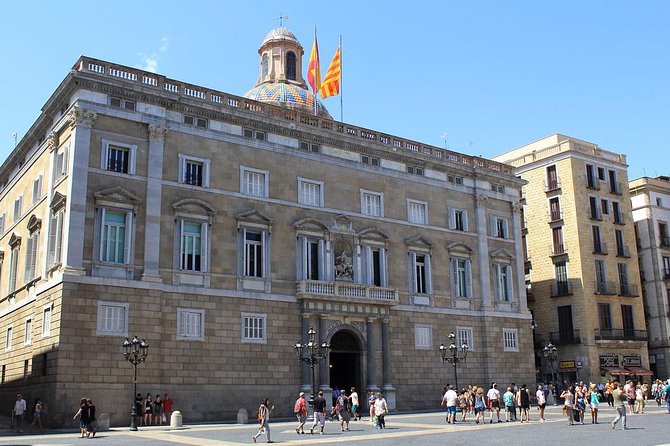
- Palau de la Generalitat de Catalunya (medieval seat, modern role)
- Temple d’August (Roman Barcino connection)
- Plaça del Rei (a free stop that’s worth the slow look)
- Squares that do the talking: Plaça del Rei and Plaça de Sant Felip Neri
- Plaça del Rei: Gothic and Renaissance in one frame
- Plaça de Sant Felip Neri: a free “essence + history” stop
- Barcelona Cathedral from the outside: what you learn when you don’t rush inside
- Casa de l’Ardiaca and the art of spotting what most people miss
- The moment that makes the tour feel complete: Basilica de Santa Maria del Pi
- Price and value: what $180.24 buys you (and what it doesn’t)
- Pace, weather, and what to bring for a smooth 3-hour walk
- What stands out from real-world guide experience
- Who should book this tour?
- Should you book this Gothic Quarter + Cathedral tour?
- FAQ
- Where does the tour start and end?
- How long is the tour, and is it offered in English?
- Is this a private tour?
- Is the ticket a mobile ticket?
- Are admissions included for the stops?
- What happens if the weather is bad?
Key highlights you’ll notice right away
- A single storyline linking Roman Barcino, medieval governance, and Gothic squares
- Courtyards and hidden-in-plain-sight spots that are hard to find without guidance
- Mostly exterior stops, with a final focus at Basilica de Santa Maria del Pi
- Plaça del Rei and Plaça de Sant Felip Neri are marked free and make great photo breaks
- Private tour for your group (no mixing with strangers)
- Strong meet-up clarity, including clear start-point guidance
Why this Gothic Quarter walk feels efficient (and not just sightseeing)
The Gothic Quarter can be a little chaotic on your own. Narrow lanes. Different styles smashed together. Lots of stone. You start off excited, then you realize you don’t really know what you’re looking at.
This tour solves that problem with a tight route that moves through the neighborhood like it’s one living museum. In about three hours, you connect layers of Barcelona: Roman Barcino, medieval political power, and the civic-religious core that shaped the city.
And you don’t just get facts dumped at you. The experience is set up so the guide helps you see how each landmark relates to the next. That matters, because Barcelona’s old city is less about one famous monument and more about how the pieces connect.
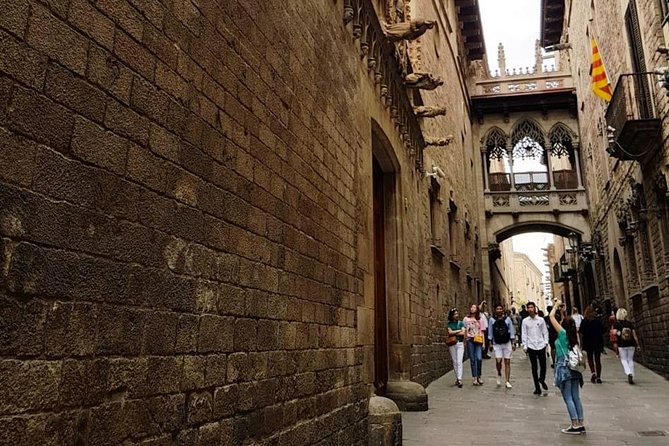
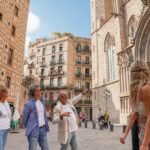
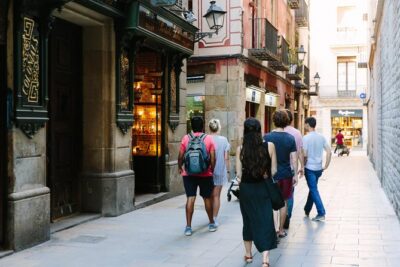
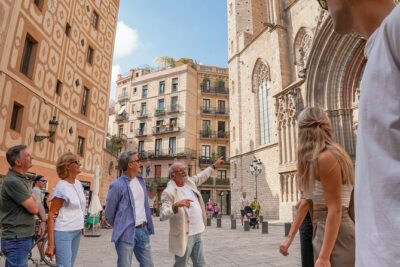
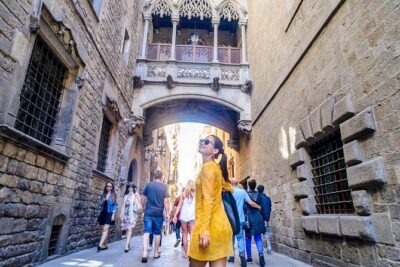
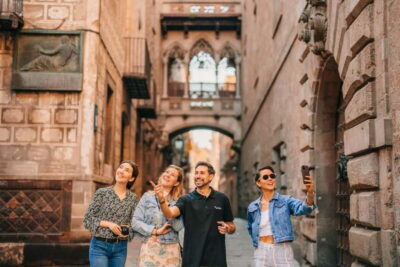
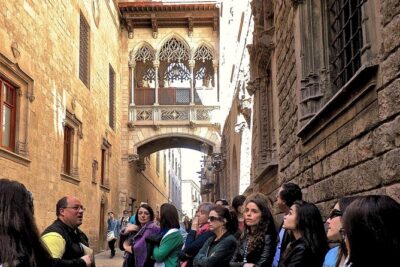
Deeper into the lanes of the Barri Gòtic


Where you start at Plaça de l’Àngel—and how to use the route well
You begin at Plaça de l’Àngel in Ciutat Vella. This is a smart choice because it puts you right where the neighborhood becomes walkable and story-friendly. From there, you move through a sequence of landmarks that each act like a chapter heading.
Also, the tour finishes at Basilica de Santa Maria del Pi (Plaça del Pi, 7). That end point is useful for you in a practical way: it lets you wrap up with an easy transition into more wandering, coffee, or another stop nearby.
If this is your first time in the Gothic Quarter, I’d treat this tour as your map. You’ll get your bearings fast, and your later self-guided exploring will feel much less like random wandering.
The Roman-to-medieval setup: Temple d’August, Plaça del Rei, and power centers
A big part of the value here is the way the route shifts eras without making it feel like a history lecture.
Basílica dels Sants Màrtirs Just i Pastor (viewing-focused stop)
You’ll see the Basílica dels Sants Màrtirs Just i Pastor, described as a famous Neo-Gothic Catholic church. The key point for your expectations: it’s presented as a visit to the landmark, but it’s not accessed inside on this tour.
So think of this stop as a “recognition moment.” You spot the style, you hear why it matters, and you move on with context.
Palau de la Generalitat de Catalunya (medieval seat, modern role)
Next up is the Palau de la Generalitat de Catalunya, the seat of the Presidency of the Generalitat of Catalonia. What I like about this stop is the contrast: it’s described as one of the few medieval-origin buildings in Europe that still functions as a government and institutional seat.
Even from outside, it helps you understand the Gothic Quarter as more than tourist scenery. It’s political geography too. You’re seeing how power and architecture stayed in the same neighborhood over centuries.
More slow hours around the old cathedral
- Barcelona: Cathedral of Barcelona Entry Ticket★ 4.5 · 1,701 reviews
- Barcelona Cathedral: Ticket, Guided Tour and VR Experience★ 4.5 · 202 reviews
- Barcelona: Private Cathedral Tour with Rooftop Access★ 4.6 · 114 reviews
Temple d’August (Roman Barcino connection)
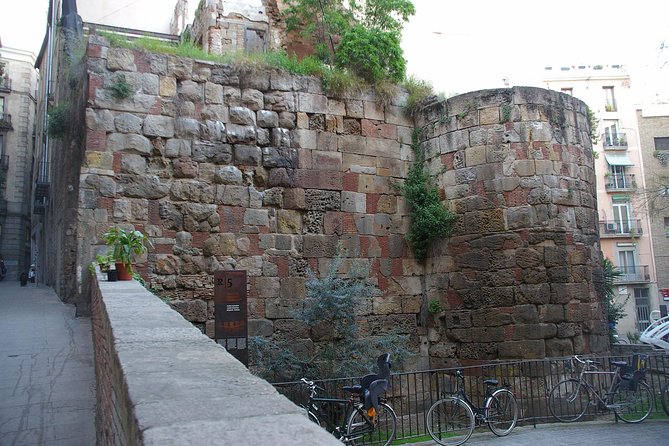
Then comes Temple d’August, the Roman temple dedicated to the imperial cult of César Augusto, built in Barcino—the city founded with Augustus’s permission, which later becomes Barcelona.
This is one of the most eye-opening parts of the day if you usually think of Barcelona as purely Gothic and modern. The tour frames the temple as the starting thread of the city’s identity. You get a sense that the neighborhood’s story didn’t begin in the Middle Ages.
Plaça del Rei (a free stop that’s worth the slow look)
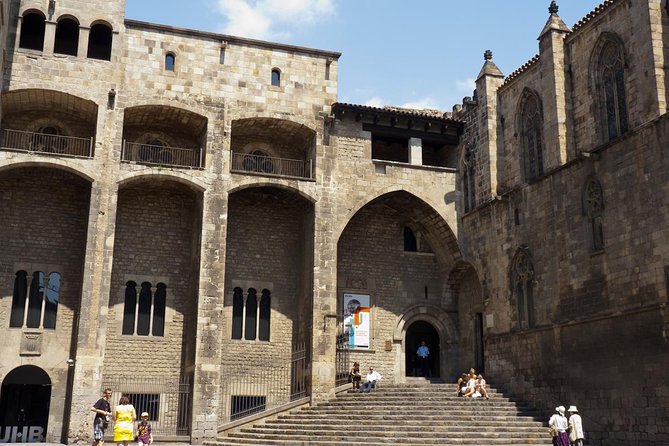
You’ll spend time at Plaça del Rei, described as a monumental square surrounded by Gothic and Renaissance buildings. This one is marked admission free, which is great because it gives you a built-in breather without worrying about tickets.
Even if you’re in a hurry, I suggest using this moment to scan the building edges and understand how squares function in Barcelona: they’re gathering spaces, and they also act like stages where different architectural eras overlap.
Squares that do the talking: Plaça del Rei and Plaça de Sant Felip Neri
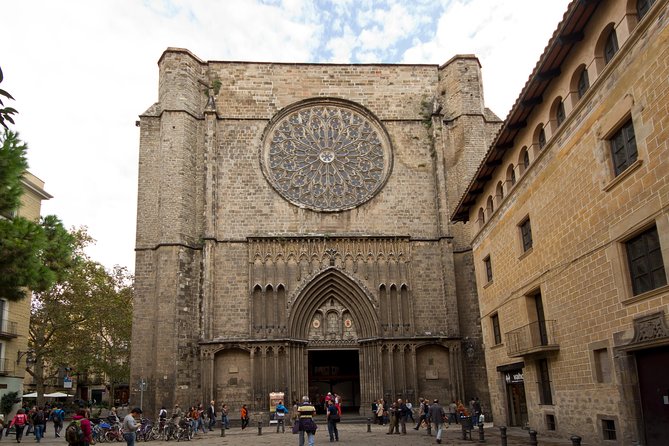
Barcelona’s streets are dramatic, but the squares are where the city’s rhythm makes more sense.
Plaça del Rei: Gothic and Renaissance in one frame
At Plaça del Rei, the point is history you can see. The square is surrounded by architecture that reflects different periods, so it becomes a visual timeline.
This is also where your guide’s storytelling helps. Once you know what to look for, you start noticing design choices that you would otherwise treat as background texture.
Plaça de Sant Felip Neri: a free “essence + history” stop
Later you visit Plaça de Sant Felip Neri—another stop marked free. It’s described as famous for its essence, and for the history it hides.
That wording is basically telling you this is a place where atmosphere is part of the interpretation. If you like small-town mood in a big city, this is a good break.
Barcelona Cathedral from the outside: what you learn when you don’t rush inside
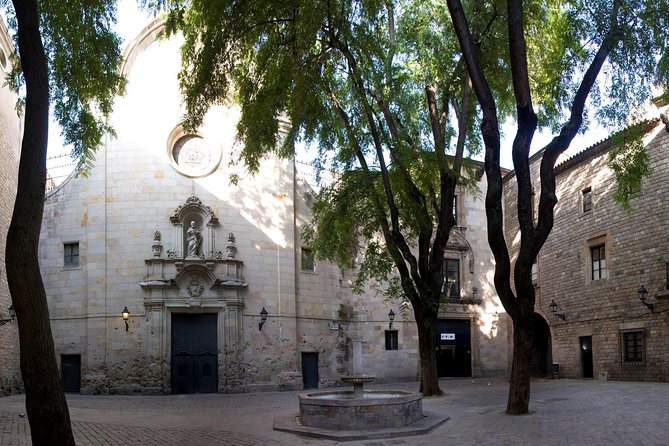
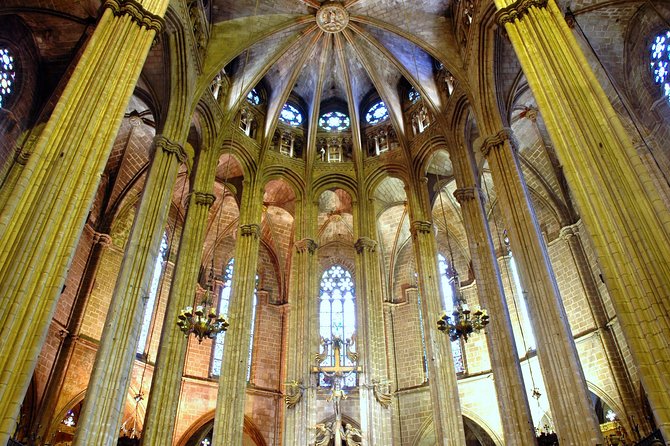
Even without interior access, Barcelona Cathedral is still one of the anchors of the area. On this tour, you’ll learn the history and meaning of the cathedral, but it’s presented as a stop where you’re not going inside.
This can be a drawback if your dream is cathedral interiors on a tight schedule. But it can also be smart, depending on what you want.
Here’s how to make it work:
- Use the time to understand the cathedral’s role in the city’s evolution.
- Look at how it shapes the feel of the surrounding streets.
- Treat it as a reference point, then decide later if you want a separate interior visit on your own.
If you’re doing this tour early in your trip, this approach often pays off because you’ll come back later with better questions and a clearer sense of what the cathedral represents beyond the exterior.
Casa de l’Ardiaca and the art of spotting what most people miss
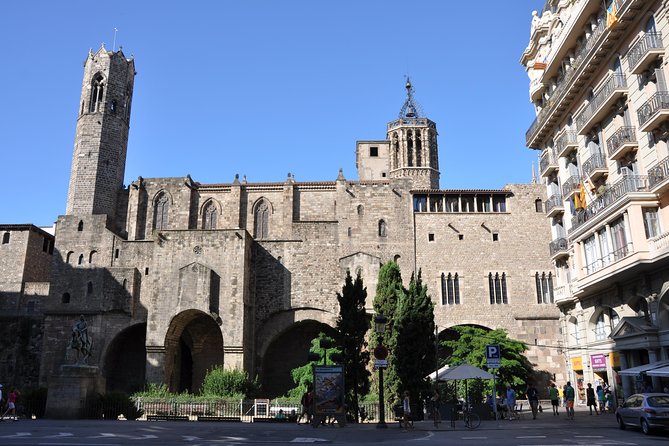
One of the most enjoyable parts of the route is that it mixes in a stop specifically positioned as lesser-known: Casa de l’Ardiaca.
It’s described as one of the secret tourist spots that very few people know, and again, it’s not accessed inside. That still works because the guide’s job is to point out what matters—details you’d likely walk past without the prompt.
This is where the experience matches what I value in a good walking tour: the guide doesn’t just tell you what the building is. They help you notice why it feels important.
The moment that makes the tour feel complete: Basilica de Santa Maria del Pi
The day ends at Basilica de Santa Maria del Pi. This is described as a stop where you’ll discover and enter together—so it’s where the tour’s tone shifts.
I like ending here because it gives you a satisfying payoff after the earlier exterior-focused stops. Even if you’re not spending a long stretch inside, you’re still finishing with something that feels like a real Barcelona experience, not just a parade of facades.
If you want to keep the momentum going after the tour, the location is also helpful. You’re in the right area to continue exploring at walking speed without needing a commute.
Price and value: what $180.24 buys you (and what it doesn’t)
Let’s talk money plainly. The tour price is $180.24 per person for an experience around 3 hours long.
That’s not the cheapest walking tour category. So here’s where the value can make sense for you:
- Private for your group: You’re not sharing commentary with a mixed crowd. That usually means a better pace and more direct interaction.
- Mobile ticket: It cuts friction before you even start.
- Group discounts: If you’re traveling with friends or family, the per-person value can improve.
- Coverage of multiple eras: Roman, medieval governance, and Gothic storytelling in one route saves you time and guesswork.
What this price likely won’t do is give you lots of interior access at multiple sites. Many stops are explicitly not accessed inside, and some ticket notes indicate admissions aren’t included. So if your priority is paying once and going into as many buildings as possible, you’ll want to compare options carefully.
But if your priority is learning how Barcelona fits together—and having a guide lead you to details and courtyards you’d miss on your own—this price starts to feel more reasonable.
Also, a practical note: the experience is booked on average 43 days in advance. That’s a sign this is something people plan for, so if you’re aiming for a specific day, don’t wait until the last minute.
Pace, weather, and what to bring for a smooth 3-hour walk
This is a walking tour in Ciutat Vella. It’s not described as a strenuous hike, and most travelers can participate. Still, plan for city walking.
The tour also requires good weather. If rain hits, you may be offered a different date or a full refund.
So I’d plan like this:
- Wear comfortable shoes you trust for uneven old-stone sidewalks.
- Bring a light layer. Barcelona evenings can feel cooler than expected in shoulder seasons.
- If you’re sensitive to sun, pack water and something to cover your head.
One small advantage: the route is near public transportation, so you have options if you want to shorten the walk or link it to another plan afterward.
What stands out from real-world guide experience
Two details from real experiences really caught my attention because they affect your day more than you’d think:
First, the guide’s explanations focus on how Barcelona developed over time, not just what a building looks like. That matches the tour’s structure: Roman temple, political palace, cathedral anchor, then a culminating church visit.
Second, the meeting point is handled with care. One traveler shared that the start-point was explained well, and they even received the guide’s phone contact by email the day before. That kind of small preparation helps when you’re dealing with narrow streets and crowds.
Who should book this tour?
This is a great fit if:
- You’re in Barcelona for the first time and want a fast, clear orientation through the Gothic Quarter
- You prefer guided storytelling that helps you see connections between monuments
- You like the idea of a private group experience with only your people
It might be less ideal if:
- Your top priority is going inside many monuments during the same tour
- You want a ticket-included route where every major site becomes a full interior visit
Should you book this Gothic Quarter + Cathedral tour?
If you’re aiming to understand Barcelona’s old center instead of just collecting photos, I think you should strongly consider booking.
Book it especially if:
- You want a guided timeline from Roman roots through medieval civic power to the cathedral area
- You’ll appreciate courtyards and architecture details that are hard to find alone
- You want to start your trip with structure, then roam the neighborhood afterward with confidence
One practical decision tip: If you know you’ll want interior time at multiple major monuments, pair this tour with a separate ticketed visit later. This one is designed to teach you what you’re seeing first. Then you can choose where to go deeper.
FAQ
Where does the tour start and end?
It starts at Plaça de l’Àngel, Ciutat Vella, Barcelona, Spain, and it ends at Basílica de Santa Maria del Pi, Plaça del Pi, 7, Ciutat Vella, 08002 Barcelona, Spain.
How long is the tour, and is it offered in English?
The tour lasts about 3 hours and it is offered in English.
Is this a private tour?
Yes. It’s listed as private, meaning only your group participates.
Is the ticket a mobile ticket?
Yes, the tour uses a mobile ticket.
Are admissions included for the stops?
Some stops are marked as free (Plaça del Rei and Plaça de Sant Felip Neri). For other stops, admission tickets are noted as not included, and several monuments are described as not accessed inside the enclosure.
What happens if the weather is bad?
The experience requires good weather. If it’s canceled due to poor weather, you’ll be offered a different date or a full refund.
More Barcelona Tours on Our Radar
- Barcelona: Sagrada Familia Entry Ticket with Audio Guide
★ 4.6 · 105,312 reviews - Barcelona: Park Güell Admission Ticket
★ 4.4 · 76,534 reviews - Barcelona: Casa Batlló Entry with Self-Audioguide Tour
★ 4.7 · 25,359 reviews - Barcelona: Montjuïc Cable Car Roundtrip Ticket
★ 4.5 · 22,368 reviews - Barcelona: Hola Barcelona Public Transport Travel Card
★ 4.5 · 20,985 reviews
Around the Old Cathedral
- Barcelona: Cathedral of Barcelona Entry Ticket
★ 4.5 · 1,701 reviews - Barcelona Cathedral: Ticket, Guided Tour and VR Experience
★ 4.5 · 202 reviews - Barcelona: Private Cathedral Tour with Rooftop Access
★ 4.6 · 114 reviews - Cathedral of Barcelona Entrance Ticket – Optional Private Guide
★ 4.0 · 114 reviews - Photo Walking Tour Barcelona Cathedral Gothic Quarter El Born
★ 5.0 · 37 reviews
Lost in the Gothic Quarter
- Barcelona in 1 Day: Sagrada Familia, Park Guell,Old Town & Pickup
★ 5.0 · 13,541 reviews - Barcelona all included: Sagrada, Park Güell, Montjuic & Gothic
★ 5.0 · 2,169 reviews - Barcelona: Sagrada Familia, Modernism, and Old Town Tour
★ 4.7 · 1,621 reviews - Barcelona Gothic Quarter Tapas & Taverns Food & Wine Tour
★ 5.0 · 1,470 reviews - Barcelona Helicopter, Sailboat & Old Town Private Walking Tour
★ 5.0 · 1,395 reviews
Just Rated Around Barcelona





Gothic Quarter Tours, compared.
 ★ 5.0Barcelona in 1 Day: Sagrada Familia, Park Guell,Old Town & PickupFrom $12013,541 reviews
 ★ 5.0Barcelona all included: Sagrada, Park Güell, Montjuic & GothicFrom $1192,169 reviews
 ★ 4.7Sagrada Familia, Modernism, and Old Town TourFrom $521,621 reviews
 ★ 5.0Barcelona Gothic Quarter Tapas & Taverns Food & Wine TourFrom $1311,470 reviews
 ★ 5.0Barcelona Helicopter, Sailboat & Old Town Private Walking TourFrom $5131,395 reviews
 ★ 4.8Old Town and Gothic Quarter Walking TourFrom $211,393 reviews
 ★ 4.7Helicopter, Boat Ride & Old Town Private TourFrom $5001,357 reviews
 ★ 5.0Barcelona Old Town & Gothic Quarter Small Group TourFrom $221,308 reviews
Browse the lists this tour appears in