
Reviewed · GAUDÍ ARCHITECTURE TOURS
Barcelona e-Bike Tour: Gaudí & Old Town Small Group
Electric bikes make Barcelona easier.
This small-group ride is a smart way to see Old Town lanes and get Gaudí stories without spending half your vacation walking uphill. You glide through historic neighborhoods, then shift to the grand Modernisme blocks where the architecture gets personal and the city’s power players leave clues in stone.
One thing to plan for: in a crowded city, it can be harder to hear your guide at every moment, especially if spacing stretches at red lights. I’d still call it a great value if you show up ready to ride, look, and ask questions when you can.
In This Review
- Key highlights before you pedal
- Getting Your Barcelona Bearings on Two Wheels
- Plaça de Sant Agustí Vell: the start point that puts you in the middle
- The Gothic Quarter and Roman Barcino: narrow lanes with a time-travel feeling
- El Born and Santa Maria del Mar: the market past and the people’s cathedral
- Parc de la Ciutadella and the 1888 Expo Arch
- Barceloneta by bike: fisherman views and a smoother ride to the water
- Port Olímpic: the skyline angle that makes it feel like a port city
- Rambla de Poblenou: a calmer take on Barcelona’s idea of an avenue
- Passeig de Gràcia and Gaudí: La Pedrera plus the rich-family rivalry
- La Pedrera (Casa Milà) stop
- The other famous Gaudí house on the avenue
- Guides, pace, and what makes the ride feel easy
- What $38.70 buys you (and why it can be a good deal)
- Small-group reality: the upside and the one catch
- Who should book this e-bike Gaudí and Old Town tour?
- Should you book it?
- FAQ
- How long is the Barcelona e-bike tour?
- What’s included in the price?
- Are admission tickets included?
- What language is the tour offered in?
- How big is the group?
- Can I cancel for free?
- Is it okay if I’m not an experienced cyclist?
Key highlights before you pedal
- A real e-bike workout shortcut: you get movement and views with far less strain than regular biking
- Small group energy (up to 15): easier questions, easier pacing, better staying together
- Old Town to the sea in one flow: Gothic Quarter to Born to Ciutadella to Barceloneta and Port Olímpic
- Gaudí stops on Passeig de Gràcia: you’ll spend time on famous houses, including La Pedrera
- Local guide stories that connect places: Roman Barcino, Santa Maria del Mar, and the 1888 expo backdrop
- Bring a bottle: there’s a water refill station so you can stay sensible in the sun
Getting Your Barcelona Bearings on Two Wheels
If it’s your first time in Barcelona, I love tours that help you understand the city’s shape fast. This one does it well because it mixes neighborhoods with clear “mental map” moments. You start in the historic core, then gradually move outward toward the waterfront—so after 3 hours, you’re not just tired. You’re oriented.
The big advantage is the e-bike. Barcelona can be flat, but it’s still a lot of stop-and-go walking—especially when you’re trying to see the Gothic Quarter and then reach the water. With an e-bike, you cover ground without treating your day like a gym session. And because the bikes come with helmets and you’ve got a guide steering the route, you’re not guessing your way through the mess of streets.
I also like that the tour keeps a relaxed rhythm. It’s not a sprint to a checklist. The pace is designed for sightseeing from the saddle, which means you spend more time looking at buildings, not just staring at your phone.
Follow the Gaudí trail a little further




Plaça de Sant Agustí Vell: the start point that puts you in the middle
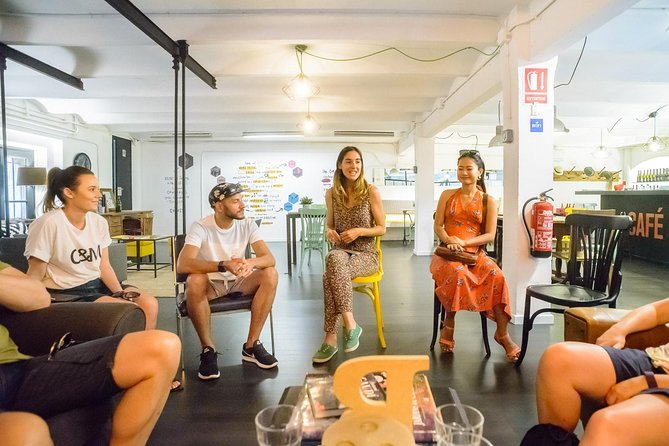
The meeting point is Plaça de Sant Agustí Vell, 16 in Ciutat Vella. From there, you get the briefing and then head into the oldest parts of the city. It’s one of those starts that makes sense: you’re positioned close to where you’ll want to be exploring anyway later.
This is the kind of tour where a little setup pays off. Show up on time, drink a bit of water before you start, and keep your phone charged because you’ll want photos when the streets open up. Barcelona photography looks best when you’re moving—like right as a lane curves or a grand building comes into view.
The e-bike makes this early stage even easier. Narrow streets can feel intimidating in traffic, but you’re riding in a guided flow with helmets on and a plan for the turns.
The Gothic Quarter and Roman Barcino: narrow lanes with a time-travel feeling
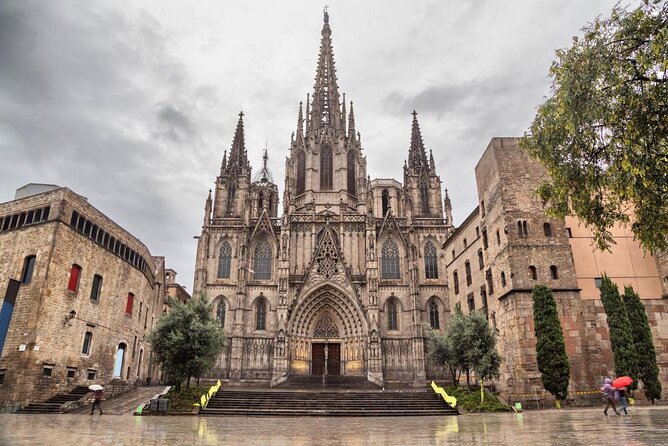
The first leg runs through the Gothic Quarter, starting from the area described as the city’s earliest Roman times—Barcino. Even if you’re not a Roman-history nerd, you’ll get why that matters. This part of Barcelona is built like a puzzle: tiny streets, sudden squares, and walls that look like they’ve been watching every era walk by.
Here’s what I think you’ll appreciate: you don’t just pass through. You’re meant to notice the little narrow streets and the “medieval path” feel of the city. That’s the difference between getting an overview and actually understanding what makes this old area so distinctive.
A small-group ride helps because you can slow down when the guide points something out—without holding up a huge bus of people. And because you’re on an e-bike, you’re not wrestling with every curb and staircase the way you would on foot.
Possible drawback: at the busiest intersections, you may have to focus more on riding than listening. It’s not a failure of the tour—it’s how city life works. So keep your eyes up, then catch your guide’s stories when you’re paused at a safe moment.
El Born and Santa Maria del Mar: the market past and the people’s cathedral
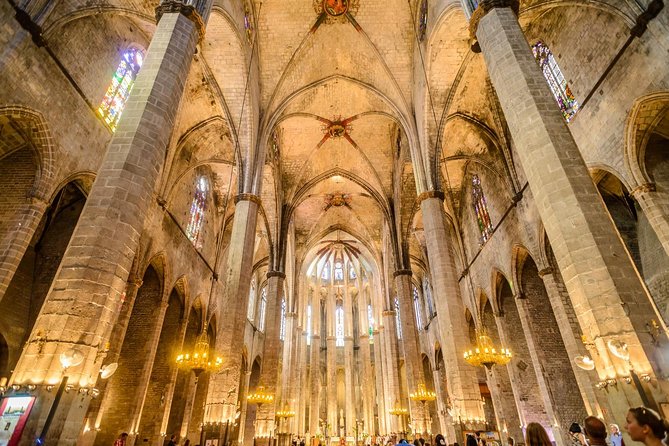
Next, you swing into El Born Centre de Cultura i Memoria, where the area’s past includes a time as an important food market. The tour frames it as a place where you can sense that “treasure” feeling—like the city tucked something valuable away and only recently pulled it into the open.
Then comes the stop that gives Barcelona’s skyline a different kind of meaning: Santa Maria del Mar, described as the cathedral by the sea. The explanation is very “Barcelona this is for us” energy—built by people for people, with the sea-themed idea of protection.
This is where the tour becomes more than architecture spotting. You start to see how neighborhoods relate to work, trade, and everyday life. That’s also why Born is such a great neighborhood to include: it’s not only pretty; it has layers of function.
On a bike, you’ll experience that layer as you move. It’s easier to connect the dots when you’re physically traveling the distance between places instead of bouncing between them by taxi.
Parc de la Ciutadella and the 1888 Expo Arch
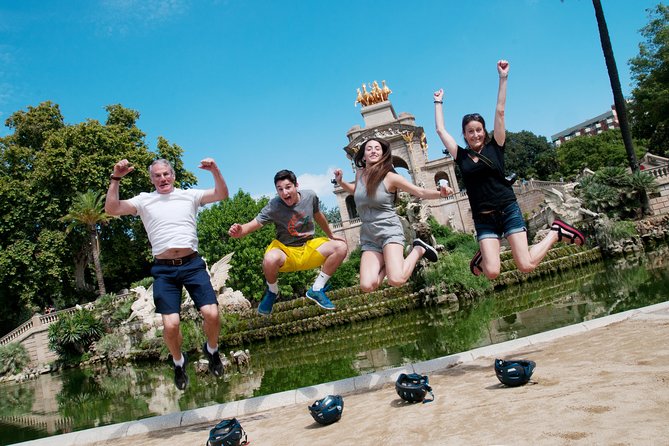
Then you reach a breather: Parc de la Ciutadella. The tour treats it like an oasis inside the city, and that’s exactly the right way to think about it. You’re moving from dense streets into a park setting where you can actually feel space around you.
This stop also brings in a specific historical anchor: the park hosted the International Exposition of 1888. And yes, you’ll ride past the majestic arch used as a door for the expo. It’s one of those details that makes your mental map better—because you’re not only learning “here is a park,” you’re learning “here is a park with a famous public event past.”
Even if you don’t care about expo history, that arch is the kind of thing you can’t replicate with a book. Seeing it from bike level gives it scale. And the park break helps reset your legs and attention before heading toward the coast.
Deeper into the lanes of the Barri Gòtic
- Barcelona all included: Sagrada, Park Güell, Montjuic & Gothic★ 5.0 · 2,169 reviews
- Barcelona: Sagrada Familia, Modernism, and Old Town Tour★ 4.7 · 1,621 reviews
- Barcelona Gothic Quarter Tapas & Taverns Food & Wine Tour★ 5.0 · 1,470 reviews
Barceloneta by bike: fisherman views and a smoother ride to the water
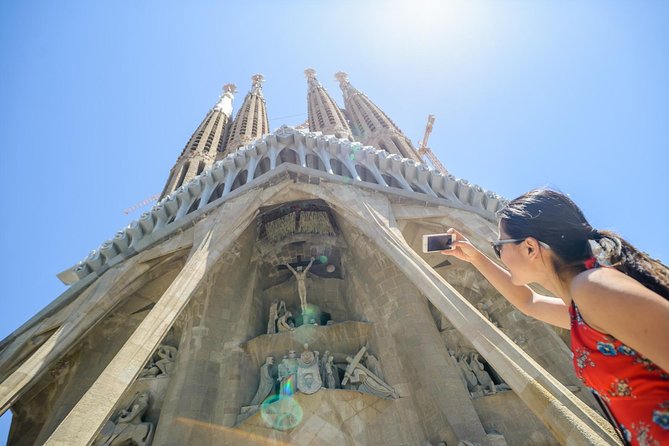
From Parc de la Ciutadella, the route heads toward Barceloneta, the waterfront neighborhood where fishermen and fisherwomen have lived for many years. This part matters because it shifts Barcelona’s story from stone and streets to sea life.
You’ll get a sense of the rhythm of the area without having to walk the entire strip. For me, it’s a great use of an e-bike because you can keep cruising while still noticing details—like the way the street layout changes as you approach the shoreline.
And yes, this is also where you tend to feel the temperature difference. Coastal air can be a real help, especially if you’re riding in warmer months.
Port Olímpic: the skyline angle that makes it feel like a port city
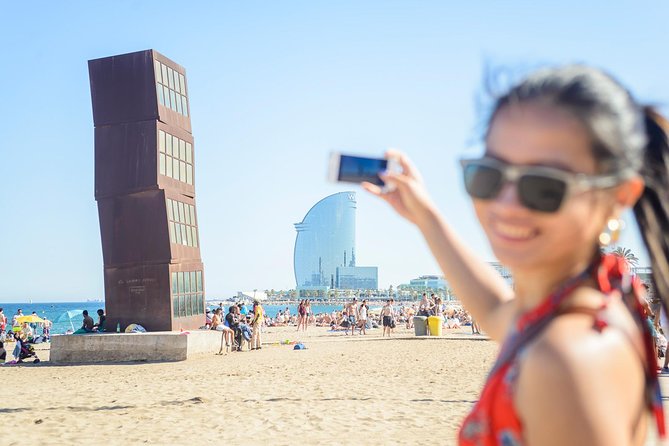
Next up is Port Olímpic, where you get “from this magical perspective” views of Barcelona’s skyline. The tour also frames it as the city opening toward the Mediterranean sea—a nice line of thinking because the port isn’t just scenery. It’s one of the reasons Barcelona has always been outward-looking.
This stop is short, but it’s timed well. The tour moves from old streets and park history toward a modern maritime viewpoint, so your brain gets a satisfying change in scenery.
If you love photos, this is one of the parts where being on a bike is a big advantage. You’re not stuck at the same viewing spot. You can arrive with a fresh angle and keep moving when it’s time to go.
Rambla de Poblenou: a calmer take on Barcelona’s idea of an avenue
Then the route turns to Rambla del Poblenou, explicitly away from the crowded Rambla. This is a smart choice if you’re trying to experience Barcelona without getting trapped in the tourist traffic vortex.
The tour’s angle here is practical: the guide explains the meaning of these types of avenues in everyday life, and you’re doing it in a neighborhood that feels more local than the postcard strip.
What you’ll likely enjoy most is the contrast. The city already gave you “old city maze.” Now it gives you “real neighborhood living room.” That shift helps you understand Barcelona as a living place, not only a museum.
Passeig de Gràcia and Gaudí: La Pedrera plus the rich-family rivalry
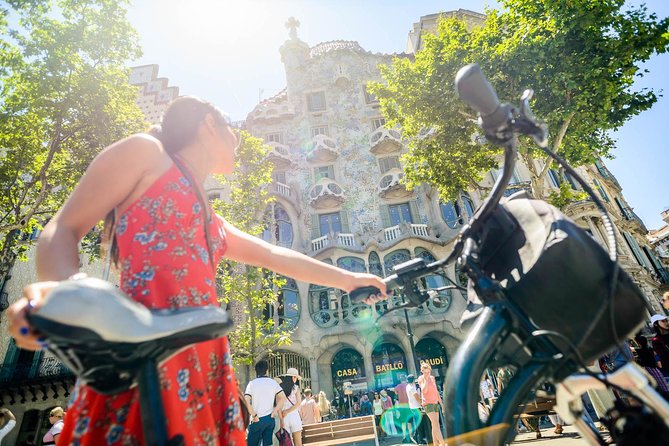
Now for the part most people booked for: Gaudí. You’ll spend time around Passeig de Gràcia, often treated like Barcelona’s version of a high-status avenue. The tour uses a vivid framing: wealthy families lived door by door, and there was constant competition over who had the best house.
This is more than a gimmick. When you understand that social rivalry, the Modernisme buildings stop feeling random and start feeling like architecture with a storyline. People were showing off. People were branding themselves. And Gaudí was turning those ambitions into signature forms.
La Pedrera (Casa Milà) stop
One key stop is La Pedrera, described as designed by Antoni Gaudí for a very rich couple. You’ll pause to hear the stories behind the wavy walls—and you’ll hear why it feels like a place straight from a fairytale.
The other famous Gaudí house on the avenue
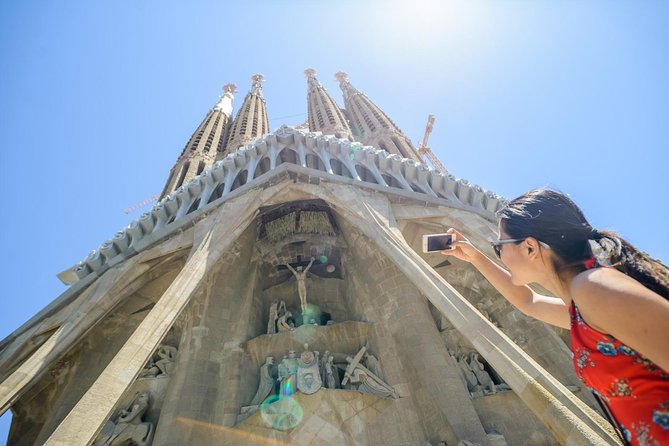
The tour also includes time at the second major Gaudí house on Passeig de Gràcia, described as another “modernist gem” tied to the competition between families. The guide’s explanation focuses on that family rivalry theme and the way Gaudí made the buildings feel almost alive.
If you’ve seen Gaudí photos before, this tour helps you connect them to the street. Standing near these facades makes you notice details you’d miss from a distance, like how ornament works at close range.
Guides, pace, and what makes the ride feel easy
A lot of the best feedback you’ll see about this tour comes down to guide energy and bike handling. Different guides have different styles—names that show up include Oriol, Rory, Julio, Mateo, Anka, and Lili—but they share the same goal: keep you moving safely while telling stories that make sense.
You’ll also get the practical rhythm of the city: stop for red lights, regroup, and listen when you’re in a place where you can actually hear. One useful point to remember from the overall experience: Barcelona traffic is busy, so the guide’s reminders matter. You don’t need to be a fearless cyclist. You do need to pay attention and follow the group.
And while the tour is under 3 hours, it still covers enough distance that you’ll feel like you had a proper “orientation” day. It’s a good match if you want motion, sun, and city context without spending the whole day walking.
What $38.70 buys you (and why it can be a good deal)
At $38.70 per person for about 3 hours, the value here is mostly about time and effort. You’re paying for:
- A professional local guide telling you what matters
- An e-bike with a helmet, which turns a lot of street time into a manageable ride
- A route that strings together several of the city’s best-known areas, including Old Town, the waterfront approach, and Gaudí on Passeig de Gràcia
If you tried to do this by yourself, you’d likely spend time figuring out neighborhoods, routes, and what to notice. You might also spend more than you want on transport, and you’d still walk plenty—especially in the Gothic Quarter.
The tour also includes water refill support, and that’s not a small thing in Barcelona. Bring a bottle and fill it. You’ll thank yourself later.
What’s not included: food and drinks (unless specified) and attraction tickets (though the listed stops are described as free admission at those moments). So plan to eat separately.
Small-group reality: the upside and the one catch
The tour caps at 15 travelers, and that helps more than it sounds. Smaller groups usually mean less time waiting and fewer chances to get lost. Also, you’re more likely to get your question answered without feeling like you’re shouting over 50 other people.
That said, the city is still the city. If the streets are crowded, the group can stretch at lights or turns. The key is your own role: stay alert, keep your distance where the guide asks, and don’t assume you can fully multitask with your camera at every stop.
If you’re the kind of person who hates even mild confusion, consider arriving a bit early, staying close to your guide, and being flexible.
Who should book this e-bike Gaudí and Old Town tour?
You’ll enjoy this most if you want:
- A first-day overview that helps you understand where everything sits
- A way to see the Gothic Quarter, Born, Ciutadella, and the coast area without a long walking day
- Gaudí architecture time that focuses on stories and street context, not only big ticket entries
- A low-stress ride that still feels like you did something real
You might skip it (or choose a different time of day) if you really want uninterrupted guide narration in a quiet setting, or if you’re scheduling around late-day darkness. The route is flexible with different itinerary times, but light and crowd levels change the feel.
Should you book it?
Yes, if your goal is to get your bearings and see major Barcelona zones in a smooth, fun way. This is one of those tours that gives you a lot of “future planning power”: you’ll know what neighborhoods you want to revisit on foot, and you’ll better understand the city’s layout after only a few hours.
If you care about Gaudí and also want Old Town context, the route makes the connection for you—Roman Barcino to sea-facing Barcelona to the rich-family competition on Passeig de Gràcia. Bring water, ride attentively, and you’ll likely leave with both photos and a clearer sense of where to go next.
FAQ
How long is the Barcelona e-bike tour?
It’s about 3 hours.
What’s included in the price?
You get a small-group bike tour with a professional local guide, plus use of the bicycle and helmet and access to a water refill station (bring your bottle).
Are admission tickets included?
At the listed stops, admission tickets are shown as free. Attraction tickets are not included.
What language is the tour offered in?
The tour is offered in English.
How big is the group?
The tour has a maximum of 15 travelers.
Can I cancel for free?
Yes. You can cancel for a full refund if you cancel at least 24 hours before the experience starts.
Is it okay if I’m not an experienced cyclist?
Most travelers can participate. The bikes are e-bikes, and the experience is designed to be manageable for a range of fitness levels.
More Barcelona Tours on Our Radar
- Barcelona: Sagrada Familia Entry Ticket with Audio Guide
★ 4.6 · 105,312 reviews - Barcelona: Park Güell Admission Ticket
★ 4.4 · 76,534 reviews - Barcelona: Casa Batlló Entry with Self-Audioguide Tour
★ 4.7 · 25,359 reviews - Barcelona: Montjuïc Cable Car Roundtrip Ticket
★ 4.5 · 22,368 reviews - Barcelona: Hola Barcelona Public Transport Travel Card
★ 4.5 · 20,985 reviews
Lost in the Gothic Quarter
- Barcelona in 1 Day: Sagrada Familia, Park Guell,Old Town & Pickup
★ 5.0 · 13,541 reviews - Barcelona all included: Sagrada, Park Güell, Montjuic & Gothic
★ 5.0 · 2,169 reviews - Barcelona: Sagrada Familia, Modernism, and Old Town Tour
★ 4.7 · 1,621 reviews - Barcelona Gothic Quarter Tapas & Taverns Food & Wine Tour
★ 5.0 · 1,470 reviews - Barcelona Helicopter, Sailboat & Old Town Private Walking Tour
★ 5.0 · 1,395 reviews
Further Along the Gaudí Trail
- Barcelona: Park Güell and Gaudí House Museum Entry Ticket
★ 4.5 · 6,326 reviews - Barcelona: Gaudí’s Park Güell Tour with Fast-Track Ticket
★ 4.8 · 4,512 reviews - Barcelona: Sant Pau Recinte Modernista Entry Ticket
★ 4.6 · 2,567 reviews - Barcelona: Sagrada Familia, Modernism, and Old Town Tour
★ 4.7 · 1,621 reviews - Sagrada Familia & Gaudi Tour Private or Small Group with Tickets
★ 4.5 · 1,188 reviews
Just Rated Around Barcelona
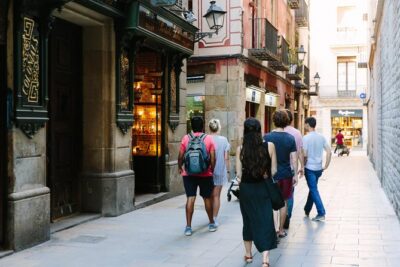




Gaudí Architecture Tours, compared.
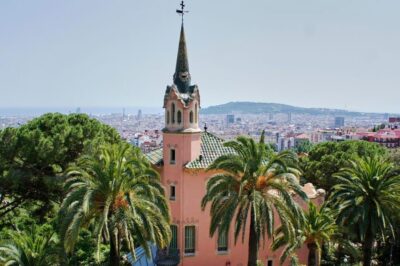 ★ 4.5Park Güell and Gaudí House Museum Entry TicketFrom $336,326 reviews
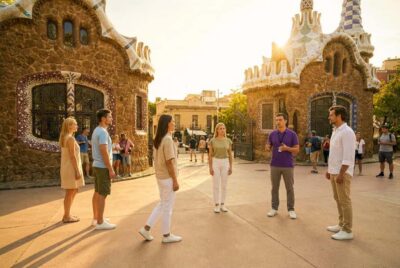 ★ 4.8Gaudí’s Park Güell Tour with Fast-Track TicketFrom $324,512 reviews
 ★ 4.6Sant Pau Recinte Modernista Entry TicketFrom $212,567 reviews
 ★ 4.7Sagrada Familia, Modernism, and Old Town TourFrom $521,621 reviews
 ★ 4.5Sagrada Familia & Gaudi Tour Private or Small Group with TicketsFrom $901,188 reviews
 ★ 5.0Complete Gaudi Tour: Casa Batllo, Park Guell & Sagrada FamiliaFrom $1621,152 reviews
 ★ 5.0Ramblas, Old Town, Gothic and Gaudi Architecture Walking TourFrom $35723 reviews
 ★ 4.5Gaudi´s Casa Vicens Skip the Line Ticket with AudioguideFrom $26685 reviews
Browse the lists this tour appears in