
Reviewed · GOTHIC QUARTER TOURS
Barcelona Jewish & Gothic Tour
Stone hides stories in Barcelona. This private tour threads 600 years of Jewish life through the Gothic Quarter, showing how faith and daily survival left marks you can still spot. You’ll pair medieval architecture with legends and names tied to Barcelona, including Nahmanides.
I love the way the route points out lived-in details like a medieval mikvah and the practical clues of kosher life, including ovens connected to Shabbat. I also like the human touch: guides such as Ella and Eyal are praised for keeping the pace friendly, answering questions, and making the city’s layers feel real.
One drawback: it’s a walking tour, so plan for comfortable shoes and a fair bit of time on older streets.
In This Review
- Key takeaways
- Why the Gothic Quarter is the perfect place for Jewish history
- Price and what you get for $171 in 4 hours
- Meeting point: where to start near Conesa Entrepans
- Stop-by-stop: the Ancient Synagogue area and the hidden mikvah
- Nahmanides and the 600-year story stitched into the streets
- Plaça Catalunya: a quick reset before the Gothic maze deepens
- Plaça Nova and Barcelona Cathedral: courtyards, Gothic structure, and the story behind the stone
- Plaça Reial and La Boqueria: where markets and shared life show up
- The guiding difference: Ella, Eyal, and why storytelling matters here
- What you’ll remember after the walk
- Who should book this Jewish & Gothic tour
- Should you book Barcelona Jewish & Gothic Tour?
- FAQ
- FAQ
- How long is the Barcelona Jewish & Gothic Tour?
- Is this tour private or group-based?
- What sites and themes will I see during the walk?
- What’s included in the $171 per person price?
- Is food included?
- Where do I meet the guide?
- What languages are available?
- Is the tour wheelchair accessible?
Key takeaways
- Hidden ritual life: you’ll hear about a medieval mikvah tucked under later construction
- Nahmanides in context: you’ll connect Ramban’s legacy to the Jewish community’s influence in Barcelona
- Survival clues in stone: you’ll look for symbols and architectural features tied to secrecy and escape
- Gothic Quarter courtyards: you’ll see parts of the Gothic fabric that most people miss while passing through
- Markets as meeting points: the story includes how Jewish and non-Jewish Catalans shared commercial life
Why the Gothic Quarter is the perfect place for Jewish history
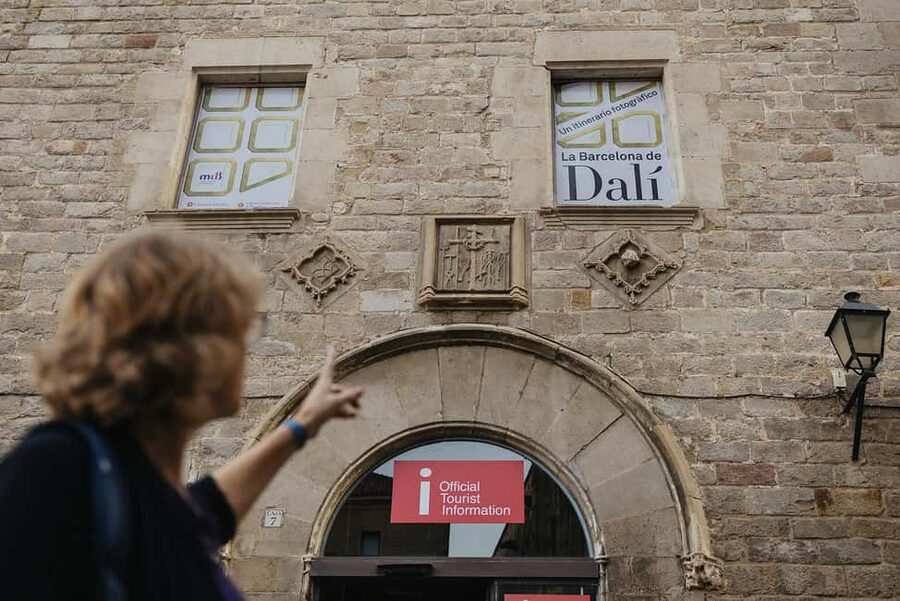
The Gothic Quarter in Barcelona is basically a lesson in layers. You walk from square to alley to courtyard, and each turn feels like it’s hiding something. This tour uses that setting well by tying the architecture to real Jewish life rather than treating it like a museum stop.
What makes it click is the focus on physical, on-the-ground evidence. You’re not only hearing about people and dates; you’re looking at stone, corridors, courtyards, and street patterns that help explain how communities practiced their faith, traded, studied, and endured.
You’ll also get the big timeline without it turning into a lecture. The story moves from medieval flourishing to the 1492 expulsion, and you see how the community left a lasting footprint in the city even when it was forced out.
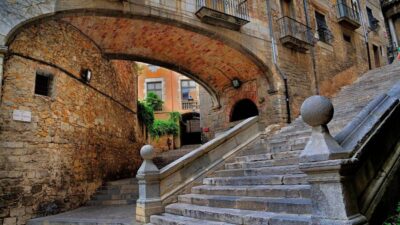
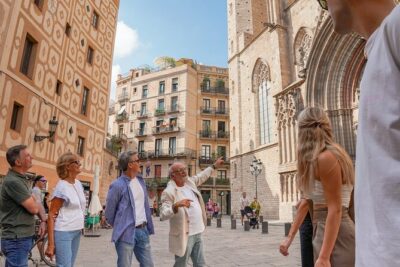
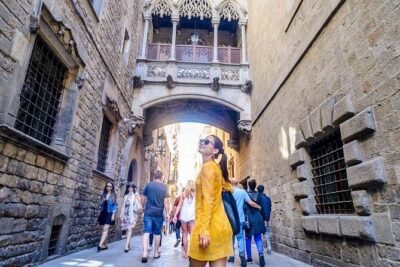
Deeper into the lanes of the Barri Gòtic
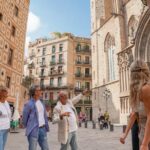


Price and what you get for $171 in 4 hours
At $171 per person for a 4-hour private walking tour, this isn’t a budget bus tour price. The value comes from three things that matter in a city like Barcelona: a local guide, site entrance fees included, and time spent walking slowly enough to notice details.
Entrance fees are included, so you’re not stuck doing math halfway through the experience. You also get a live English-speaking guide (with Hebrew and Spanish available), which helps when you want context for what you’re seeing. And because it’s private, you can ask questions without feeling like you’re holding up a big group.
The practical tradeoff is that you’re paying for depth, not speed. If you want quick highlights with photos and no discussion, this might feel like more time than you need.
Meeting point: where to start near Conesa Entrepans
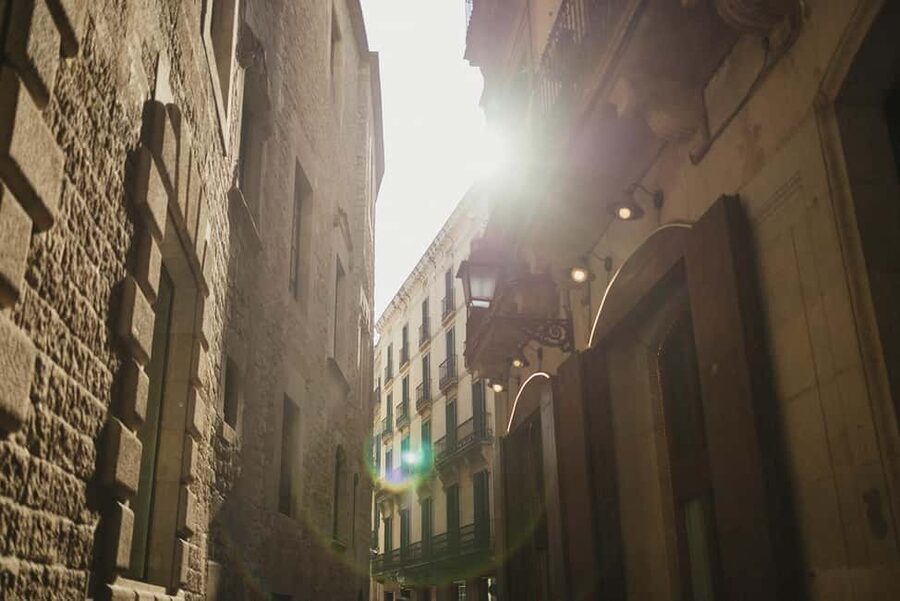
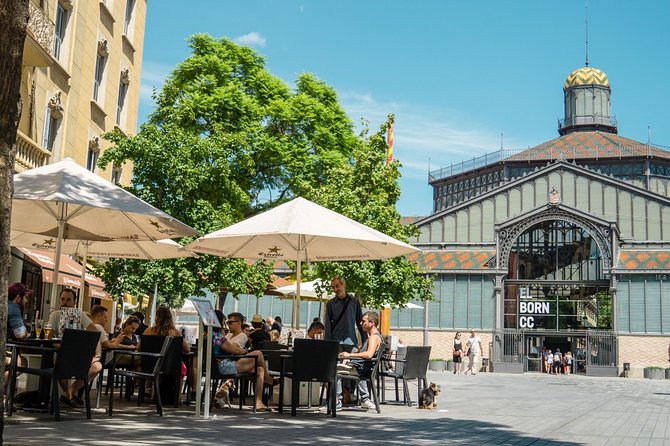
You meet at Plaça de Sant Jaume, just next to the Conesa Entrepans sandwich shop. The guide is waiting near the entrance and wears a hat with the Barcelona Dreaming logo, so it should be easy to spot.
This start location is helpful because it puts you near the edges of the Gothic maze. You begin with a city pulse, not a remote departure spot, and that makes the walk feel natural right from the first steps.
Tip: arrive a few minutes early and get your footwear sorted. You’ll be moving through historic streets, and the best part of the tour is noticing what’s around you, not rushing to keep up.
Stop-by-stop: the Ancient Synagogue area and the hidden mikvah
The tour spends about two hours at the Ancient Synagogue area, and that’s the heart of the experience. This is where you see how Jewish life wasn’t only about grand buildings; it was also about everyday practices housed in clever, sometimes discreet spaces.
A major highlight is the medieval mikvah, described as hidden beneath later construction. That detail matters because it turns the story from abstract history into something physical. You’re learning that ritual life had architecture and engineering behind it, even when the community needed privacy.
You’ll also hear about secret Jewish quarter areas and narrow passageways used for religious practice in secrecy. Even when you can’t point to every single “exact spot” like a film scene, the guide’s explanation helps you understand the logic of the neighborhood layout.
If you like context that makes you look twice at corners and stairways, this first stretch is a strong match.
Nahmanides and the 600-year story stitched into the streets
A big name in the tour is Nahmanides, also known as Ramban. The tour connects his legacy to the broader community that shaped Barcelona for centuries, and you’ll hear how his work influenced Jewish thought far beyond Catalonia.
This part works best when you’re okay with the idea that history is not just dates. The guide ties philosophy, scholarship, and community life to the city’s geography and architecture, so Barcelona becomes more than a backdrop. It becomes part of how ideas traveled and how daily faith was lived.
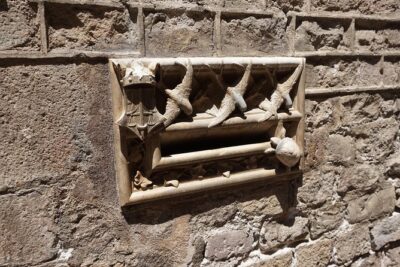
You’ll also encounter references to secret symbols carved into stone. The tour frames these marks as whispers of a legacy that lasted even as politics and safety changed. For me, that’s one of the most moving angles: you’re not only learning what happened—you’re noticing how people tried to preserve meaning.
- Barcelona: Sagrada Familia Entry Ticket with Audio Guide★ 4.6 · 105,312 reviews
- Barcelona: Park Güell Admission Ticket★ 4.4 · 76,534 reviews
- Barcelona: Casa Batlló Entry with Self-Audioguide Tour★ 4.7 · 25,359 reviews
Plaça Catalunya: a quick reset before the Gothic maze deepens
After the synagogue-focused section, you move through central areas and land at Plaça Catalunya. This stop is short, but it gives your bearings. It’s a chance to re-orient after the tight medieval lanes and reset your mental map.
What I like about a pause like this is that it prevents “Gothic fatigue.” You can see the larger urban structure again, then step back into the older streets with clearer contrast.
Your guide uses this kind of city-to-city contrast to explain how Jewish and non-Jewish Catalans were intertwined in daily life—markets, festivals, and commerce. That’s important, because it counters a common trap: thinking history always happened in separate bubbles.
Plaça Nova and Barcelona Cathedral: courtyards, Gothic structure, and the story behind the stone
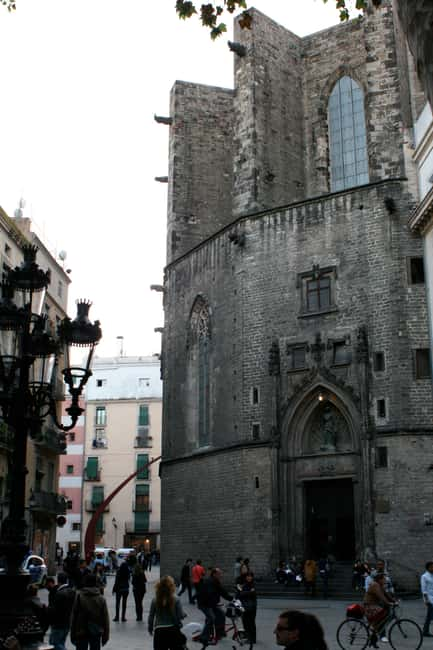
As you reach Plaça Nova and then the Barcelona Cathedral area, the tone shifts toward architecture you can actually feel. Gothic buildings are dramatic, but the tour keeps them grounded in meaning by linking design choices to the community around them.
The standout theme here is hidden Gothic courtyards and secrets that locals may not talk about often. This is where you learn how to read the city. Instead of just admiring angles and height, you’re being coached to notice what the space suggests about movement, gathering, and privacy.
The cathedral stop is also a useful anchor because it’s one of Barcelona’s most recognized sites. Having it in the middle of a Jewish-and-Gothic narrative helps you see the whole area as interconnected rather than isolated. You’re not only looking at an emblem; you’re viewing a neighborhood where different lives overlapped.
Practical note: cathedral area streets and entrances can involve short walks and turns. If you’re sensitive to crowds, plan to enjoy the quieter moments by letting the guide set the pace.
Plaça Reial and La Boqueria: where markets and shared life show up
Plaça Reial and La Boqueria bring you out of stone labyrinth mode and into everyday Barcelona. This matters because the tour doesn’t treat the Jewish quarter story as only religious. It includes how people lived together through trade and shared public spaces.
La Boqueria, in particular, is a place where you can picture how markets helped people mingle. The tour frames this as part of how Jewish and non-Jewish Catalans intersected—sharing commercial life, festival energy, and daily rhythms.
Even if you don’t buy anything (food and drinks are not included), just seeing the market in the middle of the history walk adds texture. It reminds you that a community is not only houses of worship and legends. It’s also bargaining, baking, arriving, and seeing familiar faces.
The guiding difference: Ella, Eyal, and why storytelling matters here
This is one of those tours where the guide can make or break the experience. The reviews highlight two names in particular: Ella and Eyal. Both are described as warm, clear, and full of small details that keep you engaged without turning the walk into a scripted monologue.
What you’re really paying for is interpretation. You could wander the Gothic Quarter on your own, but you’d likely miss why the mikvah matters, how kosher ovens connect to Shabbat life, and what escape-route legends are trying to explain about fear and resilience.
I also like that the guides are positioned as locals with deep family roots in Barcelona’s Jewish quarter. That background doesn’t guarantee every story is the same for every listener, but it usually makes the delivery more human—less like a fact sheet, more like city knowledge passed down.
And if you have questions, the guide interaction is a real plus. You’re not trapped watching and hoping.
What you’ll remember after the walk
A tour like this tends to stick for a specific reason: it changes how you look at the city afterward. After you’ve heard about secret synagogues hidden below Gothic streets, you start noticing patterns—where spaces might have allowed privacy, where passageways could have served as practical routes, and how architecture can reflect need.
You’ll also leave with a more complete picture of Jewish Barcelona as more than survival. The story includes scholars, merchants, and spiritual leaders shaping the city. Then it brings you to the expulsion in 1492, so you see the arc of flourishing and rupture rather than only one side.
If you like museums, you’ll probably enjoy those too. But if you prefer learning through streets and settings, this format is the right fit.
Who should book this Jewish & Gothic tour
This tour is ideal if you want:
- Jewish history in Barcelona tied to real architecture and specific places
- A private format where you can ask questions and set the conversation tone
- A slower walking pace that makes courtyards and side streets feel meaningful
- A guide who brings legends and symbols into context
It may be less ideal if:
- You want a purely photo-driven highlights loop and minimal walking time
- You dislike explanations and prefer silent sightseeing
- You have limited mobility and need very flexible pacing (the tour is wheelchair accessible, but you’ll still be walking through historic areas)
Should you book Barcelona Jewish & Gothic Tour?
I’d book it if you’re the type of visitor who gets curious when a city feels confusing—if you like turning alleys into explanations and stone into stories with names. The price makes sense when you value a private guide and entrance fees included, and when 4 hours on foot doesn’t feel like a burden.
If you’re in Barcelona for the first time and only want the biggest monuments, you might choose something more general. But if you’re drawn to how communities lived—quietly, cleverly, and sometimes under pressure—this tour gives that perspective in a way a standard itinerary usually won’t.
FAQ
FAQ
How long is the Barcelona Jewish & Gothic Tour?
The tour lasts 4 hours.
Is this tour private or group-based?
It’s a private walking tour with a private group format.
What sites and themes will I see during the walk?
You’ll explore Jewish heritage sites connected to medieval life, including a medieval mikvah, secret Jewish-quarter areas, kosher oven references, and Gothic Quarter highlights such as hidden courtyards and key Gothic architecture areas. You’ll also learn about Nahmanides and the community’s timeline, including expulsion in 1492.
What’s included in the $171 per person price?
Included features are the private walking tour of the Gothic Quarter, an English-speaking guide, entrance fees for all visitors, and exploration of Jewish heritage sites with stories, architectural insights, local traditions, and folk legends.
Is food included?
No. Food and drinks are not included.
Where do I meet the guide?
Meet your guide at Plaça de Sant Jaume, just next to the Conesa Entrepans sandwich shop. The guide will be near the shop entrance wearing a hat with the Barcelona Dreaming logo.
What languages are available?
The guide is available in English, Hebrew, and Spanish.
Is the tour wheelchair accessible?
Yes, the tour is wheelchair accessible.
More Ways to Tour Barcelona
- Barcelona: Casa Batlló Entry with Self-Audioguide Tour
★ 4.7 · 25,359 reviews - Barcelona: 24 or 48-Hour Hop-On Hop-Off Bus Tour
★ 4.4 · 20,872 reviews - Barcelona: Park Guell Guided Tour with Skip The Line Entry
★ 4.7 · 17,563 reviews - Barcelona: Sagrada Familia Skip-the-Line Entry Ticket & Tour
★ 4.8 · 12,789 reviews - Barcelona: FC Barcelona Museum “Barça Immersive Tour” Ticket
★ 4.4 · 10,944 reviews
More Barcelona Tours on Our Radar
- Barcelona: Sagrada Familia Entry Ticket with Audio Guide
★ 4.6 · 105,312 reviews - Barcelona: Park Güell Admission Ticket
★ 4.4 · 76,534 reviews - Barcelona: Casa Batlló Entry with Self-Audioguide Tour
★ 4.7 · 25,359 reviews - Barcelona: Montjuïc Cable Car Roundtrip Ticket
★ 4.5 · 22,368 reviews - Barcelona: Hola Barcelona Public Transport Travel Card
★ 4.5 · 20,985 reviews
Lost in the Gothic Quarter
- Barcelona in 1 Day: Sagrada Familia, Park Guell,Old Town & Pickup
★ 5.0 · 13,541 reviews - Barcelona all included: Sagrada, Park Güell, Montjuic & Gothic
★ 5.0 · 2,169 reviews - Barcelona: Sagrada Familia, Modernism, and Old Town Tour
★ 4.7 · 1,621 reviews - Barcelona Gothic Quarter Tapas & Taverns Food & Wine Tour
★ 5.0 · 1,470 reviews - Barcelona Helicopter, Sailboat & Old Town Private Walking Tour
★ 5.0 · 1,395 reviews
Just Rated Around Barcelona


Gothic Quarter Tours, compared.
 ★ 5.0Barcelona in 1 Day: Sagrada Familia, Park Guell,Old Town & PickupFrom $12013,541 reviews
 ★ 5.0Barcelona all included: Sagrada, Park Güell, Montjuic & GothicFrom $1192,169 reviews
 ★ 4.7Sagrada Familia, Modernism, and Old Town TourFrom $521,621 reviews
 ★ 5.0Barcelona Gothic Quarter Tapas & Taverns Food & Wine TourFrom $1311,470 reviews
 ★ 5.0Barcelona Helicopter, Sailboat & Old Town Private Walking TourFrom $5131,395 reviews
 ★ 4.8Old Town and Gothic Quarter Walking TourFrom $211,393 reviews
 ★ 4.7Helicopter, Boat Ride & Old Town Private TourFrom $5001,357 reviews
 ★ 5.0Barcelona Old Town & Gothic Quarter Small Group TourFrom $221,308 reviews
Browse the lists this tour appears in