
Reviewed · GOTHIC QUARTER TOURS
Gothic Quarter and Old City
Barcelona’s Gothic streets pull you in. This 2-hour sunset walk is a great way to understand how Barcelona’s past stacked up into the city you see today, with an expert guide steering you through hidden corners and busy viewpoints. I especially like the storytelling pace: from Roman-era roots to later Catalan Gothic details, it feels like the stones are talking. The only real drawback is practical—this is still a walking tour, and food and drinks aren’t included, so plan accordingly.
What makes it work is the format. You get a live guide (in multiple languages) plus a headset, which matters in tight streets where it’s easy to lose the thread. Based on guide feedback I’ve seen—like Cesar’s easy charm and Pedro’s history passion—it’s the kind of tour where you come away with names, context, and a few fun Catalan quirks you can actually use while exploring on your own.
In This Review
- Key Points Worth Knowing Before You Go
- Why the Gothic Quarter Feels Different at Sunset
- From Roman Origins to Catalan Gothic: What the Guide Actually Helps With
- Meeting Point and Start: Getting Oriented Fast
- Stop-by-Stop Through the Barri Gòtic and Old City
- Basilica de Santa Maria del Pi: A Landmark That Shapes the Surroundings
- Sant Felip Neri Square: Small Space, Big Personality
- Old City Barcelona Streets: The In-Between That Makes the City Make Sense
- El mural del petó: A Street Detail With Cultural Meaning
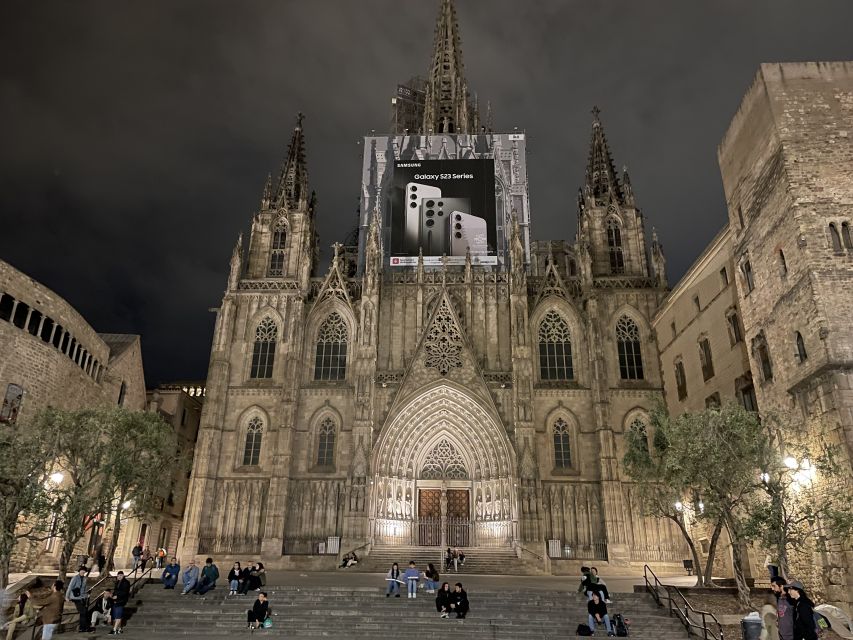
- Barcelona Cathedral and Santa Eulalia: The Gothic Centerpiece
- Plaça del Rei: Power, Place, and Stone Surfaces
- Puente del Obispo: A Short Bridge With a Strong Sense of Connection
- Plaça de Sant Jaume: Where Civic and Religious Worlds Meet
- Finish at Plaça Reial: A Good Landing Spot
- What’s Included (and What You Need to Bring)
- Price and Value: Is $41 a Fair Deal?
- Who This Tour Fits Best
- Should You Book This Gothic Quarter and Old City Sunset Walk?
- FAQ
- How long is the Gothic Quarter and Old City tour?
- Where does the tour start?
- What languages are available for the live guide?
- Is the tour wheelchair accessible?
- Does the price include food or drinks?
- What happens if it rains or I need to cancel?
Key Points Worth Knowing Before You Go
- Sunset timing through the Barri Gòtic for softer light and a calmer feel than midday
- A clear arc from origins to modern Barcelona, guided from earlier periods up to today
- Catalan Gothic explained in plain terms, not just dates and architecture
- Chocolate gets a surprising spot on the tour, with an explanation you’ll remember
- Big-name landmarks plus quieter squares, including Santa Maria del Pi and Sant Felip Neri
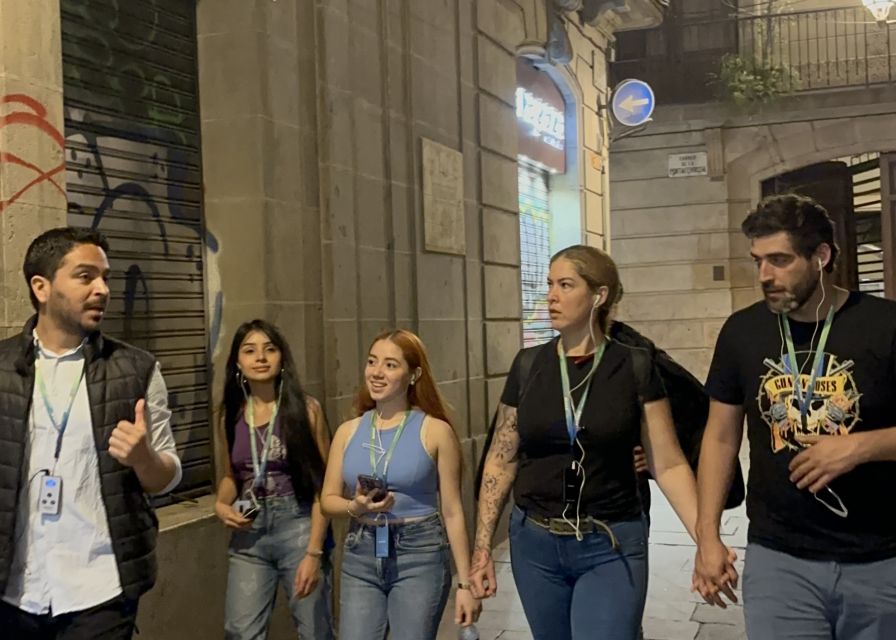
- Headsets keep you locked in, even when streets get noisy or turn into alleys
Why the Gothic Quarter Feels Different at Sunset
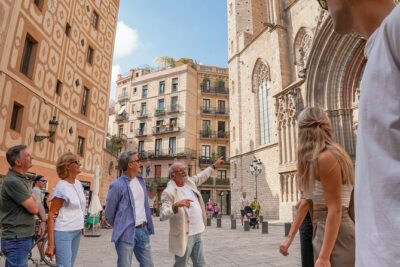
Barcelona at golden hour has a trick: the light makes old stone look warmer, and the crowds spread out just enough to let you notice details. That’s what I like about starting this walk near the old-city flow and then working your way through the Gothic Quarter—you’re not just taking photos, you’re getting orientation.
The tour is built around short stops and steady walking, which is ideal when you want to see a lot without turning the city into a checklist. Sunset also helps you spot textures: weathered façades, worn steps, and small contrasts between “formal” landmark buildings and the everyday street fronts around them. If you’re the type who likes to understand what you’re looking at, the timing makes the explanations land better.
One more practical note: the route includes several photo moments, so don’t plan anything tight right before or after. Wear comfortable shoes—you’ll be moving a fair bit for two hours.
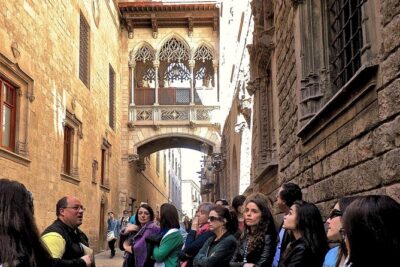
Deeper into the lanes of the Barri Gòtic
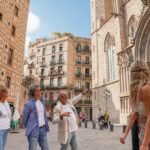


From Roman Origins to Catalan Gothic: What the Guide Actually Helps With
The best tours don’t just point. They connect. Here, the guide’s job is to help you see how Barcelona’s origins echo through the city layout, and how later styles—especially Catalan Gothic—show up in recognizable ways.
You’ll hear about the city from Roman times forward, then into more recent centuries, with the guide threading it into what you’re standing in front of. That matters because the Gothic Quarter can feel like it’s all Medieval, all the time. But once you understand the layers, you stop seeing only scenery and start seeing a timeline in the streets.
This is also where the “why” elements come in:
- why this part of town became such a focus for locals and visitors
- why certain traditions show up here
- and even why chocolate is more important to Barcelona than you might expect
The chocolate part won’t be a random detour—it’s the kind of cultural footnote that makes the area feel lived-in, not museum-like. And if you’re into architecture, you’ll get guidance on how to read Gothic features without needing a degree.
Meeting Point and Start: Getting Oriented Fast
Meeting point may vary depending on which option you booked. One starting option is Font de Canaletes, a recognizable place that’s handy for finding your way back to the main tourist arteries before you step deeper into the older streets.
From the start, you’re set up to walk rather than scatter. That’s important in the Gothic Quarter. If you try to DIY it, you often end up zigzagging through impressive streets but missing the logic of the district. This tour keeps the path moving, with the guide telling you what you’re about to see before you see it.
Also, you’ll be using a headset. That sounds small, but in Barcelona’s narrow lanes it can make a big difference—especially if you’re traveling with your own map and want the guide’s narration to stay clear.
Stop-by-Stop Through the Barri Gòtic and Old City
Basilica de Santa Maria del Pi: A Landmark That Shapes the Surroundings
One of the early highlights is Basilica de Santa Maria del Pi. You’ll get time for a photo stop, plus a guided look and walk (about 30 minutes here). Even if churches aren’t your top interest, what you’ll notice is how this kind of building anchors the neighborhood.
A basilica like this doesn’t just sit there. It shapes how people move through the area, and it gives the Gothic Quarter that “main character” feeling for anyone walking nearby. The guide helps you connect the architecture to the broader Catalan Gothic story—so you’re not just seeing stone, you’re seeing style.
If you’re short on stamina, treat this stop as a moment to slow down. It’s not just pass-by sightseeing.
See more of Barcelona in one sweep
- Barcelona: City Sightseeing Hop-On Hop-Off Bus Tour★ 4.4 · 10,061 reviews
- City Sightseeing Barcelona Hop-On Hop-Off Bus Tour: 24 or 48-Hour★ 4.0 · 5,250 reviews
- Barcelona: City Walking Tour with a Local Guide★ 4.9 · 1,384 reviews
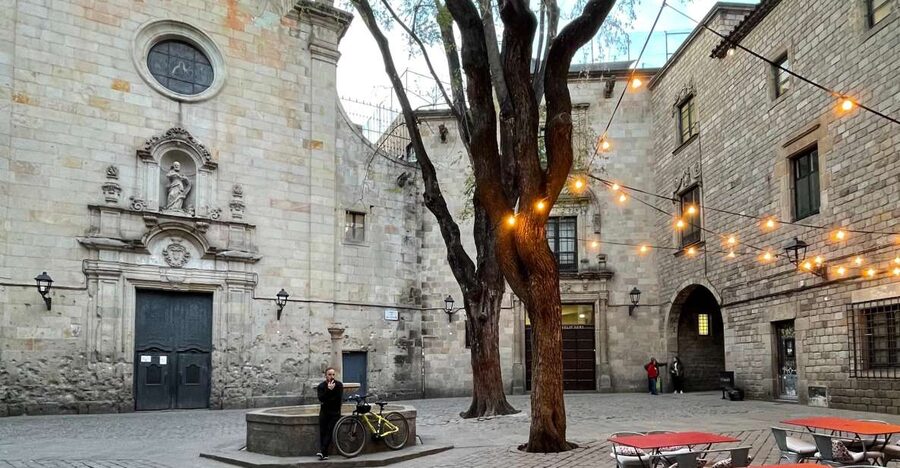
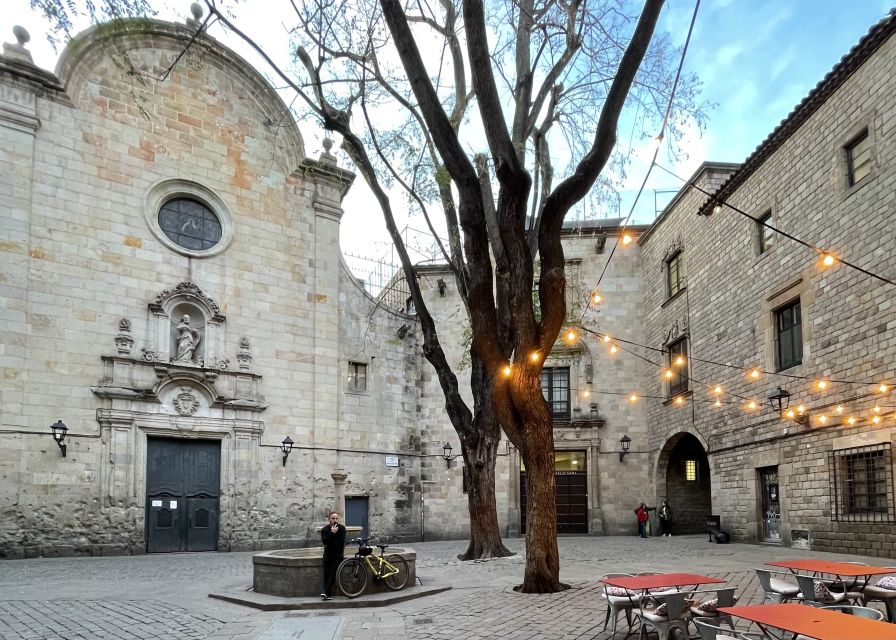
Sant Felip Neri Square: Small Space, Big Personality
Next is Sant Felip Neri Square, with a shorter stop (about 15 minutes). Squares like this are where the Gothic Quarter turns from architectural spectacle into human-scale life: you feel the way the neighborhood breathes when the walking slows.
In a tour like this, the value of a smaller square stop is that it’s easier for the guide to point out details—how the surrounding buildings frame the space, and why locals still feel connected to these spots. You’ll also get a photo stop and guided walk, so you’ll have a clear reason to look at what you might otherwise ignore.
Old City Barcelona Streets: The In-Between That Makes the City Make Sense
Then you’ll move through parts of Old City Barcelona with photo stop(s), guided tour, and walking. This segment is less about one single “wow” building and more about the street logic: turns, sightlines, and clusters of history that don’t always show up if you’re only hunting big landmarks.
I like this part because it’s where the tour transforms from sightseeing into understanding. The guide’s facts—Roman-to-modern context, plus everyday traditions—help you see how the district functions as a whole.
El mural del petó: A Street Detail With Cultural Meaning
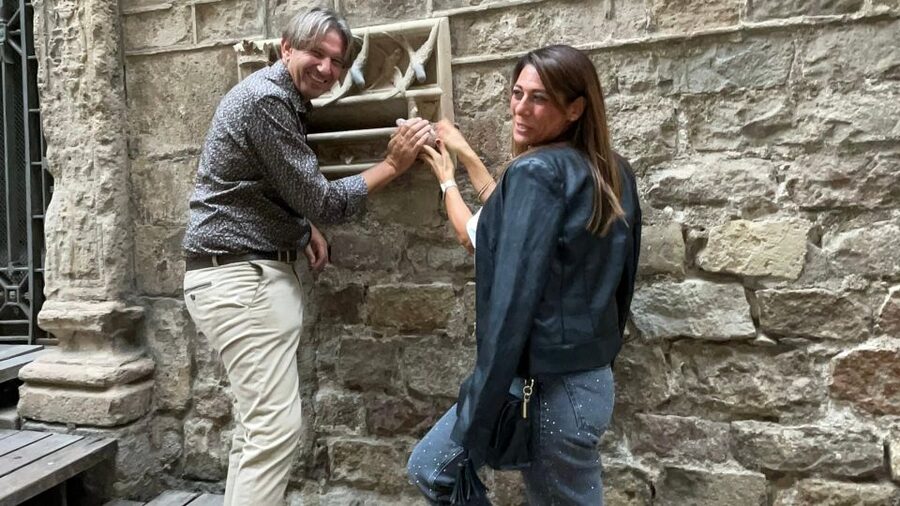
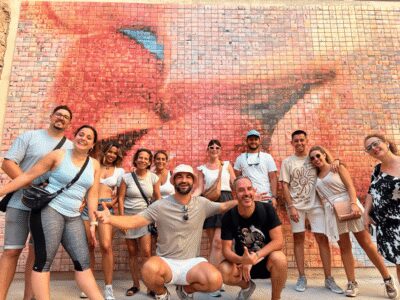
At el mural del petó, you’ll have another photo stop and guided explanation (with walking time). This kind of mural stop is useful because it pulls you out of only formal architecture. It reminds you that the Gothic Quarter isn’t only cathedrals and bridges—it’s also street-level symbols and modern touches in an old setting.
If you like art that lives in public space, you’ll probably enjoy this stop more than expected. The guide’s narration helps turn a quick glance into a meaningful look.
Barcelona Cathedral and Santa Eulalia: The Gothic Centerpiece
Next is Barcelona Cathedral (about 15 minutes, with photo stop and guided walk). You’ll also connect the cathedral to Santa Eulalia, which gives the place a strong identity beyond “big church.”
This is one of those landmarks where a guide really helps. Left to your own devices, you might take photos and move on. With a guide, you’ll learn what to notice—how Gothic features read, how the building’s role shaped the city around it, and why this cathedral matters to both history and present-day Barcelona.
If you’re sensitive to time spent inside, keep expectations realistic. This stop is structured for a short, focused look rather than a long visit.
Plaça del Rei: Power, Place, and Stone Surfaces
Then you’ll reach Plaça del Rei (about 15 minutes). Even without a long explanation, it’s easy to see why royal and civic power would gravitate here. The space feels designed for authority—open enough to read, grounded enough to remember.
The guide’s job here is to connect the square to the larger story of Barcelona’s development. You’ll get photo time and guided context, plus a short walk that helps you understand how this square fits into the walk’s larger arc.
Puente del Obispo: A Short Bridge With a Strong Sense of Connection
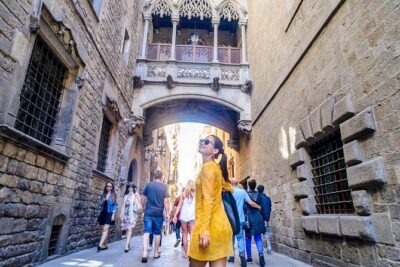
After Plaça del Rei comes Puente del Obispo (photo stop and guided walk). Bridges inside historic districts can be more meaningful than they look because they often connect more than land. They connect storylines: religious authority, civic movement, and the way the cathedral complex interacts with surrounding streets.
A short stop like this is perfect for photos too, but don’t treat it as only a picture moment. The guide’s explanation helps you see why the bridge is placed where it is and what it represents in the district.
Plaça de Sant Jaume: Where Civic and Religious Worlds Meet
Finally, before the finish, you’ll arrive at Plaça de Sant Jaume (photo stop, guided tour, and a walk). Squares like this are often where the city’s identity concentrates. Here, the tour helps you understand why this kind of place is central to the old city story.
This stop is valuable if you want to stop treating Barcelona like a string of attractions and start seeing the city as organized space—one where different institutions left visible marks on the map.
Finish at Plaça Reial: A Good Landing Spot
You finish at Plaça Reial. It’s a smart end point because it’s lively enough that your “okay, now what?” moment doesn’t hit right away. After two hours of history and narrow streets, you’ll appreciate a more open square atmosphere where you can reset and continue exploring at your own pace.
What’s Included (and What You Need to Bring)
This tour includes a walking tour, an expert guide, and headsets so you can hear clearly. That headset detail is genuinely useful in the Gothic Quarter, where street noise and distance can make guided narration hard to follow.
Not included: food and drinks. Bring water (and if you like, a small snack) so the last third of the walk doesn’t become a distraction. Also bring comfortable shoes—the route includes multiple steps and uneven old-stone surfaces.
The tour also notes that it can be cancelled in case of rain. In practical terms: if weather looks questionable, keep some flexibility in your plans and bring a light layer.
Price and Value: Is $41 a Fair Deal?
At $41 per person for about 2 hours, you’re paying for three things: guided context, a structured route, and the headset system. When you compare that to a self-guided walk, the value is mainly in time saved and understanding gained.
You’re not just buying access to “cool buildings.” You’re paying for someone to connect the layers: Roman origins to later Catalan Gothic details, plus cultural explanations like the chocolate connection. If you’re the type who wants to walk less aimlessly and come away with a clearer sense of the city, this price tends to make sense.
If you’re traveling on a strict budget and already have strong city-history reading skills, a DIY walk could be cheaper. But if you’d rather spend the money to avoid confusion and get your bearings fast, the inclusion of headsets and an expert guide is what tips it toward good value.
Who This Tour Fits Best
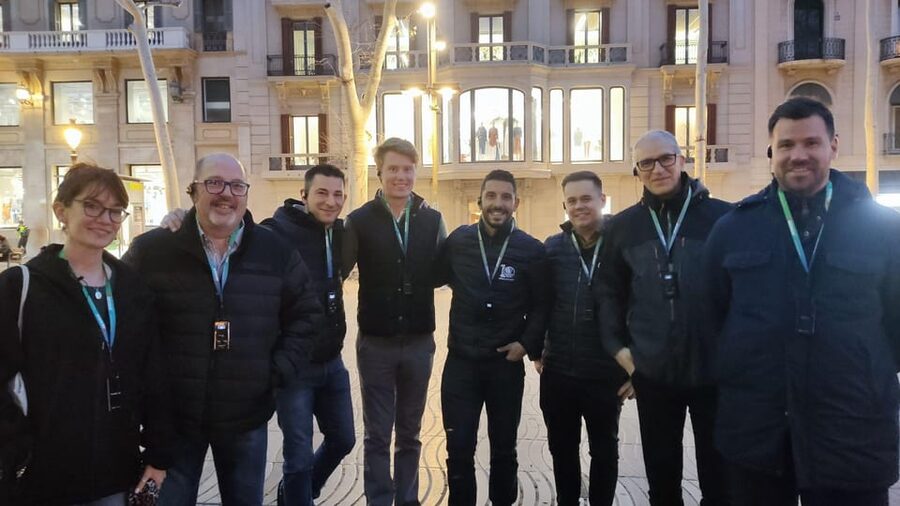
This tour is a strong match if:
- you want a sunset walking orientation and don’t want to plan a route
- you’re curious about how Barcelona’s origins and Catalan Gothic show up in real places
- you like hearing city stories tied to specific landmarks (rather than general lectures)
- you prefer a guide who keeps things clear and human
If you only care about one landmark photo and don’t want narration, you might find it too “tour-like.” But if you enjoy context—even quick context—this format is built for you.
Should You Book This Gothic Quarter and Old City Sunset Walk?
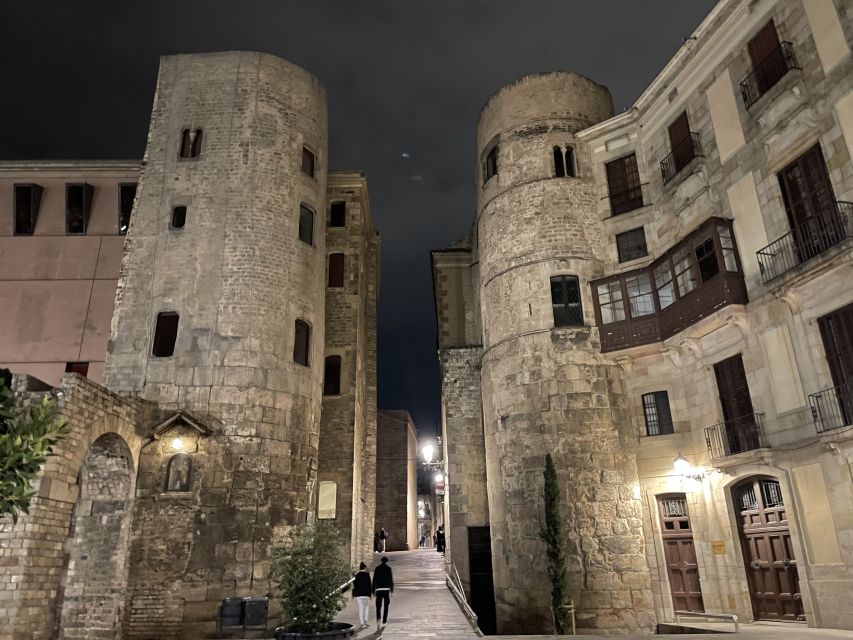
I’d book it if you want a guided, well-paced way to understand why the Gothic Quarter still feels special to locals and why people keep coming back to the maze of streets. The strongest reasons to choose this one are the expert guide format, the headset support, and the way the tour links architecture to story (including Catalan Gothic, Roman-era context, and those culture details like chocolate).
Skip it if you hate walking, expect food to be included, or you prefer totally free-form sightseeing with no structure at all.
If you’re deciding with limited time in Barcelona, this is the kind of tour that helps you spend the rest of your trip exploring with better instincts—and fewer wrong turns.
FAQ
How long is the Gothic Quarter and Old City tour?
The tour lasts 2 hours.
Where does the tour start?
The meeting point may vary depending on the option booked. One listed starting option is Font de Canaletes.
What languages are available for the live guide?
The tour offers live guiding in Italian, English, Portuguese, and Spanish.
Is the tour wheelchair accessible?
Yes, the tour is wheelchair accessible.
Does the price include food or drinks?
No. Food and drinks are not included.
What happens if it rains or I need to cancel?
The tour can be cancelled in case of rain. You can also cancel up to 24 hours in advance for a full refund.
All of Barcelona in One Sweep
- Barcelona: City Sightseeing Hop-On Hop-Off Bus Tour
★ 4.4 · 10,061 reviews - City Sightseeing Barcelona Hop-On Hop-Off Bus Tour: 24 or 48-Hour
★ 4.0 · 5,250 reviews - Barcelona City Tour Hop-On Hop-Off with Optional Boat
★ 4.0 · 3,012 reviews - Barcelona: City Walking Tour with a Local Guide
★ 4.9 · 1,384 reviews - Barcelona: Private City Tour by Eco Tuk Tuk
★ 4.9 · 1,339 reviews
More Barcelona Tours on Our Radar
- Barcelona: Sagrada Familia Entry Ticket with Audio Guide
★ 4.6 · 105,312 reviews - Barcelona: Park Güell Admission Ticket
★ 4.4 · 76,534 reviews - Barcelona: Casa Batlló Entry with Self-Audioguide Tour
★ 4.7 · 25,359 reviews - Barcelona: Montjuïc Cable Car Roundtrip Ticket
★ 4.5 · 22,368 reviews - Barcelona: Hola Barcelona Public Transport Travel Card
★ 4.5 · 20,985 reviews
Lost in the Gothic Quarter
- Barcelona in 1 Day: Sagrada Familia, Park Guell,Old Town & Pickup
★ 5.0 · 13,541 reviews - Barcelona all included: Sagrada, Park Güell, Montjuic & Gothic
★ 5.0 · 2,169 reviews - Barcelona: Sagrada Familia, Modernism, and Old Town Tour
★ 4.7 · 1,621 reviews - Barcelona Gothic Quarter Tapas & Taverns Food & Wine Tour
★ 5.0 · 1,470 reviews - Barcelona Helicopter, Sailboat & Old Town Private Walking Tour
★ 5.0 · 1,395 reviews
Just Rated Around Barcelona
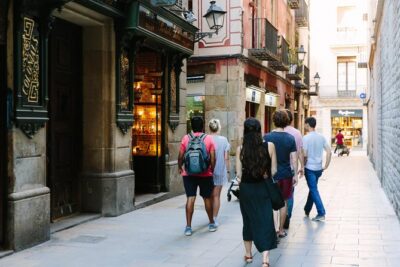





Gothic Quarter Tours, compared.
 ★ 5.0Barcelona in 1 Day: Sagrada Familia, Park Guell,Old Town & PickupFrom $12013,541 reviews
 ★ 5.0Barcelona all included: Sagrada, Park Güell, Montjuic & GothicFrom $1192,169 reviews
 ★ 4.7Sagrada Familia, Modernism, and Old Town TourFrom $521,621 reviews
 ★ 5.0Barcelona Gothic Quarter Tapas & Taverns Food & Wine TourFrom $1311,470 reviews
 ★ 5.0Barcelona Helicopter, Sailboat & Old Town Private Walking TourFrom $5131,395 reviews
 ★ 4.8Old Town and Gothic Quarter Walking TourFrom $211,393 reviews
 ★ 4.7Helicopter, Boat Ride & Old Town Private TourFrom $5001,357 reviews
 ★ 5.0Barcelona Old Town & Gothic Quarter Small Group TourFrom $221,308 reviews
Browse the lists this tour appears in