
Reviewed · GOTHIC QUARTER TOURS
Gothic Quarter Barcelona Tour with Audioguide
Skip group crowds in Barcelona.
This self-guided audio route strings together Gothic-era churches, royal palaces, and Barcelona’s waterfront vibe, all powered by a phone app instead of a live guide. You’ll start at Plaça de Catalunya and end back there, with an offline map to keep you on track.
What I like most is how it lets you move at your pace through the narrow lanes without feeling locked into a group schedule. I also like that the app uses 21 audio recordings plus illustrations, so you’re not just reading signs—you’re guided as you recognize what you’re looking at.
One thing to consider: it’s fully self-guided. You’ll need to bring your own headphones, keep your phone charged, and be ready to pay any site entrance fees where tickets are required.
In This Review
- Key Things You’ll Notice on This Walk
- What This 1.5-Hour Audio Tour Really Gives You (for $8.27)
- Starting at Plaça de Catalunya: Your Best Launch Pad
- Parroquia Santa Anna and Barcelona Cathedral: Medieval Quiet, Then Scale
- Palau Reial Major and Palau de la Generalitat: When Politics Lives in Stone
- Plaça Sant Felip Neri and Santa Maria del Pi: Squares, War Marks, and a Climb
- La Rambla to Boqueria: Street Life Meets Food Central
- Plaça Reial to Mirador de Colom: Night-Friendly Streets and City Views
- Maritime Museum, Port Vell, and Rambla de Mar: Ending with the Sea
- Timing, Tickets, and Headphone Reality Check
- Who Should Book This Gothic Quarter Audio Tour?
- Should You Book This Gothic Quarter Audio Tour?
- FAQ
- How long is the Gothic Quarter Barcelona Tour with Audioguide?
- How much does the tour cost?
- What start and end point does the tour use?
- What language is the audio available in?
- Do I need headphones?
- Is this a self-guided tour or a guided tour?
- Are entrance tickets included?
- Is an offline map included?
- How many people is the tour limited to?
- What if I need to cancel?
Key Things You’ll Notice on This Walk
- Offline map route for GPS navigation: You’re not guessing your way through the Gothic Quarter streets.
- 21 audio recordings about the sights: Short, focused explanations as you reach each landmark.
- Illustrations to help you spot buildings fast: Helpful when facades are partly hidden behind medieval streets.
- A route that stretches from old town to the sea: Cathedral and palaces, then La Rambla, then Port Vell.
- Good value for the variety of stops: For a little over an hour, you cover a lot of Barcelona’s “greatest hits.”
What This 1.5-Hour Audio Tour Really Gives You (for $8.27)
This experience is basically a guided walk, minus the guide. For $8.27 per person, you’re paying for an organized route, a mobile ticket, and an audio guide app that stays with you through roughly 1 hour 30 minutes of sightseeing. That’s the value: you get structure without the herd.
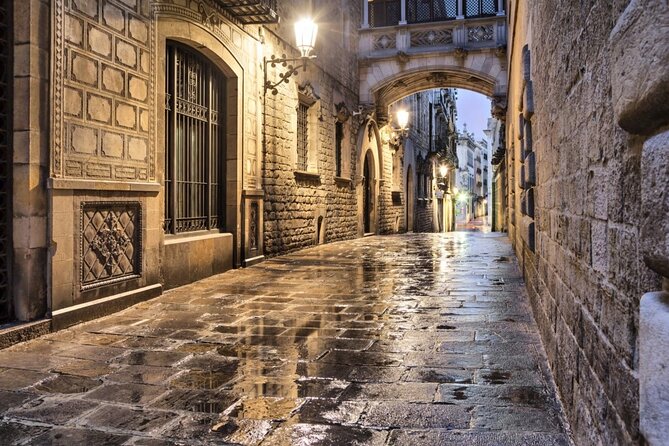
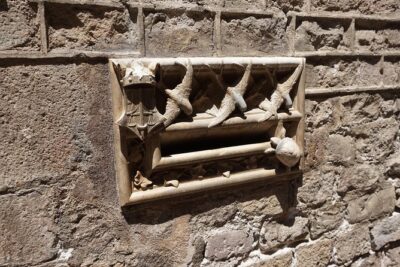
The other big win is flexibility. You can pause when something catches your eye—like a door carved with medieval details or a quieter square you didn’t expect. You’re not stuck waiting for everyone else to read the same plaque.
The trade-off is also clear. It’s not a hands-on tour with a person answering questions. Instead, you’re relying on your phone: download the app, activate your purchase, and follow the on-screen map. If you’re the kind of traveler who likes to wander, this works well. If you want live storytelling and real-time corrections, you may find this approach a little hands-off.
Also, plan for headphone time. Headphones aren’t included, and Barcelona streets have their own soundtrack—so bring something comfortable that blocks out enough noise to hear the recordings.
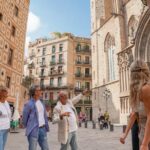
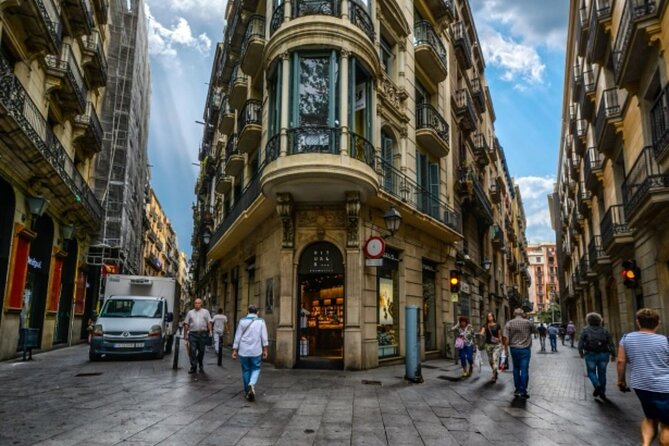
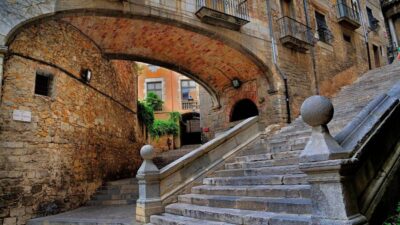
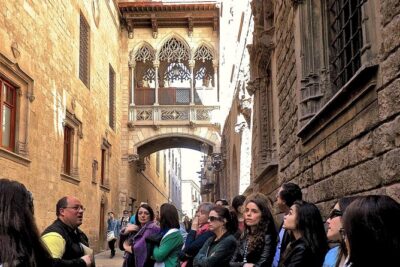
Deeper into the lanes of the Barri Gòtic


Starting at Plaça de Catalunya: Your Best Launch Pad
You begin at Plaça de Catalunya, and it makes sense. The square connects Barcelona’s older core with the modern Eixample district, so it’s a natural “jumping-off point” for moving from big city energy into the Gothic Quarter’s tighter lanes.
The square itself is part of the experience: it’s described as a busy meeting point with fountains, greenery, and iconic sculptures. That’s useful because your first minutes aren’t spent struggling to find the right street. You get your bearings fast—then the audio route gradually pulls you into the medieval texture of the city.
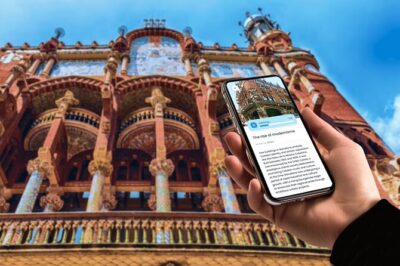
Practical tip: once you start walking, don’t let your phone do all the work. Use the offline map to stay oriented, but also keep an eye on visible landmarks. The route includes illustrations in the app to help you identify what’s next, which makes turns feel less like guessing and more like following a plan.
Parroquia Santa Anna and Barcelona Cathedral: Medieval Quiet, Then Scale
After Plaça de Catalunya, the route introduces the Gothic Quarter in a way that builds mood. You’ll first stop at Parroquia Santa Anna, described as a medieval church with 12th-century charm. This is the kind of stop that rewards slow walking. Expect a calmer atmosphere than the main streets, with Gothic architectural features and stained glass that adds color without needing a long visit.
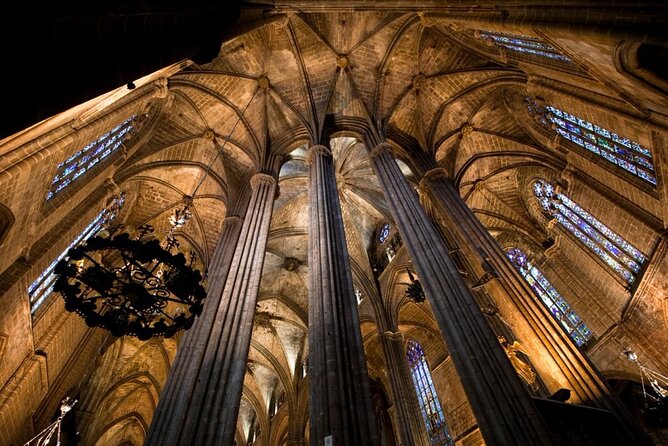
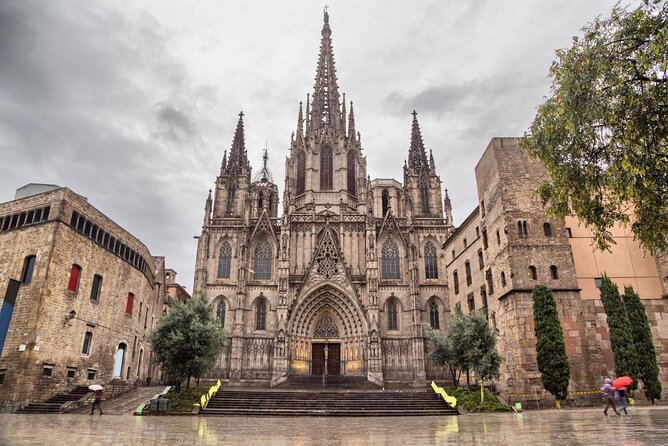
Then you reach the big centerpiece: Barcelona Cathedral. This is where the audio guide helps you see the building beyond the obvious. You’re told it has Gothic and neo-Gothic elements, an intricate facade, and a serene cloister. The app also points you toward the cathedral’s chapels and encourages you to look for views from the bell tower.
Why this is worth the time: cathedrals in Europe can feel like they’re all “big church, next big church.” Here, the audio framing makes it easier to notice specific features—what Gothic means in practice, where neo-Gothic enters the story, and how the cloister shifts the experience from street noise to interior quiet.
Possible drawback: cathedral areas can require extra time if you want bell-tower views or deeper chapel browsing. The route is compact overall, so if you spend too long here, you may feel rushed later.
Palau Reial Major and Palau de la Generalitat: When Politics Lives in Stone
Next up, the route shifts from religious power to civic power.
At Palau Reial Major, you’re described a palace tied to the counts of Barcelona and the kings of Aragon. The focus is on the medieval setting—courtyards and the Saló del Tinell, where important events unfolded. Even if you don’t read every label, the audio help makes the building feel like more than a pretty facade. You start thinking in terms of who used these rooms and why they mattered.
Then you stop at Palau de la Generalitat de Catalunya, which serves as Catalonia’s seat of government. The app highlights the Gothic façade and the inner courtyard, plus the Saló de Sant Jordi as a symbol of Catalan autonomy.
This pair of stops works well because they answer a question you might have while walking: why does the Gothic Quarter feel so “official”? Between a cathedral and palaces/government buildings, you’re seeing Barcelona’s Middle Ages as both spiritual and political.
Practical note: these are prominent public buildings, so check your comfort level with indoor browsing. The route is designed as a walking tour with audio cues; it’s not a long museum marathon.
Plaça Sant Felip Neri and Santa Maria del Pi: Squares, War Marks, and a Climb
The route slows again at Plaça Sant Felip Neri, described as a serene square where traces of the Spanish Civil War remain on church walls. That’s a heavy note in an area that otherwise reads calm and walkable. The contrast is part of why it’s memorable: you’re given permission to pause and reflect instead of just snapping photos and moving on.
From there, you visit Santa Maria del Pi. This one is presented as a Gothic treasure with soaring spires and a striking rose window. The audio guide also encourages you to explore the interior and climb the bell tower for panoramic views.
Why a bell tower stop is smart here: the Gothic Quarter is visually complex—lots of narrow streets, uneven perspectives, and layered rooftops. A higher viewpoint helps you connect what you just walked with how the neighborhood actually sits in the city.
Possible drawback: if you don’t want to climb stairs, you’ll need to decide in advance. The route gives you the option, but it’s still a “time cost” if you do it. Wear good shoes and pace yourself so the climb doesn’t steal energy from La Rambla and the waterfront finish.
- Barcelona: Sagrada Familia Entry Ticket with Audio Guide★ 4.6 · 105,312 reviews
- Barcelona: Park Güell Admission Ticket★ 4.4 · 76,534 reviews
- Barcelona: Casa Batlló Entry with Self-Audioguide Tour★ 4.7 · 25,359 reviews
La Rambla to Boqueria: Street Life Meets Food Central
Once you leave the tight Gothic lanes, the route opens up along La Rambla, a famous boulevard lined with shops, cafes, and street performers. The audio guide frames it as an iconic promenade—more about city atmosphere than quiet detail.
Next is Mercado de la Boqueria. This is where the tour becomes sensory. You’ll step into a food market described as featuring fresh produce, seafood, cured meats, and local delicacies. You can eat tapas at stalls and soak up the daily bustle of market life.
For many people, this is the moment the tour stops feeling like “architecture sightseeing” and starts feeling like “Barcelona, right now.” Even if you skip a meal, walking through the market is a quick way to understand local food culture without needing a separate food tour.
Practical tip: markets can be intense on the senses. If you’re photos-first, keep your phone handy but also give your eyes a break—look up, not just down at counters. The audio guide will keep you anchored in the story of what you’re seeing.
Plaça Reial to Mirador de Colom: Night-Friendly Streets and City Views
After the market, you hit Plaça Reial, described as enchanting with palm trees and Mediterranean charm, lined with cafes and restaurants. The audio guide also points out the iconic Gaudí lampposts—one of those details that’s easy to miss if you’re walking fast.
This square is also described as especially lively at night, which matters for planning. If you’re taking this walk in daylight, you’ll still enjoy the architecture and the atmosphere, but if you’re in Barcelona at night, it can feel like the “same place, different mood.”
Then the route includes the Mirador de Colom (Columbus Monument). The tour notes that you can take an elevator to the top for panoramic views and check an exhibition room for history. It’s a good counterpoint after Boqueria: you go from crowd energy and food smells to a calmer, wide-angle perspective.
Maritime Museum, Port Vell, and Rambla de Mar: Ending with the Sea
The final phase moves you toward the water.
You’ll visit the Maritime Museum, described as housed in a medieval shipyard and focused on Barcelona’s seafaring heritage. Expect ship replicas, navigational instruments, and maritime art. This isn’t just about boats—it’s about Barcelona’s relationship with trade and exploration, framed through the exhibits you can actually see.
Then you reach Port Vell, described as a vibrant waterfront. You’ll stroll along a palm-lined promenade with superyachts and seafood spots. The route also points out nearby options like the Barcelona Aquarium and Maremagnum shopping, plus Barceloneta Beach if you want to keep the coastal theme going.
Finally, the walk ends at Rambla de Mar, a wooden footbridge that leads into the maritime area. It’s described as an easy stroll with restaurants and shops, plus views of Port Vell and the Mediterranean. It’s a calm way to finish because you get movement and scenery without another big checklist of buildings.
Why this ending works: the tour starts in medieval power and worship, then shifts into commerce and public life, and finishes where Barcelona’s identity becomes visibly coastal. You don’t just “tick sites.” You feel the change in the city’s character.
Timing, Tickets, and Headphone Reality Check
The experience runs about 1 hour 30 minutes, so think of it as an efficient “great hits” route rather than a deep museum circuit. Some stops are described as having Admission Ticket Free, but the experience itself lists that entrance fees/tickets are not included.
So the practical way to handle this is simple:
- Be ready for a few stops to be free to enter.
- Be ready for other spots to require tickets if you want to go inside specific areas (like bell tower access or museum entry).
Also, because it’s self-guided, your smartphone becomes the guide. Make sure you:
- Bring your own headphones.
- Have enough battery for the offline map and app playback.
- Download/activate before you start walking so you’re not troubleshooting mid-route.
Group size is capped at 20 travelers, but that mostly matters for the platform side. You won’t be walking with a human group anyway. You’re still the one deciding how long to linger.
Who Should Book This Gothic Quarter Audio Tour?
This is a great fit if you:
- Like wandering and don’t want to stick to a strict walking pace.
- Enjoy learning in small chunks as you see landmarks.
- Want an organized route that covers Gothic Quarter icons plus La Rambla and Port Vell in one compact timeframe.
- Prefer a self-guided format where you can stop for photos, people-watching, or quick breaks.
You might want to choose something else if you:
- Want a live guide to answer questions on the spot.
- Don’t like using apps while walking (or you’re likely to run out of battery).
- Want a long, slow itinerary with lots of indoor time.
Should You Book This Gothic Quarter Audio Tour?
I’d book it if you want maximum Barcelona for minimum hassle. For $8.27, you get a structured route, a mobile app with an offline map, and 21 audio recordings that make it easier to understand what you’re looking at as you walk.
Skip it only if you know you won’t use headphones, don’t want app-based navigation, or you’re planning to spend lots of time inside every site. For a traveler who enjoys independent pacing, this one is a strong value—and it’s a very satisfying way to connect the Gothic Quarter’s medieval atmosphere to the city’s waterfront energy.
FAQ
How long is the Gothic Quarter Barcelona Tour with Audioguide?
It’s approximately 1 hour 30 minutes.
How much does the tour cost?
The price is $8.27 per person.
What start and end point does the tour use?
You start at Plaça de Catalunya, Eixample, 08002 Barcelona, Spain, and it ends back at the same meeting point.
What language is the audio available in?
The tour is offered in English, and you’ll have 1 year access to the tour in the language of your choice.
Do I need headphones?
Yes. Headphones are not included, so you’ll need to bring your own.
Is this a self-guided tour or a guided tour?
It’s self-guided. You download the audio guide app, activate your purchase, and follow the route on the mobile app map with no human guide.
Are entrance tickets included?
No. Entrance fees/tickets are not included. Some stops are listed as free, but not all entrances are covered.
Is an offline map included?
Yes. You get an offline map with the route for easy GPS navigation.
How many people is the tour limited to?
The maximum is 20 travelers.
What if I need to cancel?
You can cancel for a full refund if you cancel at least 24 hours in advance. If you cancel less than 24 hours before the start time, the amount paid is not refunded.
More Ways to Tour Barcelona
- Barcelona: Casa Batlló Entry with Self-Audioguide Tour
★ 4.7 · 25,359 reviews - Barcelona: 24 or 48-Hour Hop-On Hop-Off Bus Tour
★ 4.4 · 20,872 reviews - Barcelona: Park Guell Guided Tour with Skip The Line Entry
★ 4.7 · 17,563 reviews - Barcelona: Sagrada Familia Skip-the-Line Entry Ticket & Tour
★ 4.8 · 12,789 reviews - Barcelona: FC Barcelona Museum “Barça Immersive Tour” Ticket
★ 4.4 · 10,944 reviews
More Barcelona Tours on Our Radar
- Barcelona: Sagrada Familia Entry Ticket with Audio Guide
★ 4.6 · 105,312 reviews - Barcelona: Park Güell Admission Ticket
★ 4.4 · 76,534 reviews - Barcelona: Casa Batlló Entry with Self-Audioguide Tour
★ 4.7 · 25,359 reviews - Barcelona: Montjuïc Cable Car Roundtrip Ticket
★ 4.5 · 22,368 reviews - Barcelona: Hola Barcelona Public Transport Travel Card
★ 4.5 · 20,985 reviews
Lost in the Gothic Quarter
- Barcelona in 1 Day: Sagrada Familia, Park Guell,Old Town & Pickup
★ 5.0 · 13,541 reviews - Barcelona all included: Sagrada, Park Güell, Montjuic & Gothic
★ 5.0 · 2,169 reviews - Barcelona: Sagrada Familia, Modernism, and Old Town Tour
★ 4.7 · 1,621 reviews - Barcelona Gothic Quarter Tapas & Taverns Food & Wine Tour
★ 5.0 · 1,470 reviews - Barcelona Helicopter, Sailboat & Old Town Private Walking Tour
★ 5.0 · 1,395 reviews
Just Rated Around Barcelona


Gothic Quarter Tours, compared.
 ★ 5.0Barcelona in 1 Day: Sagrada Familia, Park Guell,Old Town & PickupFrom $12013,541 reviews
 ★ 5.0Barcelona all included: Sagrada, Park Güell, Montjuic & GothicFrom $1192,169 reviews
 ★ 4.7Sagrada Familia, Modernism, and Old Town TourFrom $521,621 reviews
 ★ 5.0Barcelona Gothic Quarter Tapas & Taverns Food & Wine TourFrom $1311,470 reviews
 ★ 5.0Barcelona Helicopter, Sailboat & Old Town Private Walking TourFrom $5131,395 reviews
 ★ 4.8Old Town and Gothic Quarter Walking TourFrom $211,393 reviews
 ★ 4.7Helicopter, Boat Ride & Old Town Private TourFrom $5001,357 reviews
 ★ 5.0Barcelona Old Town & Gothic Quarter Small Group TourFrom $221,308 reviews
Browse the lists this tour appears in