
Reviewed · PAELLA COOKING CLASSES
Private Cava Sabrage and Paella Class in Barcelona
One bottle, two skills. This private Barcelona class mixes cava sabrage with a real paella you make from scratch, taught by Zara at Savour Academy. I especially like that all food and drink are included, so you’re not hunting for tapas before or after. The only drawback to flag: you’ll want decent weather and some comfort with a hands-on, slightly messy cooking setup.
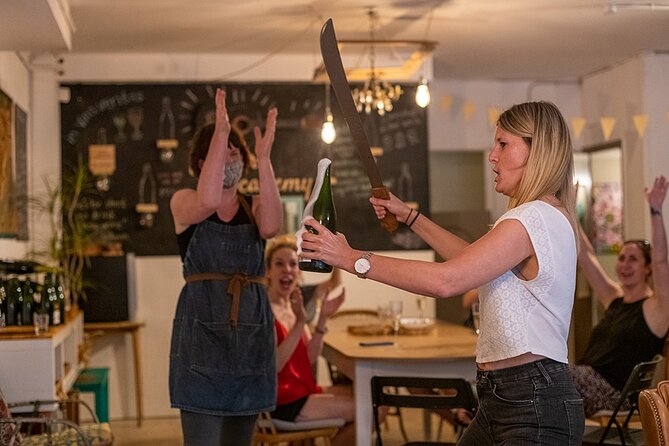
What makes this one feel different is the pacing. You start with a safe, guided demo (plus a short history of champagne sabrage), then you try the technique yourself, popping the top of biodynamic cava from Parés Baltà in Spain’s D.O. Penedès. After that comes the paella work—stock, chopping, and sofrito—followed by the meal you helped create.
Because it’s a true private class, it’s built around your group, not a mixed crowd. That means you should book early if you want a specific day, and it may feel a little tight if your schedule is already packed.
In This Review
- Key things to know before you go
- Why cava sabrage and paella makes total sense in Barcelona
- Entering Savour Academy: setup, snacks, and the vibe
- The cava sabrage lesson: safety, technique, then your turn
- From popping bottles to building flavor: cooking your paella
- What you’ll actually eat: paella, then seasonal dessert
- Timing, duration, and why 3 hours feels just right
- Price check: is $138.18 per person good value?
- Where to fit this in your Barcelona trip
- Who should book this (and who might skip it)
- Practical tips so your night goes smoothly
- Should you book this cava sabrage and paella class?
- FAQ
- FAQ
- Where does the class meet in Barcelona?
- How long is the private cava sabrage and paella class?
- Is this class private?
- Is the class offered in English?
- What is included in the ticket price?
- What paella options are available?
- Can I request dietary adjustments?
- What cava is used for sabrage?
- What do you get for completing the sabrage?
- What is the cancellation policy?
Key things to know before you go
- Private group only: nobody else joins you.
- Hands-on sabrage: you learn the safe technique, then you do the popping.
- Parés Baltà cava in D.O. Penedès: biodynamic cava is part of the experience.
- Paella from scratch: stock, chopping, sofrito, and then your finished paella.
- Food and drink included: snacks during sabrage, paella, and seasonal dessert.
- Take-home keepsake: certificate and your sabred cork keyring.
Why cava sabrage and paella makes total sense in Barcelona
Barcelona has a thing for eating like a sport: you show up hungry, you learn the rhythms, and you leave with new habits. This experience leans into that by pairing a party trick you can repeat later—sabrage—with a classic Spanish dish that takes real technique. If you like hands-on food classes that don’t feel like a lecture, this one is built for you.
I also like the “all-in” structure. Instead of paying for a demo and then adding your own meal, you get snacks while you practice, paella in your chosen style, and a seasonal dessert. It’s simpler for your planning and better value for your night.
The other reason it works: it’s not just about the wow moment. After the cava popping, you still do the cooking steps that actually make paella taste like paella—especially the base and the flavor build.
Other kitchens where you'll cook the paella

Entering Savour Academy: setup, snacks, and the vibe
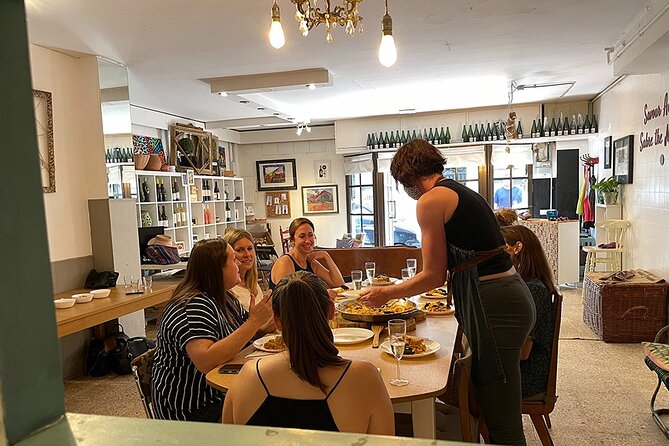
The class meets at Savour Academy, Carrer del Farell, 12, bajos, in the Sants-Montjuïc area of Barcelona. It’s near public transportation, which matters here because you’ll likely want to pair this with dinner plans that are easy to reach by metro or bus.
Once you’re in, you’ll get the flow of the evening. From the start, it feels social without being chaotic. During the sabrage portion, you’ll have a small snack setup—think olives and crisps—so you’re not starting the hands-on parts on an empty stomach.
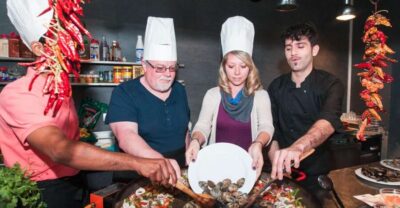
You should expect a kitchen-style workshop environment. It’s practical. You’ll chop, mix, and cook. If you’re the kind of person who loves cooking shows but hates the cleanup part, come ready for a little mess and a lot of fun.
The cava sabrage lesson: safety, technique, then your turn
The centerpiece is the cava sabrage—yes, the part where you pop the top off a bottle with a saber. But what’s smart is the way they build toward it.
First, you get a short history lesson explaining where this champagne sabrage idea comes from and why cava fits into the Spanish celebration culture. Then you’re shown the technique safely. This is not a free-for-all; you’re learning a method, not just chasing a stunt.
Here’s what makes it satisfying: biodynamic cava from Parés Baltà in D.O. Penedès is the bottle you’ll be sabering. That detail matters. Good cava isn’t just a prop—it’s something you’ll want to taste.
After the lesson, you get the chance to do it yourself. Zara’s approach (based on multiple class experiences) focuses on giving you confidence step by step. The hands-on results are part performance, part skill-building, and part photo-ops.
One more perk: if you successfully sabre, you receive a certificate of completion and your sabred cork becomes a keyring. It’s small, but it turns the night into a souvenir you’ll actually keep.
From popping bottles to building flavor: cooking your paella
After sabrage, the night shifts from spectacle to scent and technique. Your paella starts from scratch, and that means you’ll do key groundwork rather than just assemble pre-made components.
Based on the class flow, you’ll work through steps like:
- making or preparing the stock
- chopping ingredients
- building the sofrito (the flavor base that gives paella its backbone)
You’ll also choose your paella style. The menu options you can pick from include:
- Valencian (chicken and pork)
- mixed (seafood, chicken, and pork)
- seafood (including mussels)
- vegan (a plant-based paella option)
If you have dietary needs, adjustments can be requested. That’s useful if you’re traveling with someone who eats vegan or avoids certain ingredients. Just know the instruction is to request adjustments rather than assuming every niche need is possible.
What you get in return is better than a restaurant meal. When you make the sofrito and see how the base sets the tone, paella stops being a mystery dish. You learn the logic behind the flavor, not just the final plate.
What you’ll actually eat: paella, then seasonal dessert
Once your paella is done, you sit down together at the table to enjoy what you made. This is one of those classes where the meal feels like the payoff, not an afterthought.
In addition to your paella, the class includes dessert. It’s listed as seasonal—so you might get options like truffles or ice cream with fruit. The exact selection can vary, but the key point stays the same: dessert is included, and it’s part of the pacing of the night.
And yes, there’s often a drink moment beyond the cava. In the experience setup, you’ll be drinking cava during the sabrage segment, and at least some classes include a pitcher of sangria with the meal. If you’re the type who enjoys pairing food with something familiar-but-not-same, that’s a plus.
More private days built around you
- Montserrat Monastery Small Group or Private Tour Hotel pick-up★ 5.0 · 5,144 reviews
- Tour Welcome Barcelona with Local Guide in Eco Tuk Tuk Private★ 5.0 · 1,882 reviews
- Barcelona Private Tour by Sidecar Motorcycle★ 5.0 · 1,750 reviews
Timing, duration, and why 3 hours feels just right
The class runs about 3 hours. That’s a sweet spot for a hands-on evening in Barcelona. Long enough to learn, cook, and eat without rushing, but not so long that it becomes a full-day commitment.
The only time issue to consider is real-world kitchen timing. One experience did mention the schedule felt a bit tight at times. That’s not unusual in a busy workshop environment where sabrage practice and cooking need careful pacing. If you’re the type who hates being slightly on the clock, plan low-stress arrangements before and after your class.
Price check: is $138.18 per person good value?
At $138.18 per person, this isn’t the cheapest “cooking class in Barcelona” option. But it does line up well with what’s included and what’s unique.
You’re paying for several things at once:
- a private setting (only your group participates)
- hands-on instruction for both sabrage and paella
- food and drink included rather than tacked on separately
- ingredient work for paella from scratch, not just assembling a meal
- take-home keepsakes (certificate and keyring)
If you compare it to doing a standard cooking class plus paying for drinks and a full dinner at restaurants, the price starts to look more reasonable. The private factor is especially important here. If you’re traveling as a couple or small group, “private” can turn the price from expensive into fair.
Also, you’re getting a skill you can repeat: you’ll remember the steps of sabrage and the cooking logic behind paella. Even if you never shave a bottle again, you’ll at least keep paella technique tools in your head.
Where to fit this in your Barcelona trip
This class is a good fit for an evening when you want something more memorable than a standard tapas crawl. It’s also a nice choice if you’re celebrating something—several experiences were tied to milestones like birthdays—and you want a built-in story for the group.
Because the location is in Sants-Montjuïc (at Carrer del Farell 12), you can pair it with nearby neighborhoods and keep transport easy. If you’re staying in central areas, you’ll likely still find it manageable to reach by metro or bus.
I’d avoid putting this right before a long day trip or right after an exhausting travel day. You’ll be standing, chopping, and handling ingredients. You don’t need to be an athlete, but you should be ready to participate.
Who should book this (and who might skip it)
You’ll love this class if:
- you enjoy hands-on workshops more than lecture tours
- you want a Barcelona food experience that feels interactive
- you like the idea of learning something you can show off later (sabrage)
- you want both a drink moment and a cooking meal, without extra planning
You might think twice if:
- you dislike anything even mildly messy (paella prep is practical work)
- you have very tight timing constraints for the night
- weather is unreliable in your dates, since the experience requires good weather
If you’re traveling with someone who’s nervous about the sabrage part, that’s not a deal-breaker. The class includes safety instruction and step-by-step confidence building, and the environment is set up to help you try, not to pressure you to be perfect.
Practical tips so your night goes smoothly
- Wear clothes you’re comfortable cooking in. You’ll be handling food, and kitchen work gets close to your outfit.
- If you’re switching between sabrage and cooking, expect you’ll want water afterward and maybe a quick refresh before heading out again.
- Plan for the class to run as a single flow: snacks, technique, cooking, eating. Don’t schedule something that depends on you leaving instantly.
- Dietary needs should be requested in advance. Vegan and multiple paella styles are supported, but you’ll want clarity before you arrive.
- Bring a flexible mindset about timing. One class experience noted it could feel tight at times, so don’t stack your evening with another high-stakes plan.
Should you book this cava sabrage and paella class?
If you want a Barcelona activity that’s genuinely different—part skill, part meal, part celebration—this is an easy yes. The biggest selling points for me are the private setup, the fact that everything food-and-drink related is included, and the way you actually learn both halves: sabrage technique and paella construction.
It also works well as a group experience with a shared story. Even if you don’t become a paella expert by the end, you’ll leave with a clear sense of the steps and a memory you can’t get from a restaurant table.
My advice: book it on a night when you’re not rushing. If your travel dates line up with stable weather, this kind of evening is exactly what makes Barcelona feel special.
FAQ
FAQ
Where does the class meet in Barcelona?
It meets at Savour Academy, Carrer del Farell, 12, bajos, Sants-Montjuïc, 08014 Barcelona, Spain.
How long is the private cava sabrage and paella class?
The experience lasts about 3 hours.
Is this class private?
Yes. It is a private tour/activity, and only your group participates.
Is the class offered in English?
Yes, the experience is offered in English.
What is included in the ticket price?
All food and drink are included, including snacks during the sabrage, your paella, and seasonal dessert.
What paella options are available?
You can choose from Valencian (chicken and pork), mixed (seafood, chicken, and pork), seafood (including mussels), or vegan.
Can I request dietary adjustments?
Dietary adjustments are available on request.
What cava is used for sabrage?
You sabre biodynamic cava from Parés Baltà winery in D.O. Penedès.
What do you get for completing the sabrage?
Successful sabreurs receive a certificate of completion and their sabred cork becomes a keyring.
What is the cancellation policy?
You can cancel for a full refund if you cancel at least 24 hours before the experience’s start time (local time). If you cancel less than 24 hours before, the amount paid is not refunded.
Private Days Built Around You
- Montserrat Monastery Small Group or Private Tour Hotel pick-up
★ 5.0 · 5,144 reviews - Tour Welcome Barcelona with Local Guide in Eco Tuk Tuk Private
★ 5.0 · 1,882 reviews - Barcelona Private Tour by Sidecar Motorcycle
★ 5.0 · 1,750 reviews - Barcelona: Private Group Bike Tour
★ 4.8 · 1,420 reviews - Barcelona Helicopter, Sailboat & Old Town Private Walking Tour
★ 5.0 · 1,395 reviews
More Barcelona Tours on Our Radar
- Barcelona: Sagrada Familia Entry Ticket with Audio Guide
★ 4.6 · 105,312 reviews - Barcelona: Park Güell Admission Ticket
★ 4.4 · 76,534 reviews - Barcelona: Casa Batlló Entry with Self-Audioguide Tour
★ 4.7 · 25,359 reviews - Barcelona: Montjuïc Cable Car Roundtrip Ticket
★ 4.5 · 22,368 reviews - Barcelona: Hola Barcelona Public Transport Travel Card
★ 4.5 · 20,985 reviews
Back in the Paella Kitchen
- Barcelona: Paella Cooking Experience & Boqueria Market Tour
★ 4.8 · 3,661 reviews - Barcelona Paella Cooking Class with Market Visit, Tapas & Sangria
★ 5.0 · 2,531 reviews - Barcelona Food Tour: Tapas, Paella, Sangria & 8+ Local Tastings
★ 5.0 · 1,275 reviews - Girona & Costa Brava Small Group Tour From Barcelona with Paella!
★ 4.5 · 1,098 reviews - Paella Experience and Bottomless Wine in Barcelona
★ 5.0 · 1,037 reviews
Just Rated Around Barcelona


Paella Cooking Classes, compared.
 ★ 4.8Paella Cooking Experience & Boqueria Market TourFrom $853,661 reviews
 ★ 5.0Barcelona Paella Cooking Class with Market Visit, Tapas & SangriaFrom $1142,531 reviews
 ★ 5.0Barcelona Food Tour: Tapas, Paella, Sangria & 8+ Local TastingsFrom $1171,275 reviews
 ★ 4.5Girona & Costa Brava Small Group Tour From Barcelona with Paella!From $1391,098 reviews
 ★ 5.0Paella Experience and Bottomless Wine in BarcelonaFrom $2411,037 reviews
 ★ 4.9Paella Cooking Class with Market Visit and MoreFrom $95711 reviews
 ★ 5.0Paella Cooking Class with Professional Chef: Four Course DinnerFrom $211561 reviews
 ★ 5.0Tossa de Mar: Kayak & Snorkel Tour with Paella from BarcelonaFrom $156421 reviews
Browse the lists this tour appears in