
Reviewed · GAUDÍ ARCHITECTURE TOURS
Barcelona: Art Nouveau & Gaudí Tour
The Golden Square turns street corners into stories. This tour in Eixample is a fast, art-nerd-friendly way to see Modernism in stone, ceramic, and glass while a top guide (often praised as Johannes and Hannes) connects buildings to the political fights that shaped Barcelona. I especially liked the way the guide keeps architecture and history moving together, not dumped as facts. One thing to consider: it’s mostly exterior viewing, so if you want lots of interior ticketed sights, you’ll need a different plan (and entry fees aren’t included).
You start in a very walkable zone, then use a U-Bahn ticket as the tour shifts across the grid. It’s a private group up to 4, so the pace stays relaxed and photo stops feel normal, not forced.
In This Review
- Key points you’ll care about before you go
- Why Eixample’s grid is the perfect stage for Modernism
- Plaça de Urquinaona start, U-Bahn help, and the relaxed walk rhythm
- 1714, Madrid, and the money behind the palaces
- Art Nouveau vs. Catalan Modernism: 1885 changes the whole story
- Golden Square palaces: stone, ceramic, and glass you can actually understand
- Cerdà’s grid and the dream of a perfect city
- Gaudí’s hour on Passeig de Gràcia: trencadís, the block of discord, and quarry talk
- Gaudí tricks, star-filled ceilings, and why Sagrada Família feels like unfinished genius
- The best part: how Johannes (and Hannes) turns facts into a walk that never stalls
- What you’ll miss if you only want ticketed sights
- Price and value: $212 per group up to 4 people
- Who this Barcelona Art Nouveau and Gaudí tour is best for
- Should you book this tour?
- FAQ
- How long is the Barcelona Art Nouveau and Gaudí tour?
- Where is the meeting point?
- What languages does the tour guide speak?
- What’s included in the price?
- Are entry fees included?
- Is the tour wheelchair accessible?
- Does the tour run in bad weather?
Key points you’ll care about before you go
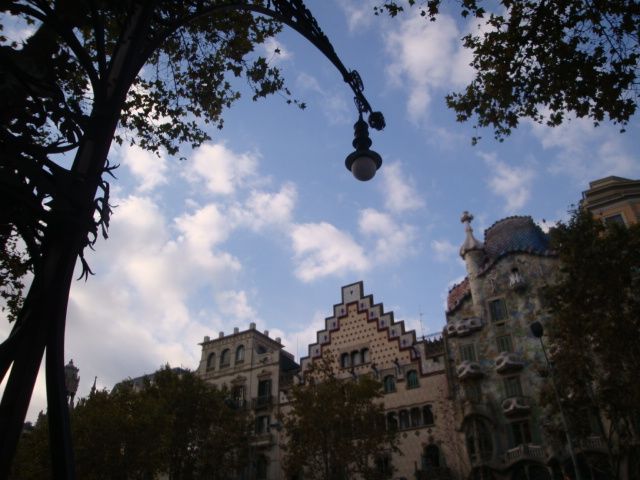
- Golden Square focus: you’re walking Eixample’s “city expansion” core where industrialists and aristocrats showed wealth through architecture
- Modernism explained like a story: Catalan Modernism starting in 1885 as a cultural movement, not just a building style
- Politics meets palaces: the tour frames why central power from Madrid mattered for local freedom and money
- Gaudí hits at eye level: expect big moments like Passeig de Gràcia (trencadís) and references tied to Sagrada Família
- A guide who actually teaches: praised for instant expertise and for linking people, events, and styles so it never drags
- Weather-proof planning: it runs in sun, rain, and wind, including strong showers
Why Eixample’s grid is the perfect stage for Modernism
Eixample literally means city expansion. The neighborhood you walk today really began after the city walls came down: in 1854, when Barcelona could finally build outward into the open land between the old crowded center and the smaller town of Gràcia. That matters, because Modernism didn’t grow in a vacuum. It grew where space, ambition, and money suddenly had room to spread.
The tour centers on the Golden Square—Eixample proper—where upper classes, newly rich elites, and Catalans who’d come into money through South America (often called Indianos) commissioned grand palaces. This is why the streets feel like a gallery you can stroll through: the architecture wasn’t subtle. It was branding, built in stone and tiles.
And yes, you’ve probably walked past parts of Eixample without realizing how many layers sit behind the facades. This tour puts those layers in your pocket, so you stop seeing decoration as “pretty” and start seeing it as communication.
Follow the Gaudí trail a little further



Plaça de Urquinaona start, U-Bahn help, and the relaxed walk rhythm
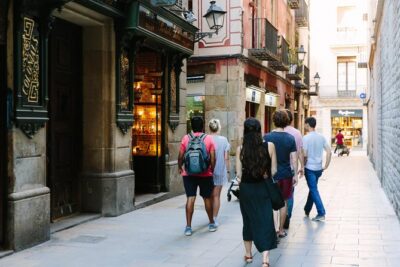
You meet at Plaza de Urquinaona, right in front of Theater Borrás. From there, you’re set up to explore by foot along wide streets and corners that make good viewing angles. The tour is described as relaxed—no sprinting, plenty of time for photos, and bathroom breaks that aren’t treated like an emergency.
You’ll also get a U-Bahn (subway) ticket. Even though it’s a walking tour, that small inclusion helps you shift between areas without turning the day into a long endurance test.
One practical note: it’s built for close street-and-square viewing. The program sticks to the exteriors of monuments and buildings, with only a couple of exceptions. So plan your expectations accordingly: you’re seeing Barcelona the way you’d see it while living here, not like a museum day.
1714, Madrid, and the money behind the palaces
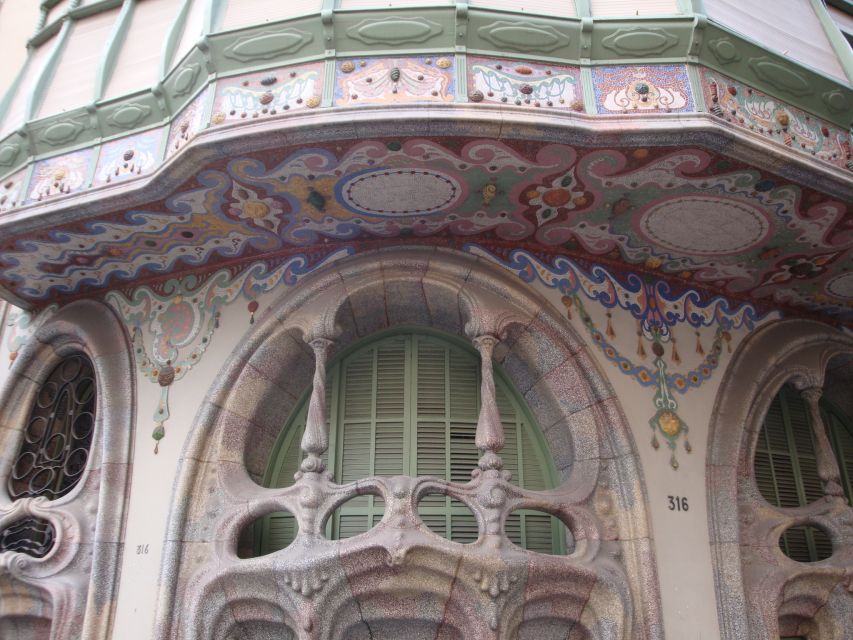
Here’s one reason this tour feels more satisfying than a basic architecture walk: it explains why Barcelona’s power struggle mattered for what you see on the streets. The background is tied to repercussions of the war of secession, including 1714 and beyond. After that, local aspirations for autonomy and self-governance were blocked by central authorities in Madrid. The result was a city where everyday life and local officials had limited room to act—unless they had serious cash.
And that’s where the architecture comes in. The tour frames the wealthy classes as using buildings as visible proof of status and influence. If you’re walking Eixample expecting whimsy, the first big “aha” is that Modernism here is partly about control and self-definition. People poured money into ambitious façades because it was one of the few ways to speak loudly when politics wasn’t cooperating.
You’ll also hear about the reshaping of the city over time: the idea of an older city that held the poor while the upper echelons were packed in tighter conditions, and the long push toward a new urban plan. You don’t just learn dates. You learn why dates became streets.
Art Nouveau vs. Catalan Modernism: 1885 changes the whole story
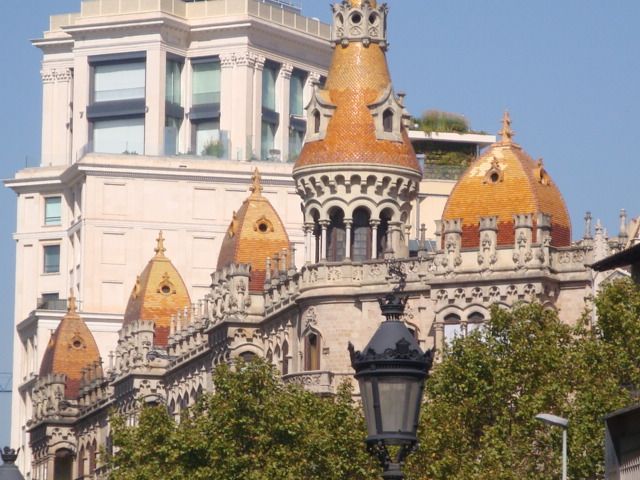
Catalan Modernism isn’t presented as one single style you can spot instantly. It starts in 1885 more like a cultural movement that also touched literature and visual arts—similar in spirit to other European movements like German Art Nouveau, the Viennese Secession, or the English Modern Style.
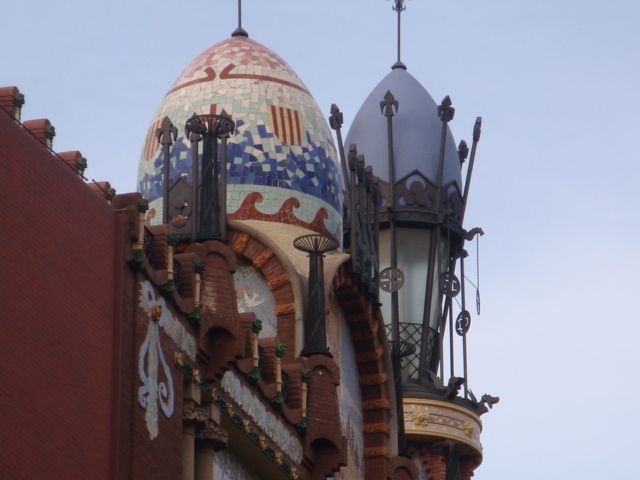
That context makes the façades easier to read. You’re not just looking for a “Gaudí look.” You’re seeing a regional interpretation of Modernism with its own themes and symbolism. The tour even gives you examples of how meaning is baked into materials. One highlighted case is the Palau de la Musica, designed by Domènech i Montaner. The idea there isn’t only that music is present—it’s that the building creates an allegory of Catalan folk songs in stone.
So when you see ornate balconies, stained-glass effects, ceramic surfaces, or sculptural details, you’ll start asking the useful question: what is this trying to say?
Golden Square palaces: stone, ceramic, and glass you can actually understand
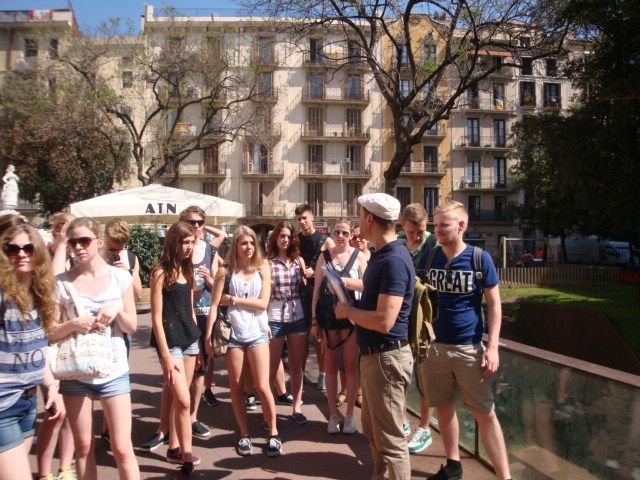
The route through the Golden Square is where the tour earns its “Modernism magic” reputation. You’ll walk along Eixample’s defining streets and corner façades—the kind you might have noticed from a distance. Up close, those leveled corners and façade rhythms make more sense. They were designed to be seen from multiple angles, which suits real strolling.
The tour also ties specific architects into the bigger picture:
- Domènech i Montaner, known for theatrical symbolism and craft
- Puig i Cadafalch, another key figure in the Modernist wave
- Gaudí, whose signature language shows up as the walk builds toward his “hour”
Even if you don’t memorize building names, you’ll recognize patterns: how decoration follows function, how material choices create texture, and how façades become public statements. This is where the experience becomes less about spotting famous faces and more about learning how the neighborhood “works.”
- Barcelona: Hola Barcelona Public Transport Travel Card★ 4.5 · 20,985 reviews
- Barcelona: 24 or 48-Hour Hop-On Hop-Off Bus Tour★ 4.4 · 20,872 reviews
- Barcelona: Park Guell Guided Tour with Skip The Line Entry★ 4.7 · 17,563 reviews
Cerdà’s grid and the dream of a perfect city
One of the tour’s most useful sections connects Eixample’s expansion to a planning vision: Ildefons Cerdà’s utopia of the perfect city. If you’ve ever stared at Eixample’s straight lines and thought, okay, this is just a grid, this part changes that. It frames the grid as a big idea about living better—an attempt to improve the city’s logic, movement, and everyday life.
That matters because it links architecture and street design. The façades are the art. The streets are the stage. And the planning vision is the reason you get a neighborhood where buildings line up in a way that makes touring on foot actually enjoyable.
You’ll also hear about the “phoenix from the ashes” moment of the Catalan Renaissance, plus later shifts like Barcelona’s World Fair era when Barcelona “cleans up” and projects a modern image. It’s a reminder that the city you see today is layered—politically, culturally, and physically.
Gaudí’s hour on Passeig de Gràcia: trencadís, the block of discord, and quarry talk
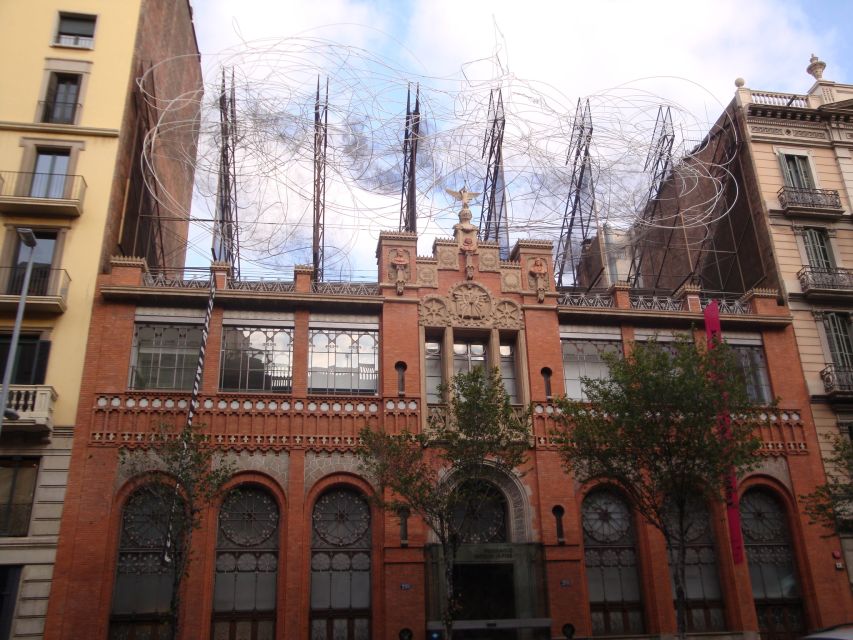
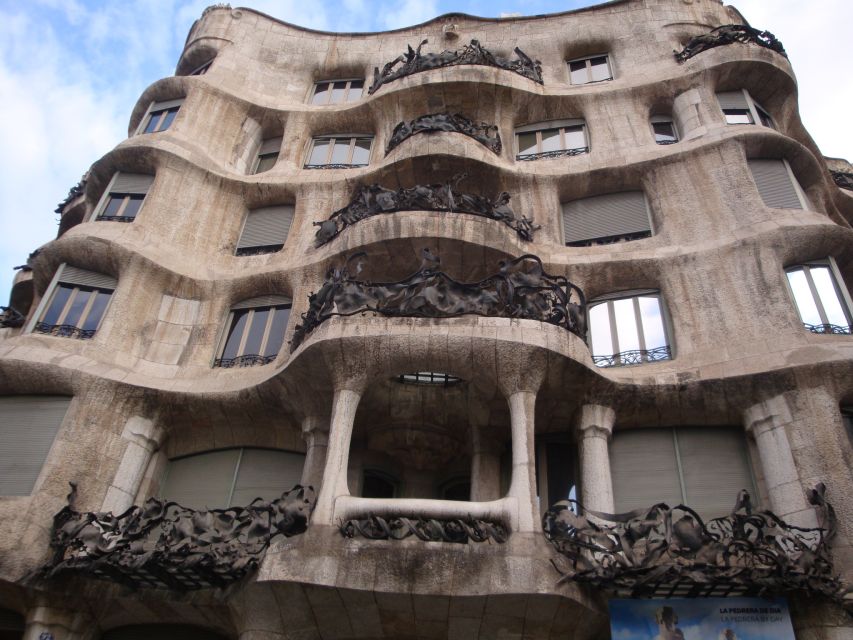
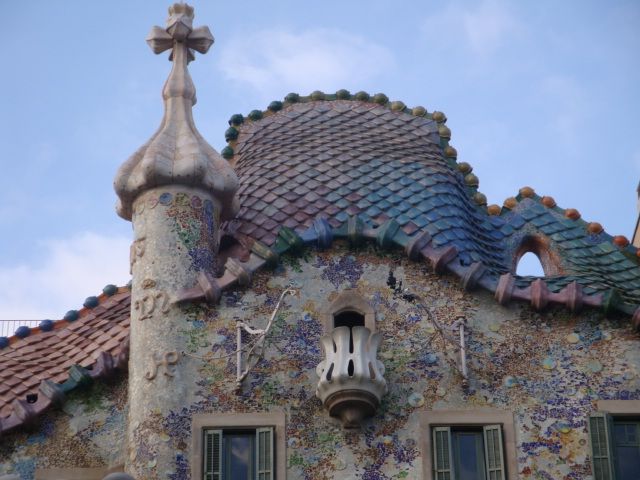
As the walk turns toward the Gaudí-heavy zones, expect the tour to slow down just enough for your eyes to catch details. Passeig de Gràcia is the obvious highlight in the program, especially the idea of trencadís—those shard mosaics that bring “luck” into the design language. The tour encourages you to treat those broken-tile patterns like a deliberate artistic choice, not random decoration.
You’ll also hear about the block of discord, including “three stars.” Even if you don’t plan to stop at every single famous façade, this segment helps you understand why the area is famous: Modernism here isn’t just beautiful. It’s competitive. It’s different designers trying to out-signal each other with style.
Another fun thread the tour follows is the “most famous quarry in the world.” Without getting too in-your-face about it, the point is clear: materials weren’t just materials. They came from real places and real production chains, and that connects craft to the industrial side of the city.
By this stage, you’re also being primed for Gaudí’s more playful storytelling approach. That keeps the tour from feeling like a lecture.
Gaudí tricks, star-filled ceilings, and why Sagrada Família feels like unfinished genius
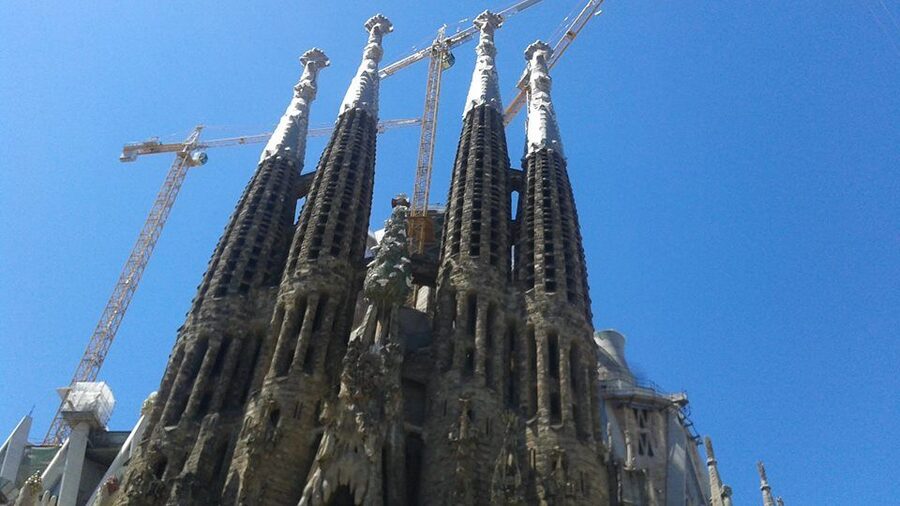
Near the end of the walk, the focus sharpens around Gaudí concepts that feel almost like puzzles:
- references to Gaudí’s trick with string (the tour uses it as a way to think about how he solved design problems)
- “war of stars on the ceiling,” which points you to symbolism and dramatic ornament as a kind of visual storytelling
- “Gaudí’s lost plans” connected to Sagrada Família, where you get the sense that architecture can be both vision and ongoing work
The tour keeps everything mostly outside. So you shouldn’t expect a ticketed interior marathon here. But you will leave with a clearer idea of why Sagrada Família isn’t just famous—it’s structurally and imaginatively unusual.
If you’re a first-timer to Barcelona, this helps you approach the basilica with better questions. If you’ve already seen it, it gives you reasons to look again.
The best part: how Johannes (and Hannes) turns facts into a walk that never stalls
This tour’s standout isn’t just the buildings. It’s the guide style. The feedback I read was consistent: guides praised for being fully in their element, with a command of architecture and history that doesn’t require constant checking.
That shows up in the way the tour connects:
- local events to political shifts
- named people to named styles
- and the “why” behind Modernism—so the day feels like cause-and-effect, not a slideshow
It also helps that the tone is described as lively and didactic, with plenty of anecdotes. One specific praise called out the guide’s ability to link local and political events and people to building styles so the day never bored. Another praised an emphatic, knowledgeable teaching approach, and yet another singled out how much more there was than expected.
In practical terms, this matters because you’re outdoors. When you’re walking, you either get the rhythm of the story or you start looking at buildings like decorations. A strong guide keeps you from drifting.
What you’ll miss if you only want ticketed sights
This is where I’ll be blunt. The tour is designed to keep you on streets and squares with mostly exterior viewing. Entry fees aren’t included, and museum-style interior visits aren’t part of the plan beyond a couple exceptions.
That’s not bad. It’s just a choice. You’ll get a powerful sense of Barcelona’s Modernism language as it appears in daily city life. But if your travel style is: I want to step inside everything and collect stamps, you may feel like you’re starting an appetite you can’t fully finish.
Also keep weather in mind. It’s a three-weather tour that runs in sun, rain, and wind, even strong showers. The walking is relaxed, but you’ll still be outside. Bring the basics: a hat/sunglasses/sunscreen in summer, and a light coat or jacket in winter. A small water bottle is a smart move year-round.
Price and value: $212 per group up to 4 people
At $212 per group (up to 4) for about 3.5 hours, this isn’t priced like a solo “cheap ticket” city walk. It’s priced like a private-group experience where the guide can pace for you.
Here’s why it can still be good value. You get a live guide (German and English options), a private group, and a U-Bahn ticket included. If you split the cost with friends or family, it can become very reasonable compared to paying for separate individual tours.
The biggest value driver, though, is time and teaching quality. Modernism tours can turn into name-dropping unless the guide can connect the dots. The consistent feedback about the guide’s expertise and teaching approach is exactly what you want when you’re paying for interpretation, not just movement.
Entry fees aren’t included, so factor that in only if you decide to add any interior stops elsewhere on your own.
Who this Barcelona Art Nouveau and Gaudí tour is best for
You’ll likely love this tour if:
- you want Modernism in context, not just photos
- you enjoy architecture when someone explains what it’s saying
- you’re staying in the Eixample area and want a structured walk
- you prefer a relaxed 3.5-hour pace with photo stops
It’s also a good match for mixed-interest groups: someone who loves Gaudí will get their moments, and someone more into history will get the political and cultural background.
If you only want interiors, or you hate weather-outdoor days, you might want a different format.
Should you book this tour?
I’d book it if your goal is to understand Eixample’s Modernism fast, with a guide who can explain why the façades look the way they do. The private-group size helps the walk feel personal, and the guide-focused praise suggests you’ll get real storytelling, not just a list of buildings.
I’d hesitate if you’re set on ticketed museum interiors, or if you’re traveling with very young kids who need lots of indoor breaks. The tour is designed for street-level learning, in real weather, so go prepared.
If you want the Golden Square to make sense—and to feel like Barcelona rather than like homework—this is a strong pick.
FAQ
How long is the Barcelona Art Nouveau and Gaudí tour?
It lasts about 3.5 hours.
Where is the meeting point?
You meet at Plaza de Urquinaona, in front of Theater Borrás.
What languages does the tour guide speak?
The live guide is listed as available in German and English.
What’s included in the price?
The city tour is included, along with a U-Bahn (subway) ticket.
Are entry fees included?
No. Entry fees are not included.
Is the tour wheelchair accessible?
Yes, the tour is listed as wheelchair accessible.
Does the tour run in bad weather?
Yes. It’s described as running in sun, rain, and wind, even strong showers.
More Ways to Tour Barcelona
- Barcelona: Casa Batlló Entry with Self-Audioguide Tour
★ 4.7 · 25,359 reviews - Barcelona: 24 or 48-Hour Hop-On Hop-Off Bus Tour
★ 4.4 · 20,872 reviews - Barcelona: Park Guell Guided Tour with Skip The Line Entry
★ 4.7 · 17,563 reviews - Barcelona: Sagrada Familia Skip-the-Line Entry Ticket & Tour
★ 4.8 · 12,789 reviews - Barcelona: FC Barcelona Museum “Barça Immersive Tour” Ticket
★ 4.4 · 10,944 reviews
More Barcelona Tours on Our Radar
- Barcelona: Sagrada Familia Entry Ticket with Audio Guide
★ 4.6 · 105,312 reviews - Barcelona: Park Güell Admission Ticket
★ 4.4 · 76,534 reviews - Barcelona: Casa Batlló Entry with Self-Audioguide Tour
★ 4.7 · 25,359 reviews - Barcelona: Montjuïc Cable Car Roundtrip Ticket
★ 4.5 · 22,368 reviews - Barcelona: Hola Barcelona Public Transport Travel Card
★ 4.5 · 20,985 reviews
Further Along the Gaudí Trail
- Barcelona: Park Güell and Gaudí House Museum Entry Ticket
★ 4.5 · 6,326 reviews - Barcelona: Gaudí’s Park Güell Tour with Fast-Track Ticket
★ 4.8 · 4,512 reviews - Barcelona: Sant Pau Recinte Modernista Entry Ticket
★ 4.6 · 2,567 reviews - Barcelona: Sagrada Familia, Modernism, and Old Town Tour
★ 4.7 · 1,621 reviews - Sagrada Familia & Gaudi Tour Private or Small Group with Tickets
★ 4.5 · 1,188 reviews
Just Rated Around Barcelona





Gaudí Architecture Tours, compared.
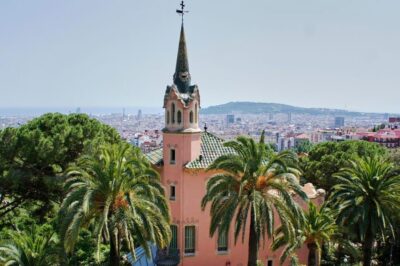 ★ 4.5Park Güell and Gaudí House Museum Entry TicketFrom $336,326 reviews
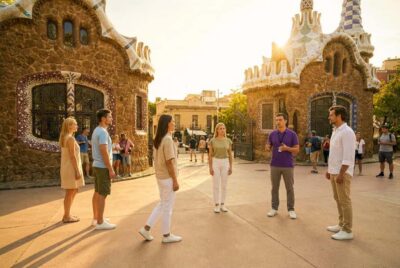 ★ 4.8Gaudí’s Park Güell Tour with Fast-Track TicketFrom $324,512 reviews
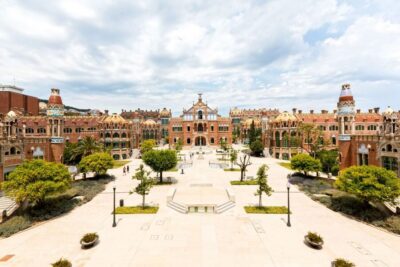 ★ 4.6Sant Pau Recinte Modernista Entry TicketFrom $212,567 reviews
 ★ 4.7Sagrada Familia, Modernism, and Old Town TourFrom $521,621 reviews
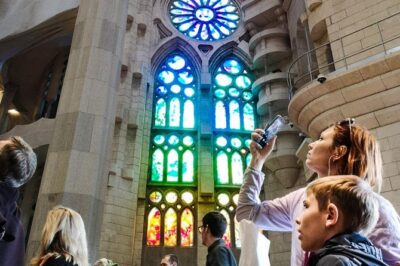 ★ 4.5Sagrada Familia & Gaudi Tour Private or Small Group with TicketsFrom $901,188 reviews
 ★ 5.0Complete Gaudi Tour: Casa Batllo, Park Guell & Sagrada FamiliaFrom $1621,152 reviews
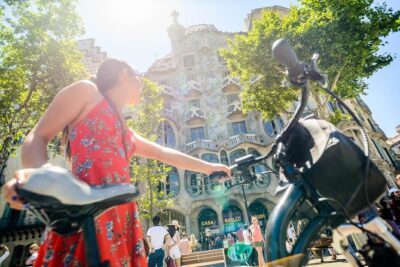 ★ 5.0Barcelona e-Bike Tour: Gaudí & Old Town Small GroupFrom $38769 reviews
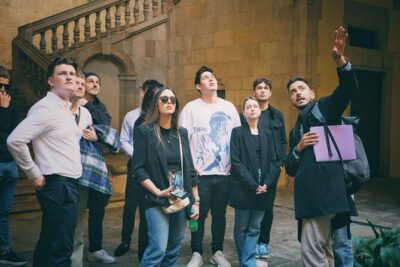 ★ 5.0Ramblas, Old Town, Gothic and Gaudi Architecture Walking TourFrom $35723 reviews
Browse the lists this tour appears in