

Reviewed · GAUDÍ ARCHITECTURE TOURS
Barcelona: Discover Gaudi Architectural Guided Tour
Some cities need a guide. Barcelona’s Gaudí details need one too. This 3-hour morning walking tour uses architect commentary to help you read the buildings instead of just staring at them. You’ll connect Gaudí’s personal turning points with the bigger story of Barcelona’s modern urban plan and Modernisme style.
I especially love that the guides are practising architects (often also professors and architectural critics). That technical angle shows up in how they explain engineering choices, not just pretty shapes. I also like that the walk mixes Gaudí with key neighbors like Domènech i Montaner and Puig i Cadafalch, so you can see what Gaudí was reacting to.
One drawback to plan for: you won’t go inside the buildings. You’re seeing exteriors and street-level design, so if you want interior rooms, you’ll need other visits.
In This Review
- Key Things You’ll Notice on This Walk
- Where the Tour Starts on Passeig de Gràcia
- Why Architect Guides Make Gaudí Click
- The Modernisme Neighborhood Lesson: Eixample as a Design Machine
- Antoni Tàpies Foundation: Modern Barcelona’s Creative Edge
- Domènech i Montaner: Casa Lleó Morera and the Power of Style
- Puig i Cadafalch: Casa Amatller and Barcelona’s Competitive Creative Mode
- Casa Calvet, Casa Batlló, Casa Milà: Gaudí’s Residential Master Class
- Casa Calvet: A Clear Starting Point
- Casa Batlló: Fantasy With a Purpose
- Casa Milà: The City’s Weird, Wonderful Late Statement
- Hidden Courtyards: How Private Space Becomes Public Life
- Gaudí’s Turning Points: Manhattan, Güell, and Sagrada Família
- No Interiors: What You’re Getting Instead
- Practical Tips for a Smooth 3-Hour Morning
- Who Should Book This Gaudí Architecture Tour
- Should You Book It?
- FAQ
- How long is the Barcelona Discover Gaudí Architectural Guided Tour?
- What language is the guided tour in?
- What buildings will we see on the tour?
- Will we go inside the buildings?
- Where does the tour meet?
- Is there a cancellation option if my plans change?
Key Things You’ll Notice on This Walk
- Architects leading the show: you’ll get explanations that treat buildings like working systems, not posters.
- Gaudí’s full arc, not just famous facades: from early influences and social concerns to his later, more spiritual direction.
- Modernisme context in walking distance: Eixample buildings by Domènech i Montaner and Puig i Cadafalch help you place Gaudí.
- Courtyard design that still matters: you’ll learn how hidden spaces became today’s public garden-like moments.
- Real career turning points: Manhattan work, Eusebi Güell’s last commission, and the first steps toward the Sagrada Família.
- Useful end-of-tour guidance: you’ll receive a guide from the local partner’s team for more architecture and a drink.
Where the Tour Starts on Passeig de Gràcia
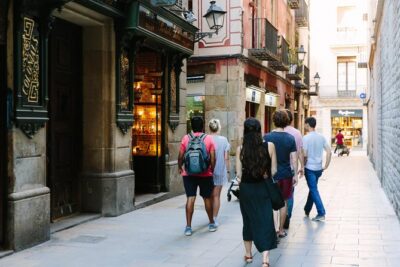
Your morning begins at the sculpture by Joan Brossa, directly in front of Comedia Cinema, at the intersection of Passeig de Gràcia and Gran Via. It’s a smart meeting spot because it puts you right in the most walkable concentration of Eixample architecture.
Plan to arrive a few minutes early. This tour moves at a steady city-walk pace, and it’s not the kind where you want to be playing catch-up while someone is explaining a facade detail.
Follow the Gaudí trail a little further




Why Architect Guides Make Gaudí Click
This tour’s biggest advantage is the guide lineup. The tour is led by practising architects, and that changes what you pay attention to. Instead of generic history talk, you get explanations that link design to structure, city life, and why Barcelona looked the way it did.
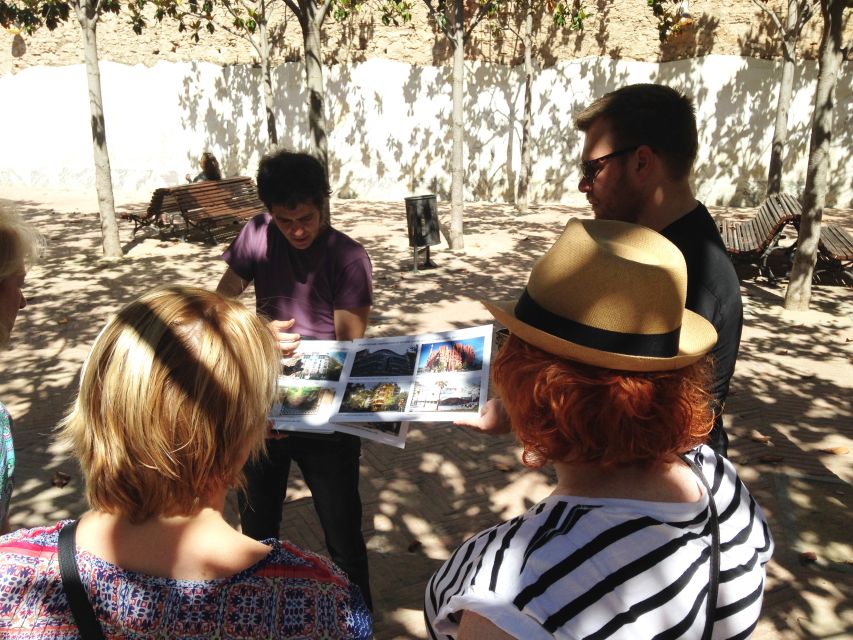
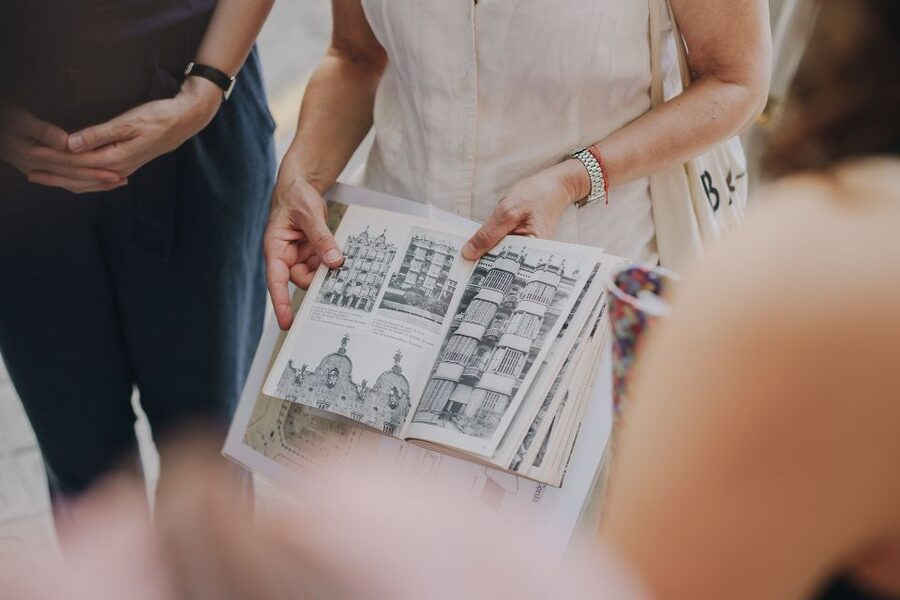
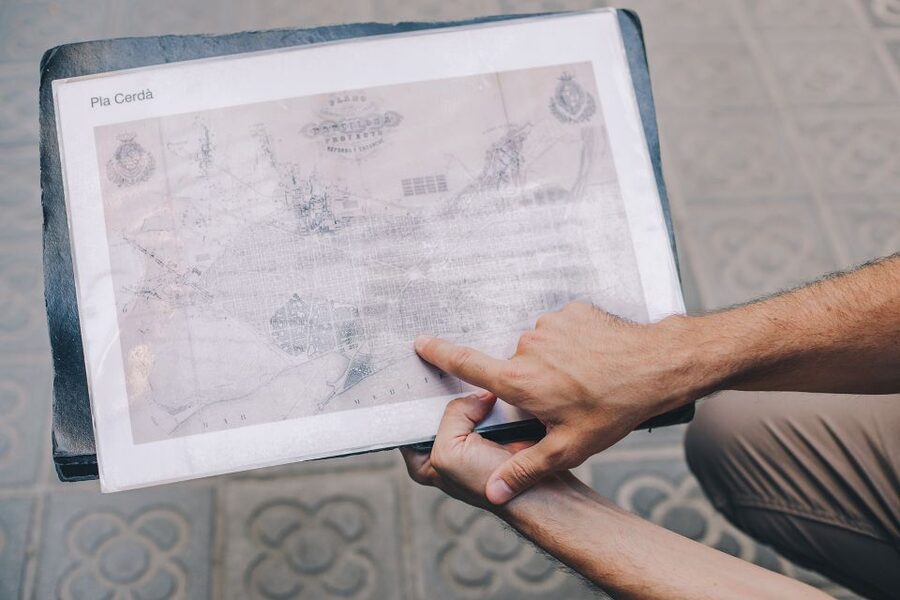
You can see that style in how guides present Gaudí’s ideas. One guide (Pía) is known for connecting Gaudí’s architecture to technology and engineering innovations, showing you how the buildings work. Another guide (Tomasz) brings visual aids and can handle a large group without the information getting watered down.
If you’re the type who asks questions, you’ll feel comfortable here. Guides have a way of keeping discussions friendly and on-topic, even when questions get political, social, or environmental. They usually stay at a level that works for mixed audiences, but they can talk shop if the group wants it.
The Modernisme Neighborhood Lesson: Eixample as a Design Machine
You’re walking through Barcelona’s Eixample era, when the city grew into its modern shape. The tour doesn’t treat Gaudí as an isolated genius in a vacuum. You’ll learn how Barcelona’s plans and public life shaped what architects tried to build.
A key idea you’ll come away with is how Barcelona moved toward modern urbanism: wider streets, structured blocks, and architecture that could show identity street by street. When you see Gaudí and his contemporaries placed side by side, his style feels less like random imagination and more like a bold response to the city around him.
Antoni Tàpies Foundation: Modern Barcelona’s Creative Edge
One of the stops is the Antoni Tàpies Foundation. Even if you’re not there for art specifically, it helps frame Barcelona’s modern identity as a mix of design, culture, and ideas.
In a walking tour like this, a stop like that works as a bridge. You start by understanding how Barcelona grew and what architects wanted. Then you pivot back to Gaudí and realize he was part of a broader thinking culture, not only a maker of buildings.
Domènech i Montaner: Casa Lleó Morera and the Power of Style
You’ll also see Casa Lleó Morera, designed by Domènech i Montaner. This is a great choice because it shows you how Modernisme expressed itself through craftsmanship and ornament, and how different architects pursued different design goals.
This helps you spot what’s distinct about Gaudí later. When you’ve just compared styles nearby, his choices become easier to classify: what he borrowed from the Modernisme moment, and what he pushed into his own direction.
More days walked with a local guide
- Barcelona: Sagrada Familia Entry Ticket with Audio Guide★ 4.6 · 105,312 reviews
- Barcelona: Park Guell Guided Tour with Skip The Line Entry★ 4.7 · 17,563 reviews
- Fast Track Sagrada Familia Guided Tour★ 4.5 · 8,795 reviews
Puig i Cadafalch: Casa Amatller and Barcelona’s Competitive Creative Mode
Next up is Casa Amatller, by Puig i Cadafalch. Like the other Modernisme giants you’ll see, it’s a reminder that this neighborhood wasn’t about one person. It was about a whole set of architects working in the same era, with competing ideas and shared influences.
You’ll likely notice how the facade language communicates family identity, wealth, and ambition. That context matters because Gaudí’s work—especially his residential buildings—also carries a strong message. It just tends to read more emotionally and structurally at the same time.
Casa Calvet, Casa Batlló, Casa Milà: Gaudí’s Residential Master Class
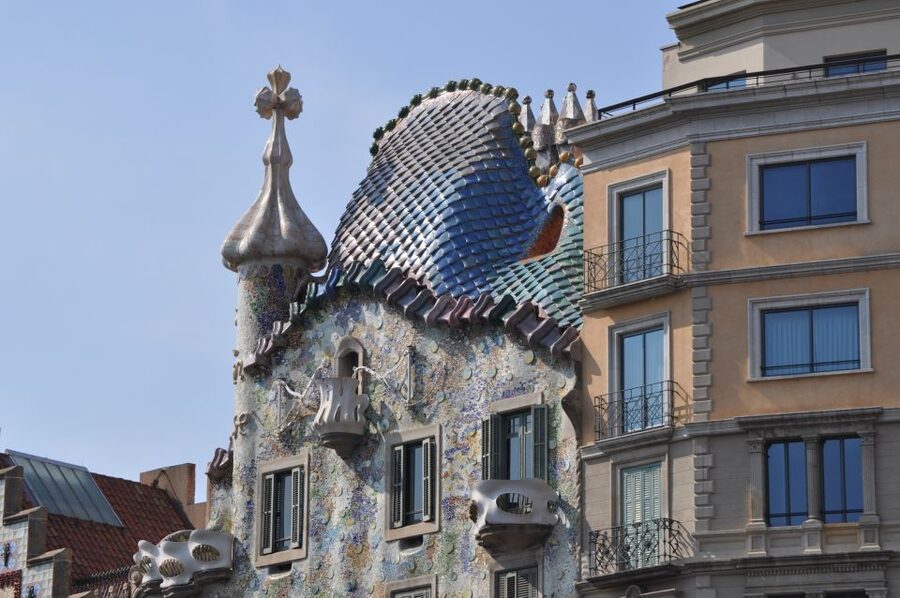
The walking tour’s Gaudí highlight centers on his three major residential buildings: Casa Calvet, Casa Batlló, and Casa Milà. Seeing them in sequence is the fast way to understand why people get obsessed. Each one feels like a different answer to the same question: how do you make architecture feel alive?
Casa Calvet: A Clear Starting Point
Casa Calvet is often a good first Gaudí “anchor” because it feels structured and intentional. You can start learning the patterns: the relationship between facade rhythm and interior planning ideas, and how ornament works as part of the overall concept rather than decoration alone.
Even without entering, the outside tells you a lot if your guide is pointing you toward it.
Casa Batlló: Fantasy With a Purpose
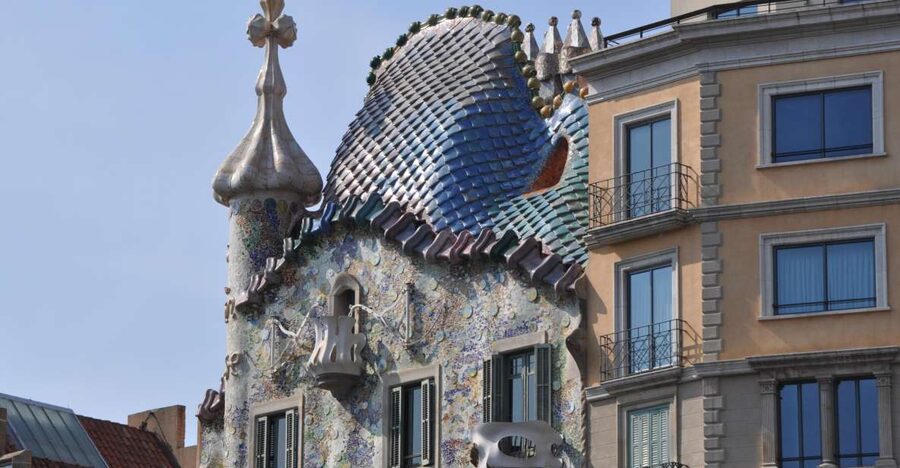
Then you’ll move to Casa Batlló, where Gaudí’s imagination becomes unmistakable. The building reads like spectacle, but the point on this tour is that the spectacle has logic. The best guides explain how Gaudí used form to express deeper intentions.
If engineering details matter to you, this is where that approach pays off. One recurring theme in architect-led commentary is that Gaudí’s design choices aren’t only visual—they’re tied to how spaces behave.
Casa Milà: The City’s Weird, Wonderful Late Statement
Finally, Casa Milà brings you to Gaudí at full creative momentum. It feels less like a rigid composition and more like something shaped by motion, light, and atmosphere.
This is a good stop to connect back to Gaudí’s personal story arc. When the guide talks about his changing focus—from earlier social concerns toward a more divine, cathedral-like absorption—it becomes easier to see why his forms later feel more spiritual and less merely stylish.
Hidden Courtyards: How Private Space Becomes Public Life
A standout theme on this tour is hidden courtyards and how they became public garden-like spaces. This is one of those Barcelona design tricks that’s hard to understand from postcards.
When you learn the reasoning behind courtyard design, you start noticing air, light, and social use. Courtyards aren’t only pretty; they’re a city solution. They bring breathing room into dense living, create shared micro-communities, and make architecture feel less closed off.
This matters because it ties architecture to daily life. It’s one reason Gaudí and his peers shaped how Barcelona feels at street level even when you’re just walking past.
Gaudí’s Turning Points: Manhattan, Güell, and Sagrada Família
The story thread running through the walk is Gaudí’s career evolution. You’ll trace a path that starts with human and social concerns and gradually shifts toward a deeper fixation on the divine—eventually earning the reputation as the last great cathedral builder.
The guide also covers several turning points that help you place the buildings you’re seeing. Expect to hear about:
- a project in Manhattan
- the last commission from Eusebi Güell
- Gaudí’s first architectural steps with the Sagrada Família
Even if you know the headline facts already, this tour’s strength is how the timeline connects to what you’re looking at on the street. You’re not just memorizing dates. You’re learning how a working mind changes its priorities.
No Interiors: What You’re Getting Instead
Let’s be honest: you’re not going inside these buildings. The tour is exterior and street-level focused, with the emphasis on what you can see from the sidewalk and what the guide teaches you to notice.
That can still be a win. Gaudí’s facades are the main event for a walking tour, and the other Modernisme buildings are designed to be read visually in context. If you want to “taste” the architecture quickly across a compact area, this fits.
If you’re hoping for interior rooms, try to combine this with at least one separate building visit. Otherwise, you may feel you’re missing the full experience.
Practical Tips for a Smooth 3-Hour Morning
This is a 3-hour walking experience, in English, and it’s designed to be wheelchair accessible. You’ll want weather-ready clothing because Barcelona can be pleasant but changeable.
A few practical things that make the tour more enjoyable:
- Bring comfortable shoes. The whole point is to stay close and keep your eyes moving.
- Come ready to look up. Many of the most useful details are higher than you expect.
- Have your questions ready. The guides are comfortable answering, and they often adjust the technical level to the group.
Also, because the route is focused and timed, it’s worth treating the walk like a learning session. If you show up already trying to “collect views,” you’ll miss some of the design thinking that makes this tour special.
Who Should Book This Gaudí Architecture Tour
This is a great fit if you:
- like architecture beyond a photo hunt
- want context for Gaudí within the larger Modernisme moment
- enjoy guides who can explain structural and engineering ideas in plain language
- want a morning activity that gives you a base for exploring the rest of Barcelona
It may be less ideal if you only care about interiors, or if you want a relaxed, no-explanation stroll. This tour is active and interpretive. You’ll get the most out of it when you’re paying attention.
Should You Book It?
Yes, if you’re looking for value in guided thinking rather than just landmarks. For the price, you’re getting a 3-hour walk led by practising architects, multiple architectural heavy-hitters, plus an end-of-tour guide that points you toward more architecture to see afterward.
Book it with confidence if you want to understand what you’re looking at—how Gaudí’s career shifted, how Modernisme neighbors shaped the neighborhood, and why design choices link to city life. Skip it only if you mainly want to enter buildings and spend your time indoors.
FAQ
How long is the Barcelona Discover Gaudí Architectural Guided Tour?
The tour lasts 3 hours.
What language is the guided tour in?
The live tour guide speaks English.
What buildings will we see on the tour?
You’ll see modern architecture including the Antoni Tàpies Foundation and Casa Lleó Morera (Domènech i Montaner), Casa Amatller (Puig i Cadafalch), and Gaudí’s residential buildings: Casa Calvet, Casa Batlló, and Casa Milà. The tour also includes hidden courtyards.
Will we go inside the buildings?
No. The tour does not include entering the buildings.
Where does the tour meet?
Meet by the sculpture by Joan Brossa, located in front of the Comedia Cinema at the intersection of Passeig de Gràcia and Gran Via.
Is there a cancellation option if my plans change?
Yes. You can cancel up to 24 hours in advance for a full refund.
More Ways to Tour Barcelona
- Barcelona: Casa Batlló Entry with Self-Audioguide Tour
★ 4.7 · 25,359 reviews - Barcelona: 24 or 48-Hour Hop-On Hop-Off Bus Tour
★ 4.4 · 20,872 reviews - Barcelona: Park Guell Guided Tour with Skip The Line Entry
★ 4.7 · 17,563 reviews - Barcelona: Sagrada Familia Skip-the-Line Entry Ticket & Tour
★ 4.8 · 12,789 reviews - Barcelona: FC Barcelona Museum “Barça Immersive Tour” Ticket
★ 4.4 · 10,944 reviews
More Barcelona Tours on Our Radar
- Barcelona: Sagrada Familia Entry Ticket with Audio Guide
★ 4.6 · 105,312 reviews - Barcelona: Park Güell Admission Ticket
★ 4.4 · 76,534 reviews - Barcelona: Casa Batlló Entry with Self-Audioguide Tour
★ 4.7 · 25,359 reviews - Barcelona: Montjuïc Cable Car Roundtrip Ticket
★ 4.5 · 22,368 reviews - Barcelona: Hola Barcelona Public Transport Travel Card
★ 4.5 · 20,985 reviews
Further Along the Gaudí Trail
- Barcelona: Park Güell and Gaudí House Museum Entry Ticket
★ 4.5 · 6,326 reviews - Barcelona: Gaudí’s Park Güell Tour with Fast-Track Ticket
★ 4.8 · 4,512 reviews - Barcelona: Sant Pau Recinte Modernista Entry Ticket
★ 4.6 · 2,567 reviews - Barcelona: Sagrada Familia, Modernism, and Old Town Tour
★ 4.7 · 1,621 reviews - Sagrada Familia & Gaudi Tour Private or Small Group with Tickets
★ 4.5 · 1,188 reviews
Just Rated Around Barcelona





Gaudí Architecture Tours, compared.
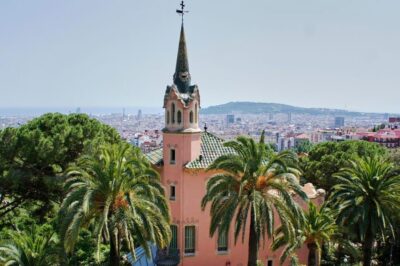 ★ 4.5Park Güell and Gaudí House Museum Entry TicketFrom $336,326 reviews
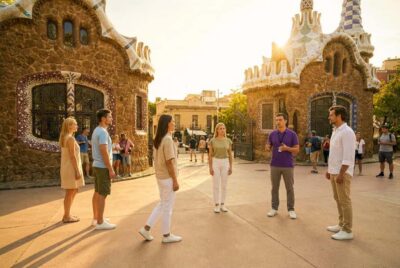 ★ 4.8Gaudí’s Park Güell Tour with Fast-Track TicketFrom $324,512 reviews
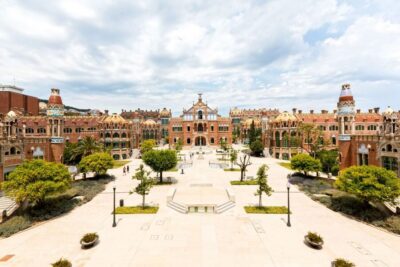 ★ 4.6Sant Pau Recinte Modernista Entry TicketFrom $212,567 reviews
 ★ 4.7Sagrada Familia, Modernism, and Old Town TourFrom $521,621 reviews
 ★ 4.5Sagrada Familia & Gaudi Tour Private or Small Group with TicketsFrom $901,188 reviews
 ★ 5.0Complete Gaudi Tour: Casa Batllo, Park Guell & Sagrada FamiliaFrom $1621,152 reviews
 ★ 5.0Barcelona e-Bike Tour: Gaudí & Old Town Small GroupFrom $38769 reviews
 ★ 5.0Ramblas, Old Town, Gothic and Gaudi Architecture Walking TourFrom $35723 reviews
Browse the lists this tour appears in