
Reviewed · GAUDÍ ARCHITECTURE TOURS
Barcelona in One Day: Gaudí, Gothic Quarter &Tapas (Private Tour)
Barcelona compresses a lot.
This private day wraps Gaudí, the Gothic Quarter, and a food-focused finish into one tight route that moves fast but still feels human. I like that it’s set up to cut crowd time (especially with Sagrada Família in the late afternoon), and I also like that the guide points out the small design and history details you’d miss if you just wander. One consideration: with 5 hours and a long walking circuit, if your pace is slower or your arrival timing is off, you may not cover every stop.
I love the mix of old Barcelona to new Barcelona. You start in the medieval core, then you swing to Modernisme on Passeig de Gràcia, and you end with Sagrada Família when many day-trippers have already gone. Guides like Olga, Carla, and Valentina show up consistently in the feedback as friendly, patient, and very good at explaining what you’re seeing in plain language. The one drawback I’d flag: this can become essentially a walking tour if you expect lots of long sits down inside buildings that require tickets.
In This Review
- Key highlights you should care about
- Why a private one-day Barcelona sweep actually works
- The route plan: starting near the Gothic Quarter, ending at Sagrada Família
- Plaça Nova and the Roman letters of Barcino
- Catedral de Barcelona: Gothic inside a small time slot
- Casa de l’Ardiaca and the medieval power vibe
- Plaça del Rei and Plaça Sant Jaume: medieval Barcelona at human scale
- Sinagoga Major: one of Europe’s oldest synagogues
- La Rambla and Mercat de la Boqueria: the sights you can actually taste
- Gaudí’s Passeig de Gràcia: Casa Batlló and La Pedrera
- Casa Batlló: House of Bones and trencadís magic
- La Pedrera (Casa Milà): sculpted stone and UNESCO status
- Sagrada Família after the crowds: what to expect inside
- Tapas time: where food fits and why it matters
- Price and value: is $264.34 worth it?
- Who should book, and who should think twice
- Should you book this Barcelona in One Day private tour?
- FAQ
- How long is the tour?
- Is this a private tour?
- Is the tour in English?
- What’s included for ticket prices?
- Where does the tour start?
- Does weather affect the experience?
Key highlights you should care about
- Private tour for your party means you can set your pace and ask questions without the group-control feel
- Sagrada Família later in the day (starts around 4 pm) to help you see it with less crowd pressure
- Roman-to-medieval-to-Modernisme in one route: Barcino letters, Gothic squares, then Gaudí’s houses
- Boqueria Market stop gives you Barcelona by the senses, not just by photos
- Food included via a tapas moment adds a real taste of the city’s everyday life
- Some major interiors cost extra (Catedral, Casa Batlló, La Pedrera), so you’ll want to plan for tickets
Why a private one-day Barcelona sweep actually works
Barcelona is a city where one good day can feel like three—if you pick the right sights and the right order. This tour is built around that logic. You get a guided walk through the Gothic Quarter and central sights, then you pivot to Gaudí’s architecture, and you finish at Sagrada Família when the flow tends to ease.
The big value in doing it this way is not just convenience. It’s context. When you see Plaça Nova and the bronze-and-aluminum letters spelling Barcino, you understand you’re standing on a much older city layer than you’d guess from street-level. Then, as you move through medieval squares like Plaça del Rei and Plaça de Sant Jaume, the guide helps connect architecture to power and daily life—who ruled, where decisions were made, and why certain spaces mattered.
Also, this tour is private. That matters in a city full of crowded tickets and long lines. Reviews repeatedly praise guides for being responsive—people mention the guide matching pace to needs and keeping things friendly, not just scripted.
One practical reality: 5 hours plus multiple stops means you’ll be moving. In one review, the group hit about 12,000 steps in roughly 5 hours. If you’re the type who wants to linger a long time inside every monument, this schedule may feel tight.
Follow the Gaudí trail a little further




The route plan: starting near the Gothic Quarter, ending at Sagrada Família
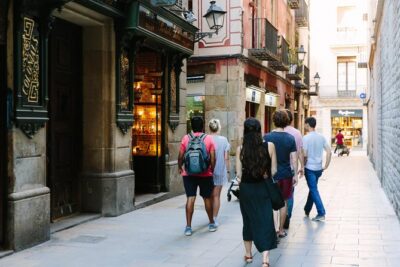
The tour starts at Av. de la Catedral, 7 in Ciutat Vella. From there, you work through the Gothic Quarter and the old-city fabric first. That’s smart. Early on, you’re closer to the medieval sites, and you’re walking in the area where the street texture is part of the experience.
Then comes the key timing choice: you visit Sagrada Família in the later afternoon, around 4 pm, when visitor crowds usually thin out. That timing is one of the reasons people rate this highly. It’s easier to look closely, take your time, and actually enjoy the interior without feeling like you’re in a conveyor belt.
Your end point is back near the meeting area. So the tour is circular enough that you’re not stranded far from where you started.
Plaça Nova and the Roman letters of Barcino
You begin in Plaça Nova, right in the Gothic Quarter, where you can almost feel the Roman city wall right behind the present-day streets. Here’s the fun detail: you’ll see seven giant letters that spell Barcino, the original name tied to the Roman settlement.
These letters come from the work of Joan Brossa. Six are bronze and one is aluminium, bolted to the ground. It’s the kind of modern art choice that makes sense in Barcelona: creative, slightly playful, and grounded in history. You’re not just staring at a relic—you’re seeing a living city reference its own roots.
This stop is quick (about 10 minutes), but it sets the tone. Once you’ve absorbed the idea that Barcelona has layered cities—Roman, medieval, Modernisme—the rest of the walk clicks into place.
Catedral de Barcelona: Gothic inside a small time slot
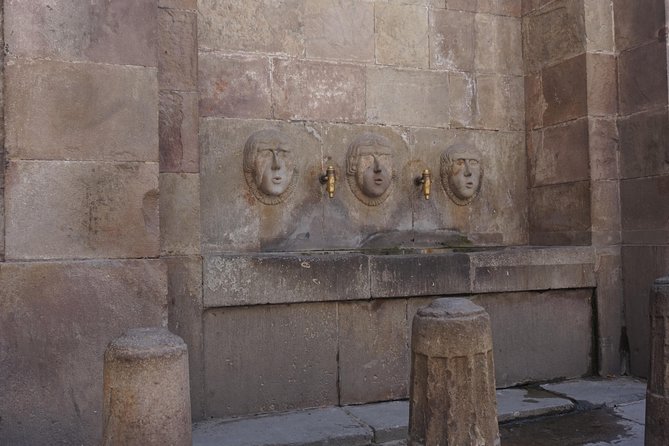
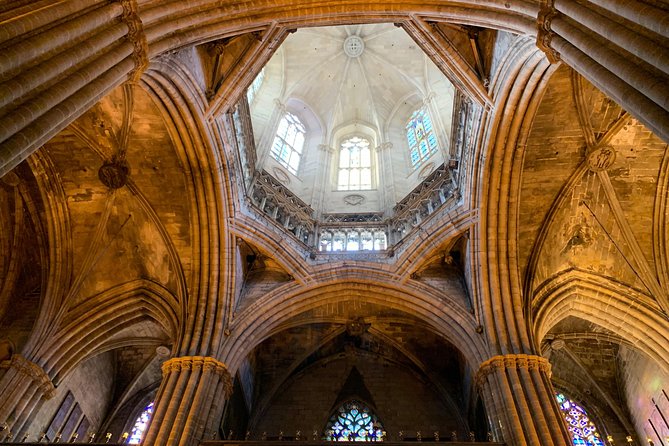
Next is Catedral de Barcelona. The focus here is on the interior. You get a guided look at the nave, chapels, and the cloister with its fountain. The best part of a cathedral visit is often the mood shift—cooler air, quieter space, and a ceiling that makes you look up without even trying.
One catch: cathedral admission is not included. You’ll want to expect to either pay for entry or accept that your time may be more exterior-focused if you don’t want to add another ticket cost. The cathedral stop is timed to around 10 minutes, so if you’re planning to do a deeper self-guided exploration, go in with that in mind.
Still, even a short cathedral visit with a guide can be worthwhile. It helps you recognize Gothic features instead of just appreciating the overall look.
Casa de l’Ardiaca and the medieval power vibe
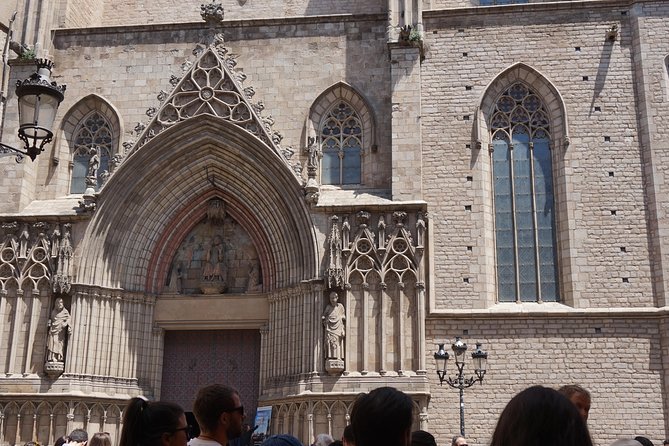
Casa de l’Ardiaca is a quieter stop, and it works because it’s tucked into the story of medieval Barcelona. This building began as a residence for the ecclesiastical hierarchy from the 12th century onward, then it changed over time—especially in the early 16th century with updates that connected parts of the complex.
You’ll notice the mix of styles: Renaissance-style decorations layered onto a flamboyant Gothic base. There’s also a staircase that leads to an upper terrace, with a balcony described as classic Romeo-and-Juliet style.
This is one of those places where your enjoyment depends on how you like details. If you enjoy architecture texture—courtyards, transitions between styles, and small structural quirks—you’ll probably feel like you got more than the time suggests.
Deeper into the lanes of the Barri Gòtic
- Barcelona all included: Sagrada, Park Güell, Montjuic & Gothic★ 5.0 · 2,169 reviews
- Barcelona: Sagrada Familia, Modernism, and Old Town Tour★ 4.7 · 1,621 reviews
- Barcelona Gothic Quarter Tapas & Taverns Food & Wine Tour★ 5.0 · 1,470 reviews
Plaça del Rei and Plaça Sant Jaume: medieval Barcelona at human scale
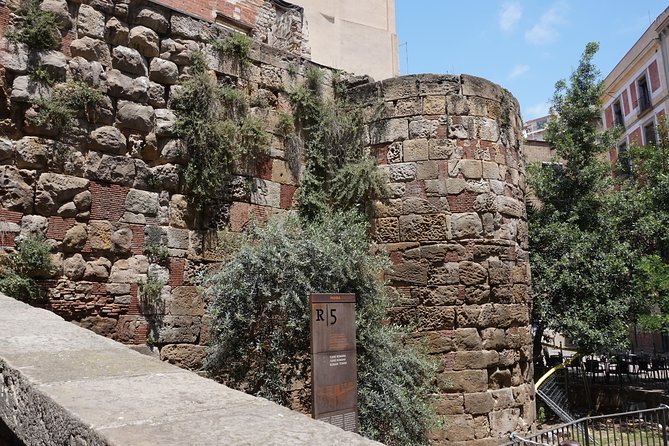
Two squares do a lot of heavy lifting here.
First, Plaça del Rei. It’s the monumental ensemble that best shows Barcelona’s medieval past. The royal palace—Palau Reial Major—and surrounding buildings form a peaceful enclosed space. It’s a bit like stepping into a stage set for how medieval governance felt.
Then comes Plaça de Sant Jaume, the city’s political centre for centuries. Today it’s an open square that acts like a lung for the Gothic Quarter. The big names here are City Hall and the Palau de la Generalitat—the buildings that tie modern Barcelona back to long-running civic life.
Both stops are short (around 10 minutes each), but the guide’s job is to make them more than pretty views. In practice, these squares help you understand how Barcelona organized itself: who met, where decisions happened, and how the built environment supported authority.
Sinagoga Major: one of Europe’s oldest synagogues
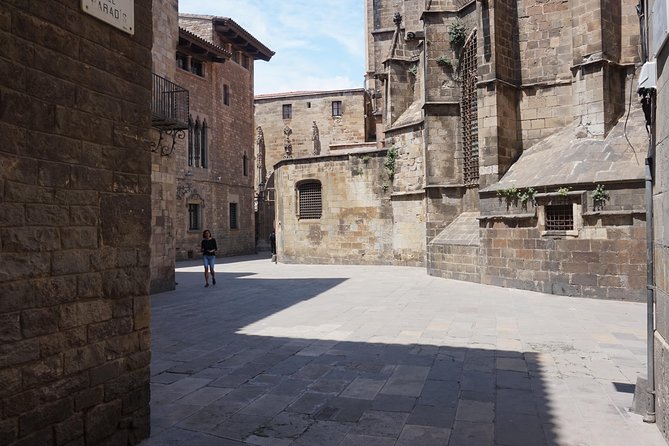
The tour continues into the Jewish Quarter with a stop at the Sinagoga Major de Barcelona, described as one of Europe’s oldest synagogues and restored for public visits.
The guide’s historical context matters a lot here. From the 9th to the 14th century, Barcelona had a sizable Jewish community—thought to be around 4,000 people—organized into narrow street neighborhoods called calls (from the Hebrew word kahal, meaning community or congregation).
This stop is brief (about 5 minutes), so don’t expect a long lecture. But it’s a strong reminder that Barcelona’s story is not only Roman and Catholic. It also includes Jewish history woven into the city’s street grid.
If you care about history, this is one of the stops that makes the day feel more complete.
La Rambla and Mercat de la Boqueria: the sights you can actually taste
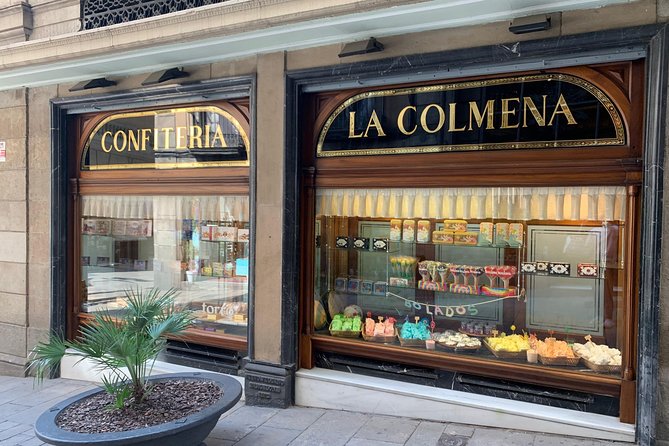
Then you hit La Rambla, the famous stretch everyone walks at least once. It runs about 1.2 kilometers and was laid out in 1766 following the contours of medieval city walls. Locals adopted it quickly because Barcelona is full of narrow streets—this was the open space where people of different classes could stroll.
A guide helps here because Rambla can go from charming to touristy in seconds. You’ll walk a chunk of it (around 15 minutes), but the point is to connect it to city life.
Next comes Mercat de la Boqueria. This is where the day gets more sensory. The market is described as evolving from a history of peddlers into a modern, colorful hub, like a human river for anyone who enjoys watching people work and eat.
This stop is about 30 minutes. That’s enough to look, snack if you want, and get a real feel for what Barcelona sounds like in the middle of the day.
Gaudí’s Passeig de Gràcia: Casa Batlló and La Pedrera
Now you shift to Modernisme, specifically the stretch where Gaudí is basically unavoidable.
Casa Batlló: House of Bones and trencadís magic
Casa Batlló is the best-known of the pair. It was redesigned by Gaudí in 1904 from an earlier house, and it’s often locally called Casa dels ossos (House of Bones), thanks to its skeletal, organic look.
What you’ll appreciate on this route:
- irregular oval windows
- flowing sculpted stone work with few straight lines
- the colorful mosaic made of broken ceramic tiles, called trencadís
- a roof arched in a way people liken to a dragon or dinosaur
- the common interpretation that a rounded feature near the top suggests the lance of Saint George plunged into the back of the dragon (Catalonia’s patron saint)
This stop is about 10 minutes, and admission is not included. So you’ll likely focus on exterior impact and what your guide can point out quickly. If you want an interior visit, budget for it separately.
La Pedrera (Casa Milà): sculpted stone and UNESCO status
Then comes La Pedrera, also called Casa Milà. It was Gaudí’s last private residence, built between 1906 and 1912 for Pere Milà and his wife Roser Segimon.
This one was controversial at the time because of its undulating stone façade and twisting wrought-iron balconies, plus the collaboration with Josep Maria Jujol. In structural terms, the building is known for innovations like a self-supporting stone façade and a free-plan floor, along with an underground garage and a spectacular terrace.
By 1984, it was declared a UNESCO World Heritage Site—so you’re not just looking at a pretty façade; you’re looking at architecture that mattered internationally.
The visit is around 15 minutes, and admission is not included. Again, you’re likely getting the highlight visuals and guide explanations rather than a full interior tour.
Sagrada Família after the crowds: what to expect inside
Finally, the reason this day works: Sagrada Família.
In this tour format, Sagrada Família is included and timed for the calmer part of the day, starting around 4 pm. That timing is the big win. It gives you a better chance to walk through and actually look at details instead of being rushed along.
The emphasis is on the interior: you’re meant to walk and observe the details inside the temple, taking it at a slower pace than a standard day-trip schedule would allow. Since the tour includes this admission, you’re less likely to end the day feeling like you still have to make ticket decisions mid-stream.
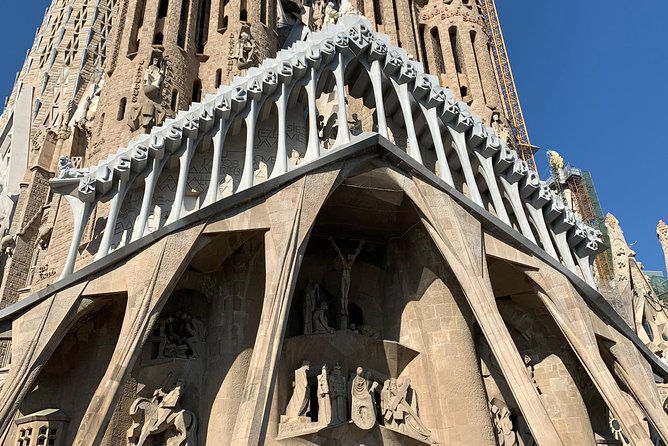
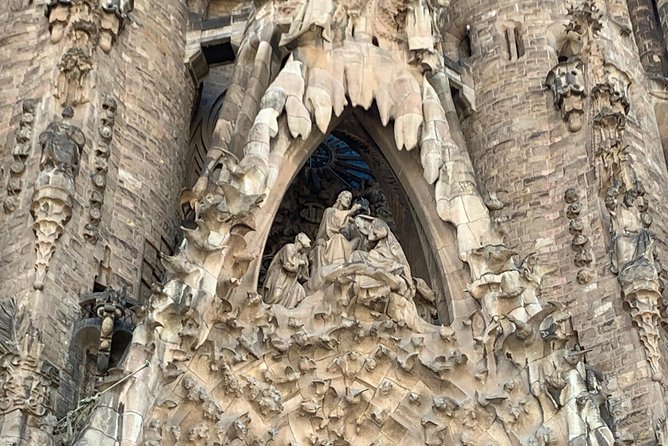
Also, if you’ve already seen other churches in Spain, this one will feel different. It’s still a work in progress, and the architecture’s design language makes you look up and pay attention. That’s why people in the feedback keep calling it amazing—this is a sight where a good guide can change how you experience it.
If you’re a first-time Barcelona visitor, this is a strong finish. It ties the day together: you started with the city’s earliest layers, and you end with its most iconic modern statement.
Tapas time: where food fits and why it matters
Even if you don’t consider yourself a foodie, you’ll feel the value of a tapas stop because it’s part of how Barcelona breathes.
The feedback about this experience mentions a sweet and a savory path: a stop for traditional nougat at Planelles Donat, then a final meal of tapas at Orio, a chain known for its pintxos, plus wine and beer. That’s a very practical way to end a long walking day: you’re not deciding where to go after you’re tired.
One more reason the tapas moment works: it keeps the day from becoming only monuments and photos. You get a break, you talk with your guide, and you let your feet and your brain reset.
Just be realistic. With this many stops, you won’t have a 2-hour sit-down meal. You’ll want to snack smart and eat when it’s offered.
Price and value: is $264.34 worth it?
At $264.34 per person, this isn’t a budget add-on. But it may still be good value if you’re choosing it for the right reasons.
Here’s how to judge it:
- You’re getting a private tour, not a seat on a mass departure.
- The schedule is built to avoid peak crowds, especially by finishing with Sagrada Família later.
- Several stops have free admission tickets, including Plaça Nova, Casa de l’Ardiaca, Plaça del Rei, Plaça de Sant Jaume, and the Sinagoga Major, plus La Rambla and time at Boqueria.
- Sagrada Família admission is included, which is a big cost component on its own.
- Some major stops are not included for entry—Catedral de Barcelona, Casa Batlló, and La Pedrera.
So your true cost depends on what you choose to enter inside. If you want interiors at all the paid sites, expect extra ticket spending. If you’re happy with exterior highlights and guided explanations where ticketed entry isn’t included, the included parts make the price easier to justify.
Where the price feels strongest is in the guidance quality. Multiple reviews mention guides like Olga, Carla, Valentina, Anna, Pol, and Viggo as informative and fun, with a patient, friendly style. When the guide is good, you get more meaning from every stop—and that’s the real return on investment.
Who should book, and who should think twice
This tour is a great fit if:
- you have limited time and want the main Barcelona highlights without DIY stress
- you like architecture and want the city explained in a straight, practical way
- you want Sagrada Família at a calmer hour
- you enjoy walking and don’t mind moving every stop or so
It’s not the best fit if:
- you need lots of long, slow breaks inside museums and churches
- you’re expecting a fully flexible route that always hits every single stop, no matter what
- you’re uncomfortable with the walking pace of a 5-hour city circuit
One caution worth taking seriously: there was at least one negative experience where the itinerary wasn’t completed as expected and the person asked for a refund. The response emphasized that the guide adjusted pacing based on arrival time, mobility needs, and jet lag. That’s a reminder: because it’s private, your guide will often adapt to real conditions—but you should also communicate clearly at the start about pace and expectations.
Should you book this Barcelona in One Day private tour?
If you want a one-day plan that actually makes sense—Roman roots, medieval squares, Modernisme houses, market energy, and Sagrada Família at the right hour—this is a solid choice.
Book it if:
- you’re a first-time visitor
- you want a guide-led day with private attention
- you care about timing and want fewer crowd pressures at the end
- you’re okay adding tickets for entries that aren’t included
Skip it or ask extra questions before booking if:
- you want guaranteed long indoor time at Casa Batlló and La Pedrera (since admission isn’t included)
- you’re bringing mobility limits and need more time than the schedule allows
- you prefer a less-walking style of touring
My bottom line: this is priced like a premium private experience, and it makes sense when you treat it as a guided highlights walk with a proper Sagrada finish—plus food as the breathing space.
FAQ
How long is the tour?
It runs about 5 hours.
Is this a private tour?
Yes. It’s private for your party only.
Is the tour in English?
Yes. The tour is offered in English.
What’s included for ticket prices?
Sagrada Família admission is included. Other sites listed include options where admission is not included, such as the Cathedral, Casa Batlló, and La Pedrera.
Where does the tour start?
The meeting point is Av. de la Catedral, 7, Ciutat Vella, 08002 Barcelona.
Does weather affect the experience?
Yes. The experience requires good weather. If it’s canceled due to poor weather, you’ll be offered a different date or a full refund.
One More Tapas Crawl
- Montserrat Half-Day Tour with Tapas and Gourmet Wines
★ 5.0 · 7,359 reviews - Montserrat & Cogwheel Train, Gourmet Wine Tasting & Tapas/Lunch
★ 5.0 · 6,290 reviews - Barcelona Tapas and Wine Experience Small-Group Walking Tour
★ 5.0 · 5,804 reviews - Montserrat with Black Madonna & Medieval Winery with Tapas/Lunch
★ 5.0 · 5,209 reviews - Barcelona: Tapas Walking Tour with Food, Wine, and History
★ 4.8 · 4,261 reviews
Lost in the Gothic Quarter
- Barcelona in 1 Day: Sagrada Familia, Park Guell,Old Town & Pickup
★ 5.0 · 13,541 reviews - Barcelona all included: Sagrada, Park Güell, Montjuic & Gothic
★ 5.0 · 2,169 reviews - Barcelona: Sagrada Familia, Modernism, and Old Town Tour
★ 4.7 · 1,621 reviews - Barcelona Gothic Quarter Tapas & Taverns Food & Wine Tour
★ 5.0 · 1,470 reviews - Barcelona Helicopter, Sailboat & Old Town Private Walking Tour
★ 5.0 · 1,395 reviews
Further Along the Gaudí Trail
- Barcelona: Park Güell and Gaudí House Museum Entry Ticket
★ 4.5 · 6,326 reviews - Barcelona: Gaudí’s Park Güell Tour with Fast-Track Ticket
★ 4.8 · 4,512 reviews - Barcelona: Sant Pau Recinte Modernista Entry Ticket
★ 4.6 · 2,567 reviews - Barcelona: Sagrada Familia, Modernism, and Old Town Tour
★ 4.7 · 1,621 reviews - Sagrada Familia & Gaudi Tour Private or Small Group with Tickets
★ 4.5 · 1,188 reviews
Just Rated Around Barcelona




Gaudí Architecture Tours, compared.
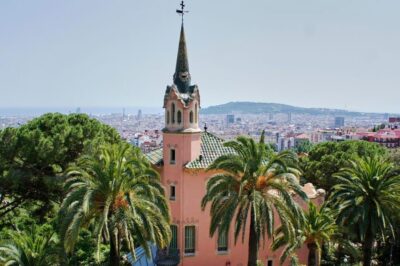 ★ 4.5Park Güell and Gaudí House Museum Entry TicketFrom $336,326 reviews
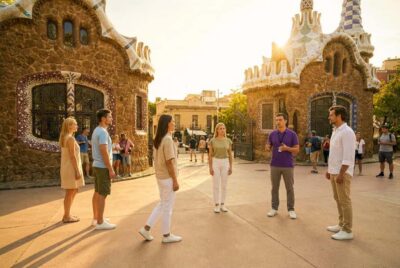 ★ 4.8Gaudí’s Park Güell Tour with Fast-Track TicketFrom $324,512 reviews
 ★ 4.6Sant Pau Recinte Modernista Entry TicketFrom $212,567 reviews
 ★ 4.7Sagrada Familia, Modernism, and Old Town TourFrom $521,621 reviews
 ★ 4.5Sagrada Familia & Gaudi Tour Private or Small Group with TicketsFrom $901,188 reviews
 ★ 5.0Complete Gaudi Tour: Casa Batllo, Park Guell & Sagrada FamiliaFrom $1621,152 reviews
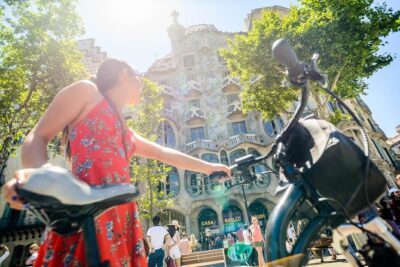 ★ 5.0Barcelona e-Bike Tour: Gaudí & Old Town Small GroupFrom $38769 reviews
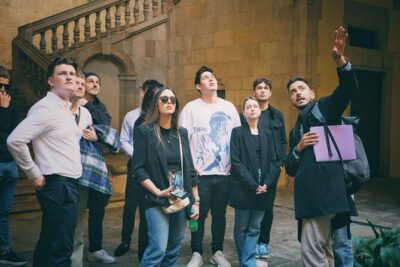 ★ 5.0Ramblas, Old Town, Gothic and Gaudi Architecture Walking TourFrom $35723 reviews
Browse the lists this tour appears in