
Reviewed · GAUDÍ ARCHITECTURE TOURS
Gaudí and Modernism – Private Walking Tour
Modernism here is more than pretty facades. This private walking tour threads the Eixample’s big ideas from Plaza de Catalunya to the still-incomplete Sagrada Família, with Patrick connecting politics, culture, and design into one walkable story.
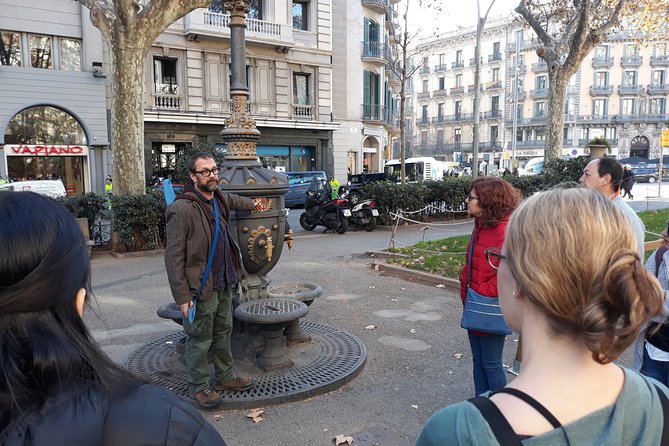
I love the relaxed pace that leaves room for discussion, and I love how the tour turns small details into real clues—like the Bancs Fanals lamppost symbolism along Passeig de Gràcia.
One consideration: this experience is built around outdoor viewing, so if you get stuck with rain or cold winds, you may want to rethink timing since it’s weather-dependent.
In This Review
- Key highlights you’ll actually feel on the walk
- Why a Gaudí and Modernism walk makes sense (and why it’s not just house-staring)
- Meeting on Passeig de Gràcia, then finishing at Sagrada Família
- Plaza de Catalunya: where the old city vibe meets Modernisme planning
- Passeig de Gràcia: luxury, bourgeois power, and the street as a stage
- Bancs Fanals: streetlamps that act like a symbolic warning label
- Casa Lleó i Morera: Domènech i Montaner’s facade full of intent
- Casa Amatller: chocolate family history plus a free courtyard look
- Casa Malagrida: a tobacco industrialist’s Argentina–Spain storyline
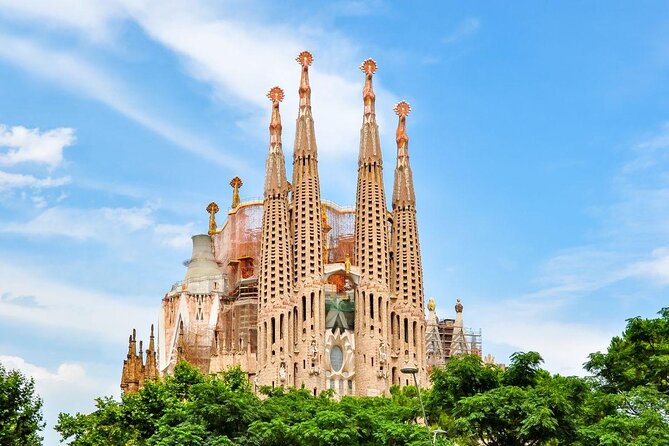
- Sagrada Família: finish with Gaudí’s “still in progress” facades
- Price and value: what you’re paying for at $66.08 per person
- Who should book this Gaudí and Modernism tour?
- Should you book it?
- FAQ
- How long is the Gaudí and Modernism private walking tour?
- How much does the tour cost?
- Where does the tour start and end?
- Is the tour private, and is it offered in English?
- What stops are included on the route?
- Is there anything you can see for free at Casa Amatller?
Key highlights you’ll actually feel on the walk
- Private, English-language tour with a guide-led pace for questions and slow looking
- Patrick’s ability to link history to architecture, not just name-dropping
- Plaza de Catalunya to Eixample transition, plus visible traces connected to the Spanish Civil War
- Manzana de la Discordia focus with Casa Lleó i Morera and Casa Amatller highlights
- Casa Amatller courtyard access for free, including the staircase, old elevator, and sculptures
- Sagrada Família as the finish point, with outside facades explained over about 30 minutes
Why a Gaudí and Modernism walk makes sense (and why it’s not just house-staring)
Barcelona’s Modernisme looks best when you understand the city behind it. This tour is designed for that. Instead of bouncing between random stops, you get a line of logic: how Barcelona’s late-19th and early-20th century wealth, politics, and civic identity shaped what went up in the Eixample.
What makes it work is the way Patrick connects cause and effect. You’re not only hearing who designed what—you’re learning why certain families wanted to broadcast status, why certain symbols mattered, and how design choices show up on facades you can see from the street.
The best part for me is the balance: you get big-name architecture (Gaudí, among others) without losing the smaller “how did they think?” details. You’ll leave with a mental map for reading Barcelona’s Modernisme like a language.
Follow the Gaudí trail a little further




Meeting on Passeig de Gràcia, then finishing at Sagrada Família
The tour starts at Apple Passeig de Gràcia, Pg. de Gràcia, 1 (L’Eixample). You’ll end in front of the Sagrada Família, with that final stretch giving you the grand finish.
Practically, this is an easy route for first-timers because:
- You begin in the Eixample/major boulevard zone (simple to reach by public transportation)
- You end at the one monument most people already plan to visit
- The walking time is about 2 hours 30 minutes, so it’s long enough for context but not so long you feel wrecked
The tour also offers pickup, which is a nice option if your day starts elsewhere and you’d rather not figure out the first meeting point on the fly.
Plaza de Catalunya: where the old city vibe meets Modernisme planning
You start at Plaza de Catalunya, the square that acts like a dividing line between Barcelona’s older core and the Modernista expansion of the Eixample.
This is a smart warm-up stop. You get orientation: how the city evolved, why the Eixample became the stage for wealthy families to build and compete through architecture, and how history still leaves marks you can notice as you move through the streets.
The tour also points out traces connected to the Spanish Civil War that can still be seen. Even if you don’t go searching for them afterward, learning that those scars exist helps you look at the city more carefully as you walk.
What to watch for: don’t just treat this as a landmark. Treat it as the “why are we walking here?” page—because it sets up the modernist streets that follow.
Passeig de Gràcia: luxury, bourgeois power, and the street as a stage
Next you head to Passeig de Gràcia, Barcelona’s high-fashion, high-status boulevard. This is where you’ll hear the story of the Catalan bourgeoisie in the 19th century and early 20th century—families who wanted their buildings to broadcast success.
The value here is not only aesthetic. You’re learning how architecture served as social signaling. You’ll start to notice patterns: the way facades try to impress from far away, and the way ornament becomes a language of ambition.
Small drawback: because this part of the walk is on a major street, you may have to work a bit to focus while cars and foot traffic do their thing. That’s normal in Barcelona, but it’s worth keeping your attention on details like entrances, cornices, and transitions between floors.
Bancs Fanals: streetlamps that act like a symbolic warning label
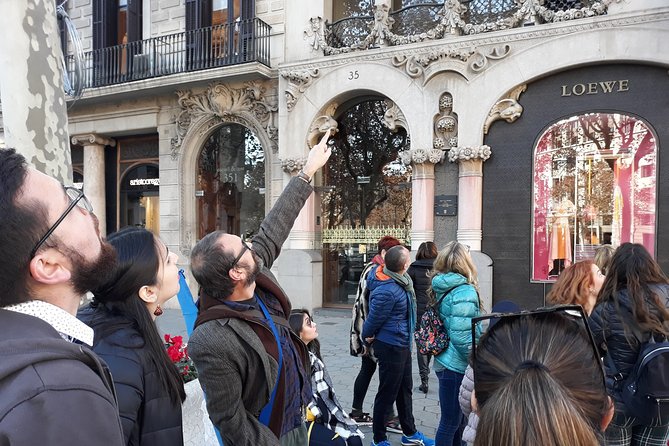
On Passeig de Gràcia, you stop for Bancs Fanals, the elaborate modernist lampposts. These aren’t just pretty street furniture. They’re built with symbols and details that reward close looking.
This is one of those stops that makes the whole tour feel different. It’s easy to assume Modernisme is only about buildings. Bancs Fanals reminds you that the style also shows up in the “in-between” parts of the city—public space, design coherence, and the choices people made for everyday life.
If you like architecture, but you also like meaning, this is a great moment. If you’re only after famous monuments, you might want to keep your eyes open anyway—because that symbolic thinking is how the rest of the tour clicks.
More Barcelona streets to take slowly
- Barcelona Tapas and Wine Experience Small-Group Walking Tour★ 5.0 · 5,804 reviews
- Barcelona: Tapas Walking Tour with Food, Wine, and History★ 4.8 · 4,261 reviews
- Barcelona: Food Walking Tour with Tapas and Wine★ 4.9 · 2,180 reviews
Casa Lleó i Morera: Domènech i Montaner’s facade full of intent
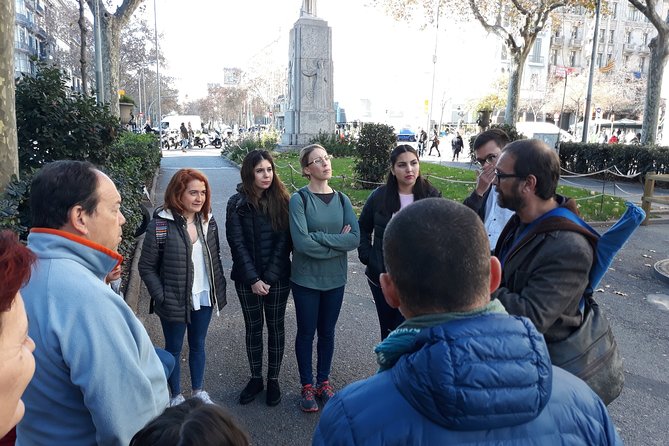
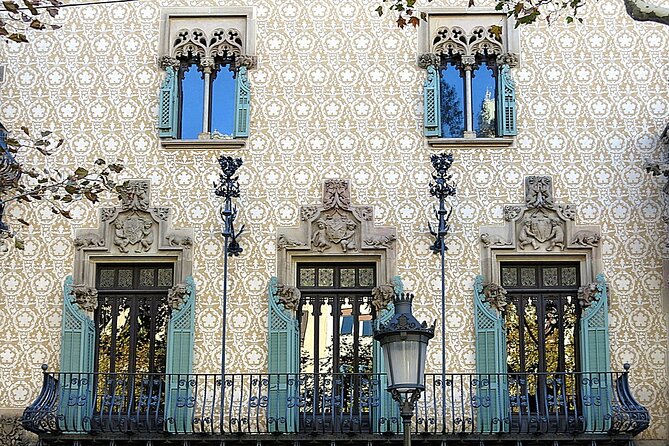
Your next focus is Casa Lleó i Morera, part of the famous Manzana de la Discordia block. This house stands out because it’s tied to the architect Domènech i Montaner, from the early 20th century.
Patrick’s approach helps you read the facade as more than decorative. You’ll get a sense of how the house reflects the life and thoughts of its creator and its owner, and you’ll be guided toward the idea that facades can function like message boards—full of decisions meant to be seen.
What I like about this stop for your trip planning: it gives you a frame for the next houses. Once you understand how one architect’s choices can tell a story, the other stops don’t feel like random variations. They feel like a conversation.
Casa Amatller: chocolate family history plus a free courtyard look
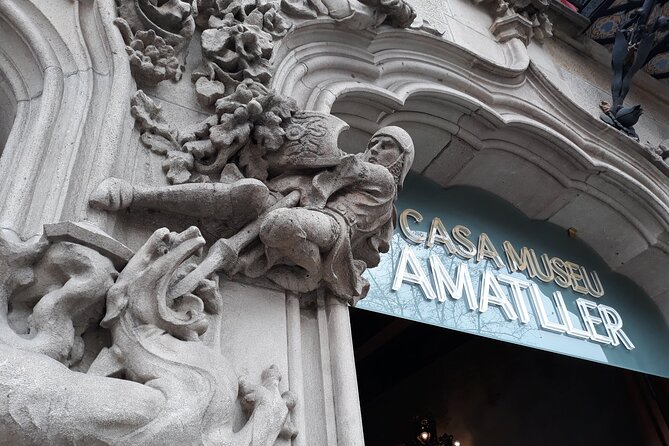
One of the best-known houses in the Eixample, Casa Amatller, was designed by Puig i Cadafalch. The house belonged to a family of chocolate producers, and that’s not just trivia—it’s part of the meaning Patrick shares as you examine the facade.
You’ll spend time hunting for symbols hidden on the front, and then the tour adds a practical bonus: you can go for free to the inner courtyard. From there, you can admire the staircase, the old elevator, and refined sculptures.
That courtyard access is a strong value point. A lot of tours stop at the street-facing view only. Here, you get at least one interior-side payoff without needing to pay extra just to see something more intimate.
Tip for the courtyard moment: slow down. Courtyards tend to be where the design becomes less about spectacle from across the street and more about how a building feels when you’re inside its rhythm.
Casa Malagrida: a tobacco industrialist’s Argentina–Spain storyline
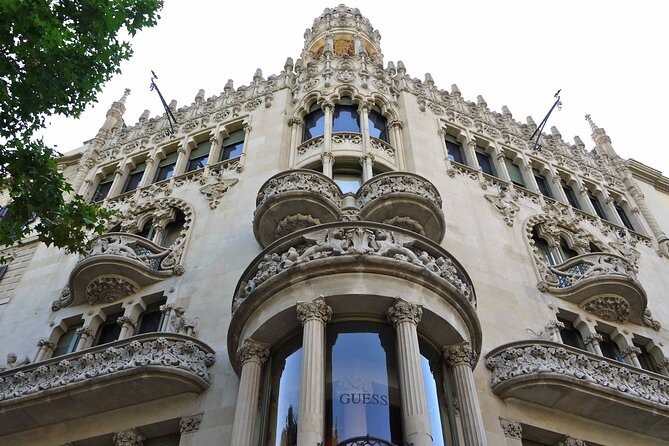
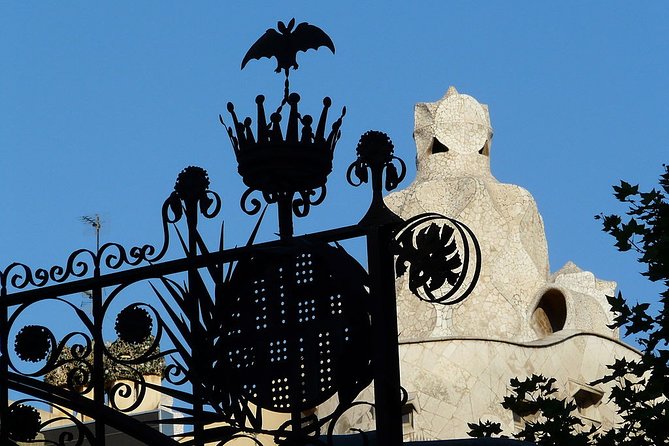
Before the walk reaches the big finish, you’ll look at Casa Malagrida, described as an early example of a modernist bourgeois house on the route. It belonged to Señor Malagrida, a rich tobacco industrialist.
The key story here is geographic and personal: the tour links the decoration of the facade to Malagrida’s life between Argentina and Spain. That angle matters because it turns the building into evidence. It suggests how people with business ties abroad brought identity, taste, and status back to Barcelona in visual form.
Why this stop is worth your attention: it helps you see Modernisme not only as local art, but as global identity—money and influence moving across borders and then landing in stone, glass, ironwork, and symbols.
Sagrada Família: finish with Gaudí’s “still in progress” facades
The tour ends at Sagrada Família, still incomplete and still one of the most recognizable monuments in Barcelona. You’ll spend about 30 minutes seeing the various facades from the outside, while the guide explains its surprising and long history and how construction works.
This is a smart ending. If you start the tour with context (Eixample wealth, Modernisme ideas, symbolism, and how facades communicate), then Sagrada Família stops being a single famous name and becomes part of a broader architectural worldview.
Also, because you’re viewing from outside, you’re not locked into a ticket schedule during this walking experience. You get the architectural big-picture while staying flexible for the rest of your day.
What to expect: outside facades give you the overall design logic. If you want close-up details of sculpture and interior space, you’ll still want your own separate time later—but this tour gives you the understanding that makes that later visit much more meaningful.
Price and value: what you’re paying for at $66.08 per person
At $66.08 per person for roughly 2 hours 30 minutes, the price is not just for walking between stops. You’re paying for:
- A private guided experience (only your group)
- An English-language explanation that connects multiple buildings into a single narrative
- A route that mixes “big names” with street-level Modernisme details like Bancs Fanals
- Optional pickup and the convenience of a mobile ticket
You’ll also see that this tour is commonly booked about 14 days in advance, which is a subtle clue that it fits into a lot of people’s early Barcelona planning. If you’re traveling in peak season or on a tight schedule, booking earlier is a practical move.
Is it cheaper than DIY walking? Sure. But it’s also like paying for the translation between what you see and what it means. For many people, especially first-timers, that translation is the whole point.
Who should book this Gaudí and Modernism tour?
This tour is ideal if you:
- Want to understand the Eixample Modernisme beyond surface beauty
- Like history that connects to design choices, not just dates
- Prefer a guide to set a relaxed pace and allow discussion
- Want a strong start-of-trip architecture hit—helpful before you see other Gaudí-related buildings elsewhere
It’s also a nice fit for groups where not everyone wants the same pace. The tour can be adapted (the guide has been noted for adjusting for seniors), and the route is built around sightlines and outside viewing.
If you only want to see one or two famous buildings in a rush, this may feel like more walking than you need. But if your goal is to understand Barcelona’s Modernisme, the mix of stops makes sense.
Should you book it?
Yes, if you’re the type of traveler who looks up from your phone when you hear a streetlamp might have symbols. You’ll get a clear route, a guide who connects design to social and political context, and an ending at Sagrada Família with enough background to make it land.
I’d skip or reschedule if you’re traveling during rough weather and you hate outdoor walking. This is a street-and-facade experience, so conditions matter.
If you’re deciding when to do it: do it early in your Barcelona stay. It sets you up to see the rest of the city with better instincts.
FAQ
How long is the Gaudí and Modernism private walking tour?
It lasts about 2 hours 30 minutes.
How much does the tour cost?
The price is $66.08 per person.
Where does the tour start and end?
It starts at Apple Passeig de Gràcia, Pg. de Gràcia, 1, L’Eixample, 08007 Barcelona, Spain, and it ends in front of the Sagrada Família.
Is the tour private, and is it offered in English?
Yes, it’s a private tour/activity, and it’s offered in English.
What stops are included on the route?
The walk includes Plaza de Catalunya, Passeig de Gràcia, Bancs Fanals, Casa Lleó i Morera, Casa Amatller, Casa Malagrida, and finishes at Sagrada Família.
Is there anything you can see for free at Casa Amatller?
Yes. You can go for free to the inner courtyard of Casa Amatller to admire the staircase, the old elevator, and sculptures.
More Ways to Tour Barcelona
- Barcelona: Casa Batlló Entry with Self-Audioguide Tour
★ 4.7 · 25,359 reviews - Barcelona: 24 or 48-Hour Hop-On Hop-Off Bus Tour
★ 4.4 · 20,872 reviews - Barcelona: Park Guell Guided Tour with Skip The Line Entry
★ 4.7 · 17,563 reviews - Barcelona: Sagrada Familia Skip-the-Line Entry Ticket & Tour
★ 4.8 · 12,789 reviews - Barcelona: FC Barcelona Museum “Barça Immersive Tour” Ticket
★ 4.4 · 10,944 reviews
More Barcelona Tours on Our Radar
- Barcelona: Sagrada Familia Entry Ticket with Audio Guide
★ 4.6 · 105,312 reviews - Barcelona: Park Güell Admission Ticket
★ 4.4 · 76,534 reviews - Barcelona: Casa Batlló Entry with Self-Audioguide Tour
★ 4.7 · 25,359 reviews - Barcelona: Montjuïc Cable Car Roundtrip Ticket
★ 4.5 · 22,368 reviews - Barcelona: Hola Barcelona Public Transport Travel Card
★ 4.5 · 20,985 reviews
Further Along the Gaudí Trail
- Barcelona: Park Güell and Gaudí House Museum Entry Ticket
★ 4.5 · 6,326 reviews - Barcelona: Gaudí’s Park Güell Tour with Fast-Track Ticket
★ 4.8 · 4,512 reviews - Barcelona: Sant Pau Recinte Modernista Entry Ticket
★ 4.6 · 2,567 reviews - Barcelona: Sagrada Familia, Modernism, and Old Town Tour
★ 4.7 · 1,621 reviews - Sagrada Familia & Gaudi Tour Private or Small Group with Tickets
★ 4.5 · 1,188 reviews
Just Rated Around Barcelona
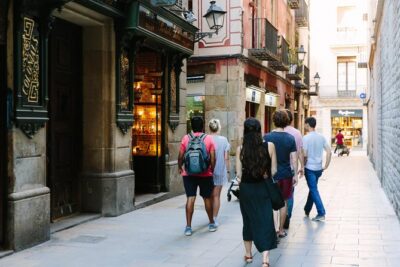





Gaudí Architecture Tours, compared.
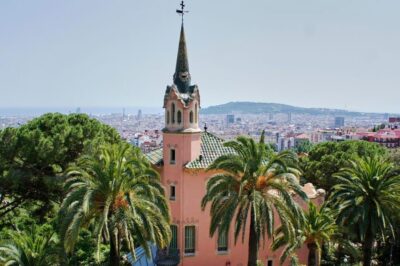 ★ 4.5Park Güell and Gaudí House Museum Entry TicketFrom $336,326 reviews
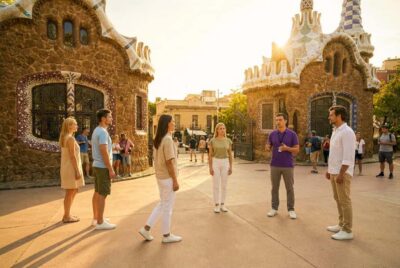 ★ 4.8Gaudí’s Park Güell Tour with Fast-Track TicketFrom $324,512 reviews
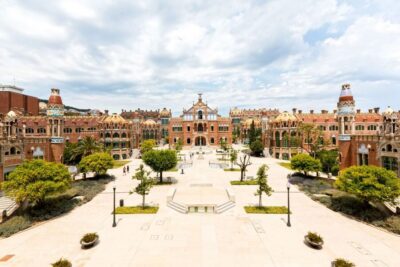 ★ 4.6Sant Pau Recinte Modernista Entry TicketFrom $212,567 reviews
 ★ 4.7Sagrada Familia, Modernism, and Old Town TourFrom $521,621 reviews
 ★ 4.5Sagrada Familia & Gaudi Tour Private or Small Group with TicketsFrom $901,188 reviews
 ★ 5.0Complete Gaudi Tour: Casa Batllo, Park Guell & Sagrada FamiliaFrom $1621,152 reviews
 ★ 5.0Barcelona e-Bike Tour: Gaudí & Old Town Small GroupFrom $38769 reviews
 ★ 5.0Ramblas, Old Town, Gothic and Gaudi Architecture Walking TourFrom $35723 reviews
Browse the lists this tour appears in