
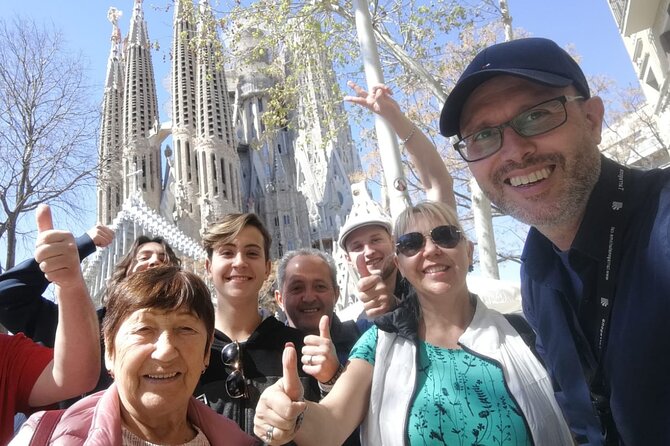
Reviewed · GAUDÍ ARCHITECTURE TOURS
Gaudi’s Modernist Legacy: Small Group Walking Tour
Modernisme hits you fast in Barcelona. This small-group walk strings together Gaudí-era architecture with clear stories about the modernist movement.
I love how the tour mixes iconic stops with guide-led explanations that help you actually see what you’re looking at.
One thing to watch: plans can hinge on ticket/entry details at places like Sagrada Família, so don’t assume everything is included just because the focus is Gaudí.
You’ll find the best part is the small group size (max 12), which keeps questions from getting lost. The guide time also lands well, with stops along Passeig de Gràcia and then a strong finish at Sagrada Família.
A solid drawback is that timing can feel tight if your group lingers at earlier buildings—so you may want to arrive ready to walk and take notes fast.
Key points to know before you go
- Max 12 people means you get personal attention instead of group herding.
- Passeig de Gràcia is your main stage, with luxury boutiques and major modernist façades.
- Casa Batlló + La Pedrera are included as the core Gaudí moments.
- Domènech i Montaner’s influence shows how modernisme took off before Gaudí went full genius-mode.
- St George’s legend and patron-saint symbolism add storytelling between buildings.
- Sagrada Família is the emotional finish, with stained glass light and façade symbolism explained.
In This Review
- How a Modernist Walk Gets You Oriented Fast
- Price and What Feels Like a Good Deal
- Meeting at Carrer de Fontanella, Then Heading Straight to Passeig de Gràcia
- Passeig de Gràcia: Luxury Avenue With an Architecture Lesson Plan
- The Domènech i Montaner Stop: Seeing Modernisme Before Gaudí’s Peak
- Chocolate History in Architecture: Buying the Good Stuff Along the Way
- Casa Batlló: Color, Fantasy, and Why It Works
- A Quick Story Break: St George and Symbolism Between Buildings
- La Pedrera (Casa Milà): Gaudí’s Culmination and the Nature Connection
- Sagrada Família at the End: Light, Shapes, and Emotion
- The Guide Factor: When Names Like Antonio, Montse, Roberto, Jordi Matter
- Who This Tour Is Best For (and Who Should Skip It)
- Should You Book This Gaudí Modernist Legacy Tour?
- FAQ
- How long is the Gaudí modernist walking tour?
- What’s the group size?
- What’s included in the price?
- Is food or hotel pickup included?
- Where do we start and where does the tour end?
- Is Sagrada Família admission included?
How a Modernist Walk Gets You Oriented Fast
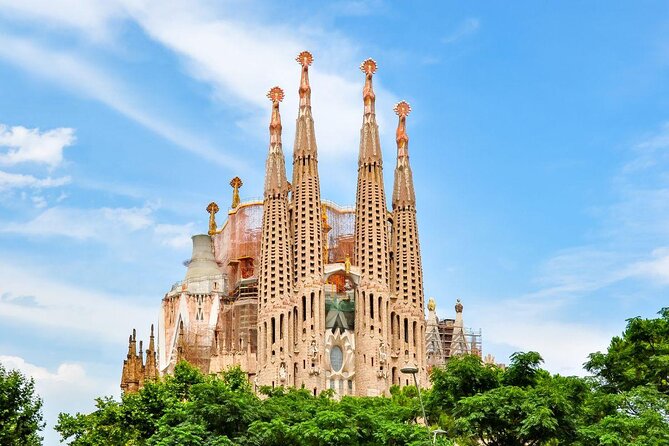
Barcelona can feel like two cities at once. You’ve got the old Gothic streets you picture on postcards, and then you’ve got the straight, elegant drama of the modernist era. This tour is designed for that second city—so you get your bearings quickly and start noticing patterns instead of random details.
The big value here is the “why,” not just the “what.” You’re guided through a sequence of buildings that show how modernisme spread, then how Gaudí evolved it into something completely his. With a group capped at 12, the guide can slow down when people need clarification, and you can actually ask questions instead of shouting at the front of a moving line.
It’s also a flexible choice. You can pick from a range of start times, which matters in Barcelona, where you often need to juggle museum hours, meal timing, and time for Sagrada ticket lines.
Price and What Feels Like a Good Deal
At $22.01 for about 2 hours 30 minutes, this isn’t a money-sink day tour. You’re paying for three things that cost time and attention on your own: a professional guide, a structured route, and guided interpretation of major landmarks.
Here’s the trade-off to keep in mind. The modernist core includes Casa Batlló and La Pedrera, but the tour focuses on explanations at Sagrada Família rather than stating that full entry is automatic. One review experience also highlights confusion around admission expectations at Sagrada. So: treat ticketing as something you should confirm before the day.
If you’re the kind of traveler who likes to walk a city with an intelligent filter—so you see more than you’d notice solo—this price can feel fair. If you’re mainly chasing photos and don’t care about context, you might feel it’s more guided-story than pure free-choice sightseeing.
Follow the Gaudí trail a little further




Meeting at Carrer de Fontanella, Then Heading Straight to Passeig de Gràcia
The start point is Carrer de Fontanella, 2 in Ciutat Vella, and the tour ends at Sagrada Família in Eixample. That setup is smart: you begin closer to the older core of the city, then you walk your way to the modernist heart.
Expect to do real walking. This is not a sit-down museum tour. You’ll be on your feet long enough that shoes matter, especially since modernist façades reward you for stopping and looking up.
Also, the tour uses a mobile ticket, which is handy in Barcelona where paper receipts and offline confirmations can slow things down. Near public transportation, it’s easy to connect from other plans.
Passeig de Gràcia: Luxury Avenue With an Architecture Lesson Plan
Your first major “wow” comes on Passeig de Gràcia, Barcelona’s famous avenue of elegant houses and upscale shopping. The tour doesn’t treat this as just a shopping street. Instead, it frames the boulevard like a living gallery where you can compare styles side by side.
This is the moment where your eyes learn a new job. You start looking at details like:
- How the façades create movement through shape and ornament
- How neighboring buildings contrast in tone and design choices
- How modernist architects used buildings as public statements, not just private residences
If you’ve ever walked past grand buildings and felt like you missed the point, this is where the guide helps you correct that. Even if you don’t plan to buy anything in the boutiques, it’s a fun street to walk for the atmosphere—then immediately level up your understanding of what you’re seeing.
The Domènech i Montaner Stop: Seeing Modernisme Before Gaudí’s Peak
Next, you get a key historical anchor: you’ll see a house credited with pioneering the modernist style in Barcelona, built by Domènech i Montaner. The tour also links him to Gaudí through an important fact: he was Gaudí’s teacher at university.
That detail matters more than it sounds. It helps you avoid the common mistake of thinking Gaudí appeared from nowhere. He grew out of a movement with mentors, ideas, and a growing appetite for a new architectural language in Catalonia.
At this stop, I’d focus on two things while the guide explains:
1) What makes this building “modernist” rather than just pretty
2) How modernisme sets up the later, more wild experimentation you see in Gaudí’s work
You don’t need to be an architecture nerd to benefit. This stop gives you a framework you’ll use immediately on the later Gaudí houses.
Chocolate History in Architecture: Buying the Good Stuff Along the Way
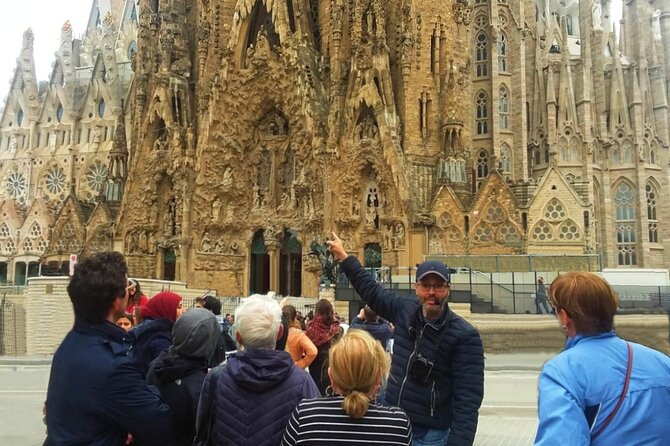
Then the tour heads to a modernist house connected to one of Barcelona’s famous chocolate-makers. It’s a straightforward, practical stop: you get architecture plus a real-life reason to care—this is where the city’s food culture and modernist design share a street.
The obvious value: you can pick up good chocolate to take home. It turns the tour from pure sightseeing into a souvenir with actual flavor.
What to watch during the explanation is the storytelling logic. The guide isn’t just naming the building; you’re learning how these modernist blocks were tied to wealth, trade, and branding. That makes the façades feel less like decorative wallpaper and more like a message meant for the public.
More Barcelona streets to take slowly
- Barcelona Tapas and Wine Experience Small-Group Walking Tour★ 5.0 · 5,804 reviews
- Barcelona: Tapas Walking Tour with Food, Wine, and History★ 4.8 · 4,261 reviews
- Barcelona: Food Walking Tour with Tapas and Wine★ 4.9 · 2,180 reviews
Casa Batlló: Color, Fantasy, and Why It Works
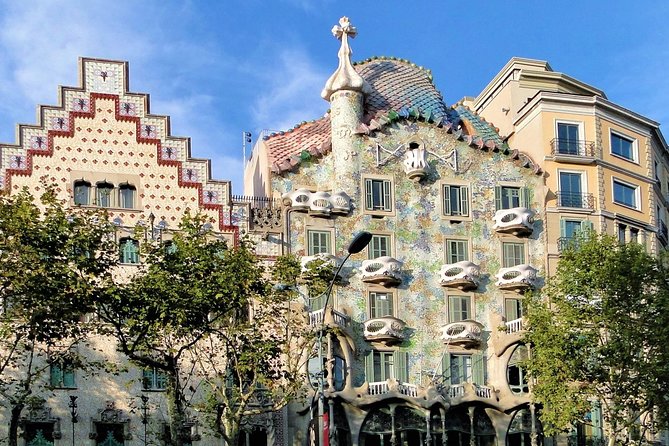
Now you hit one of the headline stops: Casa Batlló on Passeig de Gràcia. The tour highlights how the façade’s color and fantasy pull you in—and how it sits in strong contrast to neighboring buildings like Casa Amatller and Casa Lleó Morera.
This is one of those places where a guided stop changes the experience. Left alone, you might look at the façade and say, wow, it’s weird. With the guide, you’ll start to understand how the design creates meaning through shape, texture, and dramatic visual choices.
A practical tip: give yourself a minute to step back and scan the entire frontage before you focus on details. From a distance, the building reads as a whole concept. Up close, the details reward you for slowing down.
If you’re doing this tour early in your Barcelona trip, Casa Batlló also gives you a mental template for the rest of Gaudí’s organic thinking.
A Quick Story Break: St George and Symbolism Between Buildings
Along the route, you pass by a building that ties into the legend of St George, the patron saint of Barcelona and also of many other countries and cities. This kind of stop might seem small compared with Casa Batlló and Sagrada Família, but it’s a smart pacing tool.
It also trains your attention. You start noticing how modernist designers and city culture blend symbolism into architecture—meaning a façade can be both design and story.
La Pedrera (Casa Milà): Gaudí’s Culmination and the Nature Connection
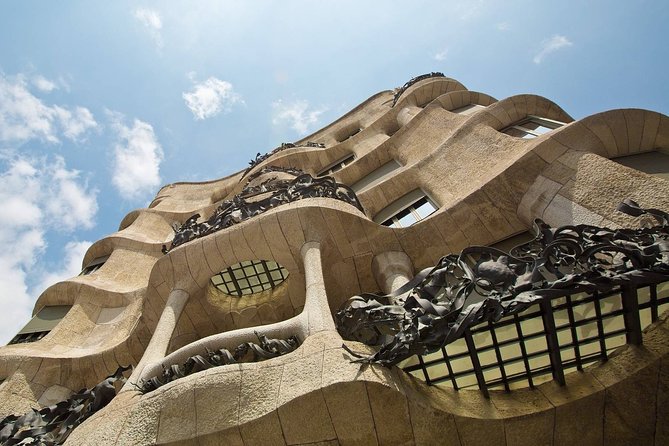
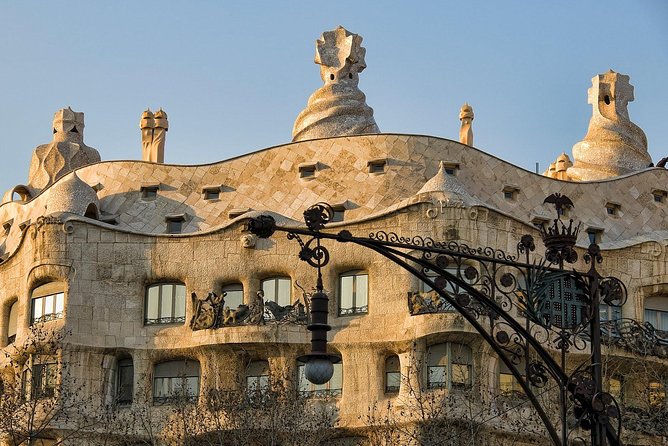
From Batlló’s fantasy to Casa Milà, known as La Pedrera, you get a different kind of Gaudí. The tour frames Casa Milà as a UNESCO World Heritage Site and the culmination of Gaudí’s career—designed for changing social needs without losing his core inspiration: nature and organic forms.
Even if you’re not a design expert, the guide helps you see what’s different about this building’s logic. You’ll be thinking beyond the famous exterior and toward how the building functions as a whole—its shapes, its rhythm, and the way organic forms show up in unexpected places.
This is usually where people stop taking photos and start watching themselves understand. That’s a good sign. It means the tour’s explanations are doing their job.
Sagrada Família at the End: Light, Shapes, and Emotion
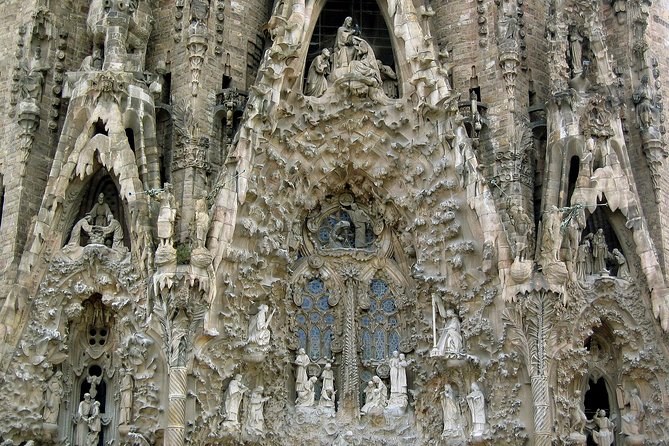
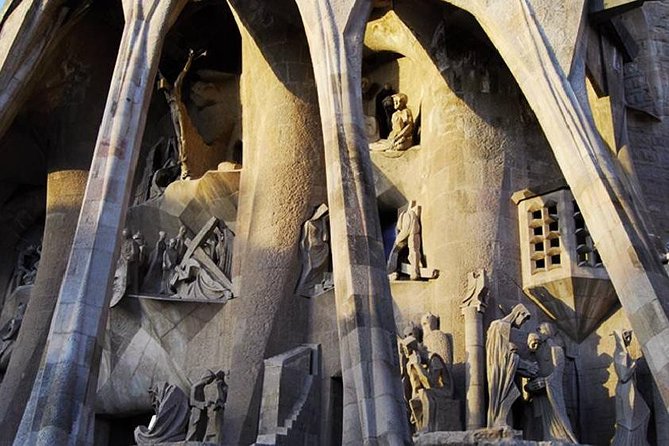
The tour’s finish is Sagrada Família, which is presented as the life project of a genius. You get an explanation that focuses on what makes the building unforgettable: organic shapes across the structure, light filtering through stained glass windows, and the symbolism built into the sculpted façade.
This is the stop that can feel like a reset button. Even if you’ve seen pictures, the way light behaves in a space like this is hard to predict. The guide’s framing helps you focus on the right things so you’re not just scanning for famous angles.
One practical consideration: Sagrada Família is a ticketed, high-demand site. The tour ends there and includes explanation, but entry details can be confusing depending on how the day runs. If you want time inside, check your expectations before you go so you aren’t surprised at the entrance.
The Guide Factor: When Names Like Antonio, Montse, Roberto, Jordi Matter
This tour stands or falls with the guide. The strongest pattern across guide experiences is clear communication and real passion. You’ll hear names like Antonio, Montse, Jose Carlos, Alfredo, Laura, Roberto, Jordi, and Miguel—and the theme is consistent: they explain modernism in a way that makes the buildings feel logical, not just impressive.
You’ll also benefit from small practical touches, like thoughtful pacing and easy-to-use city suggestions. One thing you should expect is that the guide doesn’t only talk. They point out features people miss—like small visual cues in façades that become obvious once someone points them out.
Because the group stays under 12, you’re more likely to feel like you’re part of a conversation rather than watching a lecture on the move.
Who This Tour Is Best For (and Who Should Skip It)
This is a great choice if:
- You want a guided intro to Barcelona modernism without turning it into a full-day project
- You care about seeing the “why” behind Gaudí’s style and the movement around him
- You like small-group attention and hate getting stuck behind five umbrellas blocking the view
You might want to consider another format if:
- You only want free time to roam at your own pace
- You’re strict about tour timing and can’t handle even small schedule pressure at major sites
- You’re arriving with zero flexibility and expect every landmark to be entered automatically
Should You Book This Gaudí Modernist Legacy Tour?
I’d book it if you want a smart, efficient route through Barcelona’s modernist era, with Casa Batlló and La Pedrera doing the heavy lifting and Sagrada Família providing the emotional finish. The small-group cap and guide-led explanations make it a good value, especially at this price.
Before you commit, do one simple prep: confirm what’s included regarding entry at Sagrada Família, and plan your day so you aren’t rushing. If you do that, you’ll walk away with more than photos—you’ll leave understanding what you saw and why Barcelona’s modernism still looks like the future.
FAQ
How long is the Gaudí modernist walking tour?
The tour lasts about 2 hours 30 minutes.
What’s the group size?
The group is limited to a maximum of 12 people, which helps keep the experience personal.
What’s included in the price?
It includes a professional guide and a modernist walking tour with stops that cover Casa Batlló and La Pedrera, plus thorough explanations of modernist architecture and Sagrada Família.
Is food or hotel pickup included?
No. Food and drinks aren’t included, and there’s no hotel pickup or drop-off.
Where do we start and where does the tour end?
You meet at Carrer de Fontanella, 2 in Ciutat Vella, and the tour ends at Sagrada Família in Eixample.
Is Sagrada Família admission included?
The tour includes explanations related to Sagrada Família and ends there, but ticket requirements can apply. I recommend confirming entry expectations ahead of time.
More Ways to Tour Barcelona
- Barcelona: Casa Batlló Entry with Self-Audioguide Tour
★ 4.7 · 25,359 reviews - Barcelona: 24 or 48-Hour Hop-On Hop-Off Bus Tour
★ 4.4 · 20,872 reviews - Barcelona: Park Guell Guided Tour with Skip The Line Entry
★ 4.7 · 17,563 reviews - Barcelona: Sagrada Familia Skip-the-Line Entry Ticket & Tour
★ 4.8 · 12,789 reviews - Barcelona: FC Barcelona Museum “Barça Immersive Tour” Ticket
★ 4.4 · 10,944 reviews
More Barcelona Tours on Our Radar
- Barcelona: Sagrada Familia Entry Ticket with Audio Guide
★ 4.6 · 105,312 reviews - Barcelona: Park Güell Admission Ticket
★ 4.4 · 76,534 reviews - Barcelona: Casa Batlló Entry with Self-Audioguide Tour
★ 4.7 · 25,359 reviews - Barcelona: Montjuïc Cable Car Roundtrip Ticket
★ 4.5 · 22,368 reviews - Barcelona: Hola Barcelona Public Transport Travel Card
★ 4.5 · 20,985 reviews
Further Along the Gaudí Trail
- Barcelona: Park Güell and Gaudí House Museum Entry Ticket
★ 4.5 · 6,326 reviews - Barcelona: Gaudí’s Park Güell Tour with Fast-Track Ticket
★ 4.8 · 4,512 reviews - Barcelona: Sant Pau Recinte Modernista Entry Ticket
★ 4.6 · 2,567 reviews - Barcelona: Sagrada Familia, Modernism, and Old Town Tour
★ 4.7 · 1,621 reviews - Sagrada Familia & Gaudi Tour Private or Small Group with Tickets
★ 4.5 · 1,188 reviews
Just Rated Around Barcelona





Gaudí Architecture Tours, compared.
 ★ 4.5Park Güell and Gaudí House Museum Entry TicketFrom $336,326 reviews
 ★ 4.8Gaudí’s Park Güell Tour with Fast-Track TicketFrom $324,512 reviews
 ★ 4.6Sant Pau Recinte Modernista Entry TicketFrom $212,567 reviews
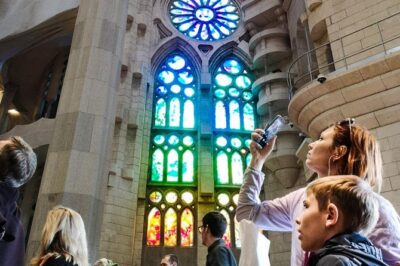
 ★ 4.7Sagrada Familia, Modernism, and Old Town TourFrom $521,621 reviews
 ★ 4.5Sagrada Familia & Gaudi Tour Private or Small Group with TicketsFrom $901,188 reviews
 ★ 5.0Complete Gaudi Tour: Casa Batllo, Park Guell & Sagrada FamiliaFrom $1621,152 reviews
 ★ 5.0Barcelona e-Bike Tour: Gaudí & Old Town Small GroupFrom $38769 reviews
 ★ 5.0Ramblas, Old Town, Gothic and Gaudi Architecture Walking TourFrom $35723 reviews
Browse the lists this tour appears in